Can I Walk the Walls of Dubrovnik for Free?
No, the Dubrovnik city walls are ticketed at every entrance, but here is exactly what the ticket costs, what it includes, and the honest ways to pay less.
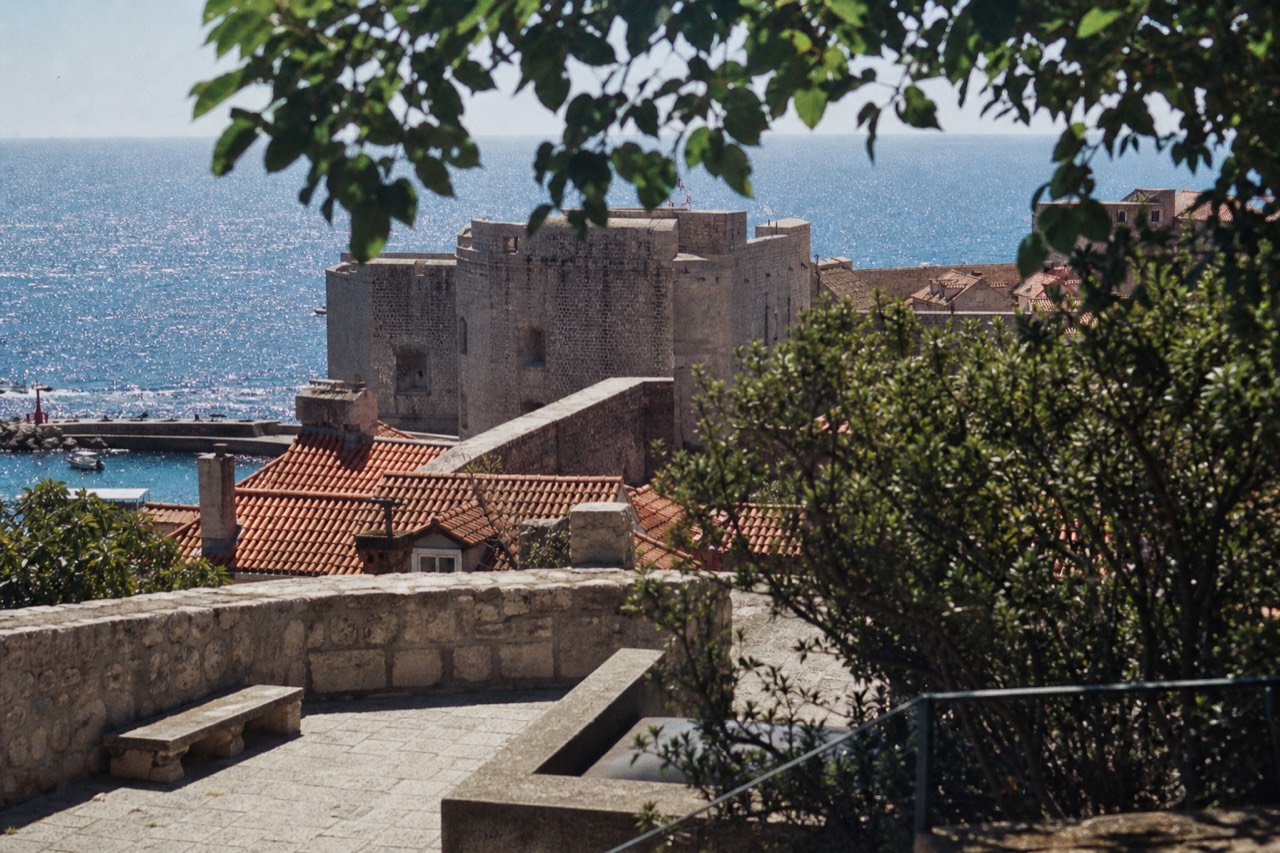
Can I Walk the Walls of Dubrovnik for Free?
No. The Dubrovnik city walls are a paid attraction at every entrance: the adult ticket is 40 euro in main season, 1 March to 30 November, and 20 euro in December, with children aged 7 to 18 at 15 euro and 5 euro respectively and under 6 free. There is no free section of the main circuit, no free hour and no family ticket. The only genuinely free walking in Dubrovnik is the Old Town streets themselves.
I get asked this at Pile Gate most weeks in summer, usually by someone who has read a forum thread from years ago. The confusion is understandable. For a long stretch of the wall's modern history the answer was murkier, and older travel writing still circulates claims about free access, side gates or evening windows when the ticket desks close. None of that survives contact with the current setup. The operator, the Society of Friends of Dubrovnik Antiquities, staffs every entrance to the circuit, and the pricing is published on its own webshop in exactly two paid article types: adult, and child aged 7 to 18. That is the entire menu.
What confuses people further is that the wall is visible, temptingly, from everywhere. You can stand on the Stradun and watch the walkers above you. You can see the ticket barriers from the outside. The circuit is right there, a staircase away, and it looks like public infrastructure in the way that a city park or a seafront promenade is. It is not. It is a maintained monument with 16 towers, 3 fortresses, 6 bastions, 2 corner fortifications, 3 bulwarks with rows of turrets, 3 moats, 2 flank fortresses, 1 breakwater and 2 drawbridges, and its upkeep is funded by those tickets. The Things to Do in Dubrovnik question of whether the price is fair is separate, and I will come back to it, because the honest answer is more interesting than a flat yes or no.
One more thing worth knowing before you budget. The 40 euro adult ticket is not a walls-only ticket. The operator's own shop names the article "adult walls + Lovrijenac", and the ticket includes free admission to Fort Lovrijenac across the bay, the Western Outer Wall, which closes in December, January and February, and the Collection of Coins of the Republic of Ragusa at Gundulić Square 6. So when you compare the price against other European monument tickets, compare it against a three-site combination, not a single wall.
| Ticket | Main season (1 March to 30 November) | December |
|---|---|---|
| Adult | 40 euro | 20 euro |
| Child 7 to 18 | 15 euro | 5 euro |
| Child 6 and under | free | free |
| Fort Lovrijenac bought alone | 15 euro | 15 euro |
If you are planning the whole visit rather than just this one question, the full breakdown of entry options is in the city walls ticket prices guide, which covers the combinations in more depth.
Can You Walk the City Walls of Dubrovnik for Free?
Not the main circuit, no. Every entrance to the 1,940-metre wall walk is staffed and ticketed, and the operator sells exactly two paid article types, adult and child aged 7 to 18. What you can do for free is walk the streets inside the walls, the Stradun included, and enjoy the views from ground level. The wall itself has no free stretch, no free window and no loophole.
Let me deal with the specific myths, because each one has a grain of truth behind it.
The first myth is that you can walk part of the wall for free and turn back before the ticket desk. The circuit's entrances are controlled at the point of entry, not mid-walk, so there is no partial free stretch. The wall is 1,940 metres long, up to 25 metres high, 4 to 6 metres thick on the land side and 1.5 to 3 metres on the sea side, and its shape was reached in the 13th century, with the last major work, the Bastion of St Stephen, finished in 1660, according to the operator's own description of the monument. All of it sits behind the same ticket.
The second myth is that early morning or late evening gets you in free. The operator's stated working hours at the time of check are 08:00 to 19:30, and the entrances are staffed throughout those hours. There is no published free period outside them, and I would not plan a trip around the hope of one.
The third myth is the most persistent: that some other fortification is "basically the walls". Fort Lovrijenac, the standalone fortress on its 37-metre sea rock, is a separate ticket at 15 euro, not a free substitute. The Western Outer Wall is included in the walls ticket, not free on its own. What genuinely is free are the views from Mount Srd if you walk up rather than taking the cable car, the alleyways and staircases of the Old Town, and the harbour and beaches outside the walls. If your budget is zero, those are your walls-adjacent experiences, and they are good ones. But the circuit itself, the one you have seen in photographs, is paid.
For most people reading this, the real question is not whether the wall is free but whether it is worth paying for, and if so, whether to pay for it alone or as part of a guided walk. Those are genuinely different decisions.
A ticket-only visit suits confident independent travellers who already know roughly what they are looking at. A guided walls walk suits everyone else, and in a city whose history is this layered, the guide earns their fee. The Old Town & Walls Combo Walk from Dubrovnik Walks, for instance, covers both the streets and the circuit in about 3 hours 30 minutes, from $50.94 per person, rated 4.8 across 1,183 reviews. The admission-only product, from $36.37 per person, is the pure ticket route if a guide is not for you.
Is It Worth It to Walk the City Walls in Dubrovnik?
For most visitors, yes. The 40 euro adult ticket is not just the wall circuit: it also covers Fort Lovrijenac, the Western Outer Wall and the Collection of Coins of the Republic of Ragusa, and it costs the same as the one-day Dubrovnik Pass in main season, which adds ten more sights plus a 24-hour bus ticket. In December the maths changes, because the walls drop to 20 euro while no pass tier is on sale at all.
I will argue the worth-it case honestly, because 40 euro is real money and pretending otherwise would be dishonest.
The walk itself is the single best thing you can do in Dubrovnik, and I say that as someone who has traced every metre of it in every season. The circuit gives you the city in a way nothing else does: the red rooftops of the Old Town from above, the Adriatic flattening to the horizon, Lokrum island sitting offshore, and the geometry of the fortress system revealing itself tower by tower. The 24.7-hectare UNESCO property you are walking around was inscribed in 1979 under criteria (i), (iii) and (iv), and the view from the ramparts is the clearest explanation of why. There is a reason nearly every visitor who pays the price describes it as the highlight of the trip rather than a rip-off.
The value case is stronger than most people realise, because of what the ticket bundles. Fort Lovrijenac alone is 15 euro, so the combination pricing rewards anyone who planned to see both anyway. And here is the detail that changes the calculation for a lot of visitors: the one-day Dubrovnik Pass costs the same 40 euro as the standalone walls ticket in main season, and it includes the walls plus ten more sights, among them the Rector's Palace, the Maritime Museum, the Museum of Modern Art and a 24-hour bus ticket. The three-day pass at 50 euro and the seven-day pass at 60 euro add suburban bus coupons and House Bukovac in Cavtat. All of that is published on the official pass site, and every tier lists the walls and Lovrijenac as its first inclusion, with a one-time visit to each institution. The full sight list is in everything the Dubrovnik Pass covers.
| Option | Price | What you get |
|---|---|---|
| Walls ticket, main season | 40 euro | Walls circuit, Fort Lovrijenac, Western Outer Wall, coin collection |
| Walls ticket, December | 20 euro | Walls circuit, Fort Lovrijenac, coin collection (outer wall closed) |
| One-day Dubrovnik Pass | 40 euro | Everything above plus ten sights and a 24-hour bus ticket |
| Three-day pass | 50 euro | Same sights plus suburban bus coupons and House Bukovac in Cavtat |
| Seven-day pass | 60 euro | Same as three-day over seven days |
One caution on that comparison, and it matters: the pass and the walls ticket only cost the same in main season, 1 March to 30 November. In December the standalone walls ticket falls to 20 euro and no pass tier is on sale at all, so the "pass costs the same as the walls" line is a main-season claim only. If you are visiting in winter, buy the walls ticket and pay separately for anything else you want to see.
If you would rather have the history explained while you climb, the 2-Hour City Walls Walk from Dubrovnik Walks runs from $29.58 per person and is rated 4.8 across 1,387 reviews. One recent guest review captures what a guide adds to the stone: "This well organized tour helped put Dubrovnik's past (and present) into perspective. It's incredible that the city walls have withstood the test of time. Antun was a wonderful guide." You can read more about that operator and check availability on the tour page, or Check availability directly.
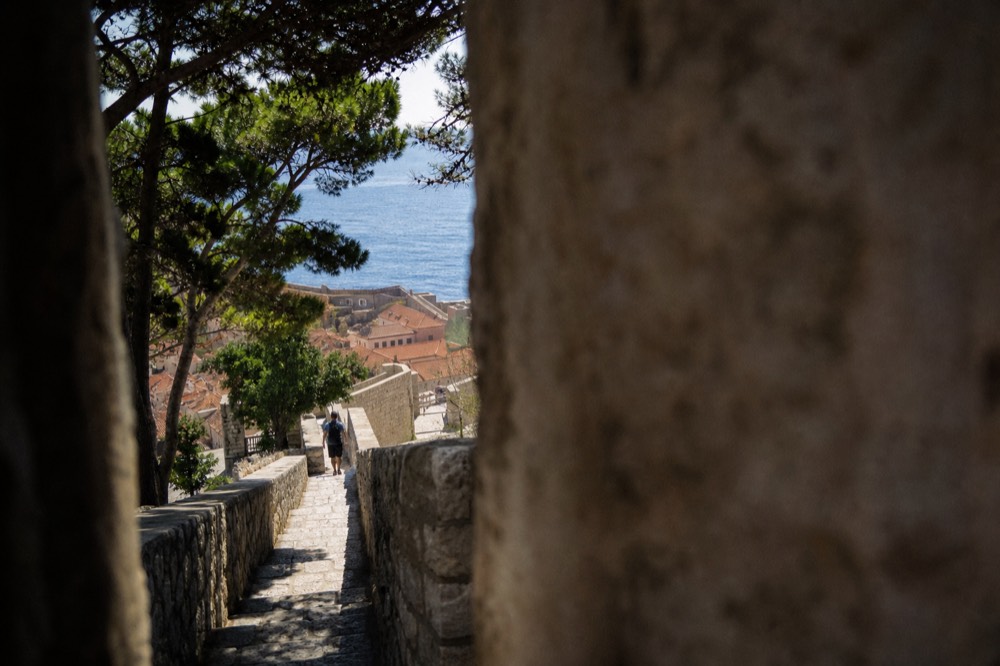
Before you commit to the price, a few practicalities will shape whether the ticket feels worth it on the day. The circuit runs about two kilometres, and with photo stops and stairs it takes most people one and a half to two hours at a comfortable pace. There is only one set of public toilets on the route, near the Pile entrance, so plan around that, and note that the circuit itself has no shade and almost no seating, which matters in the July and August heat. The wall is one-way, so once you start you are committed to finishing, and wheelchairs and strollers cannot manage the steps.
Where you enter makes a real difference to the experience. Three entrance points serve the circuit: Pile Gate, near the base of the cable car by Buža, and at the Maritime Museum near St John Fortress. Most people start at Pile, which puts the hardest stair climb first and the sea-facing stretches later. The cable-car-side entrance near Buža is the quieter option and can save you a long queue in peak months, though at busy times all three can still mean waiting.
Timing matters as much as the entrance. The walls are busiest between 10:00 and 15:00 in high season, when cruise passengers are ashore, so arriving at opening or in the late afternoon buys you both fewer people and better light over the rooftops. No ticket, including the Dubrovnik Pass, lets you skip the entrance queue, so an early start is the only reliable way around it. Dogs are not allowed on the walls, which is worth knowing before you plan the walk into a day with a pet along.
Can I Walk the Dubrovnik City Walls?
Yes, anyone of reasonable fitness can. The circuit is 1,940 metres long and reaches up to 25 metres high, with steep stone stairs on the land side and long exposed stretches in full sun. The operator's stated hours are 08:00 to 19:30. There is no published time limit inside, but the practical constraint is heat and crowds, not the distance.
The physical demand is often understated. This is not a flat promenade. The land side climbs in flights of stone steps, the surface is polished and uneven in places, and in July and August the middle of the day turns the seaward stretch into an oven with almost no shade. The wall thickness, 4 to 6 metres on the land side, means there is nowhere to step off for a rest. Bring more water than feels reasonable, wear shoes with grip rather than espadrilles, and start early.
Timing matters more than fitness, and this is where Dubrovnik's crowd data is genuinely useful. The Old Town has six electronic counters at its entrances, updating a headcount every 15 minutes, and the official carrying capacity from the UNESCO assessment is 11,275 people. On a real September morning the count read 3,139 at 07:00, 5,419 at 08:00, 7,297 at 09:00, peaked at 7,739 at 10:00, and sat at 7,205 by 11:00. The pattern is consistent: the wall is quietest in the first hour after opening and again in the late afternoon, and the 10:00 peak is when the cruise shuttle buses have landed.
Those cruise numbers come from the Port Authority's own cruise management page, and they upend the usual advice. September and October, not July and August, are the busiest cruise months in Dubrovnik, and they are also the months with the best walking weather. If you are coming in that window, book a timed guided walk or arrive at opening, because the 08:00 walls queue is a fraction of the 10:30 one.
If you want the walls plus the Old Town explained in a single morning, the combo walk is the efficient choice, since it handles the ticket logistics and the routing in one booking.
How Can You Pay Less for the Dubrovnik City Walls?
Yes, there are three honest routes. The Dubrovnik Pass costs the same 40 euro as the walls ticket in main season and adds ten more sights plus buses, the child ticket is 15 euro in main season, and in December the adult price halves to 20 euro with children at 5 euro. There is no student, senior or family discount, because the operator sells exactly two paid article types.
Start with the pass, because for many visitors it is effectively a free upgrade. If you were going to buy the walls ticket anyway and you also want the Rector's Palace or the Maritime Museum, the one-day pass at 40 euro costs the same as the walls ticket alone in main season and includes all of them plus a 24-hour bus ticket. The catch is the season: the pass is sold for the summer window only, and in December the walls ticket at 20 euro is the cheaper route with no pass alternative on sale. If your dates are flexible and your interests are broad, the pass wins; if you only want the wall, the standalone ticket is the honest purchase.
Second, travel in the shoulder or off season. December's 20 euro adult ticket and 5 euro child ticket are the lowest prices the operator sells, and the winter Old Town, quiet and occasionally storm-lit, is a completely different experience from the summer one. The Western Outer Wall is closed December through February, but the main circuit and Lovrijenac stay in the ticket.
Third, bundle a guide. This sounds like spending more, not less, but a combo product that includes the walls plus the Old Town walk replaces two separate bookings and often costs less than the sum of a solo ticket plus a solo walking tour. The admission-only ticket product, from $36.37 per person, rated 3.6 across 249 reviews, is the comparison point: it is the pure entry route with no guiding, and its rating reflects what people expected versus what a ticket alone delivers.
Whichever route you take, the one thing I would not do is skip the walls over the price. Of everything a Dubrovnik visit can cost you, this is the line item most likely to be remembered a decade later, and the least likely to be regretted. The free version of Dubrovnik, the streets, the staircases, the harbour at dusk, is genuinely good. But the wall is the reason the free version is worth walking at all.
Common Questions About Walking the Dubrovnik City Walls for Free
Can I walk the walls of Dubrovnik for free?
No. Every entrance to the main circuit is staffed and ticketed. The adult ticket is 40 euro in main season, 1 March to 30 November, and 20 euro in December, with children aged 7 to 18 at 15 euro and 5 euro, and under 6 free. There is no free section, free hour or family ticket.
How Much Does It Cost to Walk the Dubrovnik City Walls?
The adult ticket is 40 euro in main season and 20 euro in December. Children aged 7 to 18 pay 15 euro in main season and 5 euro in December, and children 6 and under are free. The ticket also includes Fort Lovrijenac, the Western Outer Wall and the coin collection.
Is the City Walls Ticket Included in the Dubrovnik Pass?
Yes. Every pass tier lists the City Walls and Lovrijenac Fortress as its first inclusion, with a one-time visit allowed. In main season the one-day pass costs the same 40 euro as the standalone walls ticket and adds ten more sights plus a 24-hour bus ticket. In December no pass tier is on sale and the walls ticket drops to 20 euro.
When Is the Best Time of Day to Walk the Walls?
The first hour after the 08:00 opening, or the late afternoon. Measured counts on a September morning show the Old Town climbing from 5,419 people at 08:00 to a 7,739 peak at 10:00, so the early start buys you both cooler stone and thinner crowds. The operator's stated hours are 08:00 to 19:30.
Can Children Walk the Dubrovnik City Walls?
Yes. Children aged 7 to 18 pay 15 euro in main season and 5 euro in December, and children 6 and under walk free. The circuit has steep stone stairs and long unshaded stretches, so carry more water than you think you need and start early in the warmer months.