Can You Fly Direct to Dubrovnik from the USA?
The honest answer on nonstop flights from the United States to Dubrovnik, which European gateways connect best, and how to reach the Old Town once you land.
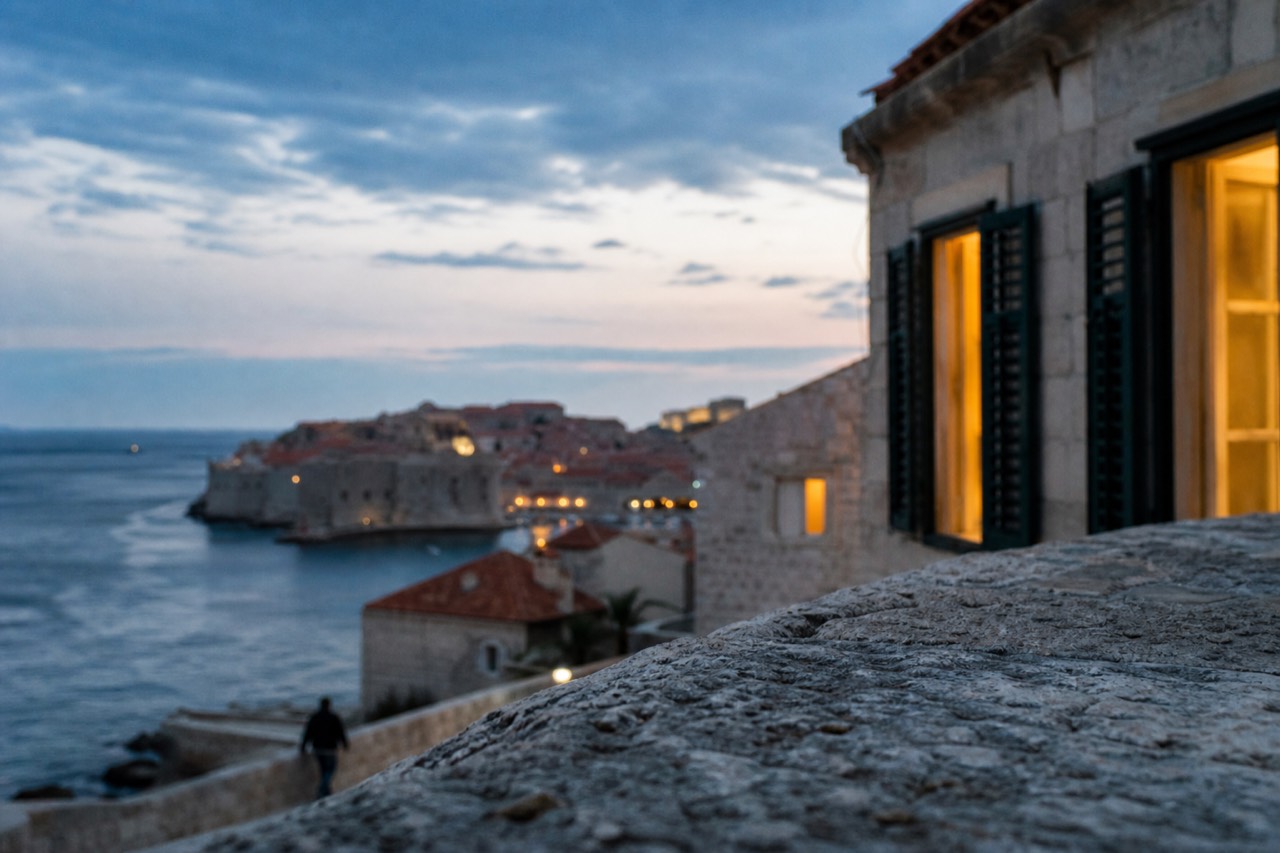
Can You Fly Direct to Dubrovnik from the USA?
No, not year-round. Dubrovnik Airport has no scheduled nonstop from any United States city outside the summer season, and even in summer, nonstop transatlantic service is seasonal and reshuffled from one year to the next, so no route should be booked on assumption. Nearly every American visitor connects through a European hub, and those connections are short and frequent.
That is the plain answer, and it deserves the plain caveat that goes with it. Seasonal nonstops between the United States and Dubrovnik have existed in recent summers, and airlines add and drop them depending on demand, aircraft availability and the wider travel market. What was true last July is not a promise for next June. Anyone planning around a specific nonstop should check current schedules directly with the airline before building the rest of the trip around it, because a route that disappears mid-planning is the single most common way an American itinerary to Croatia gets scrambled.
The practical reality is friendlier than the headline suggests. Dubrovnik is one of Croatia's best-connected seasonal airports, with a steady stream of flights from major European gateways through the warmer half of the year, and the connecting hop from a hub is measured in a couple of hours, not a day. Most travellers from North America overnight or same-day connect through cities like Frankfurt, London, Paris, Amsterdam, Vienna or Istanbul, then land in Dubrovnik before lunch. If you want the full picture of carriers, seasons and booking windows, our Dubrovnik flights and airlines guide goes deep on the scheduling side, and it is refreshed against the same sources we use everywhere on this site.
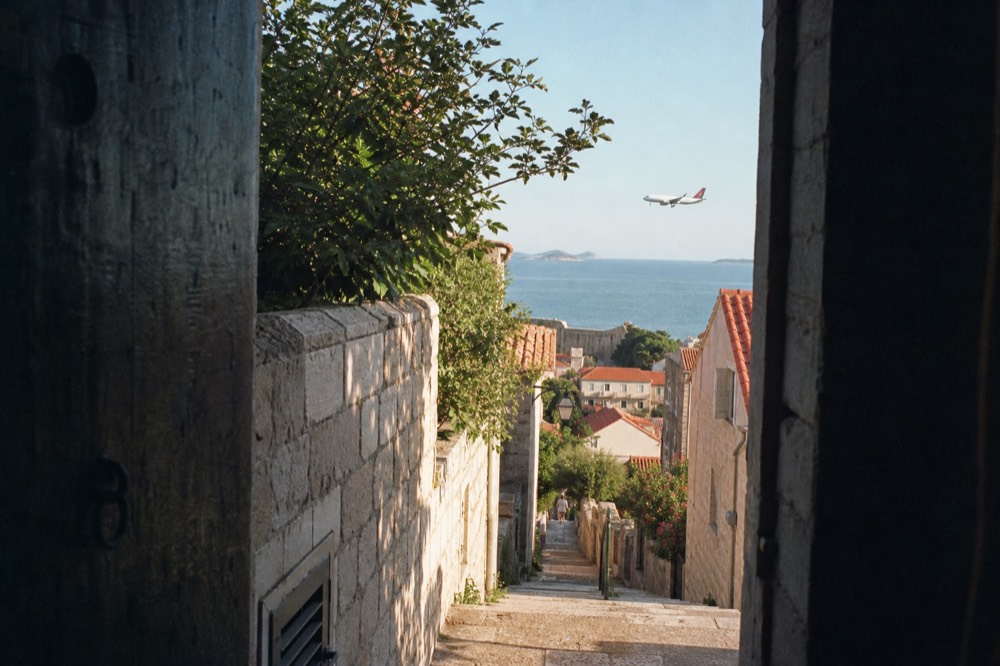
It also helps to understand why the city is worth the extra leg. Dubrovnik recorded about 4.2 million overnight stays in 2025, sharing first place among Croatian destinations with Rovinj, according to the Croatian Bureau of Statistics. The walled Old Town, a UNESCO World Heritage Site since 1979, covers just 24.7 hectares, and the city around it counts 41,562 residents at the 2021 census. That density of history and sea inside a small, walkable core is exactly what pulls visitors across an ocean, and it is why the airport, small as it is, punches above its weight in summer.
| Dubrovnik at a Glance | Verified Figure |
|---|---|
| City population, 2021 census | 41,562 |
| Overnight stays, 2025 | about 4.2 million |
| Cruise passengers, 2025 | 625,257 |
| Cruise calls scheduled, 2026 | 461 |
| City Walls circuit length | 1,940 metres |
| Old Town UNESCO inscription | 1979 |
Once you are here, the reward for the connection is a compact city where the headline sights sit within a short walk of each other. The City Walls circuit, 1,940 metres long and up to 25 metres high in places, the cable car up Mount Srđ and the island of Lokrum can fill three or four days without a single further flight, and the tours below are the ones that pair naturally with a first visit built around that classic trio.
Where Can I Fly Direct to Dubrovnik From?
Directly, from cities across Europe, on routes that run heavily in the April-to-October window and thin out in winter. Dubrovnik Airport's nonstop network is seasonal and European: the summer schedule is broad, with frequent flights from the continent's major hubs and leisure routes from across the region, while the winter schedule contracts sharply. Long-haul travellers connect at one of those hubs.
I have watched this rhythm from the ground for years, and it is one of the most misunderstood parts of planning a Dubrovnik trip. People read "no direct flight from America" and imagine a remote, hard-to-reach outpost. The opposite is true in summer. From late spring through early autumn the airport hums with arrivals from across Europe, and the morning wave lands visitors in time for a full first day. In the depths of winter the picture changes: frequencies drop, some routes pause entirely, and a connection through Zagreb or another major hub becomes the standard path.
What this means for an American traveller is simple sequencing. Book the transatlantic leg into whichever European hub offers the best fare and timing, then book the hub-to-Dubrovnik leg separately or together, keeping an eye on connection length. A tight 60-minute connection is a gamble in a busy summer hub; a four-hour buffer turns the change of planes into a coffee stop. And because Dubrovnik's schedule is seasonal, the calendar of your trip matters more than the map. A June itinerary and a November itinerary are, in flying terms, two different cities.
The seasonality cuts both ways, and it is worth saying plainly: the same summer that fills the skies fills the streets. Cruise passengers at the Port of Dubrovnik peaked in September 2025 at 101,246 and in October at 100,132, ahead of July's 96,072 and August's 87,385, according to Port Authority data. Flying in shoulder season means thinner flight schedules but also thinner crowds, and that trade is worth making for many travellers. Our best time to visit guide works through it month by month.
Since the classic first-day move is to get above the city and then walk inside it, the combo that bundles the cable car, a guided Old Town walk and the City Walls is worth a look before you leave home.
Can You Fly Direct from the USA to Croatia?
Into Croatia, yes, seasonally: nonstop flights from the United States have operated to Croatian airports in summer, most consistently to Zagreb, the capital and the country's main intercontinental gateway. But a nonstop from an American city all the way to Dubrovnik is the exception, not the rule, and most summers it either does not exist or runs for a narrow window. Plan on connecting.
Croatia's position on the far southeastern edge of the European Union, with a population of roughly four million, means its intercontinental air links have always been limited and seasonal. Zagreb, inland and roughly the country's geographic opposite end from Dubrovnik, is the airport with the most established long-haul role. Coastal airports, Dubrovnik included, live on European traffic: leisure routes that spin up in spring and wind down in autumn. That structural fact changes less than the individual routes do, so it is the thing to build plans around.
For a visitor from the United States, this shapes the two basic itinerary shapes. The first is the connect-and-continue: fly into a European hub, connect to Dubrovnik, and spend the whole trip on the coast. The second is the open-jaw: fly into Zagreb or another Croatian entry point, travel overland or by domestic flight, and fly home from Dubrovnik. Both work. The second trades a bit of logistics for a much wider view of the country, and travellers who take it rarely regret seeing the interior as well as the sea.
A word on expectations, because I field this question constantly. The absence of a year-round nonstop is not a signal that Dubrovnik is difficult. It is a signal that the city is a seasonal, leisure-driven destination whose airlines follow the sun. Once you accept that the journey will have one connection, the planning gets easier, not harder: you stop hunting for a nonstop that may not exist and start optimising the connection you will actually take, which is where the real comfort is won or lost.
Which Airports Fly Direct to Dubrovnik?
European airports, in the main: Dubrovnik's nonstop arrivals come from the major hub cities of Western and Central Europe plus a rotating cast of seasonal leisure routes, with the network at its widest from late spring to early autumn. There is no standing intercontinental nonstop. In winter the list contracts to a hardy core of hub connections.
The airport that serves the city is small, coastal and efficient, and its summer schedule is built for holiday traffic rather than business frequency. What that means in practice is strong peaks on weekends, morning arrival banks from the big hubs, and a terminal that can go from calm to crowded in the space of an hour. Arriving outside those banks is one of the quiet luxuries of a well-planned trip: passport control moves quickly and baggage claim is short, because the facility was simply never designed for widebody waves.
Because the routes change, the honest advice is to treat any specific list of departure airports as a snapshot, not a fixture. Check the current season's schedule when you book, and if a nonstop from North America appears for your travel dates, price it against a hub connection before assuming it is the better deal; seasonal long-haul leisure fares can run high, and a well-timed connection through a European hub is often both cheaper and easier on the body clock. For the same reason, our Dubrovnik Airport guide keeps the practical detail on terminals, transport and timing in one place.
One more planning thought, and it is the one Americans most often miss: you do not need any further flights once you are here. The Dalmatian coast rewards staying grounded. Montenegro, the Bay of Kotor and the walled towns of Herzegovina are all reachable by road on organised day trips, which is precisely why a border-crossing excursion is one of the most-booked products among visitors who arrived by air. The Montenegro Day Trip from Dubrovnik runs from $58 per person and is rated 4.4 across 5,611 reviews, and it turns a flight-free vacation day into a second country.
Which Cities Fly Direct to Dubrovnik?
In summer, a wide sweep of European cities: the continent's major capitals and hubs, plus seasonal leisure routes that shift each year. The dependable core is the big-hub traffic from Western and Central Europe, which runs daily or near-daily through the season. In the off season the list shrinks to that core, and some weeks it shrinks further. Intercontinental cities do not appear on it outside rare seasonal experiments.
If you are choosing a hub from the American side, the practical ranking is about connection quality rather than geography. You want a hub with frequent Dubrovnik flights, so that a delayed transatlantic leg does not cost you a whole day, and you want reasonable minimum connection times. The major Western European hubs fit that description through the summer, and Central European hubs are a strong alternative, often with shorter total journey times than the map suggests. Istanbul adds a genuinely eastern option that works well from many American departure cities.
The seasonal shape of the flight network also interacts with the season you actually want. September and October combine the year's busiest cruise months with a still-full flight schedule, so the airport is busy but the routes are wide. November is the opposite: quiet streets, a thin schedule, and connections that need more care. Whichever you choose, the crowd data is worth knowing before you lock dates, because it is the difference between a Stradun you stroll and a Stradun you shuffle through.
| Date | Ships Scheduled | Passengers by Capacity |
|---|---|---|
| 6 October | 2 | 5,798 |
| 29 September | 2 | 5,675 |
| 30 September | 3 | 5,536 |
| 15 September | 4 | 5,273 |
Those are ship capacity figures for the busiest remaining days of the season, not people counted ashore, but they are a fair proxy for when the Old Town will feel full. Land on one of them and an 08:00 walls walk is not a suggestion, it is a strategy.
How Do You Get from Dubrovnik Airport to the Old Town?
By shared shuttle, private transfer, taxi or local bus, with the shared departure transfer the budget anchor at from $20 per person, rated 4.5 across 57 reviews. The airport sits outside the city, so every option involves a road transfer, and in summer the arrival banks mean queues form fast: booking a transfer ahead, or moving quickly off the plane, saves real time.
The shared transfer is the workhorse option and the one I point most first-time visitors toward. It is cheap, it drops in the city rather than at a remote stop, and it removes the scramble at the taxi rank after a long travel day. Private transfers cost more and buy you a direct, wait-free ride, which matters if you are landing late or travelling with a group and luggage. For the full breakdown of routes, stops and timings, see getting from the airport to the Old Town, which covers the options in detail.
Once you have dropped your bags, the city is yours on foot, and the costs that follow are refreshingly predictable because they are published by the operators themselves. The adult City Walls ticket, which is actually a walls plus Fort Lovrijenac combination, is 40 euro in main season, 1 March to 30 November, and 20 euro in December, with children 7 to 18 at 15 euro then 5 euro and under 6 free. The cable car's adult round trip is 30 euro per the operator's own price page. A Lokrum ticket is 30 euro and includes the return boat.
| Item | Main Season Price | Notes |
|---|---|---|
| City Walls adult, includes Lovrijenac | 40 euro | 20 euro in December; child 7 to 18 is 15 euro, then 5 euro |
| One-day Dubrovnik Pass | 40 euro | Same price as the walls ticket, adds ten more sights and a 24-hour bus ticket, main season only |
| Cable car adult round trip | 30 euro | Child 4 to 12 round trip 8 euro, under 4 free |
| Lokrum ticket | 30 euro | Includes reserve entry and return boat transfer |
| Shared airport transfer | from $20 per person | Rated 4.5 across 57 reviews |
Note the season qualifier on the pass comparison, because it trips people up: the one-day Dubrovnik Pass costs the same 40 euro as the standalone walls ticket only in main season. In December the walls ticket drops to 20 euro and no winter pass tier is on sale at all, so the "just buy the pass" advice is a March-to-November rule. Our Dubrovnik Pass guide works through every tier if you are weighing a longer stay.
For the first day itself, the combination that keeps coming up in this article exists for a reason. The Cable Car, Walking Tour and City Walls Combo runs about four and a half hours, from $90.66 per person, rated 4.6 across 360 reviews: up the mountain, back down into the lanes, and onto the walls with a guide who can name what you are looking at.
That heat note is worth underlining for anyone flying in from a northern American summer: Dubrovnik in July and August regularly pushes walkers to shorten the walls circuit, and the Things to Do in Dubrovnik planning pages consistently recommend starting at opening time, 08:00 to 19:30 being the operator's stated hours. Book the big outdoor sights for morning, save museums and shade for the afternoon, and the whole trip falls into place.
Whichever way you assemble the days, the flight question that opened this article is the smallest obstacle on the list. One connection, a short transfer, and you are standing on a 298-metre limestone street that has been the city's spine since the 1272 Statute fixed its plan. The rest is just sequencing.
Common Questions About Flying to Dubrovnik
Can you fly direct to Dubrovnik from the USA?
Not year-round. Seasonal nonstops between the United States and Dubrovnik have operated in some summers, but there is no standing intercontinental route, and seasonal service is added or dropped each year. Nearly all American travellers connect through a European hub, and those connections are short and frequent through the April-to-October season.
Can You Fly Direct from the USA to Croatia?
Seasonally, yes. Nonstops from the United States have operated to Croatian airports, most consistently into Zagreb, the capital and main intercontinental gateway. Coastal airports including Dubrovnik run on European traffic, so a connection is the standard path for the Dalmatian coast.
Which Airports Fly Direct to Dubrovnik?
European airports, in the main: the major hub cities of Western and Central Europe plus a rotating set of seasonal leisure routes, widest from late spring to early autumn and thinnest in winter. Treat any specific airport list as a snapshot and check the current season's schedule when you book.
How Do You Get from Dubrovnik Airport to the Old Town?
By shared shuttle, private transfer, taxi or local bus. The shared departure transfer is the budget anchor at from $20 per person, rated 4.5 across 57 reviews. In summer the arrival banks create queues quickly, so a pre-booked transfer or a fast exit from the plane saves real time.
Is September a Good Month to Fly Into Dubrovnik?
It depends on what you want. September still has the full summer flight schedule, but it was also 2025's busiest cruise month, with 101,246 passengers, ahead of July and August. Expect warm sea, wide flight availability and busy streets, and plan early starts for the major sights.
Do You Need More Flights Once You Are in Dubrovnik?
No. The coast, the islands and even neighbouring countries are reachable by road and boat. Montenegro day trips run from $58 per person, island cruises from $59.16, and the Elaphiti islands sit on regular ferry and tour routes. Most visitors never board another plane until the flight home.