Do You Need a Ticket for Dubrovnik City Walls?
Yes, the Dubrovnik City Walls are ticketed: 40 euro for an adult in main season, 20 euro in December, with children 7 to 18 at 15 euro. Here is exactly what the ticket covers, whether the walk is worth it, and how to choose between the ticket, the pass and a guided tour.
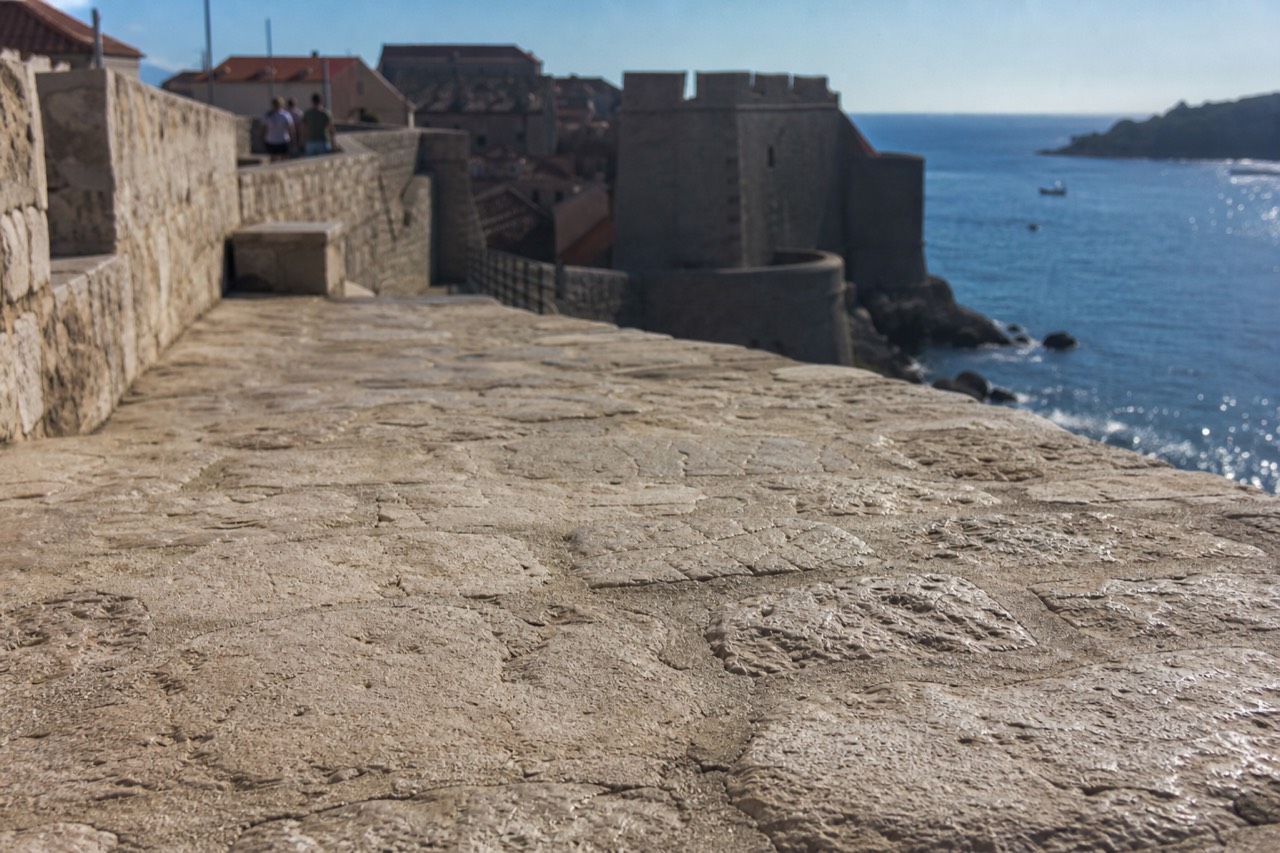
Do You Need a Ticket for Dubrovnik City Walls?
Yes, you need a ticket for the Dubrovnik City Walls, and there is no free route onto the circuit. The adult ticket is 40 euro in main season, 1 March to 30 November, and 20 euro in December. Children 7 to 18 pay 15 euro in main season and 5 euro in December, and children under 6 walk free. There is no family ticket, only adult and child.
The walls are run by the Society of Friends of Dubrovnik Antiquities, the same operator that maintains the fortifications, and entry is controlled at the gates with barcode scanning. You cannot slip on through a side stair, because there isn't one: the circuit is entered at a handful of ticketed points and exited where you finish. The operator's stated working hours at the time of check were 08:00 to 19:30, and the last entry closes well before that, so an early ticket is also the practical way to beat both the heat and the crowds.
What surprises most first-time visitors is how much the ticket actually includes. The 40 euro adult ticket is internally named as the walls plus Lovrijenac combination: it covers the full 1,940-metre circuit, Fort Lovrijenac across the bay, the Western Outer Wall (closed December through February), and the Collection of Coins of the Republic of Ragusa on Gundulić Square. Lovrijenac bought alone is 15 euro, so the combination is the default for a reason.
| Ticket | Main season (1 Mar to 30 Nov) | December |
|---|---|---|
| Adult | 40 euro | 20 euro |
| Child 7 to 18 | 15 euro | 5 euro |
| Child 6 and under | free | free |
| Lovrijenac Fortress alone | 15 euro | 15 euro |
There is one alternative worth naming before you buy anything standalone: the Dubrovnik Pass. In main season the one-day pass costs the same 40 euro as the walls ticket and adds ten more sights plus a 24-hour bus ticket. That equivalence is a main-season fact only: in December the standalone walls ticket drops to 20 euro and no pass tier is on sale at all, so the comparison flips completely. The full breakdown lives in our Dubrovnik Pass worth-it guide, and the pricing structure is confirmed on the official pass site.
If you already know you want a guide on the walls rather than just a barcode, the choice below covers the three sensible options: a guided walls walk, admission only, and an Old Town walk for the day before or after.
Can I Walk the Dubrovnik City Walls?
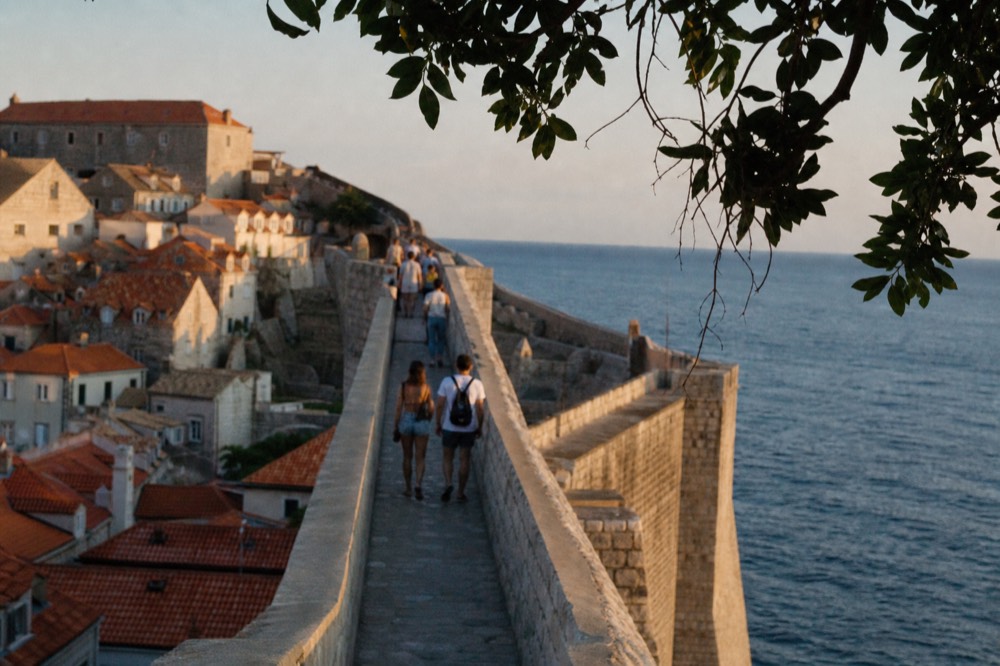
Yes, anyone with a ticket can walk the Dubrovnik City Walls, and the full circuit is about two kilometres of stone path with many stairs and no escape shortcut. The walls run 1,940 metres, reach up to 25 metres high, and are 4 to 6 metres thick on the land side. Most visitors finish in 1.5 to 2 hours, more with photo stops.
The circuit is one-way in practice during busy periods, and the entrance most people use is near the Pile Gate side, close to the fountain, with a second entry point by the Maritime Museum end. You climb immediately: this is a walk with sustained stair work, not a promenade, and in July and August the stone radiates heat back at you from below as well as above. Water, a hat and shoes with grip are not optional extras here, they are the difference between a highlight and an ordeal.
The walls themselves are a catalogue of medieval engineering. Sixteen towers, three fortresses, six bastions, two corner fortifications, three bulwarks with rows of turrets, three moats, two flank fortresses, one breakwater and two drawbridges, per the operator's own description of the circuit. The shape we walk today was reached in the 13th century and the final piece, the Bastion of St Stephen, was finished in 1660. Walking it, you are reading eight centuries of defensive logic in stone, from the thick land-side walls built to resist siege artillery to the slender sea walls that only ever needed to resist the Adriatic.
Accessibility is the honest caveat. There is no lift, no ramped alternative, and stretches of stair that would defeat a stroller or a wheelchair. If you are travelling with small children, a carrier beats a pushchair by a distance. For everything else about the circuit, our city walls walking guide covers the route, the direction and the best entry point in detail.
One planning note that saves people real money: if you intend to visit the walls and more than one museum, the pass arithmetic changes quickly.
| Option | Price | What you get |
|---|---|---|
| Walls ticket, adult | 40 euro main season, 20 euro December | Walls circuit, Lovrijenac, Western Outer Wall, coin collection |
| Dubrovnik Pass, 1 day | 40 euro, main season only | Everything above plus ten more sights and a 24-hour bus ticket |
| Dubrovnik Pass, 3 days | 50 euro, main season only | Same sights, one-time visits each, suburban bus coupons |
| Dubrovnik Pass, 7 days | 60 euro, main season only | Same sights plus House Bukovac in Cavtat, 168-hour bus ticket |
Every pass tier lists the walls plus Lovrijenac as its first inclusion, and every tier allows a one-time visit to each institution, the walls included. So the pass is not a discount on the walls, it is the walls at par plus everything else thrown in, but only between 1 March and 30 November.
If you would rather have someone else handle the ticket and tell you what you are looking at, a guided walls tour is the middle path.
Is It Worth Going on City Walls in Dubrovnik?
Yes, the walls are worth going on, and they are the single most reliable view platform in the city: 25 metres above the rooftops on one side and the open Adriatic on the other. The 40 euro price stings, but the circuit is the reason Dubrovnik is on the UNESCO World Heritage List, inscribed in 1979, and no street-level walk reproduces it.
I say that as someone who has walked the circuit in every month of the year, and the view never stops working: the red rooftops of the Old Town compressed into a 24.7-hectare peninsula, Lokrum green in the middle distance, and the wall path itself threading between towers that were built to be seen from the sea. The Stradun, all 298 metres of it, was fixed in its final plan by the 1272 Statute, and from the wall you finally understand the city as a single designed object rather than a maze.
The value question is really a fairness question, and it deserves a straight answer. Forty euro for a two-hour walk is a lot by Croatian standards, and the price has climbed over the years. What you are paying for is the maintenance of two kilometres of medieval fortification, three fortresses and sixteen towers, in a city whose economy leans heavily on exactly this monument. The UNESCO listing that the walls anchor is the city's economic engine, and the walls were on the World Heritage in Danger list from 1991 to 1998, during and after the siege, when the roofs you will photograph were being rebuilt.
There is a cheaper framing too. The same ticket includes Lovrijenac, which stands on a 37-metre sea rock across the bay and is a genuinely excellent fortress visit in its own right, plus the Western Outer Wall and the coin collection. If you use all of it, the per-hour cost of the ticket drops well below a boat tour.
For the guided version, the walls-and-wars walk is the one that pairs the circuit with the story:
A recent guest review of that tour captures why a guide changes the walk:
This well organized tour helped put Dubrovnik's past (and present) into perspective. It's incredible that the city walls have withstood the test of time. Antun was a wonderful guide.
linda_a
Is It Worth It to Walk the City Walls in Dubrovnik?
Yes, walking the walls is worth it for almost every visitor, with two honest exceptions: days when cruise crowds peak, and the dead of a July afternoon. The walk itself takes about two hours, there is almost no shade, and the experience is directly proportional to when you start. An 08:00 entry is a different monument from a 13:00 entry.
Timing is everything here, and the city's own counting system proves it. Six counters at every Old Town entrance update a headcount every 15 minutes, and the official carrying capacity from the UNESCO assessment is 11,275 people. On a real September morning the curve ran 1,200 people at 04:00, 3,139 at 07:00, 5,419 at 08:00, 7,297 at 09:00, peaking at 7,739 at 10:00 and still 7,205 by 11:00. The walls concentrate that crowd onto a path roughly two metres wide in places, which is why locals will tell you to be at the gate when it opens. The rest of the planning pages sit on Things to Do in Dubrovnik.
The cruise calendar matters more than the weather forecast. Cruise passengers at the Port of Dubrovnik peaked in September 2025 at 101,246 and October at 100,132, above July's 96,072 and August's 87,385, so the old advice to avoid July and August for crowd reasons is simply wrong: late September and October are the busiest cruise months of the year. The Port Authority limits cruise passengers to 8,000 a day in most cases, and of 243 cruise days a year only 18 exceed that, but those are the days the wall path feels like a queue with a view.
So the practical worth-it formula: enter at opening, in the shoulder months if you can, with water and a hat. Under those conditions the walls are the best two hours and 40 euro you will spend in the city. Enter at midday in peak season and you will still get the views, but you will share each tower with a tour group and the memory will be of shoulders as much as rooftops.
A note on season, because it changes the experience more than the price does. In April, May and October the stone is cool underfoot, the light is softer for photography, and the cruise calendar, though numerically busier in autumn, spreads its arrivals across the day rather than dumping them at the gate at 09:00. In June through August the walls open into a wall of heat, and the sea breeze only reaches the seaward stretches. Winter visits are the quietest of all, with the December ticket at 20 euro and the Western Outer Wall closed, but the Adriatic in winter light is a photographer's reward in itself.
Is It Worth Doing the City Walls in Dubrovnik?
Yes, the city walls are worth doing, and they are the one paid sight in Dubrovnik I would keep on any itinerary regardless of budget or trip length. The circuit is the city's defining experience, the ticket includes Lovrijenac, and even a half-day visitor from a cruise ship can complete it comfortably. The only real decision is ticket-only versus a guided walk.
That decision comes down to what you want from two hours on stone. Ticket-only, at 40 euro, you get the circuit at your own pace, and the views do most of the talking. What the views do not do is explain themselves: why the land walls are tripled, why Lovrijenac sits alone across the bay, why the rooftops are a patchwork of old and new tiles. A guided walk, such as the 2-hour Ancient City Walls & Wars tour from $29.58 per person, rated 4.8 across 1,387 reviews, layers the siege history and the republican era onto the stones, and the guide fee is on top of your own entry in most guided formats, so check the inclusions on the live listing before booking.
For visitors who want the bare minimum of planning, admission-only is the simplest route, and the listing below sells exactly that:
One comparison worth making while you decide: the walls versus the cable car. The cable car lifts you 367 metres to the upper terminal at 405 metres above sea level in 3 minutes 30 seconds, and an adult round trip is 30 euro. From Srđ you see the whole city, walls included, in one frame. From the walls you are inside the frame. They answer different questions, and on a short visit the walls answer the better one: what this city actually is.
The honest summary of worth, by visitor type: first-timers, yes, without hesitation. Families with children over about 7, yes, with water and an early start. Anyone with knee, heart or heat problems, consider Lovrijenac alone at 15 euro instead, which gives you fortress walls, sea views and the famous cliff-side perspective with a fraction of the stair climbing. Cruise passengers with five hours in port, yes, but go straight to the walls from the gate and save the Stradun for after.
What Does the Walls Ticket Include, and When Should You Buy?
The 40 euro adult walls ticket includes the full circuit, Fort Lovrijenac, the Western Outer Wall and the Collection of Coins of the Republic of Ragusa, and it is valid for the day of purchase. Children under 6 enter free, and there is no family ticket, only adult and child 7 to 18. Buy in main season if you want the pass option at all, because no winter pass tier is on sale.
The inclusions are the part most visitors under-use. Lovrijenac is a ten-minute walk around the bay from Pile, and it is the fortress you have been photographing from the walls all morning; the ticket you already hold gets you in. The Western Outer Wall is the quieter, greener stretch that most crowds skip, closed December through February. The coin collection on Gundulić Square is a small museum stop that pairs well with the morning market outside it.
On buying: the operator sells dated tickets through its own webshop, and buying ahead fixes your entry window, which matters in the 08:00 rush. The one thing not to do is plan around a 2027 price, because 2027 is not on sale and nobody, including the operator's own system, can quote it yet. If your dates fall in December, the standalone ticket at 20 euro is the better arithmetic than any pass, since no pass tier is on sale then at all.
A last word on combining the walls with the rest of a short trip. If you are in town for two days or more, do the walls on the first morning: the circuit doubles as an orientation flight over the city, and every street you walk afterwards falls into place. On a one-day visit, pair the walls with either Lovrijenac or the cable car, not both, and leave the museums for a return trip. However you structure it, the ticket is the one purchase in Dubrovnik that reliably outperforms its price tag.
If you are still weighing the options across the whole city, the trio below is the shortlist: the guided walls walk, admission only, and the local-guide Old Town walk that pairs well with a walls morning.
Common Questions About Dubrovnik City Walls Tickets
Do you need a ticket for Dubrovnik City Walls?
Yes. The walls are a paid monument with controlled, scanned entry and no free access point. An adult ticket is 40 euro in main season, 1 March to 30 November, and 20 euro in December. Children 7 to 18 pay 15 euro in main season and 5 euro in December, and children under 6 enter free.
Can I Walk the Dubrovnik City Walls for Free?
No, there is no free way onto the circuit, and views from the public terraces outside the walls do not substitute for the wall path itself. The closest free experience is the walk to Lovrijenac's exterior and the viewpoints around it, which are free to approach even though the fortress interior needs a ticket.
Does the Walls Ticket Include Fort Lovrijenac?
Yes. The 40 euro adult ticket is the walls plus Lovrijenac combination, and it also covers the Western Outer Wall, closed December through February, and the Collection of Coins of the Republic of Ragusa. Lovrijenac bought alone is 15 euro.
Is the Dubrovnik Pass Better Than the Walls Ticket?
In main season, usually yes if you plan to visit even one museum beyond the walls: the one-day pass costs the same 40 euro and adds ten more sights plus a 24-hour bus ticket. In December the standalone walls ticket falls to 20 euro and no pass tier is on sale, so the comparison only holds between 1 March and 30 November.
How Long Does It Take to Walk the Walls?
Most visitors complete the 1,940-metre circuit in 1.5 to 2 hours, more with photography stops. The path includes many stairs with almost no shade, so in summer an early start is both cooler and far less crowded. The operator's stated hours at the time of check were 08:00 to 19:30.
Is There a Family Ticket for the Walls?
No. The operator sells exactly two paid ticket types, adult and child 7 to 18, and nothing else. Children under 6 enter free, so a family simply buys adult and child tickets individually.