Does Dubrovnik Have Good Nightlife?
Does Dubrovnik have good nightlife? An honest answer from a local specialist: what the evenings actually offer, where the bars and clubs sit, and what to book before dark.
Does Dubrovnik Have Good Nightlife?
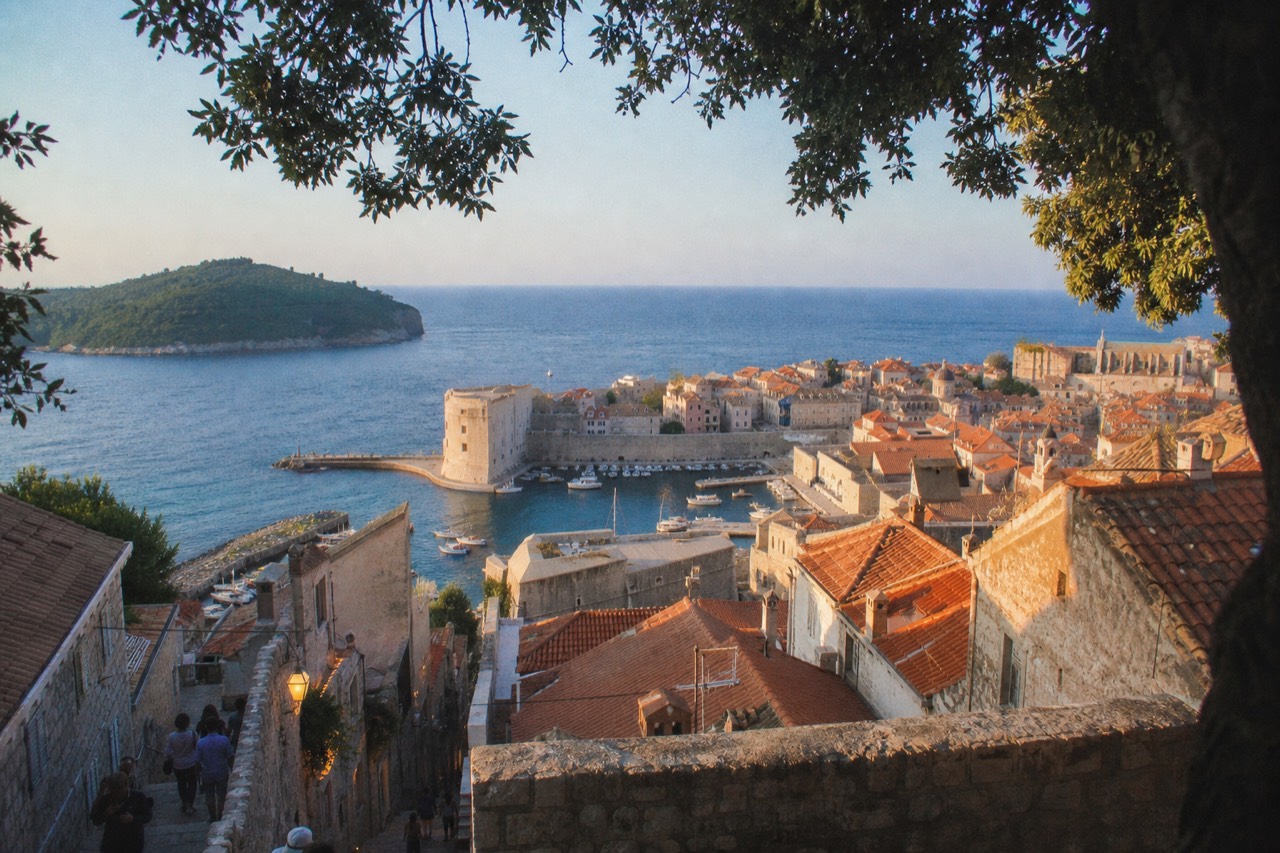
Yes, but on its own terms. Dubrovnik's nightlife is compact, scenic and winds down earlier than in Spain or Greece: bars fill the Old Town's lanes and terraces, one big club inside a fortress carries the late crowd, and the seafront stays lively from aperitivo hour until around midnight in high summer. It is a beautiful evening city rather than an all-night one, and September and October bring more visitors to town than July does.
That last point surprises people. Port Authority data shows cruise passengers in 2025 peaked in September at 101,246 and October at 100,132, above July's 96,072 and August's 87,385. The evenings in early autumn are warm, the terraces are full, and the town hums. If your mental image of a Dubrovnik night is a sleepy winter village or a 4 a.m. disco crawl, both halves of that image need adjusting.
I have walked these streets with travellers since 2015, and the honest framing is this: Dubrovnik delivers one of the prettiest evening backdrops in Europe, a handful of genuinely good bars, a famous cliff-side drink spot, one fortress nightclub, and a growing set of evening experiences, from sunset cruises to a free night walk. What it does not deliver is a sprawling multi-district club scene. If you want that, Split is the better base, and I will compare the two cities properly further down.
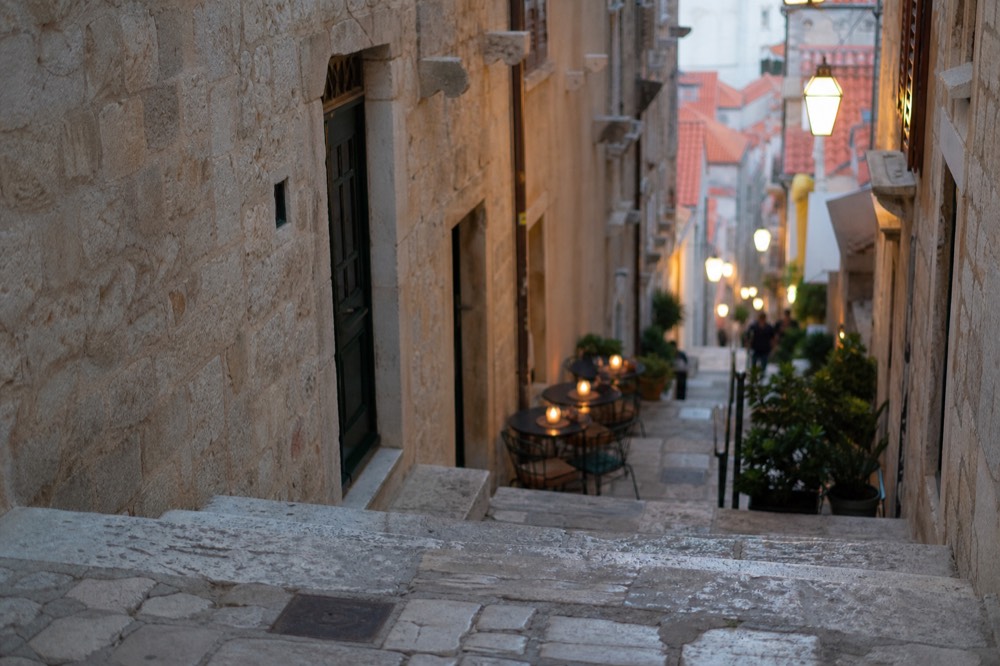
The evening here starts early and rewards the early. Locals and visitors alike take an aperitif around 19:00 or 20:00, dinner runs late by northern European habits, and the serious night air arrives after 22:00. The Old Town is small, 24.7 hectares inside the walls per its UNESCO listing, so everything is within a ten minute walk of everything else. You never need a taxi inside the evening's geography, which is part of the charm.
One of the best-value ways to learn that geography after dark is a free evening walk. Magical Dubrovnik Nights: History and Legends runs on GuruWalk, pay-what-you-want, about an hour and 45 minutes, rated 4.9 across 288 reviews. A night walk also solves a real problem: the daytime Old Town is crowded, and the same lanes at night are close to empty, lit by lanterns, and far easier to actually see. For more on the format generally, see the free walking tour guide.
If your evening plan is more liquid than legendary, the trio below covers the three best formats: the free night walk itself, a short sunset cruise to Cavtat with a cold platter and unlimited drinks, and the adults-only panoramic sunset cruise on the replica Karaka ship. All three end early enough that you can still make a late dinner.
Where Do the Bars and Clubs Actually Sit?
Most of the bars and clubs worth visiting sit inside or just steps outside the Old Town walls, clustered together in a compact, walkable zone that takes minutes to cross rather than hours. Rather than being scattered across the city, the nightlife concentrates in this historic core, so you can wander between venues on foot without needing taxis or long journeys between spots. The main concentration spreads off the Stradun, the 298 metre limestone main street, into the side lanes around it, with two headline venues doing the heavy lifting for late nights: Buža Bar, perched on the cliffs outside the wall above the open sea, and Culture Club Revelin, the nightclub inside the Revelin Fortress at Ploče Gate. Add hotel terraces along the seafront and a strip of café-bars in Lapad, and you have the whole evening map in one sentence.
Buža deserves its fame honestly. You pass through a hole in the city wall, descend a few steps, and suddenly you are on bare rock above the sea with the island of Lokrum in front of you. Sunset is the hour everyone wants, and seats go early in July and August. The full lowdown, including how the two adjacent bars differ, is in the Buža Bar guide. Culture Club Revelin, meanwhile, is the one true big club: international DJs, a stone-vaulted interior inside the fortress, and a season that runs through the warm months. Nightlife here is seasonal in a way northern clubbers sometimes forget; a February Tuesday is a different planet from a Saturday in August.
The rhythm of a Dubrovnik night, hour by hour, looks roughly like this:
| Time | What is happening | Where |
|---|---|---|
| 18:00 to 20:00 | Aperitivo hour, terraces fill, sunset watchers claim cliff seats | Buža, seafront terraces, Stradun café-bars |
| 20:00 to 22:30 | Dinner, the busiest stretch for restaurants and konobas | Old Town lanes, Ploče, Lapad |
| 22:30 to 01:00 | Bar-hopping peak, live music in some venues, club nights build | Side lanes off the Stradun, Revelin later |
| 01:00 onward | Only the club and a couple of late bars still open, high season only | Culture Club Revelin, a handful of late bars |
Two practical notes from walking these lanes at night for years. First, the stone is slick in places and the lanes are dim, so bring shoes with grip, not just style. Second, prices climb inside the walls; a drink on the Stradun itself costs more than the same drink two lanes north. The difference is rarely huge, but on a multi-hour evening it adds up, and the side-lane bars are usually the ones with character anyway.
If a guided evening sounds better than finding your own way between bars, the night walk I mentioned above is the anchor option, and it pairs naturally with a drink afterwards, since it ends inside the walls with half a dozen bars within three minutes' walk.
Does Dubrovnik Have Good Wine?
Yes, Dubrovnik has excellent wine, and it may be the most dependable pleasure of an evening there. Local grapes like Plavac Mali and Pošip appear on nearly every list, often poured by producers working just up the coast, so a glass at a seaside table rarely disappoints. Whether you want a simple house pour or a serious bottle from a nearby vineyard, the city delivers with striking consistency. Dalmatian wine is the quiet strength of the region's nights out: the local red workhorse is Plavac Mali, a close relative of Zinfandel, grown on the steep Pelješac and Dingač slopes just up the coast, and the whites, led by Pošip from Korčula, are crisp and food-friendly. What Dubrovnik lacks is urban wineries; what it has instead is konobas and wine bars that pour these bottles by the glass at fair prices, plus wine-tasting tours into the Konavle valley and the Pelješac peninsula for visitors who want the full story.
The deeper background is in the Plavac Mali guide and the Pelješac wine guide, but the short version for a night out is this: order the house red in any konoba and you will almost always get a Plavac Mali you would happily pay restaurant prices for at home. The Ston oysters guide covers the other half of the classic pairing, since Malostonski Bay oysters and a local white is the region's signature evening starter.
If you want wine as the evening's main event rather than its accompaniment, two formats work well. Closer to town, the food and drink walking tour with a local guide is rated a perfect 5 across 704 reviews and doubles as a bar-and-bite crawl through the Old Town, from $165.64 per person. Both end early enough to continue the night on your own.
For a self-guided wine evening, the honest advice is to skip the Stradun-fronting venues and head for the small wine bars tucked into the lanes, where the pours are more generous with the story as well as the volume. Ask for Plavac Mali by name, ask whether it is from Pelješac or Dingač, and you will get a conversation, not just a glass. Croatians take quiet pride in these wines, and the region's bottles rarely travel far beyond the country, which makes drinking them here feel like a local privilege rather than a tourist ritual.
Is Split or Dubrovnik Better for Nightlife?
Split is the better choice if nightlife is the main reason for your trip, since its bar and club scene runs later and livelier. Dubrovnik suits travelers who prefer a beautiful evening stroll, drinks with a view, and an early night over a big one, so pick Split for parties and Dubrovnik for atmosphere. Split is Croatia's second city, a university town with a year-round resident crowd, a waterfront promenade lined with bars, and a late-night culture that runs past 2 a.m. even out of season. Dubrovnik's scene is seasonal, compact and earlier, but its setting, drinking above the sea through a hole in a medieval wall, is something Split simply cannot copy, and for many travellers that setting is the whole point of the evening.
The comparison matters because many travellers combine both cities, and the order matters less than the expectations. If you front-load Dubrovnik and finish in Split, the nights get progressively bigger, which suits most people. The reverse order can make Dubrovnik's midnight wind-down feel like an early curfew, even though it is nothing of the sort when you know where to be.
| Factor | Dubrovnik | Split |
|---|---|---|
| Scale of scene | Compact, one main club, dozens of bars | Large promenade strip, multiple clubs |
| Season | Strongly seasonal, April to October | Year-round, quieter in winter |
| Late night | Rarely past 01:00 outside peak | Regularly past 02:00 |
| Setting | Medieval lanes, cliff bar, fortress club | Roman palace cellars, seafront promenade |
| Prices | Higher, especially inside the walls | Noticeably lower per round |
There is a third name that belongs in this conversation: Hvar. The island is Croatia's party headline in July and August, and travellers weighing a nightlife-first trip should read the Dubrovnik vs Hvar comparison before committing. But for a city base with easy days and pleasant nights, the Dubrovnik-Split axis is the real decision, and the honest summary is that Split wins on volume while Dubrovnik wins on backdrop. Neither wins on both.
One timing note that cuts the other way: Dubrovnik's shoulder-season evenings are underrated. With cruise passengers peaking in September and October rather than July and August, the terraces stay busy well into autumn, the sea is still swimmable, with a long-run September average of about 23.6 degrees, and the crowds at 22:00 are thinner than at midday. A late-September night out here, warm and unhurried, is arguably the city at its best.
Does Villa Dubrovnik Have a Beach?
No, Villa Dubrovnik does not have a sandy beach, but it does offer direct sea access from its rocky shoreline. Dubrovnik's coast is largely rock and shingle rather than sand, and the villa's terrace and bathing platforms let guests swim in the Adriatic right at the property. Villa Dubrovnik is a well-known luxury hotel on the cliffside just east of the Old Town, above the water on the road toward Sveti Jakov, and like nearly everything on that coastline its sea access is rocky and terraced rather than a sweep of sand. For its current facilities, sunbathing platforms and sea ladders included, check with the hotel directly, because the site's verified records do not cover the property's amenities and I will not guess at them.
What I can verify is the coastline around it. The famous sandy-ish exception nearby is Banje Beach, the polished shingle beach below the hotel's side of town with the Old Town walls as its backdrop, covered in the Banje Beach guide. Further along the same headland, Sveti Jakov is the quiet local favourite, a small shingle cove under a chapel with a spectacular view back over the city, described in full in the Sveti Jakov guide. Neither is a five minute stroll from Villa Dubrovnik in heels, so plan footwear accordingly.
The reason this question belongs in a nightlife article at all is that the eastern cliffside is one of the best sunset-and-drinks positions in the city. The seafront below Ploče faces almost due south and west, so the evening light comes straight across the water, and the terraces along there fill at golden hour. The cable car gives the same show from 405 metres up: in June, July and August it runs until midnight, and from 15 to 30 September until 23:00, so a ride up after dinner is a legitimate night out in itself. The operator's own timetable and price pages carry the details, and the cable car guide covers the practicalities.
For swimmers, the honest seasonal picture is in the swimming season guide: the long-run averages peak at 25.8 degrees in August and hold about 23.6 in September, but those are open-water climatological figures, not beach readings, and sheltered bays along this coast run warmer, as the Croatian met service's own Dubrovnik buoy showed when it read 27.0 to 27.4 degrees on a September day against that 23.6 monthly mean. In short: swim in the morning, drink on the terrace at dusk, and let the hotel's rocky shore be what it is, a viewpoint with a ladder.
What Should You Book Before Dark?
Book three things before dark: the sunset cruise, which sells out fast on clear evenings; the fortress club on big-event nights, when demand spikes sharply; and any evening tour you want during July, August and late September, the busiest stretch of the season. Securing these ahead of time means you will not arrive to find tickets gone. Everything else, the bars, the lanes, the cliff seats if you arrive early enough, can be improvised on the spot. The reason booking matters here is capacity: the Old Town's official carrying capacity is 11,275 people, the counting system updates every 15 minutes, and on a day when the counters read a 7,739 peak at 10:00, the evening venues are full too, so the popular formats sell out first.
The sunset formats are the clearest example. The panoramic sunset cruise on the Karaka ship, a faithful replica of a historic argosy, is adults only, runs about an hour and a half, and costs from $59 per person, rated 4.8 across 833 reviews. The Cavtat sunset cruise with a cold platter and unlimited drinks is shorter and cheaper, from $23.66 per person, rated 4.9 across 203 reviews, and pairs a boat ride toward the pretty harbour town of Cavtat with an unhurried hour on the water. Both sell out on the heavy cruise days, and because cruise passengers peaked in September and October in 2025 rather than midsummer, the shoulder-season evenings are exactly when the boats fill.
The evening I would build myself, and the one I describe to visitors who ask, runs like this: the free night walk at dusk while the lanes are lantern-lit and cool, a drink on a cliff or terrace through sunset, dinner in a side-lane konoba with a glass of Plavac Mali, and then either the cable car up for the view or a slow wander home through the empty lanes after midnight. It is not a big night out by Split's standards. It is a better-looking one than almost anywhere.
If you are planning the wider trip around this, the cluster of planning pieces on Things to Do in Dubrovnik covers the daytime half: the walls, the islands, the day trips and the itineraries that leave your evenings free. Nightlife here is not the headline attraction, but it is the part of the day people remember longest, and it costs less to do well than most visitors expect, especially if the first item on the itinerary is a walk that costs whatever you decide it was worth.
Common Questions About Nightlife in Dubrovnik
Does Dubrovnik have good nightlife?
Yes, on its own terms: a compact, scenic evening scene centred on the Old Town's bars, the cliff-side Buža Bar, the fortress nightclub Culture Club Revelin, and a growing set of evening tours and sunset cruises. It winds down around midnight to 01:00 outside peak season rather than running to dawn, so it rewards an early start and a beautiful setting over sheer volume.
Is Split or Dubrovnik Better for Nightlife?
Split, if nightlife is the trip's main purpose: it has a year-round scene, a long seafront bar strip and clubs that run past 02:00. Dubrovnik's scene is seasonal, smaller and earlier, but its setting, from a drink through a hole in the medieval wall to a club inside a fortress, is more dramatic. Many travellers do both cities, Dubrovnik first, Split last, so the nights build rather than shrink.
Does Dubrovnik Have Good Wine?
Yes. The region's signature red is Plavac Mali, grown on the steep Pelješac and Dingač slopes, and the leading whites, such as Pošip from Korčula, are crisp and food-friendly. Dubrovnik has no urban wineries, but its konobas and wine bars pour these local bottles by the glass, and guided tastings run into the Konavle valley and the Pelješac peninsula.
What Time Do People Eat Dinner in Dubrovnik?
Dinner runs late by northern European habits: kitchens fill from around 20:00 and keep serving until 22:30 or later in the warm season. Aperitivo hour before that, from about 18:00 to 20:00, is when the terraces and the cliff bar are at their liveliest, so the evening builds in stages rather than starting with the main course.
Is Dubrovnik Good for a Night Out in Winter?
Only modestly. The bar and club scene is strongly seasonal, with the fortress club and many terrace venues operating mainly from spring through autumn, and the cable car closed from January to March. Winter evenings are quiet, lantern-lit and atmospheric, but if a lively night out is the goal, plan the trip between April and October.