How Expensive Is a Meal in Dubrovnik?
A straight answer to what a meal costs in Dubrovnik, why the Old Town charges more, where locals eat cheaper, and how food spending fits the rest of a visit budget.
How Expensive Is a Meal in Dubrovnik?
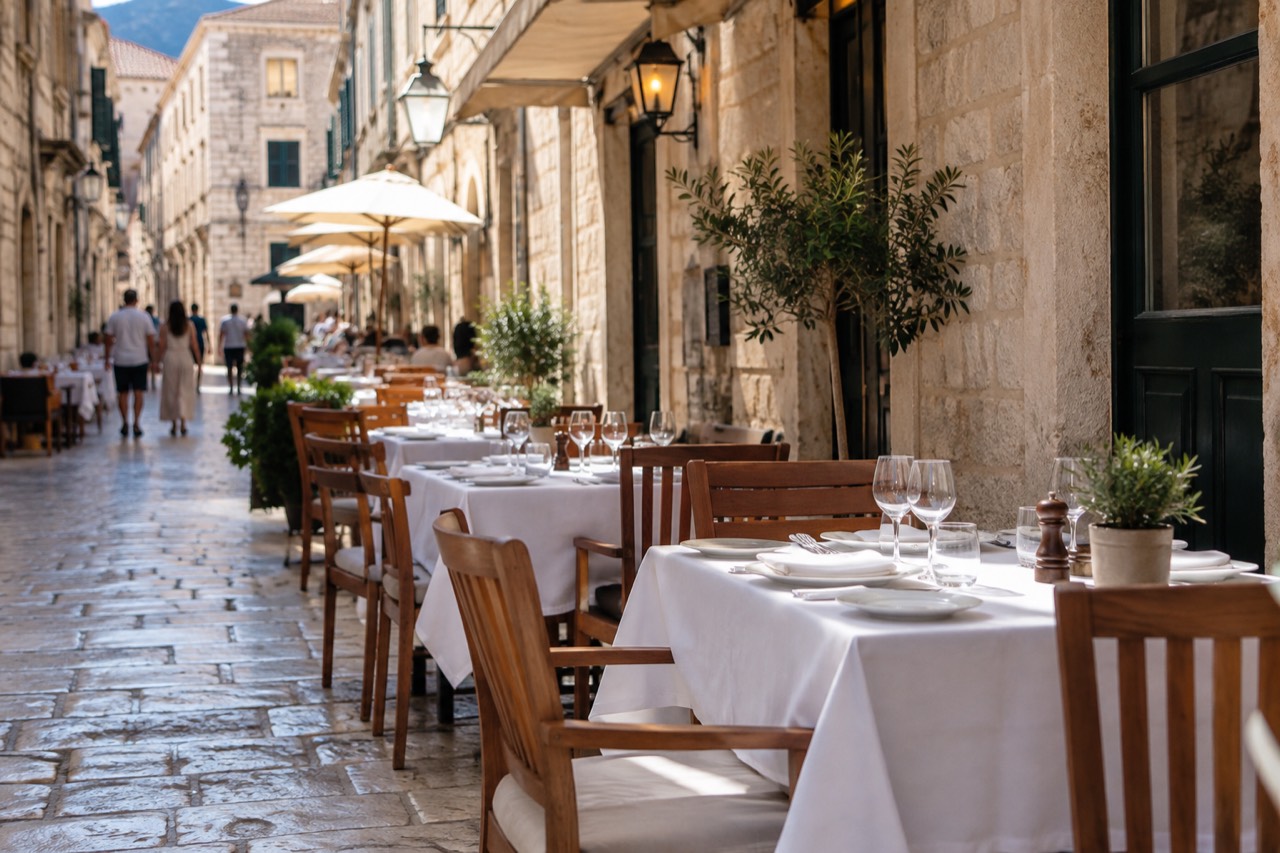
A meal in Dubrovnik is expensive by Croatian standards and moderate by Western European ones, and the price you pay depends almost entirely on where the table sits. Inside the walled Old Town, restaurant prices carry a heavy tourist premium. Walk fifteen minutes out, into Gruž or the back streets of Lapad, and the same style of cooking costs meaningfully less. Budget accordingly: treat Old Town dining as the splurge, not the baseline.
I get this question constantly, and I always give the same honest answer: Dubrovnik is a city where the same plate of pasta can cost two very different prices depending on whether the waiter can see the Stradun from the door. The Old Town is a UNESCO World Heritage site, inscribed in 1979, covering just 24.7 hectares, and every square metre of it is prime commercial real estate with rents to match. Those rents land on the menu. A restaurant on the main street is not charging you for the food, it is charging you for the address.
That does not mean eating well here requires an unlimited budget. It means the single most effective money decision you make in Dubrovnik is not which restaurant you pick, but which side of the wall you pick it on. The city recorded about 4.2 million overnight stays in 2025, sharing first place among Croatian destinations with Rovinj, according to the Croatian Bureau of Statistics. Volume like that supports two parallel food economies: one priced for visitors who will be in town for two days, and one priced for the 41,562 people who actually live here.
The honest framing for the rest of this page: I will not quote you specific dish prices, because restaurant menus here shift seasonally and I would rather not print a number that goes stale. What I can give you is the structure, the fixed costs around the meal, and the levers that genuinely move the bill. For a fuller budget picture, our piece on daily spending in Dubrovnik breaks down the whole day, not just the table.
Before the food, a quick word on the other fixed costs, because they shape how much people have left for dinner:
| Fixed visitor cost | Main season price | December price |
|---|---|---|
| City Walls and Lovrijenac adult ticket | 40 euro | 20 euro |
| City Walls child 7 to 18 | 15 euro | 5 euro |
| Dubrovnik Pass, one day | 40 euro | not on sale |
| Cable car adult round trip | 30 euro | closed January to March |
| Lokrum island ticket with return boat | 30 euro | 30 euro |
Notice the pattern. The walls ticket and the one-day pass cost the same 40 euro in main season, 1 March to 30 November, which is why I usually tell people to buy the pass instead: it adds ten more sights plus a 24-hour bus ticket for the same money. In December the standalone walls ticket drops to 20 euro and no pass tier is on sale at all, so the comparison flips. The City of Dubrovnik's own project page sets out the pass structure if you want the official version.
If you are planning to spend on the walls anyway, the guided options are worth comparing against the bare ticket:
Is Dubrovnik Expensive to Visit?
Yes, Dubrovnik is expensive to visit, and it is the most expensive destination in Croatia by most measures that matter. The fixed costs stack fast: a 40 euro walls ticket, a 30 euro cable car round trip, a 30 euro Lokrum ticket, and Old Town restaurant prices on top. A visitor who does the famous three, eats on the Stradun, and stays inside the walls will spend at a Western European capital rate.
The scale of the demand explains the pricing. Dubrovnik shares first place with Rovinj for the most overnight stays of any Croatian destination in 2025, about 4.2 million nights, while Croatia as a whole took 20.7 million arrivals and 94.8 million nights in commercial accommodation. When demand is that deep, and when the supply of tables inside a 24.7-hectare walled city is physically capped, prices rise to whatever the market clears at. This is not greed so much as arithmetic.
The counterweight is that the crowd pressure is seasonal and knowable. Cruise passengers in 2025 peaked in September at 101,246 and October at 100,132, above July's 96,072 and August's 87,385, according to Port Authority data. Most people assume August is the crush; it is not. If you want the same weather with thinner tables, late September and October deliver it, and shoulder-season accommodation prices drop accordingly. Our best time to visit guide works through the whole calendar.
The Port Authority also limits cruise passengers to 8,000 a day in most cases, and out of 243 cruise days a year only 18 exceed that number. The Old Town has an official carrying capacity of 11,275 people, monitored by six counters at every entrance updating a headcount every 15 minutes. What this means for your wallet: the city is actively managing crowding, but it is not managing prices downward. Expect to pay for the privilege of a managed city.
Where the money actually goes, roughly, for a typical day:
| Spend category | How the cost behaves | Cheapest realistic lever |
|---|---|---|
| City Walls entry | Fixed, 40 euro adult in main season | Buy the one-day pass at the same 40 euro |
| Meals inside the walls | Highest premium tier | Move one meal outside the walls |
| Island trips | From 39.42 to 259.6 dollars depending on boat | Public Lokrum boat at 30 euro all in |
| Guided tours | From 20 dollars for a paid walk | Free GuruWalk options exist |
The cheapest paid Old Town walk on this site's roster starts at $20 per person, which gives you a sense of the floor: even the budget tier of guided Dubrovnik is a real line item. The most reviewed island cruise, the full-day Elaphite trip with lunch, runs from $59.16 and carries 10,312 reviews at 4.9, and that lunch on the boat is, for many visitors, the best-value meal of their entire stay. Fish picnic on the water beats a tourist terrace on the Stradun almost every time.
Is Dubrovnik Very Expensive?
Very is relative, but the honest answer is that Dubrovnik sits at the top of Croatia and roughly at the level of a mid-tier Western European city. Compared with Split or Mostar it is clearly dearer. Compared with Venice or Dubrovnik's peers on the French and Italian Riviera, it is comparable or slightly under. The shock is not the absolute level, it is the contrast with prices twenty minutes down the coast.
I always tell visitors to calibrate against the day trip market, because it is the clearest price signal available. A Mostar and Kravica waterfall day trip from Dubrovnik starts at $35 per person and carries 10,019 reviews at 4.6. A Montenegro day trip starts at $58. These are full days out of the country for the price of a modest dinner for two inside the walls. That contrast is the whole story of Dubrovnik pricing: within the walls, premium; an hour away, Balkan.
Bring euros, and bring the expectation that cash still smooths small transactions in the region. Croatia uses the euro, cards are broadly accepted in the city, but the habit of carrying some cash for small konobas and markets has not died out.
What pushes a Dubrovnik visit from expensive to very expensive is stacking the premium tiers without noticing. The food and drink walking tour with a local guide starts at $165.64 per person and is rated 5 across 704 reviews, and it is genuinely excellent, but it is also four restaurant-quality stops priced as one ticket. The oyster, mussel and wine tasting tour in Ston with lunch starts at $157. The Peka cooking lesson runs from $159.83. Each is a splurge; stacking all three in one week is a different holiday entirely.
For context, here is where the bookable food experiences sit:
| Food experience | Starts from | Rating |
|---|---|---|
| Food and drink walking tour, local guide | $165.64 | 5 across 704 reviews |
| Oyster, mussel and wine tasting in Ston with lunch | $157 | 4.9 across 111 reviews |
| Peka traditional cooking lesson | $159.83 | 10 reviews, too few to quote a rating |
If a guided food splurge is on your list, the walking tour is the one I would point people toward first, because it doubles as an orientation to the city.
If you are budgeting a full week, it helps to think in tiers rather than a single daily figure. The sightseeing tier is the most predictable: a seven-day Dubrovnik Pass at 60 euro covers the walls and the other included sights, and since the one-day pass already matches the standalone walls ticket in main season, the longer passes effectively buy the extra sights and the bus ticket on top of what you would pay anyway. The eating tier is where the spread opens up.
The regional tier is the one people forget to plan for. The Mostar and Kravica day trip at 35 dollars and the Montenegro day trip at 58 dollars are both full days out of the country, and either one costs less than a single premium food experience inside the walls. A traveller who swaps one splurge for one of these day trips keeps the holiday varied and cuts the weekly total noticeably, while still eating well in town on the nights in between. That is the practical version of the contrast this whole section turns on: premium inside the walls, Balkan an hour away, and a workable holiday built from a mix of both.
Is It Expensive to Live in Dubrovnik?
Yes, living in Dubrovnik is expensive, and for residents it is arguably harder than for visitors, because local wages meet tourist-city prices. The city counted 41,562 inhabitants at the 2021 census, and the county 115,862, a small resident base carrying a destination of 4.2 million annual overnight stays. Housing is scarce, seasonal work dominates, and everyday costs run high.
The structural problem is simple: the same fixed supply of old buildings serves both a small resident population and an enormous visitor economy. When a landlord can rent a flat to visitors by the night, the residential rental market thins out and prices climb. Restaurant prices follow the same logic from the other side, because staff who serve visitors need to live somewhere within reach, and their housing costs feed back into menu prices.
For visitors, the practical takeaway from the resident experience is this: the places residents actually eat are the value anchors, and they are not secrets so much as slightly inconvenient. Our piece on where locals eat in Dubrovnik maps them properly, but the short version is Gruž, where the market sits, and the non-waterfront stretches of Lapad. The Dubrovnik Tourist Board's own site is a reasonable cross-check for what is officially promoted versus what simply exists.
Seasonality is the other resident reality. The city's working year compresses into roughly April to October, and the shoulder months are when locals reclaim their own city. September's sea is still warm, with a long-run average of about 23.6 degrees for the month, and the cruise peak of 101,246 passengers that month means the town is busy but the rhythm is different. Locals eat out more in October and November, when the visitor volume drops toward the 28,480 cruise passengers of November.
Is Dubrovnik Expensive to Eat?
Yes, eating in Dubrovnik is expensive, and it is the single most variable cost in the city. The same cuisine spans a wide price range purely by location: Stradun and cliff-view terraces at the top, back-street konobas in the middle, and self-catering from the Gruž market at the bottom. Where you choose to sit matters more than what you order.
The geography of the price cliff is worth learning on day one. Inside the walls, the premium climbs as you approach the Stradun, the 298-metre main street whose final plan was fixed by the 1272 Statute, and peaks at the spots with a direct view of it or of the sea from the walls. A few streets back, still inside the walls, prices soften. Outside Pile or Ploče gates they soften further. In Gruž, around the market and the port, you reach the level locals actually pay. The food is the same regional cooking throughout: grilled fish, black risotto, peka under a bell, local plavac mali wine.
Two habits save the most money without lowering quality. First, eat your main meal at midday, when many kitchens run simpler set offerings and the terraces are not competing for sunset demand. Second, buy breakfast and picnic supplies from the Gruž market rather than a café terrace; market fruit, bread, cheese and olives cost a fraction of a seated breakfast and taste better. The trade-off is honest: you are paying for the table and the view, not the ingredients.
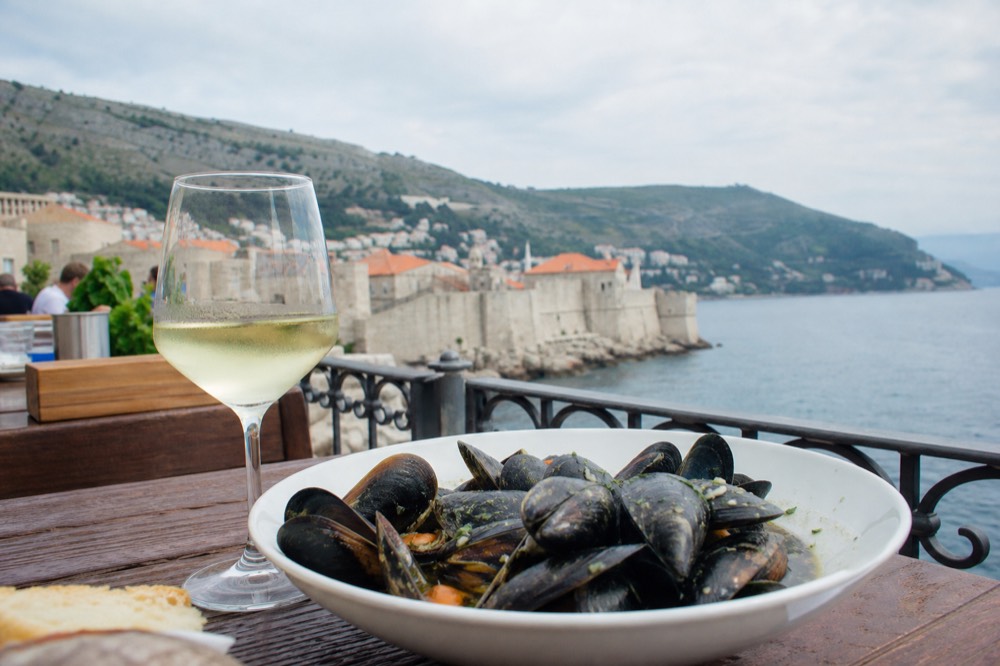
Alcohol is its own line. Wine by the glass on a Stradun terrace carries the same location premium as the food. A bottle from a local shop, drunk on a bench overlooking the Adriatic, costs a fraction of the same pour with table service. The Buža bar, perched on the cliffs outside the walls, is the famous middle path: a genuinely spectacular setting where you accept the premium because the setting is the product. Our Buža bar guide covers it in full.
For visitors who want the food explained rather than just served, the guided options earn their price. The combo walk below pairs the Old Town and the walls in one ticket, which frees budget for one genuinely good dinner instead of several forgettable ones:
And for the full picture of the city you are eating your way through, the cable car and Old Town walking tour runs about 4 hours 30 minutes from $163.50 per person, rated 4.6 across 716 reviews, and ends with the kind of panorama that makes the dinner bill easier to accept:
A rough planning frame for a day of eating, expressed as relative tiers rather than invented prices:
| Where you eat | Relative cost tier | What you are paying for |
|---|---|---|
| Stradun and sea-view terraces | Highest | The address and the view |
| Back-street konobas inside the walls | Upper middle | Atmosphere, walkable location |
| Lapad and Gruž restaurants | Middle | The food itself, resident-level pricing |
| Market picnic, self-catering | Lowest | Ingredients, your own viewpoint |
The one-sentence summary I give friends: budget for one splurge meal a day inside the walls, eat your other meals like a local, and put what you save toward a boat trip, because the Elaphite cruise with lunch at from $59.16 is the best food-per-euro on the coast. For everything else to see and do while you digest, Things to Do in Dubrovnik is the full index.
Common Questions About Meal Costs in Dubrovnik
How expensive is a meal in Dubrovnik?
Expensive by Croatian standards, moderate by Western European ones, and highly dependent on location. Inside the walled Old Town, and especially on the Stradun and sea-view terraces, prices carry a heavy premium. In Gruž and the back streets of Lapad the same regional cooking costs meaningfully less. The strongest lever is not what you order but where the table sits.
Is Dubrovnik expensive to visit?
Yes. The fixed costs stack quickly: a 40 euro adult City Walls ticket in main season, a 30 euro cable car round trip, a 30 euro Lokrum ticket, and premium restaurant prices inside the walls. The one-day Dubrovnik Pass costs the same 40 euro as the walls ticket in main season, 1 March to 30 November, and adds ten more sights plus a 24-hour bus ticket, which softens the total.
Is Dubrovnik very expensive?
Relative to its neighbours, yes. It is clearly dearer than Split or Mostar, and comparable to mid-tier Western European destinations. The contrast is sharpest on day trips: a Mostar and Kravica waterfall day trip starts at $35 per person, a full day out of the country for the price of a modest dinner for two inside the walls.
Is It Expensive to Live in Dubrovnik?
Yes. The city counted 41,562 inhabitants at the 2021 census against about 4.2 million overnight stays in 2025, and that imbalance pushes housing and everyday costs to tourist-city levels while wages stay local. For visitors, the useful signal is that the restaurants residents actually use cluster in Gruž and non-waterfront Lapad, at noticeably gentler prices.
Is Dubrovnik expensive to eat?
It can be, but it is the most controllable cost in the city. Eat one splurge meal a day inside the walls, take your other meals outside them, buy breakfast and picnic supplies from the Gruž market, and drink shop-bought wine at a viewpoint rather than by the glass on a terrace. The ingredients are the same everywhere; only the table price changes.