How Much Does It Cost to Walk the Dubrovnik City Walls?
The Dubrovnik City Walls ticket costs 40 euro in main season and 20 euro in December, with children 7 to 18 at 15 euro then 5 euro. Here is exactly what that buys and whether it is worth it.
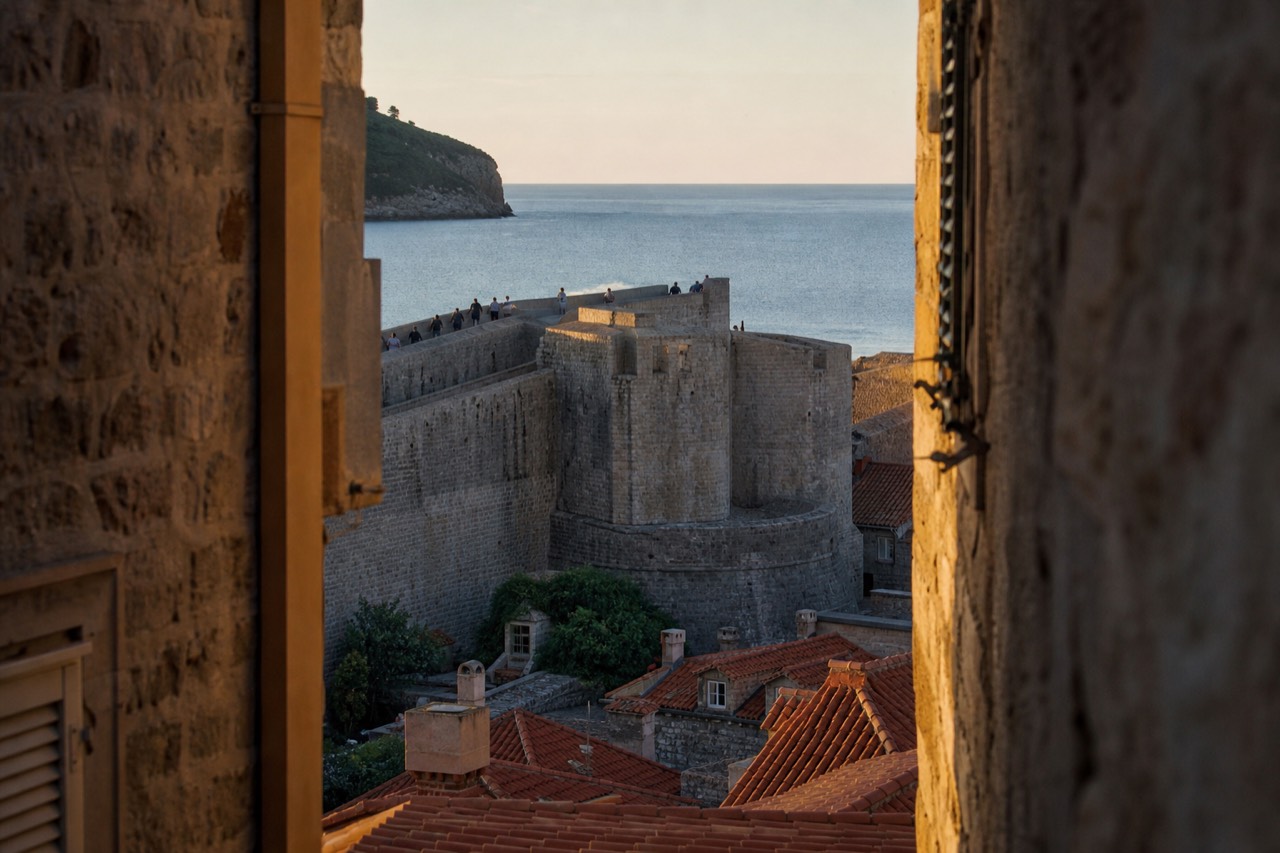
How Much Does It Cost to Walk the Dubrovnik City Walls?
The adult ticket to walk the Dubrovnik City Walls costs 40 euro in main season, which runs 1 March to 30 November, and drops to 20 euro in December. Children aged 7 to 18 pay 15 euro in main season and 5 euro in December, while children under 6 walk free. There is no family ticket: the operator sells exactly two paid ticket types, adult and child, and nothing else.
Those prices come straight from the walls operator's own webshop, the Society of Friends of Dubrovnik Antiquities, and they carry a detail most second-hand summaries miss. The 40-euro adult ticket is not a walls-only ticket at all. It is a combination ticket, internally listed as walls plus Fort Lovrijenac, and it also covers the Western Outer Wall and the Collection of Coins of the Republic of Ragusa on Gundulić Square. Fort Lovrijenac, the standalone fortress on its 37-metre sea rock across the bay, costs 15 euro if you buy it alone, so the combination is where the value sits.
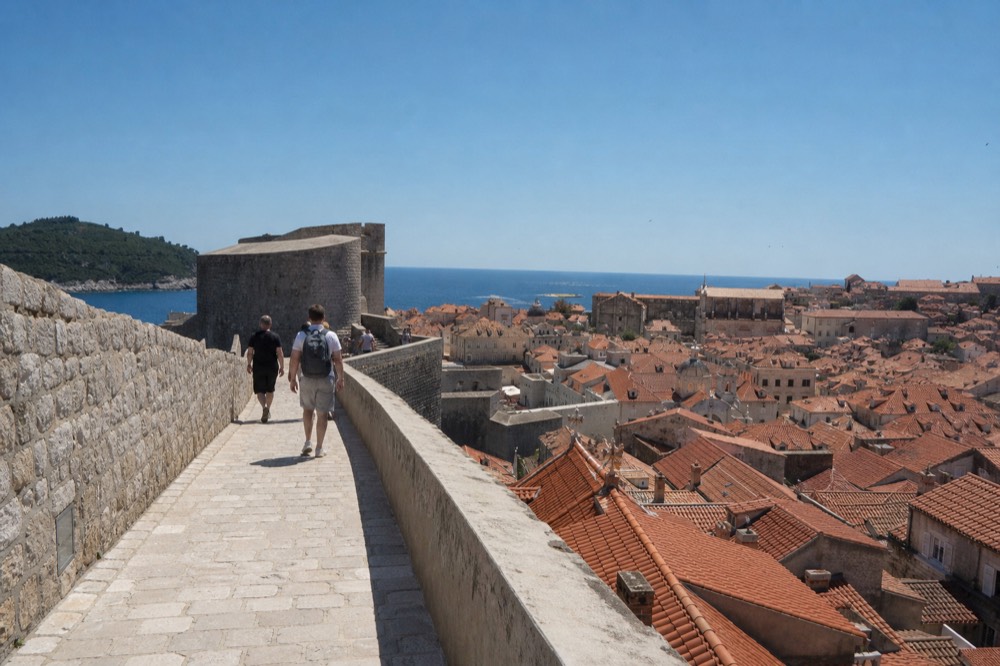
I have walked this circuit more times than I can count, in every month of the year, and the pricing structure is the single most common question I field at Pile Gate. Visitors arrive expecting a modest heritage-site fee and find a 40-euro headline, which lands somewhere between a surprise and a shock for anyone budgeting a family trip. A family of two adults and two teenagers faces 110 euro in July for a walk, before lunch, before the cable car, before anything else. The honest answer is that the price is high by Croatian standards, that the walk itself is genuinely extraordinary, and that there are exactly two levers that change the maths: the calendar and the Things to Do in Dubrovnik pass, which I will break down below.
Here is the full price picture in one table:
| Ticket | Main season (1 Mar to 30 Nov) | December |
|---|---|---|
| Adult | 40 euro | 20 euro |
| Child 7 to 18 | 15 euro | 5 euro |
| Child 6 and under | Free | Free |
The walls themselves justify some of that price by sheer scale. The circuit is 1,940 metres long, up to 25 metres high, 4 to 6 metres thick on the land side and 1.5 to 3 metres on the sea side, with 16 towers, 3 fortresses, 6 bastions, 2 corner fortifications, 3 bulwarks with rows of turrets, 3 moats, 2 flank fortresses, 1 breakwater and 2 drawbridges along the way. The operator's stated working hours at the time of check were 08:00 to 19:30, and the shape of the circuit was reached in the 13th century, with final construction finished in 1660. For the deeper planning picture, including timing and route options, the city walls tickets guide covers the practicalities in full.
A note on where these numbers come from, because walls pricing is one of the most garbled subjects in Dubrovnik travel content. The operator runs its own transactional webshop, and its pricing system returns the season boundaries explicitly: 1 March to 30 November for the 40-euro tier, and December for the 20-euro tier. Anything you read that quotes a different split, a student rate, a senior rate or a family bundle, is describing a ticket that does not exist. The shop offers exactly two paid article types and free entry for the youngest children, and that is the entire catalogue.
If you want the walls explained rather than just walked, a guided option changes the experience considerably:
Is It Worth It to Walk the City Walls in Dubrovnik?
For most visitors, yes: the walls are Dubrovnik's single best-paid experience, and the 40-euro ticket delivers roughly two hours of continuous panoramic walking that no viewpoint in the city can match. The value case weakens only in specific cases, mainly very short cruise visits, extreme midday heat in July and August, or tight budgets where the December 20-euro window or the Dubrovnik Pass arithmetic wins instead.
Worth is subjective, so let me anchor it in what you actually get. The circuit runs the full perimeter of the Old Town, a UNESCO World Heritage site inscribed in 1979 under criteria (i), (iii) and (iv), covering 24.7 hectares inside a 1,188.6-hectare buffer zone. From the wall top you look down on the Stradun, all 298 metres of it, the terracotta sea of rooftops, the Franciscan monastery courtyard, and the Adriatic on three sides. There is no other place in the city where that perspective exists. The UNESCO listing itself notes the Old Town spent 1991 to 1998 on the World Heritage in Danger list, which is part of why the site is so heavily protected and monitored today.
The crowd dimension matters to the worth question more than most guides admit. Six counters at every Old Town entrance update a headcount every 15 minutes, and the official carrying capacity from the UNESCO assessment is 11,275 people. On a real September day the counter read 1,200 at 04:00, 5,419 at 08:00, a 7,739 peak at 10:00, then 7,205 at 11:00. What that curve means in practice: the wall path itself is never empty, but at 08:00 you walk at your own pace, while at 10:00 you walk at the pace of the queue in front of you. Anyone asking "is it worth 40 euro" should first ask "at what hour", because the same ticket buys two different experiences depending on the clock.
The other honest input is cruise traffic, and here the data runs against intuition. Cruise passengers in 2025 peaked in September at 101,246 and October at 100,132, above July's 96,072 and August's 87,385. September and October, not July and August, are the busiest cruise months. The Port Authority limits cruise passengers to 8,000 a day in most cases, and of 243 cruise days a year only 18 exceed that number, with only 4 days slightly above 10,000, and about forty call requests were refused in a single season to hold that line. But the shoulder-season crowds are real. If your trip falls in those months, book the earliest possible wall entry. Note too that cruise passenger figures are ship capacity, not people who actually walk ashore, so even a peak scheduled day does not mean every one of those passengers is on the Stradun.
For visitors who want the history to land while they walk, the guided 2-Hour City Walls Walk from Dubrovnik Walks runs about two hours, is rated 4.8 across 1,387 reviews, and starts from $29.58 per person on top of your ticket. One recent guest review captures what a guide adds to the stone:
This well organized tour helped put Dubrovnik's past (and present) into perspective. It's incredible that the city walls have withstood the test of time. Antun was a wonderful guide.
linda_a
Can I Walk the Dubrovnik City Walls?
Yes, anyone of reasonable mobility can walk the walls, and no booking is needed for the ticket itself: you buy at the gate or online and walk the circuit in one direction, anticlockwise, with roughly 1,940 metres of path and a lot of stairs. The circuit takes most people between one and three hours, and it is not accessible for wheelchairs or strollers, since the route is stone staircases and uneven paving throughout.
The practicalities deserve more attention than they usually get. There are three entrance points, with Pile Gate the most used, and the walk is one-way, anticlockwise, which spreads people out and keeps the narrow sections moving. Water is essential in summer: there is a café about halfway, near the Fort Minceta end of the circuit in the hotter months, but prices on the wall are what you would expect from a captive audience, so carry your own bottle. Shade is almost nonexistent. I always tell people to treat the walls like a short hike, not a museum stroll: trainers rather than flip-flops, a hat, and sunscreen even in October.
Timing is the one variable you fully control. The operator's stated hours at the time of check were 08:00 to 19:30, and the counting data above shows why the first hour is gold: 5,419 people in the Old Town at 08:00 against a 7,739 peak at 10:00. Late afternoon works too, when the light softens over Lokrum and the day-trippers have thinned. What does not work well is the 11:00 to 15:00 window in July and August, when the stone radiates heat and the queue at Pile can stretch along the drawbridge. The best time to visit guide works through the seasonal trade-offs in detail.
Here is how the main ways onto the walls compare:
| Option | What you pay | What it covers |
|---|---|---|
| Walls ticket, main season | 40 euro adult, 15 euro child 7 to 18 | Walls circuit, Fort Lovrijenac, Western Outer Wall, coin collection |
| Walls ticket, December | 20 euro adult, 5 euro child 7 to 18 | Same inclusions, Western Outer Wall closed December to February |
| One-day Dubrovnik Pass | 40 euro | Everything above plus ten more sights and a 24-hour bus ticket |
| Guided walls walk | From $29.58 per person plus your ticket | About two hours with a licensed guide over the circuit |
Read that table as a decision tree rather than a menu. If the walls are your one big sight and you are visiting between March and November, the pass and the standalone ticket cost the same, so take the pass for the extras. If you are visiting in December, the standalone 20-euro ticket wins outright because no winter pass exists. If you want context and stories more than independence, the guided walk layered on either ticket is the richest version of the day, and it also solves the timing problem, since guided groups start at fixed hours and the operator handles the queue logistics.
If you would rather sort the whole thing in one transaction, a guided walk bundles the route, the history and the timing decisions:
Can You Walk the City Walls of Dubrovnik for Free?
No, there is no free way onto the Dubrovnik City Walls: every entrance is ticketed and staffed, and the operator sells no free tier, no resident exemption for visitors and no free hours. The word "free" in this context belongs to the free, pay-what-you-want walking tours of the Old Town streets on GuruWalk, which are genuinely free but stay at street level and never climb the wall.
This question gets asked constantly, and the confusion is understandable because Dubrovnik does have a real free-tour scene. Three walks run on the pay-what-you-want model on GuruWalk: a 1 hour 45 minute Old City walk rated 4.87 across 2,242 reviews, a 1 hour 30 minute Game of Thrones and history walk rated 4.74 across 444 reviews, and a 1 hour 45 minute evening history and legends walk rated 4.9 across 288 reviews. All three are excellent and none of them includes the walls, because the walls are a paid monument with controlled access, not a public street. The free walking tour guide explains how those tours actually work.
What you can do for free is walk the Old Town itself, all of it, at any hour, through Pile Gate and Ploče Gate and every alley off the Stradun. The street-level city costs nothing. You can also see the walls from outside for free, and the view from the lower cable-car station approach or from across the bay at Fort Lovrijenac's rock gives you the fortress skyline without the ticket. But the wall-top path itself, the 1,940 metres with the rooftops below you, is behind a turnstile in every direction.
One genuine saving exists, and it is not a hack: the calendar. In December the adult ticket halves to 20 euro and the child ticket drops to 5 euro, the same circuit, the same views, and the crowds a fraction of their September size. The trade is shorter days, cooler air and the Western Outer Wall section closed from December through February. For anyone flexible on dates, that is the closest thing to a discount the walls offer.
Is It Worth Going on City Walls in Dubrovnik?
Yes, and the strongest version of the case is this: the walls are the one Dubrovnik experience that cannot be substituted, because every alternative viewpoint, the cable car, Mount Srd, the sea, sees the city from outside, while the walls put you inside the skyline itself. At 40 euro it is expensive for a walk and cheap for the best two hours of most people's trip, and the pass arithmetic can make it effectively free.
Let me make the pass arithmetic concrete, because it is the single most useful thing a first-time visitor can know. The one-day Dubrovnik Pass costs 40 euro, exactly the same as the standalone walls ticket in main season, and adds ten more sights, including the Rector's Palace, the Maritime Museum and the Franciscan Monastery Museum, plus a 24-hour bus ticket. Every pass tier lists walls plus Lovrijenac as its first inclusion, and each sight is visitable once. If you plan to see even two of the museums, the pass wins outright; if the walls are your only paid sight, the two products cost the same and the pass is still the better buy. The is the pass worth it breakdown runs the full comparison.
Two boundaries on that arithmetic, both from the operators' own sites. First, the 40-euro equivalence is a main-season claim only, 1 March to 30 November: in December the standalone walls ticket falls to 20 euro while no winter pass tier is on sale at all, so the pass stops being a bargain and stops existing in the same month. Second, the pass is sold in a single ticket type, adult 7 and over, priced at 40 euro for one day, 50 for three days and 60 for seven, with the longer tiers adding suburban bus coupons and House Bukovac in Cavtat. The official pass site carries the full inclusion list.
For the guided experience specifically, the 2-Hour City Walls Walk covers the circuit with a licensed guide from Dubrovnik Walks, rated 4.8 across 1,387 reviews and starting from $29.58 per person, and the Old Town and walls combination version runs about 3 hours 30 minutes from $50.94, rated 4.8 across 1,183 reviews. A guide does not replace the ticket, but for visitors who want the siege stories, the Republic of Ragusa context and the filming trivia to mean something as they climb, it is the difference between a very good walk and a memorable one. The operator's own page at citywallsdubrovnik.hr has the official monument details.
So: 40 euro in main season, 20 euro in December, children 7 to 18 at 15 then 5, under 6 free, no family ticket, and the ticket quietly includes Fort Lovrijenac and two more sites. Walk early, walk anticlockwise, carry water, and if museums are on your list at all, buy the pass instead of the ticket. And if you are still weighing whether the price is fair, remember what the fee actually funds: the maintenance of a 1,940-metre stone circuit over a living city, a monument that spent seven years on the World Heritage in Danger list and came back. Few 40-euro tickets anywhere buy that much.
Whichever way you buy your way onto the stone, these three options cover the full spread of price and format, from a guided walls walk to a short Old Town tour to a cable car and museums bundle:
Common Questions About the Dubrovnik City Walls Cost
How much does it cost to walk the Dubrovnik City Walls?
The adult ticket is 40 euro in main season, 1 March to 30 November, and 20 euro in December. Children aged 7 to 18 pay 15 euro in main season and 5 euro in December, and children under 6 are free. There is no family ticket; the operator sells only adult and child tickets.
Is It Worth It to Walk the City Walls in Dubrovnik?
For most visitors, yes. The circuit delivers about two hours of continuous panoramic walking that no other viewpoint in the city can match, and the ticket includes Fort Lovrijenac and two additional sites. The value case weakens only for very short visits, extreme midday heat, or tight budgets where the December 20-euro window is the smarter choice.
Can I Walk the Dubrovnik City Walls?
Yes, anyone of reasonable mobility can walk the circuit, which is about 1,940 metres with many stone stairs and takes one to three hours. The route is one-way, anticlockwise, and is not suitable for wheelchairs or strollers. The operator's stated hours at the time of check were 08:00 to 19:30.
Can You Walk the City Walls of Dubrovnik for Free?
No. Every wall entrance is ticketed and staffed, with no free tier or free hours. The free, pay-what-you-want walking tours on GuruWalk cover the Old Town streets but never climb the walls. The closest thing to a discount is the December season, when the adult ticket halves to 20 euro.
Does the Walls Ticket Include Anything Else?
Yes. The 40-euro adult ticket is a combination ticket covering the walls circuit, Fort Lovrijenac, the Western Outer Wall (closed December through February) and the Collection of Coins of the Republic of Ragusa. Fort Lovrijenac bought alone costs 15 euro.
Should I Buy the Dubrovnik Pass Instead?
In main season, usually yes. The one-day pass costs the same 40 euro as the standalone walls ticket and adds ten more sights plus a 24-hour bus ticket. The equivalence holds only from 1 March to 30 November: in December the walls ticket drops to 20 euro and no winter pass tier is on sale.