Is Dubrovnik Good for Cycling?
An honest answer to whether Dubrovnik works for cyclists, where the rideable terrain is, what not to do, and which tours are worth your day.
Is Dubrovnik Good for Cycling?
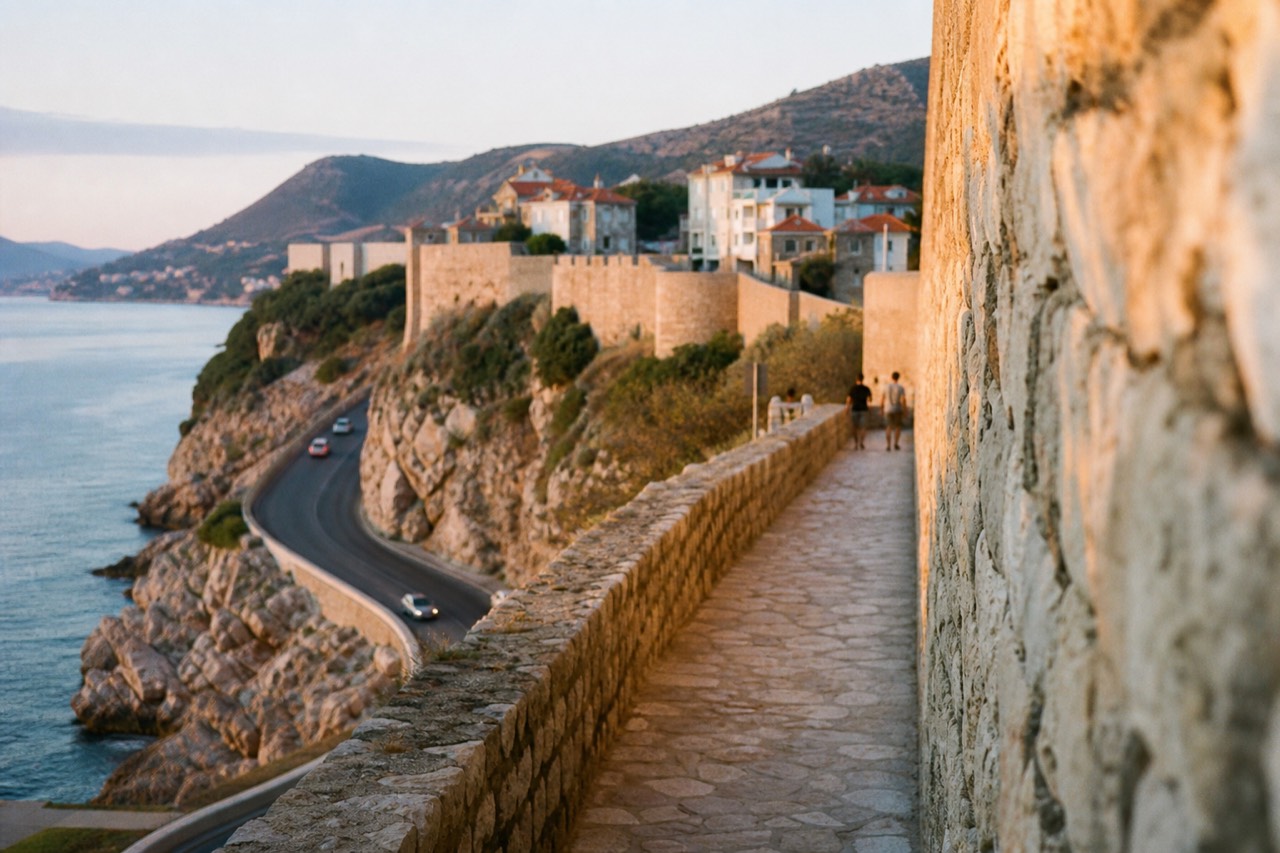
Dubrovnik is a poor city for casual cycling and a genuinely good one for a specific kind of rider. The walled Old Town is pedestrian stone and stairs, completely unsuited to a bike. But the Lapad bay promenade, the coastal road toward Cavtat, and the Konavle valley to the south are smooth, scenic and rewarding, and a road or e-bike rider will love them. The honest answer is that you do not come to Dubrovnik for city cycling, you come for the riding on its edges.
I walk this city for a living, and I can tell you the geography bluntly. The town climbs a steep hillside between the sea and Mount Srđ, and the streets inside the walls are polished limestone laid for feet, not wheels. When it rains that stone turns slippery enough that even walking demands care. Anyone picturing Amsterdam-style cycling through the Old Town should drop that image now; it does not exist, and attempting it will earn you nothing but a sore wrist and a scolding.
What does exist is excellent riding within twenty minutes of the walls. Lapad's bays sit on near-flat ground. The Župa coast east of the airport runs flat and fast beside the water. Konavle, the green valley south of the city, is a ribbon of quiet lanes between hills, vineyards and old mills, and it is where local road cyclists actually train. The terrain is there; it just is not in the postcard.
That distinction matters for planning. If cycling is a nice-to-have, treat it as one half-day activity in Lapad or Konavle and spend the rest of your trip on foot, because walking is how Dubrovnik reveals itself. If you are a committed cyclist, base yourself in Lapad or further out, bring or renting a proper bike, and ride early, before the coast road traffic builds. The two strategies share one rule: keep the bicycle and the Old Town apart.
Where Can You Actually Ride?
Three zones work well. Lapad's bays offer flat, short promenade riding for families and easy riders. The coastal road southeast toward Cavtat serves longer, rolling rides with sea views. Konavle valley, south of the airport, is the best road cycling in the region, quiet lanes through farmland between the hills and the border. The Old Town, Mount Srđ's access road and the busy port approach are best avoided.
Start with Lapad because it is the most forgiving. The peninsula west of the Old Town holds most of the city's hotel capacity, and its bays are strung together by a promenade and low-traffic streets that sit almost level with the sea. A family with children can putter between beaches and cafés here without a serious climb anywhere. It is not dramatic riding, but it is safe, short and pleasant, and it ends wherever you like for a swim.
The Župa coast is the step up. Heading southeast from the city, past the airport and toward Cavtat, the road hugs the shoreline with long flat stretches and a few rolling headlands. Cavtat itself sits on a wooded peninsula about twenty kilometres out, and the ride makes a satisfying out-and-back with a long lunch at the far end. Traffic is real on this road, so ride early, single file, and expect the afternoon to belong to cars and buses.
| Zone | Terrain | Best for | Watch out for |
|---|---|---|---|
| Lapad bays | Flat promenade and quiet streets | Families, casual riders, e-bikes | Pedestrians in the afternoon |
| Župa coast to Cavtat | Flat to rolling coastal road | Fitness riders, long out-and-backs | Traffic after mid-morning |
| Konavle valley | Quiet lanes, gentle valley floor | Road cyclists, wine-country loops | Heat, few water stops |
| Old Town core | Stone paving, stairs, crowds | Nobody, walk it instead | Steps, pedestrians, no riding |
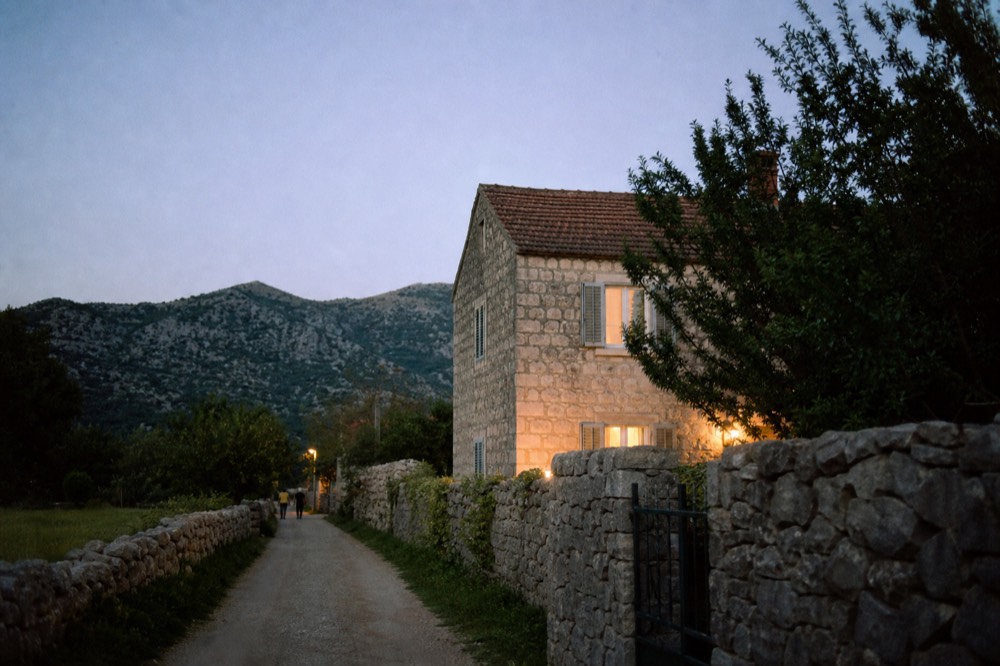
Konavle is the local secret, though it is no secret to Croatian cyclists. The valley stretches south from the airport toward the Montenegro border, flat along the Ljuta river and ringed by hills, with a landscape of vineyards, cypress lines and stone hamlets that feels nothing like the cruise-ship waterfront. Distances are flexible: you can stitch together anything from a thirty-kilometre loop to a full century using the valley roads and the coast. Wine estates along the way make the stops better than any café strip.
One honest caveat about effort: heat. July and August afternoons in this region are brutal for climbing, and the sea temperature data hints at why the coast feels so heavy in summer, with a long-run August average of about 25.8 degrees and September about 23.6. Ride by 07:00 or after 18:00 in high summer, carry more water than feels reasonable, and treat the middle of the day as beach time. That rhythm is how locals ride here, and it works.
For the days you leave the bike parked, the Old Town rewards a guide far more than a map. The combo walk covering both the streets and the city walls is the efficient version, and you can Check availability alongside our guide to the city walls. The walls themselves run 1,940 metres with sections up to 25 metres high, per the walls operator's own site, and a guided circuit puts those numbers in context.
What Not to Do in Dubrovnik?
Do not ride inside the Old Town walls, do not cycle the narrow cliff road above the port at midday, do not underestimate the stairs in any season, and do not expect shade on the walls circuit. Beyond cycling, do not buy a walls ticket without checking the season pricing, and do not plan a single busy day around September or October without checking the cruise schedule, because those are the busiest cruise months of the year.
The first rule is mechanical. The Old Town is a pedestrian zone of polished stone and relentless steps, and a bicycle there is a liability to you and to everyone around you. Park it at a rack outside Pile or Ploče and go in on foot. This is not a rule lawyers invented; it is physics meeting limestone. The same logic applies to Buža, the cliffside bar perched on the outer wall, whose terrace is reached by a doorway and steps that have never met a wheel.
The second rule is timing. Cruise passengers in 2025 peaked in September at 101,246 and October at 100,132, above July's 96,072 and August's 87,385, according to Port Authority data. The folk wisdom says avoid August; the numbers say the shoulder season is when the Old Town is most crowded. Those figures are ship capacity rather than confirmed walkers ashore, but the pattern is real, and it should shape both your walking days and your cycling days, since a quiet Konavle morning beats a packed Stradun every time.
| Mistake | Why it fails | Do this instead |
|---|---|---|
| Riding inside the Old Town | Stone stairs, crowds, pedestrian zone | Park at Pile, walk the core |
| Cycling at midday in summer | Heat and traffic both peak | Ride before 07:00 or after 18:00 |
| Buying walls tickets blind | Price depends on the season window | Check the operator's shop first |
| Assuming August is peak crowds | September and October lead cruise numbers | Check the cruise schedule before booking |
The third rule is about money. The adult city walls ticket is 40 euro in main season, 1 March to 30 November, and drops to 20 euro in December, with only adult and child 7 to 18 tickets sold and under 6 free. There is no family ticket, whatever a blog tells you. And the one-day Dubrovnik Pass equals that 40 euro walls price in main season only, adding ten more sights and a 24-hour bus ticket; in December no pass tier is on sale at all. If you are visiting across a season boundary, do the arithmetic for your actual dates.
The fourth rule is about respect, and it doubles as good cycling sense. Do not ride through the Gruž market crowd at 08:00 when the stalls are doing their briskest trade, do not lock a bike to a historic railing or a church fence, and do not treat the coastal footpaths between beaches as personal time-trial courses. Dubrovnik's 41,562 residents, at the 2021 census, share their town with about 4.2 million overnight stays a year, and the difference between a welcome visitor and a nuisance is usually just speed and volume.
Is Dubrovnik Worth Visiting?
Yes, and for reasons that survive the crowds. The walled Old Town is a UNESCO World Heritage Site inscribed in 1979, covering 24.7 hectares, with the Stradun running 298 metres through its centre. Add Lokrum island, the Elaphiti islands, the cable car to Mount Srđ and a food scene punching above the city's size, and the answer is clearly yes, provided you plan around the peak cruise days.
Skeptics point at the crowds and the prices, and both criticisms are fair on a bad day. But the crowd problem is concentrated and predictable. Six counters at every Old Town entrance update a headcount every 15 minutes, and the official carrying capacity from the UNESCO assessment is 11,275 people. On a real September morning the count climbed from 3,139 at 07:00 to a 7,739 peak at 10:00. Go at 08:00 or after 19:00 and you will have the lanes almost to yourself; go at 11:00 on a four-ship day and you will understand the complaints.
The depth is what converts the skeptics. This is a city whose walls took their basic shape in the 13th century and were finished in 1660 with the Bastion of St Stephen, a maritime republic's capital that survived on diplomacy and trade, and the architecture still tells that story street by street. Fort Lovrijenac stands on a 37-metre sea rock just outside the walls, and the view back across to the Old Town from its terraces is the single best free photograph in the region, after the walls ticket you will likely already hold.
For a fuller argument, our verdict on whether Dubrovnik is worth visiting works through the costs and the payoffs in detail, and the overview of the best things to do covers the full menu. The short version from where I stand: visitors who structure their days around mornings, islands and one or two guided experiences leave delighted. Visitors who arrive blind at noon in October often leave exhausted. The city is not the variable; the plan is.
Cycling, for what it is worth, is one of the better escape valves. When the Old Town is at its busiest, the Konavle lanes and the Župa coast are near empty, and a morning on the bike buys you an appetite and a perspective on the region that the walls cannot. That is the pattern I would recommend to anyone staying four days or more: two days on foot inside the walls, one day on the water, one day on a bike in the valley.
What Are the Best Tours in Dubrovnik?
The best-value tours cluster into four families: walking tours of the Old Town and walls, island cruises, kayaking trips along the coast, and Game of Thrones location walks. The strongest all-round pick for a first visit is a combo walk covering both the Old Town and the city walls in one guided outing, rated 4.8 across 1,183 reviews and starting from $50.94 per person, because it bundles the two essential experiences into one morning.
Walking tours are the backbone. The cheapest paid Old Town walk starts at $20 per person, and the combo version that adds the walls circuit runs about 3 hours 30 minutes from $50.94. If you would rather walk the walls alone, admission starts from $36.37 per person, though that product's rating sits at 3.6 across 249 reviews, so read the listing carefully before booking. A guide changes the walls from a beautiful slog into a story, and on a first visit that difference is worth the money.
| Tour family | Entry price | Best for |
|---|---|---|
| Old Town and walls walks | From $20 per person | First visits, history, orientation |
| Island cruises with lunch | From $59.16 per person | Beach time, swimming, easy days |
| Sea kayaking and snorkelling | From $35 per person | Active travellers, coastal views |
| Game of Thrones walks | From $25.57 per person | Fans of the show |
On the water, the Elaphiti islands cruise with lunch is the most reviewed product in the region, rated 4.9 across 10,312 reviews and starting from $59.16 per person, and it doubles as the easiest swimming day of any trip. Kayaking runs cheaper and closer, from $35 per person for a two-and-a-half-hour paddle with snorkelling, and it is the best way to see the walls from sea level. Game of Thrones walks start from $25.57, and the version that adds Lokrum and the throne is rated 4.8 across 6,132 reviews.
There is also a free tier worth knowing about. Three pay-what-you-want walks run on GuruWalk, including a free Game of Thrones and history walk rated 4.74 across 444 reviews, and a night history and legends walk rated 4.9 across 288 reviews. They cost nothing up front and you tip what the walk was worth, which makes them a low-risk way to test whether a guided format suits you before committing to a paid product.
My reporting rule on all of these: I have not taken any of the operator tours myself, so everything here comes from the listings and from aggregate review data rather than personal experience. What I can vouch for is the shape of the market, because I watch it daily. Prices cluster tightly, ratings are high across the board, and the real differentiators are duration, group size and whether the walls ticket is included. Read those three fields before you read anything else.
Is the Dubrovnik Zipline Worth It?
For most visitors, yes. The panorama zipline is rated 4.9 across 2,109 reviews and starts from $64 per person, and it delivers an aerial view of the Old Town and the coast that nothing else matches except the cable car, which is a different experience entirely. It is worth it if you want adrenaline with your view; skip it if you are afraid of heights, because the whole point is being very high, very fast.
The zipline runs above the hillside close to Mount Srđ, launching riders across a valley with the walled city and the Adriatic laid out below. The operator is a local adventure company, and the reviews consistently praise both the views and the crew. At $64 it sits in the middle of the local activity price band, more than a kayak tour and less than a full-day cruise, and the experience lasts a fraction of the time. You are buying ten minutes of sensation and a photograph, not a day.
Compare it honestly with the cable car, which is the other way to get high above the city. The cable car climbs 367 metres over a 778.2-metre track in 3 minutes 30 seconds to the station at 405 metres, and the operator claims a view range of up to 60 km on a clear day, per its own technical page. An adult round trip is 30 euro. The cable car is calm, family-friendly and repeatable; the zipline is a thrill ride with the same scenery rushing past. Many visitors do both in one afternoon, riding up the hill and ziplining near the top.
That review matches the pattern in the aggregate data: the 4.9 rating across 2,109 reviews is unusually strong even by this city's standards, and the recurring themes are the view and the staff. The practical caveats are weight and age limits, which vary by operator and are stated on the live listing, and the weather, because wind closes ziplines anywhere in the world. Book it early in your trip so a cancelled slot can be rescheduled, and check the listing's cancellation terms before you commit.
For a cyclist, the zipline makes a neat bookend. You spend a morning earning your views with your legs in Konavle, then spend an afternoon having one handed to you at speed. The two experiences describe Dubrovnik's whole range: a city that can be worked for, and a city that can be simply gawped at. Both are legitimate; the best trips include a little of each.
How Should a Cyclist Structure a Dubrovnik Trip?
Base yourself in Lapad rather than the Old Town, rent a bike for just one or two days, and ride early in Konavle or along the Župa coast. Give the Old Town full walking days with a guided walls circuit, add a day on the water, and finish with the zipline or cable car for the aerial view, so you enjoy both Dubrovniks without forcing a bicycle where it does not belong.
Lapad is the practical base for a reason beyond the riding: it is flat, it holds most of the hotel capacity, and it connects to the Old Town by bus in minutes. Staying inside the walls is atmospheric but means stairs with every exit, which is charming on day one and tiresome by day four with a bike in the equation. From Lapad you can roll out of your hotel onto quiet streets and be on valley roads within half an hour, which is the entire point of bringing a bike at all.
Renting locally beats importing a bike for most travellers. The terrain around the city rewards a road bike or a good e-bike, and both are available in town; an e-bike flattens the Konavle valley's side roads and the climbs back toward the coast, which matters in summer heat. Check the rental's included kit, a spare tube, a pump and a lock at minimum, because punctures happen on rural lanes and the nearest shop may be a valley away. Helmets should come with the bike; if they do not, walk out.
The weekly rhythm I would recommend, having watched thousands of visitors get this right and wrong: day one on foot with a guided Old Town and walls combo walk, to orient and to understand what you are looking at; day two on the water, an Elaphiti cruise or a kayak morning; day three on the bike in Konavle with a wine stop; day four flexible, the cable car, the zipline, Lokrum or a second lazy beach day. Anyone with a Things to Do in Dubrovnik shortlist longer than that can stretch each block, but the order holds: understand it, see it from the sea, then see it from the saddle.
The final word on cycling here is a matter of expectations. Come expecting a Dutch cycling city and Dubrovnik will disappoint you. Come expecting a stunning stretch of Adriatic coast and a green valley attached to one of the world's great walled cities, with riding that fills mornings and leaves afternoons for everything else, and it will exceed what you imagined. The bike is not the reason to visit. It is one of the better ways to spend your third morning.
Common Questions About Cycling in Dubrovnik
Is Dubrovnik good for cycling?
Not as a cycling city in itself, but very good on its edges. The Old Town is pedestrian stone and stairs, unsuitable for bikes, while Lapad's bays, the Župa coast toward Cavtat and the Konavle valley south of the airport offer flat, rolling and quiet road riding respectively. Treat cycling as one or two half-day activities, not as your transport.
Can You Cycle Inside the Old Town Walls?
No. The walled core is a pedestrian zone of polished limestone and staircases, and cycling there is impractical and unwelcome. Park at racks outside Pile or Ploče gates and explore on foot; the walls circuit alone involves stairs and over a kilometre of walking.
Where Is the Best Road Cycling Near Dubrovnik?
The Konavle valley, south of the airport, is the local favourite: quiet lanes on a valley floor between hills, vineyards and stone hamlets, with loops from about thirty kilometres upward. The coastal road toward Cavtat is the other strong option, best ridden early before traffic builds.
Is Dubrovnik Too Hilly for Casual Cyclists?
The city itself is hilly, but the rideable zones are not. Lapad's promenade and bay streets are nearly flat and suit families and e-bikes, and the Konavle valley floor is gentle. An e-bike flattens everything else if you want to add coastal climbs.
When Should You Not Ride Around Dubrovnik?
Avoid midday in July and August, when heat and traffic both peak, and avoid the Old Town and the Gruž market crowd at any hour. Ride before 07:00 or after 18:00 in high summer, and note that September and October are the busiest cruise months, which matters more for walking days than valley riding.