Is It Safe for US Citizens to Travel to Croatia Right Now?
A practical safety answer for American travelers heading to Croatia and Dubrovnik, covering crime, crowds, health, money and border basics.
Is It Safe for US Citizens to Travel to Croatia Right Now?
Yes. Croatia is a safe country for US citizens to visit right now, and it consistently ranks among the more secure destinations in Europe for American travelers. The risks that deserve real attention are not violent crime, which is rare, but the ordinary travel hazards of a busy Mediterranean destination: pickpocketing in crowds, summer heat on stone streets, steep staircases, and sea conditions. Croatia is a member of the European Union, uses the euro, and sees millions of foreign visitors a year without the kind of security disruption that dominates headlines elsewhere.
I get this question from American travelers constantly, usually in the same breath as questions about crowds and prices. The two worries get tangled together. Safety and comfort are different problems with different solutions, and mixing them up leads people to cancel trips over fears that do not match the reality on the ground, while under-preparing for the things that actually cause problems, like dehydration on a hot August afternoon on the city walls.
Let me be precise about what I can speak to. I have worked in Dubrovnik travel since 2015, walking this city in every season, and the practical picture below is drawn from that experience plus verified local data. What follows is the honest safety answer, then the practical layers: crowds, health, money, borders and the small daily decisions that keep a Croatia trip smooth.
Is It Safe to Travel to Croatia Right Now?
Yes, Croatia is safe to visit right now. As a stable European Union member with a large tourism industry built around foreign visitors, it maintains a functioning emergency system and low rates of violent crime. Millions of travelers move through the country each year without incident, and the same basic precautions you would take anywhere in Europe apply here as well. The US State Department has long kept Croatia at its lowest advisory levels, the ones reserved for ordinary travel destinations, and nothing in the current picture suggests that has changed. Millions of overnight stays were recorded in Dubrovnik alone in 2025, roughly 4.2 million nights, alongside about 20.7 million arrivals across Croatia in commercial accommodation, and the overwhelming majority of those trips end without incident. There is no pattern of unrest, no targeted crime against foreigners, and no infrastructure failure a visitor needs to route around.
The safety question Americans usually mean is three smaller questions stacked together. Is there violent crime aimed at tourists? No, at rates worth planning around. Is there political instability or civil unrest? No. Are there natural hazards? Only the ordinary Mediterranean ones: heat, sun, sea and terrain. Croatia is not a destination where safety planning means avoiding neighborhoods or worrying about demonstrations. It is a destination where safety planning means sunscreen, water, sensible shoes and a zipper on your daypack.
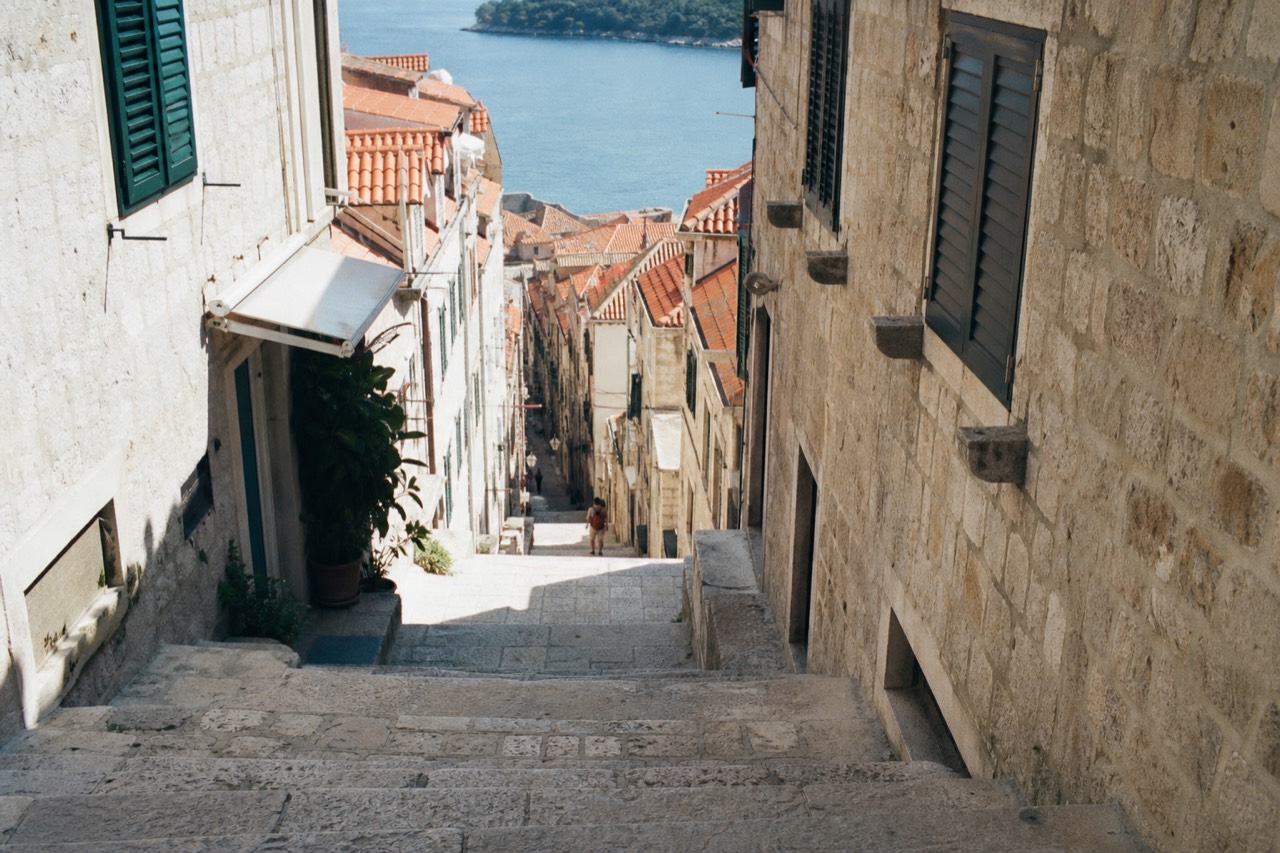
The city of Dubrovnik itself is a small place, 41,562 residents at the 2021 census, whose economy is overwhelmingly tourism. A town that size, that dependent on visitor goodwill, polices its public spaces carefully. The Old Town is walkable, lit at night, and busy until late in the season. Solo travelers, couples and families all move around it comfortably after dark, and the main evening risk is the same one you would face in any pedestrianized European old town: watching your footing on polished stone.
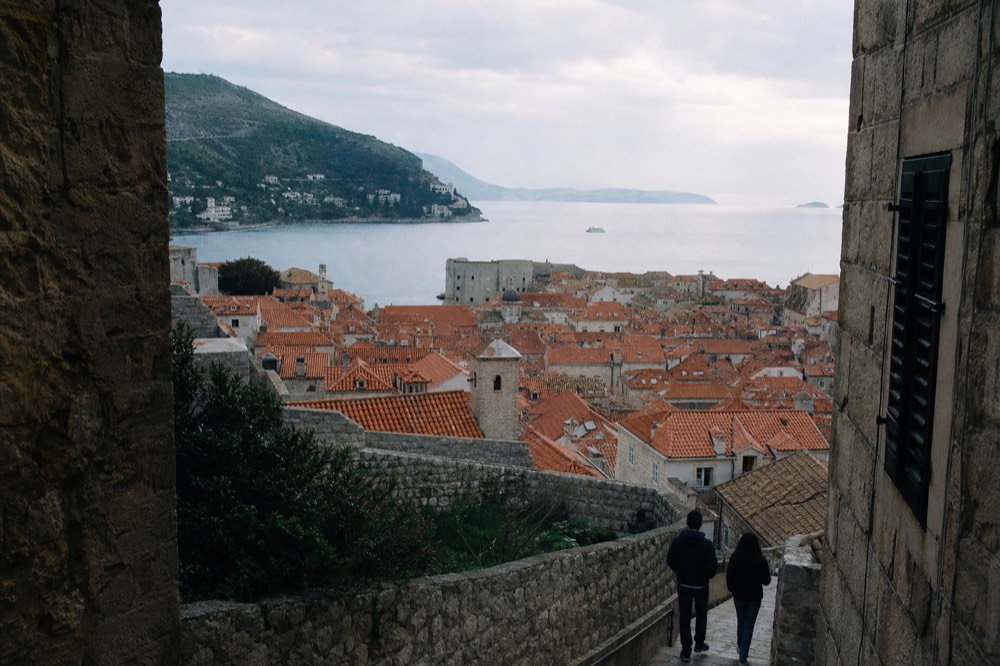
The one thing I tell every American visitor: the danger here is boredom-proofing, not danger. People over-worry about crime and under-worry about the sun. Dubrovnik's Old Town is limestone, reflectively bright and almost treeless on the main circuit. On a hot day the walls themselves become the hazard, which is why I point people toward the timing advice in our guide on walking the city walls.
| Concern | Realistic level in Croatia | What actually helps |
|---|---|---|
| Violent crime | Very low; rare and rarely tourist-targeted | Normal urban awareness |
| Pickpocketing | The main realistic theft risk, in dense crowds | Front pockets, zipped bag, no phone on café tables |
| Summer heat | High on exposed stone, July and August | Water, shade stops, morning scheduling |
| Terrain | Steep stairs and polished stone year-round | Shoes with grip, care after rain |
| Sea conditions | Generally calm; wind and currents vary | Swim at patrolled beaches, heed flags |
Is It Safe for Americans to Travel to Croatia Right Now?
Yes, Croatia is safe for American travelers right now, and US citizens face no elevated risk compared to other visitors. The country is welcoming to Americans, English is widely spoken in tourist areas, and there are no anti-American tensions or entry complications beyond a standard passport check at the border. US citizens can enter Croatia visa-free for tourism under the standard short-stay rules that apply to visa-exempt nationals, since Croatia joined the Schengen area. Your passport needs to be valid for the duration of your stay, and the European travel authorization now being phased in for visa-exempt visitors applies to Americans the same way it applies to anyone else, so check the official requirement before you fly rather than relying on a blog summary, mine included.
The practical American-specific questions I field are less about safety and more about friction. Can you drink the tap water? Yes, it is safe and good. Are credit cards accepted? Widely, though small konobas and market stalls sometimes prefer cash or a local card, so carrying some euro notes is sensible. Do you need to worry about the health system? Croatian pharmacies and emergency care are solid, and pharmacists routinely help with minor issues, but travel insurance that covers medical care is the right call for any international trip, ours included.
One genuinely useful safety habit for Americans: register your trip details somewhere a family member can reach, save the local emergency number, which is the single EU-wide number that reaches police, fire and medical services anywhere in the union, and keep a photo of your passport. These are the same precautions I would recommend for a trip to Canada. The difference between a safe trip and a stressful one in Croatia is almost never a security event. It is a lost passport at 22:00 with a 06:00 flight, or a twisted ankle on the stairs down to a beach in cheap sandals.
For orientation on arrival, a guided first walk does double duty as a safety measure. A local guide tells you which staircases are poorly lit, which beaches have facilities, where the pharmacy and clinic are, and how the bus system works. The Old Town walking tour with a local guide does exactly this, from $20 per person, rated 4.8 across 5,826 reviews. One guest review captures the practical value well:
Alex was a fantastic guide, she explained the complex history of Dubrovnik to give a lasting impression of the history of the area. Really appreciated that she aimed for shaded areas on a boiling September day. The food recommendations for after were much appreciated too! Great tour for a first experience of the old town!
Sophie
Is It Safe for Americans to Go to Croatia Right Now?
Yes, it is safe for Americans to go to Croatia right now, whether you are traveling with children, exploring as a solo traveler, or taking a road trip through the region. Croatia remains a stable, welcoming destination where millions of international visitors, including many from the United States, travel each year without serious safety concerns. The country's tourism infrastructure is built for exactly this kind of visitor, and the most common American trip patterns, a Dubrovnik base with day trips to Montenegro or Bosnia and Herzegovina, are routine, well-trodden and safe. The border crossings involved are ordinary road crossings, busy in peak season but unremarkable, and tour operators run these routes daily. One recent traveler on a Montenegro day trip noted that the border crossing took only 15 minutes in September, which matches the pattern: waits are a scheduling issue, not a safety issue.
Day trips are where Americans often feel the most uncertainty, because a map shows you leaving the EU for Montenegro or Bosnia and Herzegovina. In practice these are stable, tourist-heavy corridors. The Mostar and Kravica day trip from Dubrovnik runs from $35 per person and is rated 4.6 across 10,019 reviews, numbers that only happen on routes thousands of travelers use without incident every season. Bring your passport, bring some euro cash for the Bosnia side, and let the operator handle the logistics.
Crowds are the one safety-adjacent issue worth real planning. Dubrovnik measures its own Old Town headcount every 15 minutes, and the official carrying capacity from the UNESCO assessment is 11,275 people. The Port Authority limits cruise passengers to 8,000 a day in most cases and refuses call requests to hold that line, per its own crowd-management page. The counter-intuitive part: cruise passenger volume peaks in September and October, above July and August. If your mental model is "August is the crush, September is calm," the data says otherwise, and the fix is timing your day, not cancelling it.
| Time of day | Old Town headcount pattern | Best use of that window |
|---|---|---|
| Before 08:00 | Counts in the low thousands | Walls circuit, photography, quiet streets |
| 08:00 to 09:00 | Rapid climb, 5,419 at 08:00 on a September day | Enter attractions, find shade, breakfast indoors |
| 10:00 | Observed peak, 7,739 on a September day | Boat trip, Lokrum, or a beach outside the walls |
| Midday to 15:00 | Sustained high counts and peak heat | Lunch, museums, cable car to cooler altitude |
| Evening | Thinning crowds, cooler stone | Stradun stroll, sunset viewpoints, dinner |
What Should US Visitors Actually Be Careful Of in Croatia?
US visitors should mainly watch for pickpocketing in dense crowds, heat and sun exposure, slippery stone surfaces and steep stairs, changing sea conditions, and aggressive road behavior on coastal highways. None of these are unusual dangers, but they catch travelers off guard because Croatia feels familiar and easy compared to other European destinations, so basic awareness goes a long way. None of these are Croatia-specific dangers; they are the standard hazards of any southern European coastal destination, and each has a boring, effective countermeasure. Pickpocketing is opportunistic and concentrated where crowds compress, at the Pile and Ploče gates, on the Stradun at midday, and at bus stops. Front pockets and a zipped crossbody bag end almost all of it. Everything else on the list is a matter of gear and scheduling rather than vigilance.
Heat deserves more respect than Americans usually give it. The stone streets radiate, the walls offer almost no shade, and the September sea average is about 23.6 degrees per the long-run NOAA climatology, which means swimming is genuinely available but does not feel like a cold plunge. That same dataset is a 1991 to 2020 open-water average, not a beach thermometer: sheltered bays run warmer, and the Croatian met service's own Dubrovnik buoy has read 27.0 to 27.4 degrees on an early September day against that 23.6 mean. Carry water, take the walls early, and treat a midday museum or boat deck as a safety decision, not a cop-out.
Terrain is the quiet one. Dubrovnik is a city of staircases, and polished limestone becomes slick after rain or morning washing. Good shoes matter more here than in almost any European city I know, and I say that as someone who has watched plenty of flip-flop accidents happen in slow motion. Families weighing the practicalities will find the stair-free options and stroller-friendly routes covered in our with-kids itinerary.
Finally, the sea. Croatia's coast is calm and the swimming is superb, but wind shifts and currents exist, and flagged beaches exist for a reason. The same principle applies to cliff jumping spots and the rocks below the bars on the outside of the walls: locals know the depths and the conditions, and visitors guessing is how injuries happen. When in doubt, swim where others swim.
Do You Need to Worry About Health, Money or Emergencies?
No, nothing unusual, but three preparations pay off. Buy travel insurance that includes medical coverage, carry some euro cash alongside your cards, and know the single EU-wide emergency number, which reaches police, fire and medical services anywhere in the union. Croatian healthcare is competent, pharmacies are well stocked and staffed by professionals who commonly speak English, and the tourist regions are used to dealing with foreign visitors. For Americans, whose domestic insurance typically does not travel with them, a travel medical policy is not paranoia, it is the standard kit for any European trip.
Money is straightforward since Croatia adopted the euro. Cards are widely accepted in restaurants, shops and tour bookings, and the site's own tour listings are priced in dollars for exactly that reason. Cash matters in small amounts: a market stall, a small konoba, a tip left on a table. Tipping is appreciated but modest, rounding up a bill or leaving a little extra for good service, and nobody will chase you for more.
Emergencies are simpler than at home in one respect: one number reaches police, fire and medical anywhere in the EU, with English-speaking operators. For non-emergencies, a pharmacy is the first stop for minor ailments, and hotel or apartment hosts reliably know the nearest clinic. The US Embassy is in Zagreb, which matters for lost passports; a passport photo stored in your email makes that conversation far shorter.
One comfort-oriented note that doubles as safety: altitude is a legitimate heat strategy. The cable car lifts you 367.0 metres from the lower terminal to the Mount Srđ station in 3 minutes 30 seconds, and the operator states a clear-day view range of up to 60 km. On a day when the Old Town is radiating heat, an afternoon at 405 metres is measurably cooler and one of the most pleasant ways to wait out the peak. The cable car ticket with an Old Town tour bundles both, from $92.04 per person.
How Do Crowds and Timing Affect How Safe and Comfortable It Feels?
Crowds shape how comfortable Walt Disney World feels far more than how safe it is, because the parks are heavily policed and monitored regardless of attendance. The real difference shows up in wait times, walkway congestion, and heat exposure, all of which climb with peak attendance. Visiting early in the day, on weekdays, or during off-peak seasons makes the same parks feel noticeably calmer, cooler, and easier to move through. The Old Town's own counting system shows the daily shape clearly: on a September day the count climbed from 1,200 at 04:00 to 5,419 at 08:00, peaked at 7,739 at 10:00, and eased to 7,205 by 11:00. Those are ordinary numbers against an official capacity of 11,275, but the density on the Stradun at 10:00 feels nothing like the same street at 07:30. The city also publishes its cruise schedule, and the busiest days cluster in late September and early October, with 6 October carrying 5,798 passengers across two ships and 15 September carrying 5,273 across four. Knowing that shape turns a day that could feel overwhelming into one you control completely.
The practical translation for an American visitor: start early, break midday, come back for the evening. The walls at opening are a different experience from the walls at noon, and not only for heat. Fewer people on narrow staircases means fewer jammed passages, better photographs and a walk you can actually pace. Our guide to the best time to visit Dubrovnik digs into the seasonal shape, including the counter-intuitive cruise peak.
It is also worth saying plainly: crowd discomfort is not the same as overtourism crisis, and Dubrovnik manages its numbers more actively than almost any Mediterranean peer. The Port Authority's own statistics show 625,257 cruise passengers in 2025 against 582,499 in 2024, a rise, but one managed under a hard daily cap with refused calls. The city is busy because it is good, and it is measured because it has to be.
So Should You Book That Trip?
Yes, book it. For US citizens, Croatia right now is about as safe as European travel gets, and the preparations that matter are ordinary ones: travel insurance, enough water, good walking shoes, a zipped bag and sensible timing. Nothing about the current situation calls for canceling, only for the same care you would take anywhere in Europe. The safety question is really a comfort question wearing a costume, and comfort in Dubrovnik is a solved problem if you plan around the daily crowd curve and the midday heat. Come in shoulder season if you can, when the sea is still warm by the long-run averages and the cruise calendar is actually at its busiest, which tells you the weather, not the crowds, should drive your dates. Nothing in the current picture argues for waiting, and the ordinary precautions you would take for any European city cover everything that realistically goes wrong here.
If it is your first visit, spend your first morning with a local guide and let the rest of the trip run on that foundation. This site, Things to Do in Dubrovnik, exists to answer exactly these practical questions, from where Dubrovnik actually sits on the map to how many days to give it.
For planning at the national level, the Croatian National Tourist Board and the City of Dubrovnik's own official site publish current visitor information, and the UNESCO listing for the Old City documents what makes the place worth the flight in the first place. Bring your passport, bring your common sense, and come. The limestone is waiting.
Common Questions About Safety in Croatia for US Travelers
Is It Safe for US Citizens to Travel to Croatia Right Now?
Yes. Croatia is a stable European Union member with low violent crime, a tourism economy built around foreign visitors, and no entry complications for Americans beyond a standard passport check. The realistic risks are ordinary travel hazards: pickpocketing in crowds, summer heat, slippery stone and sea conditions, all manageable with normal precautions.
is it safe to travel to croatia right now?
Yes. Croatia is safe to visit right now. It records millions of foreign overnight stays a year, 4.2 million nights in Dubrovnik alone in 2025, and the overwhelming majority of trips end without incident. Emergency services are reliable and a single EU-wide number reaches police, fire and medical services anywhere in the union.
Is It Safe for Americans to Travel to Croatia Right Now?
Yes, and Americans face no elevated risk. English is widely spoken in tourist areas, tap water is safe, credit cards are widely accepted, and US citizens enter visa-free for tourism under the standard short-stay rules for visa-exempt nationals. Check the current European travel authorization requirement before flying, as it is being phased in for visa-exempt visitors.
Is It Safe for Americans to Go to Croatia Right Now?
Yes, including on the popular day trips to Montenegro or Bosnia and Herzegovina. Those border crossings are ordinary, busy road crossings on routes tour operators run daily. Bring your passport and some euro cash, and expect seasonal waits rather than any safety concern.
What Should I Be Careful Of in Dubrovnik?
Pickpocketing in dense crowds, heat on exposed stone, steep and slippery staircases, and sea conditions. Keep valuables in front pockets or a zipped bag, carry water, wear shoes with grip, start the city walls early, and swim at patrolled beaches. The Old Town's official carrying capacity is 11,275 people, tracked by counters at every entrance.
Is Dubrovnik Too Crowded to Enjoy Safely?
No, but timing matters. Counts on a September day peaked at 7,739 at 10:00 and eased to 7,205 by 11:00, well under the official capacity. Cruise passengers actually peak in September and October, above July and August. Start early, break at midday, and return in the evening for the comfortable version of the city.