Is It Worth Doing the City Walls in Dubrovnik?
A straight answer on whether the Dubrovnik city walls are worth the ticket price, the stairs and the crowds, with verified prices, timing advice and tour options.
Is It Worth Doing the City Walls in Dubrovnik?
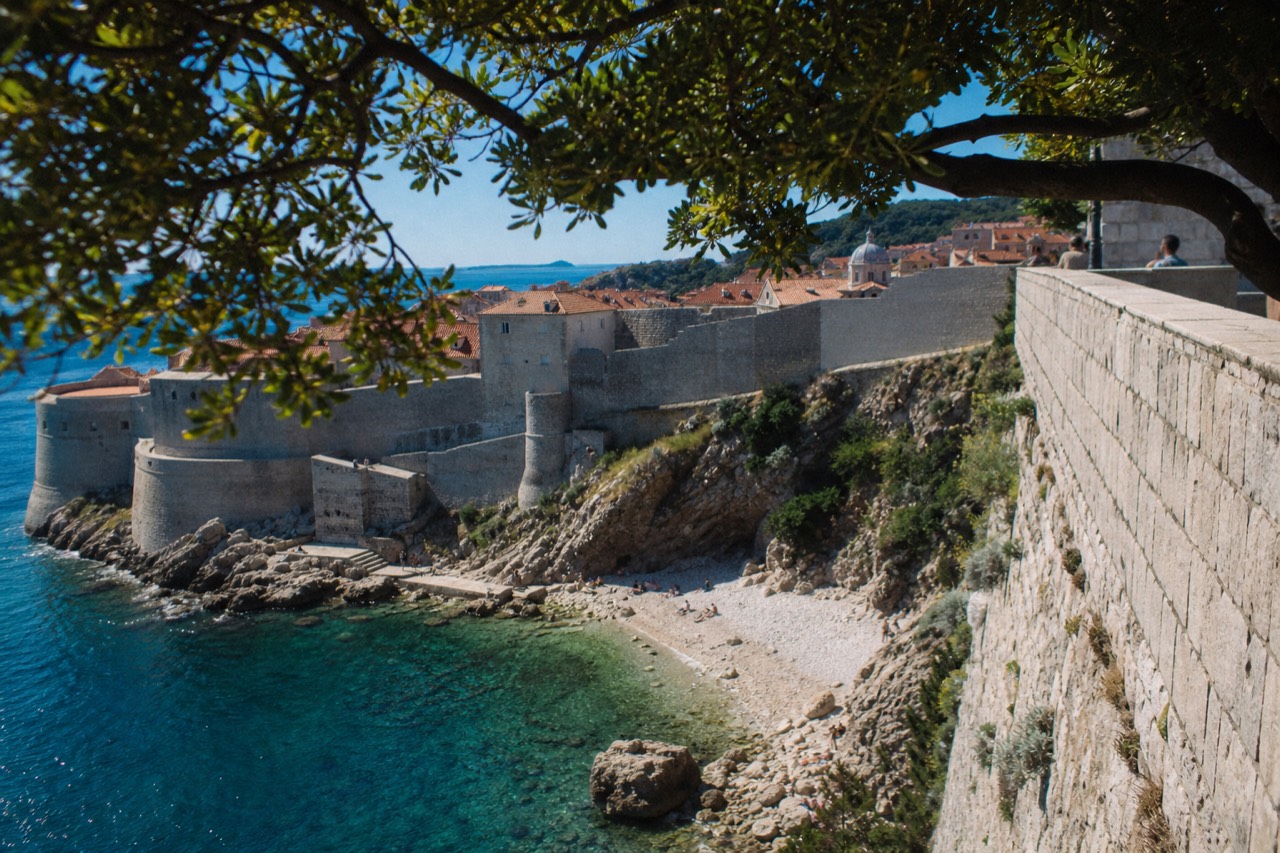
Yes, in almost every case. The walls are Dubrovnik's defining experience: 1,940 metres of stone walkway, up to 25 metres high, wrapping the entire Old Town with the sea on one side and red rooftops on the other. Nothing else in the city, and very little on this coast, gives you that view. The honest caveats are the 40 euro main-season ticket, the stairs and the summer heat, all of which are manageable with timing.
I have walked this circuit more times than I can count, in April fog, in July furnace heat and in October when the light turns the Adriatic flat and silver. It never stops being remarkable, and I say that as someone who lives here and passes under these walls daily. But "worth it" is a question about money and effort as much as beauty, so let me take it seriously rather than just cheering.
The case for is simple. The walls are the reason Dubrovnik looks like Dubrovnik. From street level you see fragments, a tower here, a bastion there. From the wall top you see the whole machine at once: the geometry of the street grid, the terracotta sea of roofs, the green shoulder of Mount Srđ behind and the Adriatic stretching south. The Old Town is a UNESCO World Heritage site, inscribed in 1979 under criteria (i), (iii) and (iv), covering 24.7 hectares, and the walls are the single best vantage point from which to understand why.
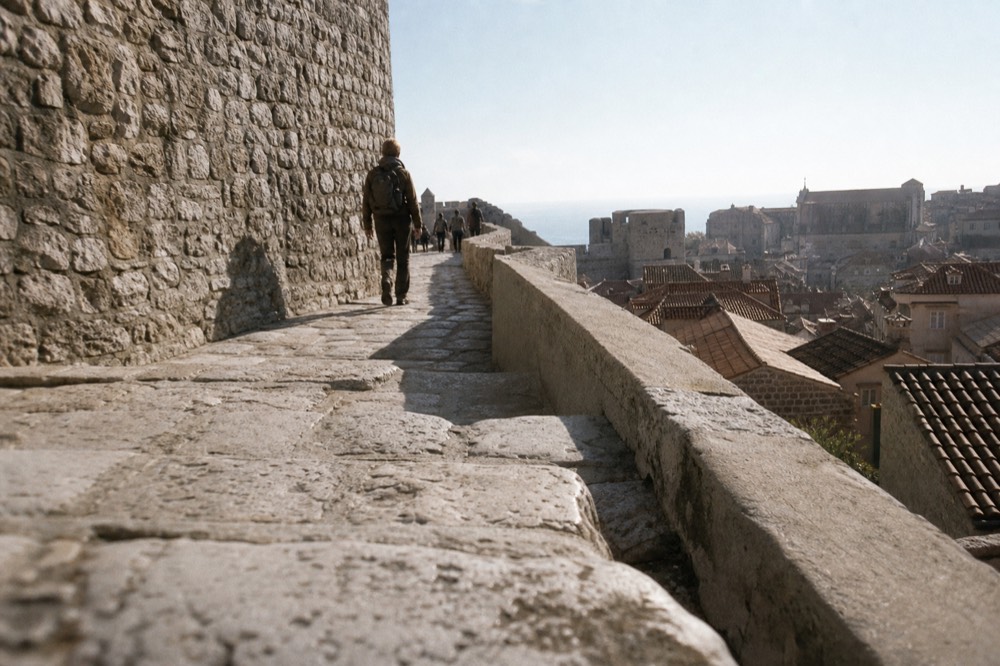
The case against deserves equal honesty. The adult ticket is 40 euro in main season, 1 March to 30 November, which is steep for a two-hour walk, and there is no family ticket, only adult and child 7 to 18 categories. In July and August the stone radiates heat and the narrow sections funnel crowds into slow shuffles. If you arrive at 11:00 on a cruise-heavy day you will get all three problems at once: price, heat and a queue of backs in front of your camera.
The compromise, and my standard advice, is to treat the walls as your one big splurge of the day and to do it early. The operator's stated hours at time of check are 08:00 to 19:30, and the first two hours are a different experience entirely: cooler air, empty photo spots and light coming in low over Lokrum. Walk at 08:00 and you will understand why people rave. Walk at 13:00 in August and you may wonder what the fuss was about.
If you want the circuit explained rather than just walked, a guided option costs less than many people assume. The 2-hour Ancient City Walls and Wars walking tour runs from $29.58 per person and is rated 4.8 across 1,387 reviews, and there is a longer combination option that adds the Old Town streets below.
For readers planning the whole sightseeing budget, the walls ticket and the Dubrovnik Pass interact in a way most visitors miss, and I cover that fully in the section on paying. First, though, the two questions underneath your question: is the experience itself worth the effort, and can you physically do it at all?
Is It Worth Going on City Walls in Dubrovnik?
Going up is worth it for almost every traveller, with two exceptions. If you have limited mobility or cannot manage roughly two hours of stone stairs in heat, the wall top is a poor fit and the views from Mount Srđ or Fort Lovrijenac deliver similar drama with less climbing. For everyone else, including families with school-age children, the walls are the highlight of a Dubrovnik trip.
Let me be concrete about what you actually get, because "the walls" is vague until you are up there. The circuit is 1,940 metres long. The main wall is 4 to 6 metres thick on the land side and 1.5 to 3 metres on the sea side, up to 25 metres high at points, and the whole structure is a catalogue of medieval engineering: 16 towers, 3 fortresses, 6 bastions, 2 corner fortifications, 3 bulwarks with rows of turrets, 3 moats, 2 flank fortresses, 1 breakwater and 2 drawbridges. The shape was reached in the 13th century and the final piece, the Bastion of St Stephen, was finished in 1660.
What that means in practice is constant variation. The sea-side stretch between the Pile towers and Buža is the postcard section, wall dropping sheer to blue water. The land side climbs past Minčeta, the circuit's most photogenic tower, with the whole town spread beneath it. You are never walking a uniform path; the wall turns, rises and opens onto a new framed view every few minutes, which is why two hours up there passes quickly.
The two exceptions deserve a full sentence each rather than a footnote. First, mobility: the circuit is stairs, uneven stone and narrow passes with no shortcuts and no lift, and once you commit at an entrance you cover a lot of it to get back down. Second, heat tolerance: in July and August the midday wall is genuinely punishing, with no shade for long stretches, and I have watched plenty of people cut their circuit short at the halfway point. Both problems have answers, and neither answer is "skip Dubrovnik".
Timing solves most of it. The crowd counters at the Old Town entrances update a headcount every 15 minutes, and on a real September day the curve read 5,419 people at 08:00, 7,297 at 09:00, a 7,739 peak at 10:00, then 7,205 by 11:00. In other words, the town itself is busiest after the walls open, not before. Arriving at opening time buys you the wall with the fewest people on it and the coolest air of the walking day.
There is also a seasonal argument worth making. September and October are the two busiest cruise months of the year in Dubrovnik, with 101,246 and 100,132 cruise passengers in 2025, above July's 96,072 and August's 87,385. That surprises people who assume August is peak. The practical takeaway: shoulder-season months are not crowd-free, but they are cooler, and a cooler wall is a better wall.
If the full circuit still feels like too much, there is a middle path I often suggest: Fort Lovrijenac alone. It stands on a 37-metre-high sea rock across the small bay from the Old Town, costs 15 euro bought on its own, and gives you the classic walls-and-Old-Town panorama from the outside. It is a climb, but a contained one, and you can be done in under an hour.
Is It Worth It to Walk the City Walls in Dubrovnik?
Walking the walls is worth the effort for the view alone, and the effort is real but overstated. The full circuit takes most people about two hours, involves several hundred stone steps and almost no shade, and is genuinely hard only in the peak heat of July and August. Done at 08:00 or after 17:00, it is a comfortable walk for anyone of ordinary fitness.
The word "walk" undersells it slightly. This is not a flat promenade. You will climb to Minčeta, descend to the sea-level stretches, squeeze through narrow passes where two people cannot walk abreast, and cross long exposed sections where the sun has full access. Wear real shoes, not flip-flops, carry more water than feels reasonable, and put sunscreen on the back of your neck. I have seen enough sunburned necks on the wall to consider that last point a public service.
Direction matters more than most guides admit. The standard advice is to enter near Pile and walk counterclockwise, which front-loads the sea-side views and puts the steepest climb, up to Minčeta, after your legs have warmed up. It also means the busiest photo spots come early, before the midday crowds thicken. If you are walking in high summer, reverse-plan around shade: the sea side gets brutal sun by midday, so an early start is not just about crowds but about not cooking.
Here is the part I would emphasize to anyone on the fence: the walls change character with the clock, so "worth it" depends on when you go up. Early morning gives you long shadows, empty staircases and the sea at its calmest. Late afternoon, with the operator open to 19:30 in the stated hours, gives you golden light on the rooftops and the sunset side of Lokrum. Midday gives you a queue and a headache. Same ticket, same stones, three different experiences.
For travellers who want the walk with context rather than silence, a guided circuit is the upgrade that most improves the experience per euro spent. The walls' story, sieges, earthquakes, the 1991 to 1998 period when the Old Town sat on the World Heritage in Danger list, is invisible without someone telling it. The Ancient City Walls and Wars walking tour from Dubrovnik Walks covers the circuit in about 2 hours from $29.58 per person, rated 4.8 across 1,387 reviews, and one recent guest review captures what a guide adds:
This well organized tour helped put Dubrovnik's past (and present) into perspective. It's incredible that the city walls have withstood the test of time. Antun was a wonderful guide.
linda_a
There is also a combination format worth knowing about if you have a full morning: the Old Town and Ancient City Walls combo tour runs about 3 hours 30 minutes total, from $50.94 per person, rated 4.8 across 1,183 reviews, pairing the street-level town with the wall-top circuit. You can compare it against the walls-only walk on the operator's live listing. For timing your circuit precisely, our separate how long the walls walk takes answer has the detailed breakdown.
Can I Walk the Dubrovnik City Walls?
Yes, anyone can walk the walls with a ticket, and no pass or guide is required. The circuit is one-way in practice, has three entrance points, and the adult ticket costs 40 euro in main season, 1 March to 30 November, or 20 euro in December, with children 7 to 18 at 15 euro then 5 euro, and under 6 free. There is no family ticket.
The ticket itself is better value than it first looks, because that 40 euro is not a walls-only ticket. It is officially the walls plus Fort Lovrijenac combination, and it also covers the Western Outer Wall (closed December, January and February) and the Collection of Coins of the Republic of Ragusa at Gundulić Square. Lovrijenac bought alone is 15 euro, so if you plan to see both, the combination is already the sensible arithmetic. The operator's own site, the Society of Friends of Dubrovnik Antiquities, lists the full inclusions.
Practical rules for the walk itself: you can enter at any of the entrances, the main one near Pile Gate, one near the Dominican Monastery end of the Old Town, and one at the Maritime Museum side, and your ticket is checked at the top of the stairs. The circuit is not formally one-way, but the flow of traffic and the narrow sections make fighting the current a bad idea. There are a couple of spots with drinks and toilets on the route, but do not count on them being open early or late; carry water.
Children are welcome and, in my observation, better at the stairs than their parents. The child ticket covers ages 7 to 18, under 6 is free, and there is no family bundle, so a family of four with two teenagers pays two adult and two child tickets. Strollers are not practical on the circuit; a carrier for toddlers is the workable option. Dogs are generally not the wall's friend in high season, heat and stone, so plan around that if travelling with one.
One thing people often ask me in the street: can you walk the walls for free, or see them without a ticket? The answer to the first is no, every entrance is controlled. The answer to the second is yes, partially: the café terraces cut into the cliff outside the wall at Buža give you the sea-side drama for the price of a drink, and the path around the outside of the walls shows you the fortifications from below. Neither replaces the circuit, but both are legitimate budget moves. Our city walls tickets guide covers the buying options in detail, including the pass arithmetic.
For anyone comparing the walls against other paid experiences on the same trip, here is how the main options stack up on price and format:
| Experience | Price from | Duration | Format |
|---|---|---|---|
| City Walls admission only | 40 euro adult, main season | 1 to 3 hours | Self-guided circuit |
| Ancient City Walls and Wars walk | $29.58 per person | About 2 hours | Guided walls circuit |
| Old Town and Walls combo tour | $50.94 per person | About 3 hours 30 minutes | Guided town plus walls |
| Old Town walk with local guide | $20 per person | About 1 hour 30 minutes | Guided, street level |
| Walls admission ticket product | $36.37 per person | 1 to 3 hours | Prebooked entry |
The guided walks sit at or below the raw admission price because the guide's fee is separate from what you pay at the gate; check the inclusions on the live listing before assuming the tour ticket covers entry. That detail surprises people, and it is the difference between a bargain and a surprise at the turnstile.
Is It Worth Paying for Dubrovnik City Walls?
Paying 40 euro is worth it if you walk the full circuit once, in good conditions, and it is poor value if you will rush it at midday in August. In main season the one-day Dubrovnik Pass also costs 40 euro, includes the walls plus Lovrijenac and ten more sights plus a 24-hour bus ticket, so anyone visiting two or more included museums should buy the pass instead.
That pass comparison is the single biggest money lever on this question, and it only works in main season. The one-day pass costs 40 euro, exactly the standalone walls ticket price between 1 March and 30 November, and every pass tier lists City Walls plus Lovrijenac Fortress as its first inclusion, with a one-time visit allowed to each institution. The three-day pass is 50 euro and the seven-day pass 60 euro, adding suburban bus coupons and House Bukovac in Cavtat. In December the standalone walls ticket drops to 20 euro and no winter pass tier is on sale at all, so the equivalence collapses; the pass site, dubrovnikpass.com, sells the summer season only.
So the decision tree is short. Visiting only the walls? Buy the ticket at the gate or prebook. Visiting the walls plus the Rector's Palace, the Maritime Museum, the Franciscan Monastery museum or any of the other included sights? The one-day pass pays for itself immediately. Staying several days? The three-day pass at 50 euro is close to automatic for most sightseeing-heavy itineraries. Our full Dubrovnik Pass guide works through every inclusion.
Is the raw 40 euro defensible on its own? I think yes, with the timing caveat. Spread over two hours, it is 20 euro an hour for the best view on the Dalmatian coast, and the ticket quietly bundles Lovrijenac, which is a real second sight, not a token add-on. The complaints you read online cluster around two things: people who did it in peak heat and people who did not know Lovrijenac was included and paid 15 euro for it separately. Both are avoidable with ten minutes of planning.
That review is attached to a cable car and Old Town combination tour, but the sentence that matters here is the middle one: they walked part of the wall because it was very hot. That is the failure mode of the 40 euro ticket, and it is a heat-and-timing failure, not a value failure. If your travel dates are fixed in high summer, go at opening, or go late, or accept that you may buy the full circuit and walk half of it.
For a different kind of value altogether, the panorama options deserve a mention. The e-tuk-tuk tour, an electric tuk-tuk ride around the viewpoints above town, runs about 1 hour 45 minutes from $59.24 per person and carries a perfect 5 rating across 1,799 reviews. It does not replace the walls, but for travellers who cannot do the stairs it captures much of the same drama from the hillsides.
My honest verdict, after years of sending friends, guests and readers up these stairs: the walls are worth doing for the overwhelming majority of visitors, worth paying full price for in main season if you time the walk well, and worth upgrading to the pass for anyone whose day includes a museum. The only people I steer away are those with real mobility limits and those determined to climb at 13:00 in August, and for the second group I simply move the appointment. On the rest of this site, Things to Do in Dubrovnik covers every alternative, from the free Old Town walks to the island cruises, if the walls verdict turns out to be no for you.
Common Questions About the Dubrovnik City Walls
Is it worth doing the city walls in Dubrovnik?
Yes, for most visitors. The 1,940-metre circuit is the best view and the best history lesson in the city, and the 40 euro main-season ticket also includes Fort Lovrijenac. Time it early or late and it is the highlight of a trip; do it at midday in August and you may regret the heat more than the price.
How Much Does the Walls Ticket Cost?
The adult ticket is 40 euro in main season, 1 March to 30 November, and 20 euro in December. Children 7 to 18 pay 15 euro then 5 euro, and under 6 is free. There is no family ticket; the operator sells exactly two paid ticket types.
Can I Walk the Walls for Free?
No. Every entrance is controlled and ticketed. You can see parts of the fortifications from outside the walls for free, and the cliffside café terraces at Buža give you the sea-side setting for the price of a drink, but the circuit itself always requires a ticket.
Does the Dubrovnik Pass Include the Walls?
Yes. Every pass tier lists City Walls plus Lovrijenac Fortress as its first inclusion, with one visit allowed to each institution. In main season the one-day pass costs the same 40 euro as the standalone walls ticket and adds ten more sights plus a 24-hour bus ticket, so it is the better buy for sightseeing-heavy days.
What Is the Best Time of Day to Walk the Walls?
Opening time, around 08:00, or the late afternoon toward the 19:30 close. The town's own counters show the headcount climbing steeply through the morning, with a real September day peaking at 10:00, and the wall's exposed stone makes midday the hottest and least comfortable slot in summer.