Is It Worth Going to Mostar from Dubrovnik?
A straight answer on whether the Mostar day trip from Dubrovnik earns its long day, with border realities, tour prices, crowd timing and what to skip in Dubrovnik itself.
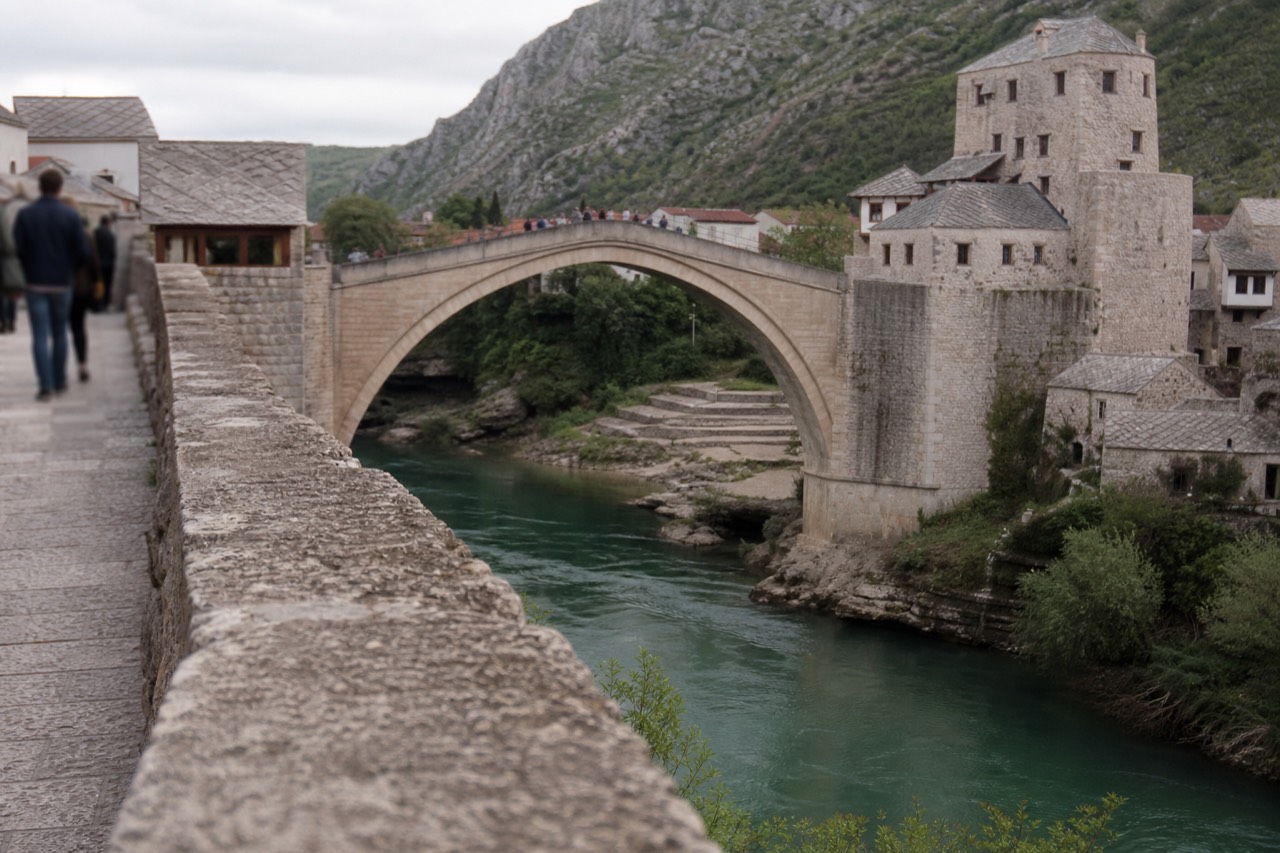
Is It Worth Going to Mostar from Dubrovnik?
Yes, for most travellers with at least four days in the region, the trip is worth it. Mostar is a genuinely different country, a different currency in practice, a different architectural world, and the old bridge over the Neretva is one of the most photographed spans in the Balkans. The trade is a long day, roughly 11 hours door to door, and a border crossing each way.
I plan itineraries in this corner of Europe for a living, and Mostar is the one excursion I keep recommending to repeat visitors who have already walked the walls and ridden the cable car. Dubrovnik is small and intensely preserved; Mostar is raw by comparison. Bullet-scarred apartment blocks still stand a few streets from the souvenir stalls, and the contrast is the point. You come back understanding the region better, not just with more photos.
The value case is also unusually strong on paper. The most-booked version of this trip, the Mostar and Kravica Waterfall day excursion, starts from $35 per person and carries a 4.6 rating across 10,019 reviews, which is an enormous review base for a land day trip anywhere in Croatia. That price covers coach transport, a guide, and time in both Mostar and the Kravica waterfalls. Lunch is usually your own arrangement, and the operators are upfront about that.
Who should skip it? Anyone on a two or three day first visit to Dubrovnik. If this is your first time in the city, the walls, Lokrum, and an Elaphiti cruise will give you more per hour than a full day on a bus, and the Mostar day trip planning guide goes deeper on that trade-off. Save Mostar for a second trip or a five-day stay.
| Tour | Length | From (per person) | Rating |
|---|---|---|---|
| Mostar and Kravica Waterfall Day Trip | About 11 hours | $35 | 4.6 across 10,019 reviews |
| Mostar and Kravice Waterfalls Day Tour (small group) | About 11 hours | $53.19 | 4.8 across 1,254 reviews |
The table shows the pattern: the entry price is low, and the step-ups buy you a smaller group or an extra stop like Počitelj rather than a fundamentally different day. All three hit the same headline sights. If you are deciding between them, decide on group size and pacing, not on itinerary, because the itinerary barely moves.
Can You Do a Day Trip to Mostar from Dubrovnik?
Yes, and it is one of the easiest long-distance day trips on the coast, because the border crossing at Metković is set up for exactly this traffic. Coaches leave Dubrovnik early, typically between 6:00 and 8:00, cross into Bosnia and Herzegovina mid-morning, and have you back in Dubrovnik by early evening. You need a valid passport; national ID cards are not enough for this border.
The distance is modest on a map and slow in practice. The road hugs the Neretva river delta, passes through Neum, the short Bosnian coast that cuts Croatia in two, and the whole run is single-carriageway most of the way. That is why every operator budgets a full 11 hours for the day even though the driving itself is only a portion of it. Build your evening plans around a late return, not a 17:00 dinner.
The border is the variable. In shoulder season, groups often clear it in minutes, and one recent review on the live listing for a Montenegro trip mentions a September border wait of just 15 minutes, which matches what I hear about the Metković crossing in autumn too. In July and August, or when several tour buses stack up at once, the same checkpoint can eat an hour. Guides factor a buffer in, but no one can promise the queue. Croatia is in the Schengen area and Bosnia and Herzegovina is not, so this is a hard external border with passport checks in both directions.
Money matters more than people expect. Bosnia and Herzegovina uses the convertible mark, but in tourist Mostar euros are widely accepted, and a review on the Mostar tour listing puts it bluntly: bring euros. Cards work in the bigger shops and restaurants near the bridge, though small stalls and the market vendors prefer cash. You do not need to change money for a day trip; a pocket of euro notes in small denominations covers lunch, coffee, and the toilets.
The standard day has three movements. First, the drive north with a stop somewhere in the delta or at Počitelj, depending on the operator. Second, two to three free hours in Mostar itself, which is enough for the bridge, the old bazaar street, a riverside lunch, and one viewpoint. Third, the Kravica waterfalls, where the wide travertine cascade has a swimming area at its base, so pack a suit and a towel even if the idea of swimming in a waterfall sounds unlikely at 7 in the morning.
The most-booked option, the one that starts from $35 per person and carries that 4.6 rating across 10,019 reviews, is the one I would point most first-timers at, and you can check availability on its tour page here on the site. It is the cheapest paid entry on the whole beyond-Dubrovnik roster and the review volume means the operational kinks have been worked out over years.
If you would rather have a smaller vehicle and a guide with more time per person, the small-group version runs about 11 hours from $53.19 per person and is rated 4.8 across 1,254 reviews. The itinerary is nearly identical; the difference is that in a van of eight you can ask questions for eleven hours, and on a full coach you cannot.
Is a Day Trip to Mostar Worth It?
For most people, yes, because the day delivers three things Dubrovnik cannot: a border crossing, a waterfall swim, and a town where East and West visibly meet in the architecture. The old bridge, rebuilt after its destruction in the war, is the emotional centre, and Mostar's mixed Ottoman and Austro-Hungarian streets give the day a texture no Croatian coastal town matches. The cost is stamina.
Let me be honest about the fatigue, because the brochures will not be. You will be on a vehicle for five to six hours of the day. You will stand in a border queue at least once. Mostar in July is hotter than Dubrovnik, and the walk back up from the falls is steep. If your holiday energy is limited, or you travel with small children, or you have one precious free day, the Elaphiti islands cruise, eight hours on the water from $59.16 per person with lunch included, will feel like a holiday and Mostar will feel like work. More of these guides are collected on Things to Do in Dubrovnik.
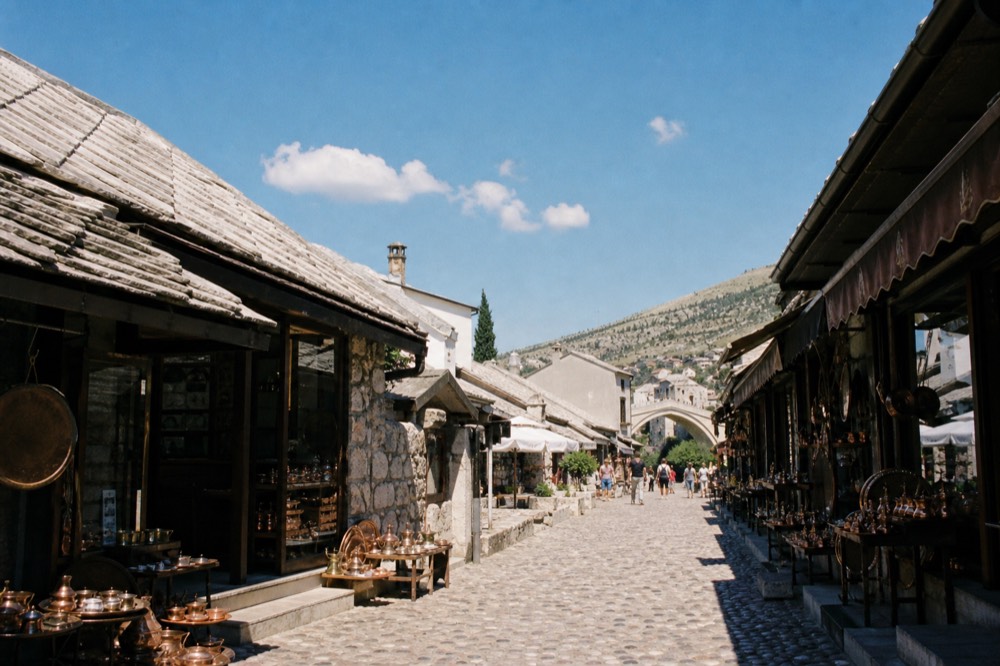
But if the question is whether the day is worth it culturally, the answer is an unqualified yes. The Stari Most bridge is the single most dramatic piece of engineering you can see on any day trip from Dubrovnik, and the divers who leap from it in summer have made the spot famous far beyond the Balkans. The old bazaar, Kujundžiluk, runs cobbled and shaded from the bridge down the river, and it sells copperwork and rugs rather than the mass-market souvenirs of Dubrovnik's Stradun.
Kravica is the surprise for most travellers. The falls are a broad green curtain of water, roughly the width of a football pitch, with a pool at the base that is genuinely swimmable in summer. Reviews consistently single it out as the part of the day people did not expect to love. One verified review from the small-group tour's listing captures the shape of the whole experience:
A long day and an early start, but well worth it. The tour guide Tina was excellent, keeping us well informed throughout the process. Bring euros! Mostar and the waterfalls are a must to see.
John_B
That is the honest review arc: the early start stings, the day is long, and almost nobody regrets it. The 4.6 rating across 10,019 reviews on the standard trip and 4.8 across 1,254 on the small-group version both tell the same story at different price points.
One planning note I give every client: eat in Mostar, not at the first restaurant the coach stops at. The riverside tables under the bridge serve river trout and ćevapi at prices well below anything inside Dubrovnik's walls, and lunch for two with drinks costs less than a single main course on the Stradun. The free hours in town are yours; do not spend them standing in a parking-lot café queue.
What Not to Do in Dubrovnik?
The three mistakes I see most are walking the city walls at midday in high summer, eating lunch on the Stradun, and spending every day inside the walls when the region's best experiences are on the water or across a border. Each one costs you money, comfort, or the very thing you came for. Add a fourth: treating Dubrovnik as a closed loop instead of a base.
Start with the walls. The circuit is 1,940 metres with almost no shade, and the operator's stated hours run 08:00 to 19:30, so there is no reason on earth to be on the stones between 12:00 and 16:00 in July and August. Go at opening or after 17:00, when the light is better for photographs anyway and the stone has stopped radiating. The adult ticket is 40 euro in main season, 1 March to 30 November, and 20 euro in December, and it includes Fort Lovrijenac, so treat the fort as your shaded second act rather than skipping it.
Eating on the Stradun is the second mistake. The 298-metre main street is beautiful and the restaurants facing it charge for the view, not the kitchen. Walk two lanes in any direction, toward the cathedral or up toward the Jesuit steps, and the same meal drops noticeably in price. The where locals eat guide maps the neighbourhoods where the city actually feeds itself.
The third mistake is staying landlocked. Dubrovnik is a sea city with a kayak, boat, and swimming culture that most visitors sample for one afternoon at most. The sea kayaking tours around Lokrum and Betina Cave start from $35.49 per person and are rated 4.9 across 1,518 reviews, which is about as strong a signal as the activity roster produces. The Bosnia day trip guide covers the same logic for Mostar: the border is close, and crossing it is the point.
And the fourth, subtler mistake is scheduling blindness. People plan around the weather and ignore the cruise calendar, then wonder why the Stradun felt like a stadium concourse at 11:00. The city runs live counters at every Old Town entrance, updating a headcount every 15 minutes, and the official carrying capacity for the historic core is 11,275 people, a figure that comes from the UNESCO carrying-capacity assessment and is published on the official visitors platform. On the busiest days the counters climb toward that ceiling by late morning, which is exactly when most day-trippers arrive.
When to Avoid Dubrovnik?
Avoid Dubrovnik's peak crowd days rather than a whole season, and the data says the worst congestion is not July and August but late September and early October, when cruise passengers peak. September 2025 brought 101,246 cruise passengers and October 100,132, above July's 96,072 and August's 87,385. That is the counter-intuitive fact most visitors never hear.
The Port Authority's own statistics page publishes these monthly figures, and the pattern repeats year on year: the shoulder season carries the heaviest ship traffic because the weather is still warm and the cruise lines reposition their fleets through the Adriatic. If your goal is an empty Stradun, the quiet windows are May and June before the fleet arrives in force, late October and November as it thins out, and winter, when the walls ticket drops to 20 euro and the town belongs to the 41,562 residents the 2021 census counted.
| Month (2025) | Cruise Passengers | What It Means for You |
|---|---|---|
| July | 96,072 | Hot, busy, peak prices |
| August | 87,385 | Hottest, slightly fewer ships |
| September | 101,246 | Warm sea, heaviest cruise month |
| October | 100,132 | Second heaviest, mild days |
| November | 28,480 | Quiet, many closures begin |
The port does manage the flow. The Port Authority limits cruise passengers to 8,000 a day in most cases, and out of 243 cruise days a year only 18 exceed that number, with only 4 days slightly above 10,000, according to its own cruise-destination page. About forty call requests were refused in a single season to hold that line. So the crowds are capped, not eliminated, and the cap is high enough that a four-ship day still puts several thousand people on the same three streets you planned to photograph at 11:00.
Here is how this connects back to Mostar. On the heaviest cruise days, the single smartest move available to a staying visitor is to leave. The coach goes north, the crowds stay in the Old Town, and you spend the day at a waterfall instead of a queue. Check the cruise schedule guide before you lock your excursion days, and put Mostar on the days with the biggest ship counts. The overall pressure is real: Dubrovnik recorded about 4.2 million overnight stays in 2025, sharing first place among Croatian destinations with Rovinj, per the national statistics bureau, so there is no truly empty week in the main season, only relatively lighter ones.
That half-hourly curve is worth internalising. By 10:00 on a busy September morning the Old Town is already near its comfortable limit, and it stays there through the afternoon. A day trip that departs at 07:00 and returns at 18:00 misses the crush entirely, on both ends. This is the strongest scheduling argument for Mostar over a second in-town day, and it is one no listicle will tell you because none of them read the counter data.
For the broader picture of which weeks to pick and which to dodge, the best time to visit guide breaks the year down month by month, and the when to avoid Dubrovnik answer covers the same question from the crowd side. My own rule of thumb after a decade of planning these weeks: if a client can only travel in late September, I book the boat and border days on the four-ship days and keep the walls for an early start on a zero-ship day.
Common Questions About Going to Mostar From Dubrovnik
Is it worth going to Mostar from Dubrovnik?
Yes, if you have at least four days in the region and want to see a genuinely different country, the old bridge, and the Kravica waterfalls in one day. Trips start from $35 per person and the most-booked option is rated 4.6 across 10,019 reviews. Skip it on a first visit of two or three days and stay in Dubrovnik.
Can You Do a Day Trip to Mostar from Dubrovnik?
Yes. Tours run about 11 hours, departing early morning and returning by early evening, crossing the border at Metković in both directions. You need a valid passport. Euros are widely accepted in tourist Mostar, so there is no need to change money for a single day.
How Much Does the Mostar Day Trip Cost?
The standard Mostar and Kravica waterfall trip starts from $35 per person. Lunch is usually at your own expense, and most travellers budget separately for the waterfall entrance and meals.
Is the Border Crossing Difficult?
Usually not. In shoulder season groups often clear it in minutes, and one review of a comparable border day trip reported a 15-minute September crossing. In July and August, or when several coaches arrive together, the wait can stretch toward an hour. Guides build in a buffer, but no operator can guarantee the queue.
When to Avoid Dubrovnik?
Avoid the heaviest cruise days rather than a whole season. Cruise passengers peaked in September 2025 at 101,246 and October at 100,132, above July and August. On those days a day trip out of town, to Mostar or Montenegro, is the most comfortable way to spend the hours when the Old Town is near its 11,275-person carrying capacity.
What Not to Do in Dubrovnik?
Do not walk the walls at midday in high summer, do not eat on the Stradun, and do not spend your whole stay inside the walls. Walk the walls at 08:00, eat two lanes back from the main street, and give at least one day to the water or a border trip.