What Attractions Are Free With the Dubrovnik Pass?
Every attraction included in the Dubrovnik Pass, from the City Walls and Fort Lovrijenac to nine museums and galleries, with prices, limits and an honest verdict on value.
What Attractions Are Free With the Dubrovnik Pass?
The Dubrovnik Pass covers the City Walls plus Fort Lovrijenac, the Rector's Palace, the Maritime Museum, the Ethnographic Museum, Marin Držić House, the Natural History Museum, the Franciscan Monastery Museum, the Museum of Modern Art, the Dulčić-Masle-Pulitika Gallery, Pulitika Studio and the archaeological exhibitions, plus a bus ticket. The three-day and seven-day tiers add House Bukovac in Cavtat. Every sight is a one-time visit only.
That single sentence is the honest answer, and it comes straight from the pass operator's own inclusion tiles rather than from a reseller's summary. The detail that trips most visitors up is not the list itself but the limit: whatever tier you buy, you can enter the walls and each institution exactly once. Buy a seven-day pass and you still cannot walk the walls twice.
I spend a lot of my working life explaining this at Pile Gate, usually to someone holding a phone with three contradictory answers open. So this page walks through the whole picture: what the pass covers, what each of those sights is, what they would cost you separately, and the arithmetic that decides whether the pass is worth it for your particular trip. The short version is that the pass is priced against the walls, and everything after that is either a bonus or a reason to skip it.
There is also a seasonal dimension that almost nobody plans for, and it changes the answer completely. The pass is a main-season product. If your dates fall in December, the entire bundle disappears from sale, the walls ticket halves, and the museums revert to individual pricing. I will flag that boundary wherever it matters below, because a sentence like "the pass costs the same as the walls" is true for nine months of the year and false for the other three.
Before the details, a quick orientation for anyone who has not bought anything yet. The pass is sold in three durations, and the trio of tours below covers the three most useful first purchases in the city: a guided Old Town walk, a guided walls walk, and a combined cable car and museums product that overlaps with what the pass does. It is worth comparing them before you commit.
What Is Free in Dubrovnik?
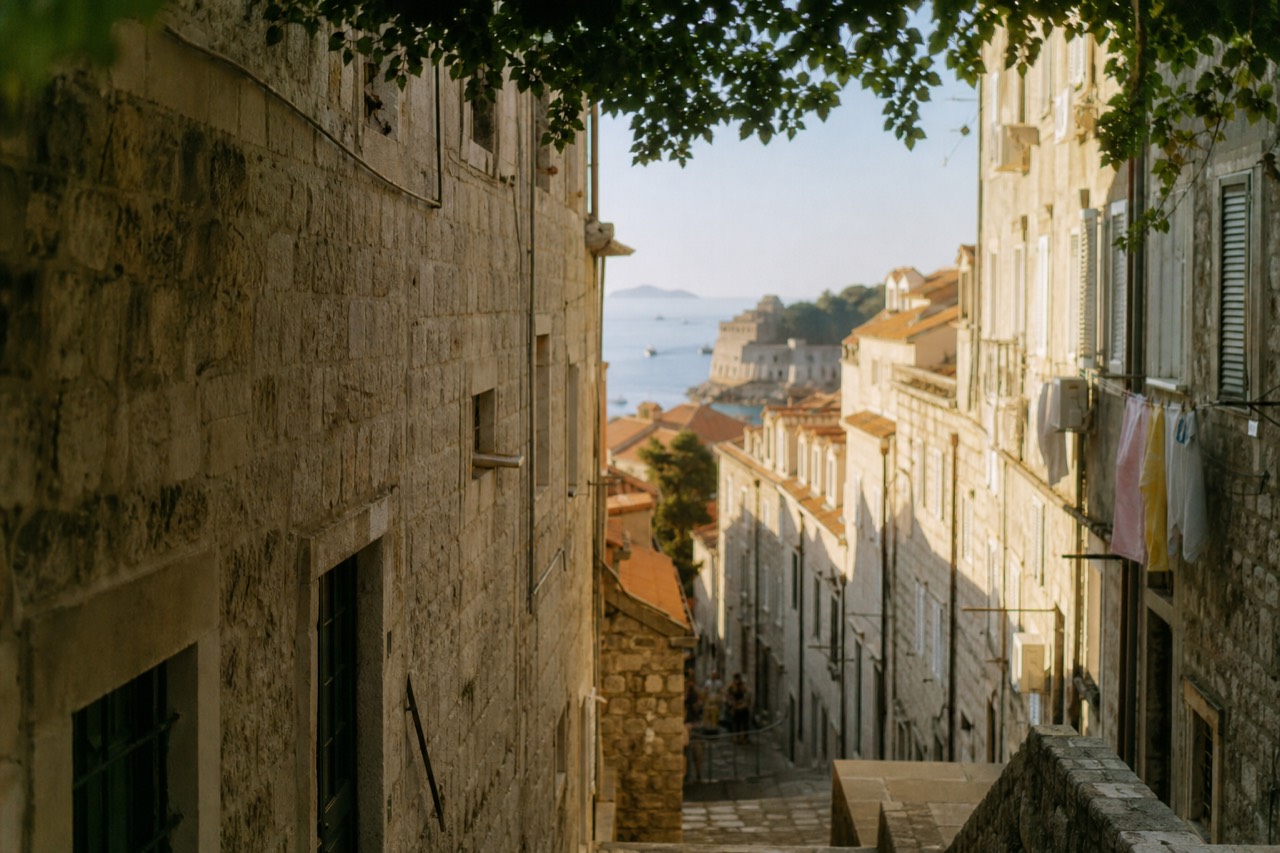
Genuinely free sights in Dubrovnik are the streets and squares themselves: the Stradun, Luža square, the Onofrio Fountain, the Old City Port, the Pile and Ploče gate approaches, every exterior staircase and viewpoint inside the walls, and the beaches outside them. The walled Old Town area of 24.7 hectares is open to walk through at any hour. Everything inside a door, including the walls circuit itself, is paid.
This distinction matters because the Old Town does not have a gate fee. You can wander the whole street plan, duck into courtyards, stand under the Sponza Palace arches and watch the harbour from the breakwater without paying a kuna's worth of anything. The Stradun itself, 298 metres of polished limestone laid out under the 1272 Statute that fixed the final plan of the city and its main street, is a public street. Nobody will ask you for a ticket to walk it.
The line is drawn at thresholds. The City Walls circuit is a paid attraction with counters at its entrances. Fort Lovrijenac across the bay is paid. Every museum, palace interior and monastery cloister is paid. The Dubrovnik Pass exists precisely to bundle that second category, the things behind doors, into one card.
It is worth being precise about what "free" means here, because search results blur it. Some pages list the walls as free with the pass, which is true in the sense that no further money changes hands at the gate, but you paid for the pass. Others list Lokrum or the cable car as pass attractions, which is flatly wrong: both are separate operators with their own tickets, and no pass tier includes either. If a listicle promises you the cable car on the Dubrovnik Pass, close the tab.
A short list of what costs nothing and what does not:
| Free to enter | Paid, covered by the pass | Paid, not covered |
|---|---|---|
| The Stradun and all Old Town squares | City Walls circuit | Cable car ride |
| Onofrio Fountain exterior | Fort Lovrijenac | Lokrum Reserve |
| Old City Port and breakwater | Rector's Palace | Trsteno Arboretum |
| Churches during services | Maritime and Ethnographic museums | Aquarium |
| Beaches at Lapad and elsewhere | Franciscan Monastery Museum | Homeland War Museum |
One practical note from someone who walks these streets daily: the free layer of Dubrovnik is not a consolation prize. Early morning on the Stradun before the day-trippers arrive, or the lanes of the northern ridge above the cathedral at dusk, are the experiences people remember as much as any ticketed interior. Plan the paid sights around them, not instead of them. If you are working out a full day, our one day Dubrovnik itinerary sequences the free and paid layers so you are indoors when the sun is brutal and on the streets when the light is good.
What Does the Dubrovnik Pass Include?
The pass includes the City Walls plus Lovrijenac Fortress, ten museums and galleries in the city, a public bus ticket for the pass duration, and, on the three-day and seven-day tiers only, suburban bus coupons and House Bukovac in Cavtat. Prices are 40 euro for one day, 50 for three days and 60 for seven, sold for the 1 March to 30 November season in a single adult ticket type.
Those prices and that season window come from the pass operator's own checkout, which labels the product "SUMMER 2026, 01.03.2026 to 30.11.2026" and offers no other season. There is exactly one ticket type on sale, ADULT PASS (7+). If you are travelling in December, no pass tier is on sale at all, and this whole page stops applying: the standalone walls ticket drops to 20 euro in December and you would buy individual museum tickets instead. Other pages covering the same trip are gathered on Things to Do in Dubrovnik.
The full structure, tier by tier:
| Pass tier | Price | Sights included | Transport |
|---|---|---|---|
| 1 day | 40 euro | Walls, Lovrijenac, nine city sights | 24h city bus ticket |
| 3 days | 50 euro | Same ten, plus House Bukovac in Cavtat | 72h bus ticket, suburban coupons |
| 7 days | 60 euro | Same ten, plus House Bukovac in Cavtat | 168h bus ticket, suburban coupons |
The one-time-visit rule is stated verbatim in the checkout: you are entitled to a one-time visit to the City Walls and all other cultural institutions regardless of the pass type. So a seven-day pass is not a seven-day museum subscription. It is a bundle of single entries with a week to use them.
The bus ticket is the quietly valuable part. The 24-hour ticket on the one-day pass covers the airport-adjacent and Lapad bus corridors, and the suburban coupons on the longer tiers cover a ride to Cavtat, which pairs neatly with the House Bukovac entry those tiers include. If your hotel is in Lapad, that bus inclusion alone saves you a couple of single fares a day.
The pass also carries discounts at partner restaurants, souvenir shops and travel agencies, per the City's own project page for the card. Treat those as a small bonus rather than a reason to buy: the discounts are modest, the partner list changes, and nobody should plan a dinner around a card. The sights and the buses are the real content.
For the full sight-by-sight breakdown of every inclusion, including the museums in detail, our Dubrovnik Pass guide carries the complete tier comparison. This page answers the attractions question; that one handles the buying logistics.
Which Museums Are Included in the Dubrovnik Pass?
The museums included are the Rector's Palace, the Maritime Museum, the Ethnographic Museum, Marin Držić House, the Dubrovnik Natural History Museum, the Friars Minor Franciscan Monastery Museum, the Museum of Modern Art Dubrovnik, the Dulčić-Masle-Pulitika Gallery, Pulitika Studio and the archaeological exhibitions. The three-day and seven-day passes add House Bukovac in Cavtat. Each is a single entry per pass.
Ten institutions sounds like a lot, and it is, but they are not equal. The Rector's Palace is the anchor: the Gothic-Renaissance seat of the Ragusan government, with its courtyard, state rooms and museum displays, it is the one museum almost every visitor should enter. The Maritime Museum, up in Fort St John at the harbour mouth, explains how a small republic became a sea power, and the fort walls themselves give you one of the better free-feeling views in the city even though you paid to be there.
The Ethnographic Museum in the granary building at Rupe covers traditional life in the Dubrovnik hinterland, and the Natural History Museum sits near the Sponza Palace. Marin Držić House is a small literary museum devoted to the city's great Renaissance playwright. The monastery's cloister is one of the loveliest quiet corners in the Old Town, and the museum holds its collection, including the pharmacy, which is often described as one of the oldest pharmacies in Europe.
The modern-art cluster, the Museum of Modern Art in the Banac palace, the Dulčić-Masle-Pulitika Gallery and Pulitika Studio, is genuinely good and genuinely under-visited. On a hot afternoon these are the coolest rooms in the city, in both senses. A realistic museum day looks something like this:
| Museum | Where it sits | Best paired with |
|---|---|---|
| Rector's Palace | Luža, off the Stradun | Sponza Palace exterior, cathedral |
| Maritime Museum | Fort St John, Old City Port | Aquarium next door, breakwater walk |
| Ethnographic Museum | Rupe, above the Stradun | Northern lanes, Jesuit staircase |
| Franciscan Monastery Museum | Stradun west end | Onofrio Fountain, Pile Gate |
| Museum of Modern Art | Banac palace, Ploče side | Ploče Gate views, port walk |
The honest planning advice: most visitors use three or four of the ten, not all ten. If museums are your reason to travel, the longer tiers pay for themselves easily. If they are not, the pass decision collapses to the walls question, which is the next section.
A note on pacing, because the geography punishes greed. The Rector's Palace, the Natural History Museum and the Franciscan Monastery Museum sit within a few minutes' walk of the Stradun, but the Maritime Museum at Fort St John and the Museum of Modern Art on the Ploče side sit at opposite ends of the Old Town. Add House Bukovac, which is in Cavtat, a bus or boat ride away, and the three-day tier starts to look less like a discount and more like a schedule. Build the museum list around where you will actually be, not around the length of the inclusion list.
Is It Worth Buying a Dubrovnik Pass?
In main season, 1 March to 30 November, the one-day pass costs 40 euro, exactly the same as the standalone walls plus Lovrijenac ticket, so every museum entry and the bus ticket is effectively free on top. If you will enter even two museums besides the walls, the one-day pass wins. In December the walls ticket falls to 20 euro and no pass is on sale, so the comparison only holds in the main season.
That equivalence is the whole value case, and it is worth spelling out. The 40 euro walls ticket is actually the walls plus Fort Lovrijenac combination; there is no cheaper walls-only ticket. It also covers the Western Outer Wall, closed December through February, and the Collection of Coins of the Republic of Ragusa at Gundulić Square. Bought alone, Lovrijenac Fortress is 15 euro. So the standalone route to walls plus Lovrijenac is 40 euro, and the pass route is also 40 euro with ten museums and a bus ticket attached.
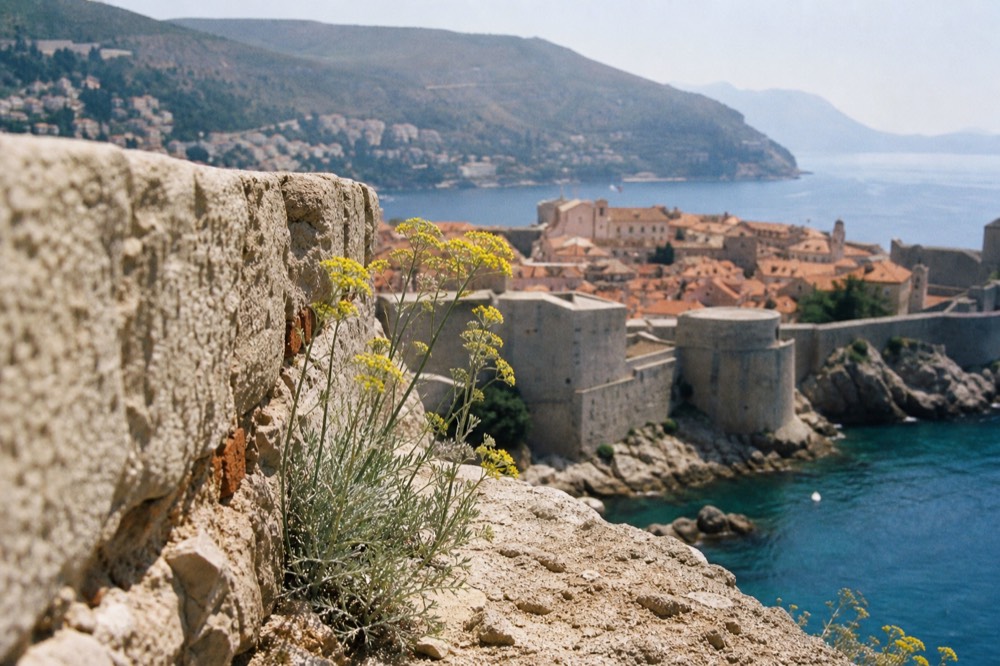
The walls themselves deserve their entry fee regardless of the pass arithmetic: 1,940 metres of circuit, up to 25 metres high, 4 to 6 metres thick on the land side and 1.5 to 3 metres on the sea side, with 16 towers, 3 fortresses and 6 bastions along the way, a circuit whose shape was reached in the 13th century and finished in 1660 with the Bastion of St Stephen. The operator's stated hours at the time of check were 08:00 to 19:30, though seasonal hours are a separate question.
For many people a guide adds more than a card does. The Ancient City Walls and Wars Walking Tour runs about 2 hours from $29.58 per person and is rated 4.8 across 1,387 reviews; it walks the circuit with the fortifications explained rather than just admired. One review captures the difference well:
This well organized tour helped put Dubrovnik's past (and present) into perspective. It's incredible that the city walls have withstood the test of time. Antun was a wonderful guide.
linda_a
For the deeper question of whether the pass fits your itinerary length, our is the Dubrovnik Pass worth it page runs the numbers across trip lengths. The one-line version: one full day, buy the one-day pass; three days with any museum interest, the 50 euro tier; a week, the 60 euro tier is close to a formality.
One more timing fact that genuinely changes plans: cruise passengers at the Port of Dubrovnik peaked in September 2025 at 101,246 and October at 100,132, above July's 96,072 and August's 87,385, with 625,257 across the full year and 461 calls scheduled for 2026. The Port Authority limits cruise passengers to 8,000 a day in most cases, and the Old Town's official carrying capacity, from the UNESCO carrying-capacity assessment, is 11,275 people, tracked by six counters at the entrances updating every 15 minutes. The practical takeaway is that September is not the quiet shoulder month people imagine, and the walls are best walked at opening time in any case. More on that in our Dubrovnik in September guide.
Whichever way you decide, the three products below are the ones that pair best with a pass purchase: the Old Town walk for orientation, the walls walk for the circuit with a guide, and the cable car and museums multipass for anyone who wants the view without buying the full city pass.
Common Questions About the Dubrovnik Pass
What attractions are free with the Dubrovnik pass?
The pass covers the City Walls plus Fort Lovrijenac, the Rector's Palace, the Maritime Museum, the Ethnographic Museum, Marin Držić House, the Natural History Museum, the Franciscan Monastery Museum, the Museum of Modern Art, the Dulčić-Masle-Pulitika Gallery, Pulitika Studio and the archaeological exhibitions, plus a bus ticket. The three-day and seven-day tiers add House Bukovac in Cavtat. Each sight allows one entry only.
Does the Dubrovnik Pass Include the City Walls?
Yes. Every tier lists City Walls plus Lovrijenac Fortress as its first inclusion, and the checkout confirms a one-time visit to the walls and all other institutions regardless of tier. You cannot walk the walls twice on any pass.
Can You Walk the Dubrovnik Walls Twice on a Pass?
No. The one-time-visit rule applies to every institution including the walls, on every tier. If you want a second circuit, you would buy a second standalone ticket, which in main season is 40 euro for adults and 15 euro for children 7 to 18, with under 6 free.
Is the Dubrovnik Pass Worth It for One Day?
Usually yes in main season. The one-day pass costs 40 euro, the same as the standalone walls plus Lovrijenac ticket between 1 March and 30 November, so the ten museums and the 24-hour bus ticket cost nothing extra. In December no pass is on sale and the walls ticket alone drops to 20 euro.
Does the Dubrovnik Pass Include the Cable Car or Lokrum?
No. The cable car is a separate operator, priced at 30 euro adult round trip in 2026, and the Lokrum Reserve ticket is 30 euro per person covering reserve entry and the return boat. Neither is bundled into any pass tier.
Which Museums Are Included in the Dubrovnik Pass?
The Rector's Palace, Maritime Museum, Ethnographic Museum, Marin Držić House, Natural History Museum, Franciscan Monastery Museum, Museum of Modern Art, Dulčić-Masle-Pulitika Gallery, Pulitika Studio and the archaeological exhibitions. House Bukovac in Cavtat is added on the three-day and seven-day tiers only.