What Is the Coldest Month in Dubrovnik?
February is the coldest month in Dubrovnik by the verified sea-temperature record, with January close behind. Here is what the cold months actually feel like, what closes, and when to go instead.
What Is the Coldest Month in Dubrovnik?
February is the coldest month in Dubrovnik by the verified sea-temperature record: the long-run February average is 14.0 degrees Celsius, fractionally below January's 14.3, with December at 16.0 and March back up at 14.2. Those figures are NOAA's 1991 to 2020 open-water averages for the grid cell off Dubrovnik, not a beach thermometer, and they mark February as the yearly minimum.
That distinction matters more than it sounds. A lot of pages will tell you January is the coldest month and leave it there, usually quoting an air temperature they never sourced. This site's verified dataset is the sea surface series, read from NOAA's OISST v2.1 long-term monthly means at the 0.25-degree cell that contains the Old Town, and cross-checked against an independent EU marine climatology that agrees within about one degree in the months that matter. On that record, February edges January by three tenths of a degree. For a traveller deciding between the two, the practical difference is nil: both are the bottom of the year.
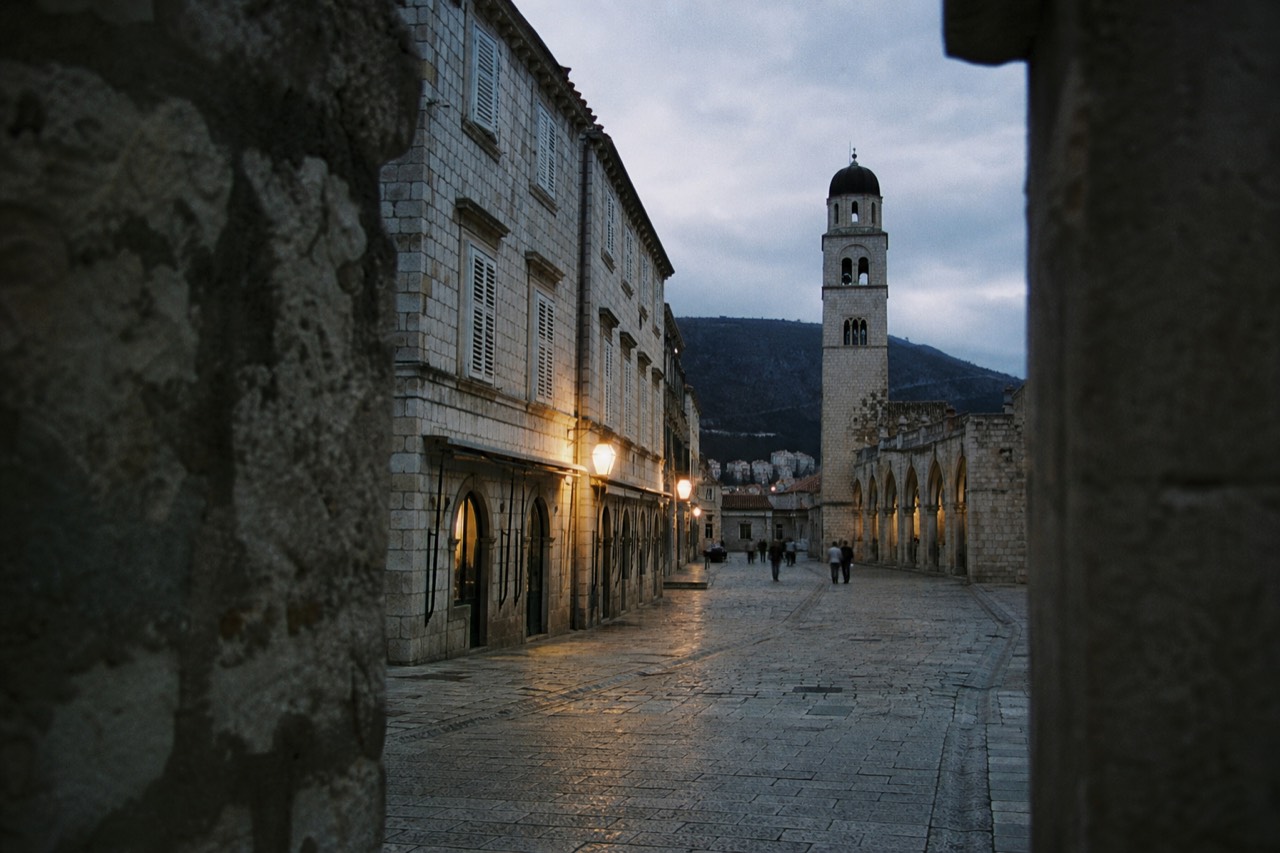
What cold actually means here deserves a reality check. Dubrovnik sits on the southernmost stretch of the Croatian coast, and the sea around it never drops out of the low teens. The city does not get the hard freezes that hit inland Croatia, and snow on the Stradun is a rare event rather than a winter feature. The cold months are grey, quiet, occasionally windy, and dramatically emptier than the season. Six counters at every Old Town entrance track a live headcount every 15 minutes, and the official carrying capacity for the historic core is 11,275 people. On a February afternoon the count sits far below the summer peak of 7,739 that the same system recorded at 10:00 on a September day.
There is a reason this site leans on the sea series rather than air temperature for the coldest-month call. Air temperature in Dubrovnik swings hard within any single day, and a single afternoon reading tells you almost nothing about the month it came from. The sea, by contrast, integrates weeks of weather: it cools slowly through autumn, bottoms out in the depths of winter, and warms slowly again through spring. When the February sea average is 14.0 and the March average is 14.2, you are looking at the thermal floor of the whole Adriatic year in this cell. It is the most stable, most defensible way to rank the months, and it happens to answer the question cleanly.
Here is the full monthly sea-temperature series, quoted exactly as the dataset gives it:
| Month | Sea temperature (°C) | Month | Sea temperature (°C) |
|---|---|---|---|
| January | 14.3 | July | 24.9 |
| February | 14.0 | August | 25.8 |
| March | 14.2 | September | 23.6 |
| April | 15.4 | October | 21.0 |
| May | 18.6 | November | 18.5 |
| June | 22.5 | December | 16.0 |
Two honesty notes travel with that table. First, these are open-water grid-cell averages, so a sheltered bay in August will read warmer than 25.8: the Croatian met service's own Dubrovnik buoy read 27.0 to 27.4 degrees across 8 September 2026 against a 23.6 September mean, which is exactly the gap you would expect between a long-run average and shallow, sun-warmed water. Second, the series is NOAA's, corroborated by EMODnet and SeaDataNet, and it is not a Croatian government figure, because no Croatian authority publishes a monthly sea-temperature climatology at all. The Croatian met service measures sea temperature at a buoy off Dubrovnik, but its public page serves the current day only, with no archive, which is precisely why the long-run series has to come from an international oceanographic dataset.
The cold months also change what is open. The cable car closes completely from January to March, reopening in April with 09:00 to 21:00 hours. The Western Outer Wall section of the city walls closes December, January and February. The main walls circuit stays open, and in December the adult ticket drops from 40 euro to 20 euro, with the child 7 to 18 ticket at 5 euro and under 6 free. There is no family ticket at any time of year, only those two paid types. The Dubrovnik Pass is sold for the summer window, 1 March to 30 November, so no winter pass tier is on sale at all: that is worth knowing before you read any page claiming the pass always matches the walls ticket. It does, in main season only.
Those three tours are the ones this page routes to because they fit the seasons this article is really about: the boat days of the warm months and the walls walk that works even when the sea is at its February minimum. The Old Town and walls combo runs about 3 hours 30 minutes from $50.94 per person and is rated 4.8 across 1,183 reviews, and it is the pick I would point a cold-month visitor toward, since the walls are open all winter and the walking never depends on water temperature.
What Is the Best Month to Go to Dubrovnik?
For most travellers the best month is a shoulder month: May, June, September or early October. The sea is swimmable from June at 22.5 degrees through September at 23.6, October still holds 21.0, and cruise crowds peak in September and October, not July and August, so June and May buy you warm water before the busiest cruise months land.
That last point is the one almost every other guide gets backwards, and it is the single most useful fact in this article. Port Authority data shows 2025 cruise passengers peaked in September at 101,246 and October at 100,132, both above July's 96,072 and August's 87,385. The trade assumption that summer is the crush and autumn is quiet is simply wrong here. September and October are the two busiest cruise months of the year in Dubrovnik. If your goal is fewer people, the months that deliver are May and June, or the genuinely quiet stretch from November through March.
The cruise schedule explains the shape of the year. There are 461 cruise calls scheduled for 2026, and the Port Authority limits cruise passengers to 8,000 a day in most cases, with about forty call requests refused in a season to hold that line. Of 243 cruise days a year only 18 exceed 8,000, and only 4 go slightly above 10,000. So the port is managed, but managed around an autumn peak. Pair that with the sea-temperature curve and the month-by-month picture looks like this:
| Month | Sea temperature (°C) | 2025 cruise passengers | What it means |
|---|---|---|---|
| May | 18.6 | 84,107 | Warm air, cool sea, moderate crowds |
| June | 22.5 | 82,642 | Swimmable water, lowest cruise count of the warm season |
| July | 24.9 | 96,072 | Peak heat, high crowds |
| August | 25.8 | 87,385 | Warmest sea of the year |
| September | 23.6 | 101,246 | Busiest cruise month, warm sea |
| October | 21.0 | 100,132 | Second busiest cruise month, cooling sea |
Note what those cruise figures are: ship capacity, not people who actually walk ashore. Write "up to 101,246 cruise passengers scheduled" and you are honest; write "101,246 people were in town" and you have overclaimed. The same caution applies to the yearly totals: 625,257 cruise passengers passed through the port in 2025, up from 582,499 in 2024, and the city also recorded about 4.2 million overnight stays in 2025, sharing first place among Croatian destinations with Rovinj. Those are big numbers for a city of 41,562 residents at the 2021 census, and they are exactly why the shoulder-month question is worth asking seriously rather than defaulting to August.
The counterweight to all of this is what the shoulder months give up. May's sea at 18.6 degrees is brisk for anything longer than a quick dip, and the first half of October can turn unsettled as the season tips toward November's 18.5. September gives you the warmest late-season water of the year outside August, but you share the Old Town with the year's heaviest cruise traffic. June is arguably the cleanest trade in the table: the sea has crossed into genuinely swimmable territory at 22.5, the cruise count is the lowest of the warm season at 82,642, and the peak-heat days of July and August are still ahead of you. Every month in the table buys you something and charges you something for it, and the honest answer is to match the trade to what you came for.
For the full month-by-month breakdown, including the months this table skips, read the site's month-by-month Dubrovnik weather guide. For the wider question of timing a first visit, the best time to visit Dubrovnik guide covers the trade-offs in depth.
If you land in the warm half of the year, the Blue Cave and Sunj Beach boat tour is a strong use of a day: it runs from $63.48 per person, is rated 4.87 across 3,105 reviews, and pairs a cave swim with the long sandy shallows of Sunj on Lopud, water that suits the June-to-September window. Check availability alongside the Blue Cave and Sunj Beach tour page.
What Is the Rainiest Month in Dubrovnik?
The honest answer is that this site's verified dataset covers sea temperature and visitor counts, not rainfall, so no rainfall figure is printed here. What can be said with confidence is that rain in Dubrovnik is a shoulder-season and winter consideration rather than a summer one, and the weather-by-month guide carries the planning detail.
I would rather tell you that plainly than quote a rainfall number I cannot source. A lot of travel content prints confident monthly rainfall tables with no origin at all, and this site's research passes verified prices, sea temperatures, cruise counts and opening seasons against primary sources, but did not close a rainfall record. The practical guidance stands regardless: the cold half of the year, November through March, is when grey days and rain most affect a Dubrovnik trip, and the warm season is predominantly dry and sunny. If a wet day does land on your trip, the site maintains a full rainy day Dubrovnik itinerary built around museums, the Rector's Palace, the Franciscan Monastery and covered old-town interiors.
One planning note connects rain to the coldest-month question. The months when the weather is least reliable, roughly November to February, are also the months when the visitor count is at its floor. The same six-counter system that recorded a 7,739 peak at 10:00 on a September morning shows the Old Town near-empty in the depths of winter. If your priority is having the walls and the Stradun to yourself, and you accept shorter days, cool air and the chance of rain, the cold months deliver an experience the summer crowd never sees. If your priority is swimming, boats and blue water, they are simply the wrong months, and the sea-temperature table above is the honest boundary line between the two.
A wet-weather plan in Dubrovnik also benefits from the pass arithmetic, with one seasonal caveat. In main season the one-day Dubrovnik Pass costs 40 euro, the same as the standalone walls ticket, and adds ten more sights plus a 24-hour bus ticket, which makes it an easy call for a museum-heavy rainy day. But no winter pass tier is on sale, so between December and February the rainy-day plan is built from individual tickets instead, starting from the 20-euro December walls price. The Dubrovnik Pass guide walks through every inclusion, including the fact that each sight, the walls included, is a one-time visit on any tier.
What Is the Coldest Month in Croatia?
Croatia's coldest month is the same calendar month everywhere, January or February depending on the measure, but the coldest places are inland, not on the coast. Continental Croatia around Zagreb takes hard freezes and snow, while the Dalmatian coast, Dubrovnik included, stays comparatively mild, with the sea never dropping below 14.0 degrees.
Croatia spans two climates. The inland north has a continental regime: real winter, sub-zero nights, snow that stays on the ground. The narrow coastal strip has a Mediterranean one: mild, damp winters and hot, dry summers. Dubrovnik sits at the warm southern end of that coastal strip, which is why its verified sea-temperature minimum, 14.0 degrees in February, reads almost gentle next to what the continental interior endures. No verified air-temperature figure for Zagreb or any inland station appears in this site's research pack, so none is printed here, but the pattern itself is not in dispute: if you are travelling Croatia in winter and want the mildest option on offer, the far south coast is it.
That has a practical routing consequence. Winter visitors often combine Dubrovnik with inland stops or with Mostar over the border in Bosnia and Herzegovina, and the Mostar day trip guide is worth reading with the season in mind, because the inland segments of that route are measurably colder than the coast you start from. The same applies to the Dubrovnik in winter guide, which covers what stays open when the season ends: the walls circuit, the Old Town churches and museums, and the December price drop on the walls ticket from 40 euro to 20 euro.
The two-climate split also explains why the coldest-month question gets answered differently depending on who you ask. A Zagreb resident and a Dubrovnik resident mean entirely different things by cold: one is describing ice on the pavement, the other a stiff bura wind and a grey sea. If your itinerary runs down the whole coast, from Istria to Dubrovnik, the winter experience softens steadily as you move south, and the far south is where the season stays most workable. That is worth building into the plan rather than discovering it: a January route that starts in the continental interior and finishes in Dubrovnik gets progressively easier as it goes, while the reverse order ends on the harshest note.
What to Do When the Cold Months Rule Out the Sea
The cold months push a Dubrovnik trip toward the walls, the Old Town walks and the museums, and away from boats and beaches. The walls circuit is open year-round, the combo walking tour runs about 3 hours 30 minutes from $50.94, and the Lokrum reserve's boat season is a warm-month proposition tied to its 09:00 then every-15-minutes schedule.
Lokrum is the clearest example of the seasonal divide. The reserve's ticket is 30 euro per person and covers both entry and the return boat transfer, with boats leaving the City Harbour at 09:00 and then every 15 minutes from 10:00 to 18:00, and the ticket office at Luža working 08:00 to 18:00. That schedule is a summer operation, and a February sea temperature of 14.0 degrees makes the island's swimming coves a spectator sport. The Lokrum Island guide covers the reserve in full for the months when it earns its price.
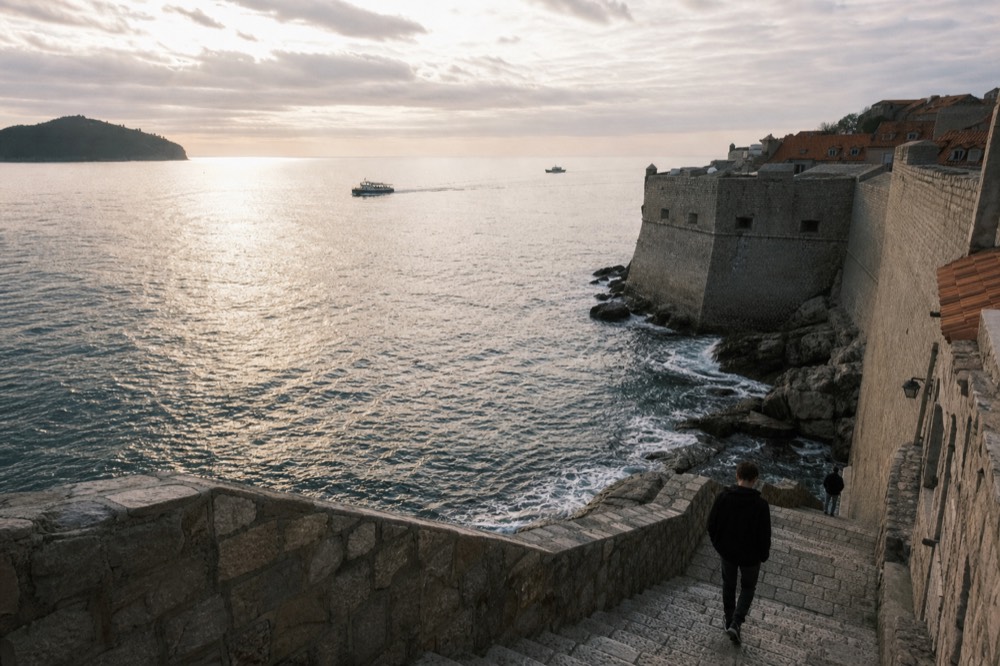
The walls, by contrast, lose nothing but their queues. The circuit is 1,940 metres long, up to 25 metres high, and 4 to 6 metres thick on the land side, and the operator's stated hours at the time of check ran 08:00 to 19:30. Walking it in December at the 20-euro off-season price, with the crowd counter sitting near its yearly floor, is one of the quietest ways to see the city. The city walls tickets guide has the full pricing detail, including the fact that the 40-euro main-season ticket is a walls plus Fort Lovrijenac combination, and that Lovrijenac, standing on its 37-metre sea rock, can also be bought alone for 15 euro.
For the boat-shaped days, plan them into the warm months and book early in your trip rather than late, so a windy day can be rescheduled. The Lokrum and Betina Cave boat tour runs from $39.42 per person and is rated 4.6 across 1,154 reviews, a shorter, cheaper format than the Blue Cave day if your sea window is tight.
The Old Town and walls combo walk suits the cold months better than any boat. It runs about 3 hours 30 minutes, costs from $50.94 per person, and carries a 4.8 rating across 1,183 reviews, pairing the street-level history with the full walls circuit in one guided block. On a cool, grey February day, that is the shape of a good Dubrovnik plan: stone, stories and an early dinner, with the sea left to its yearly minimum.
Whatever month you choose, the pages on Things to Do in Dubrovnik break the city down by season and by neighbourhood, and the cluster guide behind this question, the best time to visit guide, is the natural next stop.
Common Questions About the Coldest Month in Dubrovnik
What is the coldest month in Dubrovnik?
February is the coldest month by the verified sea-temperature record, with a long-run average of 14.0 degrees Celsius, fractionally below January's 14.3. The figures are NOAA 1991 to 2020 open-water averages for the grid cell off Dubrovnik, not a beach reading. Practically, January and February are equally cold, equally quiet, and equally unsuited to swimming.
Is Dubrovnik Cold in Winter?
Mild by continental standards, cool by Mediterranean ones. The sea never drops below 14.0 degrees, the city avoids the hard freezes that hit inland Croatia, and the main winter drawbacks are grey days, rain and short daylight rather than severe cold. The cable car closes January to March, and the Western Outer Wall closes December through February.
Can You Swim in Dubrovnik in the Cold Months?
Not comfortably. The sea-temperature record puts November at 18.5 degrees and December at 16.0, falling to the February minimum of 14.0. Most swimmers would call anything below about 20 degrees a short dip, which in this series means the realistic swimming window runs roughly June at 22.5 through October at 21.0.
What Is the Best Month to Go to Dubrovnik?
May or June for the best balance of warm water and manageable crowds, or September if you want the warmest late-season sea and accept the year's busiest cruise month. Cruise passengers peaked in September at 101,246 and October at 100,132 in 2025, above July and August, so the quiet warm months are May and June, not autumn.
Is the Dubrovnik Pass Worth It in the Cold Months?
No winter pass tier is on sale at all: the pass is sold for the summer window, 1 March to 30 November, at 40 euro for one day, 50 for three days and 60 for seven. In December the standalone walls ticket drops to 20 euro, so the main-season equivalence between the one-day pass and the walls ticket does not hold in the cold months.