What Is the Main Religion in Dubrovnik?
Roman Catholicism shapes Dubrovnik's churches, festivals and daily rhythm. Here is what that means for a visitor, plus the food, etiquette and sights questions travellers ask next.
What Is the Main Religion in Dubrovnik?
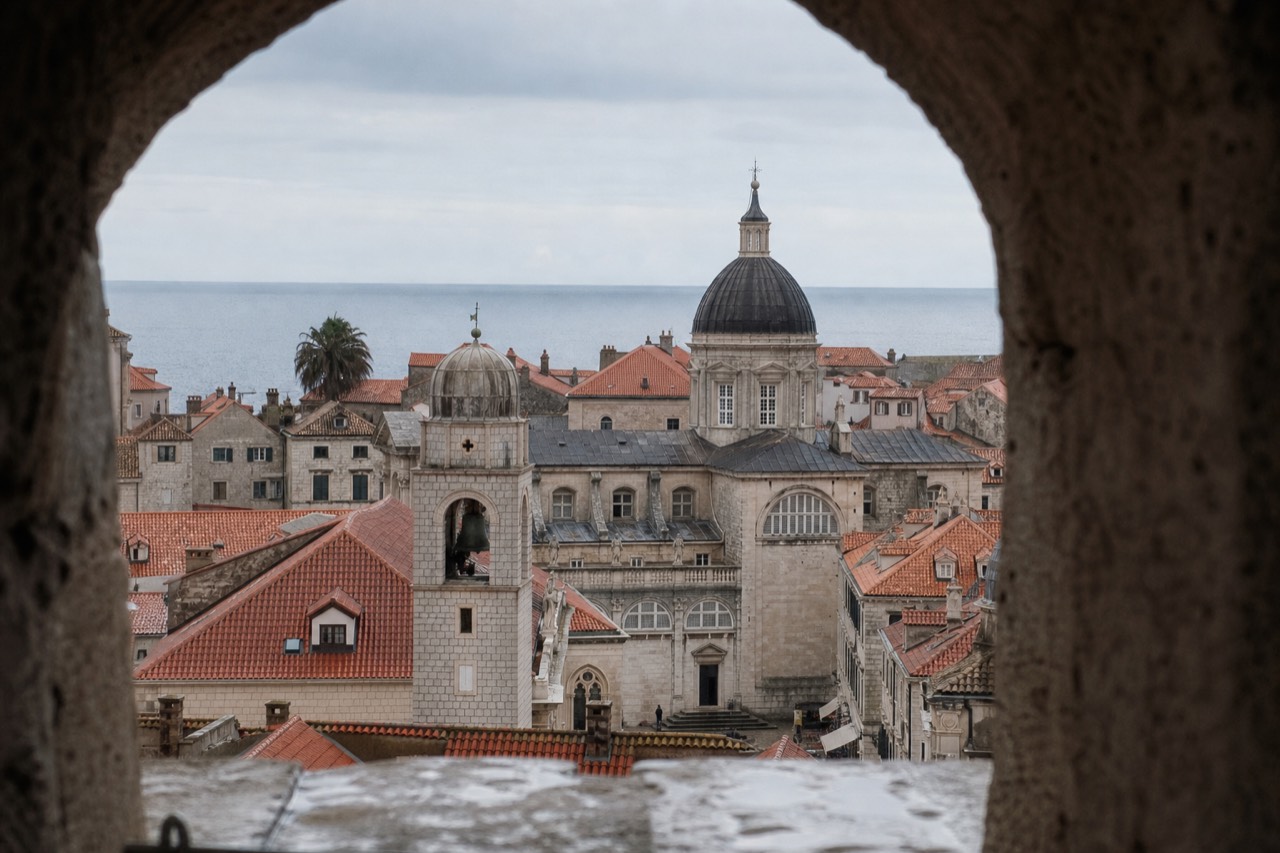
The main religion in Dubrovnik is Roman Catholicism, as it is across Croatia, where Catholicism is the faith of the large majority and the country's cultural default. Inside the walled Old Town the evidence is physical: the Dubrovnik Cathedral, the Franciscan Monastery, the Dominican Monastery and a skyline of church towers, all within 24.7 hectares.
I walk these streets for a living, and the honest answer to this question is that religion in Dubrovnik is less a private matter than a piece of civic architecture. The city's patron is St Blaise, and his image looks down over the city from niches and cornices you will spot within an hour of arriving. Visitors often ask me about him without knowing his name, because the statue above the main gate, showing a bishop holding a model of the city, is one of the first things everyone photographs. If the story interests you, we cover it in detail in why St Blaise is the patron saint of Dubrovnik.
Practically, what Catholicism means for a traveller is rhythm. Church bells mark the hours across the Old Town. Sunday masses fill the cathedral and the monastery churches, and religious feast days can close streets, fill the Stradun with processions, or add an unexpected solemnity to a day you had planned for sightseeing. Services are generally open to visitors who behave respectfully, and the great churches double as the city's most important art venues, holding paintings, reliquaries and treasury collections that rank alongside the museums.
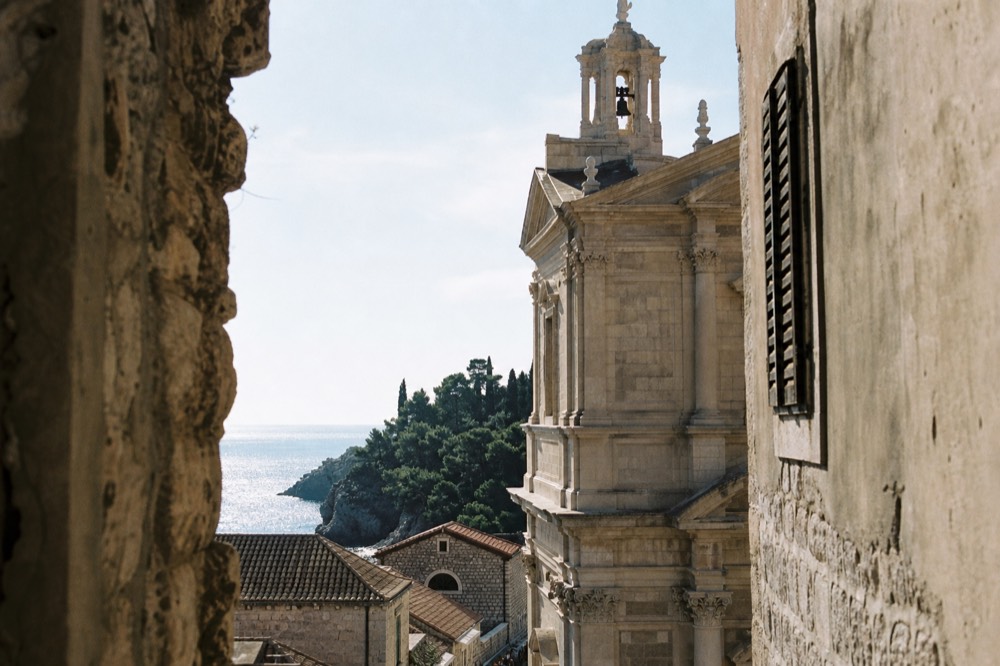
Two practical notes worth having before you go. First, modest dress is expected in working churches: covered shoulders and knees, hats off, and voices low. Second, several of the religious sites charge admission or are bundled into the Dubrovnik Pass, so a little planning saves both money and queueing. The pass and the walls interact in a way that surprises people, and I come back to it below.
The Old Town's UNESCO inscription, under reference C 95bis, covers the whole historic core, churches included, and the area was on the World Heritage in Danger list from 1991 to 1998, a period locals still discuss openly. The city's population at the 2021 census was 41,562, and the walled core is a living parish, not a museum set. That mix of worship and tourism is exactly why the etiquette questions in this article matter.
It is worth saying something about how the two coexist day to day. On a normal morning the cathedral sees a steady trickle of worshippers alongside camera-carrying visitors, and the ushers who manage that flow are patient with both. The Franciscan Monastery sits steps from the Stradun's western end, and its cloister is one of the calmest corners in the entire Old Town precisely because so many people walk past its entrance without realising what is inside. The monastery museum is one of the sights covered by the Dubrovnik Pass, and the pharmacy inside is often described as one of the oldest pharmacies in Europe. If you want a quiet hour between the walls and the museums, that cloister is where I send people.
If you want the classic first visit to the Old Town with a local guide, the most affordable paid option starts from $20 per person and is rated 4.8 across 5,826 reviews. Here are the three experiences most first-time visitors compare:
What Is the Main Food in Dubrovnik?
The main food in Dubrovnik is fresh Adriatic seafood, grilled simply and served in konoba-style restaurants, with black risotto, grilled fish, squid and shellfish leading most menus. Behind the seafood sits a Dalmatian pantry of olive oil, prosciutto, cheese and peka, the slow-cooked meat-and-vegetable dish that is the region's signature Sunday meal.
A konoba is the Dalmatian answer to a tavern, and in Dubrovnik the good ones display the day's catch on ice so you can point at what you want weighed and grilled. This is the food the city actually eats, and it is the honest answer to the food question even though the tourist strips near the Stradun will offer you plenty else. The Stradun itself is 298 metres long, laid out under a statute from 1272, and the eating gets better the further you climb into the side streets off it.
Peka deserves a special mention because you usually have to order it ahead. It is meat, often lamb or octopus, slow-cooked under a domed metal lid covered with embers, and it takes hours, which is why a cooking lesson built around it runs about four hours. The Peka Cooking Lesson from the roster starts from $159.83 per person and turns the wait into the point: you learn the technique and eat the result.
The regional specialities worth seeking out are oysters and wine from the Pelješac peninsula and nearby Ston, where oyster farming is a local industry you can visit on a day trip. The oyster, mussel and wine tasting tour to Ston starts from $157 per person, is rated 4.9 across 111 reviews, and includes lunch. For a deeper dive into what to order and why, see what is the signature dish of Dubrovnik.
Wine belongs in the same sentence as the food, because Dalmatian dining treats it as a staple rather than an occasion. If you are curious how the local bottles stack up, our guide to wine tasting around Dubrovnik covers the cellars you can reach without a car.
For travellers who would rather taste their way through the city on foot, the food and drink walking tour with a local guide runs about three hours, starts from $165.64 per person, and is rated a perfect 5 across 704 reviews.
What Not to Do in Dubrovnik?
Do not assume July and August are the busiest months, because cruise passengers actually peaked in September at 101,246 and October at 100,132 in 2025, above July's 96,072 and August's 87,385. Do not climb the walls at midday in summer, do not expect to walk them for free, and do not treat churches, stairs and residents' doorsteps as photo props.
The crowd mistake is the big one, and the data behind it comes from the Port Authority itself. Full-year 2025 brought 625,257 cruise passengers, up from 582,499 in 2024, and 461 cruise calls are scheduled for 2026. The Port Authority limits cruise passengers to 8,000 a day in most cases, and of 243 cruise days a year only 18 exceed that number, with only 4 days a year slightly above 10,000. About forty call requests were refused in a single season to hold that line. The Old Town has its own counting system, six counters at every entrance updating a headcount every 15 minutes, against an official carrying capacity of 11,275 people. On one September morning the count read 5,419 at 08:00, peaked at 7,739 at 10:00, and still stood at 7,205 at 11:00. The lesson: go early, and do not assume the shoulder season is quiet. The wider set of guides lives on Things to Do in Dubrovnik.
| Month 2025 | Cruise passengers | What it means for you |
|---|---|---|
| July | 96,072 | Busy, but not the peak |
| August | 87,385 | Hot and full, yet below September |
| September | 101,246 | The busiest cruise month of the year |
| October | 100,132 | Second busiest, mild weather |
The walls deserve their own warnings. The adult ticket is 40 euro in main season, 1 March to 30 November, and 20 euro in December, with children 7 to 18 at 15 euro then 5 euro, and under 6 free. There is no family ticket, and the 40-euro ticket is actually the walls plus Fort Lovrijenac combination, which also covers the Western Outer Wall, closed December through February, and the coin collection. Operator-stated hours at the time of check were 08:00 to 19:30. The circuit is 1,940 metres long, up to 25 metres high, and largely unshaded stone stairs, so midday in July is genuinely punishing. Walk it at opening or in the late afternoon, carry water, and wear real shoes.
A few smaller don'ts. Do not swim expecting warm water outside summer: the long-run averages for this coast are 14.3 degrees in January and 16.0 in December, against 25.8 in August, and those are open-water figures, not beach readings. Do not lean on the "two ships a day" line you may have read; the Port Authority's own limit is the 8,000-passenger daily figure with a "2+1" berthing arrangement. And do not block the narrow lanes with a photoshoot at rush hour, because people live here and the lanes are their commute.
One more, since this article started with the churches: do not wander into a working church mid-service with a camera raised. It happens most Sundays at the cathedral, and it is the single fastest way to mark yourself as a guest who did not read the room. Wait for the service to end, or come back during the published visiting hours, and you will see the same art without the friction.
The walls admission ticket is the one product that settles the biggest queue-and-price question before you arrive. It starts from $36.37 per person and is rated 3.6 across 249 reviews, with the operator Gulliver Travel.
A note on timing the walls around the cruise schedule. The counters show that the Old Town fills fastest between mid-morning and midday, which lines up with the hours when shore excursions pour in from the port. If you are staying in the city, you have the advantage: be at the wall entrance at 08:00, when the counters typically read a few thousand heads below the 11,275 capacity, and you will share the stairs with a fraction of the midday crowd. The same logic applies to the lanes after dark, when the day-trippers have sailed and the count drops back toward the early-morning figures.
On tickets, do not plan around a same-day purchase at the gate in peak weeks. The walls are the single most popular paid attraction in the city, and the 40-euro combination covers three sites, so the queue at the main entrance can eat an hour of your morning that you could have spent on the circuit itself. Buying ahead also locks in your price, since the operator's stated hours and rates are what they were at the time of check and can move between seasons. The under-6 rule and the 7-to-18 band apply to the same combination ticket, so a family of four saves real money by checking ages before queuing at all.
What Is Dubrovnik Best Known For?
Dubrovnik is best known for its complete medieval city walls, 1,940 metres of them, wrapped around a UNESCO-listed Old Town inscribed in 1979. Add the limestone Stradun, the cable car up Mount Srd to 405 metres, and the Game of Thrones filming locations, and you have the four things the city is famous for worldwide.
The walls are the headline, and the numbers explain why. Sixteen towers, three fortresses, six bastions, two corner fortifications, three bulwarks, three moats, two flank fortresses, one breakwater and two drawbridges make up the defensive system, which reached its shape in the 13th century and was finished in 1660 with the Bastion of St Stephen. Fort Lovrijenac stands apart on a 37-metre-high sea rock, and the 40-euro main-season ticket covers both. Our full guide to the city walls walks the circuit entrance by entrance.
The cable car is the second signature. The lower terminal sits 38.0 metres above sea level and the upper terminal 405.0 metres, a 367.0-metre rise over a 778.2-metre track, travelled in 3 minutes 30 seconds at 6.5 metres per second. Adult round trip is 30 euro in 2026, one way 17 euro, children 4 to 12 pay 8 euro round trip, and under 4 rides free. The operator claims a view range of up to 60 km on a clear day, and it is not marketing fluff: on a clean autumn morning you can see the Elaphiti islands and the Montenegrin hills. Note the cable car closes January to March, with April hours of 09:00 to 21:00 stretching to midnight in June, July and August.
| Cable car ticket 2026 | Price |
|---|---|
| Adult round trip | 30 euro |
| Adult one way | 17 euro |
| Child 4 to 12 round trip | 8 euro |
| Child 4 to 12 one way | 5 euro |
| Under 4 | Free |
Game of Thrones is the third, and it is not a niche interest here: the city played King's Landing, and location tours are among the most-reviewed products in the region. The original Game of Thrones tour with Lokrum and the throne starts from $25.57 per person and carries a 4.8 rating across 6,132 reviews. One guest wrote: "Brilliant day! Tour guide was very welcoming and informative! Highly recommend if you love Game of Thrones, definitely book the extra hour to go to Lokrum Island aswell! Also helps you get your bearings in the Old Town!"
Beyond the big three, the city recorded about 4.2 million overnight stays in 2025, sharing first place among Croatian destinations with Rovinj, so the fame has consequences for crowds. The Old Town's UNESCO inscription covers 24.7 hectares with an 1,188.6-hectare buffer zone, inscribed under criteria (i), (iii) and (iv). For first-timers who want the history unlocked rather than just the views, the Old Town walking tour with a local guide starts from $20 per person and is rated 4.8 across 5,826 reviews.
What Is Dubrovnik Famous For?
Dubrovnik is famous for being the "pearl of the Adriatic" style walled city you have already seen in photographs: red rooftops inside massive stone walls, a limestone main street, island boats leaving the old harbour, and cliffside bars above the sea. Its fame now runs on three engines, heritage, Game of Thrones and cruise-ship itineraries, each pulling a different crowd.
The heritage engine is the oldest. The city was a maritime republic, the Republic of Ragusa, and its institutions survive in stone: the Rector's Palace, the Sponza Palace, the harbour with its old character, and the walls themselves. The coin collection of the Republic of Ragusa, included with your walls ticket, is a small window onto that statehood that most visitors walk past without noticing.
The pop-culture engine is newer and enormous. King's Landing scenes were filmed here, and the demand they created shows up in the review counts: the most popular Game of Thrones product in the regional roster carries 6,132 reviews on its own, and the walking-only variant adds another 1,052 at a 4.9 rating. Lokrum Island, where the throne itself sits, is a 30-euro ticket that covers reserve entry and the return boat, with departures from the City Harbour at 09:00, then every 15 minutes from 10:00 to 18:00, and the ticket stays usable for three days.
The cruise engine shapes the daily rhythm. The 2026 season holds 461 scheduled calls, and the remaining-season schedule's busiest days cluster in late September and early October, with 6 October expecting two ships and up to 5,798 passengers by capacity, 29 September two ships and 5,675, and 30 September three ships and 5,536. Those are ship-capacity figures, not a headcount of who actually walks ashore, but the pattern holds: autumn, not high summer, is when the town is fullest of day visitors.
For planning around all three engines, the practical comparison that matters is the Dubrovnik Pass. In main season the one-day pass costs 40 euro, exactly the standalone walls-plus-Lovrijenac ticket, and adds ten more sights plus a 24-hour bus ticket; three-day and seven-day passes cost 50 and 60 euro and add suburban bus coupons and House Bukovac in Cavtat. In December the walls ticket drops to 20 euro and no pass tier is on sale, so the equivalence is a main-season fact only. More on that in what does the Dubrovnik pass include.
Whatever brings you, the same three products cover most first visits: the walls admission, a local guide for the Old Town, and the Game of Thrones tour with Lokrum.
Common Questions About Religion in Dubrovnik
What is the main religion in Dubrovnik?
Roman Catholicism. Croatia is a Catholic-majority country and Dubrovnik follows that pattern, with the cathedral, the Franciscan Monastery, the Dominican Monastery and numerous parish churches inside the walls. St Blaise, the city's patron, appears on facades all over the Old Town.
Can Visitors Attend Mass in Dubrovnik?
Yes, services in the cathedral and monastery churches are generally open to visitors who dress modestly, with covered shoulders and knees, and keep voices low. Schedules are posted at the church doors, and Sunday mornings are the busiest.
Are Dubrovnik's Churches Free to Enter?
It varies. Small parish churches are often free, while the major sites, including the cathedral treasury and monastery museums, charge admission or accept the Dubrovnik Pass, which lists the Franciscan Monastery Museum among its inclusions. Check at the door before joining a queue.
Does Religion Affect Opening Hours in Dubrovnik?
Only around major feast days, when processions can fill the Stradun and close streets, and on Sundays, when some church sites hold services before or instead of tourist visiting hours. Otherwise the walls, cable car and museums run their published schedules.
What Is the Main Food in Dubrovnik?
Fresh Adriatic seafood, grilled simply: squid, black risotto, shellfish and the day's catch displayed on ice in konoba restaurants. Peka, slow-cooked under embers, is the regional Sunday dish, usually ordered hours ahead.
What Is Dubrovnik Best Known For?
The complete 1,940-metre city walls around a UNESCO-listed Old Town, the cable car to Mount Srd at 405 metres, and the Game of Thrones locations that made the city King's Landing on screen.