What Movie Was Shot in Dubrovnik?
Dubrovnik's Old Town played King's Landing, Canto Bight and Nottingham on screen. Here is what was filmed here, where to see it, and how to plan the trip around crowds, etiquette and beaches.
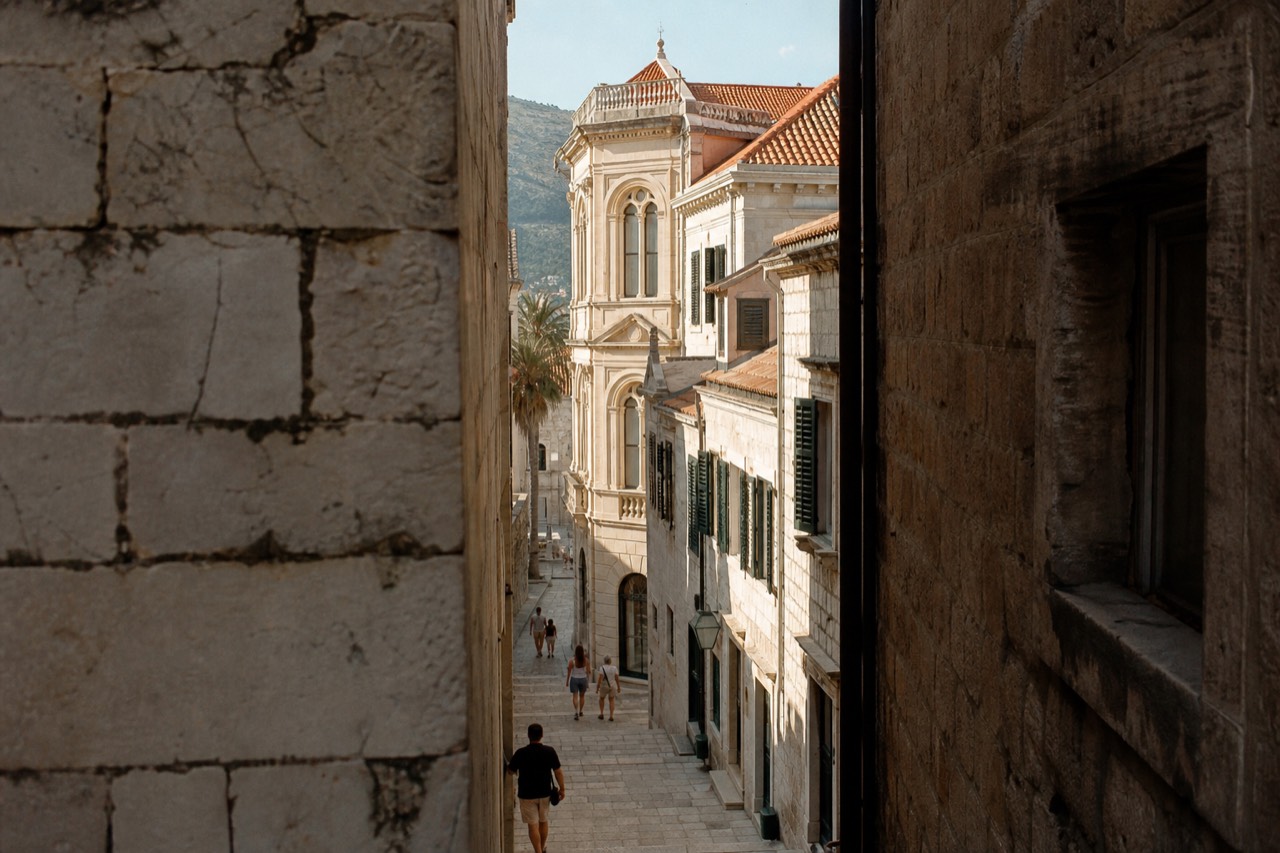
What Movie Was Shot in Dubrovnik?
Dubrovnik's Old Town stood in for three different screen cities: King's Landing in Game of Thrones, the casino city of Canto Bight in Star Wars: The Last Jedi, and Nottingham in the Robin Hood film with Taron Egerton. The same limestone streets and fortifications doubled for all three, which is why film fans keep arriving with location lists in hand.
The short answer to the question is that Dubrovnik is less a one-movie town than a repeat offender. Game of Thrones came first and stayed longest, using the walled city as King's Landing across multiple seasons after the story moved there from Malta. The production filmed on the Stradun, the 298-metre main street whose final plan was fixed by the 1272 Statute, on the Jesuit Stairs that descend from the Ignjat Đurđević Square, inside Fort Lovrijenac, which stands on a 37-metre-high sea rock, and out on Lokrum Island.
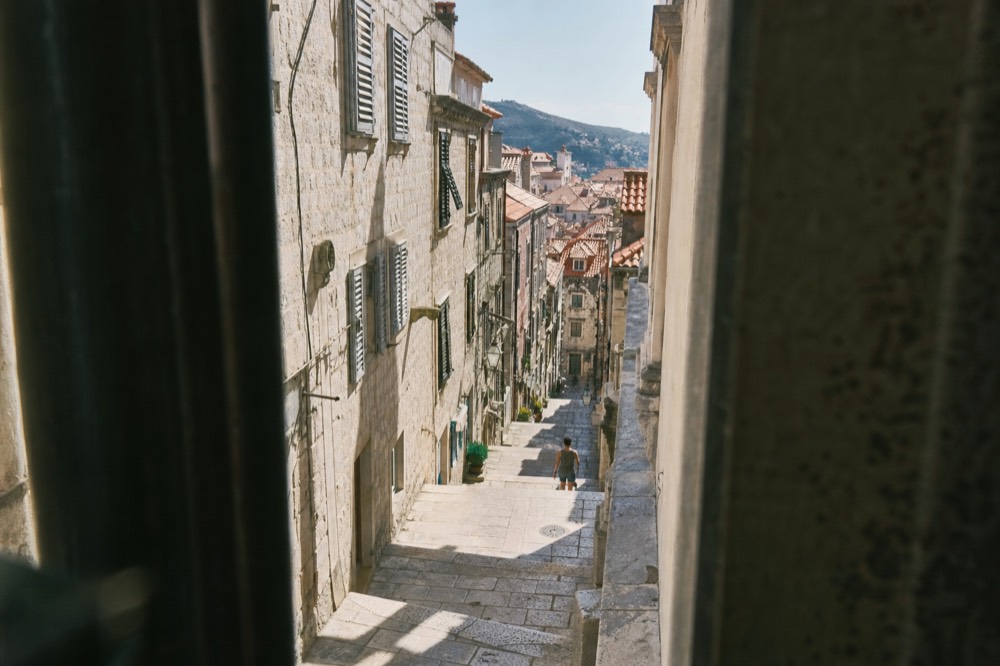
Then came Star Wars. For The Last Jedi, the production dressed the Stradun into Canto Bight, the lavish casino city where Finn and Rose land, and the camera work hides the Adriatic just outside the walls. Robin Hood followed, using Dubrovnik as Nottingham, with the walls and towers standing in for the medieval English city. If you have walked the Stradun once, you have walked through all three of those places without moving.
Not every claim you read online survives a check, and this is where a little local scepticism helps. Plenty of blogs add productions that only used aerial stock footage of Dubrovnik, or that filmed elsewhere on the Dalmatian coast. The three above are the ones with real, on-the-ground shoots in the Old Town, and they are the ones you can genuinely stand inside today. For the full location-by-location breakdown, the Game of Thrones filming locations guide maps each scene to the street you can find it on.
| Production | Dubrovnik Played | Key Locations You Can Visit |
|---|---|---|
| Game of Thrones | King's Landing | Stradun, Jesuit Stairs, Fort Lovrijenac, Pile Gate, Lokrum Island |
| Star Wars: The Last Jedi | Canto Bight | Stradun and side alleys off it |
| Robin Hood | Nottingham | City walls, towers, Old Town harbour |
The Old Town earned the job honestly. It was inscribed on the UNESCO World Heritage List in 1979 under criteria (i), (iii) and (iv), covering a 24.7-hectare property with an 1,188.6-hectare buffer zone, and it spent 1991 to 1998 on the List of World Heritage in Danger during the war years. A film location scout looking for a complete medieval walled city with the sea on three sides does not need to build anything, and that is exactly what the roster of productions here has exploited.
There is a practical reason the same streets keep getting cast, and it is worth understanding before you plan a location hunt. The walls run 1,940 metres in a closed loop, up to 25 metres high, with 16 towers, 3 fortresses and 6 bastions along the circuit, so a director can shoot a chase, a siege and a coronation without moving base. The circuit reached its basic shape in the 13th century and was finished in 1660 with the Bastion of St Stephen, which means the architecture reads as genuinely old on camera from every angle. No set builder can fake that density of real stone, and no CGI budget reproduces the texture of limestone polished by centuries of feet.
If you want the locations explained rather than just found, a guided walk is the efficient route, and the three below are the strongest picks for this cluster.
What Movie Is Filmed in Dubrovnik?
Nothing is being filmed in Dubrovnik right now, and no announced production has the Old Town booked as a standing set. What continues year-round is the pilgrim traffic to past locations: the Jesuit Stairs, Fort Lovrijenac, the Pile Gate entrance and Lokrum Island, which between them carry most of the King's Landing scenes people come looking for.
The distinction matters because visitors often arrive expecting a live set and find a living city instead. The Jesuit Stairs, the baroque flight of steps off the Stradun, are the Walk of Shame staircase, and they are a public street with a café at the bottom, so you can stand on them any hour of the day. Fort Lovrijenac, the Red Keep's exterior, sits across a small bay on its 37-metre rock and is included with your City Walls ticket in main season. Lokrum Island, which doubled for Quarth and for parts of the King's Landing gardens, is a 30-euro ticket per person that covers both the reserve entry and the return boat transfer, with departures from the City Harbour at 09:00 and then every 15 minutes from 10:00 to 18:00.
I have walked these streets with visitors since 2015, and the pattern is consistent: people who try to find the locations on their own find the Jesuit Stairs and the Pile Gate easily, then lose an hour hunting for the Lovrijenac entrance, which is outside the walls near the bus stop at Brsalje. A guided tour compresses that hunt into a single loop. The strongest option in this cluster is the Game of Thrones tour with the optional Iron Throne, a 2 to 3 hour walk rated 4.9 across 5,201 reviews, from $29.62 per person, which adds the option of a Lokrum boat leg and a sit on the Iron Throne replica. Check availability
There is also a cheaper way in, worth knowing about before you book anything. A free, pay-what-you-want Game of Thrones and history walk runs on GuruWalk, rated 4.74 across 444 reviews over 1 hour and 30 minutes, and it covers the core Old Town locations. It is not this site's product and I have not taken it, but for a tight budget it is an honest starting point, with the paid tours adding depth, the Lokrum leg or the throne.
One caution about the throne itself: there is more than one Iron Throne in this city, and not all of them are official. The replica attached to the tour above is the one with the queue and the photos to prove it. If a shop or a bar advertises a throne photo with no tour attached, you are paying for a prop, which is fine if you know that is what it is.
A word on how the filming actually worked, because it changes what you can see. Productions here did not close the Old Town for months; they shot in windows, dressed specific streets overnight and worked around a city that stayed open. That means some locations look exactly as they did on screen, like the Jesuit Stairs, while others, like the Canto Bight stretch of the Stradun, were heavily dressed with props and fountains that were removed the moment the crew wrapped. Go looking for the casino and you will find a limestone street with café tables, which is its own kind of reward, but it is not the film set. The locations that reward a visit most are the ones where the architecture itself was the set: the walls, Lovrijenac, the Pile Gate towers and the harbour.
What Not to Do in Dubrovnik?
The three mistakes worth avoiding are walking the city walls at midday in high summer, dressing for the beach inside the Old Town's churches and monasteries, and treating the Stradun as a shortcut to race down rather than the stage set it is. All three are etiquette or safety issues rather than legal ones, and all three are easily fixed with timing and a layer of clothing.
Start with the walls, because that is where the mistakes cost the most. The circuit is 1,940 metres long, up to 25 metres high, and almost entirely unshaded, and the operator's stated hours at the time of check run 08:00 to 19:30. Walking it at 13:00 in July, when the air temperature is at its peak and the limestone radiates heat back up at you, is how people end up dizzy halfway between the Minceta Tower and the Ploče Gate exit. Walk it at opening or in the last two hours instead. The city walls tickets guide covers pricing, the December drop to 20 euro, and how the ticket bundles Fort Lovrijenac in.
Dress codes are the second one. Dubrovnik's Old Town contains working churches, a Franciscan monastery and a Dominican monastery, and shoulders and knees are expected at all of them. Swimwear on the Stradun is not illegal but it marks you instantly, and more practically, the Old Town is a 10 to 20 minute walk from any beach, so there is no reason to be in a wet costume there in the first place. More of these guides are collected on Things to Do in Dubrovnik.
The third mistake is underestimating the stairs. The Old Town is a car-free grid of limestone lanes that climb steeply from the Stradun in both directions, and I plan routes for visitors for a living: the fastest way to exhaust a group is to zigzag north-south repeatedly instead of doing one side of the hill once. Pick a base direction, do it in one pass, and rest on the flat. A general orientation walk solves this on day one, and the Old Town walk with a local guide, from $20 per person and rated 4.8 across 5,826 reviews, is the best-value version of it.
Alex was a fantastic guide, she explained the complex history of Dubrovnik to give a lasting impression of the history of the area. Really appreciated that she aimed for shaded areas on a boiling September day. The food recommendations for after were much appreciated too! Great tour for a first experience of the old town!
Sophie
A few smaller things round out the list. Do not buy a "family ticket" for the walls from anyone, because the operator sells exactly two paid article types, adult and child 7 to 18, with under 6 free, and nothing else exists. Do not lean on the Buža Bar's cliff edge for a photo after the second drink. And do not plan a same-day border trip to Montenegro or Bosnia without checking the border queues, because a day trip that starts with a two-hour wait is a day trip that fails.
Two more mistakes are specific to film-location hunters. The first is blocking the Jesuit Stairs for a full photo shoot at midday: it is a working street with residents and deliveries, and the polite pattern is to take your shot, then step aside. The second is climbing on the walls' parapets or squeezing through closed sections for a better angle, which is both dangerous and pointless, because the wall walk itself gives you every angle the camera crews used and better ones besides. The productions here worked with permits and rigging; a visitor with a phone does not need either to get the shot, only patience and an early alarm.
When to Avoid Dubrovnik?
Avoid Dubrovnik when the cruise calendar peaks, which is not July and August but September and October: in 2025 the Port of Dubrovnik recorded 101,246 cruise passengers in September and 100,132 in October, ahead of July's 96,072 and August's 87,385. Midday hours on those days are the pinch point, not the whole day.
That September-and-October peak is the single most counter-intuitive fact about this city's crowds, and it comes straight from the Port Authority's own statistics. Most visitors assume the height of summer is the worst time and book "shoulder season" to escape, which lands them in the two busiest cruise months of the year. The mitigation is real, though: the Port Authority limits cruise passengers to 8,000 a day in most cases, out of 243 cruise days a year only 18 exceed 8,000, and about forty call requests were refused in a single season, per the authority's own cruise destination page.
The city also counts its own crowds. Six counters at every Old Town entrance update a headcount every 15 minutes, and the official carrying capacity from the UNESCO assessment is 11,275 people. On a real September morning the curve reads 5,419 people at 08:00, a 7,739 peak at 10:00, then 7,205 at 11:00. The lesson in those numbers is precise: the Old Town is emptiest before 09:00, near its fullest by 10:00, and eases again in the late afternoon when the ships sail. Time your walls walk and your location hunt to the shoulders of the day and the month matters far less.
| 2025 Month | Cruise Passengers | What It Means for You |
|---|---|---|
| July | 96,072 | Hot and busy, but the cruise load is below autumn |
| August | 87,385 | Peak heat, fewer cruise passengers than any of the four |
| September | 101,246 | The busiest cruise month of the year |
| October | 100,132 | Second busiest, with the warmest sea of the shoulder months |
One more nuance keeps the numbers honest: cruise passenger figures are ship capacity, not a headcount of people who actually walked ashore. On a day with 5,000 scheduled passengers, a share of them stays aboard, a share takes escorted excursions straight out of the city, and only the remainder wanders the Stradun. So the right way to read the calendar is as a pressure forecast, not a census. A heavy cruise day means the Jesuit Stairs will have a queue for photos by 11:00 and the walls will feel like a slow-moving procession in the middle hours; it does not mean the city is impassable.
So when should you come instead? Late April, May, the first half of June and late October into November all give you the same limestone streets with a fraction of the foot traffic, and the UNESCO-listed Old City loses none of its screen appeal in the quieter months. The cable car closes January to March, the walls ticket drops to 20 euro in December, and the sea is still swimmable in October, which brings us to the last question.
Is Dubrovnik Good for Beaches?
Yes, though not in the wide sandy-resort sense: Dubrovnik's beaches are mostly small, pebbly and dramatic, from Banje directly under the walls to Copacabana on the Lapad peninsula and Sveti Jakov below a cliff staircase. The sea is warm enough to swim from June into October, with a September long-run average of about 23.6 degrees.
The honest framing is that Dubrovnik is a city-with-beaches rather than a beach city. Banje sits a few minutes from the Ploče Gate with the walls behind you in the water, which makes it the most photographed beach in Croatia and the least private. Copacabana and the Lapad Bay beaches, on the peninsula west of the Old Town, are the practical day-to-day option for anyone staying in Lapad, with shallow water and café infrastructure. Sveti Jakov, reached by a long staircase below the Sveti Jakov church, rewards the climb with the best view-per-towel ratio in the city. The beaches guide breaks all of them down by access and crowd level.
| Beach | Surface | Best For |
|---|---|---|
| Banje | Pebble and concrete plateaus | Walls-and-sea photos, shortest walk from the Old Town |
| Copacabana | Pebble | Families, kayaks, easy parking near Lapad |
| Sveti Jakov | Pebble | Views and quieter water, if you accept the stairs |
| Lokrum beaches | Rock and a small salt lake | Combining swimming with the Game of Thrones island |
On water temperature, be careful what you read. The monthly figures quoted for this coast are NOAA long-run averages for 1991 to 2020, open-water grid-cell values rather than beach readings: June averages 22.5 degrees, July 24.9, August 25.8, September 23.6 and October 21.0. Sheltered bays run warmer than that in high summer, and the Croatian met service's own Dubrovnik buoy has read 27.0 to 27.4 degrees on a September day against that 23.6 monthly mean. In practice you can swim comfortably from June into October, and Lokrum's rocky coves are the best way to combine a swim with a film location, since the island's 30-euro ticket covers both the reserve and the return boat.
For a film-location trip, the smart pattern is to build the beach into the schedule rather than around it. Do the walls and the Old Town locations in the morning cool, swim in the early afternoon when the streets are at their most crowded, and come back for the golden hour on the Stradun or a sunset drink above the walls. The sea in that role works as crowd management as much as recreation: the hours when the Old Town is hardest to enjoy are exactly the hours when the water is at its best, and the two halves of the day solve each other.
For the full picture on this coast's swimming window, the swimming season guide maps the water temperatures month by month. And if your trip is built around the screen locations rather than the shoreline, the trio below covers the Game of Thrones cluster from every angle: the full tour with the Lokrum option, the pure walking version, and a general Old Town walk for anyone whose travel partner is not a fan.
Common Questions About Movies Filmed in Dubrovnik
What movie was shot in Dubrovnik?
Dubrovnik's Old Town was a principal filming location for Star Wars: The Last Jedi, which dressed the Stradun into Canto Bight, and for Robin Hood, which used the walled city as Nottingham. Game of Thrones, a series rather than a movie, filmed here most extensively of all, using the city as King's Landing across multiple seasons.
Where Is the Walk of Shame Staircase in Dubrovnik?
The Walk of Shame scene was filmed on the Jesuit Stairs, the baroque flight of steps that descends from Ignjat Đurđević Square toward the Stradun. It is a public street, free to visit at any hour, and it sits about two minutes from the Stradun's western end.
Can You Visit the Game of Thrones Locations on Your Own?
Yes. The Jesuit Stairs, the Stradun, the Pile Gate area and the outside of Fort Lovrijenac are all public space. Fort Lovrijenac's interior is included with the City Walls ticket in main season, and Lokrum Island, which doubled for Quarth, is a 30-euro ticket covering reserve entry and the return boat.
Was Star Wars Really Filmed Inside the Old Town?
Yes. The Last Jedi filmed on the Stradun itself, transforming it into Canto Bight, the casino city in the film. The production dressed the street extensively, and the recognisable architecture in the finished film is the real Dubrovnik Old Town, not a set.
Is Dubrovnik Too Crowded to Enjoy the Film Locations?
Not if you time it. The Old Town headcount peaks around 10:00 on busy days, and cruise passengers peak in September and October rather than July and August. Visiting before 09:00 or after 17:00 puts you on the same streets with a fraction of the people.