What’s the Cheapest Month to Fly to Croatia?
The cheapest months to fly to Croatia are the shoulder and low seasons, and the reasons are measurable: cruise schedules, sea temperature and hotel demand all follow the same curve. Here is how to pick your month.
What’s the Cheapest Month to Fly to Croatia?
The cheapest months to fly to Croatia are November through early March, with the shoulder windows of late April to mid May and late September through October close behind, at fares well below the July and August peak. No fixed airfare number can honestly be printed here, because airline pricing moves constantly, but the seasonal pattern does not. Demand, and therefore price, tracks the swimming season almost exactly.
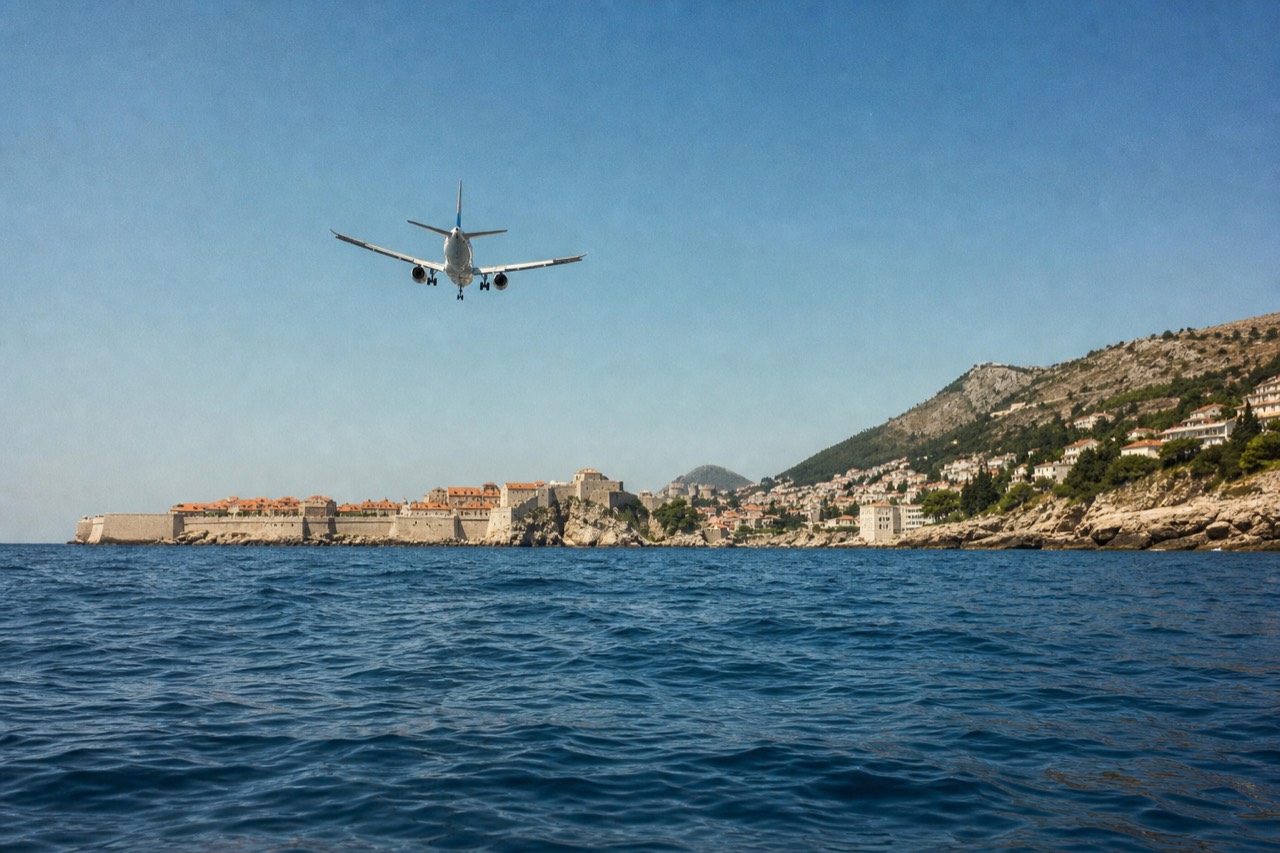
I have watched this pattern from the ground for years. Dubrovnik's flight schedule itself swells in summer: airlines add seasonal routes, frequencies rise, and the airport fills. When the schedule shrinks in the cold months, the airlines are flying half-empty planes into a quiet destination, and that is when fares soften. The trade-off is real, though. The long-run sea-surface averages for this coast put November at 18.5 degrees and December at 16.0, against August's 25.8. You will not be swimming. You will, however, have the Old Town to yourself and pay noticeably less to get there.
There is a second, less obvious lever: the cruise calendar. Cruise passengers at the Port of Dubrovnik peaked in September 2025 at 101,246 and October at 100,132, above July's 96,072 and August's 87,385, per Port Authority statistics. What that means for a flyer is that late September and October are busy on the ground even as airfare begins to slide, so the genuine fare bargains cluster in November, when cruise traffic collapses to 28,480 in a month, and in the January to February trough. If your goal is the cheapest possible seat and you accept a coat, fly in that trough. If your goal is cheap and pleasant, aim for the gap between the two.
For most readers, though, "cheapest" is not really the whole question. A November fare saves money on the flight and spends some of the holiday's pleasure, because boat tours thin out, beaches close, and the cable car shuts entirely from January to March. The honest framing is a trade-off table, not a single magic month. Before you commit, it helps to see how the whole year breaks down, which is exactly what the next section does.
What Is the Cheapest Month to Fly to Croatia?
For a trip that still feels like a holiday, the cheapest practical month is October, followed by late April and May before the summer surge. October combines falling fares with a sea still warm enough for swimming at a 21.0-degree long-run average, and the Dubrovnik Pass, walls and cable car all cost exactly the same as in August. You pay less to fly and no more on the ground.
October is the month I point budget-conscious travellers toward most often, and the reasoning is entirely measurable. The sea's long-run October average is 21.0 degrees, only 2.6 below September's 23.6, so swimming off Banje or the Elaphiti beaches is still realistic early in the month. Meanwhile the whole paid-attraction layer in Dubrovnik is flat-priced across the main season: the adult City Walls ticket is 40 euro from 1 March to 30 November, the one-day Dubrovnik Pass is 40 euro across the same window, and the cable car's adult round trip is 30 euro. Nothing gets cheaper in October, but nothing gets more expensive either, and the flight to reach it all does get cheaper.
May is the mirror image. The sea's long-run May average is 18.6 degrees, cool but bearable for northerners, airfares sit below their July peak because schools are still in session, and the cruise machine has not yet reached full speed: May 2025 carried 84,107 cruise passengers against July's 96,072. The cable car runs until 23:30 from 15 May, so evenings on Mount Srd are on the table. The one structural difference is water temperature: if swimming matters to you, October beats May by more than two degrees on the long-run averages, 21.0 against 18.6.
The booking mechanics matter as much as the month. Fares to Croatia respond to the same pressures as fares anywhere: school-holiday windows are expensive, midweek departures are usually cheaper than weekend ones, and the summer schedule itself is seasonal, with routes added in spring and dropped in autumn. A useful trick is to price the same trip across two adjacent months before committing. The difference between a late-June fare and a mid-September fare for the identical itinerary is often larger than any saving a fare-calendar trick will find you, simply because June sits inside the peak booking window and September sits after the families have gone home.
One caution about the word "cheapest" itself. The lowest headline fare is not always the lowest trip. A cheap November fare into a month when the cable car is closed, Lokrum boats stop, and many coastal konobas shut for the season can deliver a thinner holiday than a moderately priced October one. The Croatian Bureau of Statistics counted about 4.2 million overnight stays in Dubrovnik across 2025, and the overwhelming share of them landed between June and September, which tells you when the country's tourism machine is fully switched on. Fly outside that window to save money, but know what you are switching off.
What Month Is the Cheapest to Fly to Croatia?
Month by month, the fare trough runs from November through February, with January and February usually the cheapest of all; March and April climb, May and June climb further, July and August sit at the top, and September and October slide back down. The table below pairs each stretch with the verified facts that define the trip you would actually get: sea temperature, cruise traffic and what is open.
Here is the full year laid out. The sea-temperature column is the NOAA long-run monthly average for this coast, a 1991 to 2020 open-water climatology rather than a beach thermometer, and the cruise column is real Port Authority passenger data for 2025. Together they explain both the price curve and the experience curve.
| Month | Fare level vs peak | Sea avg (°C) | Cruise passengers 2025 | What to expect |
|---|---|---|---|---|
| January | Lowest | 14.3 | 3,137 | Quiet city, cable car closed, low fares |
| February | Lowest | 14.0 | 46 | The quietest month on the entire coast |
| March | Low | 14.2 | 3,346 | Shoulder begins, walls reopen at main-season prices |
| April | Low to mid | 15.4 | 36,206 | Pleasant walking weather, cool sea |
| May | Mid | 18.6 | 84,107 | Shoulder sweet spot, cable car to 23:30 late month |
| June | High | 22.5 | 82,642 | Swimming begins in earnest, fares climbing |
| July | Peak | 24.9 | 96,072 | Hottest, busiest, most expensive |
| August | Peak | 25.8 | 87,385 | Warmest sea of the year, peak crowds |
| September | Mid | 23.6 | 101,246 | Warm sea, but the busiest cruise month |
| October | Mid to low | 21.0 | 100,132 | Best cheap-and-pleasant balance |
| November | Low | 18.5 | 28,480 | Fares drop hard, season winds down |
| December | Low | 16.0 | 2,458 | Quiet, walls ticket drops to 20 euro |
Two rows deserve a second look. September's 101,246 cruise passengers make it the single busiest cruise month of the year, ahead of July and August, which surprises most people who assume the crowds vanish with the school holidays. And February, with 46 cruise passengers in the entire month, is functionally an empty stage: if your trip is about the city itself, its staircases, its walls walked in solitude and its restaurants full of locals, February is the extreme end of the cheap-and-quiet trade.
The December row carries a hidden bargain worth knowing even on a flight-price page. From 1 December the adult City Walls ticket falls from 40 euro to 20 euro, and the child ticket from 15 to 5, per the walls operator's own webshop. No winter Dubrovnik Pass tier is on sale at all, so the pass-versus-ticket comparison that makes the pass a bargain in main season simply does not exist in December: the standalone ticket is the only product, and it is half price. A cheap winter flight plus a half-price walls ticket is the lowest-cost combination of the entire year, if you dress for it.
What’s the Best Month to Visit Croatia?
The best month to visit Croatia, balancing weather, crowds and cost, is late September or October on the coast, and May inland and in the north; June and September are the strongest all-round months if you want warm swimming water without peak fares or peak crowds. The best month is not the cheapest month, but it overlaps with the cheap end of the fare curve more than most travellers expect.
The honest answer splits by what you came for. If you came for the sea, the long-run averages say the water is warmest in August at 25.8 degrees, with July at 24.9 and September at 23.6, and every one of those is a comfortable swimming temperature. If you came for the cities, Dubrovnik's Old Town, Split's palace, the walls and the staircases, the calculus inverts: you want the months when the Old Town's counters are reading thousands rather than near its 11,275 capacity ceiling, and those months are April, May, late September and October. The half-hourly count on one September morning read 5,419 people at 08:00 and peaked at 7,739 at 10:00, which gives you a feel for what a busy shoulder day actually looks like on the ground.
My own recommendation, for what a Dubrovnik-based view is worth: aim for the first half of October or the second half of May. Both sit on the cheap side of the fare curve, both keep the full attraction layer open at unchanged prices, and both avoid the August combination of peak fares, peak heat and peak crowds. October edges it for swimmers, May for walkers and garden-lovers, since Trsteno Arboretum is at its best in spring. September is wonderful too, but go in with open eyes: it is the busiest cruise month of the year, so the Old Town fills during the middle of the day even as the evenings stay calm.
Whatever month you choose, the first afternoon is best spent getting oriented, and a short guided walk is the cheapest way to do it.
For planning beyond the flight itself, two pieces on this site go deeper: the month-by-month breakdown in our guide to the best time to visit, and the answer to how much money you need per day in Dubrovnik, which is where a cheap flight stops being the whole budget story. If heat is your worry rather than price, read whether Dubrovnik is hot in September before you book the shoulder season. And for the wider picture of everything worth doing once you land, the homepage of Things to Do in Dubrovnik is the natural next stop.
How to Keep the Whole Trip Cheap, Not Just the Flight
A cheap flight saves once; cheap decisions on the ground save every day. In main season the one-day Dubrovnik Pass costs the same 40 euro as the standalone walls ticket and adds ten more sights plus a 24-hour bus ticket, which makes it the single best value move in the city; free pay-what-you-want walking tours and the 30-euro Lokrum ticket, boat included, do the rest.
The pass arithmetic is worth spelling out because so many visitors miss it. The standalone adult walls ticket is 40 euro in main season, 1 March to 30 November, and that price already includes Fort Lovrijenac, the Western Outer Wall and the coin collection. The one-day Dubrovnik Pass is also 40 euro, and its first listed inclusion is the same walls plus Lovrijenac, followed by the Rector's Palace, the Maritime Museum, the Natural History Museum, the Museum of Modern Art and more, plus a 24-hour bus ticket. Same money, roughly ten extra sights. The catch is structural, not hidden: every pass tier allows a one-time visit to each institution, and the pass is only on sale for the summer window, so in December the comparison evaporates and the half-price standalone ticket wins by default.
| Item | Main season price | December price | Notes |
|---|---|---|---|
| City Walls adult ticket | 40 euro | 20 euro | Includes Lovrijenac, Western Outer Wall, coin collection |
| City Walls child 7 to 18 | 15 euro | 5 euro | Under 6 free, no family ticket exists |
| Dubrovnik Pass, one day | 40 euro | Not on sale | Adds ten sights and a 24-hour bus ticket |
| Cable car adult round trip | 30 euro | Closed Jan to Mar | One way 17 euro, child round trip 8 euro |
| Lokrum ticket | 30 euro | Boats stop in winter | Includes reserve entry and return boat |
Beyond the big tickets, the free layer is genuinely good. Three pay-what-you-want walks run on GuruWalk, including a 1 hour 45 minute Old City walk rated 4.87 across 2,242 reviews and a Game of Thrones and history walk rated 4.74 across 444 reviews; you pay nothing up front and tip what the walk was worth to you. The Stradun, the 298-metre limestone main street whose final plan was fixed by the 1272 Statute, costs nothing to walk, and neither do the harbour, the viewpoints from the walls' exterior or the beaches. A day built around the free layer plus one paid anchor, the walls or the cable car, is a full day at a fraction of the August budget.
The last lever is where you sleep, and it moves with the same seasons as the flights. If you want the deep dive, our where to stay guide covers the neighbourhoods; the short version is that Lapad sits at the value end of the scale and Ploče at the premium end, and both are cheaper in October than in August by a wide margin. Book the flight in the trough, keep the pass in main season, lean on the free walks, and the cheapest month to fly stops being a trivia answer and becomes the first decision of a genuinely affordable trip.
It is a small outlay against the money a well-chosen month already saves you, and it pays for itself in the restaurant and konoba recommendations a good guide hands out along the way.
Between the flight saving, the pass arithmetic and the free walking layer, a shoulder-season trip can cost less than half its August twin while missing almost nothing that matters. The last thing worth doing before you book is a final side-by-side of the three easiest first-day options, which is exactly what the band below puts in one place.
Common Questions About the Cheapest Month to Fly to Croatia
What’s the cheapest month to fly to Croatia?
The cheapest months are November through early March, with January and February usually the lowest of all. Fares track the tourism season, and with the sea at its long-run coldest, 14.0 to 14.3 degrees, and cruise traffic near zero, airlines discount heavily to fill seats. October and late April are the best cheap-and-pleasant compromises.
Is September a cheap month to fly to Croatia?
September is cheaper than July and August but not a true bargain month, because demand stays high: September 2025 was Dubrovnik's busiest cruise month of the year at 101,246 passengers. The sea's long-run September average of 23.6 degrees keeps beach demand alive too. Expect mid-level fares, not trough fares.
Does everything close if I fly in winter?
The core stays open: the walls run with a 20-euro adult ticket in December, and the Old Town's restaurants and shops keep going, though some coastal konobas pause. The cable car closes January to March, Lokrum boats stop, and the Dubrovnik Pass is not on sale. You trade activities for solitude and low prices.
What’s the best month to visit Croatia overall?
Late September and October on the coast, May inland. Both sit on the cheap side of the fare curve with the full attraction layer open at unchanged prices, warm-enough water in October's case, at a 21.0-degree long-run average, and crowds well below the 11,275-person Old Town capacity ceiling.
Are Croatia flights more expensive in summer?
Yes, and measurably so. Dubrovnik recorded about 4.2 million overnight stays in 2025, overwhelmingly concentrated between June and September, and airlines price to that demand with extra seasonal routes in summer. Flying just outside that window, in May or October, typically costs less for the identical itinerary.