Why Are Dubrovnik Walls So Expensive?
The 40 euro Dubrovnik city walls ticket explained: what it actually includes, why the price is set where it is, and whether it is worth paying.
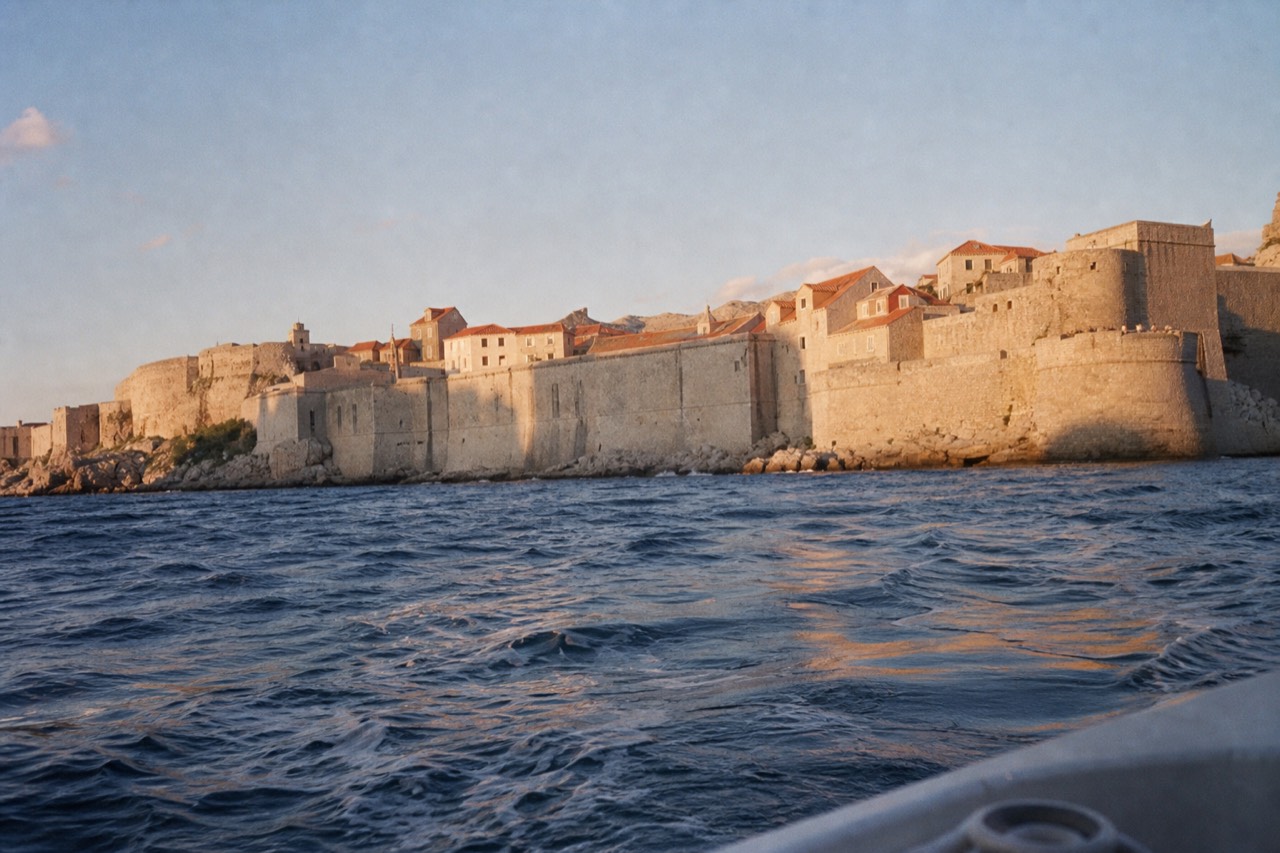
Why Are Dubrovnik Walls So Expensive?
The adult ticket is 40 euro in main season, 1 March to 30 November, because it is not a walls-only ticket: it bundles the walls circuit, Fort Lovrijenac, the Western Outer Wall and the Coin Collection into one monument fee. A single operator, the Society of Friends of Dubrovnik Antiquities, maintains 1,940 metres of medieval masonry on a UNESCO site with no state subsidy, and demand is effectively unlimited. In December the same ticket drops to 20 euro.
That is the short answer. The longer answer involves what the price actually covers, who sets it, and why a city of 41,562 residents that recorded about 4.2 million overnight stays in 2025 does not need to discount its single most famous attraction.
Start with what the ticket is. The operator's own webshop sells exactly two paid article types for the walls: an adult ticket and a child ticket for ages 7 to 18, at 15 euro in main season and 5 euro in December. Children under 6 enter free. There is no family ticket, no student tier, no walls-only option at a lower price. The internal article name in the operator's own pricing system reads "adult walls + Lovrjenac", which tells you the pairing is not a marketing bundle, it is how the monument is actually sold. Fort Lovrijenac, the standalone fortress on its 37-metre sea rock across the bay, costs 15 euro bought alone, so the combination carries real weight.
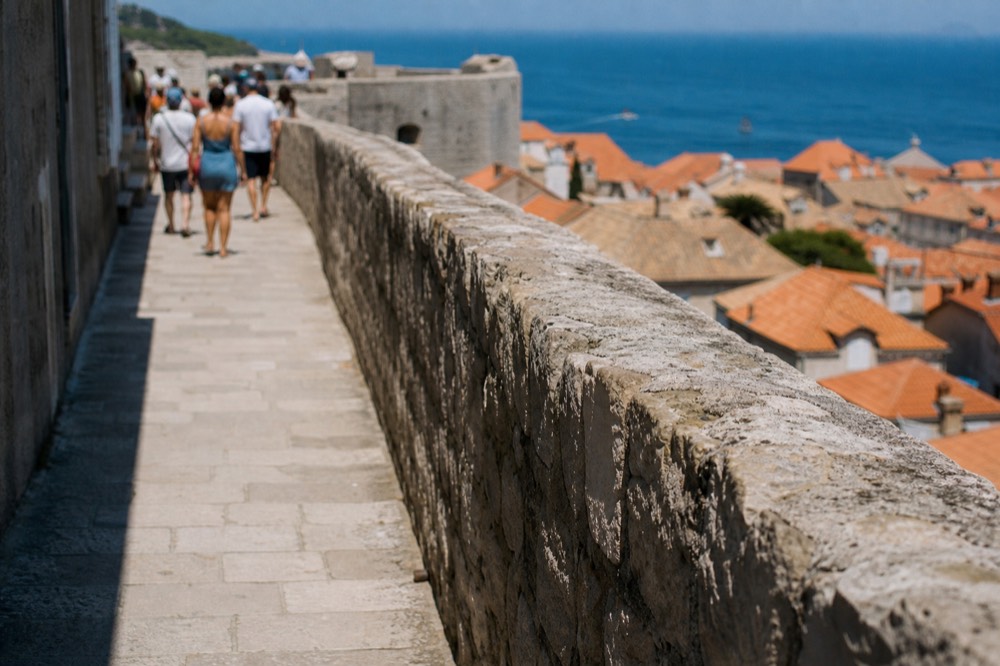
Then there is the maintenance reality. The circuit is 1,940 metres long, up to 25 metres high, 4 to 6 metres thick on the land side and 1.5 to 3 metres on the sea side, and it carries 16 towers, 3 fortresses, 6 bastions, 2 corner fortifications, 3 bulwarks, 3 moats, 2 flank fortresses, 1 breakwater and 2 drawbridges. Its shape was reached in the 13th century and the last bastion was finished in 1660. None of that is a museum piece behind glass: it is limestone open to salt wind, summer heat and a million footsteps a year, and the operator's own site page describes the structure it is charged with keeping standing. Every euro of the ticket funds that work, because there is no line item in a national budget doing it instead.
Demand does the rest. The Old Town was inscribed by UNESCO in 1979, and the walls are the one thing almost every visitor wants to do. When a monument can fill itself at 40 euro every day of a nine-month season, there is no pricing pressure in the other direction. The honest framing is not that the walls are overpriced, it is that they are priced like the Mona Lisa and not like a city park.
It is also worth separating the ticket price from the experience price. The 40 euro is the entry fee, but the real cost of the walls is the two hours, the stairs and the sun you spend on them, and none of those are refundable either. Visitors who resent the ticket most are usually the ones who arrived at midday in August with no water and no plan, paid full price for the privilege, and walked a hot treadmill. Visitors who arrive at opening, or in the cooler shoulder months, overwhelmingly report the opposite. The price is fixed; how much it feels like it was worth is almost entirely a function of when you go.
If the price is the barrier, a guided walk can actually soften it, because a guide adds context the bare ticket cannot. These three options cover the range:
A ticket alone gets you onto the stone. A guided tour gets you the why behind every tower, and for many visitors that difference is what makes 40 euro feel like value rather than a toll.
A few practical details help the price make sense. The ticket is valid for a single entry to the walls circuit, so you cannot leave halfway and come back later the same day, which makes the two-hour estimate a real commitment rather than a suggestion. Fort Lovrijenac is covered by the same ticket, but it is visited separately, on the other side of the bay, and the operator asks that you use it within three days of buying the walls ticket. The circuit is one-way in practice, with entry points at Pile Gate and near the Maritime Museum, and once you are up on the stone there are no shortcuts down.
The price history also explains some of the sticker shock. The adult ticket has climbed over the years, and each increase has been met with the same complaints followed by the same full walkways. The Society of Friends of Dubrovnik Antiquities runs the walls, and its revenue also supports other monuments in the city, not only the walls themselves. In other words, part of what you are paying for is the rest of Dubrovnik's heritage staying open.
Is Dubrovnik Expensive to Visit?
Yes, by Croatian standards Dubrovnik is the country's most expensive destination, and it shares first place with Rovinj for overnight stays, about 4.2 million nights in 2025. The walls ticket at 40 euro, the cable car round trip at 30 euro and a Lokrum ticket at 30 euro mean a single day of headline attractions can cost more than a night in a mid-range hotel elsewhere in Croatia. Food and lodging push the day higher still.
The attraction math is the easy part to plan, because the prices are published and stable. Here is what the headline sights cost an adult in main season:
| Attraction | Main season price | December price |
|---|---|---|
| City Walls + Lovrijenac (adult) | 40 euro | 20 euro |
| City Walls (child 7 to 18) | 15 euro | 5 euro |
| Dubrovnik Pass, 1 day | 40 euro | not on sale |
| Cable car round trip (adult) | 30 euro | closed Jan to Mar |
| Lokrum reserve + return boat | 30 euro | 30 euro |
One comparison in that table deserves its own sentence, because it is the single best value move in the city: the one-day Dubrovnik Pass costs the same 40 euro as the standalone walls ticket in main season, 1 March to 30 November, and adds ten more sights plus a 24-hour bus ticket. If you are walking the walls in season, buying the pass instead costs nothing extra and returns museums with it. In December the equation flips: the walls ticket falls to 20 euro and no pass tier is on sale at all, so the pass comparison is a main-season claim only.
Beyond the ticketed sights, the everyday costs are what surprise people. Meals in the Old Town carry a premium over the rest of Croatia, and a sit-down dinner for two with wine can reach what a family spends elsewhere in Dalmatia for a full day. Coffee on the Stradun costs more than coffee three streets inland, and the difference is the rent on the view, not the coffee. The counterweights are real: the Stradun, the gates, the harbour, the views from the rocks outside the walls and the whole texture of the Old Town cost nothing at all, and our free things to do guide covers a full day of them. The city is expensive at the till and generous in the street, and a good trip budget leans on the second half of that sentence.
Timing matters as much as spending discipline. Cruise passengers at the Port of Dubrovnik peaked in September 2025 at 101,246 and October at 100,132, both above July's 96,072 and August's 87,385, so the shoulder season is cheaper for rooms but not quieter on the Stradun. The Port Authority's own limit is 8,000 cruise passengers a day in most cases, and 461 cruise calls are scheduled for 2026. Prices and crowds do not move together here, which is worth knowing before you book anything.
Why Are Hotels So Expensive in Dubrovnik?
Hotel prices in Dubrovnik are high because supply is physically capped inside a 24.7-hectare UNESCO core, demand is global and strongly seasonal, and about 4.2 million overnight stays in 2025 landed on a city of 41,562 residents. Old Town inventory is mostly small stone buildings, not large modern blocks, so July and August rates reflect a limited number of rooms chasing a continental summer.
The supply side is structural and nobody can fix it. The walled Old Town is a protected World Heritage property of 24.7 hectares with an 1,188.6-hectare buffer zone, on the World Heritage in Danger list from 1991 to 1998 and treated carefully ever since. You cannot build a big modern hotel inside walls like these. What exists is a fixed stock of small buildings, converted palazzos and a limited band of larger hotels along the Lapad bay and at Ploče, and every summer that fixed stock meets demand from the whole of Europe plus a growing long-haul market.
The demand side is the part people underestimate. Dubrovnik shares first place among Croatian destinations for realised nights, and Croatia overall took 20.7 million arrivals and 94.8 million nights in commercial accommodation in 2025. When a destination of this size runs at that volume, July and August room rates are set by whoever is willing to pay the most for a scarce bed, not by local incomes. A useful planning range: outside the two peak months, rates fall noticeably, and in the shoulder months you can often stay at the same address for a fraction of the August price. Check the live rates before assuming the sticker month is the real one.
Location shifts the price more than star rating does. Inside the walls you pay a premium for the address and accept stairs, noise and small rooms. In Lapad you get more space, a beach walk and the number 6 bus into Pile Gate, usually for less. The budget anchor on our site is Hotel Komodor, a three-star in Lapad rated 7.8 out of 10 across 822 Expedia reviews, about a 29-minute walk from the Gruž cruise and ferry port. At the other end, Hotel Excelsior sits at Ploče with the Old Town at its back. Our where to stay in Dubrovnik guide breaks the neighbourhoods down in detail.
The honest summary is that Dubrovnik hotel prices are not a scam, they are arithmetic. Fixed supply, protected fabric, global demand. What you can control is the month, the neighbourhood and how early you book, and those three levers move the price more than any loyalty programme ever will.
Is It Worth Going on City Walls in Dubrovnik?
For most first-time visitors, yes: the two-kilometre circuit above the red rooftops is the single best view of the city and the one thing you cannot get any other way. The 40 euro main-season ticket stings, but the walls plus Lovrijenac combination and the photo angles over the Old Town and the Adriatic make it defensible, especially when the one-day pass returns ten more sights for the same money.
I have walked this circuit in every month of the season, and the experience is not uniform. Go at 08:00 opening and you share the wall with a fraction of the crowd: the city's own counting system, six counters at every Old Town entrance updating every 15 minutes, recorded 5,419 people inside the core at 08:00 on one September morning against a 7,739 peak at 10:00. That two-hour window is the difference between a contemplative walk and a queue with a view. The operator's stated hours at time of check run 08:00 to 19:30, so an early evening walk in high summer is another quiet window with warmer light.
The physical reality deserves honesty too. The full circuit involves stairs, exposed stretches and almost no shade, and in July and August the midday stone radiates heat. Bring water, wear real shoes, and budget two hours at an unhurried pace. The Western Outer Wall section, included in the ticket, is closed in December, January and February, which is another quiet-season trade-off to weigh against the 20 euro December price.
Whether to pay for a guide is the real decision, and the case for it is context. The wall without explanation is a spectacular treadmill; with a guide, every tower and bastion picks up a story. The Old Town & Walls combo walk runs about 3 hours 30 minutes from $50.94 per person, rated 4.8 across 1,183 reviews, and covers the streets and the circuit in one morning:
The shorter walls-focused alternative is the 2-hour Ancient City Walls & Wars walk, from $29.58 per person and rated 4.8 across 1,387 reviews. One recent guest review captures what a guide adds to the stone:
This well organized tour helped put Dubrovnik's past (and present) into perspective. It's incredible that the city walls have withstood the test of time. Antun was a wonderful guide.
linda_a
If 40 euro is genuinely out of budget, the honest alternatives are partial. The rock ledges outside the walls near Buža give you the sea view for the price of a drink, and Mount Srđ gives you the rooftop panorama from above, though the cable car round trip at 30 euro costs nearly as much as the wall itself. There is no free substitute for walking the circuit, which is exactly why the operator can charge what it does. What you get for the money is also not static through the day: the same 40 euro buys a very different walk at 08:00 with 5,419 people in the core than at the 10:00 peak of 7,739, and a very different walk again in October light with the cruise season still running at full tilt. Choose your window as carefully as you choose your ticket.
Why Is Dubrovnik So Famous?
Dubrovnik is famous for three stacked reasons: a Renaissance city-state whose walls and streets survive almost intact, UNESCO World Heritage status since 1979 for a 24.7-hectare old core, and a starring role as King's Landing in Game of Thrones, which introduced the rooftops to a global television audience. Layered on top is a literary pedigree, the Adriatic setting, and a survivor's story from the 1991 to 1998 danger-list years.
The oldest layer is the Republic of Ragusa, a maritime republic that ran its own affairs for centuries and poured its wealth into the very walls you are pricing. The Statute of 1272 fixed the final plan of both the city and its main street, and the Stradun you walk today is 298 metres of that plan still in daily use. Few cities anywhere let you read a medieval street pattern this clearly, and that completeness is what UNESCO recognised in 1979 under criteria (i), (iii) and (iv).
The modern layer is television. Dubrovnik doubled as King's Landing, and the Walk of Shame staircase, the Red Keep exteriors and the harbour scenes are all recognisable on a first walk. The effect on visitor mix was immediate and lasting, and it is why a city that was already famous in Europe became a must-see for travellers from much further away. Our Game of Thrones locations guide maps the filming sites if that layer is your reason for coming.
Fame is also, in the end, the answer to this whole article's question. A city this famous, this small and this protected will always price its bottleneck attraction at what the market bears, and the walls are the bottleneck. The consolation is that the price is transparent, the December tier halves it, the one-day pass quietly doubles its value in season, and the view from the top has not been discounted by a single euro's worth of fame. If you are planning the rest of your days around it, our Things to Do in Dubrovnik homepage is where the full picture lives.
Common Questions About Why Dubrovnik Walls Are So Expensive
Why are Dubrovnik walls so expensive?
The 40 euro main-season ticket bundles the walls circuit, Fort Lovrijenac, the Western Outer Wall and the Coin Collection, and funds the maintenance of 1,940 metres of medieval masonry on a UNESCO site. Demand is effectively unlimited, and in December the same ticket costs 20 euro.
Is Dubrovnik expensive to visit?
Yes, it is Croatia's priciest destination. The walls at 40 euro, the cable car at 30 euro and Lokrum at 30 euro can push a sightseeing day past the cost of a mid-range hotel night elsewhere in Croatia, but the Old Town streets, gates and viewpoints are free.
Why are hotels so expensive in Dubrovnik?
Supply inside the 24.7-hectare UNESCO core is physically fixed, while about 4.2 million overnight stays in 2025 landed on a city of 41,562 residents. Peak-season rates reflect scarce rooms chasing global demand; the neighbourhood and the month move the price more than anything else.
Is it worth going on city walls in Dubrovnik?
For most first-time visitors, yes. The circuit is the one view of the city you cannot get any other way, and the 40 euro one-day Dubrovnik Pass adds ten more sights plus a 24-hour bus ticket for the same price in main season. Walk early: the crowd count at 08:00 was 5,419 against a 7,739 peak at 10:00 on one September morning.
Why is Dubrovnik so famous?
A nearly intact Renaissance city-state core, UNESCO World Heritage status since 1979, and its role as King's Landing in Game of Thrones, layered over an Adriatic setting and a survival story from the 1991 to 1998 danger-list years.