Dubrovnik Old Town: A Complete Guide to the Historic Core
Dubrovnik's Old Town is a perfectly preserved medieval city inside towering stone walls, a UNESCO World Heritage site since 1979 and the backdrop for Game of Thrones. This guide covers whether it's worth visiting, where to stay, the best street, and how to get from the airport to the Old Town.
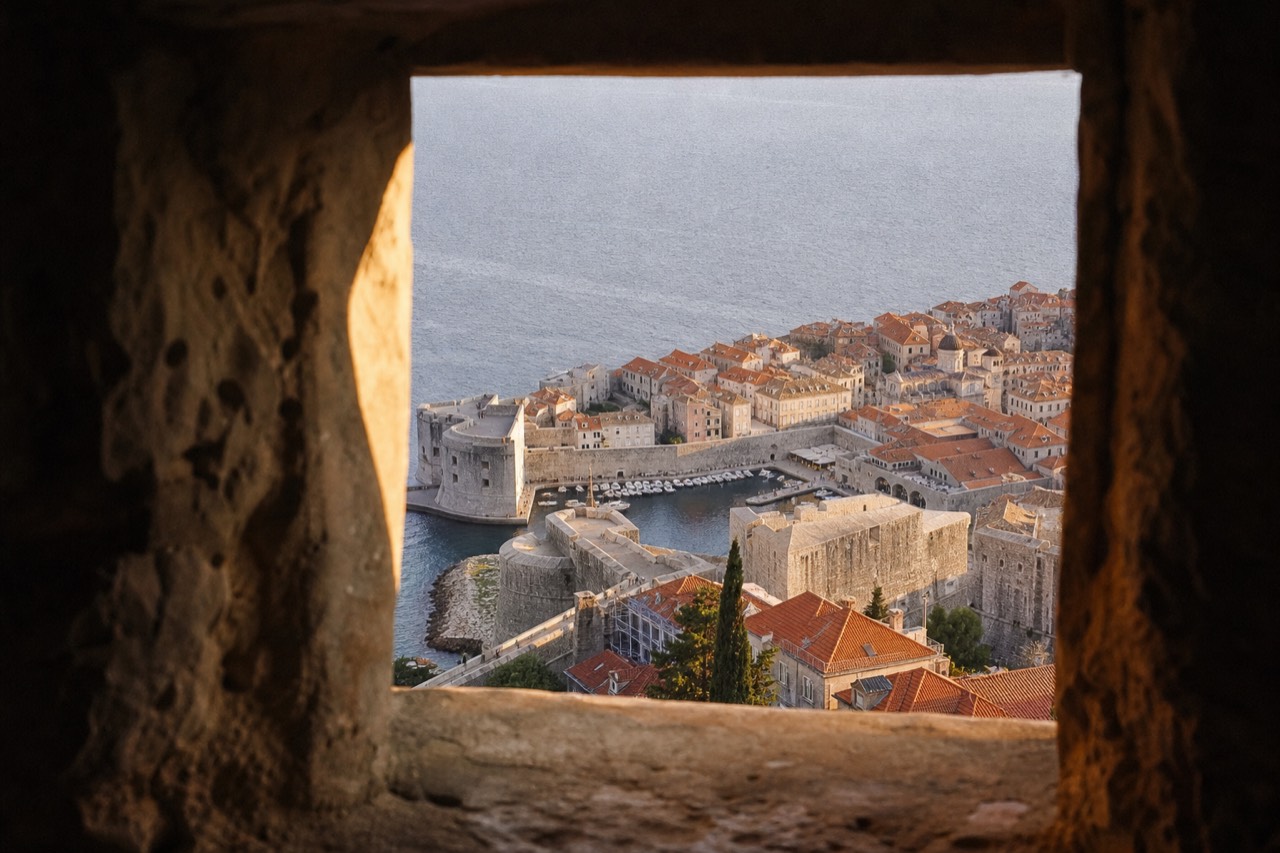
Short answer
Dubrovnik's Old Town is absolutely worth visiting. It's a 24.7-hectare UNESCO site with a 1,940-metre-long city wall, the 298-metre Stradun, and over a thousand years of history. Even in peak season the crowds are manageable with the right timing, and the Old Town's compact layout makes it walkable. The best ways to experience it are on foot, on a guided tour, or by walking the walls.
Dubrovnik's Old Town is the soul of the city, a perfectly preserved medieval core that has drawn travellers for centuries. The Old Town is the heart of Things to Do in Dubrovnik, and every visitor passes through it at least once. But what makes it so special, and how do you make the most of your time here?
Is Dubrovnik Old Town Worth Visiting?
Yes, Dubrovnik's Old Town is one of the most complete and beautiful medieval cities in the Mediterranean. It was inscribed as a UNESCO World Heritage site in 1979 under criteria (i), (iii) and (iv), and its 1,940-metre-long city walls encompass 16 towers, 3 fortresses, and a grid of polished limestone streets laid out in the 13th century. The 298-metre Stradun runs through the centre, and the whole Old Town is a walkable, car-free treasure.
The Old Town is not just a pretty backdrop: it is a living, working city that served as a major maritime republic for centuries. The walls, which reached their final shape in 1660 with the Bastion of St Stephen, are the defining feature, and walking them is the single most popular activity in Dubrovnik. The circuit is 1,940 metres long, up to 25 metres high, and 4 to 6 metres thick on the land side. The walls ticket costs 40 euro in the main season (1 March to 30 November), and includes access to Fort Lovrijenac, which stands on a 37-metre-high sea rock just outside the western wall. For a full breakdown of the walls, the ticket types, and the best time to walk them, see our guide to the Dubrovnik city walls.
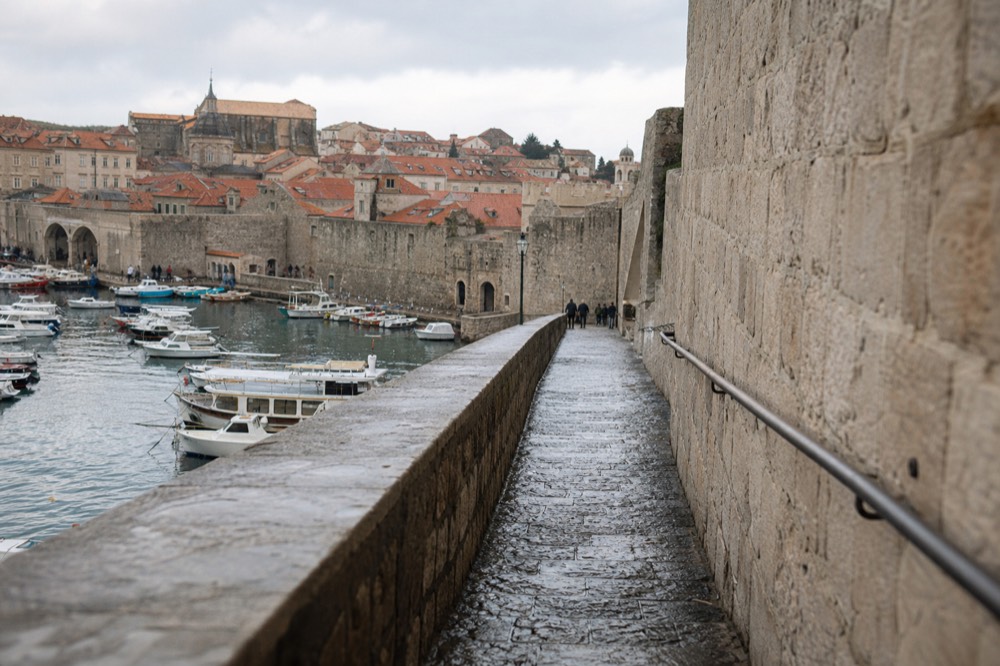
The Old Town's compact size (24.7 hectares) means you can walk from Pile Gate in the west to Ploče Gate in the east in about 10 minutes. Yet the density of sights is extraordinary: the Rector's Palace, the Franciscan Monastery, the Sponza Palace, the Cathedral, and the many churches and museums are all within a few hundred metres of each other. The Old Town was on the UNESCO World Heritage in Danger list from 1991 to 1998 during the Homeland War, and its restoration since then is a testament to the city's resilience.
The Dubrovnik Pass, which costs 40 euro for one day, 50 euro for three days, and 60 euro for seven days in the main season (1 March to 30 November), includes entry to the city walls and nine other cultural institutions, plus a 24-hour bus ticket. It is the best value for anyone planning to see multiple sights, because the standalone walls and Lovrijenac ticket already costs 40 euro. The pass is only available in the summer season; in December the walls ticket drops to 20 euro and no pass is on sale, so the economics change.
The best way to understand the walls is with a guided walking tour that explains the history and the wars, and many visitors combine the walls with a walk through the Old Town itself. These tours are among the most popular walking tours in Dubrovnik, and they give you context that a self-guided walk simply cannot match.
| Fact | Value |
|---|---|
| UNESCO inscription | 1979, criteria (i)(iii)(iv), reference C 95bis |
| Property area | 24.7 hectares |
| Buffer zone | 1,188.6 hectares |
| City walls length | 1,940 metres |
| Maximum wall height | up to 25 metres |
| Wall thickness (land side) | 4 to 6 metres |
| Wall thickness (sea side) | 1.5 to 3 metres |
| Structures on the walls | 16 towers, 3 fortresses, 6 bastions, 2 corner fortifications, 3 bulwarks, 3 moats, 2 flank fortresses, 1 breakwater, 2 drawbridges |
| Stradun length | 298 metres |
| Fort Lovrijenac | stands on a 37-metre-high sea rock |
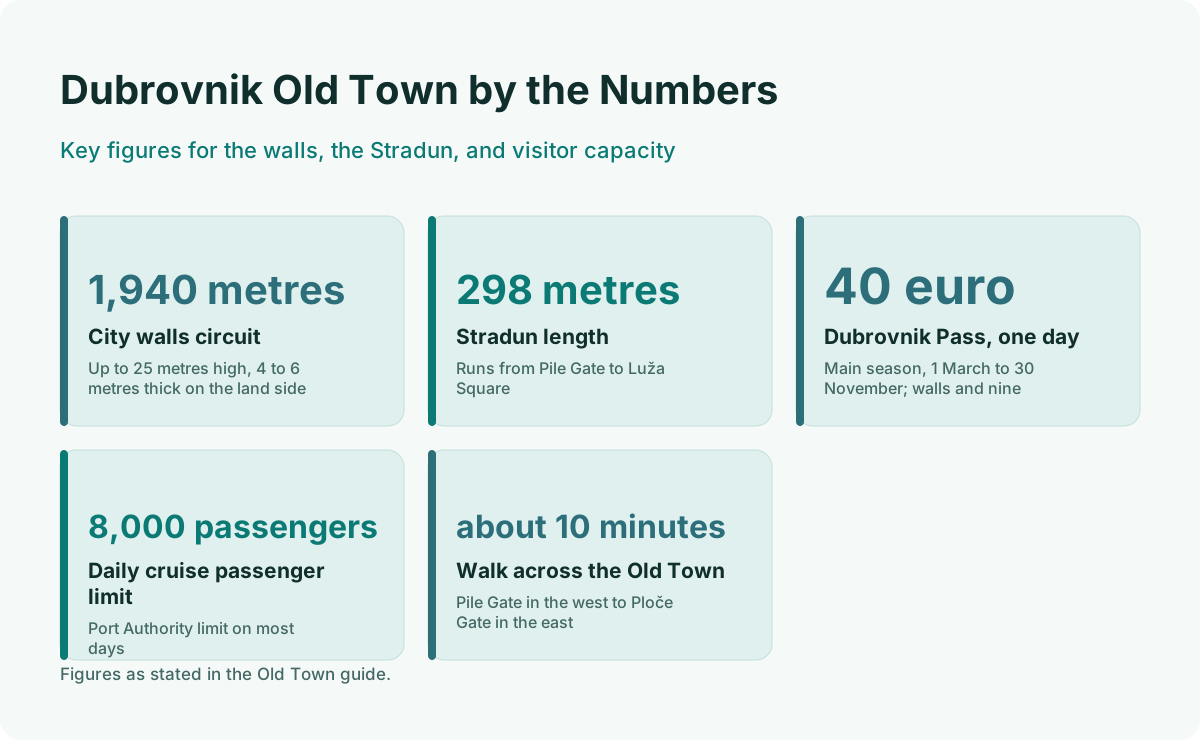
Despite the crowds, the Old Town never feels entirely overrun, because the carrying capacity is monitored in real time, and the Port Authority's limit of 8,000 passengers a day on most days means the worst congestion is predictable and avoidable. The key is to walk the walls early in the morning or late in the afternoon, and to explore the side streets when the main thoroughfare is busy. The Old Town harbour, just outside the eastern walls, is also worth a visit: it is where the Lokrum ferry departs, and the view of the walls from the water is one of the best in the city.
Should I Stay in Old Town or New Town in Dubrovnik?
Stay in the Old Town only if being inside the historic walls is your top priority and you can handle noise, high prices, and steep staircases with luggage; otherwise, choose new town areas like Lapad, Babin Kuk, or Ploče for more space, beach access, and quieter nights, with just a short bus or taxi ride to the Stradun.
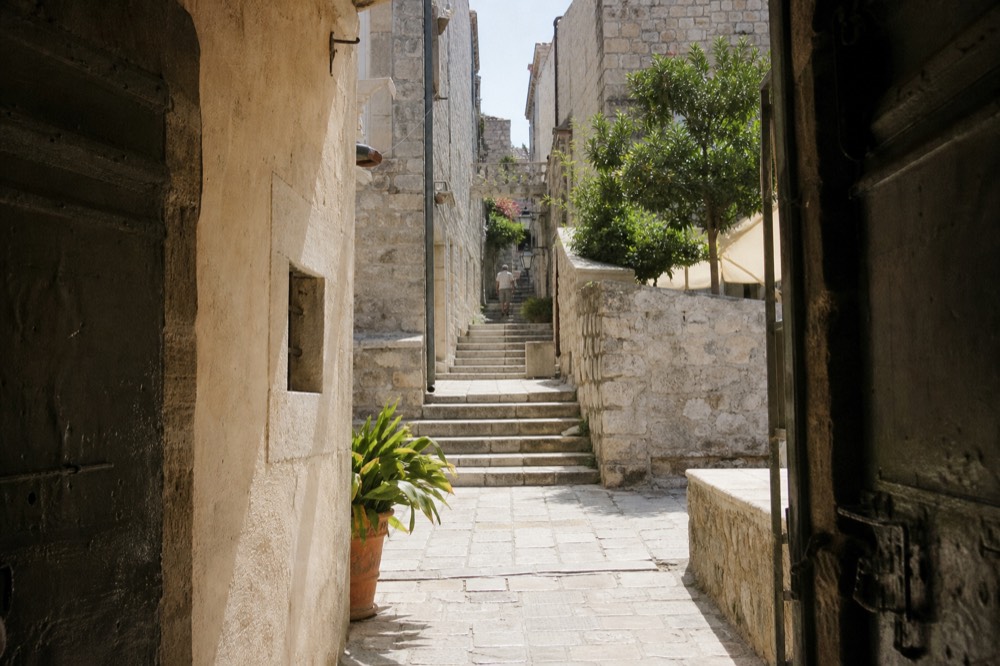
The Old Town contains a handful of small hotels, guesthouses, and private apartments, often in centuries-old stone buildings. The atmosphere is unbeatable: you can step out of your door at dawn and have the Stradun almost to yourself. However, rooms are smaller, prices are higher, and there is no vehicle access inside the walls, so you will need to carry your luggage from the nearest gate. For a first-time visitor, the convenience of being inside the walls often outweighs the drawbacks.
The area immediately outside the walls, especially Ploče (to the east), gives you a similar proximity with a bit more space and often a sea view. Hotel Excelsior, a luxury option in Ploče, is a 5-minute walk from the Old Town and offers direct views of the walls and the Adriatic. Further afield, Lapad is a popular residential peninsula about 3 kilometres northwest of the Old Town, with a long promenade, beaches, and a wide range of accommodation. Hotel Komodor, a budget-friendly three-star in Lapad, is rated 7.8 out of 10 across 822 Expedia reviews and is a 29-minute walk or a short bus ride to the Old Town. Hotel Lapad, a mid-range option in the same area, offers a pool and a waterfront setting.
Babin Kuk is even further out, about 6 kilometres from the Old Town, but it has several large resort hotels and is close to the Copacabana beach. The public bus system (Libertas) connects all these areas to the Old Town, with a journey time of about 15 to 20 minutes from Lapad and 25 to 30 minutes from Babin Kuk. Taxis and Uber are also readily available. The Gruž neighbourhood, where the main bus station and ferry port are located, is another practical option, especially if you plan to take day trips.
For families or anyone who wants a pool and a beach, staying outside the Old Town is often the better choice. For couples and solo travellers who want to be immersed in the history and nightlife, the Old Town is ideal. The key trade-off is between the Old Town's unmatched atmosphere and the comfort and value of the newer neighbourhoods.
Getting around the Old Town is easy on foot, but if you want a broader overview, the hop-on hop-off bus connects the Old Town with the cable car and other attractions. The yellow bus stops at Pile Gate, the cable car lower station, and several viewpoints, and it is a practical way to orient yourself on your first day.
| Factor | Old Town | Lapad / Babin Kuk |
|---|---|---|
| Atmosphere | Historic, car-free, vibrant | Relaxed, green, residential |
| Proximity to sights | Steps from the walls | 15-30 min by bus |
| Noise level | Can be loud until late | Quiet, especially at night |
| Beach access | None inside the walls | Lapad Beach, Copacabana |
| Price | Higher, especially in summer | Lower, with more options |
| Luggage | Must carry up stairs | Easy access by car |
The hop-on hop-off bus is a practical way to see the city without walking long distances, and it stops at the cable car, the Old Town, and several viewpoints. The audio guide gives you a running commentary, and the loop takes about an hour and a half if you stay on for the full ride.
What Is the Best Street in Old Town, Dubrovnik?
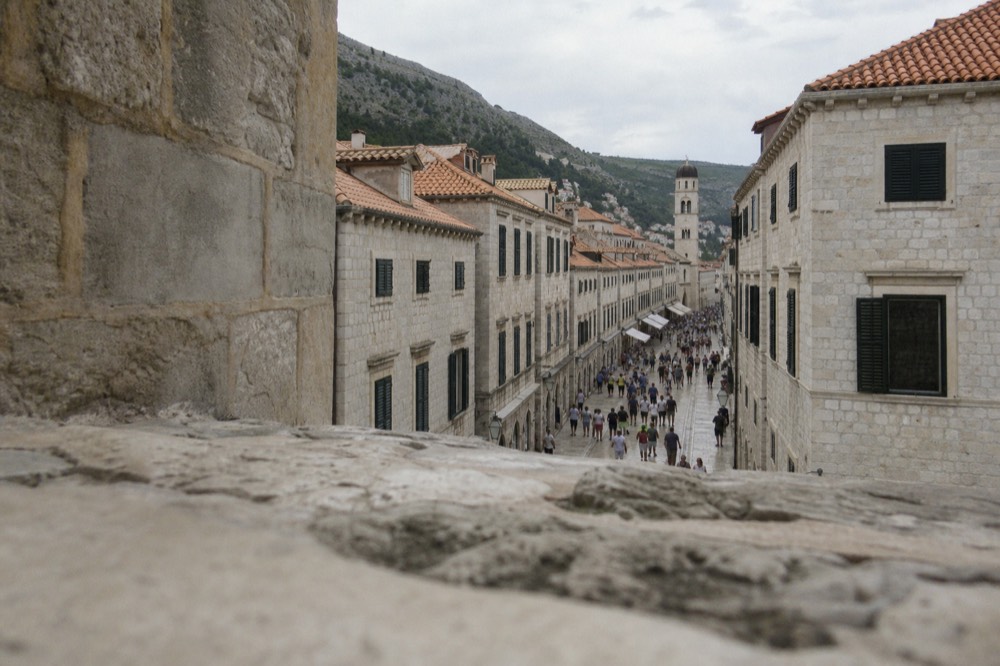
The Stradun, also called Placa, is the undisputed best street in Dubrovnik's Old Town. It runs 298 metres from Pile Gate in the west to Luža Square in the east, lined with limestone buildings of uniform height, and its design was fixed by the 1272 Statute of Dubrovnik. It is the main pedestrian artery, flanked by shops, cafes, and the city's most important monuments, and it is polished to a mirror-shine by centuries of foot traffic.
The Stradun is the living room of Dubrovnik. It was originally a shallow channel separating the island of Ragusa from the mainland, and when it was filled in, the city unified around it. The 1272 Statute determined the final plan of both the city and the street, and the uniform facades that line it today were rebuilt after a great earthquake and remain one of the most recognisable streetscapes in Europe. The limestone, quarried from the island of Korčula, reflects the Adriatic light and makes the street feel wider than it is.
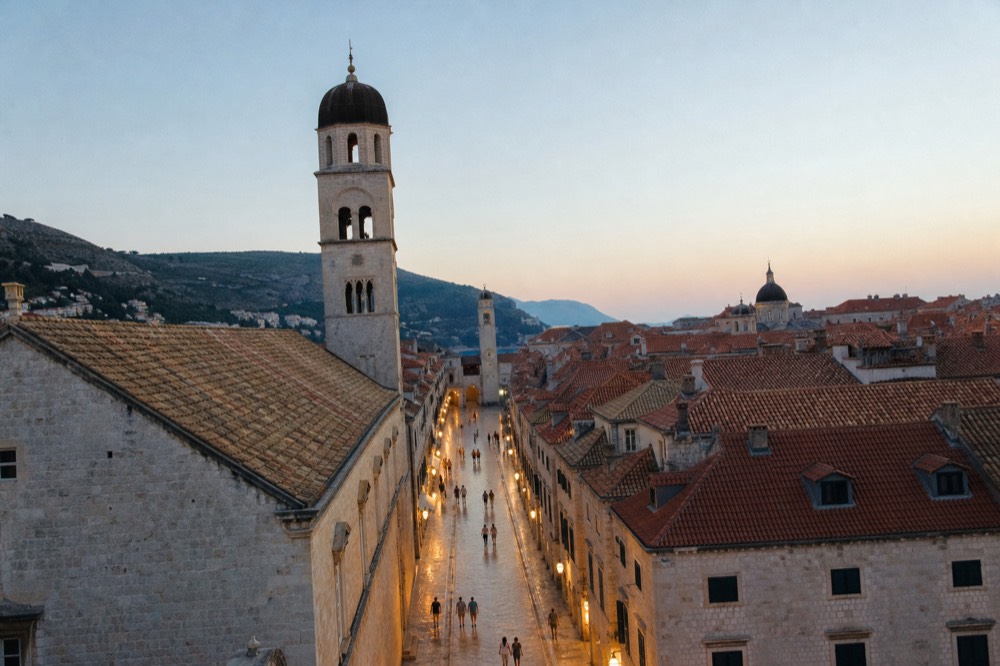
At the western end stands the Large Onofrio Fountain, a 15th-century structure that still provides drinking water. At the eastern end, Luža Square is dominated by the Clock Tower, the Sponza Palace, and the Church of St Blaise, the city's patron saint. The Stradun is also the route of the annual Feast of St Blaise procession, a tradition that has been observed for centuries and is recognised by UNESCO as intangible cultural heritage.
While the Stradun is the main thoroughfare, several parallel streets are worth exploring. Od Puča, one block to the south, runs parallel to the Stradun and is lined with restaurants and shops, but it is narrower and quieter. Prijeko, to the north, is another parallel street that often feels more local, with a few small bars and less foot traffic. The steep staircases that climb towards the walls from both sides of the Stradun reveal laundry lines, hidden chapels, and small squares where the city's daily life unfolds away from the crowds.
The cafes along the Stradun are touristy, but sitting at one with a coffee and watching the parade of visitors is a Dubrovnik ritual. For a more local experience, the side streets and the squares off the Stradun, like Gundulić Square with its morning market, offer a glimpse of the city beyond the postcard.
To truly understand the layers of history in these streets, a guided tour that combines the Old Town and the city walls is unbeatable. The combo tour covers the Stradun, the walls, and the key landmarks, and a good guide will point out details you would miss on your own.
The 3-hour 30-minute combo tour is the most efficient way to see the Old Town and the walls in a single morning, and it is the related tour we recommend for this area. You will walk the full walls circuit, explore the Old Town's main squares and side streets, and hear the stories that shaped the Republic of Ragusa. The guide handles the logistics, so you do not need to queue for tickets or figure out the best route.
| Street / Square | Character |
|---|---|
| Stradun (Placa) | Main pedestrian artery, 298 metres, shops, cafes, polished limestone |
| Od Puča | Quieter parallel street to the south, restaurants, residential feel |
| Prijeko | Local feel, small bars, fewer tourists, parallel to the Stradun on the north side |
| Luža Square | Eastern terminus of the Stradun, Clock Tower, Sponza Palace, Church of St Blaise |
| Gundulić Square | Morning market, statue of Ivan Gundulić, Franciscan Monastery nearby |
How Do I Get from the Dubrovnik Airport to Old Town?
The distance from Dubrovnik Airport (DBV) to the Old Town is about 20 kilometres, and the journey takes 20 to 30 minutes by road. The most convenient option is a shared transfer, available from $20 per person, which drops you directly at Pile Gate or your accommodation. Taxis and Uber are also available, and the public Libertas bus runs from the airport to Pile Gate, though it is slower and requires a ticket bought in advance.
Dubrovnik Airport is located in Čilipi, south of the city, and the road to the Old Town follows the coast before climbing into the hills, offering dramatic views on the descent. The airport is small but well-connected, with flights from many European cities, and it handles the bulk of the region's international arrivals.
The shared transfer is the most straightforward choice for first-time visitors. It is bookable in advance, and the vehicle meets you at the arrivals hall. The shared transfer from $20 per person is a reliable option, and the operator's listing shows a 4.5 rating across 57 reviews. The journey takes about 30 minutes, dropping you at Pile Gate, the main entrance to the Old Town. If you are staying inside the walls, you will need to carry your luggage from the gate to your accommodation, so pack accordingly.
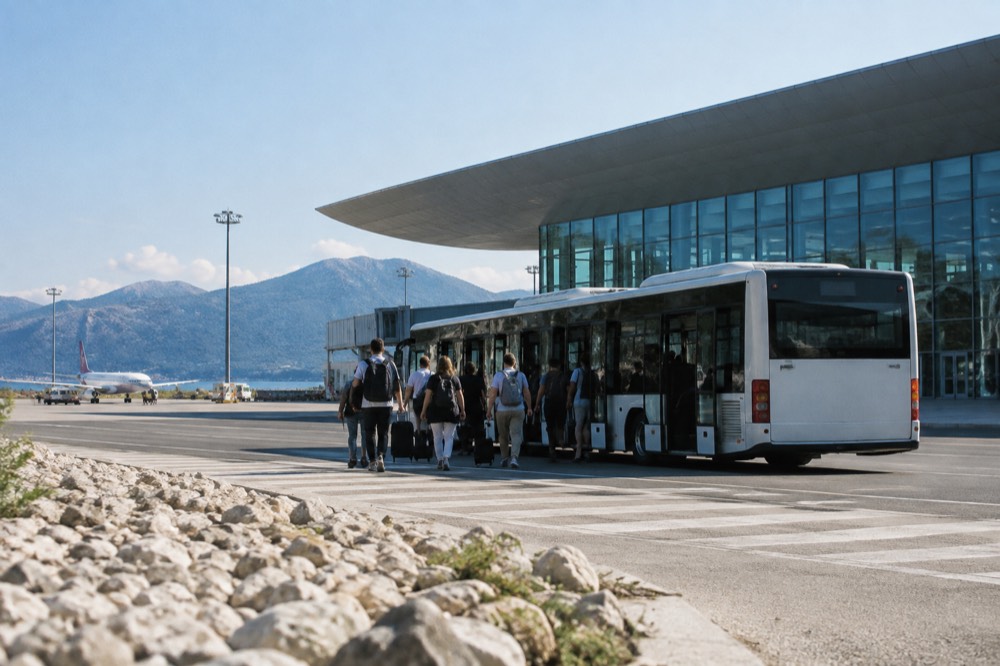
Taxis are available outside the arrivals terminal, and Uber operates in Dubrovnik, so you can use the app to book a ride. A taxi or Uber ride takes about 20 to 25 minutes, and the fare is typically comparable to the shared transfer for a solo traveller, but more expensive for a group. The public bus (Libertas line 1A or 1B) runs from the airport to Pile Gate, with a journey time of about 35 to 40 minutes. It is the cheapest option, but you need to purchase a ticket from the kiosk at the airport before boarding, and the schedule is less frequent than taxis.
Once you have settled in, a guided walking tour of the Old Town is the best way to get your bearings. The Old Town walking tour with a local guide, from $20 per person, is rated 4.8 across 5,826 reviews and covers the Stradun, the main squares, and the hidden corners that first-time visitors often miss.
| Transfer Option | Approx. Duration | Cost | Notes |
|---|---|---|---|
| Shared transfer | 30 min | from $20 per person | Pre-booked, meets at arrivals, drops at Pile Gate |
| Taxi | 20-25 min | varies, check the operator's listing | Available at the terminal, metered |
| Uber | 20-25 min | varies, check the app | Use the app, cashless |
| Public bus (Libertas) | 35-40 min | check the operator's website | Cheapest, tickets sold at the airport kiosk |
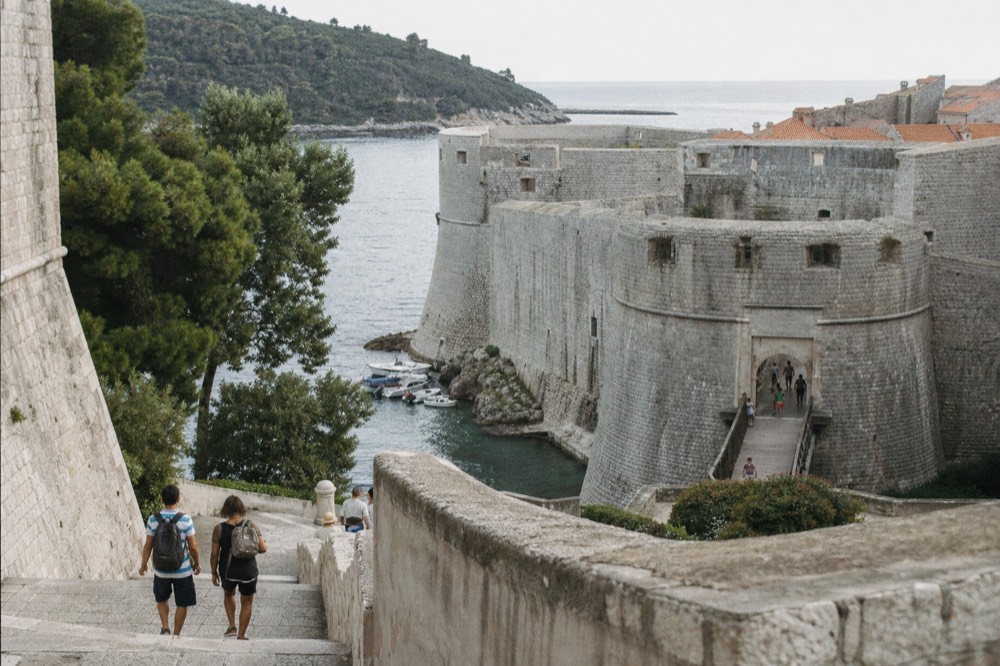
The walk from Pile Gate into the Old Town is a cinematic moment: the drawbridge, the stone arch, and the sudden reveal of the Stradun. If you arrive by taxi or bus, you are deposited right at this point. The gate was once raised at night to protect the city. Today it is the busiest entrance, and the meeting point for most walking tours.
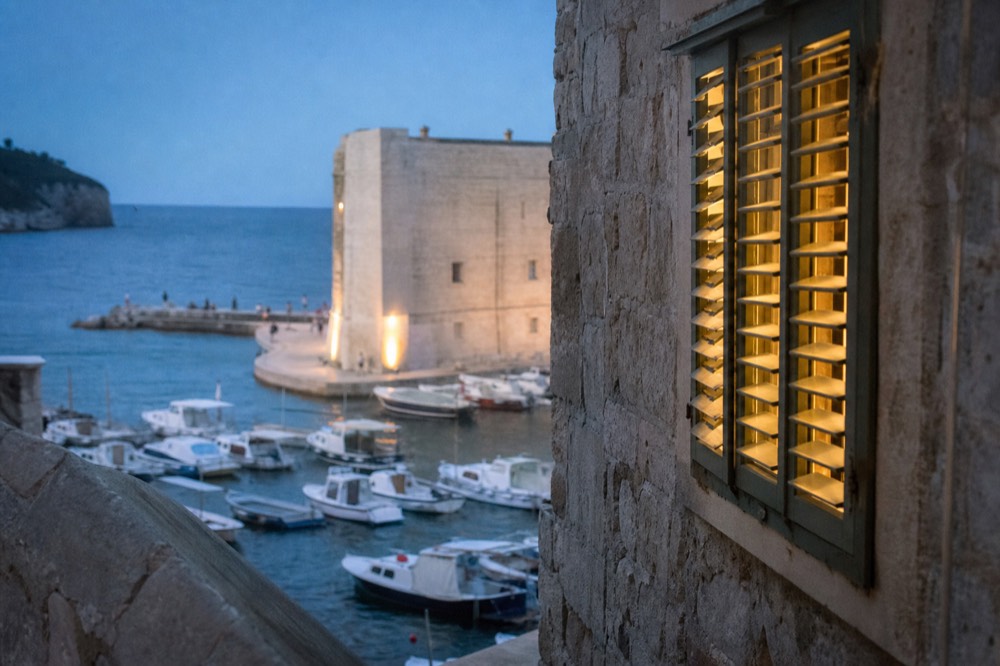
The Old Town is completely pedestrianised, so no vehicle can enter the walls. If you are staying inside the Old Town, you will need to carry your luggage from the gate to your accommodation. For this reason, many people prefer to stay just outside the walls and walk in. The Old Town harbour, visible from the eastern walls, is where the Lokrum ferry departs and where small boats offer private tours of the coastline.
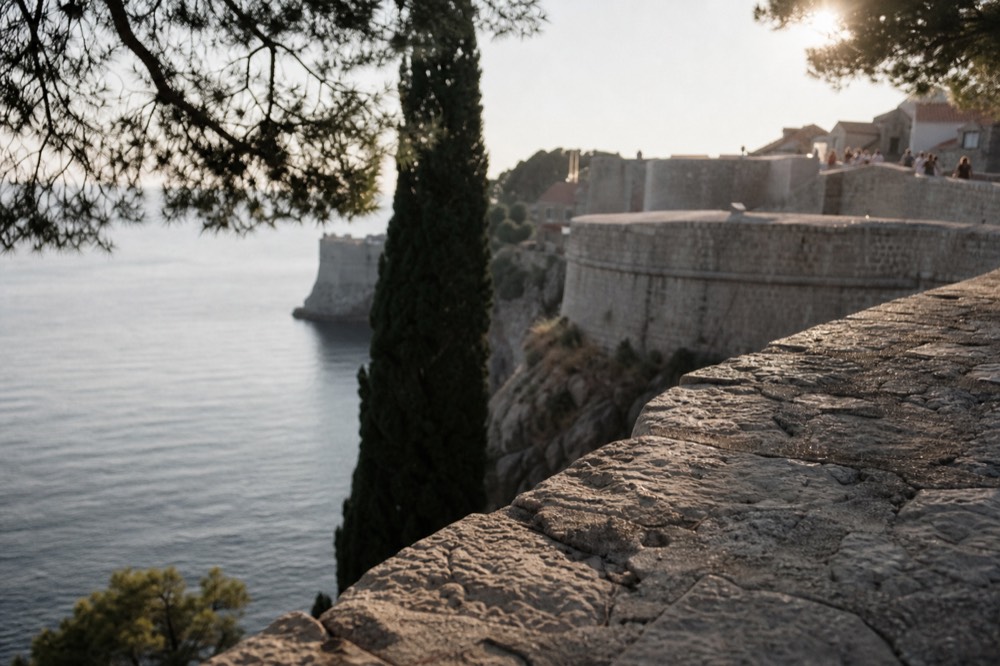
The walls themselves are the ultimate Old Town experience, and the combination of the walls and the Old Town walking tour is the most popular way to see the city. Whether you stay inside the walls or outside, the Old Town rewards repeat visits: the light changes, the crowds shift, and every walk reveals something new.
Common Questions About Dubrovnik Old Town
Is Dubrovnik Old Town Worth Visiting?
Absolutely. It is a UNESCO World Heritage site, a perfectly preserved medieval city, and the focal point of every trip to Dubrovnik. The city walls, the Stradun, and the many historic buildings make it a must-see.
Should I Stay in Old Town or New Town in Dubrovnik?
It depends on your priorities. The Old Town puts you in the centre of the action but can be noisy and expensive. The new town areas like Lapad offer more space, beaches, and quieter nights, with a short bus ride to the Old Town.
What Is the Best Street in Old Town, Dubrovnik?
The Stradun, also called Placa, is the main street. It runs 298 metres from Pile Gate to Luža Square, and it is lined with shops, cafes, and historic buildings.
How Do I Get from the Dubrovnik Airport to Old Town?
The most convenient option is a shared transfer from $20 per person, which takes about 30 minutes and drops you at Pile Gate. Taxis, Uber, and the public bus are also available.
How Much Does It Cost to Walk the City Walls?
In the main season (1 March to 30 November), an adult ticket costs 40 euro and includes Fort Lovrijenac. Children 7 to 18 pay 15 euro, and children under 6 are free. In December, the adult ticket is 20 euro.
What Is the Best Time to Visit the Old Town?
Early morning (before 9:00) and late afternoon (after 16:00) are the quietest times. The busiest months for cruise passengers are September and October, so the Old Town can be crowded even in the shoulder season.