Abandoned Kupari: Dubrovnik's Hotel Ruins and Where to Sleep Instead
Kupari, a short ride south of Dubrovnik, is a row of grand hotels abandoned since the war years, and it has become one of the strangest sights on this coast. Here is what the site actually is, how to see it, and how to answer the hotel questions it raises.
Short answer
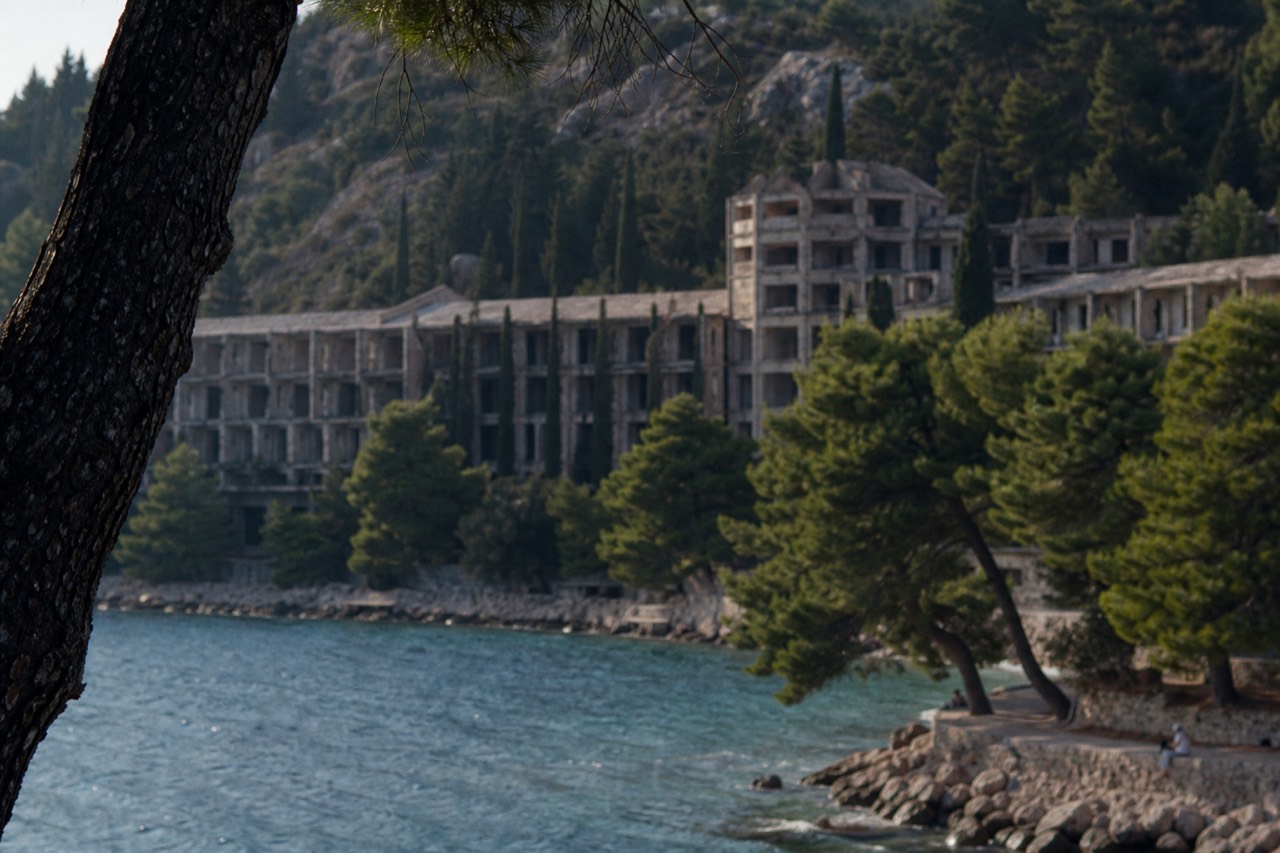
Kupari is a bay of abandoned resort hotels a few kilometres south of Dubrovnik's Old Town, left empty since the war that placed the Old Town on the World Heritage in Danger list from 1991 to 1998. You can walk the shoreline freely, though the buildings themselves are unsafe. For sleeping, Dubrovnik's verified standouts are Hotel Komodor at 7.8 out of 10, Hotel Lapad and Hotel Excelsior.
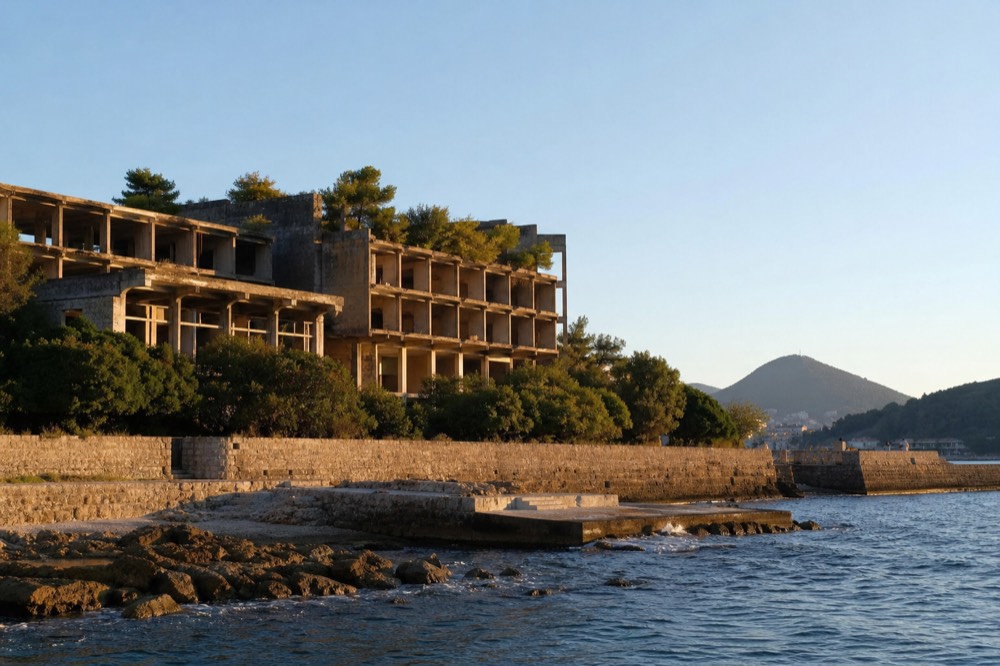
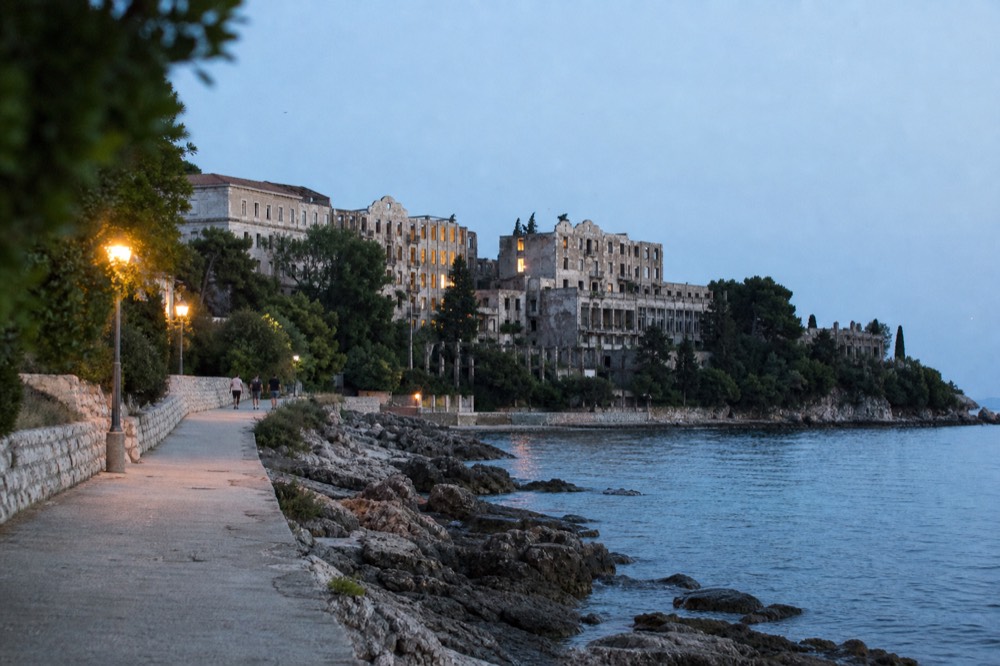
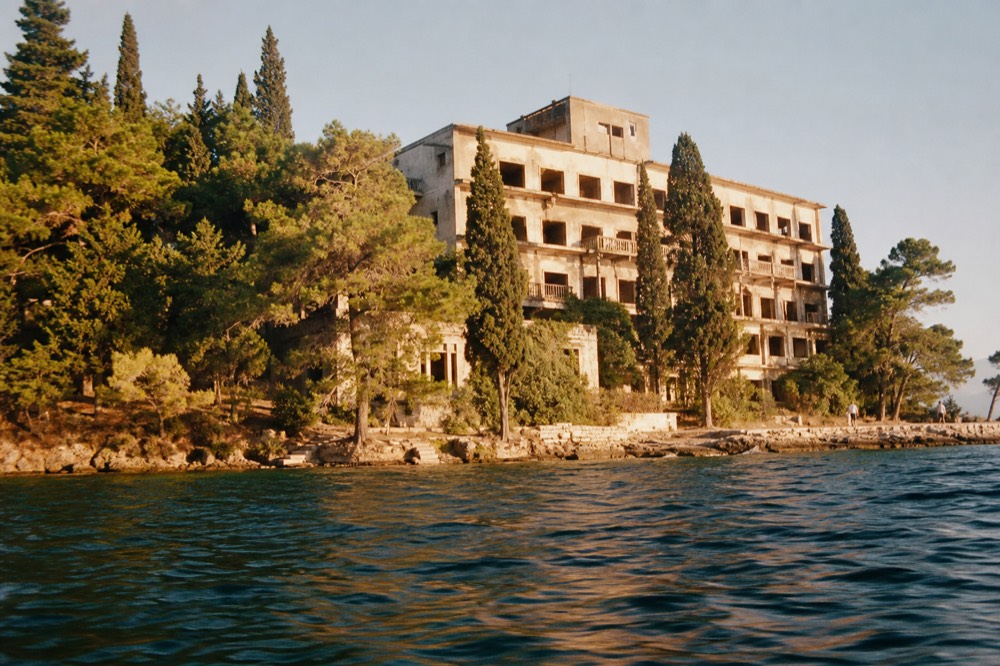
A row of hotel skeletons stands around a small bay south of Dubrovnik, their concrete balconies open to the sky and their beaches quiet. This is Kupari, and it is the answer to a question visitors ask more often every year: where is that abandoned hotel complex near Dubrovnik, and can you see it? You can. It has quietly become one of the most photographed non-attractions on the Adriatic coast, a place where the region's tourist boom and its hardest decade sit side by side.
The site raises a second set of questions too. Standing in a ruined five-storey lobby makes people think hard about where they will sleep that night, and the search traffic around Kupari is tangled up with hotel questions about Dubrovnik generally. This guide covers both: what Kupari is, how to visit it responsibly, and honest answers about the best, the most luxurious and the most practical hotels in the city, from the budget end at Hotel Komodor to the luxury end at Hotel Excelsior.
What Is the Abandoned Hotel Site at Kupari?
Kupari is a small coastal bay in Župa dubrovačka, immediately south-east of Dubrovnik, where a chain of resort hotels stood empty after the war that put Dubrovnik's Old Town on the UNESCO World Heritage in Danger list from 1991 to 1998. The buildings were never rebuilt. Today the shells are fenced, unstable and officially off-limits inside, but the bay, the beach and the views are fully accessible and free.
The hotels were once the pride of Yugoslav tourism on this coast: grand seafront blocks with terraced beaches, built for a mass holiday market that vanished almost overnight when war reached the region. The fighting that damaged the Old Town, the same conflict documented in our guide to the Dubrovnik siege story, wrecked the Kupari strip far more completely. Where the walled city was restored, Kupari was simply left.
What you see now is a landscape photographers love and insurers would hate. Whole facades stand without glass, stairwells climb to nowhere, and vegetation pushes through what were once ballrooms and lobbies. The contrast is the point: a ten-minute drive from a UNESCO-listed old core that drew about 4.2 million overnight stays in 2025, sharing first place among Croatian destinations with Rovinj, sits a resort that time forgot.
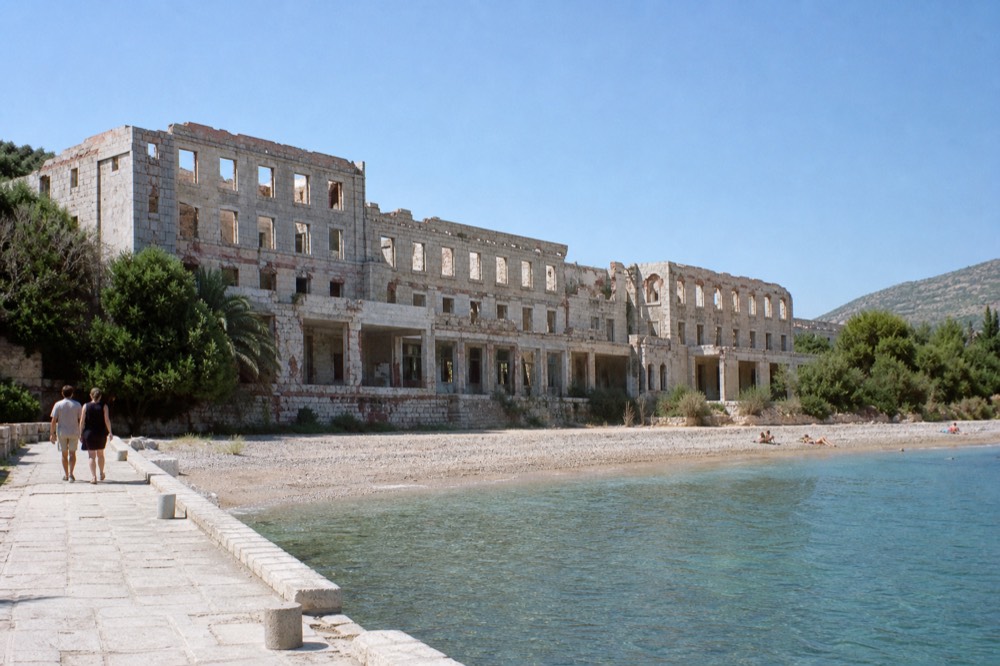
There is no ticket, no desk and no opening hour, because there is no attraction operator. Kupari is simply there. That freedom is also the risk, and the next section covers the practical reality of a visit, which is more nuanced than most social media posts suggest.
Why Did the Kupari Hotels Never Reopen?
The hotels were wrecked during the Homeland War, the same conflict that placed the Old City of Dubrovnik on the World Heritage in Danger list from 1991 to 1998, and the site became tied up in ownership disputes and redevelopment plans that never broke ground. Restoration money went to the walled city first, and Kupari's ruined blocks stayed as they were. Every reopening plan since has stalled.
The asymmetry is stark once you understand it. The Old Town, a 24.7-hectare UNESCO property inscribed in 1979 under criteria (i), (iii) and (iv), was rebuilt as a matter of national identity and economic survival, and it now anchors a destination recording about 4.2 million overnight stays a year. Kupari, a commercial resort strip with no World Heritage status, had no such constituency. Private ownership claims over the ruins dragged through courts, investors came and went, and each cycle left the buildings one winter more decayed.
The result is a rare thing in European tourism: a genuine ruin within a resort zone. Visitors who want the deeper context of that decade often pair the coastline with the Homeland War Museum exhibits, which tells the story from inside the city that was shelled.
For context on how much of this coast is managed rather than left wild, the city's own defensive numbers are a useful contrast. The walls that saved Dubrovnik once are now its best-maintained structure:
If the war-and-walls story is what draws you to this coast, a guided walk puts the fortifications in context far better than a signboard does. The two-hour walls walk is the natural fit:
One guest on that walk, linda_a, left a five-star review: "This well organized tour helped put Dubrovnik's past (and present) into perspective. It's incredible that the city walls have withstood the test of time. Antun was a wonderful guide."
This well organized tour helped put Dubrovnik's past (and present) into perspective. It's incredible that the city walls have withstood the test of time. Antun was a wonderful guide.
linda_a
Can You Walk Around the Kupari Ruins Today?
Yes, the bay, the beach and the paths around the hotels are open and free to walk, and plenty of people do. Entering the buildings themselves is not allowed and not wise: the structures are unstable, with loose concrete, open shafts and unguarded drops, and redevelopment work can close parts of the site without notice. Treat it as a landscape to photograph from outside, not a building to explore.
That is the honest line, and it is worth holding to. The most serious hazard is not fencing or security but the buildings' own condition. Decades without maintenance mean floors, staircases and overhangs that look solid from below may not be. Local advice, and common sense, say enjoy the shoreline, shoot the facades from the beach and the coastal path, and stay out of the shells.
Getting there is straightforward. Kupari sits on the coastal road south-east of the city, reachable by local bus from Dubrovnik, by taxi, or as a short drive; many visitors fold it into a loop that takes in Cavtat or the airport road side of the region. Early morning and late afternoon give the best light on the facades and the fewest people, and the bay itself is swimmable on calm days, with the usual caveats about sea temperature. The September average for this coast is about 23.6 degrees, a NOAA long-run figure for open water, not a beach thermometer, so sheltered bays like this one often read warmer.
If you would rather have a guide frame the military history of the whole area than interpret ruins on your own, a combined walls-and-city walk covers the defensive story in one outing. The combo runs about three and a half hours and pairs the Old Town's streets with the full wall circuit, which suits travellers who want the whole narrative in a single morning rather than splitting it across two bookings:
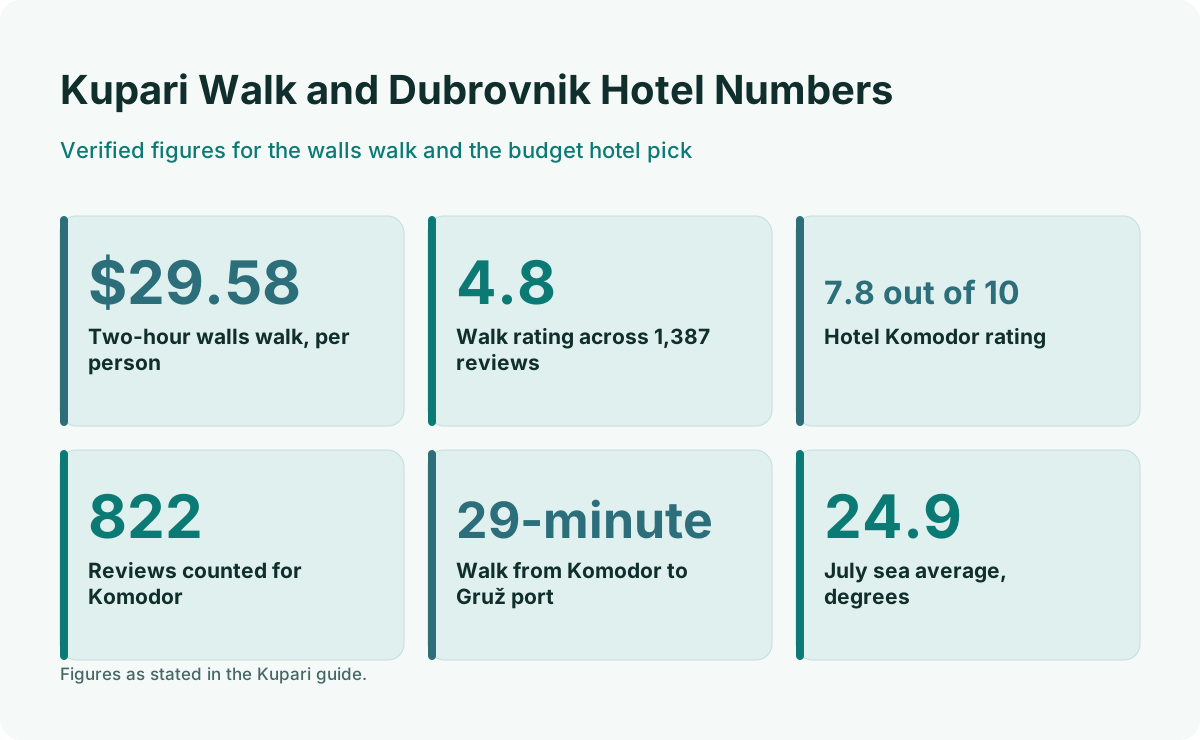
For those who prefer the shorter, walls-focused option, the two-hour walk is the one to lock in first. It runs from $29.58 per person, is rated 4.8 across 1,387 reviews, and free cancellation is available on the live listing, so you can reserve a slot before your dates are final and adjust later if your plans shift.
What Is the Best Hotel in Dubrovnik?
There is no single best hotel in Dubrovnik, because the city splits cleanly into three experiences: walled-city character inside the Old Town, resort comfort on the Lapad peninsula, and cliffside luxury at Ploče. Across our verified research, Hotel Komodor is the standout budget pick at 7.8 out of 10 across 822 Expedia reviews, Hotel Lapad the reliable mid-range choice, and Hotel Excelsior the luxury benchmark.
The honest answer depends on what "best" means to you. If it means waking up inside the UNESCO property, stepping onto the Stradun, that 298-metre limestone street whose final plan was fixed by the 1272 Statute, then an Old Town guesthouse beats any resort, at the cost of stairs, crowds and higher summer prices. If it means a pool, a beach and space, Lapad wins. If it means a famous name with the old city at your feet, Ploče is the answer.
Here is the verified comparison for the three hotels we track with confirmed data:
| Hotel | Category | Area | Verified rating | Best for |
|---|---|---|---|---|
| Hotel Komodor | Budget three-star | Lapad | 7.8 out of 10 across 822 Expedia reviews | Value stays with bus links to Pile Gate |
| Hotel Lapad | Mid-range | Lapad | Rating on the live listing | Pools, gardens, relaxed family base |
| Hotel Excelsior | Luxury | Ploče | Rating on the live listing | Old Town views at five-star standard |
One planning note that surprises people: Komodor sits about a 29-minute walk from the Gruž cruise and ferry port, but reaching Pile Gate is easier by the number 6 bus than on foot. Location inside Dubrovnik is about gradients as much as distance, and the hills between Lapad and the Old Town are real. Our where to stay in Dubrovnik area guide breaks down each neighbourhood in detail.
What Is the Most Luxury Hotel in Dubrovnik?
Hotel Excelsior at Ploče is the luxury benchmark we can point to with confidence, sitting minutes from the Old Town with the walled city and the island of Lokrum in view. It is the verified luxury option in our tracked set. Beyond it, Dubrovnik's top tier is a cluster of five-star properties around the old core and the Lapad shoreline, and their ratings live on the live listings rather than in our verified pack.
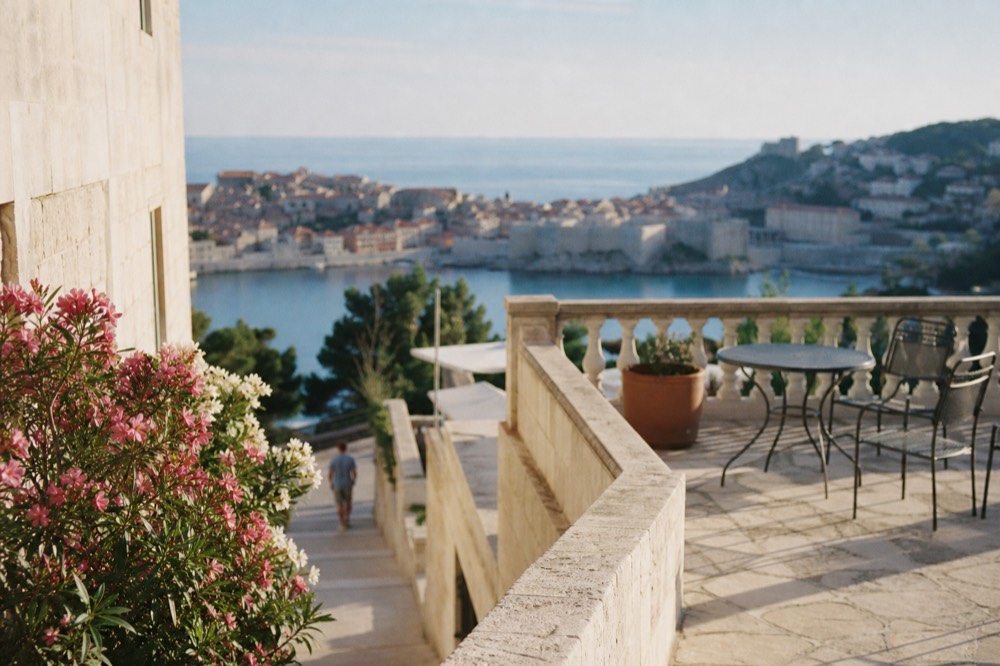
Luxury in Dubrovnik is mostly about two things: proximity to the walls without the crowd noise, and a terrace with the right angle on the Adriatic. Ploče, the quiet hillside quarter just east of the city, delivers both, which is why the famous names cluster there. From a Ploče balcony you look across at Fort Lovrijenac, standing on its 37-metre sea rock, and over the rooftops of a city inscribed by UNESCO in 1979. Everything else covered here is indexed on Things to Do in Dubrovnik.
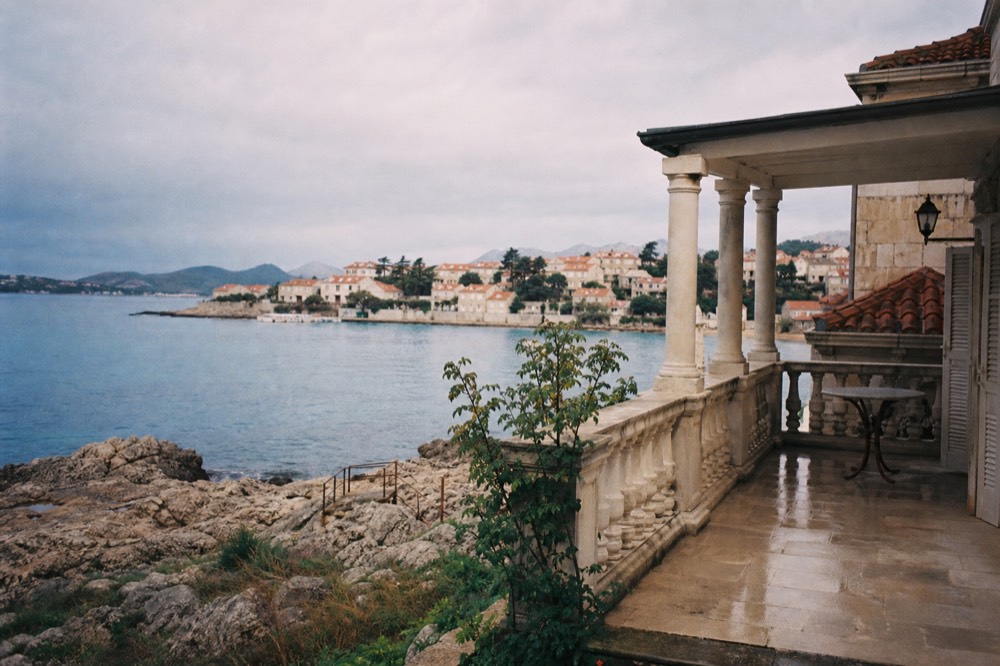
The irony of Kupari is never far away when you discuss luxury here. Fifty years ago the most glamorous beds on this coast were in the resort strip that is now a ruin, and the money that once filled those ballrooms now fills marble lobbies a few kilometres north. Standing in both places on the same day is the sharpest history lesson Dubrovnik offers.
For a splurge day to match a splurge bed, the cable car and old town combination tour is the classic luxury-adjacent outing, pairing the panorama from Mount Srđ with a guided walk:
What Is the Best Hotel to Stay in Dubrovnik for a First Visit?
For a first visit, stay at Pile or Ploče if the Old Town is your whole trip, or on the Lapad peninsula if you want beaches, pools and breathing room, with Hotel Komodor as the verified value base at 7.8 out of 10 across 822 Expedia reviews. First-timers who book Lapad should budget for buses or taxis, because the walk to Pile Gate is uphill and hot in summer.
The single most common first-timer mistake is treating Dubrovnik as flat. It is not. The Old Town itself is a stack of staircases, and the approaches from the west are steep. A hotel "ten minutes from the walls" can be ten minutes of steps with luggage. The second mistake is underestimating crowd timing: six counters at every Old Town entrance update a headcount every 15 minutes, and the official carrying capacity from the UNESCO assessment is 11,275 people. On a real September morning the count climbed from 5,419 at 08:00 to a 7,739 peak at 10:00. Visit the walls early, then retreat to your pool.
A simple decision table:
| Your priority | Best base | Trade-off |
|---|---|---|
| Maximum old-town atmosphere | Inside the walls | Stairs, crowds, higher rates |
| Views and quiet luxury | Ploče | Top of the price range |
| Beaches and pools | Lapad | Bus or taxi to the old core |
| Cruise or ferry connections | Gruž side | Least scenic surroundings |
| Budget with good links | Lapad, Hotel Komodor | Simple rooms, number 6 bus into town |
Cruise passengers should read our cruise port orientation guide before booking anything, because a ship day changes the calculus completely. And if you are weighing the whole question of how long to stay, our how many days in Dubrovnik guide covers it.
Is Dubrovnik Palace a Good Hotel?
Dubrovnik Palace is a large, well-known five-star resort on the Lapad peninsula side of the city, and the general verdict among travellers is positive for its beach access, pools and sea views, with the usual resort trade-off of being a bus or taxi ride from the Old Town. We do not carry a verified rating for it in our research pack, so we won't quote a number; check the live listing before you book.
That last clause is deliberate. This site only prints figures it has verified itself, and for most of Dubrovnik's hotel portfolio that means we point you to the live listing rather than repeating a star rating from memory. What we can say with confidence is structural: the resort sits on the seafront of the Lapad peninsula, the same area as Hotel Komodor and Hotel Lapad, which means the same geography applies. You get beaches, sunsets over the water and resort facilities, and you accept that the walled city is a journey rather than a doorstep.
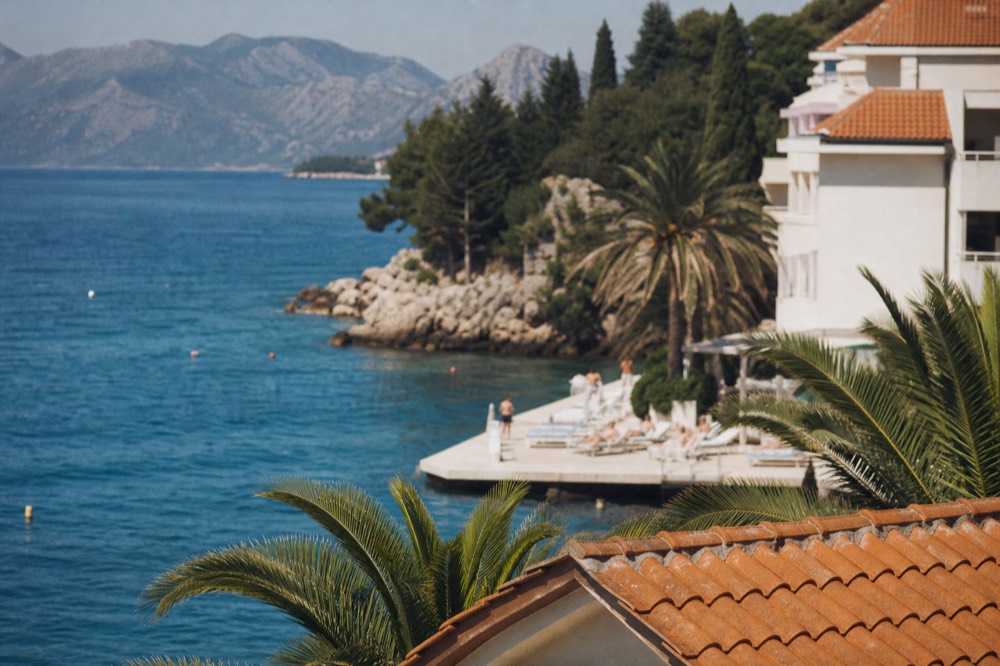
If a big resort base appeals, the honest comparison set is this:
| Option | Style | Area | Old Town access |
|---|---|---|---|
| Dubrovnik Palace | Large five-star resort | Lapad peninsula coast | Bus or taxi ride |
| Hotel Excelsior | Classic luxury | Ploče | Short walk to the walls |
| Hotel Lapad | Mid-range hotel | Lapad | Bus or taxi ride |
| Hotel Komodor | Budget three-star | Lapad | Number 6 bus to Pile Gate |
How Do You Fit Kupari Into a Dubrovnik Itinerary?
Kupari works best as a half-day add-on: a morning or late-afternoon visit by bus or taxi along the coast road, paired with Cavtat, the airport-side beaches or a Župa bay swim stop. Do not plan it as a full day, because the site itself takes under two hours to see properly, and do not plan it around entering the buildings, which you shouldn't.
A sensible loop is Old Town at first light, the walls while the count is still climbing toward its 10:00 peak, then a bus down the coast after lunch when the stone streets are at their hottest. Kupari's shadeless facades are brutal at midday in July and August, when the long-run sea average is 24.9 and 25.8 degrees respectively, so the golden-hour visit is both prettier and kinder.
One counter-intuitive planning fact is worth more than any sunset tip: cruise passengers in Dubrovnik peak in September and October, not July and August. Port Authority data shows 101,246 cruise passengers in September 2025 and 100,132 in October, ahead of July's 96,072 and August's 87,385, with 461 cruise calls scheduled for 2026. If you want the coast road and the old core to yourself, the shoulder logic is inverted: early summer is quieter than autumn.
For the full picture on timing, our best time to visit Dubrovnik guide works through the whole year, and the walls ticket detail is covered in our city walls ticket guide, where the operator's own site, the Society of Friends of Dubrovnik Antiquities, is the primary source.
However you build the day, the three walks below are the ones that pair best with a Kupari detour, and each covers ground the ruins will make you curious about:
Common Questions About Abandoned Kupari and Dubrovnik Hotels
What Is the Abandoned Hotel Complex Near Dubrovnik?
The abandoned hotel complex at Kupari, a bay in Župa dubrovačka immediately south-east of the city, where a strip of resort hotels has stood empty since the war that placed the Old Town on the World Heritage in Danger list from 1991 to 1998. The buildings were never rebuilt and redevelopment plans have repeatedly stalled.
Can You Go Inside the Kupari Hotel Ruins?
No, and you should not try. The structures are unstable, with loose concrete, open shafts and unguarded drops, and parts of the site can close without notice for redevelopment work. The bay, the beach and the paths around the hotels are free and open, and they give the best photographs anyway.
What Is the Best Hotel in Dubrovnik?
It depends on your trip. For verified value, Hotel Komodor on the Lapad peninsula scores 7.8 out of 10 across 822 Expedia reviews. Hotel Lapad is the reliable mid-range pick and Hotel Excelsior at Ploče the luxury benchmark. Inside the walls, small guesthouses trade space for atmosphere.
What Is the Most Luxury Hotel in Dubrovnik?
Hotel Excelsior at Ploče is the verified luxury option in our tracked set, minutes from the Old Town with views over the walled city and Lokrum. Dubrovnik's wider five-star tier clusters around Ploče and the Lapad shoreline, and their current ratings are best checked on the live listings.
Is Dubrovnik Palace a Good Hotel?
Dubrovnik Palace is a large five-star resort on the Lapad peninsula coast, generally well regarded for its beach access, pools and sea views, with the trade-off of a bus or taxi ride to the Old Town. We do not carry a verified rating for it, so check the live listing rather than any number quoted here.
When Is the Quietest Time to Visit Dubrovnik?
Not when you think. Port Authority data shows cruise passengers peaked in September 2025 at 101,246 and October at 100,132, above July's 96,072 and August's 87,385. Early summer and the winter months are the quietest windows, and the Old Town's own counters show the daily peak around 10:00, so mornings beat afternoons any day.