Dubrovnik for Wheelchair Users and Limited Mobility
Dubrovnik is a medieval city built on stairs, and honesty is the first thing an accessibility guide owes you. Here is what actually works: the Stradun, the cable car, the e-tuk-tuk tours, and how to plan around the rest.
Short answer
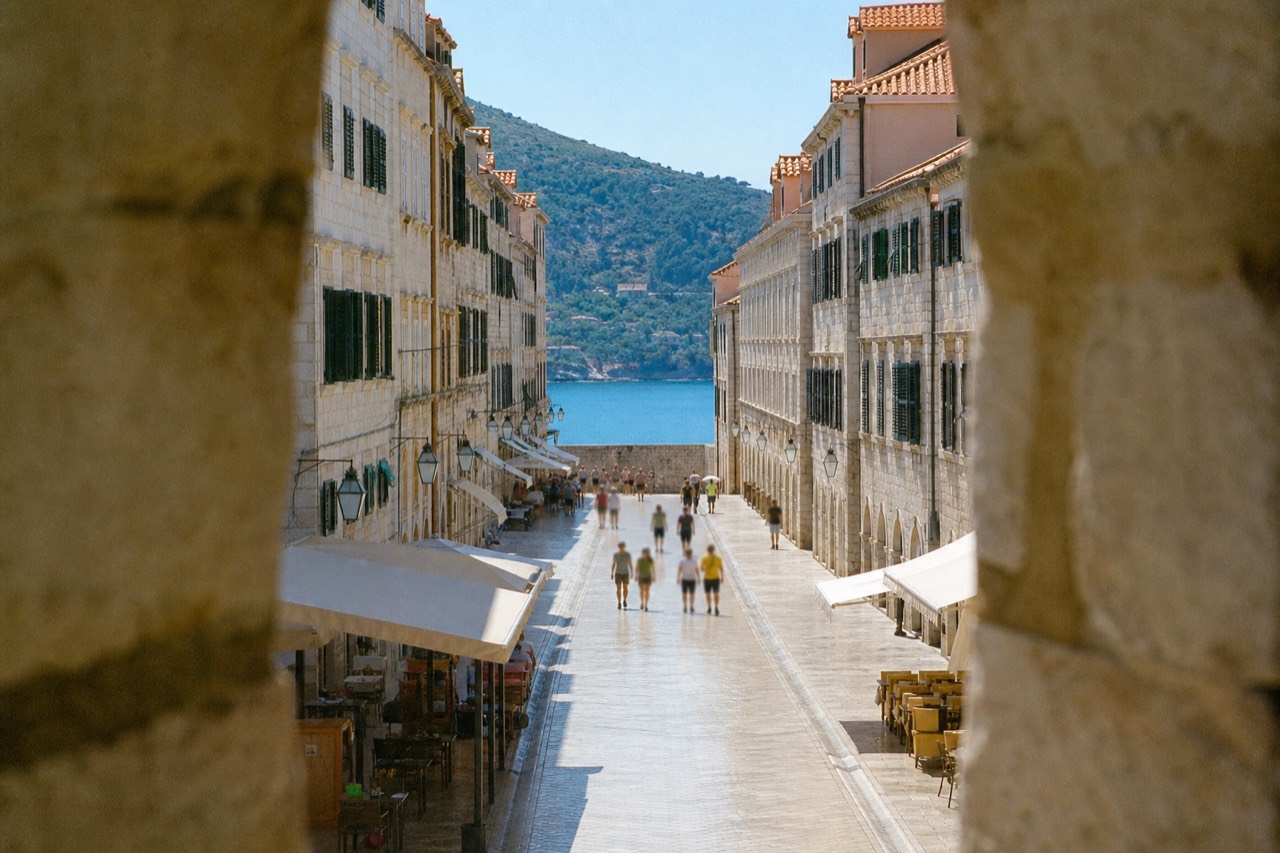
The Stradun, Dubrovnik's 298-metre main street, is flat polished limestone and fully wheelchair usable, and the cable car serves Mount Srd from a step-free lower terminal. The city walls are not accessible: 1,940 metres of stairs. The workable bookings are the e-tuk-tuk panorama tour, from $59.24, and the hop-on-hop-off bus, from $35.46.
Dubrovnik was finished as a fortress city in 1660, and nobody involved was thinking about wheels. The result is a town where the main street is a dream of smooth limestone and the side streets are staircases carved into a hillside. I have walked every one of those streets with visitors since 2015, and the honest answer to most accessibility questions is a split verdict: parts of this city work beautifully for wheelchair users and people with limited mobility, and parts are simply closed to you.
This guide separates the two. It covers the terrain, the steps to avoid, the tours and transport that genuinely work, the cable car, and the timing that makes everything easier. Where a figure matters, like the 40-euro walls ticket or the 30-euro cable car round trip, it is the operator's own number. Where something is unresolved, I say so rather than guessing.
Is Dubrovnik Wheelchair Accessible?
Partly, and the split is predictable: the Stradun and the flat ground at Pile and Ploče gates work well, the side streets and the city walls do not. The Stradun runs 298 metres of level polished stone, the cable car has a step-free lower terminal, and e-tuk-tuk and bus tours cover the viewpoints. The 1,940-metre wall circuit is stairs throughout and is not accessible.
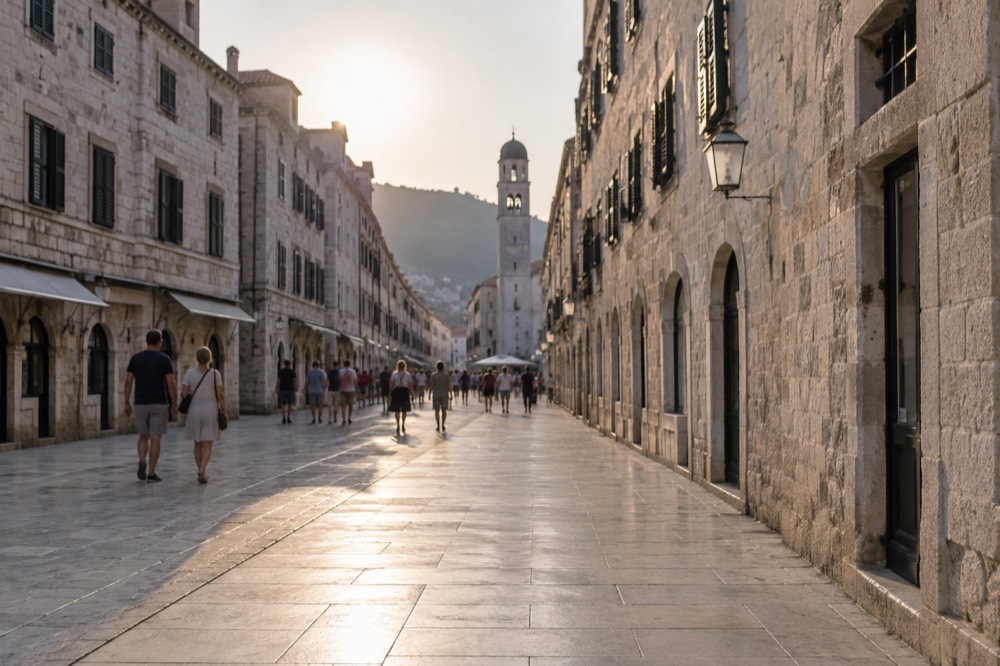
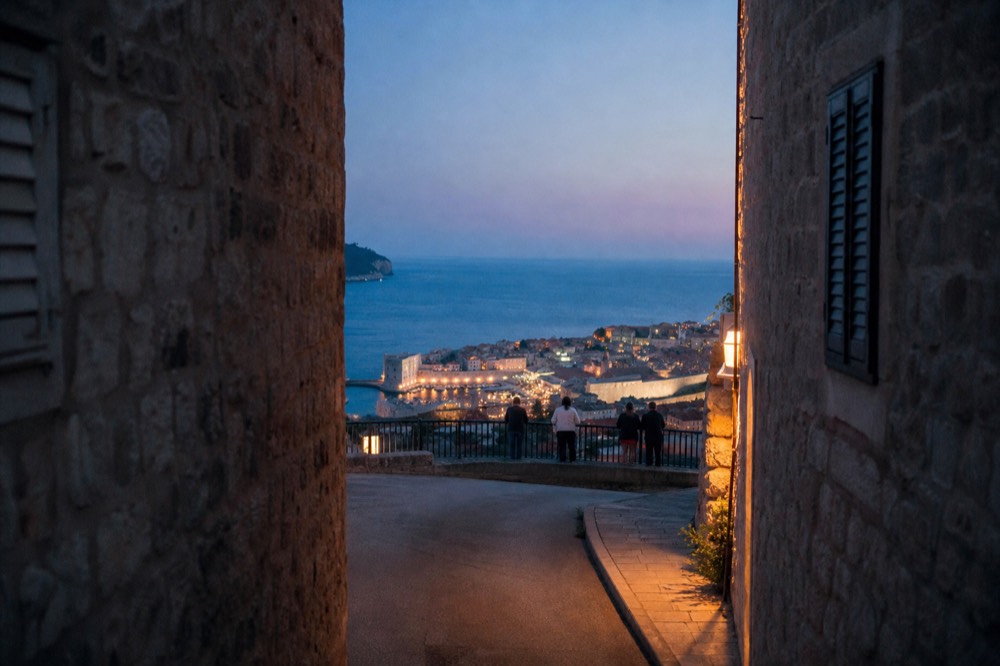
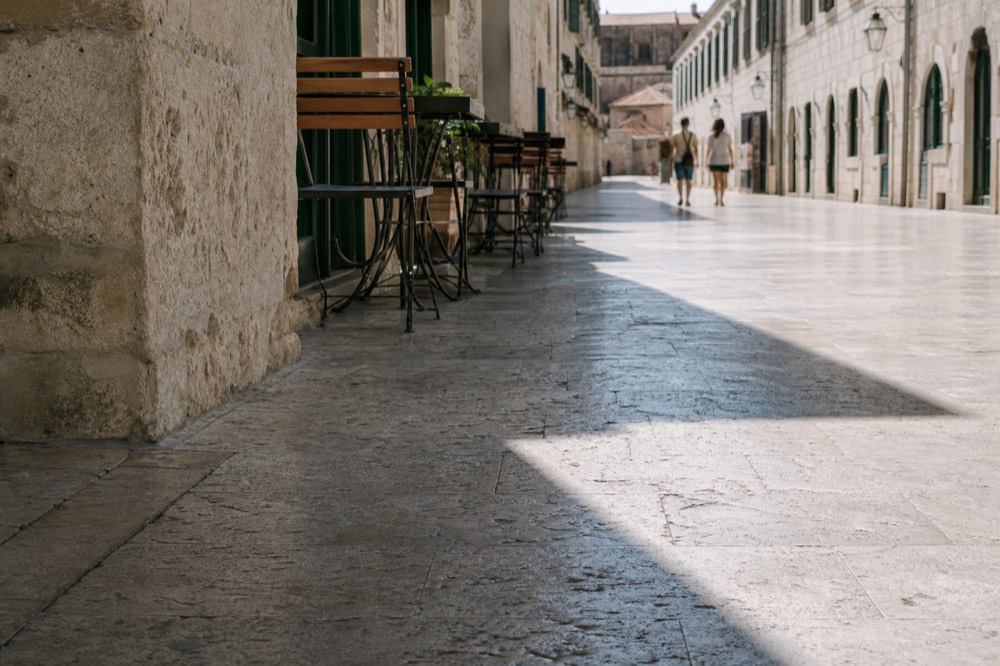
The Old Town sits on a peninsula that rises sharply from the sea. The long axis, from Pile Gate in the west to Ploče Gate in the east, is almost level. That axis is the Stradun, formally the Placa, and its final plan was fixed by the 1272 Statute. It is paved in smooth limestone polished by centuries of feet, wide, and free of steps from end to end. A wheelchair user can travel it comfortably, and the squares that open off it, Luža at the eastern end and Gundulić Square partway along, connect without kerbs.
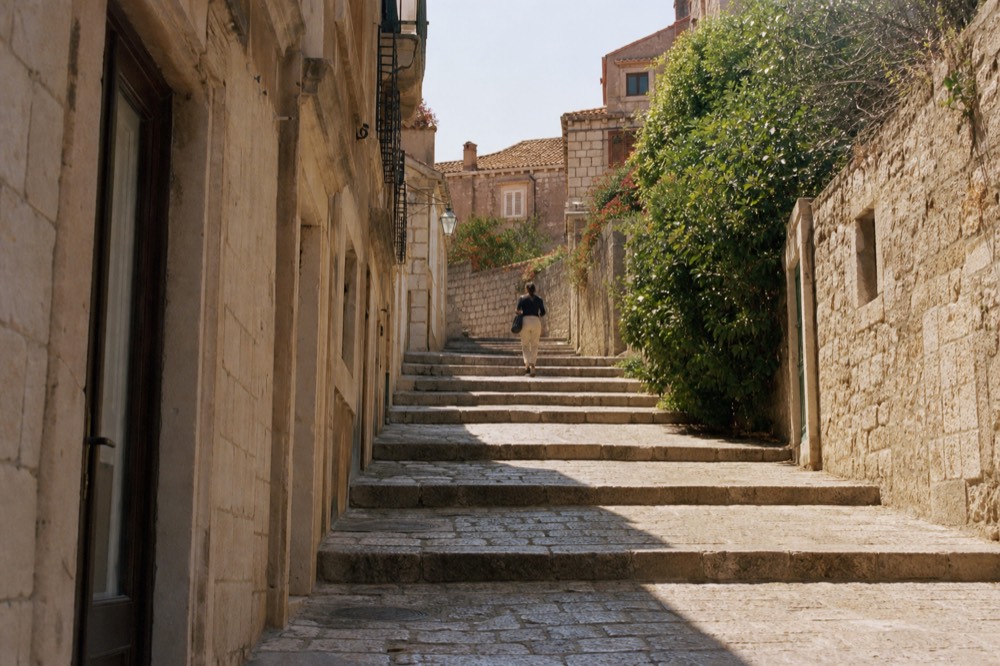
The short axis is the problem. Streets running north and south of the Stradun climb the hill in flights of stone steps, some of them long and steep. There are no ramps, no lifts, and no workaround. If your route needs Prijeko street or any of the lanes above it, you are climbing stairs or choosing another route. The same applies to everything at wall level: the walls themselves, the rocky swimming spots, and the Buža bar's cliff-edge terrace are all stair or rough terrain territory.
The practical frame is this: plan your day along the flat axis, use wheels or the cable car for the views, and treat the stair streets as scenery rather than destinations. The rest of this guide is built around that logic, starting with the single most famous staircase in the city.
Where Are the Steps of Shame in Dubrovnik?
The Steps of Shame are the Jesuit Staircase, a Baroque flight of stone steps on Uz Jezuite street, descending from the Jesuit Church toward the Gundulić Square area. They earned the nickname as a Game of Thrones filming location, standing in for the Walk of Shame steps in King's Landing. They are beautiful, steep, and completely impassable with a wheelchair.
In the show, Cersei Lannister's penance walk was filmed on this staircase, and the name stuck with fans. For an accessibility planner, the useful point is what the staircase tells you about the whole neighbourhood. The Jesuit steps are one flight among many in the eastern Old Town, and they mark the boundary between the usable flat ground near the Stradun and the stepped terrain above it. If you see the steps on a map and wonder whether the streets beyond them are manageable, the answer is no: everything uphill from there is stairs.
The viewing logic is straightforward. You can see the staircase perfectly well from its base, and the view upward, church facade above a curve of worn stone steps, is the postcard. There is no need to climb it. The Game of Thrones connection runs deep through this city, and much of it is more accessible than this one spot; our Game of Thrones filming locations guide maps which sites sit on flat ground and which do not.
For wheelchair users, the surrounding area still rewards a visit. Gundulić Square below the steps hosts the morning market on flat paving, and from there the route back to the Stradun is level. Approach the Steps of Shame as a viewpoint, photograph them from the bottom, and save your energy for the parts of the city that want you.
What Not to Do in Dubrovnik?
Do not buy a city walls ticket expecting any accessible section, do not plan to push a wheelchair up the side streets, do not visit at midday in July and August, and do not assume the Old Town's polished stone is grippy when wet. Each of these mistakes is common, and each turns a good day into a hard one. The walls are the costliest error at 40 euro per adult in main season.
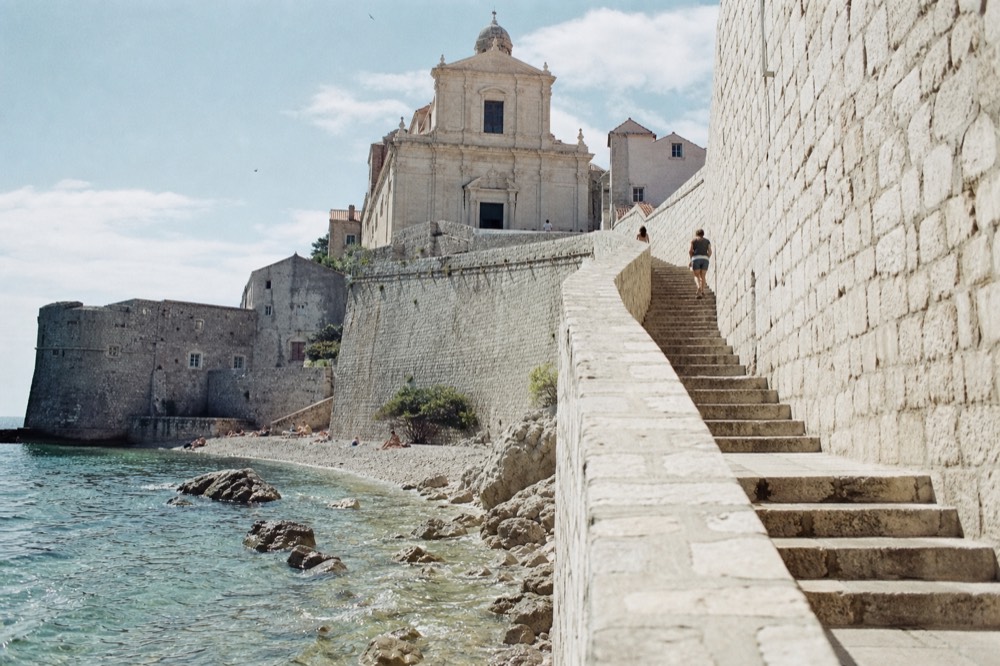
Start with the walls. The adult ticket is 40 euro from 1 March to 30 November, 20 euro in December, and it buys you a 1,940-metre circuit that is stairs for essentially its whole length, up to 25 metres high at points. There is no accessible segment, no lift, and no partial ticket. If mobility is the constraint, spend the money elsewhere and enjoy the walls from below or from Mount Srd, where the cable car delivers the same panorama without a single step. The walls operator's own site, citywallsdubrovnik.hr, describes the circuit in full.
Second, do not fight the geography. Pushing a manual wheelchair up Prijeko or any lane above the Stradun is not a matter of effort; it is a matter of steps. Route along the flat axis instead, and use the accessible transport options later in this guide for anything uphill.
Third, do not treat polished limestone as all-weather. The Stradun's shine becomes genuinely slippery after rain and in the dew of early morning. That matters for anyone, and doubly for crutches and walkers. Our page on what to be careful of in Dubrovnik covers the broader hazards, from summer heat to cruise-day crowds.
| Mistake | Why It Fails | Do This Instead |
|---|---|---|
| Buying a walls ticket with limited mobility | 1,940 m of stairs, no accessible segment, 40 euro in main season | Ride the cable car to Mount Srd for the panorama |
| Routing up the side streets | North-south lanes are stone staircases, no ramps | Stay on the Stradun axis and the flat squares |
| Midday visit in July or August | Peak heat on shadeless stone, thickest cruise crowds | Go before 09:00 or after 17:00, or visit in shoulder months |
| Assuming grip on wet limestone | Polished stone is slick after rain | Slow down, use handrails where they exist, pick dry hours |
| Booking a walking tour without asking | Standard routes include stepped lanes | Ask the operator for a flat-route variant before booking |
Which Tours and Transport Actually Work With Limited Mobility?
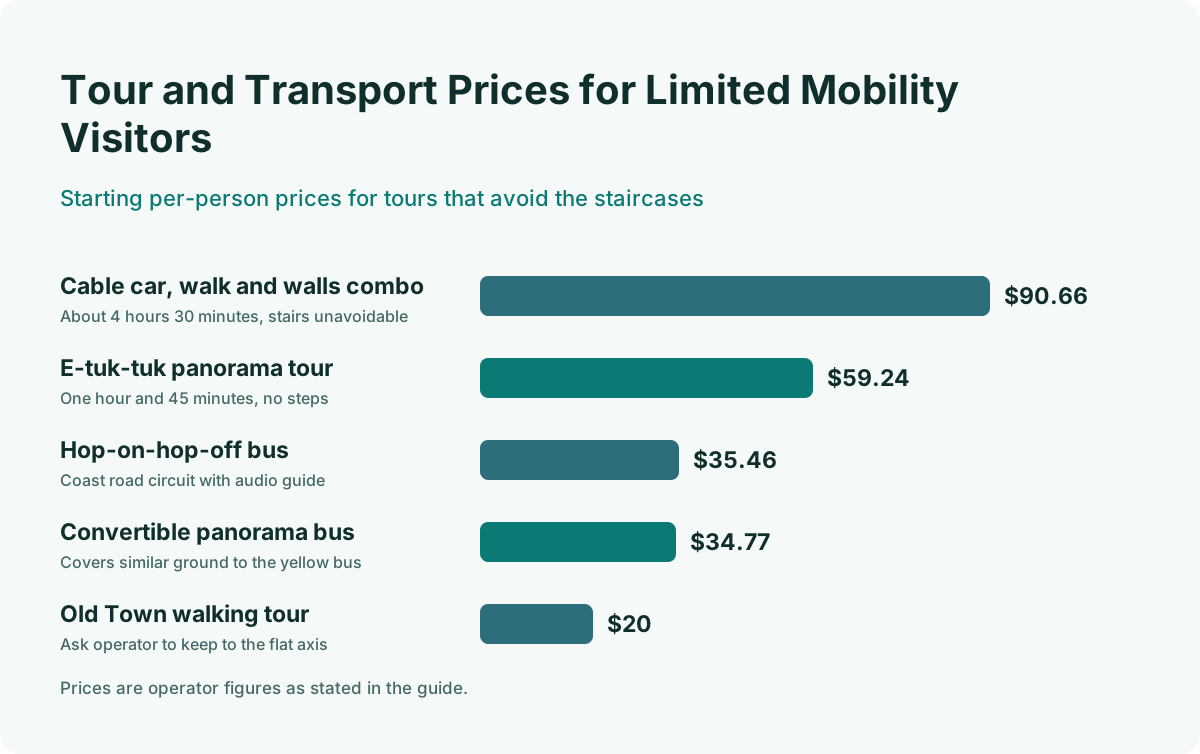
The e-tuk-tuk panorama tour is the strongest booking, from $59.24 per person for one hour and 45 minutes, rated 5 across 1,799 reviews. The hop-on-hop-off bus, from $35.46, covers the coast road with an audio guide. The Old Town walking tour, from $20, works if you ask the operator to keep to the flat axis. All three beat attempting the terrain alone.
The e-tuk-tuk tour is the one I point mobility-limited visitors to first. It is a small electric vehicle, it climbs to the Mount Srd viewpoints and along the coast road, and it removes the staircase problem entirely. At one hour and 45 minutes it is long enough to see the panorama, the river mouth and the bays without a single step. It is run by Eco Tuk Tours Dubrovnik and carries a perfect 5 rating across 1,799 reviews, which is a remarkably consistent scorecard for a panorama product. You can Check availability on the live listing, where free cancellation is offered.
The hop-on-hop-off yellow bus is the budget alternative. It runs a circuit from outside the Old Town along the Lapad coast, with an audio guide, from $35.46 per person and a 4.9 rating across 1,147 reviews. Boarding is at ground level, though check with the operator about the step into the vehicle if that matters for your situation. The convertible panorama bus covers similar ground at a similar price, from $34.77, rated 4.6 across 796 reviews.
Walking tours deserve a fair hearing. The Old Town walk with a local guide starts at just $20 per person and is rated 4.8 across 5,826 reviews, and the route is the operator's choice, which means a phone call or a note in the booking can usually secure a flat version along the Stradun, Luža and the market squares. A guide who knows the terrain adds real value here, because they know which thresholds, kerbs and crowding points to route around. Our walking tours overview compares the options.
| Option | From (per person) | Rating | Duration | Mobility Notes |
|---|---|---|---|---|
| E-Tuk Tuk panorama tour | $59.24 | 5 across 1,799 reviews | 1 h 45 m | No stairs, vehicle-based, viewpoints included |
| Hop-on-hop-off yellow bus | $35.46 | 4.9 across 1,147 reviews | 1 h 30 m circuit | Ground-level boarding, coast road route |
| Convertible panorama bus | $34.77 | 4.6 across 796 reviews | Circuit | Open-top, audio guide, coast route |
| Old Town walking tour | $20 | 4.8 across 5,826 reviews | Approx. 2 hours | Ask for a flat-route variant at booking |
Is the Cable Car Accessible, and What About the Walls?
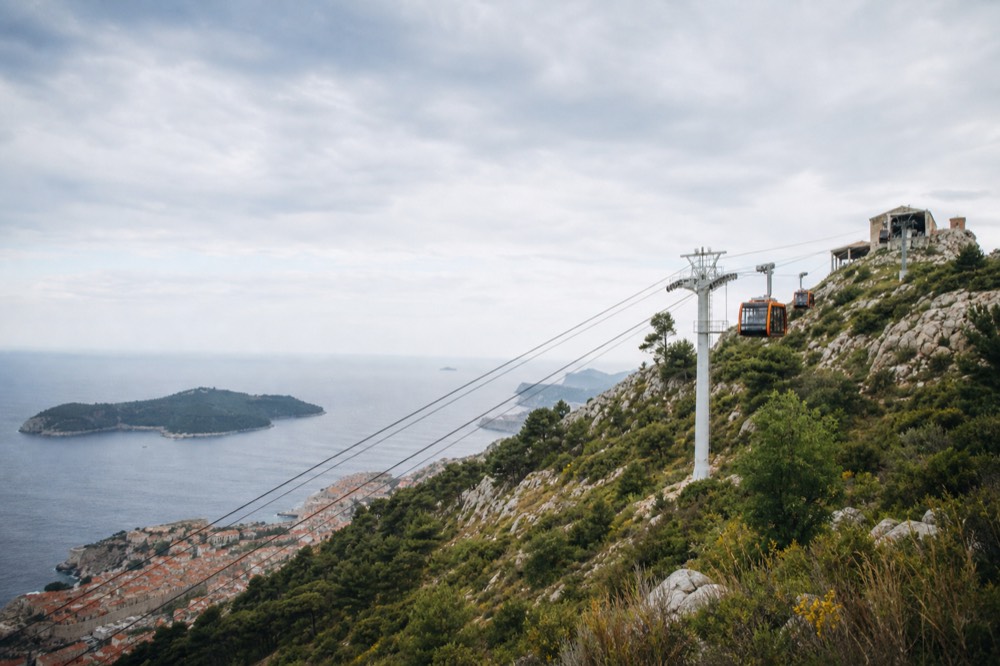
The cable car is accessible: the lower terminal sits by the Old Town at 38 metres above sea level, boarding is step-free, and the cabin reaches the 405-metre Mount Srd station in 3 minutes 30 seconds. An adult round trip is 30 euro. The city walls are not accessible in any section, and no ticket type changes that.
The cable car is the best mobility trade in Dubrovnik. Two cabins, each carrying 32 plus one, travel a 778.2-metre track at 6.5 metres per second, a 367-metre rise in three and a half minutes. At the top, the operator states a view range of up to 60 km on a clear day, which takes in the Elaphiti islands, Lokrum and the whole red-roofed bowl of the Old Town. The panorama from Srd is the same one the walls give you, minus 1,940 metres of stairs. Prices are 30 euro adult round trip, 17 euro one way, 8 euro round trip for a child aged 4 to 12, and under 4s ride free. The timetable shifts through the year, from 09:00 to 21:00 in April to midnight in high summer, and the whole system is closed January to March; the operator's own page at dubrovnikcablecar.com carries the full table.
The walls are the opposite story, and it is worth being blunt because the ticket is not cheap. The 40-euro main-season adult ticket is actually a walls plus Fort Lovrijenac combination, with Lovrijenac alone at 15 euro, and every metre of it is stepped, uneven or both. The wall is 4 to 6 metres thick on the land side and up to 25 metres high, built for defence, not passage. There is no accessible entry, no accessible segment, and no discount that makes the stairs shorter. Our cable car guide covers the ride in detail, and our city walls tickets guide explains exactly what the 40 euro buys for travellers who can use it.
One combined product deserves a mention for travellers who can manage stairs with support: the cable car, walking tour and city walls combo runs about 4 hours 30 minutes from $90.66 per person, rated 4.6 across 360 reviews. It is only for you if stairs are slow but possible, because the walls segment is unavoidable. The full index of guides sits on Things to Do in Dubrovnik.
Is Dubrovnik Worth Visiting With Limited Mobility?
Yes, provided you plan around the stairs rather than hoping to push through them. The flat axis delivers a cathedral, the Rector's Palace, the Sponza Palace, markets and café terraces, the cable car delivers the panorama, and the boat trips from the Old City Harbour are step-light. The UNESCO-listed core, inscribed in 1979, is genuinely enjoyable from ground level.
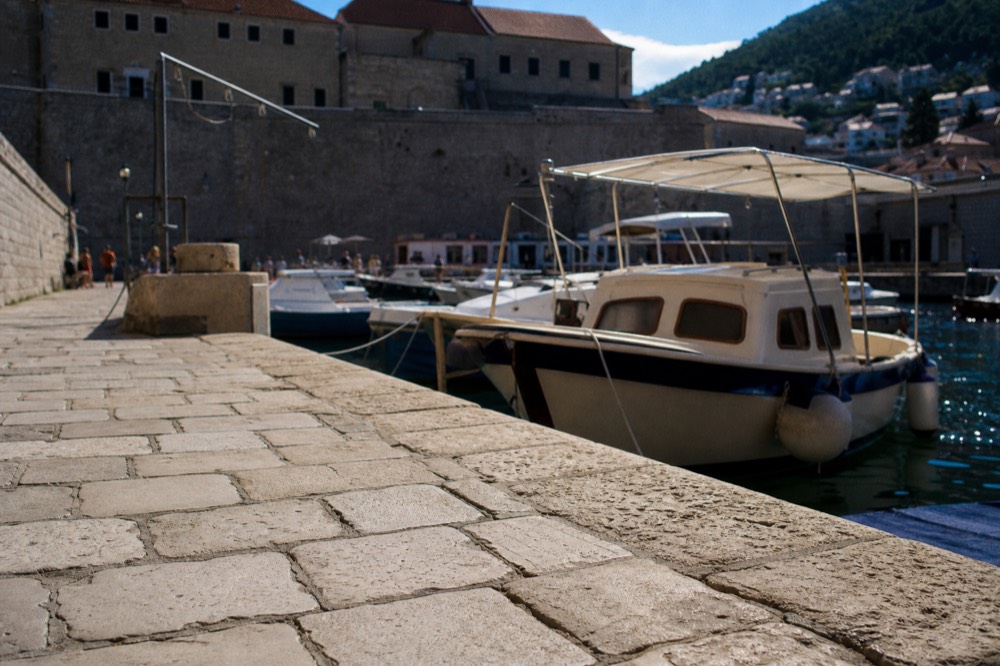
I want to push back gently on the idea that a medieval stair-city has nothing for a wheelchair user. The Old City of Dubrovnik was inscribed by UNESCO in 1979 under criteria (i), (iii) and (iv), covering a 24.7-hectare property, and a great deal of that property is reachable on the level. The Rector's Palace, the Sponza Palace, the cathedral and the Jesuit Church facade at the foot of the Steps of Shame are all on or near the flat axis. The morning market at Gundulić Square is flat. The Old City Harbour, where the Lokrum boats leave, sits at sea level a short level roll from the Stradun's eastern end.
Lokrum itself is worth considering. The 30-euro ticket covers reserve entry and the return boat transfer, boats leave the City Harbour at 09:00 and then every 15 minutes from 10:00 to 18:00, and the island's harbour area and main paths near the landing are far gentler than the Old Town's stair lanes, though the botanical garden and monastery involve some uneven ground. Ask at the ticket office at Luža about the paths before you commit. Our Lokrum Island guide has the details.
The honest ledger looks like this. What you lose: the walls, the cliff bars, the upper lanes, and any beach that is not one of the concrete or ramped ones. What you keep: one of the most beautiful main streets in Europe, a working harbour, a full set of museums on the flat, a cable car to a 405-metre summit, and boat trips to islands. That is not a consolation prize itinerary. That is a good trip.
| Sight | Terrain From the Stradun | Workable With a Wheelchair? |
|---|---|---|
| Stradun (Placa) | Flat polished limestone, 298 m end to end | Yes, comfortably |
| Rector's Palace | Level, off Luža square | Yes, check interior thresholds |
| Sponza Palace | Level, on Luža square | Yes |
| Gundulić Square market | Flat paving, short gentle rise | Yes |
| Old City Harbour | Level descent from Ploče Gate end | Yes |
| Jesuit Staircase viewpoint | View from the base is level | Yes, from below only |
| City walls circuit | 1,940 m of stairs | No |
| Side streets above the Stradun | Stone staircases | No |
When Not to Visit Dubrovnik?
Avoid July and August for heat and crowding, and know that cruise pressure actually peaks in September and October: 101,246 cruise passengers in September 2025 and 100,132 in October, above July's 96,072 and August's 87,385. For accessible travel, May, June, late September and October offer cooler stone, thinner crowds and full operating hours.
The cruise numbers surprise people, and they come from the Port Authority, not from a travel blog. September and October outrank the summer months for cruise passengers, and the daily picture matters more than the monthly one. The Port Authority limits cruise passengers to 8,000 a day in most cases, and of 243 cruise days a year only 18 exceed that figure, but those 18 days concentrate in the warm months. The Old Town has an official carrying capacity of 11,275 people, measured by six counters at every entrance that update a headcount every 15 minutes. On a busy September morning the count climbs steeply: a real curve read on 8 September 2026 showed 5,419 people at 08:00, a 7,739 peak at 10:00, and 7,205 by 11:00.
For a wheelchair user, crowding is not just unpleasant, it is a mobility problem. A packed Stradun removes your line of travel, and packed squares remove your turning space. So the timing advice is specific: if you must come in the warm season, do the Old Town before 09:00, when the counter data shows the streets still comparatively clear, and give the flat axis over to the afternoon crowds while you ride the cable car or the e-tuk-tuk. The Port Authority's cruise pages at portdubrovnik.hr describe the daily limits in full.
Heat is the second reason to skip midsummer. July and August sit in the warmest band of the year, and the sea tells the same story: the long-run August average for this coast is about 25.8 degrees, September about 23.6, from a 1991 to 2020 open-water climatology, not a beach thermometer. Stone amplifies heat, shade on the Stradun is scarce, and pushing a chair or walking with a stick on hot polished limestone is exhausting. May, June and October give you the same blue water and half the strain. Our best time to visit guide breaks the whole year down.
| Month | Cruise Passengers 2025 | Sea Average (C) | Accessible-Travel Verdict |
|---|---|---|---|
| May | 84,107 | 18.6 | Excellent: cool stone, moderate crowds |
| June | 82,642 | 22.5 | Very good: warm but before peak season |
| July | 96,072 | 24.9 | Avoid if heat is a problem |
| August | 87,385 | 25.8 | Hottest month, crowded streets |
| September | 101,246 | 23.6 | Busiest cruise month: go early in the day |
| October | 100,132 | 21.0 | Second-busiest cruise month, mild weather |
How Do You Plan an Accessible Day in Dubrovnik?
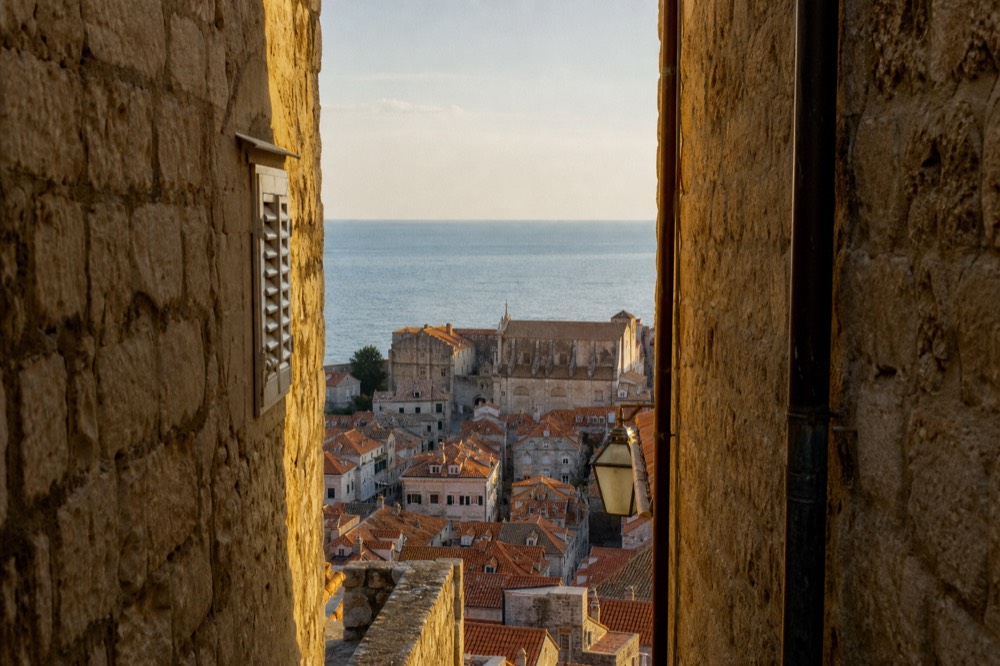
Anchor the day on the flat axis: enter at Pile Gate, roll the Stradun east, see Luža, the Rector's Palace and the market, then choose one climb-free highlight, the cable car, an e-tuk-tuk tour or a harbour boat. Do the Old Town before 09:00 in the warm months, when the counters show the streets at their emptiest, and rest through the midday peak.
Here is a day I would genuinely recommend. Start at Pile Gate on the western end, where the approach from the bus stop is level. Enter the Old Town onto the Stradun and take it east while the morning light is low and the counter data shows the crowds still thin: 5,419 people at 08:00 against a 7,739 peak at 10:00 is the difference between a clear street and a slow one. Coffee on the Stradun, then the Franciscan Monastery complex at the western end sits right on the flat, and the Sponza and Rector's Palace at Luža are a level roll further east.
Late morning, leave the Old Town for your vehicle-based highlight. The e-tuk-tuk pickup and the cable car lower terminal are both close to the Old Town's edge, and both deliver the panorama that the walls would otherwise monopolise. Lunch back on the flat, and if you have energy left, the Old City Harbour at the Ploče end is level and the Lokrum boats leave from there on the 09:00, then every-15-minutes pattern. A buffer note: the whole city had 4.2 million overnight stays in 2025, sharing first place among Croatian destinations with Rovinj, so there is no truly empty day in the warm half of the year, only better and worse hours.
One last planning point. Where you base yourself matters more with limited mobility than anywhere else in this guide, because the approach to Pile Gate from Lapad or Ploče is a real distance on pavement. Our where to stay guide covers the neighbourhoods, and the flat-access logic there is the same as here: favour Ploče or the Pile side over anything that adds hills to your day.
Common Questions About Dubrovnik Accessibility
Can you do Dubrovnik in a wheelchair?
Yes, in part. The Stradun, the flat squares, the Rector's Palace, the Sponza Palace and the Old City Harbour are all usable, and the cable car and e-tuk-tuk tours cover the viewpoints. The side streets and the full 1,940-metre city walls circuit are staircases and are not accessible.
Where are the steps of shame in dubrovnik?
They are the Jesuit Staircase on Uz Jezuite street, descending from the Jesuit Church toward Gundulić Square. They were filmed as the Walk of Shame steps in Game of Thrones. View them from the base, which is on level ground, rather than climbing them.
Is the Dubrovnik cable car wheelchair accessible?
The lower terminal is at street level beside the Old Town and boarding is step-free, and the ride covers 367 metres of rise in 3 minutes 30 seconds. Check with the operator in advance about cabin boarding assistance for your specific needs. An adult round trip is 30 euro.
Are the Dubrovnik city walls accessible?
No. The circuit is 1,940 metres of stairs and uneven stone with no accessible segment, no lift and no partial ticket. The 40-euro main-season adult ticket is a walls plus Fort Lovrijenac combination. For the same panorama without stairs, ride the cable car to Mount Srd.
What not to do in dubrovnik?
Do not buy a walls ticket expecting an accessible route, do not attempt the stepped side streets, do not visit at midday in July or August, and do not assume the polished limestone is grippy when wet. Ask any walking-tour operator for a flat-route variant at the time of booking.
When not to visit dubrovnik?
Avoid July and August if heat is a problem, and treat September and October as the real cruise peak: 101,246 and 100,132 passengers in those months in 2025, above July and August. May, June and October offer mild weather and thinner streets, and the cable car closes January to March.