Dubrovnik Aquarium: A Rainy Day and Family Visit Guide
The Dubrovnik Aquarium is the city's dependable fallback: a compact, indoor stop at the southern edge of the Old Town that works when the weather turns, when the crowds peak, or when younger travellers need an hour that is not another staircase.
Short answer
The Dubrovnik Aquarium sits at the sea end of the Old Town, inside the old fortifications, and makes a natural pairing with the walls and the Stradun. Admission details are on the operator's live listing. The adult City Walls ticket is 40 euro in main season, 1 March to 30 November, and the one-day Dubrovnik Pass costs the same 40 euro and adds ten more sights.
The Dubrovnik Aquarium divides opinion less than most attractions in this city, because it does not pretend to compete with the walls or the sea. It is a small, shaded, indoor stop at the southern tip of the Old Town, and that is exactly its value. When the bora wind strips the terraces, when a September downpour empties the Stradun for an hour, or when a six-year-old has climbed their last staircase, the aquarium is the answer that costs you nothing in weather or stamina. I have walked past its entrance on hundreds of guiding days, and the pattern never changes: families duck in, reappear calmer, and carry on toward the walls or the port.
This guide covers what the aquarium is and who it suits, then answers the four questions every visitor asks on the way there: whether you can walk from the port, whether you can walk from the cruise terminal, what a taxi should cost, and whether the Old Town around it is worth the trip at all. Along the way I will fold in the crowd data that genuinely changes how you should time a visit, because Dubrovnik's busiest months are not the ones most guidebooks assume.
What Is the Dubrovnik Aquarium Like?
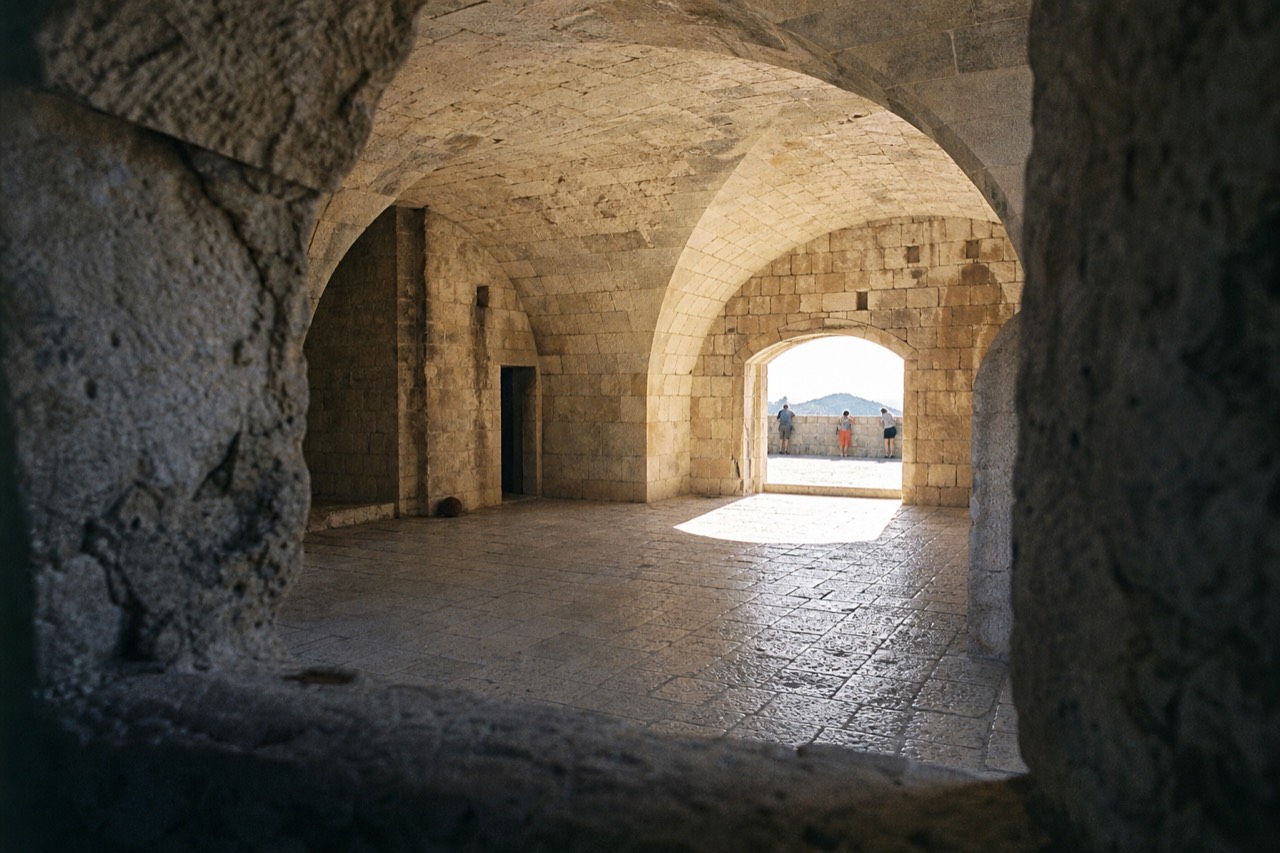
The Dubrovnik Aquarium is a small, indoor marine exhibit housed in the old fortress at the southern, seaward end of the Old Town, a few minutes' walk from the Stradun and right beside the walls circuit. It is best treated as a one-hour stop for families and rainy days rather than a headline attraction, with current admission prices on the operator's live listing.
The setting is the draw as much as the tanks. You enter through thick fortress stonework, and the interior keeps the cool, dim character of the building, which on a 30-degree August afternoon is a genuine relief. The tanks hold Adriatic marine life, the fish and sea creatures a child can actually name afterwards, and the scale is deliberately human: this is not a full-day ocean park, and planning it as one leads to disappointment. Treat it as the calm hour inside a bigger Old Town day and it delivers.
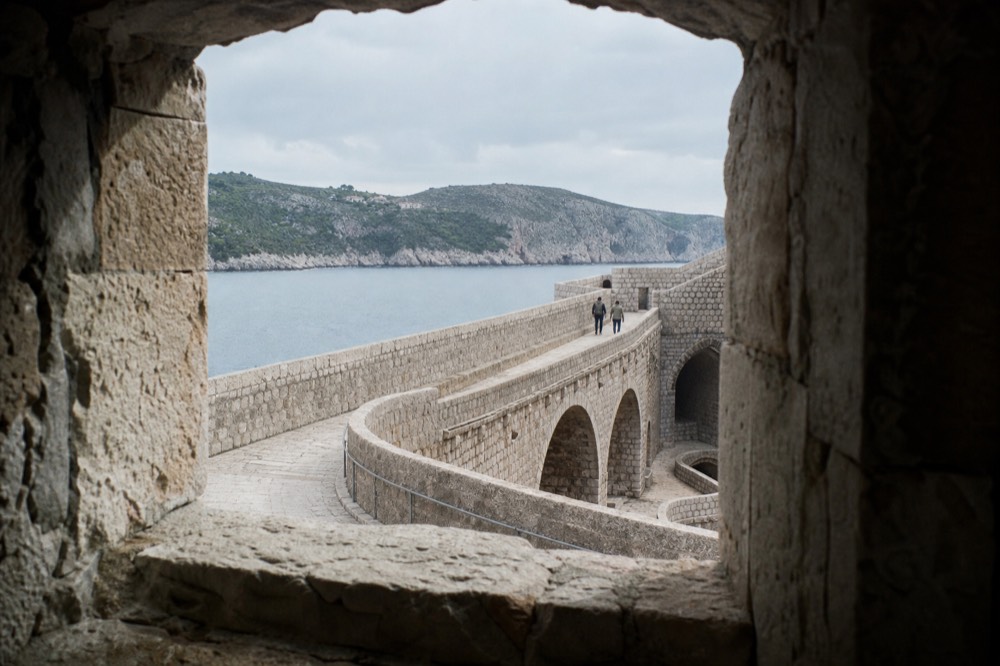
Because it sits at the southern edge of the walled city, the aquarium slots naturally into the geography of a visit. You can reach it from the Stradun in a few minutes on foot, and it pairs neatly with the walls circuit, whose entrance and whose most dramatic sea-facing stretches are close by. The walls themselves run 1,940 metres, are up to 25 metres high, and consist of the main wall plus sixteen towers, three fortresses, six bastions and more, according to the operator, the Society of Friends of Dubrovnik Antiquities, on its own site. The aquarium is the low-effort counterweight to that climb.
| Question | Short answer | Plan around it |
|---|---|---|
| Where is it? | Southern, seaward edge of the Old Town | Pair with the walls or the Stradun |
| How long does a visit take? | Most families allow roughly an hour | Slot it between two outdoor stops |
| Who is it best for? | Families with children, rainy-day visitors | Not a headline sight for adults alone |
| What does admission cost? | Prices are on the operator's live listing | Check before you go, tiers change by season |
| Is it indoors? | Yes, inside the old fortress stonework | A genuine all-weather option |
Is the Aquarium a Good Rainy Day Plan in Dubrovnik?
Yes, the aquarium is one of the few genuinely indoor stops inside the Old Town, which makes it the anchor of any rainy-day plan. Pair it with the covered lanes around the Stradun, a long konoba lunch, and the museums covered by the Dubrovnik Pass, and a wet day in Dubrovnik can hold its own against a sunny one.
Rain in Dubrovnik is usually short and violent rather than all-day, but when a proper system sits over the Adriatic, the outdoor itinerary collapses fast. The walls close their appeal in rain and wind, the cable car stops running in rough weather, and kayaking is off the table. What remains is the indoor layer of the city, and the aquarium is the most child-friendly piece of it. The museums cluster nearby too: the Rector's Palace, the Maritime Museum, the Ethnographic Museum and more are all inside the walls, and every one of them is covered by the Dubrovnik Pass.
The pass math is worth knowing here. The one-day Dubrovnik Pass costs 40 euro, the same as the standalone adult City Walls ticket in main season, 1 March to 30 November, and it adds ten more sights plus a 24-hour bus ticket, per the official pass site. On a rainy day, when you may skip the walls entirely, the pass is what turns a washed-out afternoon into a museum afternoon. Note the season boundary: in December the standalone walls ticket drops to 20 euro and no pass tier is on sale at all, so the equivalence is a main-season claim only.

For a fuller wet-weather plan, our rainy day itinerary for Dubrovnik sequences the indoor options hour by hour. The short version: start at the aquarium while children still have energy, work north through the museums, and finish with a long lunch, because Dubrovnik's restaurants do not rush you out and the rain usually breaks before the coffee does.
| Rainy day option | Indoor? | Best for | Covered by the pass? |
|---|---|---|---|
| Dubrovnik Aquarium | Yes | Families, young children | Check the live listing |
| Rector's Palace | Yes | History, architecture | Yes |
| Maritime Museum | Yes | Ships, older children | Yes |
| Ethnographic Museum | Yes | Local life, costumes | Yes |
| Long konoba lunch | Yes | Everyone, eventually | No, but discounts exist |
Can You Walk From Dubrovnik Port to Old Town?
Yes, you can walk from Dubrovnik's main port at Gruž to the Old Town, and plenty of people do, but it is a real walk along the bay rather than a stroll. Most visitors take the local bus, which runs frequently along the same road, while walkers should expect a straightforward pavement route with sea views for most of the way into Pile Gate.
Gruž is where the ferries and the bigger cruise berths sit, on the north side of the city, and the Old Town is the historic core on the south. The two are connected by a continuous coastal road with a pavement along the water, past Lapad bay and its cafe terraces. It is flat to gently rolling, entirely walkable in ordinary shoes, and honestly pleasant outside the midday heat. The trade-off is time and temperature: in July and August, with the sea averaging 24.9 and 25.8 degrees respectively, the pavement radiates, and families with small children usually regret the walk by the halfway point.

The bus is the pragmatic answer. It runs along the same corridor, costs a couple of euro, and drops you at Pile, the western entrance to the Old Town, from which the Stradun runs straight through the city. If you are staying in Lapad before or after a ferry, the geography is friendly: Hotel Komodor, for instance, sits in Lapad and is about a 29-minute walk to the Gruž cruise and ferry port, so a ferry morning does not require a taxi if you are based there. For everything else about the neighbourhood, our Lapad area guide covers the bay, the beaches and the bus stops in detail.
| Option from Gruž | Effort | Best when | Watch out for |
|---|---|---|---|
| Walk the coastal road | A real walk, mostly flat | Cool months, early morning | Midday heat in summer |
| Local bus to Pile | Minimal | Most days, most budgets | Crowding at peak times |
| Taxi or rideshare | None | Luggage, small children | Meter, agree before loading |
Can You Walk From Dubrovnik Cruise Port to Old Town?
Yes, if your ship berths at the port itself you can walk to the Old Town, and many cruise passengers do, but the honest answer depends on which berth you get. Ships tied up in Gruž face the longer walk described above, while tender boats landing passengers at the Old City Harbour put you inside the walls almost immediately.
This is the detail cruise itineraries gloss over. Dubrovnik's cruise operation uses two patterns: ships dock at the main port in Gruž, north of the centre, or they anchor and tender passengers directly into the Old City Harbour, which sits inside the walled city itself. If you tender in, the aquarium, the Stradun and the walls entrance are all within a few minutes of where your boat touches the quay, and your problem is not transport but time. If you dock at Gruž, you are in the previous section's situation, and the bus or a taxi is the sensible call for a short port call.
The Port Authority's own cruise destination page describes the arrangement, including the "2+1" berthing setup with one large ship in front of the Old City. What matters for you as a passenger is simpler: check whether your itinerary says "docked" or "tendered" before you plan a walking route, because the two experiences of "Dubrovnik cruise port" are completely different. Our cruise port to Old Town guide works through both scenarios with timings.
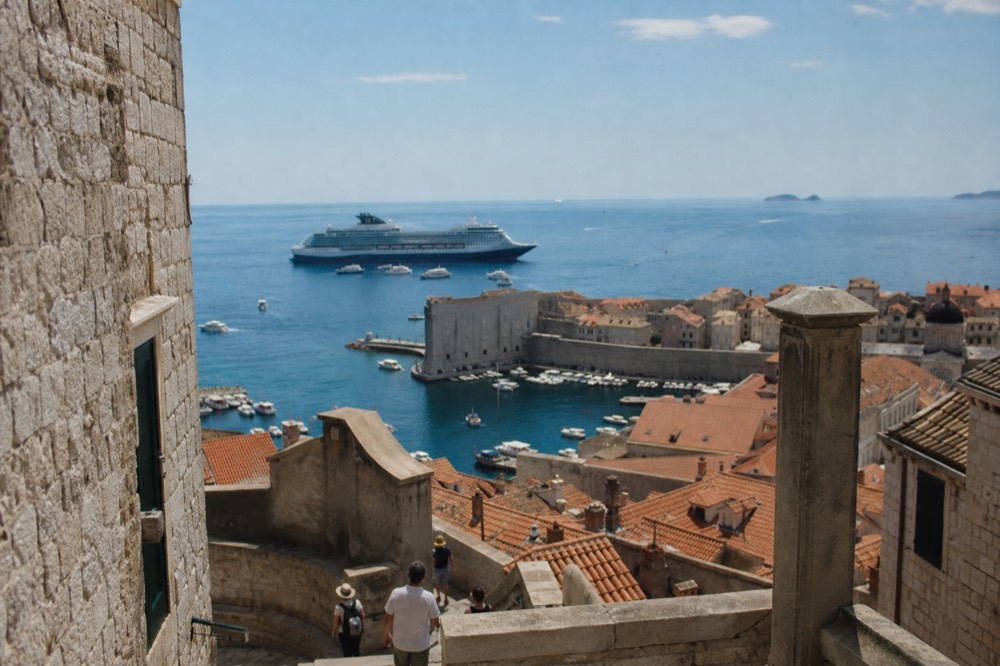
For a tendered arrival, the aquarium is almost comically convenient: you step off the boat in the harbour, and the southern fortress end of the Old Town is a short walk past the restaurants and along the seaward lanes. That makes it one of the few attractions a cruise passenger can visit, enjoy properly, and still be back at the quay early. Docked passengers with six hours ashore should budget travel time in both directions and pick either the walls or the aquarium as the anchor, not both at a rush.
How Much Is a Taxi From Dubrovnik Cruise Port to Old Town?
No reliable fixed fare for the Gruž to Old Town taxi ride can be quoted here, because the city's taxis run on meters and the fare varies with traffic and exact berth. The ride is short in distance, so the metered fare is modest by big-city standards; agree that the meter runs before you get in, and compare with the local bus, which covers the same corridor for a couple of euro.
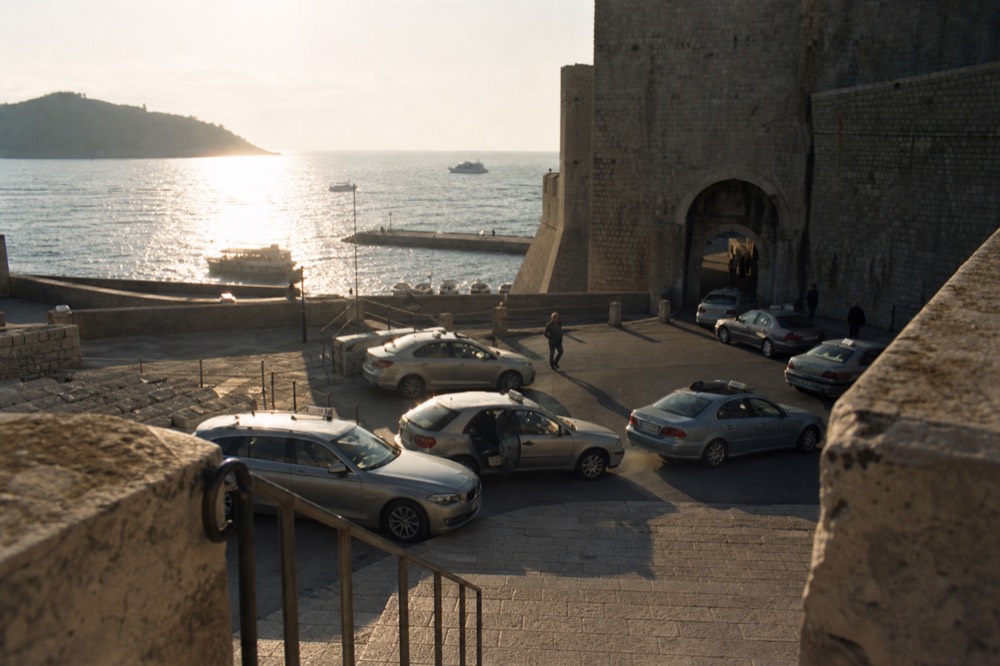
I will not print a number I cannot source, and anyone who quotes you a precise taxi fare for this route is guessing. What I can tell you is structural: the distance is short, the road is direct, and the ride is a few minutes outside gridlock. Taxis queue at the port and at Pile Gate, and rideshare services also operate in the city, which we cover in detail in getting around Dubrovnik. The meter is your protection in both cases, and a driver proposing a flat price for a metered city ride is a signal to find the next car in the rank.
For families, the calculus usually favours the taxi anyway. Four people paying bus fares approach taxi money, and a taxi drops you at the gate rather than a stop. For solo travellers and couples on a budget, the bus wins. The one scenario where neither works well is peak cruise disembarkation, when the port road thickens; walking the first stretch along the bay and catching the bus further in is a trick locals use.
| Factor | Taxi or rideshare | Local bus | Walking |
|---|---|---|---|
| Cost basis | Metered, short ride | A couple of euro per person | Free |
| Door to door | Yes, to the gate | Close, to Pile stop | Yes |
| Best for | Families, luggage, short calls | Budgets, solo travellers | Cool hours, keen walkers |
| Main risk | Unmetered flat-price offers | Peak crowding | Summer heat |
Is Dubrovnik Old Town Worth Visiting?
Yes, and the reasons are concrete rather than sentimental: the Old Town is a UNESCO World Heritage Site inscribed in 1979 under criteria (i), (iii) and (iv), a 24.7-hectare walled core whose main street, the Stradun, has run 298 metres between its gates since the city plan was fixed by the 1272 Statute. The aquarium is a small bonus inside a genuinely remarkable place.
I guide in this city and I still think the Old Town earns its reputation, crowds and all. The walls wrap a living town of stone lanes, not a museum piece, and the numbers behind the listing explain why UNESCO acted early: the property covers 24.7 hectares with a 1,188.6-hectare buffer zone, and the site spent 1991 to 1998 on the World Heritage in Danger list during the war before its restoration became one of the great conservation stories in Europe. Fort Lovrijenac stands apart on its 37-metre sea rock, visible from the walls' southern stretches near the aquarium.
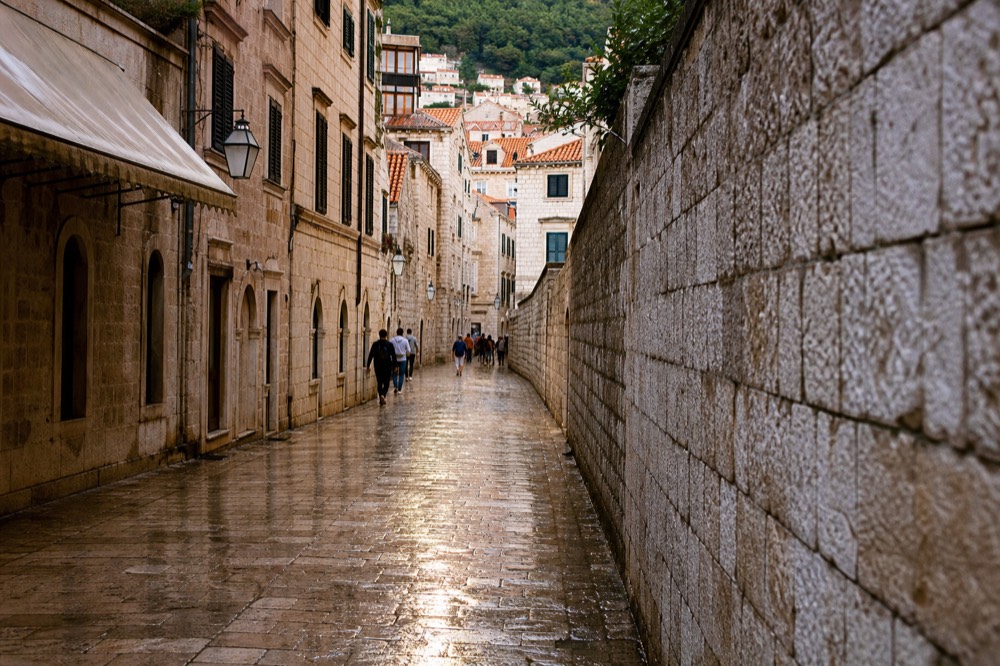
The honest caveat is pressure. Dubrovnik recorded about 4.2 million overnight stays in 2025, sharing first place among Croatian destinations with Rovinj, and the Old Town's official carrying capacity, from the UNESCO carrying-capacity assessment, is 11,275 people at a time. The city now runs six counters at every Old Town entrance, updating a headcount every 15 minutes, so this is measured, not guessed. What that means practically: the town is worth it, but when you go matters almost as much as going. Early morning and evening are the local hours; midday in July belongs to the day-tripper surge.
If you want the full argument with timings and gate-by-gate advice, our is Dubrovnik Old Town worth visiting answer page makes the case in detail. The short version for this guide: yes, come, and build the aquarium into the hot or crowded middle of the day when the lanes are least pleasant and the fortress interior most welcome.
Should You Combine the Aquarium With the City Walls?
Yes, the aquarium and the city walls make the natural pairing in this part of town, because both sit at the southern, seaward end of the Old Town. Walk the walls first in the cooler morning hours, then descend into the shaded fortress interior for the aquarium while the midday sun is at its worst, finishing with lunch in the lanes near the harbour.
The walls deserve the morning. The operator's stated hours at the time of check run 08:00 to 19:30, and the difference between 08:00 on the wall and 13:00 on the wall is the difference between a pleasure and an ordeal, both in temperature and in crowd flow. The adult ticket is 40 euro in main season, 1 March to 30 November, and 20 euro in December, with children 7 to 18 at 15 euro then 5 euro, under 6 free, and no family ticket sold. That 40-euro ticket is actually the walls plus Fort Lovrijenac combination, and it also covers the Western Outer Wall, closed December through February, and the Collection of Coins of the Republic of Ragusa.

A guided combo walk ties the two halves together neatly. The Dubrovnik Combo Tour: Old Town & Ancient City Walls runs about 3 hours 30 minutes, covers the lanes and the wall circuit with a guide, and is rated 4.8 across 1,183 reviews, from $50.94 per person. Check availability if a explained wall beats a walked one for you.
If you would rather climb at your own pace, the plain admission ticket starts at $36.37 per person and is rated 3.6 across 249 reviews, with the low rating reflecting ticketing frustrations rather than the walls themselves. And if you want the panorama without the full climb, the cable car combination tour covers the ride, a walking tour and the walls from $90.66 per person, rated 4.6 across 360 reviews. Whichever you choose, the aquarium afterwards is the recovery hour.
| Option | Price | Duration | Rating |
|---|---|---|---|
| Old Town & Walls Combo Walk (guided) | From $50.94 | About 3 hours 30 minutes | 4.8 across 1,183 reviews |
| City Walls Admission Only | From $36.37 | 1 to 3 hours | 3.6 across 249 reviews |
| Cable Car, Walking Tour and Walls Combo | From $90.66 | Guided outing | 4.6 across 360 reviews |
| Standalone walls ticket (operator) | 40 euro adult, main season | Walk at your pace | Not applicable |
When Is the Best Time to Visit the Aquarium?
The best time to visit the aquarium is mid-morning or mid-afternoon outside the peak cruise windows, and the best months are counter-intuitively September and October's edges rather than July and August. Cruise passengers in 2025 peaked in September at 101,246 and October at 100,132, above July's 96,072 and August's 87,385, so the shoulder season is now the crowded season.
That September and October outrank July and August for cruise passengers is the single most useful planning fact on this site, and it comes straight from Port Authority data. The full-year 2025 total was 625,257 passengers against 582,499 in 2024, and 461 cruise calls are scheduled for 2026. The port limits cruise passengers to 8,000 a day in most cases, with only 18 days a year exceeding that and about 4 days slightly above 10,000, but even within the cap, the difference between a two-ship morning and an empty quay is the difference between a pleasant aquarium hour and a queue.
The half-hourly curve tells you when to move. On the measured September morning the Old Town held 3,139 people at 07:00, 5,419 at 08:00, peaked at 7,739 at 10:00 and sat at 7,205 at 11:00. So the walls at 08:00, the aquarium at 11:00, lunch at 12:30 is a rhythm that dodges the worst of the surge. Cruise passenger figures are ship capacity, not people who actually walk ashore, so treat them as an upper bound on the day, not a headcount.

| Month 2025 | Cruise passengers | What it means for the aquarium |
|---|---|---|
| July | 96,072 | Hot and busy, go early |
| August | 87,385 | Hottest month, aquarium as shade |
| September | 101,246 | Busiest cruise month, time carefully |
| October | 100,132 | Still peak cruise, softer weather |
| November | 28,480 | Quiet, check seasonal openings |
What Else Can You Do With Kids Near the Aquarium?
Families based around the aquarium have a compact circuit: the walls' southern stretches, the harbour with its boats and ice cream, the Stradun's people-watching, and a guided Old Town walk pitched at children's attention spans. A local-guide walking tour from $20 per person, rated 4.8 across 5,826 reviews, is the easiest way to make the history land for younger visitors.
The Old Town works for children better than its reputation suggests, provided you ration the staircases. The flat spine of the Stradun, the harbour quays where boats come and go, and the aquarium form a low-effort loop that a five-year-old can complete without a meltdown. Add the sea itself: the September average for this coast is about 23.6 degrees, a long-run open-water average rather than a beach reading, and sheltered bays run warmer, so swimming stays realistic deep into autumn. Our things to do in Dubrovnik with kids itinerary builds a full family day on exactly these pieces.

A guide makes a real difference with children, and the reviews say so plainly. The Old Town Walking Tour with Local Guide runs from $20 per person and carries a 4.8 rating across 5,826 reviews, with guides who shade the route and pace the stories.
Alex was a fantastic guide, she explained the complex history of Dubrovnik to give a lasting impression of the history of the area. Really appreciated that she aimed for shaded areas on a boiling September day. The food recommendations for after were much appreciated too! Great tour for a first experience of the old town!
Sophie
For older children and teenagers, the sea options take over: sea kayaking tours around Lokrum and Betina Cave run from $35.49 per person and are rated 4.9 across 1,518 reviews, and the panorama zipline from $64 per person carries a 4.9 across 2,109 reviews. Both are covered in our kayaking guide if you want the full picture before booking.
Planning Your Day Around the Aquarium
A well-shaped aquarium day runs: walls or a guided walk at 08:00 when the count is low, the aquarium at 11:00 as the crowd peaks at its 10:00 high, lunch in the lanes, then the harbour or a boat in the afternoon. Budget 40 euro per adult for the walls in main season, or 40 euro for the one-day Dubrovnik Pass if museums will fill your rain hours too.
The shape matters more than the individual bookings. Dubrovnik rewards early starts more than almost any city I have worked in, because the crowd curve is steep: 5,419 people at 08:00 becomes a 7,739 peak at 10:00 on a measured September morning. Every hour you slide later costs you calm on the walls and buys you shade in the fortress, which is precisely why the aquarium belongs late morning. The afternoon then belongs to the water, whether that is the harbour, a swim, or a short sunset cruise, and the evening belongs to the Stradun, which is at its best after the day-trippers have gone.
| Time block | Plan | Why it works |
|---|---|---|
| 08:00 to 10:30 | City walls or guided combo walk | Count still climbing, heat still low |
| 10:30 to 11:30 | Dubrovnik Aquarium | Indoor shade at the crowd peak |
| 11:30 to 13:00 | Lunch in the side lanes | Beat the 13:00 restaurant rush |
| Afternoon | Harbour, swim or boat trip | Sea breeze beats stone heat |
| Evening | Stradun and sunset | The Old Town empties and cools |
Whatever you book, keep the cancellation terms in view: the live listings on this page carry free cancellation in their standard terms, so locking the walls walk early and adjusting later costs you nothing. For everything else the city offers, start from Things to Do in Dubrovnik and work outward, because the aquarium is a fine hour but it is only one hour of a city that repays three or four.
If instead you would like the panorama without the climb, the cable car combination tour bundles the ride, a guided walking tour and the walls from $90.66 per person, rated 4.6 across 360 reviews, and it works well as the finale of a family day that began with the aquarium.
Between the walls, the fortress interior and the boat options, the trio below covers the three most reliable ways to shape the Old Town half of your day. Compare them on price and format, then book whichever matches your pace.
Common Questions About the Dubrovnik Aquarium
How much is a taxi from Dubrovnik cruise port to Old Town?
The ride is short and metered, so no honest fixed fare can be quoted: the price varies with traffic and your exact berth. Agree that the meter runs before loading, and compare with the local bus, which covers the same corridor for a couple of euro per person.
Can You Walk From Dubrovnik Cruise Port to Old Town?
Yes, if your ship docks at the main port in Gruž you can walk the coastal road in, though most passengers take the bus. If your ship tenders, the boats land you in the Old City Harbour, inside the walls, and everything is on foot from there.
Is the Aquarium Good for Young Children?
Yes. It is compact, indoor, shaded and full of Adriatic marine life children can recognise afterwards. Most families allow roughly an hour, which makes it an ideal calm block in the middle of a busy sightseeing day.
Does the Dubrovnik Pass Cover the Aquarium?
The pass covers the City Walls plus Lovrijenac Fortress and ten further sights including the Rector's Palace and the Maritime Museum. For the aquarium's own admission, check the operator's live listing before you go.
When Is the Old Town Least Crowded?
Early morning, before 09:00, and evening after the day-trippers leave. On a measured September morning the count ran 5,419 people at 08:00 and peaked at 7,739 at 10:00, so the first two hours of the day are the calmest.