Dubrovnik in August: Heat, Crowds and What Still Works
August is Dubrovnik at its most intense: the warmest sea of the year, the longest days, and cruise crowds that are actually smaller than September's. Here is how the month really works, hour by hour.
Short answer
August in Dubrovnik averages sea temperatures of 25.8 degrees and cruise passenger numbers of 87,385, below September's 101,246. The heat is real but manageable with early starts. The adult City Walls ticket is 40 euro in main season, and the cable car runs until midnight. Timed tours and morning activity beat the midday crush.
August is the month everyone warns you about and half of Croatia's visitors choose anyway. The sea is at its yearly peak, the cable car runs until midnight, and the Old Town's counting system recorded a peak of 7,739 people at 10:00 on a single September morning, a figure August routinely approaches. I have walked these streets through every summer since 2015, and the honest answer is that August works if you plan around two clocks: the sun and the cruise schedule.
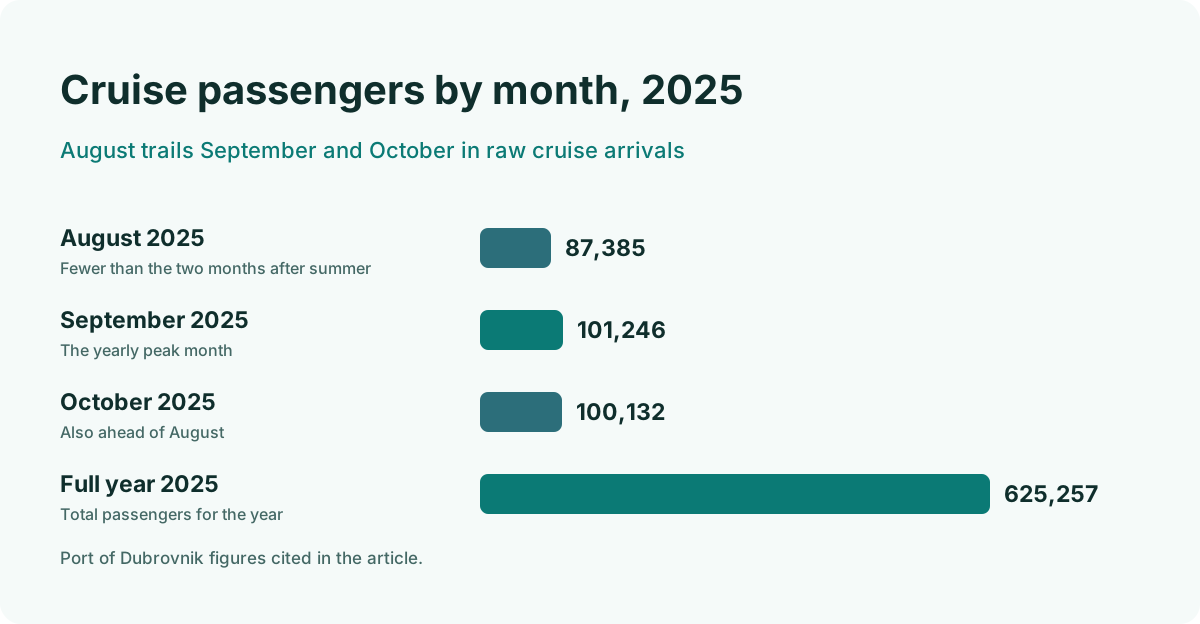
The counter-intuitive fact first, because it changes everything else on this page. Dubrovnik's cruise passengers in 2025 peaked not in August but in September, 101,246 against August's 87,385, with October at 100,132 also ahead of the summer holidays. August is hot and busy, but the raw crowd pressure from ships is heavier in the two months after most families go home. If you are locked into August by school holidays, you are not choosing the worst month for crowds. You are choosing the warmest one, and that trade can be managed.
How Hot Is Dubrovnik in August?
August is Dubrovnik's warmest month for sea and among the warmest for air, with a long-run August sea average of 25.8 degrees Celsius, and the coastal position means heat comes with a breeze rather than the stifling stillness of an inland city. Expect daytime air temperatures that push into the low thirties, strong sun from late morning, and evenings that stay warm enough for dinner outdoors without a layer.
Start with the number that matters most in August, because most visitors spend half their time in or near the water. The August average for this coast is 25.8 degrees Celsius, from the NOAA OISST v2.1 long-run average for 1991 to 2020. That is an open-water grid-cell figure, not a beach thermometer, and it needs saying plainly: sheltered bays run warmer. The Croatian met service's own Dubrovnik buoy read 27.0 to 27.4 degrees on 8 September 2026, against a 23.6 September mean, so a calm August bay can feel a degree or two warmer than the headline number.
The air side is the classic Dalmatian summer: dry, bright, and sun-driven. The heat concentrates between roughly 12:00 and 16:00, which is exactly when the Old Town's stone, with walls up to 6 metres thick on the land side, radiates stored warmth back at you. The Stradun, all 298 metres of it, is polished limestone with almost no shade, and I plan my own walking routes to be off it by midday in August. This is not a city where you power through the heat. It is a city where you restructure the day around it.
| Month | Open-water average (C) | What it means for swimming |
|---|---|---|
| June | 22.5 | Comfortable, fresh on first entry |
| July | 24.9 | Genuinely warm, no acclimatisation needed |
| August | 25.8 | The yearly peak, bath-like in sheltered bays |
| September | 23.6 | Still warm, the connoisseur's month |
| October | 21.0 | Fine for a quick swim, fresh after that |
These are long-run averages, corroborated by an independent EU dataset that puts August at 24.90 for the same waters, within about 1 degree. Neither figure is a forecast for your week, and neither is a Croatian government number; treat them as the climate baseline the actual week oscillates around. If you want the deeper comparison between late-summer months, the question is Dubrovnik hot in September has its own answer page.
Is Dubrovnik Too Hot in August?
For most visitors, no, provided the day is structured around the heat rather than against it: sightseeing before 11:00, water or shade through the midday hours, and the city again after 17:00. It becomes too hot for people who plan a 13:00 walls circuit in full sun, and it is genuinely risky for anyone who ignores water, hats and the midday pause.
The honest framing is that August heat in Dubrovnik is a scheduling problem, not a disqualification. The walls circuit, 1,940 metres of largely unshaded stone walkway, is the single most heat-exposed activity in the city, and the operator's stated hours run 08:00 to 19:30. Walking it at 08:00 is a pleasure. Walking it at 13:00 is an ordeal I would not recommend to a fit adult, let alone to children or anyone with a heart condition. The same logic applies to the Stradun, to the stairs of the Old Town, and to any itinerary that stacks land activities across the middle of the day.
The midday hours belong on or in the water, and that is where August is actually the best month of the year. The sea is at its warmest, the kayak routes around Lokrum and Betina Cave are at their most inviting, and a boat deck with a breeze is the coolest public place within 50 kilometres. This is also why the smartest August itineraries look top-heavy with morning activity: the reward for a 07:30 start is a guilt-free three-hour swim in the early afternoon.
The three cards above are the shape of an August day done well. A boat, whether a guided island trip or a self-drive rental for up to 6 people, takes the midday hours offshore. And a national-park day trip buys you forest shade and salt water in one move.
For the full argument on whether the heat rules the month out, the question is Dubrovnik too hot in August is answered in detail on its own page, and the July version of the same worry is covered under Dubrovnik's July heat.
When to Avoid Dubrovnik?
Avoid Dubrovnik on the days its own counting system shows the Old Town near its 11,275-person carrying capacity, which in practice means mid-morning to late afternoon on days with three or more cruise ships, and avoid the 12:00 to 16:00 window in August heat regardless of ship count. The month itself is not the problem; specific hours on specific days are.
The city runs a people-counting system with six counters at every Old Town entrance, updating a headcount every 15 minutes, and the official carrying capacity from the UNESCO assessment is 11,275 people. A real half-hourly curve read on 8 September 2026 shows the daily shape: 1,200 at 04:00, 5,419 at 08:00, 7,297 at 09:00, a 7,739 peak at 10:00, then 7,205 at 11:00. The Old Town empties at night and fills in a two-hour morning surge, which means the same street can feel like two different cities twelve hours apart.
| Time | People in the Old Town | What it means |
|---|---|---|
| 04:00 | 1,200 | Near-empty, photographers' hour |
| 07:00 | 3,139 | Calm, easy walking |
| 08:00 | 5,419 | Busy but comfortable, best walls hour |
| 09:00 | 7,297 | Crowded, queues forming |
| 10:00 | 7,739 | The daily peak |
| 11:00 | 7,205 | Still dense, cruise groups at full flow |
The Port Authority's own cruise-destination page explains the cap that keeps this manageable: cruise passengers are limited to 8,000 a day in most cases, and of 243 cruise days a year only 18 exceed 8,000, with only 4 days slightly above 10,000. About forty call requests were refused in a single season to hold that line. That is why the answer to "when to avoid" is not "August" but "the midday window, and the heaviest ship days". One caution on reading schedules: cruise passenger figures are ship capacity, not people who actually walk ashore, so write "up to X scheduled", never "X will be in town".
If your dates are flexible at all, the question when to avoid Dubrovnik has a fuller answer, and the shoulder-month case is made on the Dubrovnik in September guide. But if August is fixed, the avoid-list is about hours, not weeks.
How Many Cruise Ships Are in Dubrovnik in August?
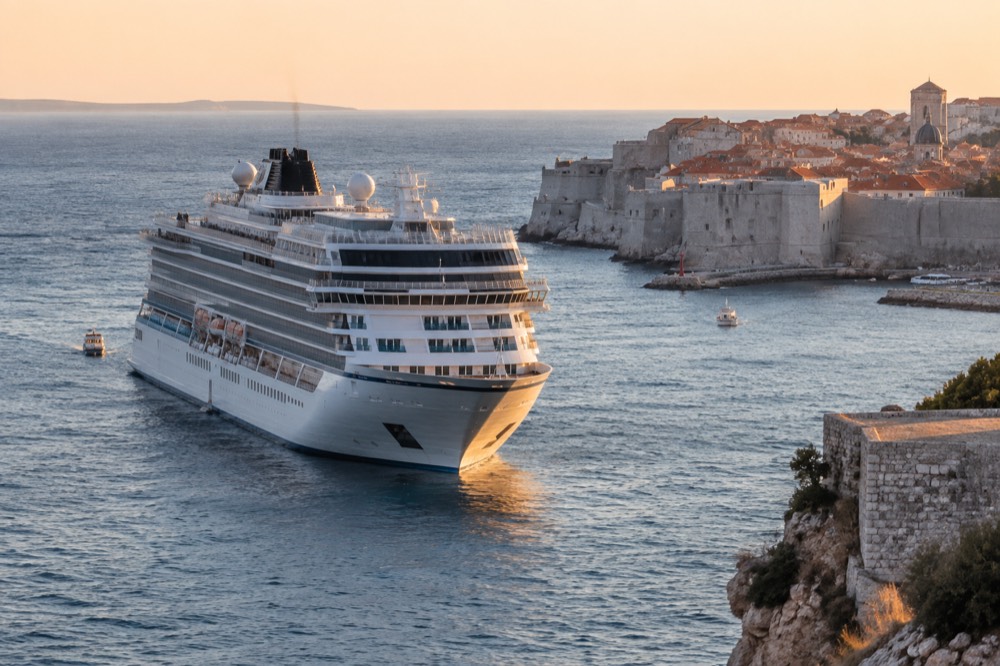
August 2025 saw 87,385 cruise passengers through the Port of Dubrovnik, fewer than September's 101,246 and October's 100,132, against a full-year total of 625,257; 461 cruise calls are scheduled for 2026, with the daily limit at 8,000 passengers in most cases, so August is busy but not the cruise peak.
The monthly pattern from Port Authority data upends the assumption that August is the worst. July 2025 actually carried more cruise passengers than August, 96,072 against 87,385, and both were beaten by the two autumn months. Families on school holidays fill the hotels and beaches in August; the ships arrive in their greatest numbers once the schools go back. For crowd planning this matters more than any weather forecast, because the ship passengers are the ones who compress into the Old Town between mid-morning and late afternoon.
| Month (2025) | Cruise passengers | Rank |
|---|---|---|
| July | 96,072 | 3rd |
| August | 87,385 | 4th |
| September | 101,246 | 1st |
| October | 100,132 | 2nd |
The port's berthing arrangement, one large ship in front of the Old City in a "2+1" pattern, spreads arrivals rather than bunching them, and the refused call requests show the cap has teeth. Still, on any given August day two or three ships can put several thousand people into the same six gates at the same hours. The cruise schedule guide carries the day-level detail, and the cruise port page covers the logistics of getting from ship to Old Town.
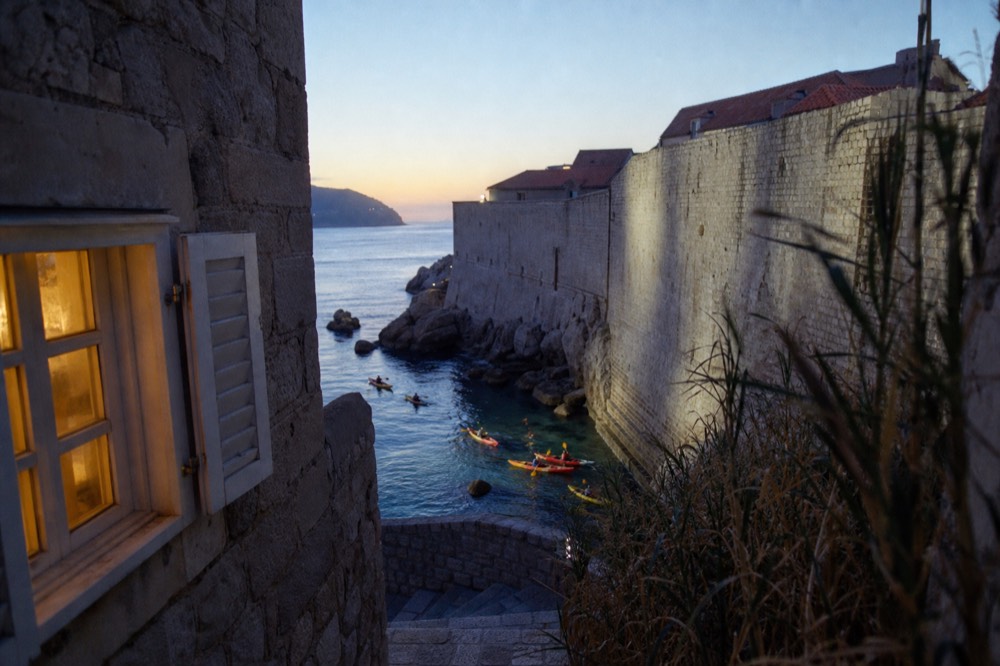
The kayak option above is the crowd answer in miniature: from $35.49 per person, rated 4.9 across 1,518 reviews, it takes you around the walls from the water side, where the only queue is the sea itself. One guest review of that exact route captures the family case: "Loved this kayaking experience. Had an amazing time as a family and enjoyed the swimming break at Betina Cave very much. The views were amazing, water was crystal clear, the guide was excellent and we learnt a lot about Dubrovnik."
What Not to Do in Dubrovnik?
Do not walk the city walls at midday in August, do not try to drive into or park near the Old Town, do not buy a ticket on arrival for anything timed, and do not plan a land-only itinerary, because the August day only works when the hottest hours are spent on water or in shade. Each of these mistakes is common, avoidable, and expensive in comfort terms.
The walls at midday deserve their own warning because they are the mistake people make with the best intentions. The 40 euro adult ticket, valid 1 March to 30 November, is the same price at 08:00 and at 14:00, but the two experiences are not comparable. There is almost no shade on the circuit, the stone holds heat, and the operator's stated hours of 08:00 to 19:30 exist partly so people can walk late. Morning or the last two hours before close, never the middle of the day. The wider set of guides lives on Things to Do in Dubrovnik.
| Mistake | Why it fails in August | Do this instead |
|---|---|---|
| Walls circuit at 13:00 | Unshaded stone, peak heat, peak crowds | Enter at 08:00 or after 17:30 |
| Driving to the Old Town | Scarcity and heat make parking miserable | Bus or stay in walking range, see the parking guide |
| Buying timed tickets on arrival | August sells out morning slots first | Book walls, cable car and boats ahead |
| All-land itinerary | Midday has no shade refuge | Insert a swim, kayak or boat block 12:00 to 16:00 |
| Lunch on the Stradun at 12:30 | Full sun, full price, full crowds | Side-street konoba, or eat at 11:30 before the surge |
The ticketing point deserves emphasis. The Dubrovnik Pass at 40 euro for one day costs exactly the same as the standalone walls ticket in main season, 1 March to 30 November, and adds ten more sights plus a 24-hour bus ticket; in December the walls ticket drops to 20 euro and no pass tier is on sale at all, so that equivalence is a main-season statement only. Whether the pass pays off for your specific plan is argued on the Dubrovnik Pass page, and the walls ticket itself is broken down under city walls tickets.
Is the Sea Warm Enough to Swim in August?
Yes, emphatically: August's open-water average of 25.8 degrees Celsius is the yearly peak, corroborated within about 1 degree by an independent EU dataset at 24.90, and sheltered bays commonly run a degree or two warmer than that baseline, so the question in August is never whether the sea is warm enough but where to swim and when.
The provenance matters enough to repeat carefully, because "the sea is 25.8 degrees" would overclaim. The headline series is the NOAA OISST v2.1 long-run average for 1991 to 2020, an open-water grid-cell figure for the waters off Dubrovnik. EMODnet's independent climatology corroborates it at 24.90 for August. Neither is a beach thermometer, and neither is a Croatian government figure; the Croatian met service's buoy, which measures the actual day, read 27.0 to 27.4 degrees on one early-September day against a 23.6 monthly mean, which tells you how much warmer calm, shallow water runs above the baseline.
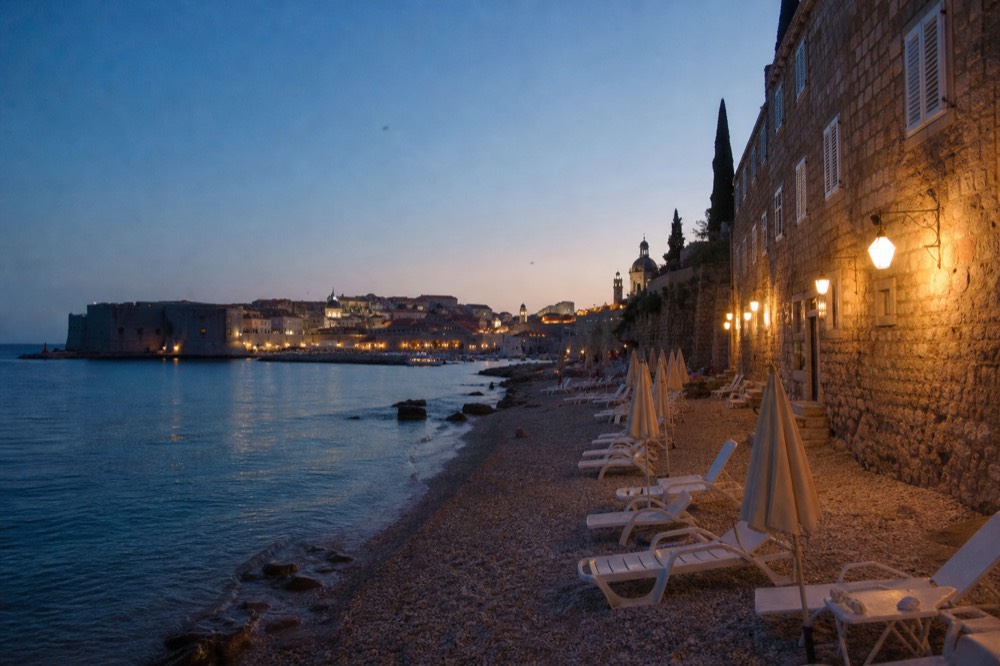
Practically, August is the month when swimming stops being a decision. Every beach from Banje to Copacabana is at its most inviting, the pebble coves around Lokrum hold their warmth, and the evening swim after a hot sightseeing day is one of the small privileges of the month. The salt water is also your heat management: an afternoon in the sea is not lost sightseeing time in August, it is the reason the evening session exists.
For the full picture of where to get in the water, the beaches guide covers the whole coast from the Old Town out to the Lapad bays, and the question of swimming in September shows how long the season runs past August.
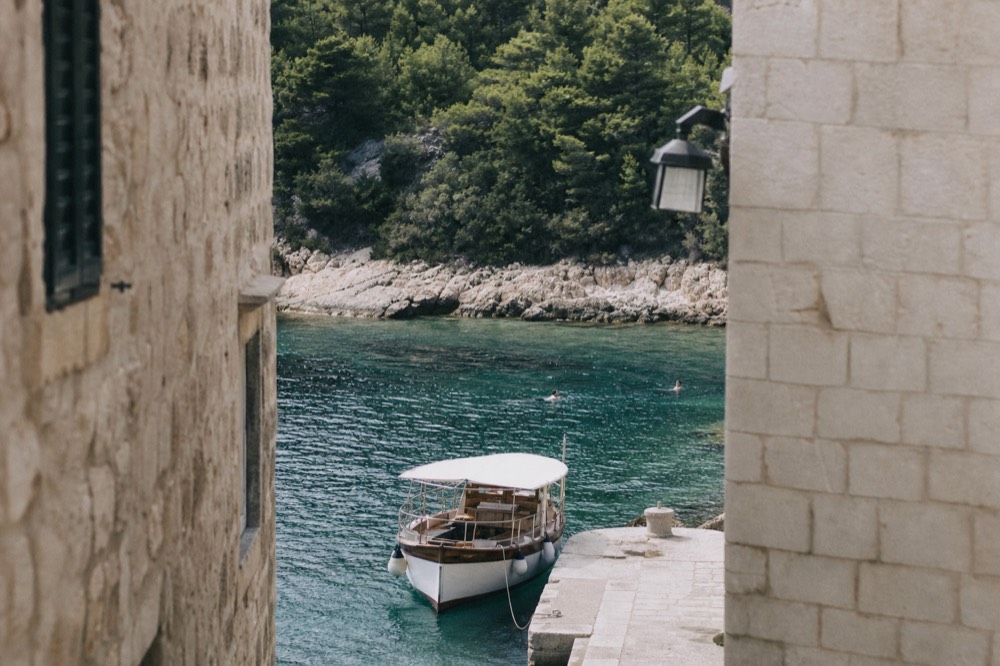
The Mljet and Elaphiti trip above is the strongest August swim vehicle on the roster: from $139.47 per person, rated 4.8 across 333 reviews, it pairs a national park's forested lakes with island swimming stops, a full day of shade and salt water while the Old Town does its midday crush.
What Are the Best Timed Activities in August?
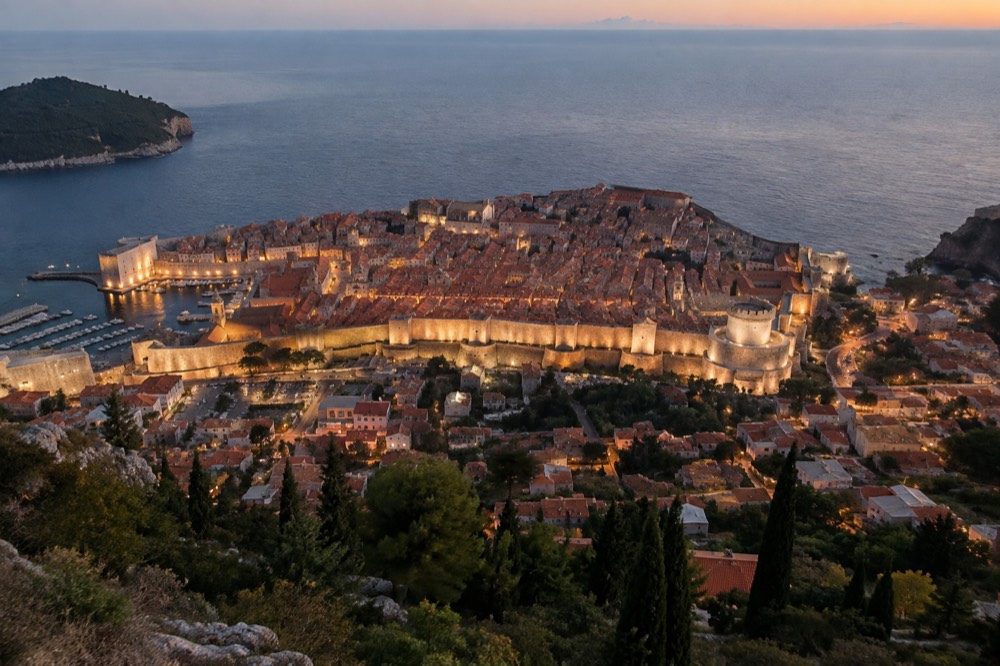
The best August activities are the ones with a natural clock: the walls at 08:00, a kayak or boat through midday, the cable car at sunset when it runs until midnight in August, and an evening food walk or night tour after the day-trippers have gone. August rewards anything timed against the heat and the 10:00 crowd peak.
The cable car is the clearest example, because its own timetable is built for exactly this. In June, July, August and the first half of September it runs 09:00 to midnight, and the operator's technical page gives the ride's full anatomy: a 367.0 metre rise over a 778.2 metre track, 3 minutes 30 seconds at 6.5 metres per second, from a lower terminal at 38.0 metres to the Mount Srd station at 405.0 metres. An adult round trip is 30 euro in 2026, a child 4 to 12 round trip is 8 euro, and under 4s ride free. The sunset ride is the one to time: the operator claims a view range of up to 60 km on a clear day, and in August the sun sets late enough that you can dinner afterwards.
| Activity | Best August window | Why that window |
|---|---|---|
| City walls circuit | 08:00 to 10:00 | Shade on the sea side, thin crowds |
| Old Town walking tour | 08:30 to 10:30 | Guides route to shade before the stones heat |
| Kayak to Betina Cave | 10:30 to 13:30 | Water time through the heat build |
| Island boat day | 09:00 to 17:00 | Offshore breeze replaces the midday city |
| Cable car to Srd | 19:00 onward | Sunset light, runs until midnight in August |
| Night history walk | 21:00 onward | Cool air, empty lanes, lit walls |
The evening deserves its own pitch, because August nights are the city at its most generous. There is a free, pay-what-you-want night walk on GuruWalk, Magical Dubrovnik Nights: History and Legends, 1 hour and 45 minutes long and rated 4.9 across 288 reviews, and a night walk is the single best-value format in the August heat. The sunset spots guide maps the land-based alternatives if a tour is not your format.
What Should You Pack and Plan for August?
Pack for heat management rather than fashion: a hat, a refillable bottle, reef shoes for the pebble beaches, and shoes with real grip for the walls' polished stone, and plan your bookings around the fact that August sells out morning slots first, so walls entry, cable car and any boat should be reserved before you fly.
The footwear point is the one visitors underestimate. The walls' walkway and the Stradun's limestone are polished by centuries of feet, and in August heat, with sweat and sunscreen in the mix, smooth soles become a genuine slip risk on the steeper sections. Grip first, breathability second. Reef shoes matter just as much: Dubrovnik's beaches are pebble and rock, not sand, and the pebbles at Banje hold the day's heat into the evening.
Planning-wise, August is a book-ahead month in a way May and October are not. The counting data explains why: the 10:00 crowd peak means everyone wants the 08:00 to 10:00 window, and the morning walls slots, the early kayak departures and the small-group boats are the first things to fill. The free-cancellation options on the live listings make early booking low-risk, and the reassurance is worth having: reserve the timed things, leave the flexible things flexible.
For the wider planning frame, how many days in Dubrovnik will tell you how long to give the city, and the one day itinerary shows how the timed-August day fits together hour by hour. If August's heat is a dealbreaker despite everything above, the best time to visit guide makes the shoulder-season case.
Common Questions About Dubrovnik in August
Is Dubrovnik too hot in August?
It is hot, typically low thirties in the day, but manageable if you sightsee before 11:00, spend the midday on or in the water, and return to the city after 17:00. The walls at midday are the one genuinely punishing mistake. August's sea average of 25.8 degrees is the yearly peak, which offsets the heat for most visitors.
How hot is Dubrovnik in August?
Daytime air temperatures commonly push into the low thirties Celsius, with strong sun between 12:00 and 16:00 and warm evenings. The August open-water sea average is 25.8 degrees Celsius from the NOAA long-run series for 1991 to 2020, corroborated within about 1 degree by an independent EU dataset, and sheltered bays often run warmer still.
What not to do in Dubrovnik?
Do not walk the walls at midday in summer, do not drive to the Old Town expecting easy parking, do not leave timed tickets to the day itself in August, and do not build a land-only itinerary. The city works in August only when the hottest hours are spent swimming, boating or resting in shade.
When to avoid Dubrovnik?
Avoid the midday to late-afternoon window on days with several cruise ships in port, when the Old Town's counters climb toward the 7,739-person peak recorded at 10:00 on a busy day, against an official carrying capacity of 11,275. The month matters less than the hours: September actually carries more cruise passengers than August.
Can you swim in Dubrovnik in August?
Yes, and it is the best swimming month of the year. The August open-water average is 25.8 degrees Celsius, the yearly peak of the monthly series, with sheltered bays running warmer. Every beach from the Old Town out to Lapad is in full season.
Is August the busiest month for cruise ships in Dubrovnik?
No. Port Authority data for 2025 shows September at 101,246 cruise passengers and October at 100,132, both ahead of August's 87,385 and July's 96,072. August is busy with stay-over visitors on holiday, while the ships peak after the school holidays end.