How to Get From Dubrovnik to Split: Every Option Compared
The Dubrovnik to Split route is the spine of any Dalmatian trip, and the choice between bus, ferry and private transfer shapes your whole itinerary. Here is how each option actually behaves, and the day trips worth adding at either end.
Short answer
The bus runs the Dubrovnik to Split route year-round with several departures a day, while the coastal ferry runs as a seasonal service and sells out in peak weeks. There is no train. Most travellers take the bus for reliability, the ferry for the coastline, and add a Mostar or Montenegro day trip from the Dubrovnik end.
The stretch of coast between Dubrovnik and Split is the most travelled in Croatia, and almost everyone who visits one city ends up asking about the other. I have watched travellers wrestle with this decision at the bus station in Gruž more times than I can count, usually holding a phone with three browser tabs open and no clear answer. The honest answer is that the bus and the ferry serve different travellers, and neither is wrong. This guide compares every option on the Things to Do in Dubrovnik route north, then covers the day trips that make the Dubrovnik end worth a few extra days, because the transport question and the itinerary question are really one question.
How Do You Get From Dubrovnik to Split?
You have three realistic options: the intercity bus, the seasonal coastal ferry, or a private transfer, and there is no train on this route at all. The bus is the year-round workhorse with multiple daily departures from Gruž station, the ferry runs a seasonal schedule that thins out outside summer, and a private transfer costs the most but runs on your clock. Most visitors take the bus.
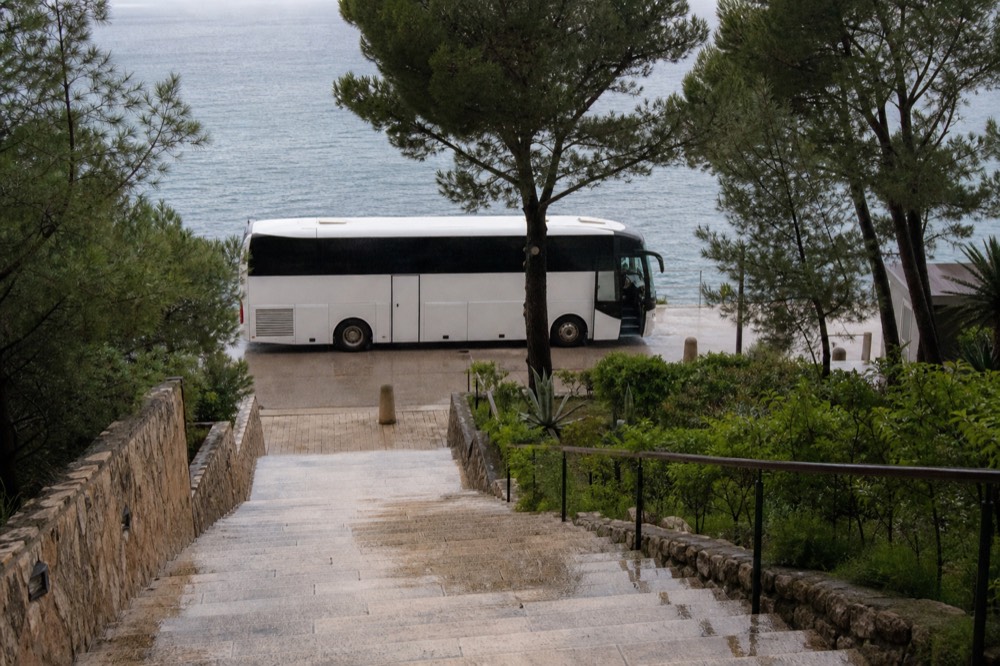
The bus is the option I point people to first, not because it is glamorous but because it is dependable. Coaches leave from Dubrovnik's main bus station in Gruž, a neighbourhood worth a morning on its own, and drop you at Split's station right beside the ferry port and the edge of the old town. The route hugs the coast for long stretches, crosses into Bosnia and Herzegovina briefly around Neum, which means carrying your passport, and then rejoins Croatia. Nothing about the border stop is dramatic, but forgetting a passport turns it into a very long day.
A private transfer sits at the other end of the price range. It makes sense for families, groups of four or more splitting the fare, or anyone with an early flight out of Split, because the driver waits for you rather than the reverse. The middle option, the ferry, deserves its own section below because travellers consistently misunderstand what it is and is not. Schedules and fares for both bus and ferry change with the seasons, so treat any specific departure time you read anywhere, including in travel forums, as a starting point and confirm on the operator's live listing before you commit money.
Is It Better to Bus or Ferry From Split to Dubrovnik?
The bus is better for reliability, frequency and year-round service; the ferry is better if the sea crossing itself is part of the holiday. The bus runs several times daily in every season, while the ferry is a seasonal product whose sailings drop sharply outside the summer window and can sell out weeks ahead in July and August. Choose on that basis, not on price alone.
I have laid out the honest trade-offs below rather than pretending one wins outright. If your priority is arriving when you planned to arrive, take the bus. If your priority is the view from the water and you are travelling inside the ferry season, the boat rewards you with a perspective on the Elaphiti islands and the coastline that no road can match. Travellers who agonise over this usually expect a right answer; there is only a right answer for your trip.
| Factor | Intercity bus | Coastal ferry |
|---|---|---|
| Season | Year-round | Seasonal, thins outside summer |
| Frequency | Multiple departures daily | Fewer sailings, peak weeks sell out |
| Departure point | Dubrovnik bus station, Gruž | Dubrovnik ferry terminal, Gruž |
| Border crossing | Yes, brief Neum corridor stop, passport needed | No, entirely at sea |
| Scenery | Coastal road views from the window | Elaphiti islands and open water |
| Best for | Reliability and schedule control | Travellers who want the crossing itself |
One detail that catches people: the bus route's brief transit through Bosnian territory means your passport gets checked, sometimes in both directions, and occasionally with a short wait while paperwork clears. Budget a little slack into any same-day connection. The deeper comparison, including what the ferry experience is actually like on board, is covered in our dedicated answer on whether to bus or ferry from Split to Dubrovnik.
Whichever way you travel, book the high-season departures early. July and August fill both the coaches and the ferry decks, and the travellers I meet who arrived stressed are almost always the ones who tried to buy a ticket on the day.
Is the Ferry From Split to Dubrovnik Worth It?
The ferry is worth it when the crossing is the point: it delivers the Elaphiti islands, the walled city skyline from the water and a day of open Adriatic that the bus cannot offer. It is not worth it when schedule certainty matters, because sailings are seasonal, less frequent than coaches, and prone to selling out or being reshuffled by weather.
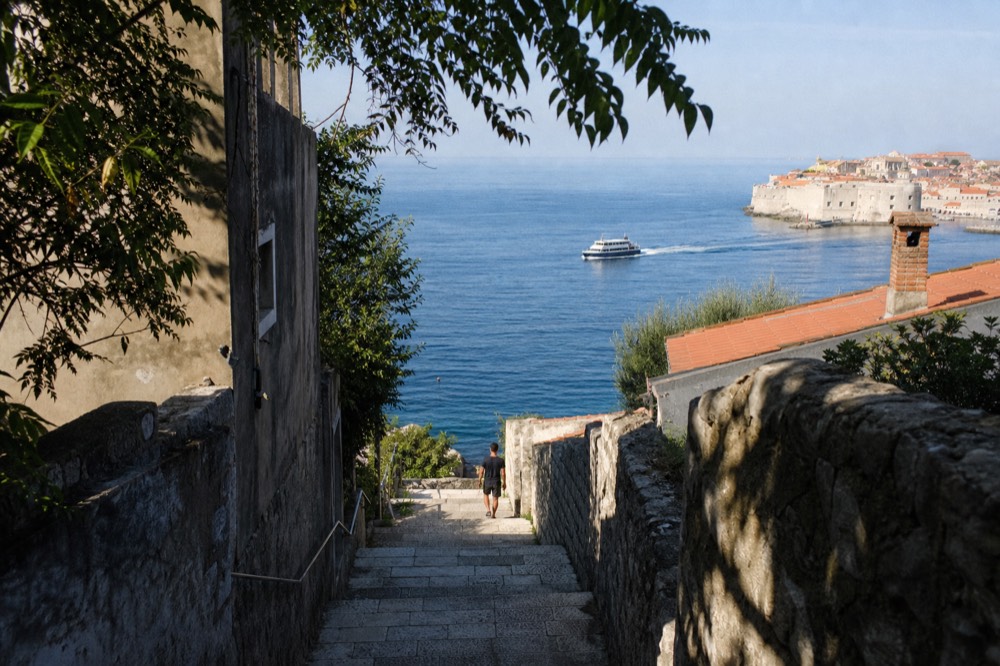
The case for the boat is experiential rather than practical. Approaching Dubrovnik from the sea is the way the city was meant to be seen for most of its history, and the silhouette of the walls and Lovrijenac rising off the water is the single best first impression you can give yourself. The crossing also traces the island-dotted coastline that made this stretch of the Adriatic a maritime power in the first place. If your trip is built around slow travel, the ferry earns its fare on the view alone.
The case against is equally plain. Fewer sailings mean less recovery from a missed connection, and a rough-weather cancellation can cost you a night you had not planned. Families with rigid onward bookings, cruise passengers with a fixed sailing time and anyone catching a flight out of Split should ride the coach and sleep better. For a fuller treatment of the trade-offs, including what each option means for luggage and connections, read is the ferry from Split to Dubrovnik worth it.
The sea itself, for what it is worth, is at its warmest in the ferry season. The August average for this coast, as a long-run open-water figure rather than a beach reading, is about 25.8 degrees, and September sits near 23.6, so a deck-side crossing in those months is genuinely pleasant rather than a wind-battered endurance test. Those numbers come from a 1991 to 2020 climatology, not this year's water, and sheltered bays along the route run warmer still.
Is a Day Trip From Dubrovnik to Montenegro Worth It?
Yes, for most travellers a Montenegro day trip is worth the long day, because Kotor Bay and the old towns of Perast and Kotor are under three hours away and look nothing like Croatia. The trade-offs are the border crossing, which can add anything from minutes to an hour each way, and a very full itinerary. Book a guided tour and the border paperwork becomes the operator's problem.
Montenegro is the closest genuinely different country to Dubrovnik, and the fjord-like Bay of Kotor is the draw. The standard day trip pairs Perast, a stone village at the water's edge with its two islet churches, with Kotor itself, a walled medieval town that climbs a hillside behind its gates. The contrast with Dubrovnik is the point: same coastline, same Venetian imprint, entirely different scale and mood.
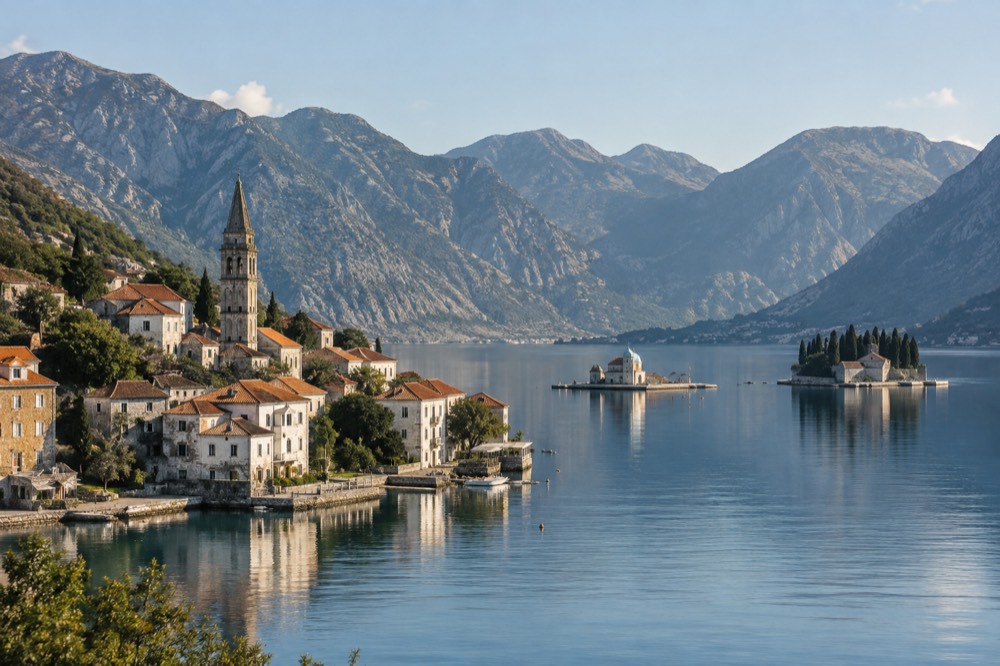
The border is the variable. The Croatia to Montenegro crossing at Debeli Brijeg can be quick or slow depending on the day and the season, and a recent traveller on the semi-private version of this tour reported the September crossing took their vehicle fifteen minutes, though your experience can differ sharply in July. That unpredictability is the strongest argument for a guided product over a rental car: a tour operator runs the route weekly and knows which windows to avoid. The standard Check availability listing runs from $58 per person, rated 4.4 across 5,611 reviews, with a small-group variant from $70.99 that adds an optional boat ride, rated 4.4 across 3,829 reviews.
We booked the semi-private tour. 6 people total. Robert was fantastic! He was so knowledgeable and enthusiastic about everything. The tour was well organized and we had just the right time at the spots. Extremely satisfied with this tour and would certainly recommend to anyone. Also the border in September only took us 15 minutes.
Nithya
What Is the Best Day Trip You Can Take From Dubrovnik?
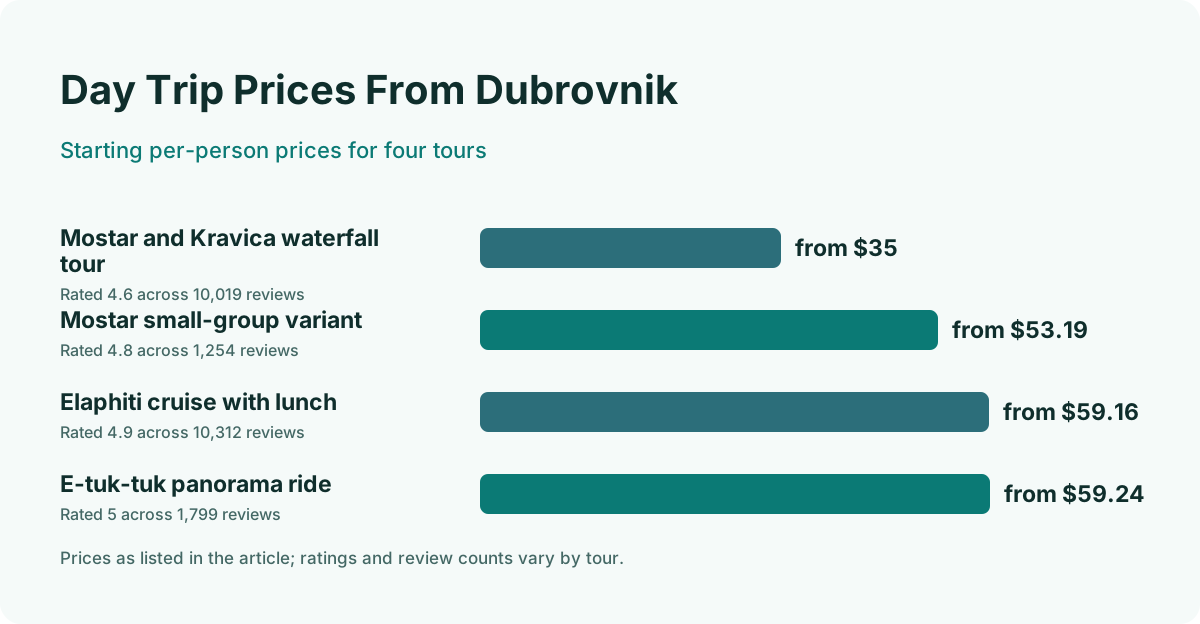
For most visitors the best day trip from Dubrovnik is the Mostar and Kravica waterfall tour: two countries, an Ottoman stone bridge, a swimmable waterfall and a price from $35 per person, rated 4.6 across 10,019 reviews. It is the trip with the highest payoff per hour travelled, and the one past guests most consistently describe as a highlight of their whole Croatia trip.
Mostar is a different world two hours inland: a rebuilt Ottoman bridge arching over green water, a bazaar of coppersmiths, and a recent history written on the buildings around you. Kravica waterfall, the second stop on the standard itinerary, is a wide curtain of water falling into a pool you can swim in, which makes it the rare sightseeing stop that doubles as a swim break. The full-day format runs about eleven hours, so it is a commitment, but the payoff-to-distance ratio beats every other inland option.
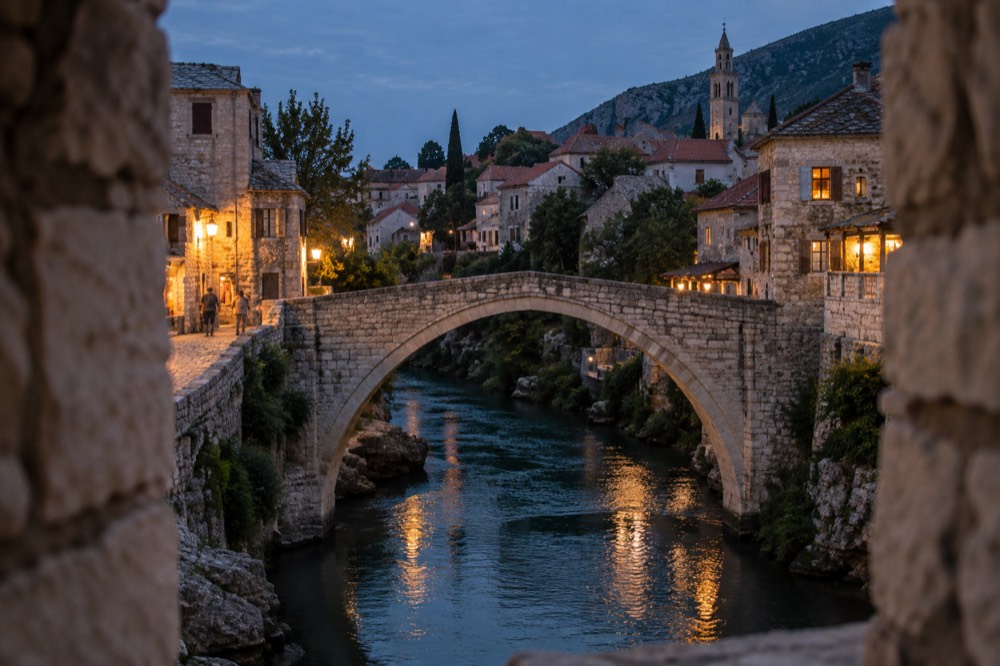
The small-group variant, from $53.19 per person and rated 4.8 across 1,254 reviews, trades a few dollars for a quieter vehicle. Whichever you choose, bring euros for Mostar, since Bosnia uses a convertible mark but euro notes are widely accepted in the tourist streets. Our full Mostar day trip guide covers the border logistics, what to wear at the waterfalls and how the two variants actually differ on the ground.
Islands compete for the title, of course. The Elaphiti cruise is the strongest challenger: a full-day boat trip with lunch from $59.16 per person, rated 4.9 across 10,312 reviews, which is the most reviewed product on this site's entire roster and the one I would hand to a traveller who has already seen enough stones for one week. If you are weighing islands against inland, our best day trip from Dubrovnik answer breaks the decision down by travel style.
| Day trip | From (per person) | Rating | Reviews | Approx. length |
|---|---|---|---|---|
| Mostar and Kravica waterfalls | $35 | 4.6 | 10,019 | Full day |
| Mostar and Kravice, small group | $53.19 | 4.8 | 1,254 | 11 hours |
| Montenegro day trip | $58 | 4.4 | 5,611 | Full day |
| Montenegro, optional boat trip | $70.99 | 4.4 | 3,829 | 11 to 12 hours |
| Elaphiti islands cruise with lunch | $59.16 | 4.9 | 10,312 | 8 hours |
| Mljet National Park and 3 islands | $153.99 | 4.9 | 397 | 10 hours |
When Is the Best Time to Travel This Route?
Travel in May, June, September or early October: the sea is warm, the ferries still run their fuller schedules, and the crowds are measurably thinner than July and August. The counter-intuitive fact is that September and October are the two busiest cruise months in Dubrovnik, ahead of July and August, so shoulder season here is a real thing but it is not an empty thing.
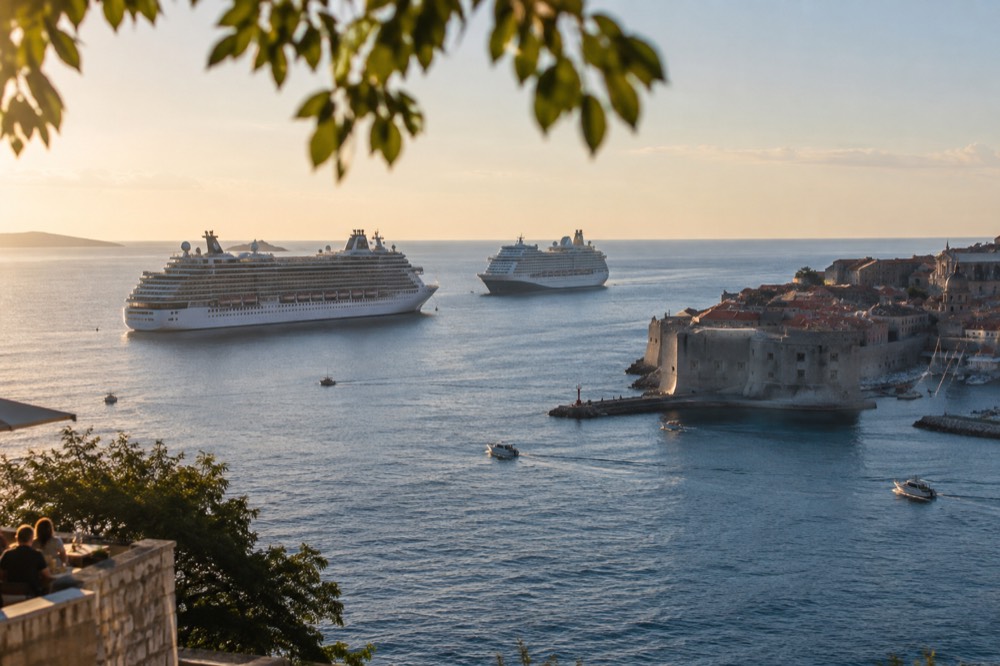
That cruise statistic surprises everyone, and it comes straight from the Port Authority's own figures: September 2025 brought 101,246 cruise passengers and October 100,132, above July's 96,072 and August's 87,385. The full year came to 625,257 passengers, and 461 cruise calls are scheduled for 2026. What it means for the Dubrovnik to Split route is simple: do not expect the old town to empty out the moment schools reopen. The port's own cruise-destination page explains the management rules, including the limit of 8,000 cruise passengers a day in most cases, published by the Dubrovnik Port Authority.
The crowd pressure is tracked, not guessed. Six counters at every Old Town entrance update a headcount every fifteen minutes, and the official carrying capacity from the UNESCO assessment is 11,275 people. On a real September morning the curve read 5,419 people at 08:00, a 7,739 peak at 10:00, then 7,205 by 11:00. The practical lesson for route planning: if you are overnighting in Dubrovnik before taking the morning bus north, you can have the walls nearly to yourself at 08:00 and be on a coach by early afternoon.
Weather-wise, the shoulder months are the sweet spot. The September sea average is about 23.6 degrees and October about 21.0, both from the 1991 to 2020 open-water climatology, warm enough for a swim stop on an island day trip without the August heat that turns the city walls into an endurance event. For the full month-by-month picture, see our best time to visit Dubrovnik guide.
| Month | Cruise passengers 2025 | Sea temperature average | Route advice |
|---|---|---|---|
| May | 84,107 | 18.6 degrees | Quiet, ferries ramping up |
| June | 82,642 | 22.5 degrees | Best balance of the year |
| July | 96,072 | 24.9 degrees | Book everything early |
| August | 87,385 | 25.8 degrees | Hottest, busiest roads |
| September | 101,246 | 23.6 degrees | Warm sea, peak cruise calls |
| October | 100,132 | 21.0 degrees | Ferry season winding down |
What Should You Know Before You Book Anything?
Carry your passport on every bus journey, book high-season transport and the city walls in advance, and check whether a Dubrovnik Pass beats the standalone walls ticket before you buy either: in main season the one-day pass costs the same 40 euro as the walls ticket and adds ten more sights plus a 24-hour bus ticket, but in December no pass tier is on sale at all.
The passport rule first, because it is the one that ruins days. The bus route transits the Neum corridor, so even a Dubrovnik to Split journey leaves Croatia twice. Non-EU citizens should have passports, not just ID cards, easily reachable. On the ferry you stay in Croatian waters, which is a small point in its favour for anyone who finds border stops stressful.
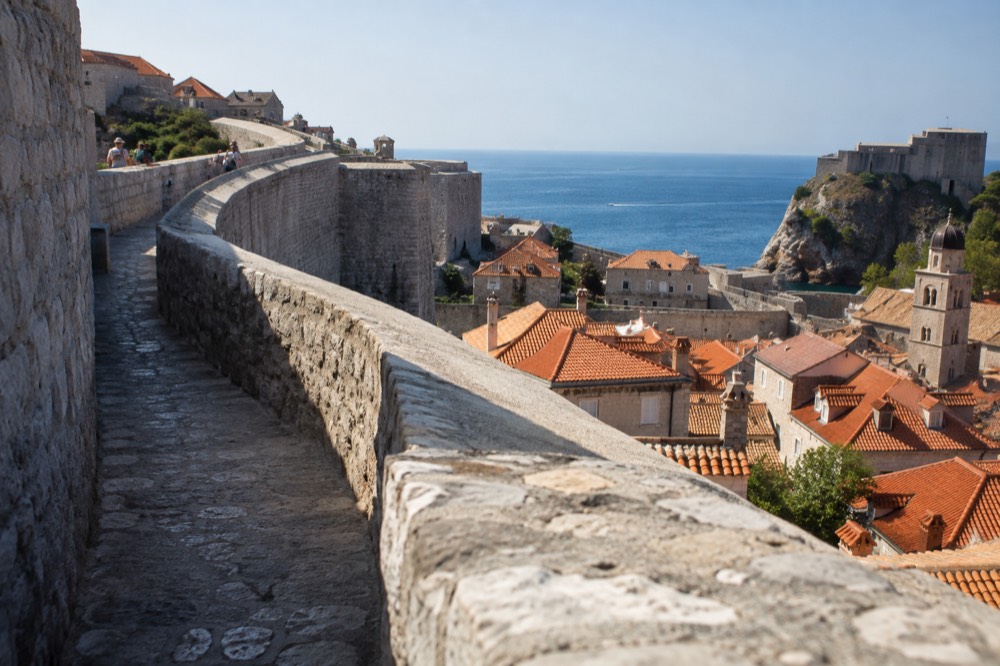
On tickets, the arithmetic is worth two minutes. The adult walls ticket is 40 euro in main season, 1 March to 30 November, and it is actually a walls plus Fort Lovrijenac combination that also covers the Western Outer Wall and the coin collection. The one-day Dubrovnik Pass costs the same 40 euro and adds ten more sights plus the bus ticket, so in main season it is close to free money. In December the standalone ticket drops to 20 euro and no pass tier is on sale, so the comparison flips. The operator's own site carries the current details at citywallsdubrovnik.hr.
| Ticket | Main season (1 Mar to 30 Nov) | December |
|---|---|---|
| City Walls adult (includes Lovrijenac) | 40 euro | 20 euro |
| City Walls child 7 to 18 | 15 euro | 5 euro |
| Under 6 | Free | Free |
| Dubrovnik Pass, one day | 40 euro | Not on sale |
| Dubrovnik Pass, three days | 50 euro | Not on sale |
| Dubrovnik Pass, seven days | 60 euro | Not on sale |
If your route includes a sunset finish in Dubrovnik before you head north, the cable car is the other book-ahead item. The adult round trip is 30 euro, one way 17 euro, children 4 to 12 pay 8 euro round trip, and under 4s ride free, with the operator's timetable and prices published at dubrovnikcablecar.com. It runs from 09:00 to midnight in the height of summer and closes entirely January to March, which matters if your route timing lands in the wrong window.
How Do You Build the Whole Route Into One Trip?
The pattern that works: two or three nights in Split or the islands first, travel south to Dubrovnik by ferry or bus, then give Dubrovnik three or four days with a Mostar or Montenegro day trip in the middle, and fly home from Dubrovnik airport. Doing the route in that order means your longest transfer day lands early and your last days are the relaxed ones.
Direction matters more than people expect. Arriving in Split, absorbing the coast southward and finishing in Dubrovnik puts your departure city at the quiet end of the trip, and Dubrovnik airport is close enough to the city that a morning flight does not require a pre-dawn panic. Reversing it means finishing with a long transfer day on your holiday's last afternoon, which is nobody's favourite memory.
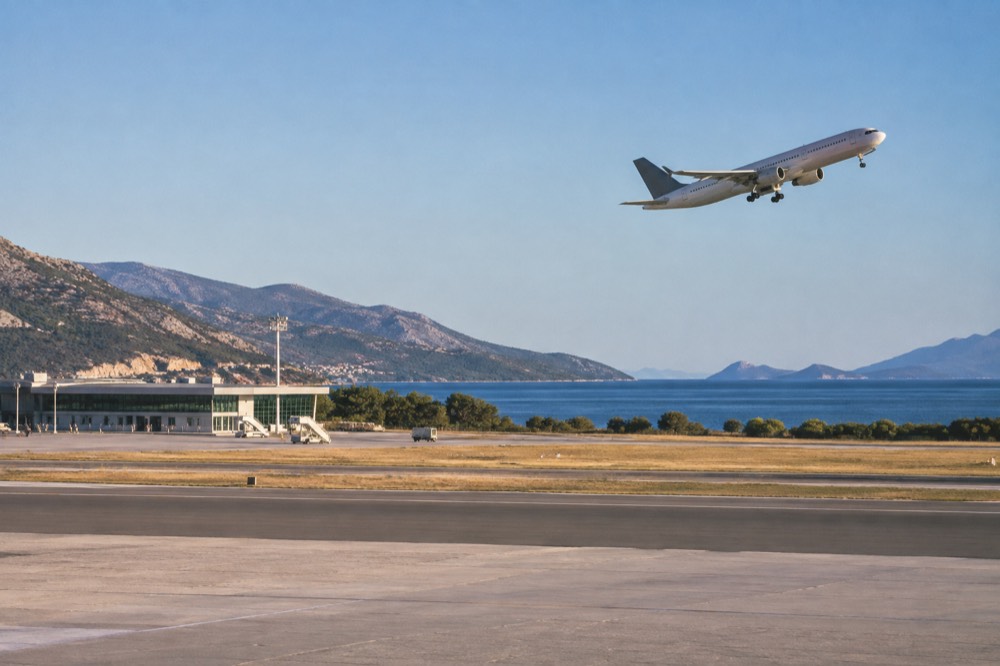
For the Dubrovnik end of the itinerary, budget at least three full days: one for the old town and the walls, one for an island or Lokrum, and one for an inland day trip. Lokrum deserves its half day, and the logistics are simpler than people fear: the ticket is 30 euro per person covering both reserve entry and the return boat, boats leave the City Harbour at 09:00 then every 15 minutes from 10:00 to 18:00, and a ticket stays usable for three days. The official reserve site has the current schedule at lokrum.hr.
| Route stage | Nights | Book ahead? | Why |
|---|---|---|---|
| Split and surroundings | 2 to 3 | Ferry onward in July and August | Peak sailings sell out |
| Transfer day to Dubrovnik | 0 | Yes, always | Fixed departures both modes |
| Dubrovnik old town and walls | 2 | Walls or pass in summer | Entry windows fill by mid-morning |
| Island or Lokrum day | 1 | Cruise in peak weeks | Boats cap at passenger limits |
| Mostar or Montenegro day trip | 1 | Yes | Border-day logistics favour guided tours |
One last planning note from experience: leave a buffer day. The coast rewards it and punishes tight scheduling, because a single storm, a slow border or a sold-out sailing can otherwise unravel a carefully built chain of bookings. Travellers who build slack into this route almost never regret it, and travellers who do not almost always end up rewriting the last third of their trip from a bus station bench.
And once the route is booked, the last thing to sort is how you will see Dubrovnik itself on your final days. The e-tuk-tuk panorama ride is the gentlest option: an hour and three quarters in an open electric vehicle, from $59.24 per person and rated 5 across 1,799 reviews, covering the viewpoints above the city without a single staircase.
Common Questions About Getting From Dubrovnik to Split
Is it better to bus or ferry from Split to Dubrovnik?
The bus is better for reliability and year-round frequency; the ferry is better when the crossing itself is part of the holiday. Coaches run multiple times daily in every season, while the ferry is seasonal, less frequent and can sell out weeks ahead in July and August.
Is the ferry from Split to Dubrovnik worth it?
Yes, if you want the sea approach to Dubrovnik and the island views along the way, and your schedule can absorb a weather risk. No, if you have a fixed onward connection, an early flight or a tight cruise departure; those travellers should take the bus.
Is a day trip from Dubrovnik to Montenegro worth it?
For most travellers, yes. Kotor Bay and Perast are under three hours away and dramatically different from Croatia. The main risk is border delay, which is exactly why a guided tour, from $58 per person and rated 4.4 across 5,611 reviews, usually beats a self-driven trip.
What is the best day trip I can take from Dubrovnik?
The Mostar and Kravica waterfall tour, from $35 per person and rated 4.6 across 10,019 reviews, offers the highest payoff per hour travelled: two countries, an Ottoman bridge, a swimmable waterfall and a manageable price. The Elaphiti islands cruise is the best alternative for a sea day.
Do I need a passport on the Dubrovnik to Split bus?
Yes. The route transits the Neum corridor through Bosnia and Herzegovina, so you leave and re-enter Croatia even on a domestic journey. Keep your passport reachable, not buried in a suitcase in the hold.
How many days should I spend in Dubrovnik at the end of the route?
Three or four full days: one for the old town and walls, one for an island or Lokrum, and one for an inland day trip such as Mostar or Montenegro. That is enough to see the city properly without rushing, with a buffer built in for weather or a sold-out sailing.