Elaphiti Islands Day Trip Guide: Cruises, Lokrum and Costs
The Elaphiti Islands are the archipelago sitting just off Dubrovnik's coast, and a full-day boat cruise through them is one of the city's most popular products. Here is how the islands, the cruises and the Lokrum crossing actually work.
Short answer
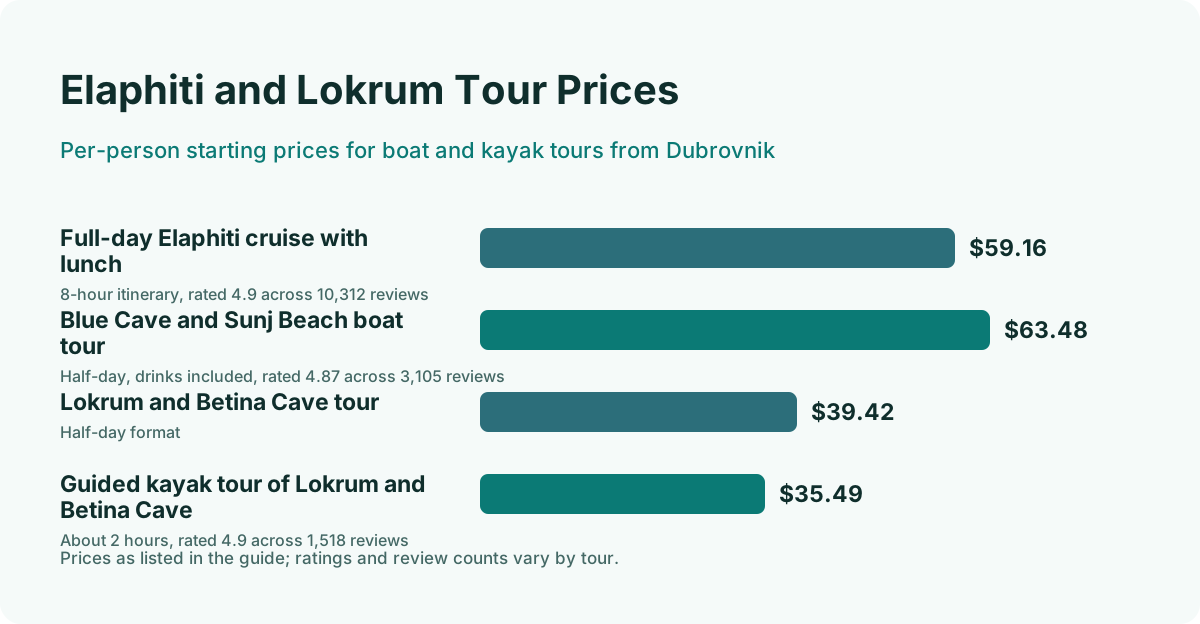
A full-day Elaphiti cruise runs about 8 hours and costs from $59.16 per person with lunch included. The Lokrum boat leaves the City Harbour at 09:00, then every 15 minutes from 10:00 to 18:00, and Lokrum entry plus the return boat is 30 euro per person. Plan on at least three hours on the island.
The Elaphiti Islands are the string of wooded islands northwest of Dubrovnik, close enough that you can see them from the city walls on a clear afternoon. Koločep, Lopud and Šipan are the three inhabited ones, and they give the day-trip market here its shape: car-free lanes, swimming stops, a sandy beach at Šunj, and a rhythm that has nothing in common with the Stradun at midday.
I have walked the Gruž harbour end of this city for years, and the morning routine never changes. By 08:30 the cruise boats are loading, the fish picnic provisions are going aboard, and the day-trippers are already in their swimwear. It is the single most reliable scene in Dubrovnik tourism, and for good reason: the product works. The most-reviewed cruise in the city carries 10,312 reviews at a 4.9 rating, which is not a marketing claim, it is a decade of guests voting with their mornings.
This guide covers the whole cluster: the Elaphiti cruises themselves, the Lokrum crossing that shares the same harbour, what each island actually offers, and what everything costs. If you want the broader picture of what the region offers beyond the Old Town, start with Things to Do in Dubrovnik and work outward from there.
What Are the Elaphiti Islands?
The Elaphiti Islands are a small archipelago off Dubrovnik's northwest coast, of which Koločep, Lopud and Šipan are inhabited and visited. They sit between the mainland and the open Adriatic, they are reached by boat from Gruž or the Old City Port, and a full-day cruise through all three runs about 8 hours from departure to return.
The name goes back a long way, but what matters to a visitor is the geography. The islands form a line roughly parallel to the coast, so a cruise can hop them in sequence without ever crossing open water for long. That is why these boats run reliably in weather that cancels trips further out. The crossings between stops are short, the bays are sheltered, and the swimming stops sit in water that warms up nicely through summer.
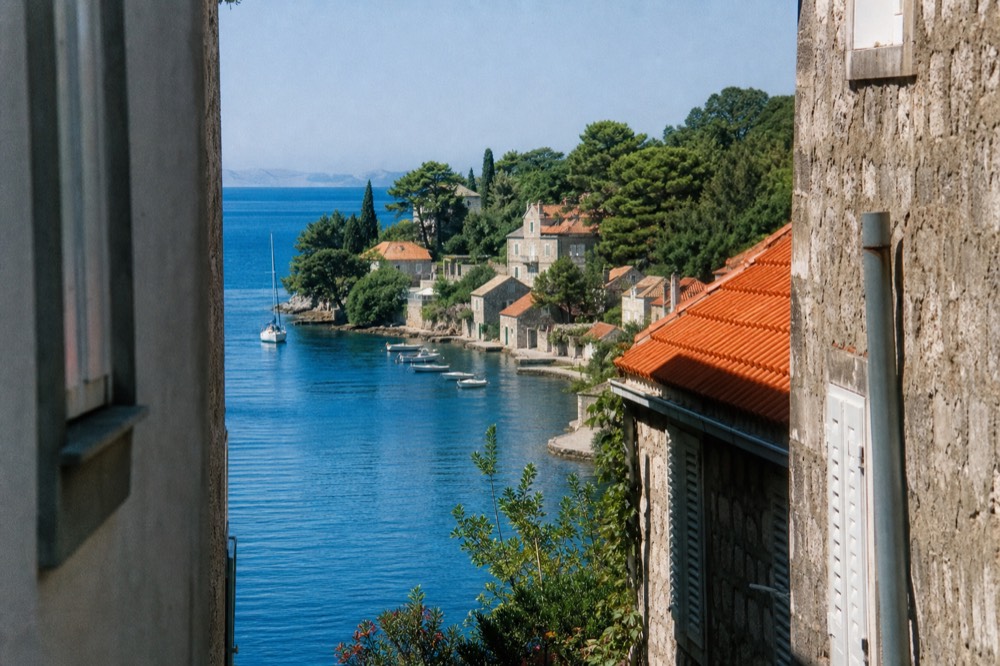
Each island has a different character. Koločep is the smallest and closest, a compact knot of pines and stone houses with two tiny settlements. Lopud is the middle island and the one most visitors remember, because it has Šunj, a genuinely sandy beach, which is rare on this limestone coast. Šipan is the largest and quietest, an island of olive groves and old summer mansions, with far fewer visitors and a slower clock.
You do not have to take a cruise. Public ferries connect Gruž with the islands year-round, and locals use them daily. But the ferry is a point-to-point service, while the cruise is a loop with a swim stop, a lunch and a guide, and that difference is what most visitors are actually buying. For the do-it-yourself version, read our Lopud island guide alongside this one.
Which Elaphiti Cruise Should You Book?
The default choice is the full-day Elaphiti cruise with lunch, from $59.16 per person, rated 4.9 across 10,312 reviews on an 8-hour itinerary. If you want a shorter or cheaper day, the Blue Cave and Šunj Beach boat tour runs from $63.48, and the Lokrum and Betina Cave tour from $39.42, both half-day formats.
The cruise market here has settled into a few clear formats. The big one is the classic three-island day: boat out of Gruž, a stop on Koločep or Šipan, a long stop on Lopud with time at Šunj, a fish picnic lunch served on board, and a swim stop somewhere sheltered on the way home. That is the shape of the best-selling product, and it fills up in peak season for a reason.
The second format skips the full circuit and goes for one headline attraction, usually the Blue Cave on Koločep or the beach at Šunj. These run three to five hours, cost a bit less or about the same, and suit anyone whose sea legs or schedule will not stretch to a full day. The third format is the Lokrum-and-cave combination, which is really an Old Town harbour product rather than an Elaphiti one, but it shares the same decision: do you want islands, or do you want one island and a cave?
Here is how the main options compare on the numbers that matter:
| Product | Format | From (per person) | Rating |
|---|---|---|---|
| Full-Day Elaphite Islands Cruise with Lunch | 8 hours, 3 islands, lunch | $59.16 | 4.9 across 10,312 reviews |
| Elaphiti Full-Day Cruise (Regina Maris) | 8 hours, lunch included | $74.58 | 4.8 across 6,751 reviews |
| Blue Cave & Šunj Beach Boat Tour | Half day, drinks included | $63.48 | 4.87 across 3,105 reviews |
| Lokrum Island and Betina Cave Boat Tour | Half day, Lokrum optional | $39.42 | 4.6 across 1,154 reviews |
| Elaphiti Luxury Pirate Ship Cruise | Full day, replica ship | $65 | 4.8 across 757 reviews |
The pirate ship deserves a word of explanation. The Karaka is a replica of a historical Dubrovnik vessel, and sailing the Elaphitis on it is a different experience from a modern cruiser: more atmosphere, less deck space. Families with children tend to love it, and the price sits between the standard cruise and the premium boat.
One review from the most-booked cruise captures what the day actually feels like, and it is worth reading before you commit:
This was a wonderful day. Nice and shaded on the boat as we cruised on the cool adriatic. Loved seeing the neat Elphiti Islands and a wonderful way to get out the the heat and large crowds for a bit. They kept the drinks flowing and lunch was phenomenal and a generous portion. This is the way to cruise the Adriatic.
Shelby_S
If you are weighing the Elaphitis against a bigger island day, our Mljet National Park trip guide covers the other direction: a national park island further out, with lakes instead of beaches.
How Long Is the Ferry Ride From Dubrovnik to Lokrum Island?
No official crossing time is published. Neither the Lokrum Reserve's own site nor its official schedule PDF states the crossing in minutes, and third-party figures range from 10 to 15 minutes, so treat any specific number you read elsewhere with caution. What is verified is the departure pattern: boats leave the City Harbour at 09:00, then every 15 minutes from 10:00 to 18:00.
This is one of those questions where the internet is confidently wrong in a dozen places. The reserve's own materials give the schedule, the ticket price and the ticket validity, but not the duration. What I can tell you from standing at that harbour is that Lokrum sits directly across from the Old City Port, visibly close, and the ride is a short hop by any measure. But a short hop is not a figure, and I will not print one.
The schedule is the part that actually shapes your day. The first boat of the morning leaves at 09:00, which is the one to catch if you want the island before the crowds. From 10:00 onward the boats run every 15 minutes until the final departures at 18:00, so you never wait long in either direction. The ticket office is at Luža in the Old City Port and works 08:00 to 18:00, which means you can buy a ticket from 08:00 even though the first boat is at 09:00.
| Lokrum boat schedule | Detail |
|---|---|
| First departure | 09:00 from the City Harbour |
| Frequency | Every 15 minutes from 10:00 to 18:00 |
| Ticket office | Luža, Old City Port, 08:00 to 18:00 |
| Ticket validity | Usable for three days after the date on it |
| Crossing time | Not published by the operator |
The official schedule and ticket terms are published by the Public Institution Lokrum Reserve, and that is the source to check if anything here changes. The three-day ticket validity is a genuinely useful detail most visitors miss: you are not locked into the day printed on the ticket, which matters if the weather turns.
The Lokrum question is really a cluster of three questions, and the other two have firm answers. How long you need on the island, and what it costs to get in, are both settled below.
How Many Hours Do You Need on Lokrum Island?
Plan on three to four hours on Lokrum, and treat that as a comfortable minimum rather than a maximum. The island packs a botanical garden, a Benedictine monastery complex, a fortress viewpoint, the Dead Sea lake, rocky swimming spots and peacocks into a walkable area, and doing it justice after a 09:00 arrival means leaving on an early-afternoon boat.
Lokrum is small, but it is dense. The monastery cloister and its gardens sit near the middle, the Dead Sea, a salt lake connected to the sea through channels, lies on the south side, and Fort Royal, the fortress on the summit, takes a steady uphill walk of maybe twenty minutes from the harbour. The view from the top is the best panorama of Dubrovnik's old walls available anywhere, because you see the whole city face-on across the water.
The rhythm I would suggest: arrive on the 09:00 boat, walk the gardens and monastery first while the shade still covers them, swim at the Dead Sea or the rocky coves around late morning when the water is calmest, then climb to Fort Royal before the midday heat peaks. That fills three hours easily. Add a fourth for a proper swim and a slow look at the botanical plantings, which are the legacy of the island's years as an archducal summer residence.
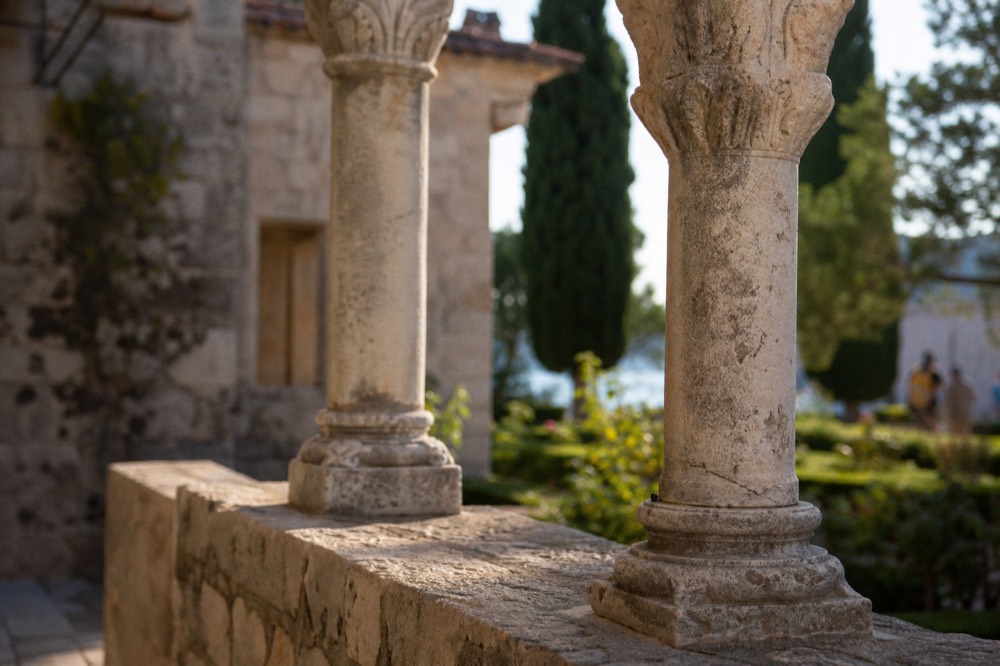
Two practical notes. First, there is no accommodation on Lokrum and the island closes in the evening, so every visit is a day visit bounded by the boat schedule. Second, swimming is allowed in the designated spots, and the rocks are real limestone rocks, so water shoes earn their place in your bag. Our full Lokrum island guide goes deeper on the swimming question if that is your main reason for going.
If your instinct is to combine Lokrum with a kayak instead of a ferry, that is a well-trodden route too: a guided kayak tour around the island and Betina Cave runs about 2 hours from $35.49 per person, rated 4.9 across 1,518 reviews. You can Check availability on the live listing if that format suits you better than the boat.
How Much Does It Cost to Enter Lokrum Island?
A Lokrum ticket is 30 euro per person, and it covers both the reserve entry and the return boat transfer, whether you arrive on the official boat or arrange your own transport. A combined Dubrovnik, Trsteno, Lokrum, Dubrovnik ticket costs 42 euro and adds Trsteno Arboretum admission plus an air-conditioned boat.
The 30-euro figure is the one that surprises people, because it is often quoted as a ferry price. It is not. It is a single combined ticket: the reserve charges for entry, the boat is bundled with it, and the price is the same however you travel. If you kayak over independently, you still pay the 30 euro, because the entry component is what you are buying. This is stated plainly on the reserve's own site, and it removes any ambiguity about paying twice.
The combined ticket is the interesting option for a full day out. Trsteno Arboretum, on the coast north of Dubrovnik, is one of the region's real treats: a Renaissance garden built around aaqueduct-fed fountains and enormous oriental plane trees. The 42-euro combined ticket covers the arboretum entry, the boat between the two, and Lokrum itself. Our Trsteno arboretum guide covers the garden end of that pairing.
| Ticket | Price | Includes |
|---|---|---|
| Lokrum only | 30 euro per person | Reserve entry and return boat transfer |
| Dubrovnik, Trsteno, Lokrum combined | 42 euro per person | Lokrum entry, Trsteno Arboretum entry, air-conditioned boat |
| Lovrijenac Fortress alone | 15 euro | Fortress entry only, no boat |
A note on the Dubrovnik Pass, because it is the obvious next question: the pass covers the City Walls, Lovrijenac and a list of museums, but Lokrum is not on that list, and there is no ferry component in any pass tier. If you are weighing the pass against island visits, our Dubrovnik Pass guide breaks down exactly what the 40-euro one-day tier buys in main season, 1 March to 30 November.
What Do You See on Koločep, Lopud and Šipan?
Koločep gives you pines, coves and two tiny hamlets; Lopud gives you Šunj, the sandy beach, plus a car-free village and bayfront walk; Šipan gives you olive groves, quiet villages and Renaissance manor houses. A cruise visits two or three of them, while the public ferry lets you build your own day around any one.
Koločep is the first island out and the smallest of the three. There are no cars, two small settlements, and a network of paths through pines to rocky coves on the seaward side. Cruise passengers typically get an hour here, which is enough for a swim and a walk, not enough for the whole path network. It is the least demanding stop and the best one for a first swim.
Lopud is the star for most visitors. The village wraps around a broad bay, the waterfront is a line of cafes and konobas, and the famous attraction is Šunj beach on the opposite side of the island, reached by a footpath over the low central ridge or by the little golf-cart shuttle that runs in season. Šunj is one of the few genuinely sandy beaches in the Dubrovnik area, shallow for a long way out, which makes it the family favourite. Cruises usually give Lopud their longest stop, and that is the right call.
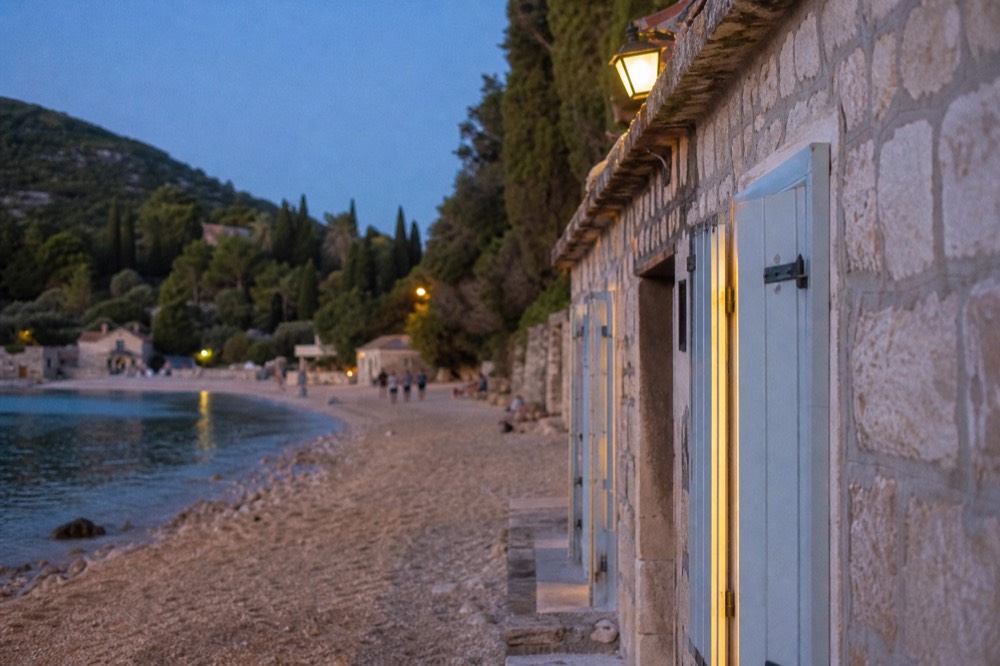
Šipan is the connoisseur's island. It is the largest of the three, it has more permanent residents than the other two combined, and its legacy is a remarkable density of summer manor houses built by Dubrovnik's old merchant families, scattered among olive groves that still produce oil. Day visitors are fewer here, and the two villages, Šipanska Luka and Suđurađ, bookend the island at either end of the road. If the cruise crowds at Lopud put you off, Šipan is the answer.
| Island | Best for | Signature stop | Crowd level |
|---|---|---|---|
| Koločep | First swim, short walk | Seaward coves | Moderate on cruise days |
| Lopud | Families, beach day | Šunj sandy beach | Busiest of the three |
| Šipan | Quiet, olive groves, manors | Šipanska Luka village | Quietest |
Our Koločep guide and Šipan guide cover the two quieter islands in detail if you want to build a ferry-based day instead of a cruise.
What Is the Blue Cave and Is It Worth the Stop?
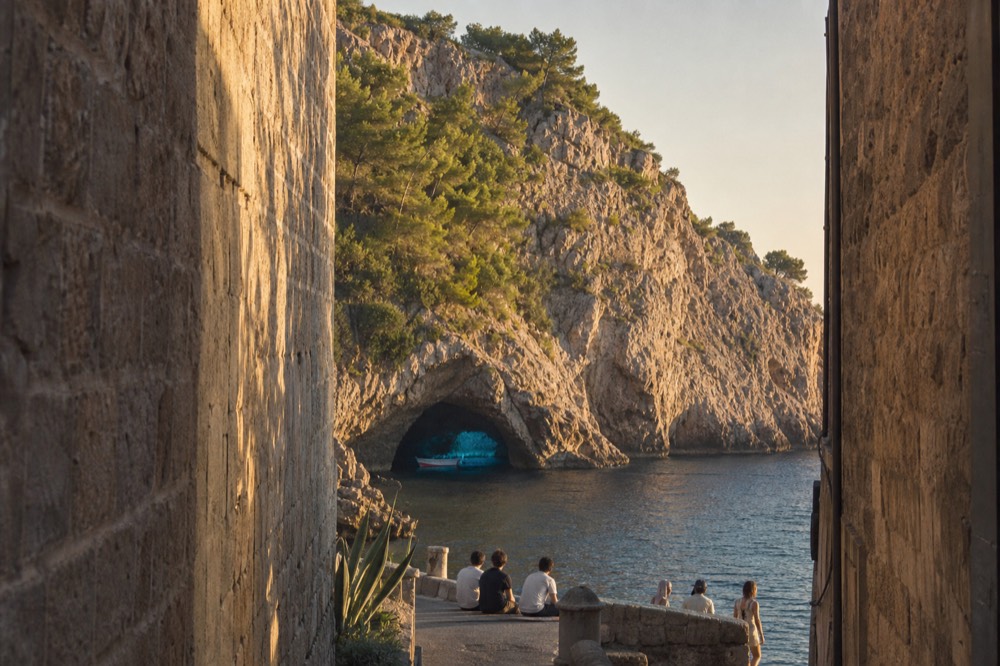
The Blue Cave is a sea cave on Koločep where the light through the underwater entrance gives the water a luminous blue glow, and boats enter it directly when conditions allow. It anchors the half-day Blue Cave and Šunj Beach tour, from $63.48 per person with drinks included, rated 4.87 across 3,105 reviews.
The cave works the way all blue caves work: sunlight enters through a submerged opening, reflects off the white seabed, and fills the chamber with light that looks artificial until you see it. Small boats can drive partway in when the sea is flat, and the tour operators time their visits for the midday hours when the effect is strongest. When the swell is up, the cave becomes a viewing-from-outside proposition, which is the honest caveat on any sea cave anywhere.
Pairing the cave with Šunj is what makes this tour clever. You get the dramatic natural phenomenon and the lazy beach afternoon in one half-day package, with drinks on board, and you are back in Dubrovnik with the evening free. For travellers who find a full 8-hour day on the water too much, or who have a flight the next morning, this is the format that fits.
When Is the Best Time of Year for an Islands Day?
September and October are the sweet spot: the sea is at its warmest of the late season, the September open-water average is about 23.6 degrees, crowds thin after the August peak, and the water stays swimmable into October at about 21 degrees. June and July give the warmest guaranteed weather but the busiest boats.
The sea-temperature figures deserve their caveat, because they are long-run averages, not a beach forecast. The 23.6-degree September number is a 1991 to 2020 open-water average from NOAA's satellite climatology, corroborated by an independent European dataset within about one degree. Sheltered bays like Šunj run warmer than the open water: the Croatian met service's Dubrovnik buoy read 27.0 to 27.4 degrees on one early-September day against that 23.6 average. So treat the averages as a floor for planning, not a ceiling.
The crowd picture has a twist worth knowing. Cruise traffic to Dubrovnik peaks in September and October, not July and August: Port Authority data shows 101,246 cruise passengers in September 2025 and 100,132 in October, ahead of July's 96,072 and August's 87,385. But cruise passengers spend their hours in the Old Town, not on the island boats, and the islands themselves are calmer in autumn than in the school-holiday weeks. The two crowds barely overlap.
| Month | Open-water average | Islands mood |
|---|---|---|
| June | 22.5 degrees | Warm, busy but not peak |
| July | 24.9 degrees | Hottest air, peak crowds |
| August | 25.8 degrees | Warmest water, busiest boats |
| September | 23.6 degrees | Warm sea, thinner crowds |
| October | 21.0 degrees | Still swimmable, quiet |
The Old Town's own carrying capacity is 11,275 people, monitored by six counters at every entrance that update every 15 minutes, and on a busy September morning the count passes 7,000 by 10:00. The islands are the pressure valve for exactly those days. If you want the full data picture, our best time to visit guide works through it month by month.
What Should You Bring on an Elaphiti Day?
Bring swimwear, a towel, sunscreen, a hat, water shoes for the rocky coves, a light layer for the return leg, and cash or a card for island cafes. The boats provide shade and lunch on the full-day cruises, but Koločep's coves and Lokrum's rocks are limestone underfoot, and the sea breeze hides how much sun you are absorbing.
Water shoes are the item people regret forgetting. Šunj is sand and needs nothing, but the swimming stops on Koločep and the entry points around Lokrum's Dead Sea are rock and stone slab, wet and sharp in places. A dry bag is worth having if you carry a phone onto a kayak or a small boat; the spray on the crossing between islands is occasional but real when the afternoon wind picks up.
Timing your food matters less than you would think on a cruise, because lunch is part of the product, usually a fish picnic served on board. On a ferry-and-independent day, the konobas on Lopud's waterfront and in Šipanska Luka are the reliable stops, and they run on island time, which means you should not arrive at 15:00 expecting a full kitchen. Our what to eat in Dubrovnik guide covers the dishes worth ordering when you do sit down.
Which Day-Tip Format Fits Your Trip Best?
Take the full-day cruise if this is your one big day out and you want islands, swimming and lunch handled; take the Blue Cave half-day if your time or sea legs are short; take the ferry to Lopud alone if you want a beach day at your own pace; and take the Lokrum boat if your priority is the monastery, the fortress view and a swim close to the city.
The honest summary is that there is no wrong answer among these, only different days. The full-day Elaphiti cruise is the best-selling product in this market by a wide margin, 10,312 reviews at 4.9 tells you that plainly, and it is the format I would point a first-time visitor toward. But it is an 8-hour commitment in the sun, and if your trip is short, a half-day on the water plus an evening in the Old Town may serve you better than a full day at sea.
If your stay runs longer, the Elaphitis are one island cluster among several. Our island hopping guide lines up Mljet, Korčula and the Elaphitis against each other, and the day trips overview covers the inland options like Mostar and Montenegro for the days you want stone towns instead of beaches.
Common Questions About the Elaphiti Islands
How long is the ferry ride from dubrovnik to lokrum island?
No official crossing time is published by the Lokrum Reserve or its schedule PDF. What is verified is the departure pattern: boats leave the City Harbour at 09:00, then every 15 minutes from 10:00 to 18:00. Third-party figures of 10 to 15 minutes circulate, but none comes from the operator, so treat them as estimates rather than facts.
How Many Hours Do You Need on Lokrum Island?
Plan on three to four hours. That covers the monastery and gardens, a swim at the Dead Sea or the coves, and the climb to Fort Royal for the best view of Dubrovnik's walls from anywhere. Arriving on the 09:00 boat and leaving early afternoon is the comfortable pattern.
How Much Does It Cost to Enter Lokrum Island?
A Lokrum ticket is 30 euro per person and covers both the reserve entry and the return boat transfer, whether you use the official boat or your own transport. A combined Dubrovnik, Trsteno, Lokrum ticket is 42 euro and adds Trsteno Arboretum admission with an air-conditioned boat.
Can You Visit the Elaphiti Islands Without a Tour?
Yes. Public ferries run from Gruž harbour to Koločep, Lopud and Šipan, and locals use them daily. You give up the swim stops, the on-board lunch and the guide, but you gain full control of your timing, and the ferry to Lopud plus a walk to Šunj beach makes a complete independent day.
Which Elaphiti Island Has the Best Beach?
Lopud, because of Šunj. It is one of the few genuinely sandy beaches in the Dubrovnik area, shallow for a long way out, reached by a footpath over the island's low ridge or a shuttle from the village. Koločep and Šipan offer rocky and pebble coves instead, which many swimmers actually prefer for the clearer water.
Is a Full-Day Cruise or a Half-Day Tour Better?
Take the full day, about 8 hours from $59.16 per person with lunch, if this is your main day out and you want the complete three-island circuit. Take a half-day like the Blue Cave and Šunj tour from $63.48 if your schedule is tight, your sea legs are uncertain, or you would rather keep an evening free in the Old Town.