A Short History of Dubrovnik for Visitors
Dubrovnik was an independent maritime republic for centuries, and nearly everything a visitor bumps into, from the Stradun to the fortress on its rock, is a leftover from that state. Here is the history that actually matters when you are walking the streets.
Short answer
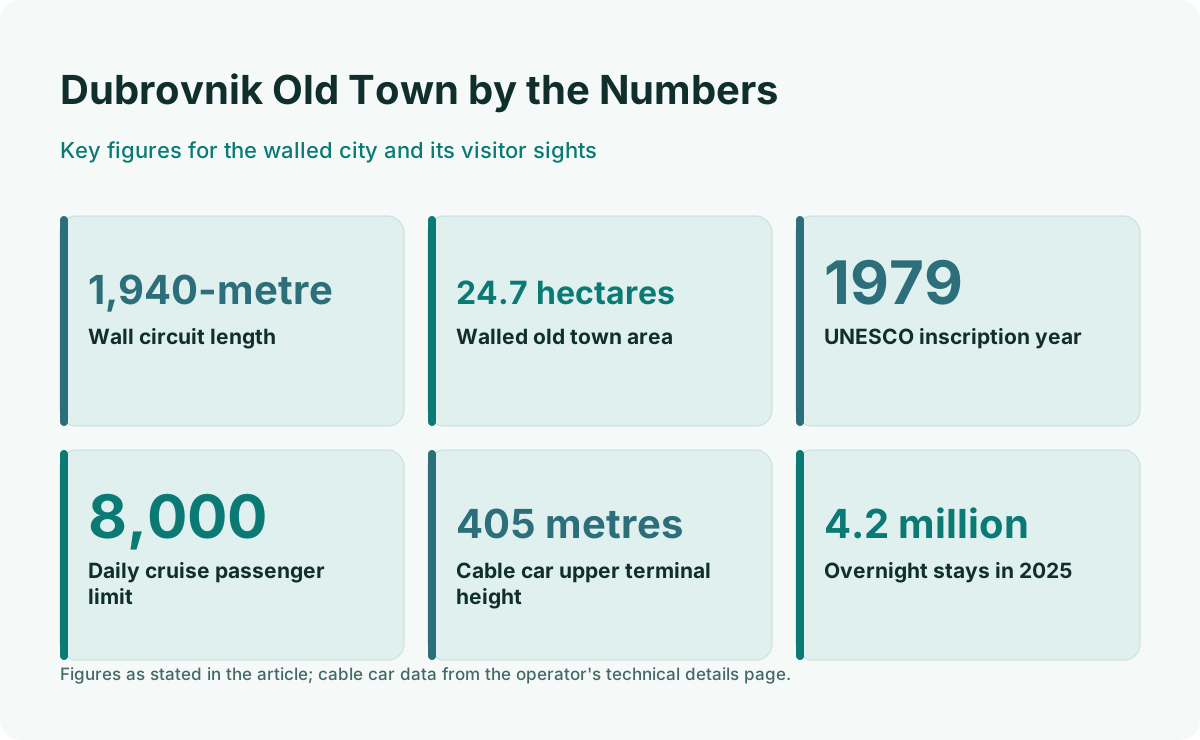
Dubrovnik was the Ragusa republic, a merchant city-state that ran its own fleet, diplomacy and laws from the 13th century until the Napoleonic era. Its 1,940-metre walls, finished in 1660, survived both earthquakes and the 1991 siege. UNESCO inscribed the Old Town in 1979, and it recorded about 4.2 million overnight stays in 2025.
Most visitors meet Dubrovnik backwards. They see the red roofs, the walls and the limestone street first, and only later learn that all of it belonged to a sovereign state called Ragusa, which coined its own money, ran its own consuls and stayed independent for roughly five centuries. I have walked these streets with travellers since 2015, and the moment people realise Dubrovnik was not a town but a small country, everything they are looking at starts to make sense.
The city sits on the southern Adriatic, and its whole story follows from that position. It faced the sea for trade and the hinterland for threat, and it answered both with the same instinct: negotiate, insure, fortify. The result is a compact walled city of 24.7 hectares, inscribed by UNESCO in 1979 under criteria (i), (iii) and (iv), that carries its entire diplomatic and commercial history on its back.
Why Is Dubrovnik's History So Unusual?
Dubrovnik's history is unusual because it survived for roughly five centuries as an independent city-state that relied on diplomacy rather than conquest, cleverly recognising whichever great power dominated the region at any given time. Rather than building an empire through force, the city preserved its freedom through negotiation, tribute, and skillful political maneuvering, allowing this small maritime republic to outlast far larger rivals while maintaining its autonomy and prosperity. It paid tribute when tribute was cheaper than war, traded with everyone including its rivals' enemies, and abolished slavery on its territory long before most of Europe had even discussed it. The city's final construction chapter closed in 1660 with the Bastion of St Stephen, and the republic itself lasted until the Napoleonic era extinguished it.
The mechanics of that survival were maritime. Ragusan ships carried grain, salt and silver across the Mediterranean, and the city's wealth came from freight rather than territory. A merchant elite governed through a Rector elected for a short term, an arrangement designed so that no single family could seize the state. The 1272 Statute fixed the final plan of both the city and its main street, the Stradun, which is why the 298-metre promenade you walk today follows a medieval framework under baroque stone.
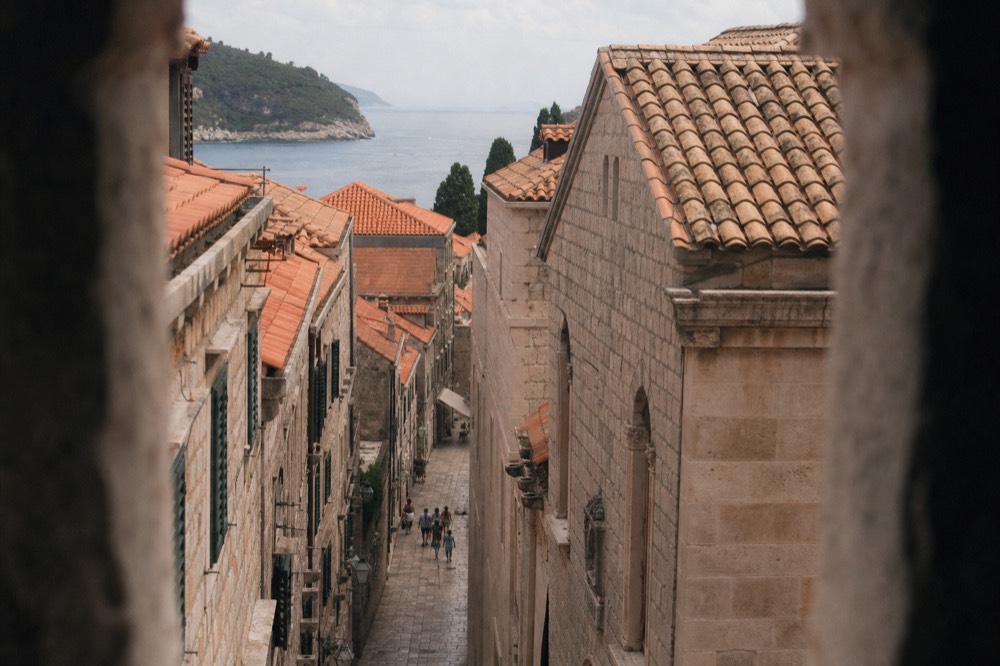
Two catastrophes shaped what you actually see. A devastating earthquake levelled most of the city, which is why the buildings facing the Stradun are largely baroque rebuilds rather than medieval originals. And the siege of 1991, when the city was shelled while it stood on the UNESCO List of World Heritage in Danger from 1991 to 1998, led to a reconstruction programme that replaced damaged roofs with the pale new tiles you can still pick out from the walls today.
The layers are visible if you know where to look, and a good guide can point at a single facade and read three centuries off it. That is the practical case for reading a little history before you arrive: it converts a pretty street into a legible document.
What Is Dubrovnik Best Known For?
Dubrovnik is best known as a remarkably complete walled medieval city-state, the former Ragusa republic, whose 1,940-metre circuit of walls encloses a UNESCO-listed old core that survived earthquakes, Napoleon and a modern siege. Its limestone streets, baroque churches and fortress towers above the Adriatic make it Croatia's most recognisable destination. The walls are the single most famous structure, and the 40-euro adult ticket in main season, 1 March to 30 November, is in fact a combination covering Fort Lovrijenac, the Western Outer Wall and the Collection of Coins of the Republic of Ragusa, so the famous monument and the famous fortress come as one purchase.
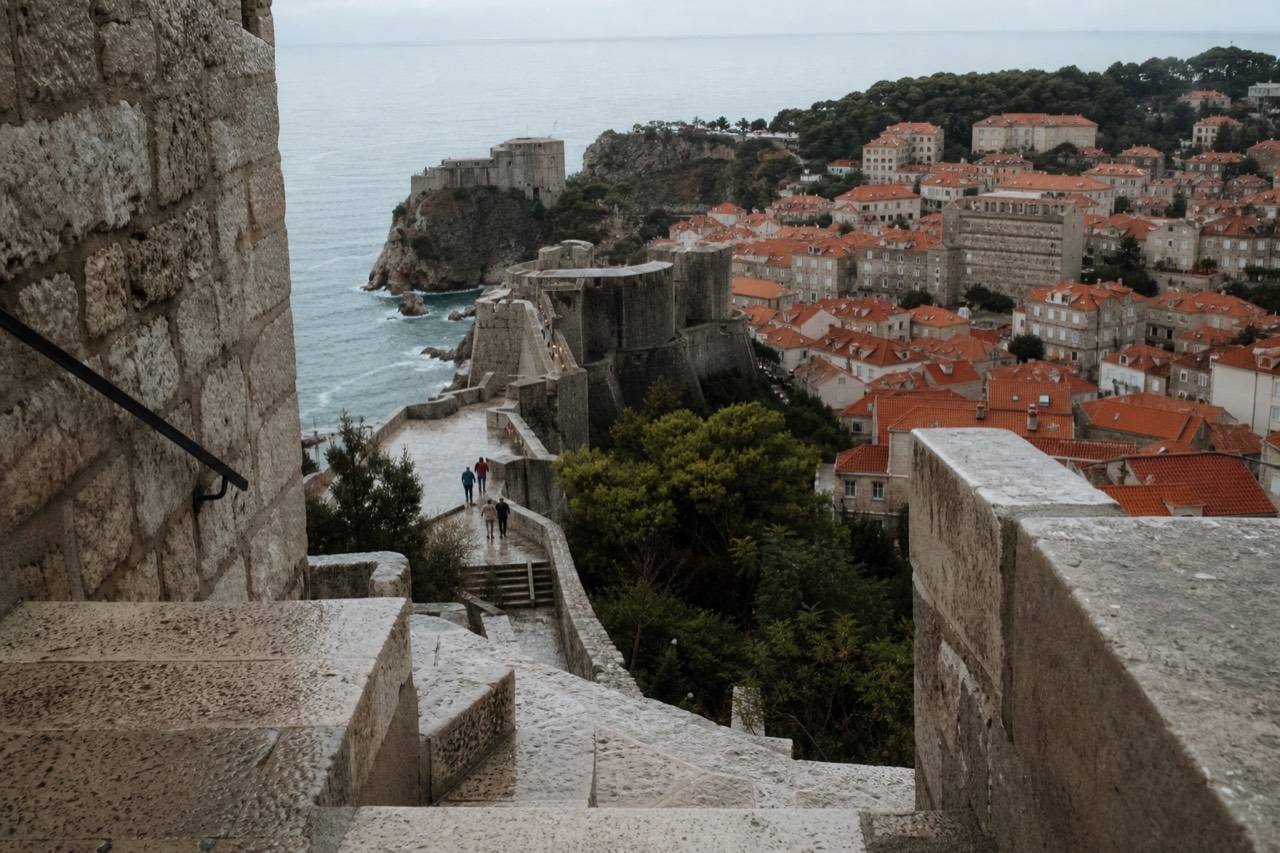
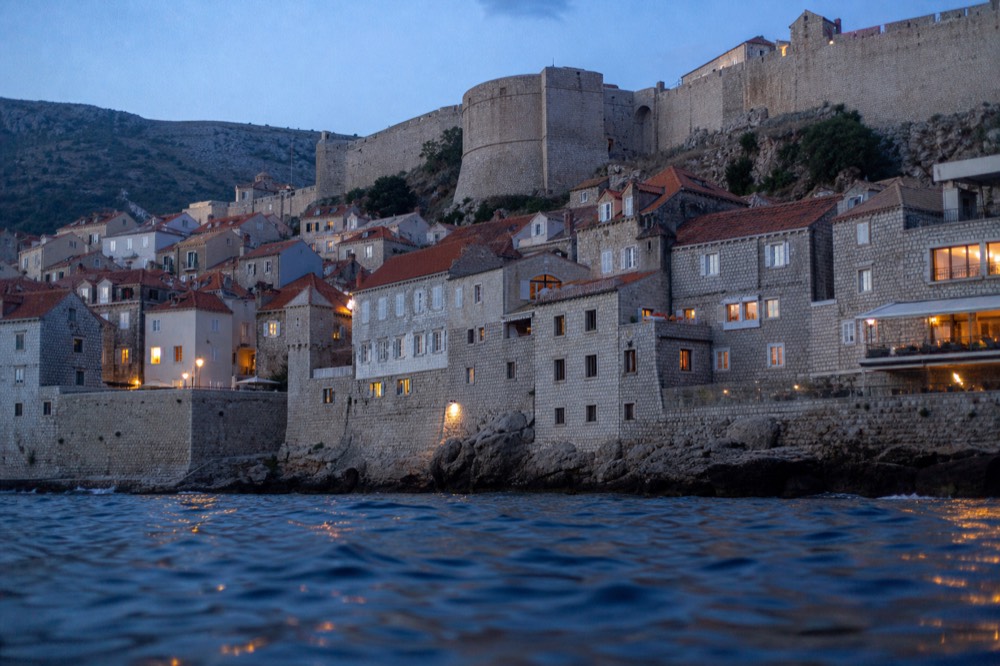
The wall circuit is the best single history lesson in the city. Walking it, you pass 16 towers, three fortresses, six bastions, three moats, two drawbridges and one breakwater, a structure that reached its basic shape in the 13th century and was only finished in 1660. The thickness tells the story by itself: 4 to 6 metres on the land side where an army could mass, and just 1.5 to 3 metres on the sea side where the Adriatic did the defending. Fort Lovrijenac, standing apart on its 37-metre sea rock, was deliberately built outside the walls so it could, in theory, be bombarded by the city's own guns if its garrison ever turned rogue.
| City Walls Ticket | Main Season (1 Mar to 30 Nov) | December |
|---|---|---|
| Adult | 40 euro | 20 euro |
| Child 7 to 18 | 15 euro | 5 euro |
| Child 6 and under | free | free |
There is no family ticket, only adult and child 7 to 18, and the operator's stated hours at the time of check were 08:00 to 19:30. If you want the walls explained rather than just walked, a guided circuit is the better format: the 2-Hour City Walls Walk runs about two hours from $29.58 per person, rated 4.8 across 1,387 reviews.
If you would rather start on the ground than on the ramparts, the walls have their own dedicated guide covering entrances, direction and timing, and the Stradun walkthrough explains the main street's own history block by block.
What Is Dubrovnik Famous For Around the World?
Dubrovnik is famous around the world as the real-life King's Landing, the capital of the Seven Kingdoms in Game of Thrones. Multiple seasons of the hit series were filmed on its streets and walls, and that global screen exposure layered a fictional fame on top of the city's older, real reputation. Today, millions of viewers recognize Dubrovnik's skyline before they ever learn its actual name. The Pile Gate, the Jesuit Staircase, Fort Lovrijenac and the walls all appear in the series, and a steady share of today's visitors arrive primarily for the filming locations rather than for the republic underneath them. The full locations guide maps every site, and the was Game of Thrones filmed in Dubrovnik answer covers the production history in detail.
The history and the fiction overlap in an interesting way: the walk of shame staircase is a real baroque set of steps, and the Red Keep is a real fortress with a real garrison history. A themed tour that also explains the actual republic is worth more than one that only quotes the show. The Game of Thrones tour with the optional Lokrum visit and Iron Throne photo stop runs 2 to 3 hours from $29.62 per person, rated 4.9 across 5,201 reviews.
Fame has a second face here, and honesty requires naming it. The same city that UNESCO inscribed in 1979 now manages cruise volumes through an official counting system, with the Port Authority limiting cruise passengers to 8,000 a day in most cases and refusing about forty call requests in a single season. Of 243 cruise days a year, only 18 exceed 8,000 passengers. That is the modern chapter of Dubrovnik history, still being written, and it is why timing matters as much as itinerary.
Is Dubrovnik Worth Visiting?
Yes, and the historical density is the reason: no other Mediterranean city packs a complete republic, a walkable 1,940-metre wall circuit, a baroque main street and a siege museum into 24.7 hectares you can cross on foot. About 4.2 million overnight stays in 2025 suggest the verdict is widely shared, and the city shares first place among Croatian destinations with Rovinj on that measure.
Worth visiting is not the same as worth visiting blindly. The Old Town is small, the crowds are real, and the peak hours between 10:00 and 11:00, when the counters once read a 7,739-person peak on a September morning, are the worst time to appreciate a medieval street. Go early, go late, or go in a shoulder month. September and October are actually the busiest cruise months, ahead of July and August, which surprises almost everyone; the best time to visit guide breaks the year down month by month.
| Experience | What It Adds | Ballpark Cost |
|---|---|---|
| City walls circuit (self-guided) | The full defensive system, 1,940 m of it | 40 euro adult, main season |
| Guided Old Town walk | The republic's story on the street where it happened | from $20 per person |
| Dubrovnik Pass, one day | Walls plus ten more sights and a 24-hour bus ticket | 40 euro, main season only |
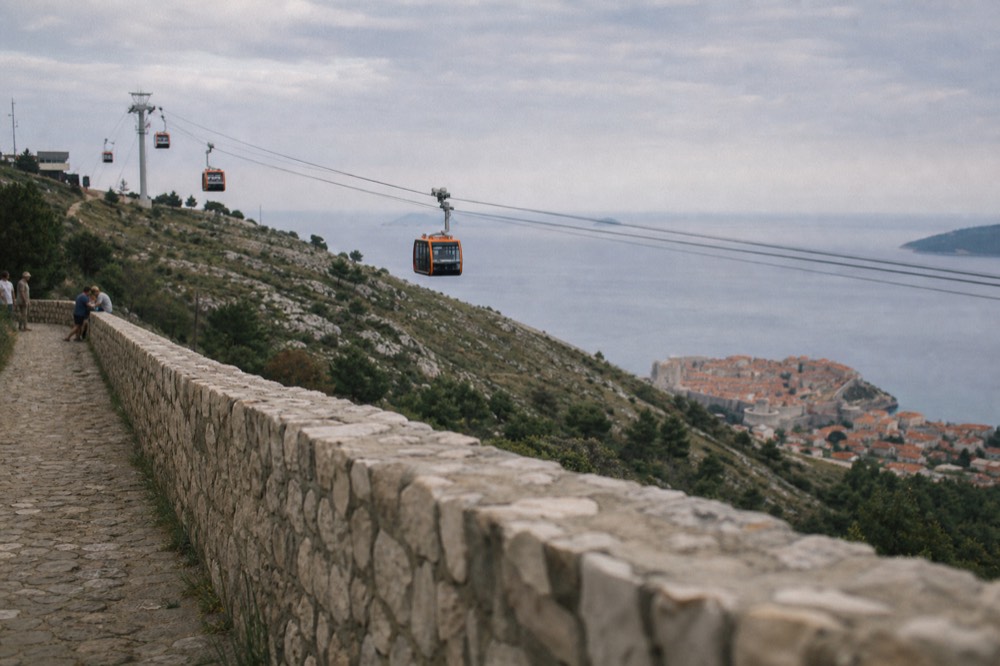
| Cable car to Mount Srd | The view the defenders never had | 30 euro adult round trip |
For depth, the homeland war museum inside Fort Imperial on Mount Srd covers the 1991 siege with photographs and artefacts, and pairs naturally with a cable car ride: the upper terminal sits 405 metres above sea level, reached in 3 minutes 30 seconds, and the view range on a clear day is up to 60 km. The operator's own technical details page publishes those figures.
What Not to Do in Dubrovnik?
Do not walk the walls at midday in summer, do not drive into the Old Town, do not expect a family walls ticket that does not exist, and do not plan a visit without checking the cruise schedule for your date. Those four mistakes account for most of the avoidable misery I see on these streets, and every one of them is a planning failure rather than a bad attitude.
The midday walls walk is the classic. The circuit has almost no shade, the stone radiates heat, and the operator's stated hours run to 19:30, so an 08:00 start or a late-afternoon lap is both cooler and emptier. The best time of day for the walls question is answered in detail there; the short version is before 09:00 or after 16:00 in high season.
| Mistake | Why It Fails | Do This Instead |
|---|---|---|
| Walls at noon in July or August | No shade, peak cruise crowds on the ramparts | Enter at opening or after 16:00 |
| Buying a "family" walls ticket | Only adult and child 7 to 18 exist; under 6 is free | Price adults and children separately |
| Assuming the pass always equals the walls price | The 40-euro match is main season only, 1 March to 30 November; no winter tier is on sale | In December, buy the 20-euro walls ticket |
| Ignoring the cruise calendar | Up to 8,000 cruise passengers a day land in most cases | Check the cruise schedule for your date |
A few smaller ones worth naming. Do not swim off the rocks below the walls at busy hours; do not sit on the Onofrio Fountain rim, it is a protected historic monument; and do not rely on a card everywhere, since small konobas and market stalls still prefer cash. The what to be careful of answer collects the rest.
How Did the Republic of Ragusa Actually Work?
The Republic of Ragusa was governed by an elected Rector who served a one-month term, with real power held by a merchant aristocracy. Its Great Council passed the laws, ran a state chancery, and kept permanent consuls posted in rival ports ranging from Venice to Istanbul, allowing this small city-state to manage trade and diplomacy across the Mediterranean. The system was designed against concentrated power, and it worked: no doge, no king, no coup, just a rotating magistracy bound by statute and watched by a treasury that answered to the council rather than to any single man.
The 1272 Statute is the anchor date for the city plan, fixing the final layout of both the city and the Stradun. Trade did the rest. The republic's fleet moved goods at scale, its insurance arrangements were among the most sophisticated in the Mediterranean, and its diplomacy consisted of paying tribute to whoever held the region while trading with everyone, including both sides of any given conflict. Neutrality was not idealism, it was the business model.
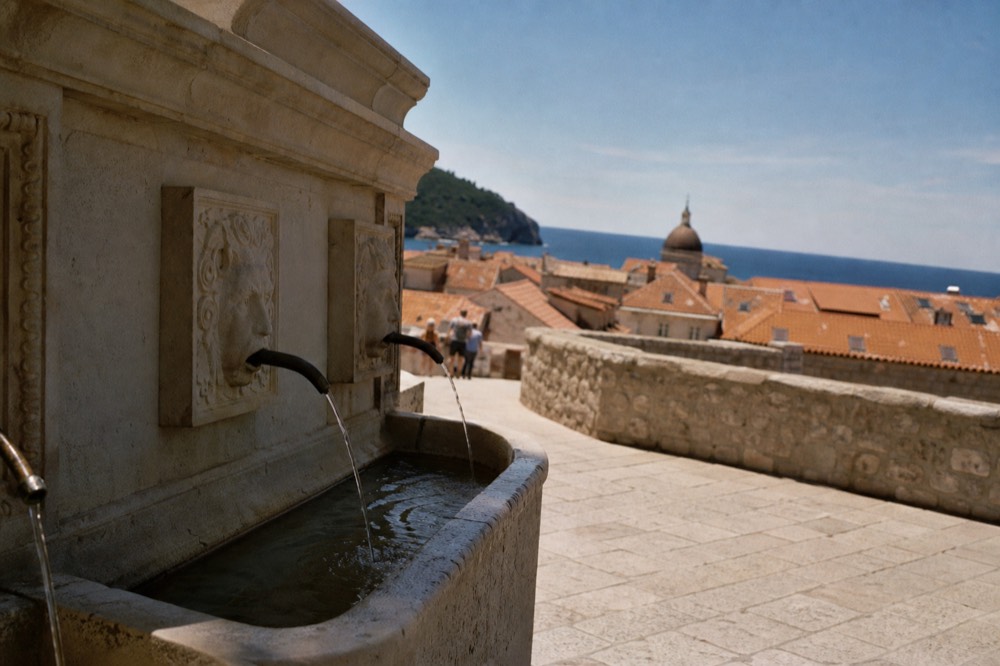
You can read the system in the buildings. The Rector's Palace, part palace and part government office, housed the head of state; the Sponza Palace next to it held the mint, the treasury and the customs house, the republic's actual engine room. Both are open to visitors, and the Rector's Palace guide covers what is inside. The Sponza Palace now also carries a memorial to the defenders of 1991, which closes the loop between the republic and the siege.
Where Can You See Each Era on the Ground?
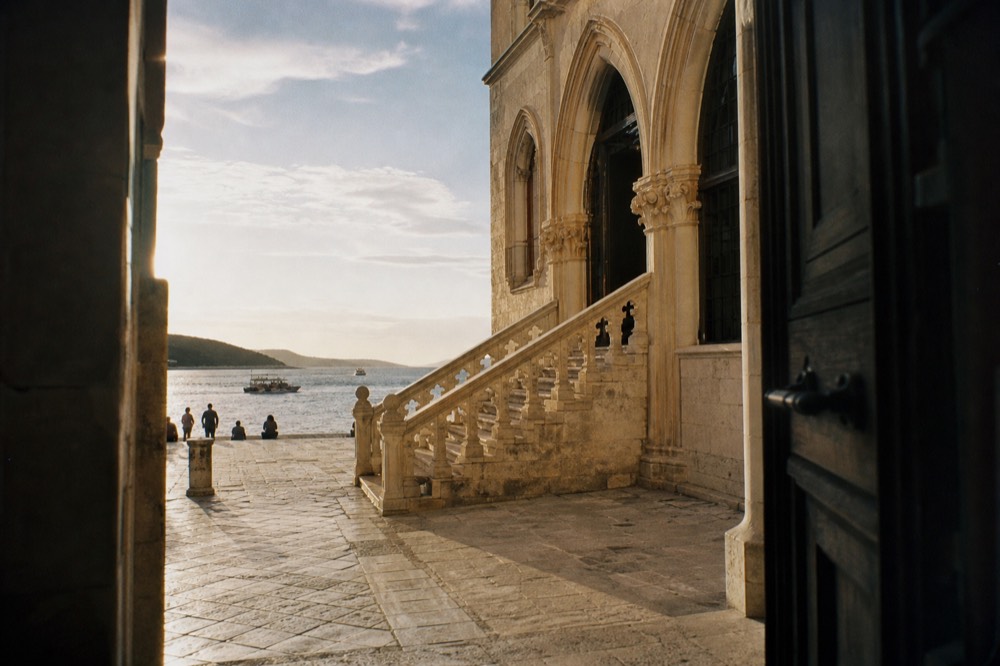
The layers sit in plain sight: the walls and street plan for the medieval republic, the baroque facades for the post-earthquake rebuild, the pale roofs for the post-1991 reconstruction, and Fort Imperial on Mount Srd for the siege itself. A visitor with one free morning can walk through five centuries without ever leaving the Old Town, which is exactly what a good guided walk is built to do.
Start at Pile Gate, where the drawbridge and moat survive from the defensive scheme. Walk the Stradun east, noting how uniform the facades are, that is the post-earthquake baroque rebuild. Turn into the Franciscan Monastery complex, whose cloister holds one of the oldest pharmacies in Europe, no founding year is verifiable, so do not trust any date a plaque or a blog asserts. End at the Sponza Palace and the Rector's Palace, the administrative heart, then climb or ride to Mount Srd for the war museum and the overview.
| Site | Era It Shows | What to Look For |
|---|---|---|
| City walls circuit | 13th century to 1660 | Wall thickness changing between land and sea sides |
| Stradun facades | Post-earthquake baroque rebuild | Uniform storey heights and shop fronts |
| Rector's Palace | Republic government | One-month Rector term, state rooms |
| Fort Lovrijenac | Independent outer defence | 37-metre sea rock, walls facing the city |
| Pale rooftops | Post-1991 reconstruction | New tiles against weathered ones, best seen from the walls |
| Fort Imperial, Mount Srd | 1991 siege | Homeland War Museum inside |
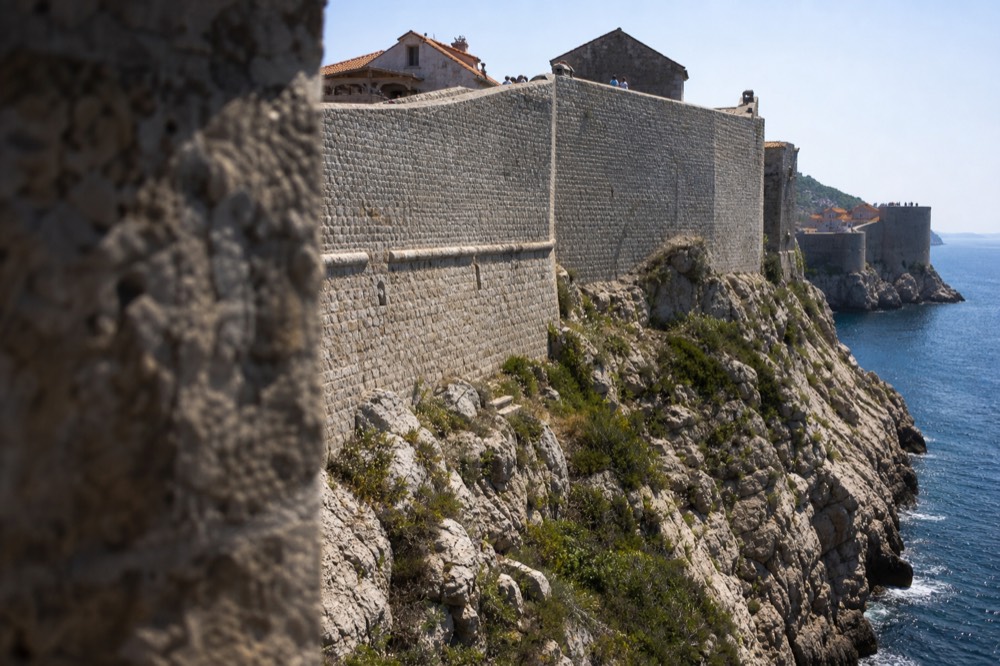
A guided walk compresses all of this into ninety minutes. Check availability if that format suits you.
For the walls themselves, the guided two-hour circuit is the stronger choice, since the defensive logic is the part a self-guided visitor most often misses. One recent guest review calls it "This well organized tour helped put Dubrovnik's past (and present) into perspective. It's incredible that the city walls have withstood the test of time. Antun was a wonderful guide."
This well organized tour helped put Dubrovnik's past (and present) into perspective. It's incredible that the city walls have withstood the test of time. Antun was a wonderful guide.
linda_a
How Do You Turn This History Into a Day?
Pair one walking element with one viewpoint: a guided Old Town walk in the morning, the walls circuit either side of midday, and the cable car or Srd walk for the late-afternoon view, with the war museum closing the story. The Dubrovnik Pass can hold this together, since the 40-euro one-day tier covers the walls plus ten more sights and a 24-hour bus ticket, matching the standalone walls price in main season only, 1 March to 30 November.
The pass arithmetic deserves one clear sentence and no more: in main season the one-day pass costs the same 40 euro as the walls ticket and adds the Rector's Palace, the Maritime Museum and the rest; in December the walls ticket alone drops to 20 euro and no pass tier is on sale at all. The is the pass worth it analysis runs the numbers for longer stays. The official pass site lists every inclusion.
| Pass Tier | Price | Transport Included |
|---|---|---|
| One day | 40 euro | 24-hour bus ticket |
| Three days | 50 euro | 72-hour bus ticket, suburban coupons |
| Seven days | 60 euro | 168-hour bus ticket, suburban coupons |
Every tier includes the City Walls and Lovrijenac Fortress, with a one-time visit to each institution. The three-day and seven-day tiers add House Bukovac in Cavtat, which makes them sensible if Cavtat is on your list; the Cavtat guide explains why that quiet town makes a good history counterweight.
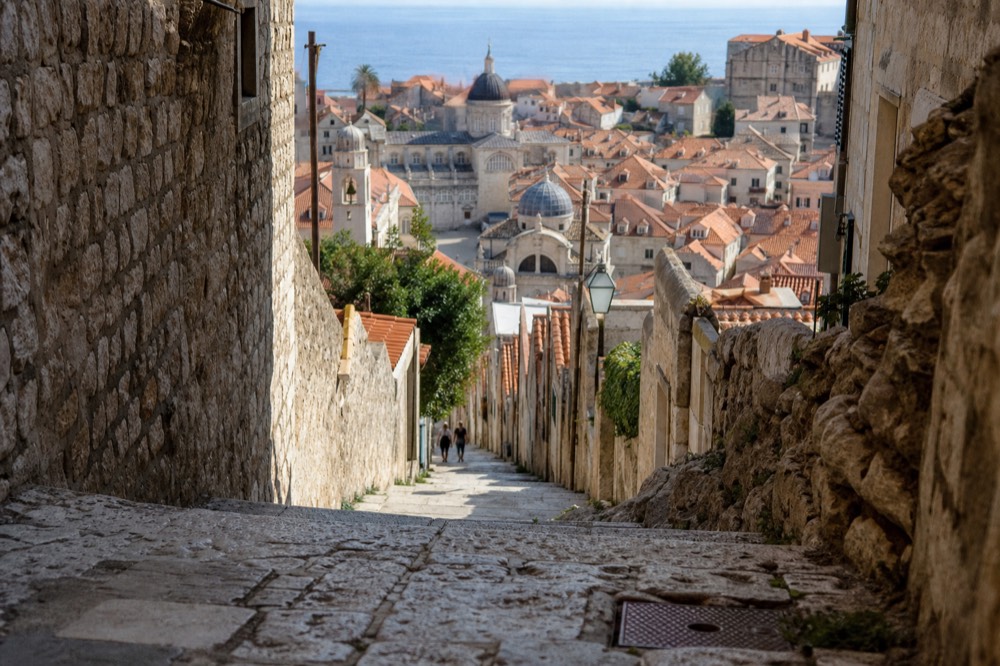
Timing the day matters more than choosing the day. The counting system's own half-hourly curve on a September morning read 5,419 people at 08:00, a 7,739 peak at 10:00, and 7,205 by 11:00, so an early start buys you the same streets with thousands fewer companions. The first-timers guide and the one-day itinerary both build on that logic. For the deeper background on every era of the city, Things to Do in Dubrovnik collects the site's practical guides in one place.
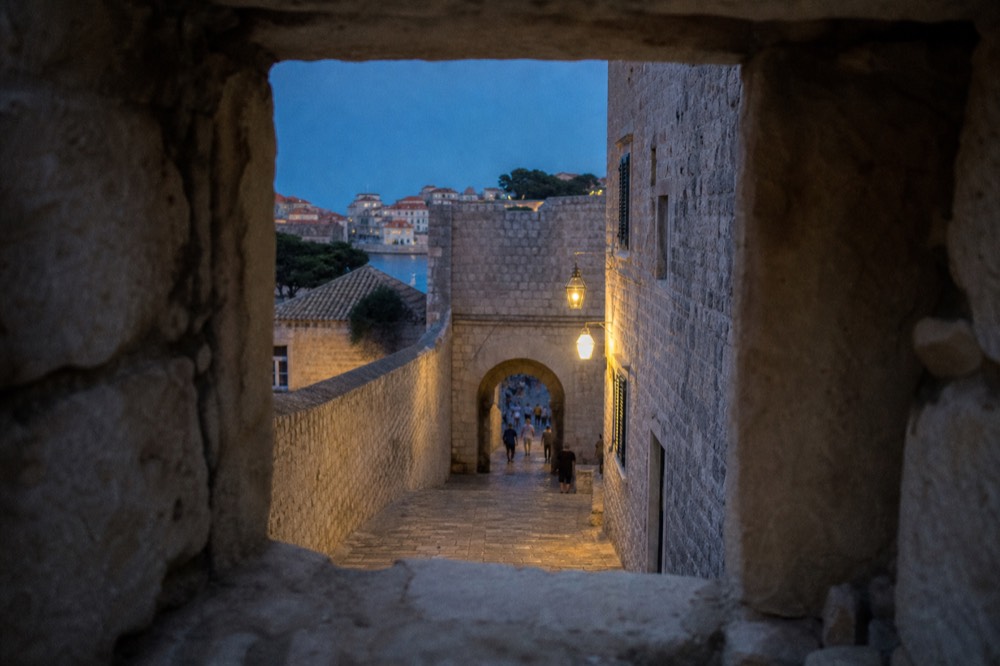
However you assemble the day, the history is the itinerary. The walls explain the fear, the palaces explain the money, the baroque facades explain the earthquake, and the pale roofs explain the siege. Walk it with that order in your head and the city stops being a backdrop and becomes the exhibit.
Common Questions About Dubrovnik History
What Is Dubrovnik Best Known For?
Dubrovnik is best known as the Ragusa republic, a walled maritime city-state whose 1,940-metre wall circuit, finished in 1660, still encloses a UNESCO-listed old core. The walls and the baroque Stradun are the two structures most visitors know before they arrive.
What Is Dubrovnik Famous For?
Around the world, Dubrovnik is famous as King's Landing from Game of Thrones, filmed here across multiple seasons, on top of its older fame as a complete walled medieval city. Fort Lovrijenac, the Pile Gate and the Jesuit Staircase all appear in the series.
Is Dubrovnik Worth Visiting?
Yes. The city packs a complete republic's history, a walkable wall circuit, baroque palaces and a siege museum into 24.7 hectares, and it recorded about 4.2 million overnight stays in 2025. Timing your visit around the cruise schedule and the midday heat makes the difference between good and exhausting.
What Not to Do in Dubrovnik?
Do not walk the walls at midday in summer, do not expect a family walls ticket, only adult and child 7 to 18 are sold, and do not assume the Dubrovnik Pass always matches the walls price, the 40-euro equivalence holds in main season only, 1 March to 30 November. Also check the cruise schedule before you fix your dates.
How Old Are the Dubrovnik City Walls?
The circuit reached its basic shape in the 13th century and was completed in 1660 with the Bastion of St Stephen. It runs 1,940 metres, reaches up to 25 metres high, and carries 16 towers, 3 fortresses and 6 bastions.
What Happened to Dubrovnik in 1991?
The city was shelled during the siege of 1991, standing on the UNESCO List of World Heritage in Danger from 1991 to 1998. The reconstruction that followed is visible in the pale new roof tiles you can pick out from the walls, and the Homeland War Museum on Mount Srd documents the period.