Mount Srđ Dubrovnik: The Cable Car, the Views and Every Way Up
Mount Srđ is the 405-metre ridge that stands behind Dubrovnik, and the cable car that climbs it is the fastest panorama in the city. Here is what the ride costs, what is actually at the top, and the other ways up worth knowing about.
Short answer
The Dubrovnik cable car climbs 367 metres in 3 minutes 30 seconds and costs 30 euro round trip for an adult in 2026, 17 euro one way. The upper station sits at 405 metres above sea level, with a stated view range of up to 60 km on a clear day. It closes January to March and runs until midnight in high summer.
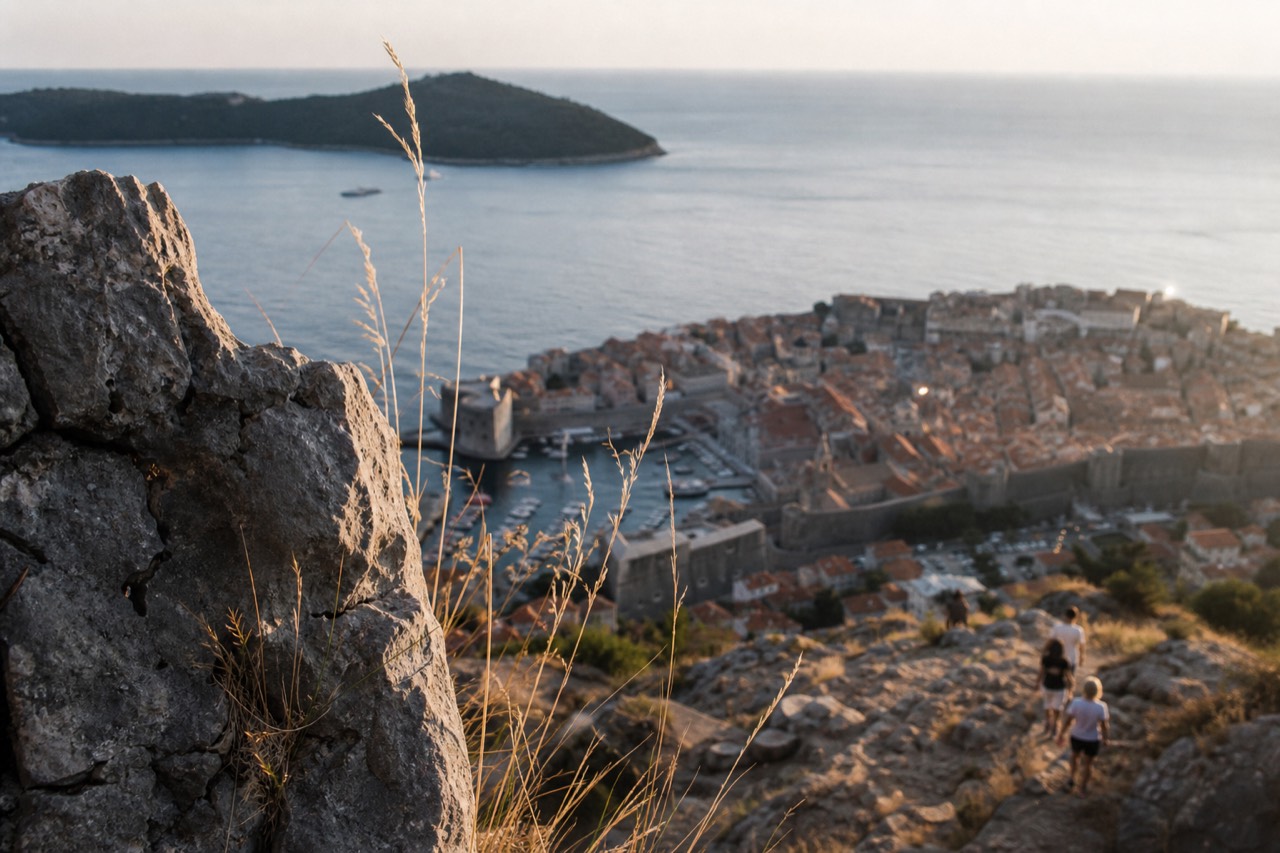
The ridge behind Dubrovnik does one job and does it perfectly: it lifts you 405 metres above the Adriatic and hands you the whole city, walls and all, laid out on a limestone shelf below. The cable car that climbs it is short, steep and, on a clear evening, one of the best-value half hours in Croatia. I have walked the paths up and down this hill more times than I can count, and I still think the first sight of the Old Town from the upper station is the moment visitors remember years later.
This guide covers the practical side of Mount Srđ: what the cable car costs, when it runs, what is genuinely at the top, whether the ride is worth the fare, and the walking route down for anyone who would rather earn the descent. It also compares the other paid ways to reach the panorama, because the cable car is the fastest option but not the only one.
What Is at the Top of the Cable Car in Dubrovnik?
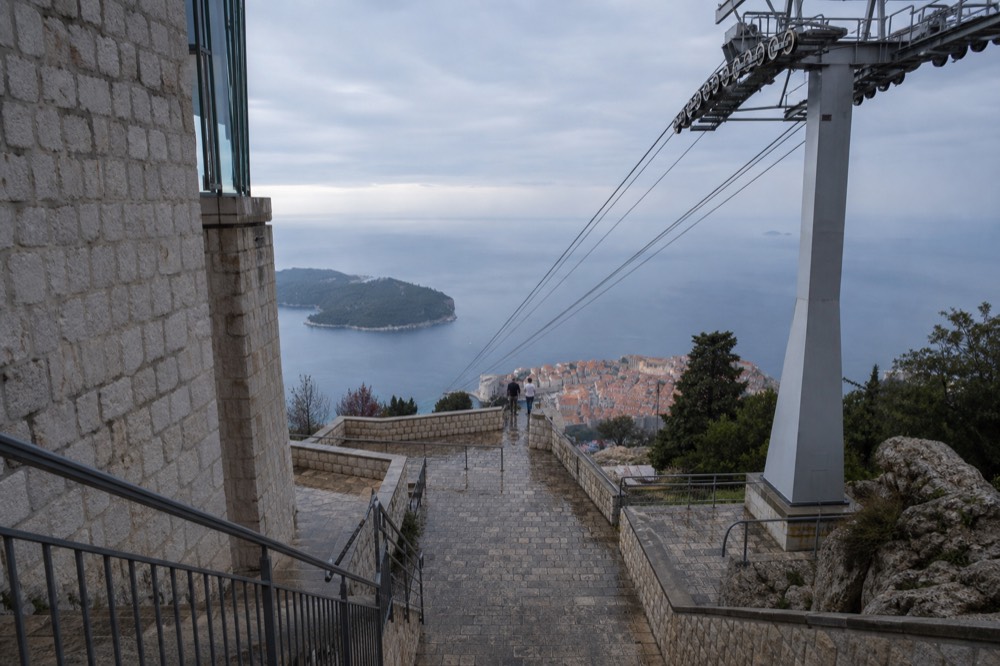
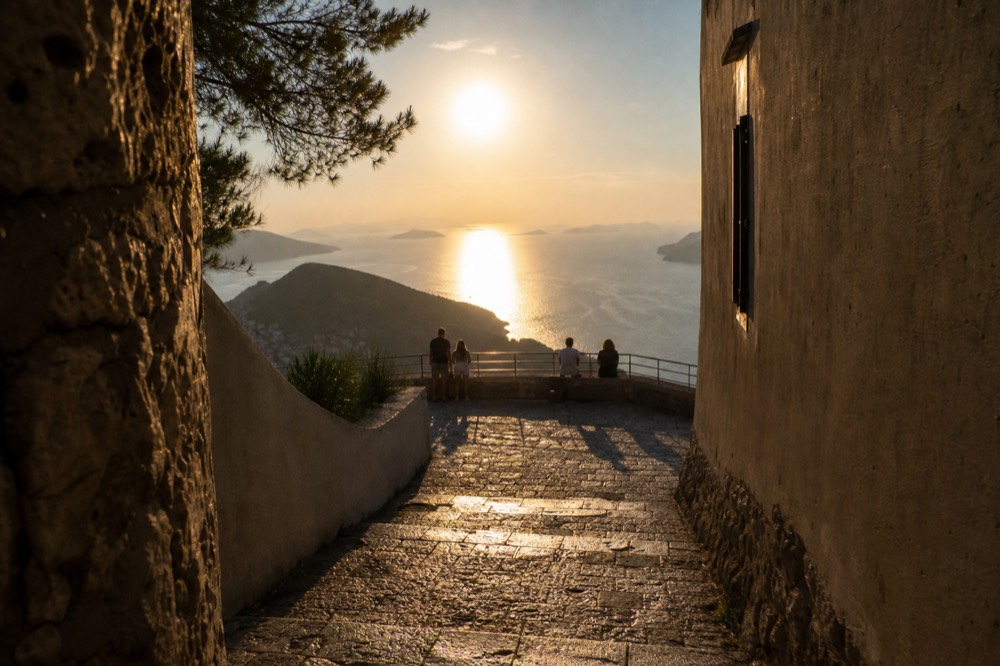
The top of the cable car is the upper station at 405.0 metres above sea level, with open viewing terraces looking down over the Old Town, Lokrum and the Elaphiti islands. The operator states a view range of up to 60 km, about 37 miles, on a clear day, which on the best evenings reaches from the Montenegrin coast to the hills of Herzegovina. There is no village up there, just the station, the terraces and the view.
That last point surprises people. The summit is not a developed attraction in the theme-park sense. You step out of the cabin, the sea is suddenly far below you, and the entire walled city sits inside a single frame, the Stradun visible as a pale line running through the middle of it. Lokrum sits just offshore like a green anchor, and on clear days the Elaphiti islands string out to the northwest. Looking inland, the Herzegovina mountains do the opposite of the sea: they rise instead of fall away.
The station itself is compact. There are terraces at different levels on the seaward side, which matters more than it sounds at sunset, when the lower rails fill first and the upper ones give you the same view with fewer elbows. Give yourself a proper amount of time up there rather than riding up, photographing and riding straight back down. The light changes fast in the last hour before the sun drops behind the islands, and the city goes from white to gold to grey-blue in roughly that order.
If you are pairing the ride with time in the city below, the cable car guide goes deeper on the ride itself, and the cable car tickets guide covers booking tactics in detail.
Is a Dubrovnik Cable Car Worth It?
For most visitors, yes. The round trip costs 30 euro per adult and delivers a 367-metre climb in 3 minutes 30 seconds, a panorama you cannot get any other way without a long hike, and a sunset that regularly outperforms anything at sea level. The one-way fare of 17 euro also makes a walk-down plan affordable: ride up, watch the light change, then descend on foot.
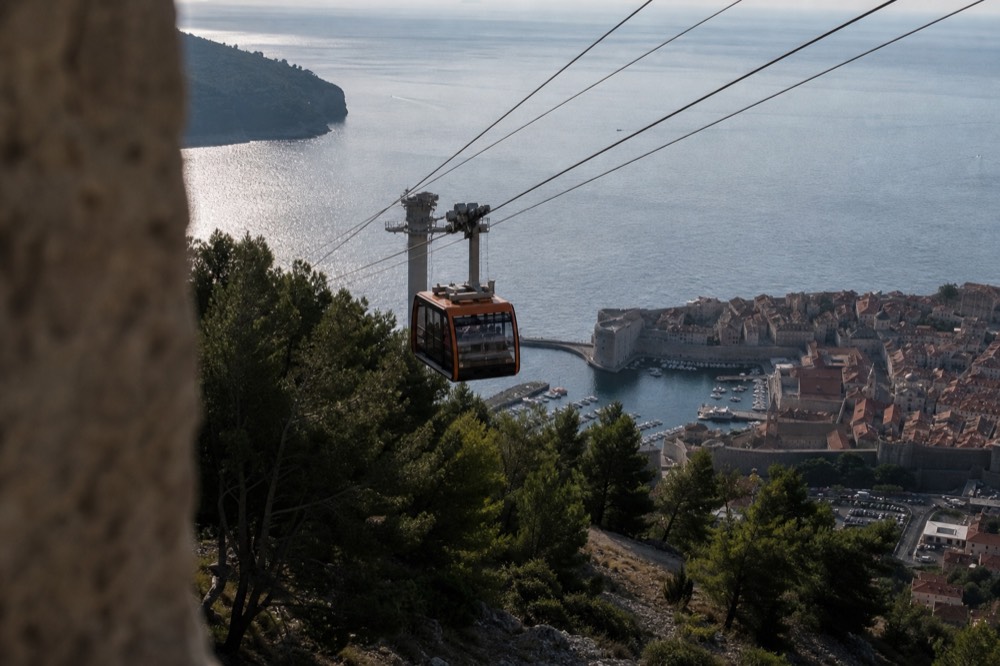
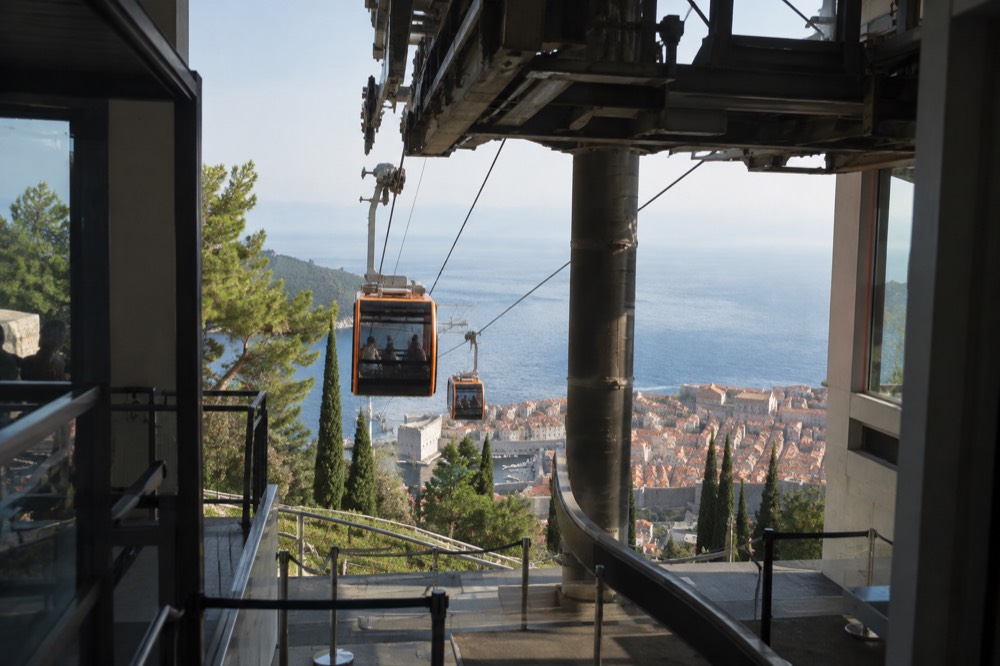
The honest case against is simple: it is a short ride for a mid-size fare, and in peak summer the queues at the lower station can eat more time than the view itself. Two cabins carry passengers up, 32 plus 1 person each, running at 6.5 metres per second along a 778.2-metre track, so the system moves a lot of people, but the 09:00 to midnight summer hours concentrate everyone into the same sunset window. Ride before 11:00 or after the sun is down and the experience changes completely.
The case for is stronger than the fare suggests. The alternative is the walking path, which I will get to below, and it is a real hike in summer heat, not a stroll. There is also nothing at sea level that replicates this angle. The city walls give you the rooftops from the inside; Srđ gives you the walls themselves from above, the whole peninsula at once, and the sea horizon behind it. For a photographer or anyone with one evening in town, that is the difference between a souvenir picture and the picture.
A middle path many visitors take is a combined tour, which pairs the cable car with a guided Old Town walk so you get the panorama and the context in one block of time. The most-booked version runs about 4 hours 30 minutes, from $163.50 per person, rated 4.6 across 716 reviews, and it handles the logistics of both halves for you.
Great tour with a great guide. Terrific views from the cable car. The old town is fascinating. We walked part of the wall because it was very hot. Sara was a fabulous guide and gave us recommendations for lunch and what else we should see.
Fred_W
If you would rather compare the ride-only options before deciding, the full spread of tours and experiences in Dubrovnik includes several that build the cable car into a bigger day.
Can I Walk Down From the Dubrovnik Cable Car?
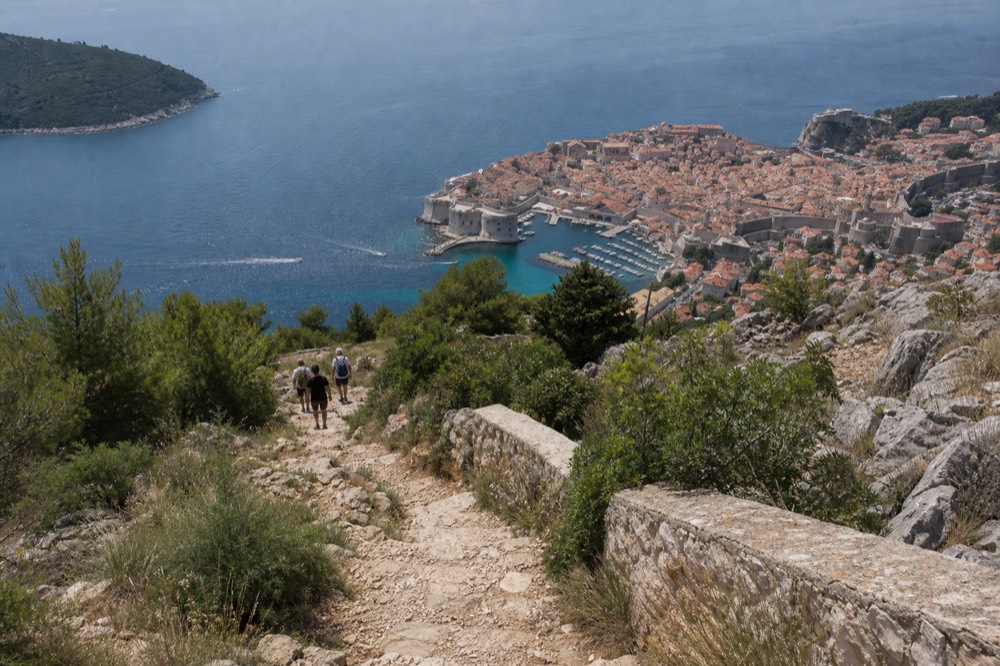
Yes, and it is one of the best downhill walks in the area. A marked path descends the southwest face of Srđ from the upper station toward the city, with the walls in view for most of the way. Buy a one-way ticket up, watch the sunset, and walk down while the light fades. Bring real shoes and water: the path is rocky, exposed and unforgiving in heat.
I have walked this route with visitors many times, and the advice I always give is the same: down is fine, up is a commitment. The trail is a former service path, stone and compacted earth, switchbacking below the cable line for part of the way before it bends toward the city side. You are on open limestone hillside with essentially no shade, so in July and August the walk down after a sunset ride is pleasant but the walk up at midday is genuinely hard work. In April, May or October, going up on foot and riding down is a lovely morning.
Timing matters for a different reason than heat. The path is unlit, and dusk in Croatia lingers longer than most visitors expect. If your sunset is late, and in midsummer it is very late, leave yourself enough daylight to reach the bottom comfortably, or plan to finish before the light goes. The city end of the path delivers you out above the northern suburbs, from where it is a short walk or a quick bus ride back toward Pile Gate and the Old Town.
A one-way adult ticket is 17 euro, so the ride-up, walk-down plan costs less than the round trip and buys you both experiences. If the climb down sounds like more than your knees want after a day on the city walls, the round trip at 30 euro is the safer booking.
What Does the Cable Car Cost and When Does It Run?
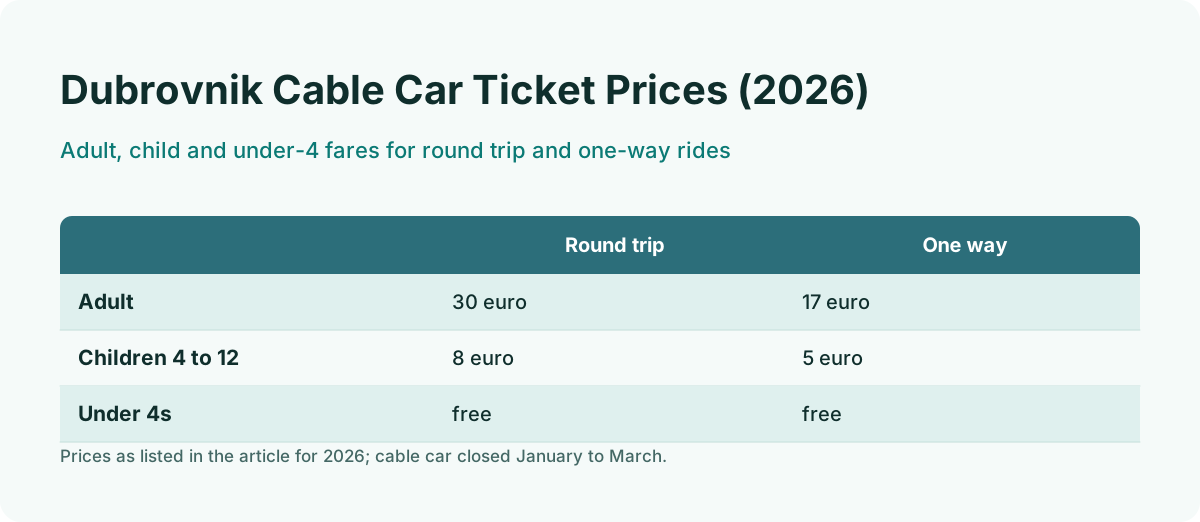
In 2026 an adult round trip costs 30 euro and a one-way ride 17 euro, with children 4 to 12 at 8 euro round trip and 5 euro one way, and under 4s free. The cable car is closed January to March, opens at 09:00 from April, and runs to midnight in June, July, August and the first half of September, with shorter hours either side.
Those prices come from the operator's own price page, which also carries the full monthly timetable. The shape of the year matters when you are planning: the long summer evenings push the last rides very late, which is exactly why the sunset queue builds. The shoulder months trade the midnight hours for thinner crowds and a lower sun that sits nicely over the Elaphiti islands. Other pages covering the same trip are gathered on Things to Do in Dubrovnik.
| Ticket | Round trip | One way |
|---|---|---|
| Adult | 30 euro | 17 euro |
| Child 4 to 12 | 8 euro | 5 euro |
| Under 4 | free | free |
| Period | Hours |
|---|---|
| January to March | closed |
| April | 09:00 to 21:00 |
| 1 to 14 May | 09:00 to 22:00 |
| 15 to 31 May | 09:00 to 23:30 |
| June to 14 September | 09:00 to midnight |
| 15 to 30 September | 09:00 to 23:00 |
| October onwards | reduced hours |
The engineering behind the fare is worth knowing because it explains the queues. The lower terminal sits at 38.0 metres above sea level and the upper at 405.0, a 367.0-metre rise over a 778.2-metre track, with the line running up to 40 metres above the ground at its highest point. The system was built in 1969, and the two-cabin, 33-person setup means capacity is fixed while demand is not. You can read the operator's own technical details at the cable car's technical page and the current fares on the timetable and prices page.
What Is the Best Time of Day to Ride?
Ride either before 11:00 or in the last 90 minutes before sunset. The morning gives you clean light on the Old Town and almost no queue; the evening gives you the famous sunset over the Elaphiti islands but the longest lines of the day. Midday is the worst of both: harsh top-down light on the city and full cabins.
The crowd mathematics here are not guesswork. Dubrovnik counts visitors inside the Old Town with six counters at every entrance, updating a headcount every 15 minutes, and the official carrying capacity from the UNESCO assessment is 11,275 people. On a September day last year the curve read 3,139 people at 07:00, 5,419 at 08:00, 7,297 at 09:00, a peak of 7,739 at 10:00 and 7,205 by 11:00. The town fills through the morning, plateaus, and stays busy until the evening excursion groups leave.
The counter-intuitive part is the season, not the hour. September and October bring more cruise passengers to Dubrovnik than July and August do, according to the Port Authority's own statistics, so the "quiet after summer" assumption does not hold here. If you are visiting in that window, the morning ride matters even more, because the sunset cabins are shared with the largest excursion crowds of the year. The Port Authority's cruise destination page explains the daily limits in its own words.
For a fuller picture of the seasons, the best time to visit guide breaks down the whole year, and the September in Dubrovnik guide covers the busiest cruise month specifically.
What Are the Other Ways Up Mount Srđ?
Besides the cable car and the walking path, three paid options reach the panorama: a hop-on hop-off panorama bus with audio guide from $35.46, an open-top convertible panorama bus from $34.77, and a zipline above the city from $64. Each suits a different traveller: the buses for effortless sightseeing, the zipline for adrenaline with the same view.
The buses do not climb to the upper station itself, but they tour the panoramic road around Srđ and the surrounding hills, with recorded commentary, at roughly a third of the cable car round-trip price for a longer experience. The hop-on hop-off version runs about 1 hour 30 minutes and is rated 4.9 across 1,147 reviews; the convertible bus tour, rated 4.6 across 796 reviews, keeps the same open-air idea in a different format. For visitors who want the view without the queue, or who are travelling with family members for whom the cable car's height is unwelcome, these are genuine alternatives rather than consolation prizes.
| Way up | Price from | Duration | Rating |
|---|---|---|---|
| Cable car round trip | 30 euro | 3 minutes 30 seconds each way | on the listing |
| Hop-on hop-off panorama bus | $35.46 | about 1 hour 30 minutes | 4.9 across 1,147 reviews |
| Convertible panorama bus | $34.77 | on the listing | 4.6 across 796 reviews |
| Panorama zipline | $64 | on the listing | 4.9 across 2,109 reviews |
| Walking path | free | a solid hike | no rating |
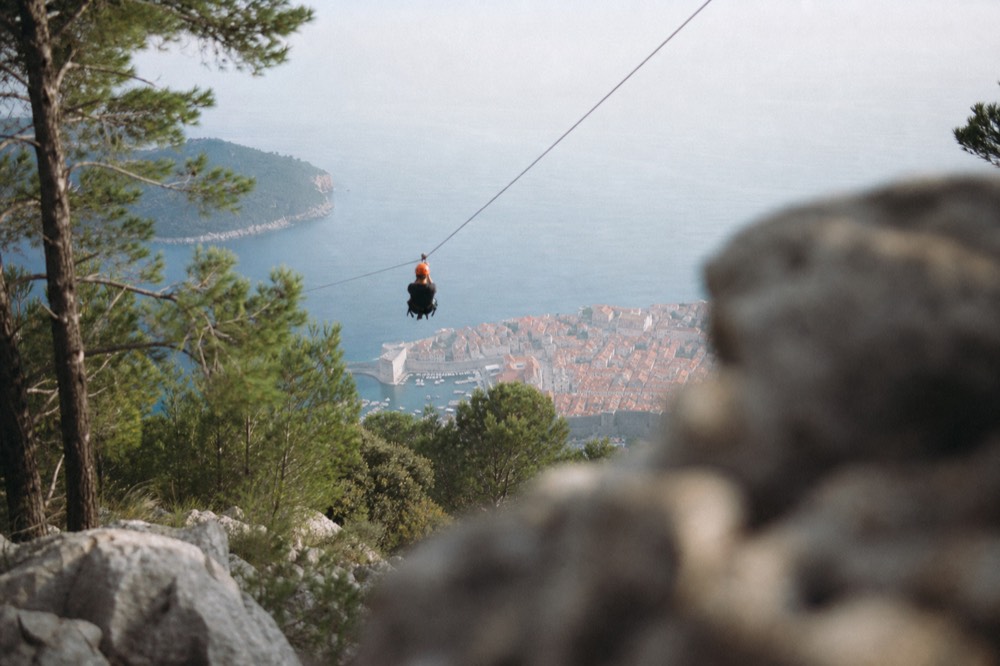
The zipline deserves its own paragraph because it is the option people underestimate. It launches from the Srđ side and puts you over the hillside with the whole city below, rated 4.9 across 2,109 reviews, and it pairs naturally with a cable car ride up: take the cabin, do the zipline, walk or ride down. For families with teenagers it is often the memory that beats the sunset.
There is also a budget combination worth knowing about: a cable car and museums multipass from $24, rated 4 across 101 reviews, which bundles the ride with museum entry and runs anywhere from 10 minutes to 3 hours depending on how much of the bundle you use. It suits a rainy-flexible day more than a sunset mission, but the price is hard to argue with.
If a bus loop sounds like your speed, you can Check availability alongside the hop-on hop-off bus guide.
How Should You Plan a Mount Srđ Visit?
Buy a one-way ticket up if you will walk down, a round trip if you will not, and time the ride for before 11:00 or the last 90 minutes of light. Budget 30 euro for the round trip, allow an hour at the top, and skip the midday window entirely. In September and October, expect the biggest crowds of the year, not the smallest.
My own default plan for visitors with one evening: get to the lower station about 90 minutes before the published sunset, ride up, claim a spot on the upper terrace, and let the whole golden hour happen from one place. Then either queue for the cabin down or start the walk while there is still colour in the sky. For morning people, the reverse works just as well: ride at opening, have the terraces nearly to yourself, and be back down for the Old Town before the headcount climbs past its 10:00 peak.
Two practical notes finish the picture. First, the lower station is a short walk from the Old Town, so the cable car pairs naturally with a walls walk or an Old Town tour in the same morning; just do not schedule the walls at noon and the cable car at one and expect either to be pleasant. Second, check the operator's hours for your exact dates before you commit to a sunset plan, because the closing time shifts several times between April and October, and the midnight summer hours shrink sharply from mid-September.
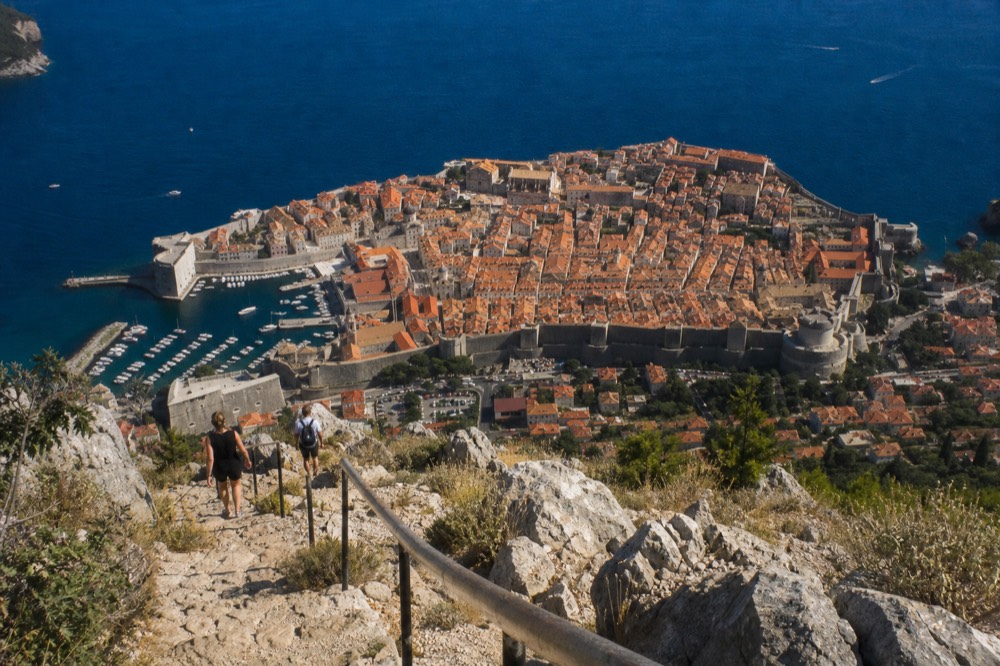
However you get up there, get up there. Dubrovnik rewards you twice: once at street level among the stone, and once from above, where the whole defensive logic of the city finally makes sense. The ridge is the second reward, and it costs less than most visitors assume.
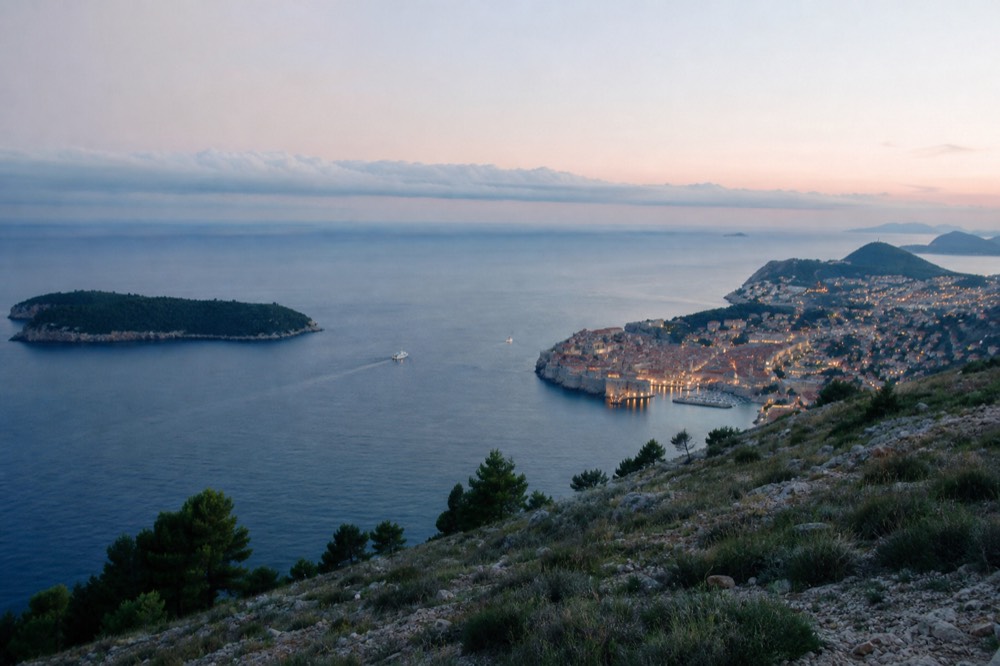
Common Questions About Mount Srđ in Dubrovnik
What Is at the Top of the Cable Car in Dubrovnik?
The upper station at 405.0 metres above sea level, with open viewing terraces over the Old Town, Lokrum and the Elaphiti islands. The operator states a view range of up to 60 km on a clear day. There is no village or separate attraction at the summit, just the station complex and the panorama.
Is a Dubrovnik Cable Car Worth It?
For most visitors, yes. The 30-euro round trip delivers a 367-metre climb in 3 minutes 30 seconds and a view unavailable anywhere else without a long hike. Ride early or at sunset to avoid the midday queues, or buy the 17-euro one-way ticket and walk down.
Can I Walk Down From the Dubrovnik Cable Car?
Yes. A marked path descends the southwest face of Srđ from the upper station toward the city. It is rocky, exposed and shadeless, so bring proper shoes and water, and start down with enough daylight left. Going down is a pleasant walk; going up in summer heat is a serious hike.
How Much Does the Cable Car Cost?
In 2026 an adult round trip is 30 euro and one way is 17 euro. Children 4 to 12 pay 8 euro round trip and 5 euro one way, and children under 4 ride free.
When Is the Cable Car Open?
It is closed January to March, opens at 09:00 in April running to 21:00, extends to midnight from June through 14 September, then shortens to 23:00 for the second half of September and reduces further from October.
What Is the Best Time of Day to Ride?
Before 11:00 or in the last 90 minutes before sunset. The Old Town headcount peaks around 10:00, and the sunset cabins draw the longest queues of the day, so early morning gives you the calmest terraces and the cleanest light.