Parking in Dubrovnik: A Driver's Practical Guide to Lots, Costs and Car-Free Days
Dubrovnik's walled Old Town has been closed to private traffic for years, so the real question for a driver is not where to park inside the walls but which lot outside them saves you the most walking, money and stress.
Short answer
You cannot drive into the Old Town at all, so plan on parking at Pile, Ilijina Glavica or a hotel garage in Lapad and walking in. The walls ticket is 40 euro in main season, the cable car round trip is 30 euro, and the cheapest paid Old Town walk starts at $20 per person. A car is a liability on most days.
Parking in Dubrovnik is the one part of a Dalmatian road trip that catches almost every driver off guard. I have walked these streets with travellers since 2015, and the pattern never changes: someone rolls up expecting to drop the car near the Stradun, discovers the Old Town is a pedestrian zone sealed behind medieval gates, and then improvises badly. This guide exists so you do not improvise. It covers where the parking actually is, what the honest trade-offs are, and, just as important, the days when the smartest parking decision is to not drive at all.
Where Can You Actually Park in Dubrovnik?
The realistic options are the public garage at Ilijina Glavica above the Old Town, the Pile area lots and street parking at the western edge, and hotel garages or public lots in Lapad and Babin Kuk, all outside the walls and requiring a walk or a bus ride in. Nothing inside the walled city is available to you, ever.
Start with the geography, because it explains everything else. The Old Town occupies a 24.7-hectare UNESCO property, and the entire core is pedestrian. There is no parking inside it, no drop-off lane, and no sneaking a car through Pile Gate for five minutes. The gates themselves are stone staircases and thresholds built for foot traffic and handcarts. Your car's journey ends at the perimeter, full stop.
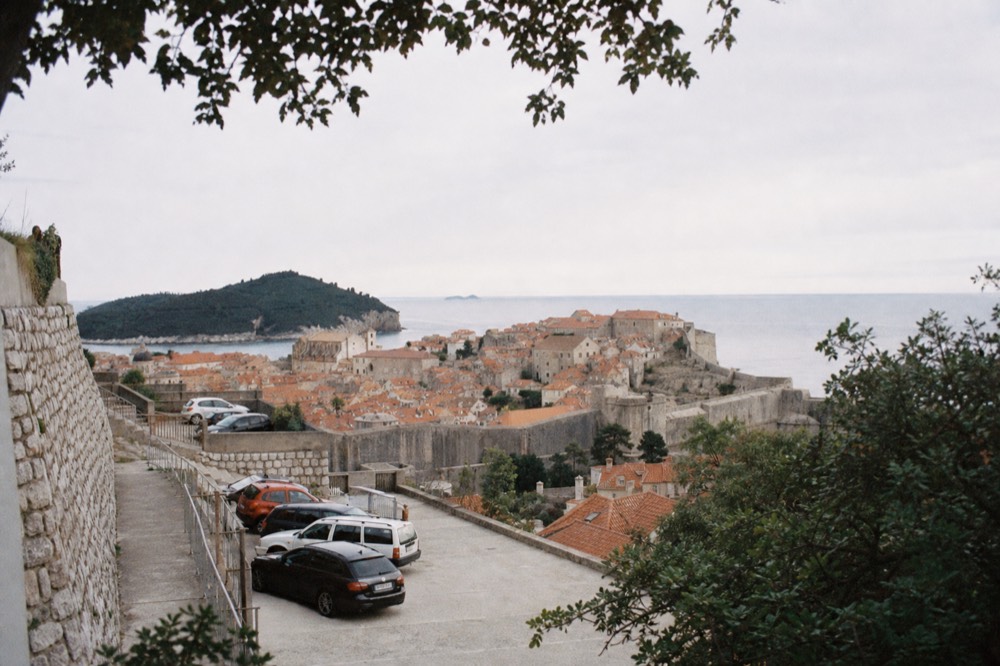
That leaves a ring of options around the city. Ilijina Glavica, the large public garage on the hillside above the Old Town, is the closest thing to a central car park, and from its upper exits you are a downhill stroll to the walls. The Pile side, at the western approach, has metered street parking and small lots that turn over quickly in the morning. Further out, Lapad and Babin Kuk have hotel garages and public lots where a car can sit for days, with buses and a pleasant seaside walk connecting you to the Old Town.
| Area | Walking to Old Town | Best for | Catch |
|---|---|---|---|
| Ilijina Glavica garage | Downhill, roughly 10 minutes | Closest all-day covered parking | Fills earliest in peak season |
| Pile street parking and lots | At the gate itself | Short visits, early arrivals | Meters, tight time limits |
| Lapad hotel garages and lots | Bus or 30+ minute walk | Multi-day stays, leaving the car | Not central, book ahead |
| Babin Kuk lots | Bus ride in | Cheapest long stays, beach days | Furthest from the walls |
| Gruž port area | Bus or long walk | Ferry arrivals, day-trip departures | Limited spaces near the port |
If you are renting a vehicle, read our guide to renting a car in Dubrovnik before you commit, because for many itineraries the rental is more burden than freedom.
What Not to Do in Dubrovnik?
The classic mistakes are attempting to drive into the Old Town, parking illegally on the approach roads around Pile and Ploče and returning to a wheel clamp or a ticket, leaving valuables visible in a parked car, underestimating how fast the closest lots fill on cruise-heavy days, and planning to drive home after sunset dinners when the one-way system punishes anyone rushing.
The clamp-and-ticket problem is the one I see most often. The streets around the Old Town look invitingly empty in the evening, and drivers convince themselves that a curb without paint is a curb without rules. It is not. Enforcement is real, the fines sting, and the recovery process can eat half a day of your holiday. If a space looks too good to be true at 19:00 outside Pile, it is.
The valuables problem is quieter but just as costly. Beach lots, the trailhead parking above scenic viewpoints, and the pull-offs along the coastal road all see opportunistic break-ins in season. Take everything out of the cabin, open the glovebox so it is visibly empty, and accept that a messy car is a target.
The timing problem is the one that ruins the most mornings. On heavy cruise days the near-town lots are effectively full by late morning, and the overflow heads for the same hillside streets you were counting on. The official people-counting system tracks visitors inside the Old Town core with six counters at every entrance, updating every 15 minutes, and the numbers climb steeply through the morning. Arrive before the crowds do, or arrive late and park far and ride the bus in without stress.
For travellers who would rather not fight the lots at all, there is a decent argument for booking a structured day and letting someone else handle the logistics. The picks above pair a cable car experience with two very different ways to spend a car-free day, and every one of them removes the parking question entirely.
Is Dubrovnik Worth Visiting?
Yes, and the numbers back it up. The Old City was inscribed by UNESCO in 1979 under criteria (i), (iii) and (iv), the walls run 1,940 metres with 16 towers and 6 bastions, and Dubrovnik recorded about 4.2 million overnight stays in 2025, sharing first place among Croatian destinations with Rovinj. A city does not hold that kind of draw on scenery alone. The history is real and layered.
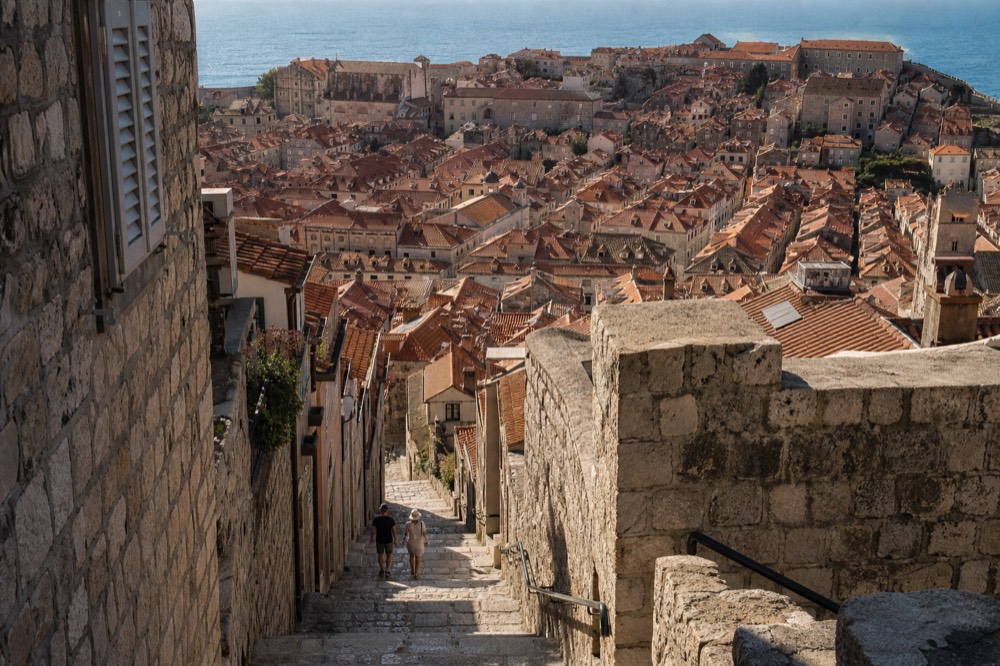
Worthiness questions deserve honest answers rather than cheerleading, so here is the balanced case. The city walls are the single finest urban walk on the Adriatic: a full circuit, up to 25 metres high, 4 to 6 metres thick on the land side, threading past towers and bastions with the sea on one side and red roofs on the other. The walls operator's own page documents the full structure list, and walking it is the moment most visitors stop asking whether the trip was worth it.
The counter-case is crowds and cost. The adult walls ticket is 40 euro in main season, 1 March to 30 November, and 20 euro in December. The cable car is 30 euro round trip for an adult. Restaurant prices in the Old Town run high. And the sheer density of visitors in July and September can make the Stradun feel like a slow-moving river. If you arrive in the shoulder months, or if you plan around the cruise calendar, most of those objections shrink dramatically.
For a deeper look at the arguments on both sides, see our piece on whether Dubrovnik is worth visiting, and for the days when the answer tilts negative, read on to the timing section below.
One way to make the visit feel worth every euro is to bundle the view with an explanation. A cable car ticket paired with a guided Old Town walk gets you the 367-metre rise up Mount Srd and a proper introduction to the city below it, without a single parking decision near the lower station.
When to Avoid Dubrovnik?
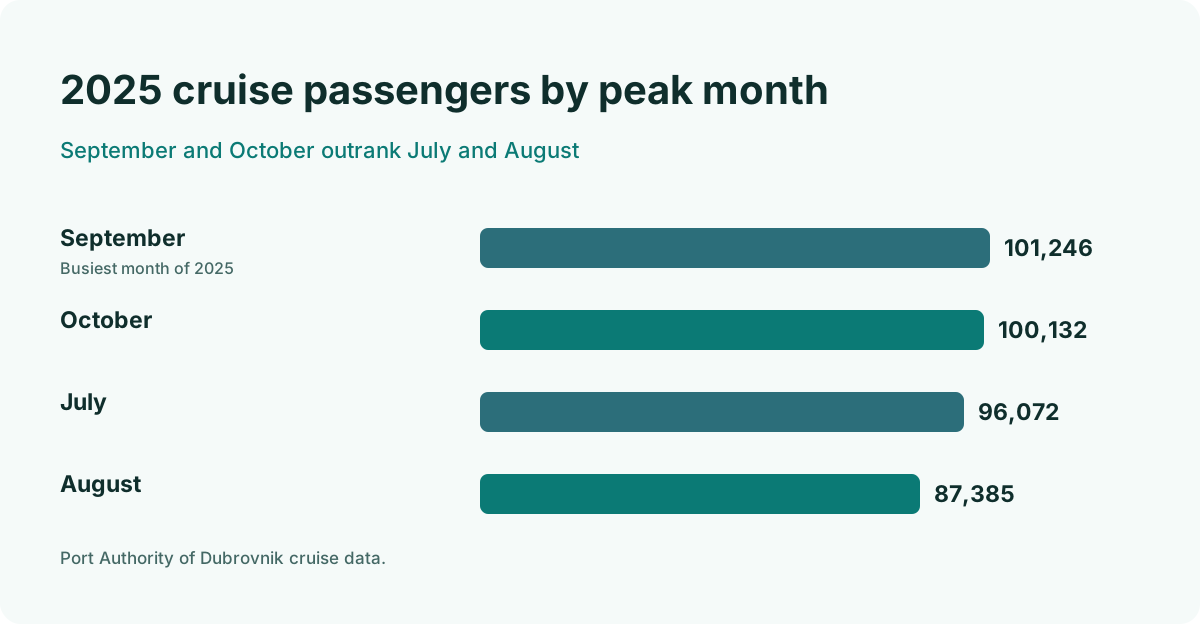
Avoid peak cruise days above all, and know that September and October, not July and August, are the busiest cruise months: 2025 cruise passengers peaked at 101,246 in September and 100,132 in October, above July's 96,072 and August's 87,385. Also avoid midday arrivals at the closest lots on any day with multiple ships, and avoid the midsummer heat if you plan a midday walls walk.
That September-and-October peak is the single most useful planning fact on this site, and it runs against every instinct. Ask anyone when Dubrovnik is busiest and they will say August. The Port Authority's own data says otherwise: the two biggest cruise months of 2025 were the first two of autumn. Sea conditions stay warm, the September average is about 23.6 degrees, and ships keep coming, so the shoulder season you booked for quiet can surprise you.
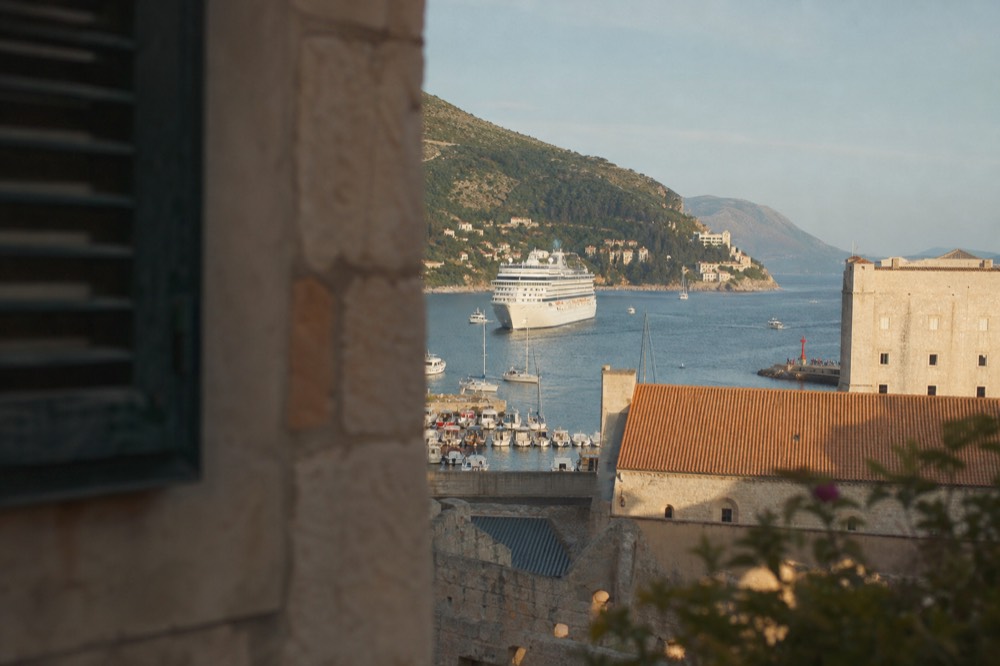
The Port Authority limits cruise passengers to 8,000 a day in most cases, out of 243 cruise days a year only 18 exceed that number, and only 4 days a year run slightly above 10,000. The Port Authority's cruise destination page sets out the caps and the berthing arrangement in its own words. For a driver, the practical translation is simple: on a two-ship morning, the Pile-adjacent parking is gone before you finish your coffee.
| 2025 month | Cruise passengers | What it means for parking |
|---|---|---|
| July | 96,072 | Busy, but spread across more days |
| August | 87,385 | Hot and full, arrive very early |
| September | 101,246 | The busiest cruise month, hardest lots |
| October | 100,132 | Second busiest, cooler walking weather |
A real half-hourly count read on 8 September 2026 shows how the day builds: 1,200 people in the Old Town at 04:00, 5,419 at 08:00, a 7,739 peak at 10:00, then 7,205 at 11:00. The official carrying capacity, from the UNESCO carrying-capacity assessment, is 11,275. Park early or park far, and if the calendar looks heavy, our best time to visit guide breaks the whole year down month by month.
Is Dubrovnik Good for Beaches?
Yes, though not in the wide-sand sense. The city's beaches are mostly rocky shelves, pebble coves and concrete swimming platforms, with Banje and its neighbours near the Old Town, the Lapad bay beaches, and Sveti Jakov offering the best-known swims. The September average sea temperature is about 23.6 degrees, and sheltered bays run warmer than that open-water figure, so the swimming season stretches well past summer.
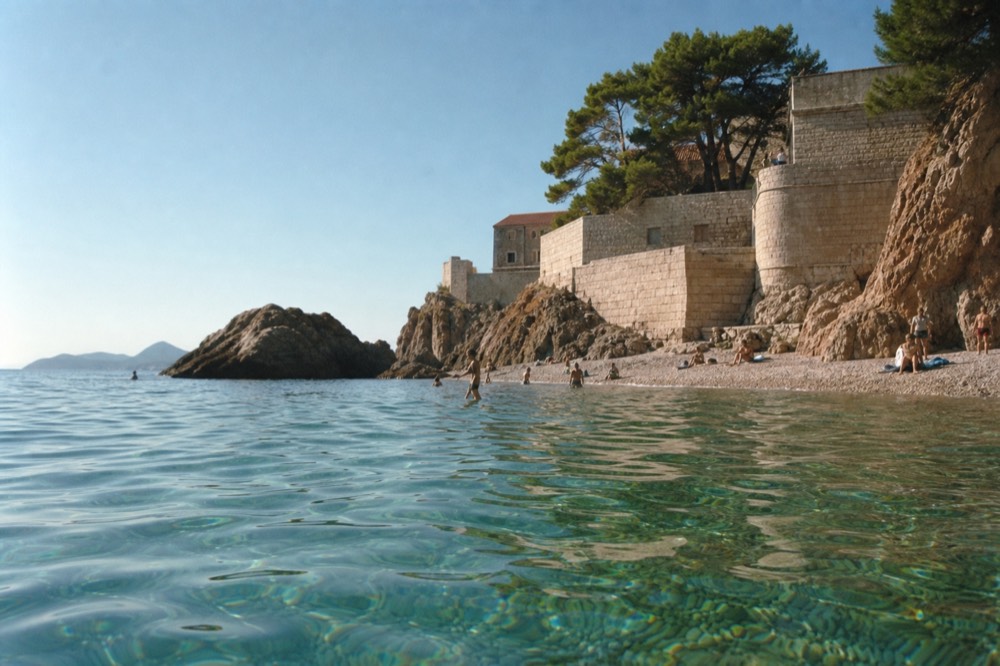
The honest framing matters here. If your mental image of a beach is a sand dune, Dubrovnik will correct you on the first visit. What it offers instead is astonishingly clear water over pale stone, and a string of coves you can reach on foot, by bus, or by a short drive with parking that is far easier than anything near the Old Town. That last point is the driver's secret advantage: the beach lots in Lapad and around the peninsula are calmer, cheaper and slower to fill than the central ones.
One caveat on the numbers. The sea-temperature figures are long-run open-water averages, a NOAA climatology for 1991 to 2020, not a beach thermometer reading. The Croatian met service's own Dubrovnik buoy read 27.0 to 27.4 degrees on 8 September 2026 against a 23.6 September mean, which tells you exactly how much warmer a sheltered bay runs in high summer. For a fuller rundown, see our guide to Dubrovnik's beaches and the piece on the swimming season.
For a different angle on the water, a kayak tour reaches coves and caves no car can touch. The two-hour kayak trip around Lokrum Island and Betina Cave runs from $35.49 per person and is rated 4.9 across 1,518 reviews, and it starts from a beach where parking is a non-issue compared with the Old Town core.
Do You Even Need a Car in Dubrovnik?
For most visitors staying three days or fewer, no. The city's core is walkable, the buses cover Lapad, Babin Kuk and Gruž, and the biggest excursions, the Elaphite islands, Lokrum and the sunset cruises, all leave by boat. A car earns its keep only for multi-stop day trips into Herzegovina, Montenegro or the Pelješac peninsula, or for a wider Dalmatian road trip with Dubrovnik as one stop.
I say this as someone who plans routes for a living: the visitors who enjoy Dubrovnik most are usually the ones who park once and forget the car. The Old Town rewards aimless wandering, stair-climbing and long lunches, none of which pair well with meter anxiety. The one-day Dubrovnik Pass costs 40 euro in main season, the same as the standalone walls ticket from 1 March to 30 November, and it adds ten more sights plus a 24-hour bus ticket, which is a neat solution for a car-free day. In December the walls ticket drops to 20 euro and no pass tier is on sale at all, so the comparison only holds in the main season.
| Plan | Car needed? | Better alternative |
|---|---|---|
| Old Town and walls only | No | Park once, walk everywhere |
| Lapad beach days | No | City bus, frequent and cheap |
| Lokrum island | No | Official boat, 30 euro entry and return transfer |
| Elaphite islands cruise | No | Boat from the Old City port |
| Mostar or Montenegro day trip | Optional | Guided tour handles the border |
| Pelješac wine route | Yes | Drive, park at wineries |
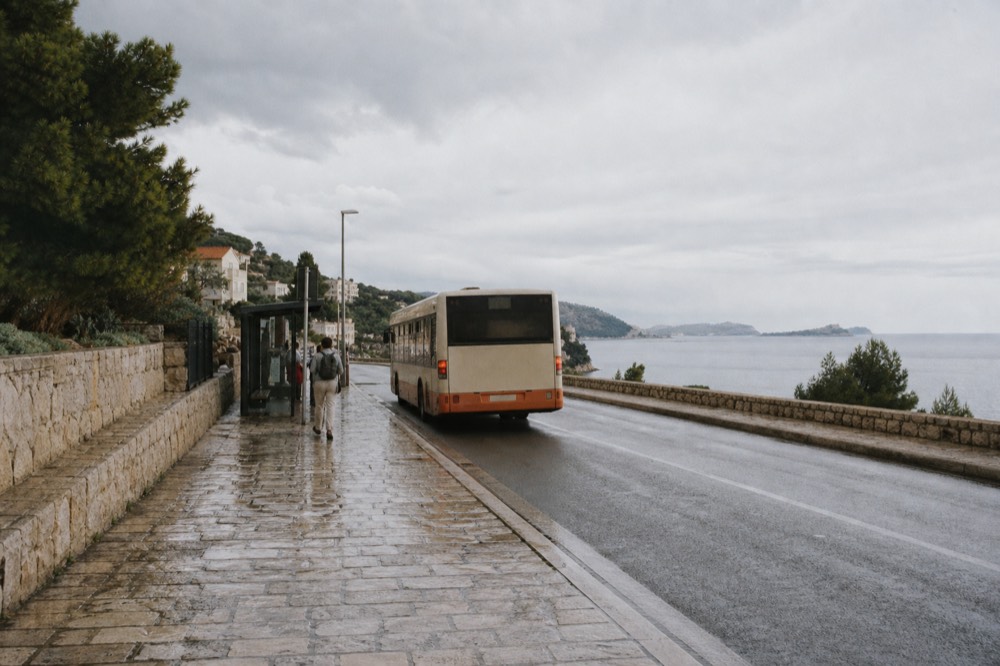
The bus system deserves more credit than it gets. The same buses the pass covers run from Lapad and Babin Kuk to Pile in minutes, and they spare you the worst of the one-way streets. If you do keep the car, our getting around guide compares every option, including taxis and transfers.
Parking Near the Cruise Port and the Ferry Terminal
Gruž, where the cruise ships and the ferries dock, is the one part of Dubrovnik where driving and parking feel almost normal. The port area has its own street parking and small lots, the terminal buildings are close together, and the bus connection to the Old Town is direct. Cruise passengers on foot have the easiest version of this: the port sits about 3 kilometres from the walls, and a bus or taxi covers it in minutes.
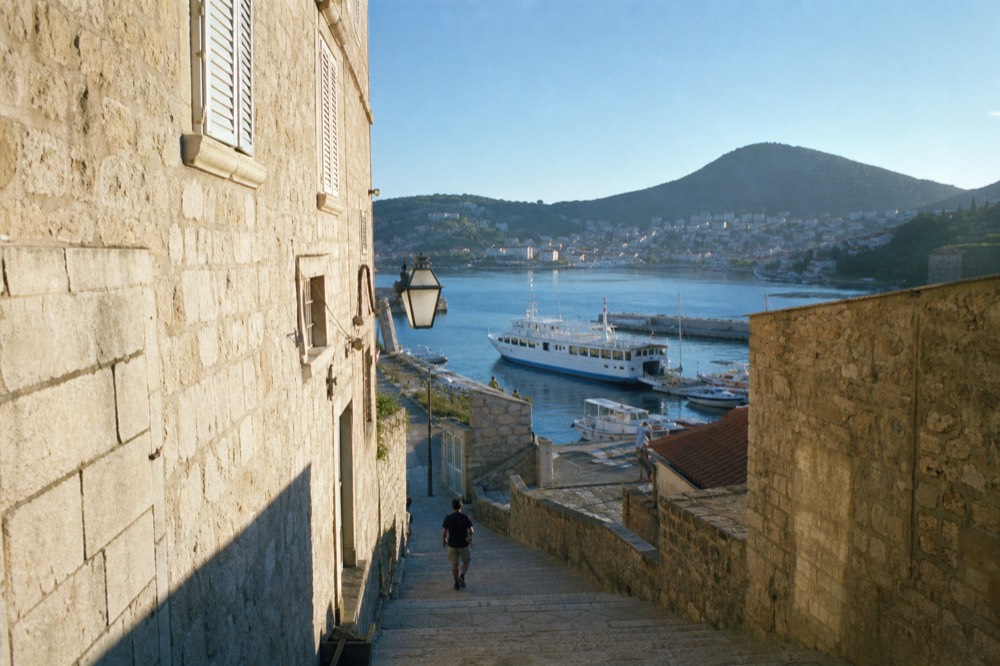
If you are arriving by ship, the practical detail is the distance and the choice of transport, and we cover both in full in getting from the cruise port to the Old Town. If you are driving to Gruž to catch a ferry to the islands or to Italy, arrive with time to spare, because the lots nearest the terminal fill on sailing mornings and the overflow parks along the approach roads.
The 2026 season holds 461 scheduled cruise calls, and the remaining schedule's busiest days cluster in late September and early October, with 6 October carrying 2 ships and up to 5,798 passengers by capacity. Those are ship-capacity figures, not people counted walking ashore, but the direction is clear: a Gruž parking space on a two-ship morning is worth arriving early for.
For a day that starts and ends without your car at all, the cable car experience bundled with an Old Town tour is hard to beat. The cable car climbs 367 metres over a 778.2-metre track in 3 minutes 30 seconds, and the operator states a view range of up to 60 km on a clear day, per the official technical details page.
Day Trips by Car: Where Having Wheels Pays Off
The car finally wins on the day trips that public transport serves badly or not at all: the Pelješac peninsula and its wine cellars, Ston and its walls and oysters, the Konavle valley, and the crossings into Herzegovina and Montenegro. These are the days to fetch the car from the Lapad lot, because the parking at the destinations is easier, cheaper and sometimes free, and the drives themselves are part of the pleasure.
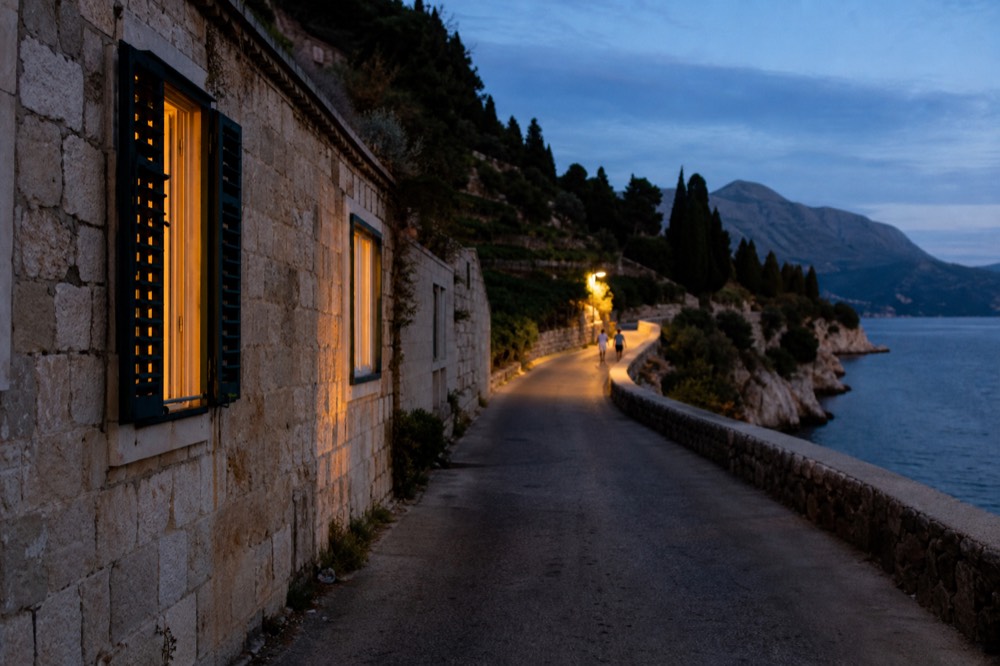
Pelješac is the driver's favourite, and rightly so. The road threads past vineyards growing Plavac Mali, the wineries welcome drop-ins with tasting rooms, and parking is a matter of pulling off the road. Ston, at the peninsula's base, has its own walls and the oyster farms you can read about in our Ston and Pelješac guide. Combine the two and you have the best car day within an hour of the city.
The border crossings are where a guided tour quietly beats the rental car. Queues into Bosnia and Herzegovina and Montenegro vary with the season, and a tour operator times the crossing for you. The Mostar and Kravica route runs from $35 per person and is rated 4.6 across 10,019 reviews on the live listing, and a Montenegro day trip runs from $58 per person. Both remove the border-queue gamble and the parking hunt in unfamiliar towns.
| Day trip by car | Parking at destination | Drive character |
|---|---|---|
| Pelješac wine route | Easy, winery pull-offs | Coastal, relaxed |
| Ston walls and oysters | Small town lots | Short, scenic |
| Konavle valley | Village parking | Rural, green |
| Mostar and Kravica | Border queues, town lots | Long, mountainous |
| Montenegro bay | Border queues, limited in Kotor | Long, spectacular |
Whichever way you spend your days, the pattern holds: park once at the edge, use feet and boats in between, and save the wheels for the peninsula and the borders. The drivers who fight the Old Town lots daily are the ones who leave grumbling, and the ones who treat the car as a day-trip tool get the best of both worlds. For everything else, Things to Do in Dubrovnik starts with the walkable core and works outward.
Common Questions About Parking in Dubrovnik
Can You Park Inside Dubrovnik's Old Town?
No. The entire walled Old Town is a pedestrian zone with no car access of any kind, and the gates are stepped stone thresholds. All parking is outside the walls, at Ilijina Glavica, Pile, Lapad, Babin Kuk or Gruž.
Where Do You Park for the City Walls?
The closest realistic option is the Ilijina Glavica garage on the hillside above the Old Town, followed by metered parking around Pile on the western approach. On cruise-heavy days both fill before late morning, so arrive early or park in Lapad and take the bus.
Is It Worth Renting a Car in Dubrovnik?
Only for multi-stop day trips to Pelješac, Ston, Konavle, Herzegovina or Montenegro, or for a wider road trip. For the Old Town, the walls, Lokrum and the island cruises, a car adds cost and stress without adding access.
When to avoid Dubrovnik?
Avoid peak cruise days, and note that September and October, not July and August, are the busiest cruise months, with 101,246 and 100,132 passengers respectively in 2025. Also avoid midday in midsummer if you plan to walk the walls in heat.
Is Parking Expensive in Dubrovnik?
Central parking is priced for scarcity, especially in the main season from 1 March to 30 November, and the closest lots fill fastest. Lapad and Babin Kuk offer cheaper long-stay options a bus ride away, and hotel garages can be booked in advance with your room.
Can You Drive From Dubrovnik to Montenegro or Mostar?
Yes, both are reachable by road, but border queues vary by season and parking in Kotor and Mostar is limited. A guided day trip handles the border timing and the destination parking for you, which is why many drivers leave the car behind on those days.