Dubrovnik Summer Festival: A Complete Visitor Guide
The Dubrovnik Summer Festival turns the Old Town's squares, forts and courtyards into open-air stages through the height of the season. Here is how to plan around it, from tickets and crowds to the month that actually suits you best.
Short answer
The Dubrovnik Summer Festival runs through summer with theatre, music and dance staged inside the walled city itself. The adult City Walls ticket is 40 euro in main season, the one-day Dubrovnik Pass is also 40 euro, and cruise crowds peak in September and October, not July and August.
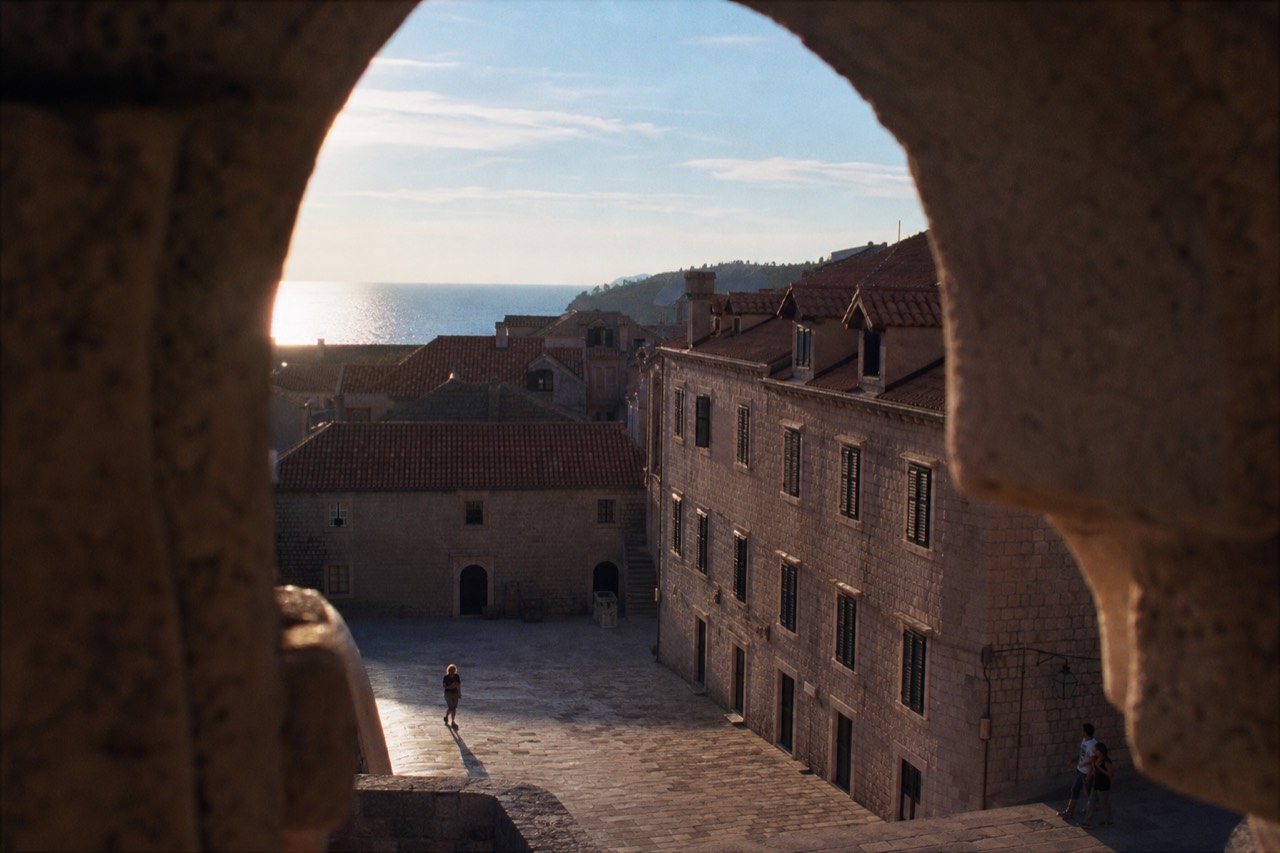
Every summer the stages of the Dubrovnik Summer Festival go up in the most improbable venue on the Adriatic: a walled medieval city that UNESCO inscribed back in 1979. Performances spill out of cloisters, fortress terraces and the open stretch of the Stradun, that 298-metre limestone street the 1272 Statute fixed into the city plan. I have walked these streets with travellers every season since 2015, and the festival weeks are the one stretch of the year when the Old Town feels like it is performing itself.
This guide covers the practical side of a festival trip: what the event actually is, what Dubrovnik itself is famous for, which month genuinely suits you, what not to do while you are here, and how to build days around the crowds. Every price and figure below comes from the operators' own sites and the official statistics, not from secondhand roundups.
What Is the Dubrovnik Summer Festival?
The Dubrovnik Summer Festival is Croatia's best-known arts festival, staging theatre, classical music, opera, dance and folklore at open-air venues across the walled city through the summer months, with the Old Town's squares and fortresses serving as the sets. It is the rare festival where the venue competes with the programme. A chamber concert inside a Renaissance cloister, or drama on a terrace above the Adriatic, is a different experience from anything inside a conventional theatre house, and that is exactly why visitors build whole trips around it.
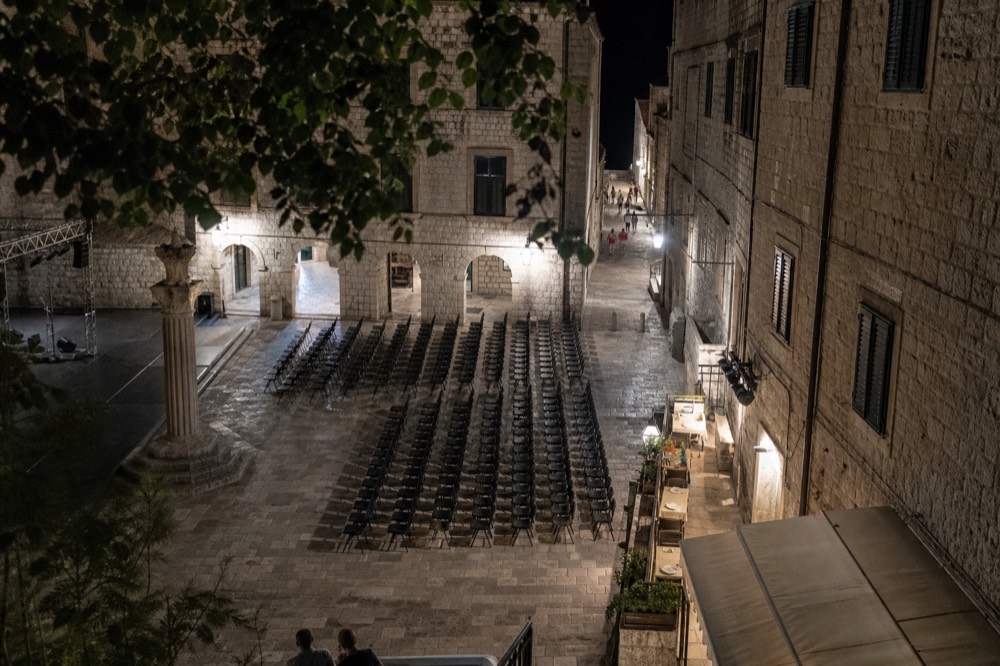
The practical consequence is that a festival trip is really two trips stacked together. By day you have the standard Dubrovnik problem: the walls, the cable car, Lokrum, the beaches, and an Old Town measured at just 24.7 hectares on the UNESCO register, which is small enough that everyone shares the same lanes. By night the city changes register, the day-trippers thin out and the stages take over. Plan the two halves separately and the trip works.
Tickets for individual performances are sold through the festival's own channels, and popular evenings in the smaller venues do sell out. The programme is published ahead of the season, so check the official listings once dates firm up rather than relying on summaries, which are frequently a year out of date. What I can tell you from the data is when the city around the festival is busiest, and that is not when most people assume.
What Is Dubrovnik Famous For?
Dubrovnik is famous for its complete medieval walls, its UNESCO-listed Old Town, its role as King's Landing in Game of Thrones, and the terrac rooftops and limestone streets photographed from Mount Srd, and the summer festival sits directly on top of that fame. The city recorded about 4.2 million overnight stays in 2025, sharing first place among Croatian destinations with Rovinj, according to the Croatian Bureau of Statistics. That volume is what shapes every festival-day decision.
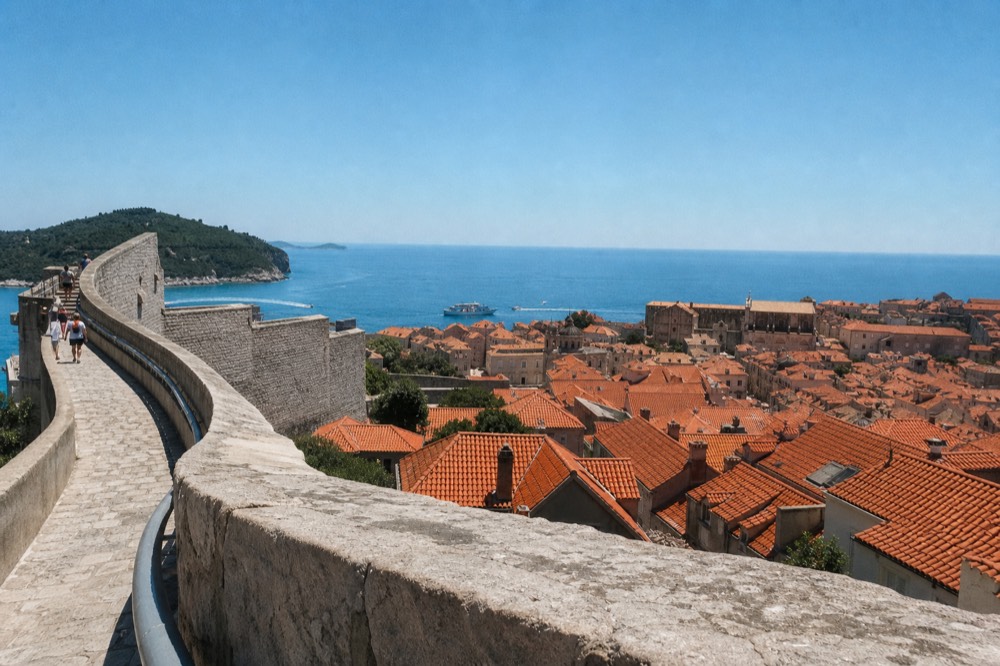
The walls themselves are the headline act. The circuit is 1,940 metres long, up to 25 metres high, and studded with 16 towers, three fortresses and six bastions, run by the Society of Friends of Dubrovnik Antiquities. Walking it is the single most popular paid activity in the city, and the ticket situation matters to any festival visitor.
| Ticket | Main season (1 March to 30 November) | December |
|---|---|---|
| Adult | 40 euro | 20 euro |
| Child 7 to 18 | 15 euro | 5 euro |
| Under 6 | free | free |
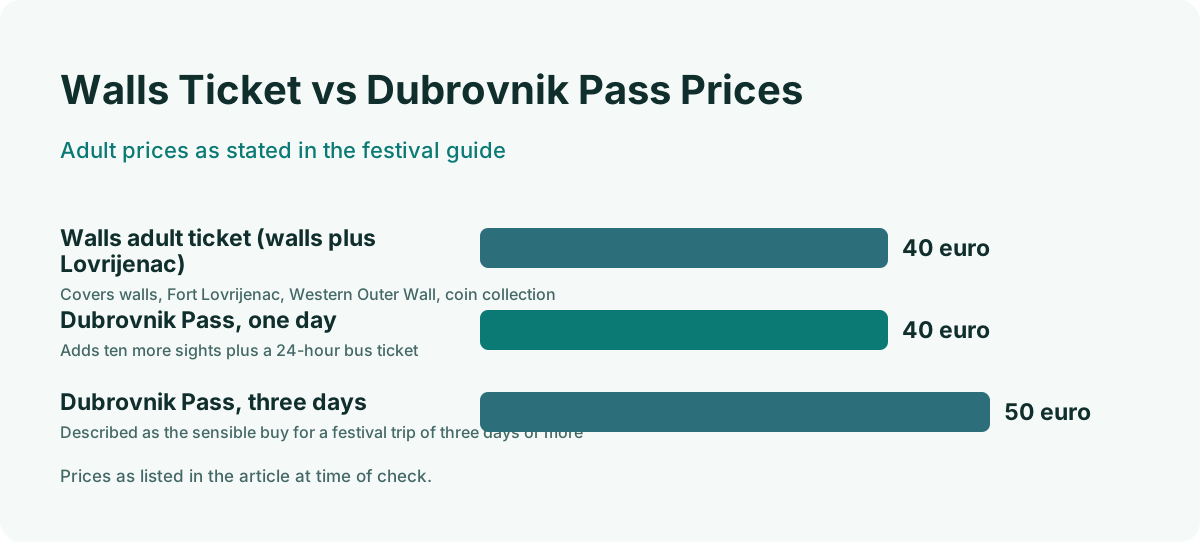
That 40-euro adult ticket is actually a combination: it covers the walls plus Fort Lovrijenac, the standalone fortress on its 37-metre sea rock, along with the Western Outer Wall and the coin collection at Gundulić Square. There is no family ticket; the operator sells exactly two paid ticket types, adult and child 7 to 18. The walls' stated hours at time of check were 08:00 to 19:30.
The Dubrovnik Pass complicates the choice, in a good way. A one-day pass costs 40 euro, the same as the standalone walls ticket in main season, and adds ten more sights plus a 24-hour bus ticket, as the official pass site lists. Every tier includes the walls and Lovrijenac, once each. Be careful with the comparison, though: the pass equivalence is a main-season fact only, because in December the walls ticket drops to 20 euro and no winter pass tier is on sale at all.
| Pass | Price | Transport included |
|---|---|---|
| One day | 40 euro | 24-hour bus ticket |
| Three days | 50 euro | 72-hour bus ticket plus suburban coupons |
| Seven days | 60 euro | 168-hour bus ticket plus suburban coupons |
For a festival trip of three days or more, the three-day pass at 50 euro is usually the sensible buy: you spread the walls over a cooler morning, add the Rector's Palace and the museums between performances, and use the bus coupons for a Cavtat escape. Our Dubrovnik Pass guide breaks the full inclusion list down sight by sight.
The festival itself belongs to that fame stack rather than competing with it. Visitors who come for the theatre still walk the walls, still ride up Mount Srd, and still photograph the same rooftops, so the practical question is not whether to do both but how to sequence them.
Is Dubrovnik Worth Visiting?
Yes, and the honest case is stronger than the postcard case: a complete walled city on the sea, a festival using that city as a stage, an island reserve ten minutes off the coast, and a cable car to a 405-metre summit, all within a compact area you can cross on foot. The counterargument, crowds and cost, is real but manageable with timing, which is what the rest of this guide is for.
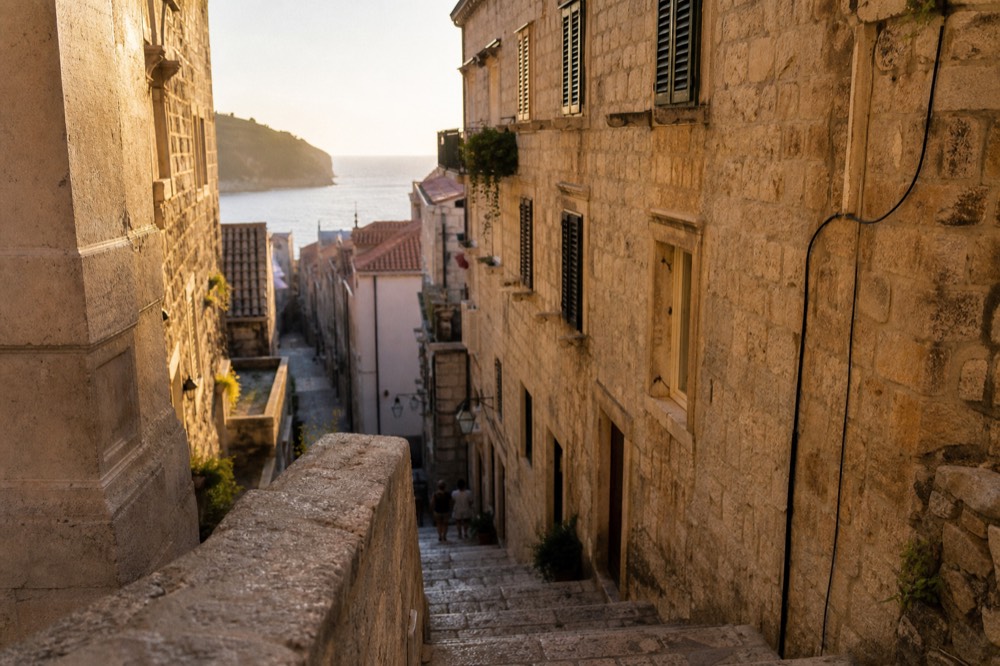
Start with what the data says about pressure. Dubrovnik's Old Town is monitored by six counters at every entrance, updating a headcount every 15 minutes, and the official carrying capacity from the UNESCO assessment is 11,275 people. On a measured September morning the count climbed from 1,200 at 04:00 to 5,419 at 08:00, peaked at 7,739 at 10:00, and still stood at 7,205 at 11:00. The city is busy, but it is measured, managed and predictable, which is more than most famous destinations can say.
The Port Authority also caps cruise passengers at 8,000 a day in most cases, and refused about forty call requests in a single season to hold that line, according to its own cruise destination page. Of 243 cruise days a year, only 18 exceed 8,000 passengers. None of this makes the Stradun empty, but it does mean the horror stories are outliers rather than the norm.
Worth visiting also depends on what you want from the evenings, and this is where a festival trip differs from a standard visit. On a normal summer night the Old Town quiets after the day-trippers leave. During the festival it fills again, purposefully, with an audience. If open-air performance in a stone city appeals to you at all, that alone answers the question.
A guided walk early in your stay is the most efficient way to make the city legible before the performances begin. The Old Town Walk with a Local Guide runs from $20 per person, is rated 4.8 across 5,826 reviews, and pairs naturally with a festival evening because it ends with your bearings set. Our Old Town walking tours guide compares the options.
What Is the Best Month to Visit Dubrovnik?
For a festival trip the best month balances the programme you want against the crowd curve, and the data is clear that September and October are the busiest cruise months, with 101,246 and 100,132 passengers in 2025, ahead of July at 96,072 and August at 87,385. June offers warm sea, thinner crowds and long light. The choice is about which trade-off you prefer.
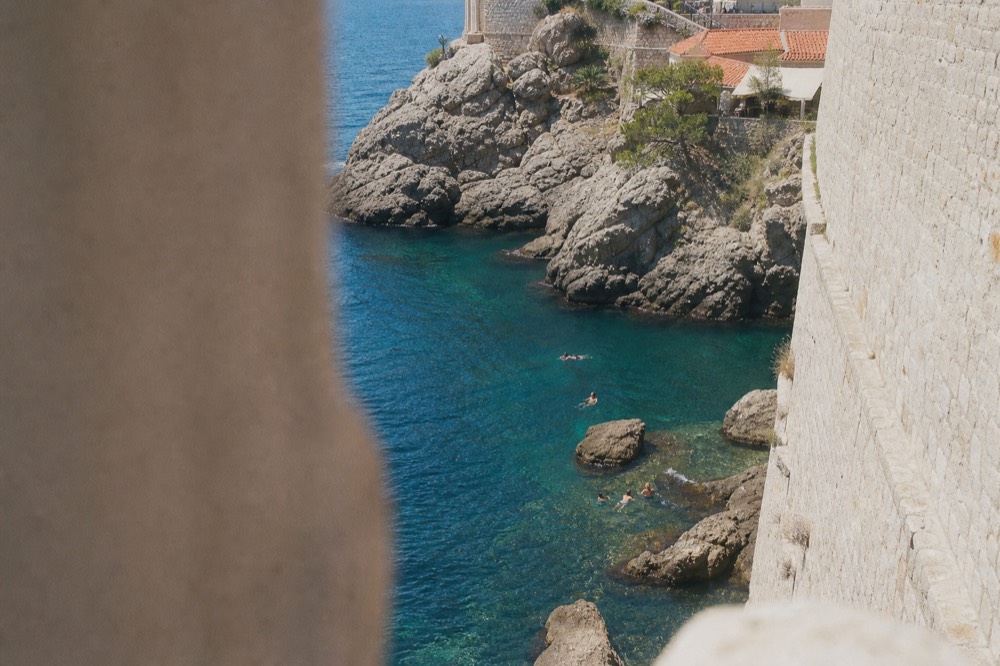
The sea temperature series helps with the swimming half of that decision. These are NOAA long-run averages for 1991 to 2020, open-water grid-cell figures rather than beach thermometer readings, and sheltered bays run warmer: the Croatian met service's own Dubrovnik buoy read 27.0 to 27.4 degrees on 8 September 2026 against a 23.6-degree September mean.
| Month | Average sea temperature | Cruise passengers, 2025 |
|---|---|---|
| June | 22.5 degrees | 82,642 |
| July | 24.9 degrees | 96,072 |
| August | 25.8 degrees | 87,385 |
| September | 23.6 degrees | 101,246 |
| October | 21.0 degrees | 100,132 |
Counter-intuitive but true: the two busiest cruise months are the two that most guidebooks call shoulder season. If you come in September expecting empty lanes, you will be surprised. If you come in June, you get nearly the same sea warmth with roughly a fifth fewer cruise passengers in port. Our best time to visit guide works through the full calendar, and the September in Dubrovnik guide covers the peak month in detail.
The festival calendar is the other half of the equation. The heart of the programme sits in July and August, when the evenings are warm enough for open-air venues to run reliably late. June carries the earlier performances and thinner audiences; late August into September tends toward the closing stretch. Match the month to the performances you actually want to see, then plan crowds around that, not the other way round.
One timing note that matters more than the month: within any given day, the walls and the Old Town peak between 10:00 and noon, per the counter data above. Festival visitors have a built-in advantage here, because the evening performance anchors the day and leaves the early morning free. Walk the walls at 08:00, swim or rest through the afternoon, and let the stage have the night.
What Not to Do in Dubrovnik?
The mistakes that cost the most are walking the walls at midday in high summer, buying a pass in December when no winter tier exists, assuming a family walls ticket exists when it does not, and planning a border day trip without buffer time for the crossing. Each of these is avoidable with one piece of knowledge, and none of them is obvious from a first page of search results.
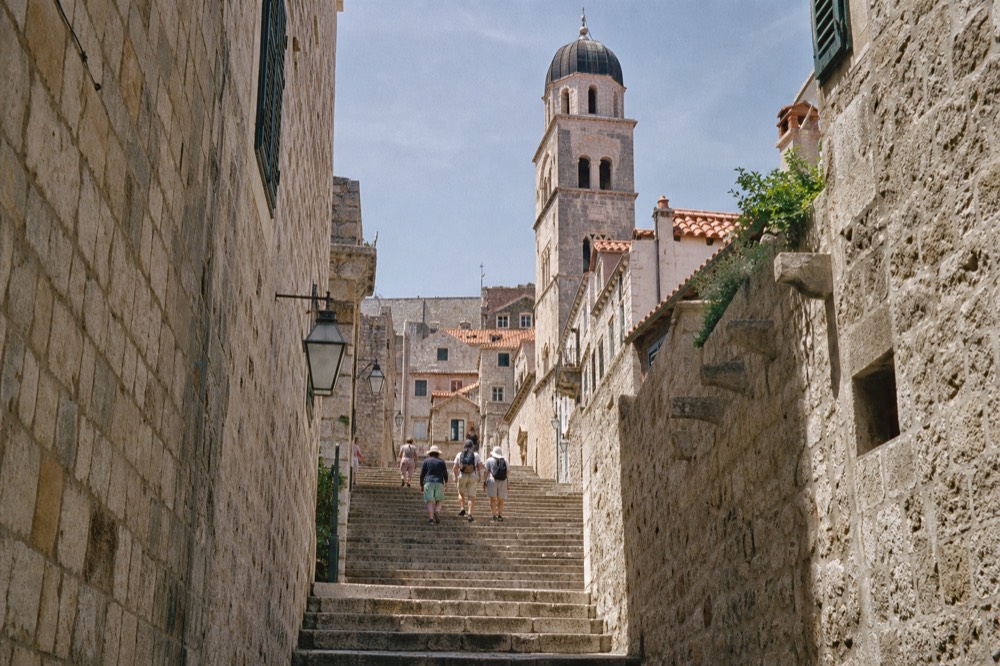
Do not walk the walls at midday in July or August. The circuit is almost entirely unshaded, the limestone throws the heat back at you, and the crowd count peaks at exactly the wrong hours. Go at opening, 08:00 in the operator's stated hours, and you share the ramparts with a fraction of the 10:00 crowd. Water, a hat and proper shoes are not optional; the stairs are worn smooth and the climbs are real.
Do not buy the Dubrovnik Pass outside its season. The pass is sold as a summer product, 1 March to 30 November, in one ticket type only, the adult pass. In December the standalone walls ticket is 20 euro and there is no winter pass to compare it against, so the usual "the pass costs the same as the walls" advice quietly becomes false. Every sentence making that comparison carries the season, and so should your planning.
Do not plan a Mostar or Montenegro day trip on a performance evening. These are long days: the Mostar and Kravica Waterfall Day Trip runs about 11 hours from $53.19 per person and is rated 4.8 across 1,254 reviews, and the border crossing time varies enormously.
Do not treat the festival as the whole trip. The performances are evening-weighted, which leaves mornings and afternoons open, and the region around the city rewards them: Lokrum, whose 30-euro ticket covers both the reserve and the return boat, with departures from the City Harbour at 09:00 and then every 15 minutes from 10:00 to 18:00, or the Elaphite islands on a full-day cruise. Our Lokrum Island guide covers the reserve, and the day trips guide ranks the mainland options.
And do not skip the small stuff that makes the city work: tap water is drinkable, the bus beats a taxi from most festival accommodation, and the Old Town is a pedestrian zone, so you walk whether you planned to or not.
How Do You Plan a Festival Day Around the Crowds?
Plan each day as three blocks: walls or a viewpoint before 09:00, water or islands through the afternoon heat, and the performance from early evening, using the counter data that shows the Old Town peaking at 7,739 people at 10:00 and easing by late afternoon. The festival's evening schedule does the sequencing work for you; you only have to protect the morning.
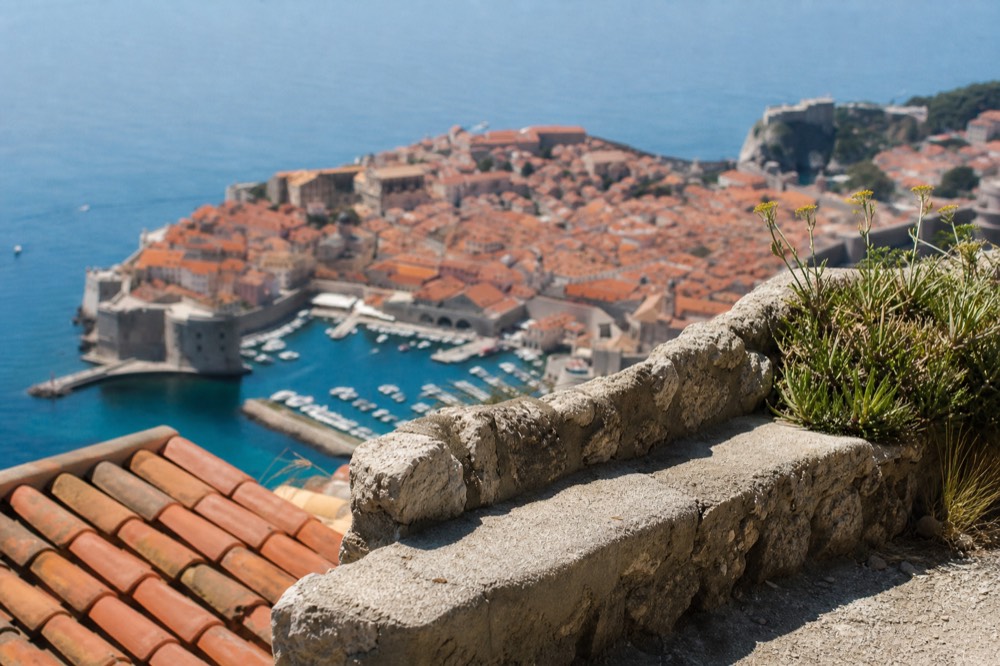
The cable car is the classic morning move, and the numbers explain why it rewards an early start. The ride covers 778.2 metres of track, rising 367 metres to the upper terminal at 405 metres above sea level, in 3 minutes 30 seconds. The view range on a clear day is up to 60 km, about 37 miles, per the operator's own page. An adult round trip is 30 euro, with children 4 to 12 at 8 euro and under 4 free.
| Cable car ticket | 2026 price |
|---|---|
| Adult round trip | 30 euro |
| Adult one way | 17 euro |
| Child 4 to 12 round trip | 8 euro |
| Child 4 to 12 one way | 5 euro |
| Under 4 | free |
Afternoons belong to the water. The sea averages 24.9 degrees in July and 25.8 in August on the long-run series, and a kayak or boat tour doubles as crowd relief. The Sea Kayaking and Snorkelling tours run from $36.50 per person and are rated 4.9 across 4,286 reviews, and the Blue Cave and Sunj Beach boat tour from $63.48 per person carries a 4.87 rating across 3,105 reviews. Either one returns you to the city in time for an early dinner before the curtain.
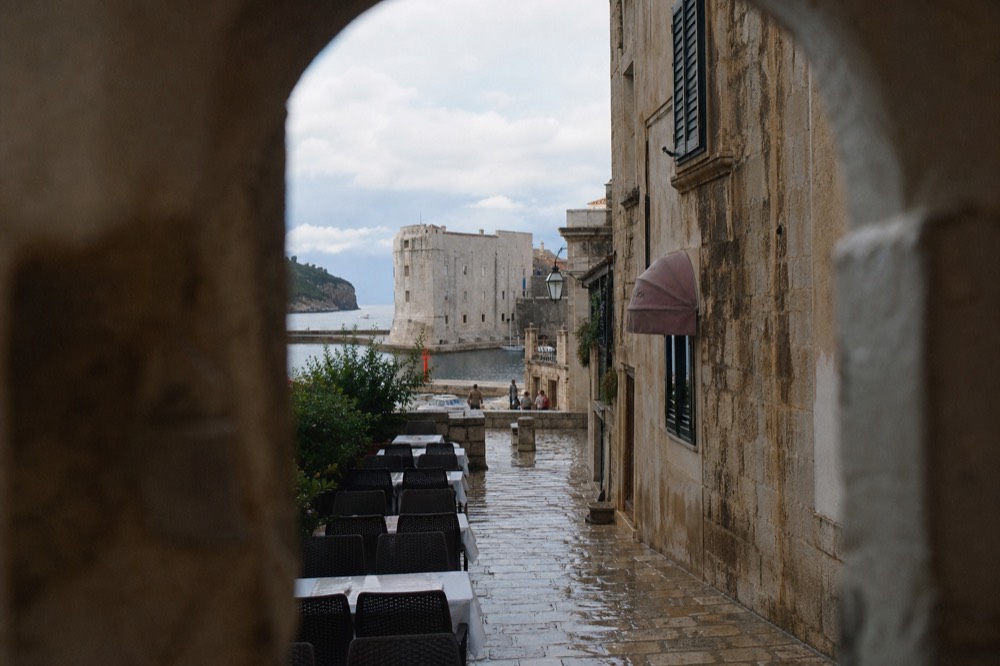
Then the evening. Festival venues are scattered through the Old Town, so book a table within walking distance rather than in Lapad if the performance matters to you, and check the venue when you buy, because a fortress terrace means stairs and a breeze while a cloister means stone seating. Our sunset spots guide lists where the light lands best if your evening is free instead.
Which Tours Pair Well With Festival Evenings?
The best pairings are short, daytime tours that leave you fresh for the evening: an Old Town walk on day one, a sunset cruise on a free evening, and a walls-focused walk if you want the ramparts explained rather than just walked. Anything over half a day risks colliding with a performance, so save the Mostar and Montenegro trips for a no-show night.
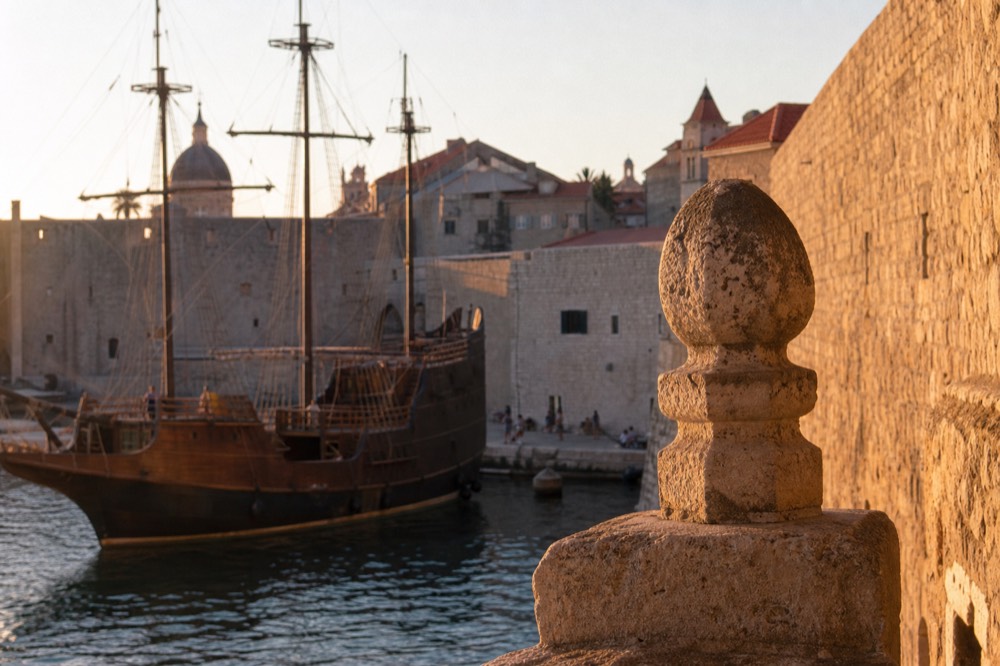
The Old Town Walk with a Local Guide, from $20 per person and rated 4.8 across 5,826 reviews, is the anchor choice, and a recent guest described exactly the festival-week use case:
Alex was a fantastic guide, she explained the complex history of Dubrovnik to give a lasting impression of the history of the area. Really appreciated that she aimed for shaded areas on a boiling September day. The food recommendations for after were much appreciated too! Great tour for a first experience of the old town!
Sophie
On a night with no performance booked, the Panoramic Sunset Cruise on the Karaka ship is the strongest evening alternative: an adults-only 1.5-hour sail from $59 per person, rated 4.8 across 833 reviews, on a replica timber ship that doubles as a festival venue itself in some seasons.
If you want the walls with context rather than alone, the 2-Hour City Walls Walk from $29.58 per person, rated 4.8 across 1,387 reviews, covers the ramparts with a guide. The City Walls Admission Only ticket from $36.37 per person is the bare entry if you would rather walk it yourself at 08:00; note its rating sits at 3.6 across 249 reviews, largely because the price surprise lands on unprepared buyers, which is why this guide leads with the real 40-euro figure.
How Much Should You Budget for a Festival Trip?
Budget roughly 40 euro a day per adult for the walls-plus-pass core, 20 to 60 euro per person per tour, 30 euro for the cable car round trip and 30 euro for Lokrum, before accommodation and food, with festival performance tickets priced separately by seat and venue. The sightseeing spend is predictable because the operators publish it; the variable is how many tours you stack.
| Item | Cost per adult | Notes |
|---|---|---|
| City Walls and Lovrijenac | 40 euro | Main season only; 20 euro in December |
| One-day Dubrovnik Pass | 40 euro | Adds ten sights plus a 24-hour bus ticket |
| Cable car round trip | 30 euro | Child 4 to 12 is 8 euro |
| Lokrum reserve and boat | 30 euro | Covers entry and the return transfer |
| Guided Old Town walk | from $20 | Rated 4.8 across 5,826 reviews |
| Full-day Elaphite cruise with lunch | from $59.16 | Rated 4.9 across 10,312 reviews |
The pass question comes down to pace. If you will visit three or more of the included sights, and on a festival trip you almost certainly will, the one-day pass pays for itself on the first afternoon. If the walls are your only indoor-sightseeing ambition, the standalone ticket is the honest buy, and remember it already includes Lovrijenac. For everything the pass covers beyond the walls, our what the Dubrovnik Pass includes rundown lists every inclusion.
Food is the line item nobody can budget for you from a distance, but the structure of a festival day helps: a proper lunch away from the Stradun costs far less than the same meal with a view, and the evening performance gives you a reason to eat early, like a local, before the venues fill. The restaurants guide sorts the city by budget and setting.
Whatever you book, keep the cancellation terms in view. Most of the tours above can be cancelled for free, which matters on a festival trip where the programme, not the weather, is the thing you are scheduling around. Lock in the walks and the cruise early, hold the day trips loosely, and let the evenings set the frame. That is the whole method, and it is the one Things to Do in Dubrovnik was built to explain.
Common Questions About the Dubrovnik Summer Festival
What Is the Dubrovnik Summer Festival?
It is Croatia's best-known arts festival, staging theatre, music, opera and dance at open-air venues across the walled city through the summer, with squares, cloisters and fortress terraces serving as stages. Tickets are sold per performance through the festival's own channels, and the smaller venues sell out for popular evenings.
What is dubrovnik famous for?
Dubrovnik is famous for its complete 1,940-metre city walls, its UNESCO-listed Old Town, its Game of Thrones filming locations, and the view of red rooftops from Mount Srd. The summer festival sits on top of that fame, using the same stone city as its stage.
Is Dubrovnik Worth Visiting?
Yes. A complete walled city on the sea, an island reserve a short boat ride away, a cable car to a 405-metre summit and a festival inside the walls make a strong case. Crowds are real but managed: the Old Town's official carrying capacity is 11,275 people, monitored by counters at every entrance.
What Is the Best Month to Visit Dubrovnik?
For the festival programme, July and August carry the heart of the schedule. For thinner crowds with warm seas, June averages 22.5 degrees and draws fewer cruise passengers. Note that September and October are actually the busiest cruise months, with 101,246 and 100,132 passengers in 2025, ahead of July and August.
What Not to Do in Dubrovnik?
Do not walk the walls at midday in high summer, do not buy a Dubrovnik Pass in December when no winter tier is on sale, do not assume a family walls ticket exists, and do not schedule a border day trip on a performance evening. Crossings into Bosnia or Montenegro can vary sharply in duration.
How Much Does a Festival Trip Cost per Day?
Budget 40 euro for the walls and Lovrijenac or the one-day pass, 30 euro for the cable car round trip, 30 euro for Lokrum, and 20 to 60 euro per person per tour, before food and accommodation. Performance tickets are priced separately by seat and venue.