Can You Swim in Dubrovnik? Beaches, Water Temperature and Safety
Dubrovnik swims in a warm, clean Adriatic, but the swimming here is a rock-and-bay affair rather than miles of sand. Here is what the water is actually like, where people swim, and when the season starts and ends.
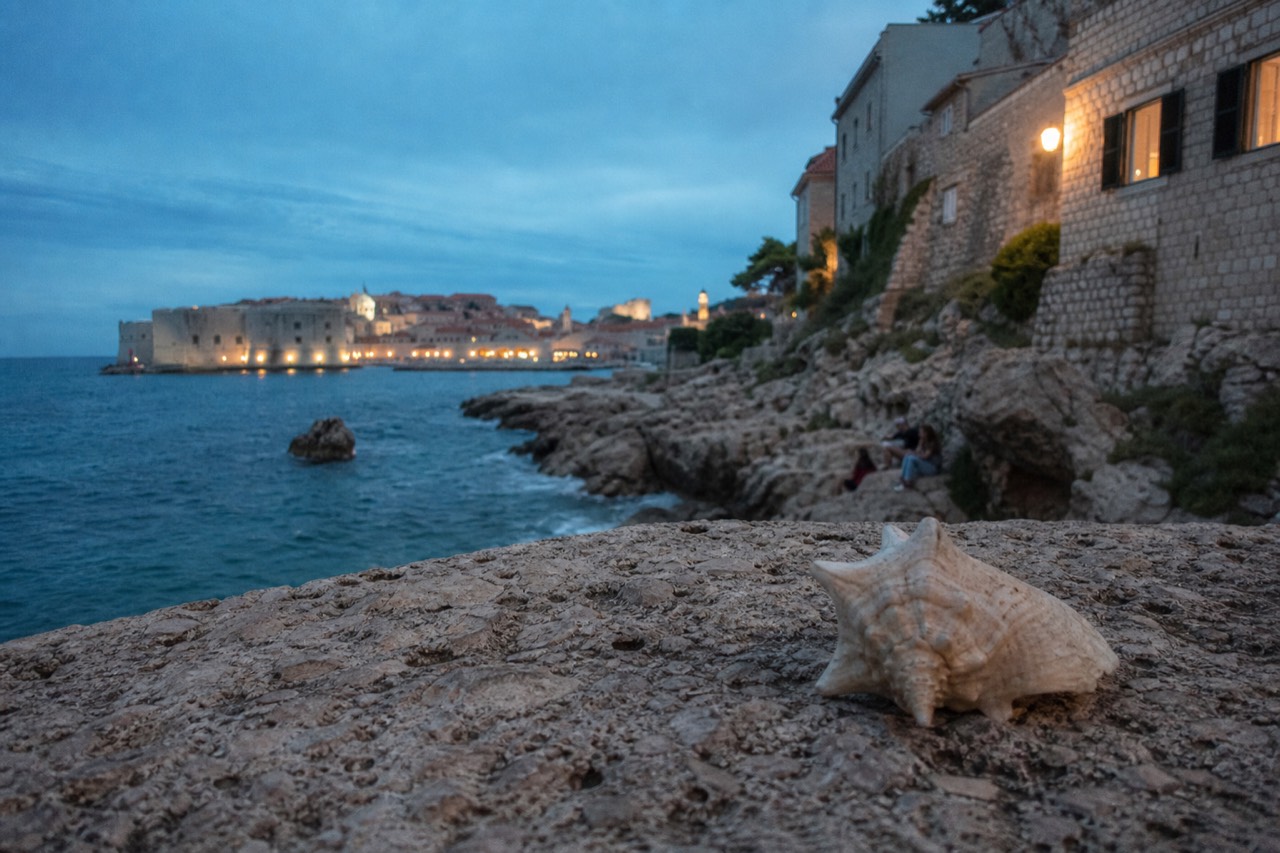
Short answer
Yes. The sea around Dubrovnik is swimmable from late May well into October, with a long-run September average of about 23.6 degrees and August about 25.8. Swimming is free at most spots, the water is clean, and the main hazards are sea urchins on rocks, hot stone underfoot and afternoon boat traffic, not currents or pollution.
Dubrovnik sits on the warmest corner of the Croatian Adriatic, and swimming is one of the reasons people come here at all. The city's beaches are mostly concrete ledges, pebble coves and rocky platforms rather than broad sand, and the water off them is startlingly clear. I have walked this coastline in every month of the year, and the pattern never changes: locals swim from the rocks in May, everyone swims in August, and a hardy few are still in the sea in late October.
This guide answers the four questions I am asked most about swimming here, and then gets practical. It covers which beaches actually work, where residents go when they want a quiet swim, whether the sea is safe, and how late in the year you can reasonably keep swimming. It also gives the real monthly water numbers, which most pages get wrong.
Can You Swim in Dubrovnik Beaches?
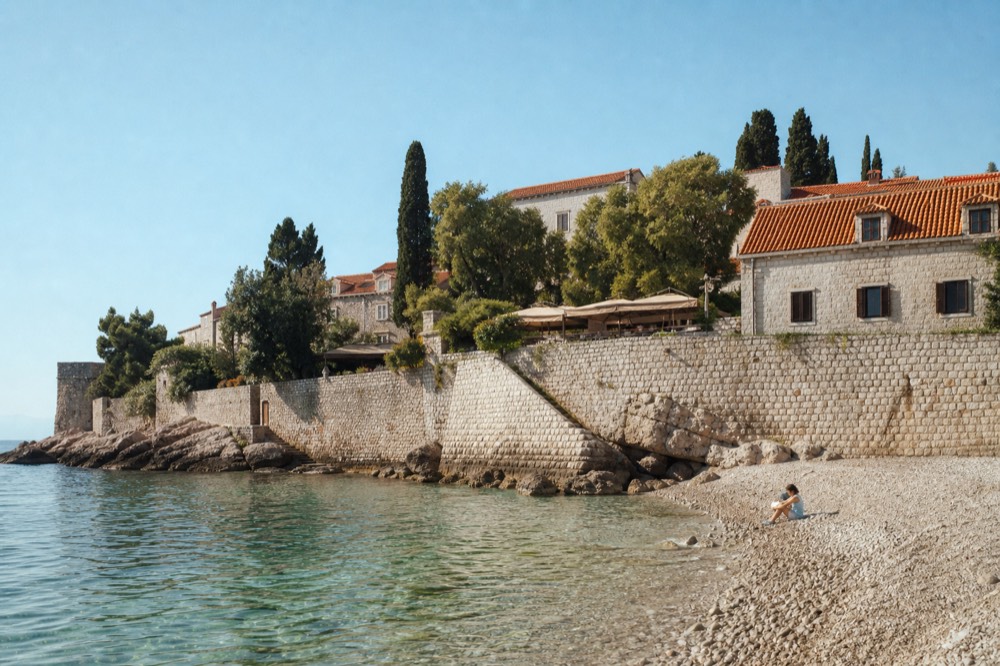
Yes, and at most of them it costs nothing. Dubrovnik's swimmable spots range from the pebble beach at Banje, five minutes from Pile Gate, to concrete bathing platforms in Lapad and rocky ledges below the walls. The water is clear and clean throughout, entry is free at nearly every location, and the only paid facilities are loungers and cafes. The catch is comfort: this is pebble and rock, not soft sand, so water shoes earn their place in your bag.
The honest summary of Dubrovnik beaches is that they are short on sand and long on atmosphere. The Stradun may be the postcard, but the swimming happens at a handful of distinct spots, each with its own character, and each described in full in our guide to the best beaches in Dubrovnik.
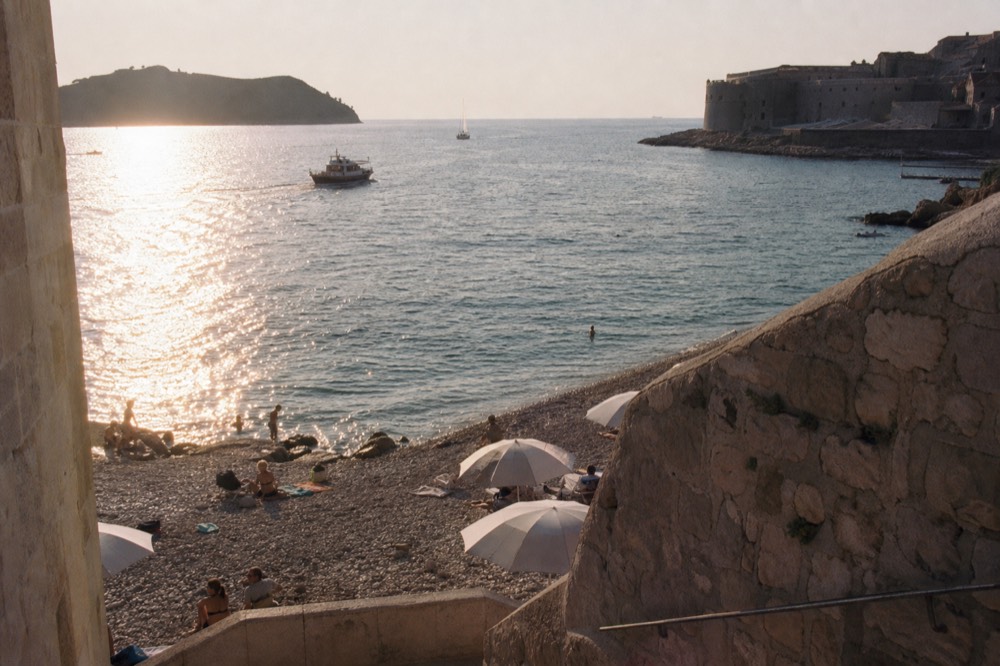
The four names worth knowing first:
| Beach | Type | Walk from Old Town | Best for |
|---|---|---|---|
| Banje | Pebble and shingle | About 5 minutes | Views back at the walls, easy access |
| Sveti Jakov | Pebble, below a cliff path | About 30 minutes | The most beautiful setting, quieter water |
| Lapad Bay (Uvala) | Pebble and concrete | Bus or 45 minute walk | Families, cafes, shade |
| Copacabana (Babin Kuk) | Pebble and concrete | Bus ride | Water sports, sunset swimming |
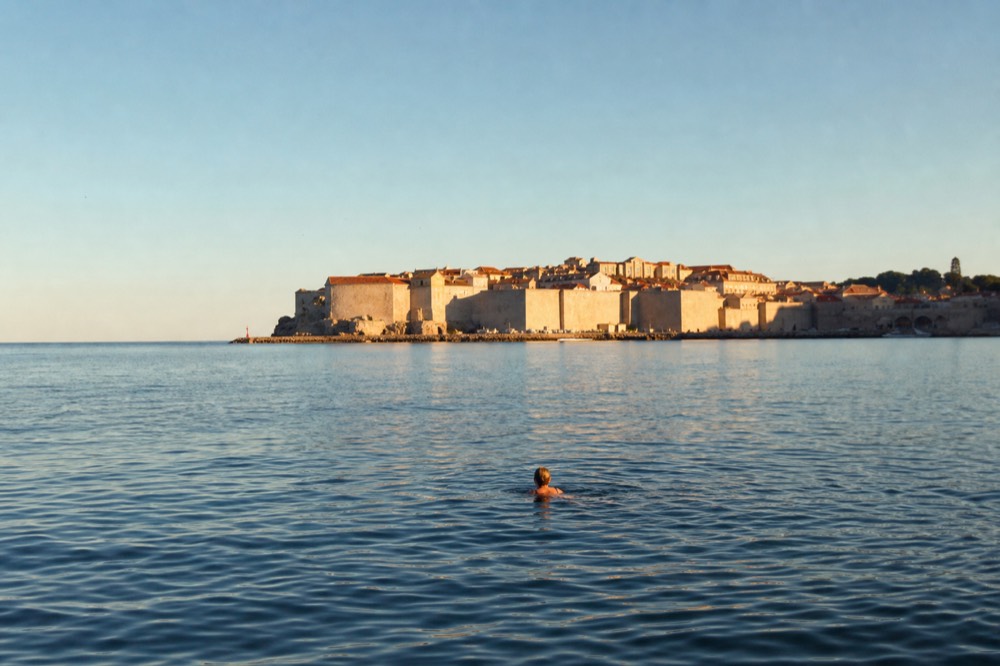
Banje is the one most visitors find first, and it deserves its reputation: you swim with the city walls and the island of Lokrum framed behind you. It is also the busiest, and in July and August the pebble strip fills by mid-morning. Sveti Jakov, below a church of the same name on the way to the airport road, is the beach I send people to when they want the photograph without the crowd. The full walk down and back is described in our piece on Sveti Jakov beach. Lapad Bay and Copacabana, out west, are where the beach day happens: shade, cafes, shallow entry, and space. Copacabana is covered in detail in our guide to Copacabana beach.
One practical note that surprises people: at Banje and most rocky spots you enter the water over smooth pebbles or stone slabs. It is not painful, but thin-soled shoes make the difference between a relaxed swim and a careful shuffle. Sea urchins live in the darker rock crevices, and I come back to that in the safety section below.
If your ideal day pairs a morning swim with an afternoon above the water, the coast also lends itself to tours. The selection below covers a panorama ride, a kayaking trip and a full island day.
Where Do the Locals Swim in Dubrovnik?
Residents mostly avoid the headline beaches and swim from free rocky platforms: Danče on the eastern side, the rocks below the Buža bars outside the walls, the ledges around the Lazareti, and the quiet coves of the Lapad peninsula. These spots have no loungers, no entry fee and no crowd, only stone, deep water and shade in the late afternoon. That is the local swimming culture: pick a rock, bring a towel, jump in.
I say this as someone who lives here: the question locals ask about a swimming spot is not "is there a beach bar" but "is there shade at five o'clock and how deep is the entry." Danče, a rocky bay just past the Ploče gates, is the classic answer. It is where people swim lengths before work in summer, where the water is deep within a few strokes of the shore, and where the only infrastructure is a small cafe and a shower.
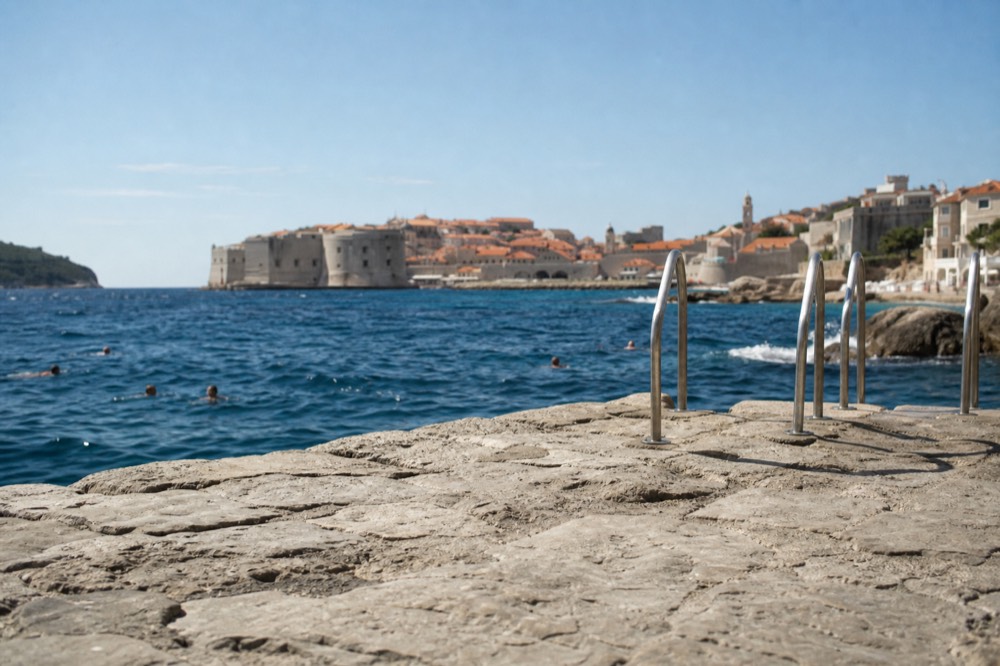
The other local habits worth copying:
| Local spot | Where | Character |
|---|---|---|
| Danče | East of Ploče Gate | Deep water, morning lap swimmers, minimal facilities |
| Buža rocks | Below the western walls | Cliff jumps and ladder entry, cafe above |
| Lapad peninsula coves | West of the bay | Evening swims, family rocks, sunset light |
| Betina Cave area | Beneath Srđ, east of town | Reached best by kayak or boat, clearest water |
The Buža bar rocks deserve a mention even though the bar itself is famous, because the swimming below them is the real attraction: you enter by ladder into deep, transparent water with the wall of the fortress overhead. Our Buža bar guide covers the cliff-jumping etiquette, which matters, since the safe spots to leap from are well known to locals and less obvious to first-timers.
Betina Cave is the spot I would single out for confident swimmers who want the clearest water within reach of town. It sits in the cliffs below Mount Srđ, and the practical way in is by sea. The two-hour kayak trip that paddles out to Lokrum and stops for a swim inside the cave is rated 4.9 across 1,518 reviews and runs from $35.49 per person, and it is the version of this coastline I recommend to friends: you get the cave, the island and the exercise in one morning.
A family who took that exact trip left a review worth quoting for what it says about the swimming break: "Loved this kayaking experience. Had an amazing time as a family and enjoyed the swimming break at Betina Cave very much. The views were amazing, water was crystal clear, the guide was excellent and we learnt a lot about Dubrovnik." That matches what the cave is like: a pebble interior, a roof open to the sky, and water you can see straight through.
Is It Safe to Swim in the Sea in Dubrovnik?
Yes, the sea around Dubrovnik is safe to swim in. The water is clean, there are no dangerous currents on the swimming coast, jellyfish are occasional rather than routine, and supervision is easy to find at the main beaches. The real hazards are small and avoidable: sea urchins in rocky crevices, hot stone underfoot, boats in busy bays, and dehydration in the summer heat. None of these should put anyone off.
I want to be precise about safety rather than reassuring in a vague way. The Adriatic here has no rip currents of the kind that worry ocean swimmers, and the tide is negligible. What the coast does have is rock, and rock means two specific things to watch.
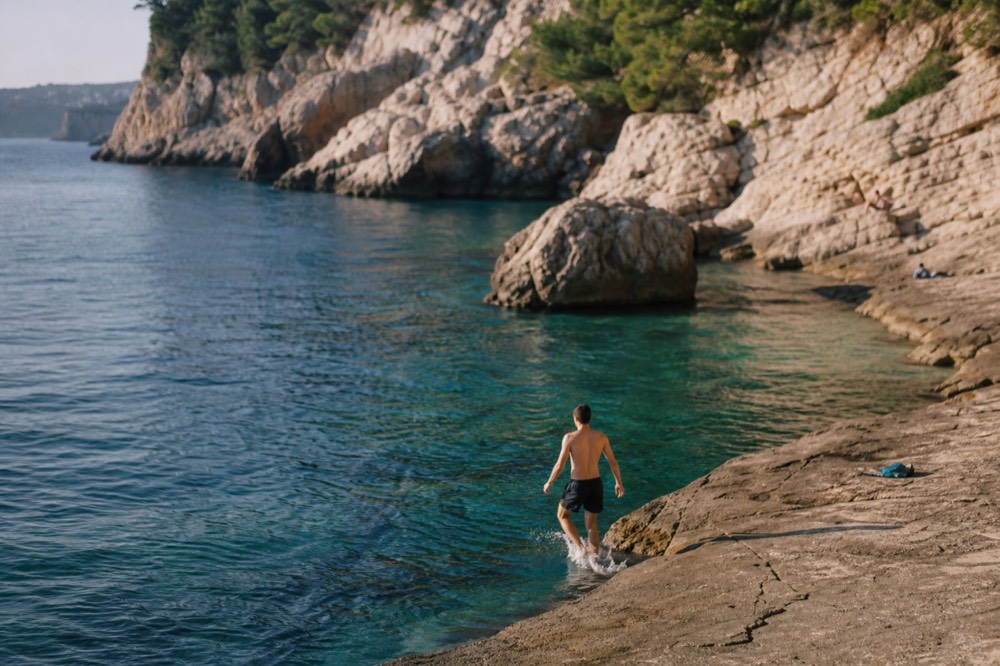
| Hazard | Where | Simple avoidance |
|---|---|---|
| Sea urchins | Dark crevices, weedy rock | Enter at clear, open slabs; wear water shoes |
| Hot stone and pebbles | All beaches in July and August | Flip-flops for the walk in, shade breaks |
| Boat traffic | Banje bay, the old port, Lokrum approaches | Swim inside marked areas, stay visible |
| Afternoon heat | Everywhere, 12:00 to 16:00 | Swim early or late, drink water |
Sea urchins are the one that catches visitors. They sit in the shaded gaps between rocks and are easy to see in water this clear, so the rule is simple: look where you put your feet, enter at open slabs rather than weedy crevices, and wear shoes if you are at all unsure. A spine in the foot is a sore evening, not a medical emergency, but it is a avoidable one.
Jellyfish deserve one honest sentence: they appear some days and not others, usually the small harmless kind, and the main beaches will tell you if anything unpleasant has drifted in. The Croatian met service publishes daily conditions for the coast, including the Dubrovnik buoy, at meteo.hr's sea data page, which is where I check water temperature and wind before a long swim.
Water quality is monitored under the Croatian bathing-water programme, and Dubrovnik's swimming areas pass it routinely. The city's visitor platform, which also runs the Old Town crowd counters, publishes local condition updates at dubrovnik-visitors.hr. If a bay ever has an advisory, it is posted, not hidden.
One last safety point, and it is the one I repeat most: swim in the morning. The sea is calmest before the afternoon breeze picks up, the stone is not yet furnace-hot, and in September the cruise-day crowds, which peak in the morning hours, are still mostly on the walls rather than in the water. Our swimming season guide breaks the whole year down if you are planning around it.
If swimming is the morning plan, the afternoon can belong to the view. The zipline above the city is the pairing I suggest most often.
Can You Still Swim in Dubrovnik in October?
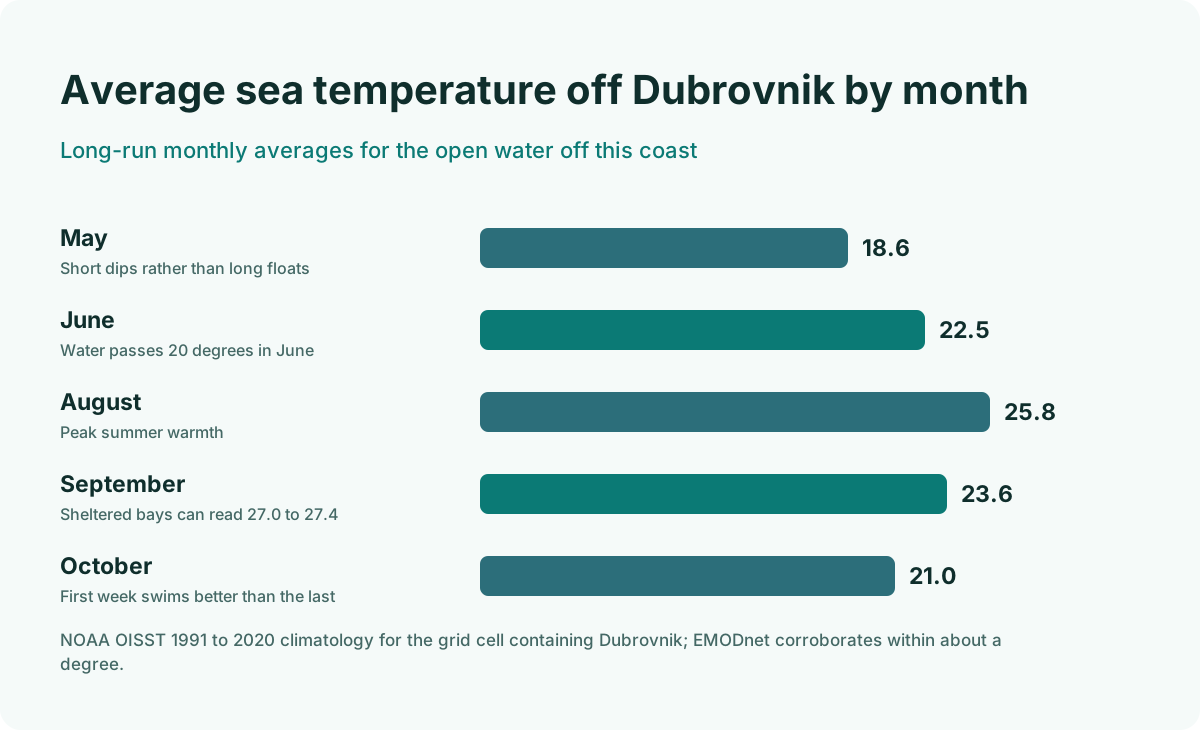
Yes, and October is one of the best-kept secrets on this coast. The long-run October average sea temperature is about 21.0 degrees, against 23.6 in September and 25.8 in August, so the water is genuinely swimmable through the month, especially in sheltered bays that hold the summer's warmth. Air temperatures are kind, the cruise crowds thin after the early-October peak, and the sea is at its calmest of the year.
The numbers matter here, and they need their context. These are long-run monthly averages for the open water off this coast, from the NOAA OISST 1991 to 2020 climatology for the grid cell that contains Dubrovnik, not a beach thermometer and not this week's reading. An independent EU dataset, EMODnet's, corroborates them within about a degree in the months that matter.
| Month | Average sea temperature | Swimming verdict |
|---|---|---|
| May | 18.6 | Bracing; locals start swimming |
| June | 22.5 | Comfortable for most people |
| July | 24.9 | Warm, peak season |
| August | 25.8 | Warmest of the year |
| September | 23.6 | Excellent; the locals' favourite month |
| October | 21.0 | Very swimmable, especially early in the month |
| November | 18.5 | Short dips for the determined |
Two caveats keep those numbers honest. First, they are open-water averages, and sheltered shallow bays run warmer: the Croatian met service's own Dubrovnik buoy read 27.0 to 27.4 degrees on 8 September 2026 against a 23.6 September mean, which shows how much a protected bay in high summer can exceed the offshore figure. Second, October water cools as the month goes on, so the first week swims better than the last.
There is a crowd dividend too. Port Authority data shows cruise passengers in 2025 peaked in September at 101,246 and October at 100,132, above July's 96,072 and August's 87,385, so early October is not empty. But those are ship capacity figures, not people on the beach, and the beach-going crowd falls away much faster than the cruise calendar does. An October morning at Sveti Jakov is a different world from an August one.
What Is the Water Actually Like, and When Does the Season Start?
The swimming season in Dubrovnik realistically runs from late May to mid-October, with the water passing 20 degrees in June and holding it through September. The sea is exceptionally clear, saltier and more buoyant than the Atlantic, and calmest in the mornings. Locals swim earlier and later than visitors do, but the comfortable window for most people is June through September.
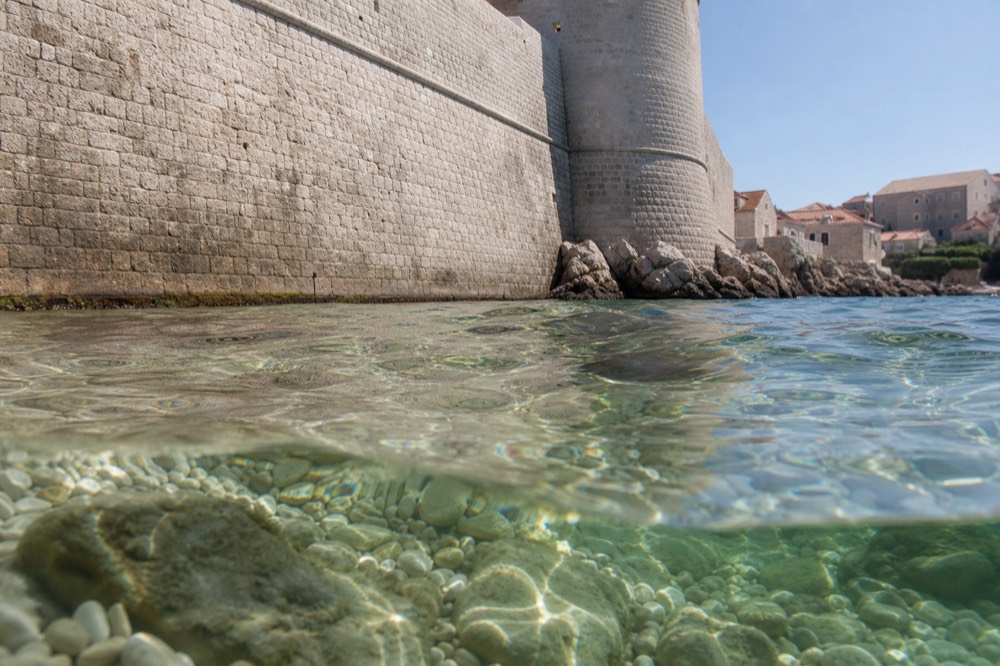
Clarity is the defining quality. There is no river mouth near the Old Town and no silty run-off, so on a calm day you can stand chest-deep off Lapad and watch fish below your feet. The salinity is noticeably higher than northern European waters, which makes floating effortless and, for some swimmers, stings the eyes a little on long swims.
The season's shape, in practical terms:
| Period | Water feel | Crowds | Advice |
|---|---|---|---|
| Mid-May to early June | Cool on entry, fine once moving | Low | Swim at midday when the sun warms the shallows |
| June to early July | Comfortable | Building | The best balance of warmth and space |
| Mid-July to August | Bath-like in the bays | Peak | Swim before 09:00 or after 17:00 |
| September | Warm and settled | High but thinning | The locals' favourite swimming month |
| October | Mild, cooling late | Low on the beaches | Sheltered bays swim best |
The one mistake I see repeatedly is visitors assuming the water matches the air instantly in spring. A 25-degree day in late April can still sit over 15-degree water. The sea lags the air by weeks, which is exactly why the May average of 18.6 climbs to 22.5 only by June. If you want to swim on an April or May trip, plan on short, proud dips rather than long floats.
Swimming Beyond the Beaches: Islands, Caves and Boat Days
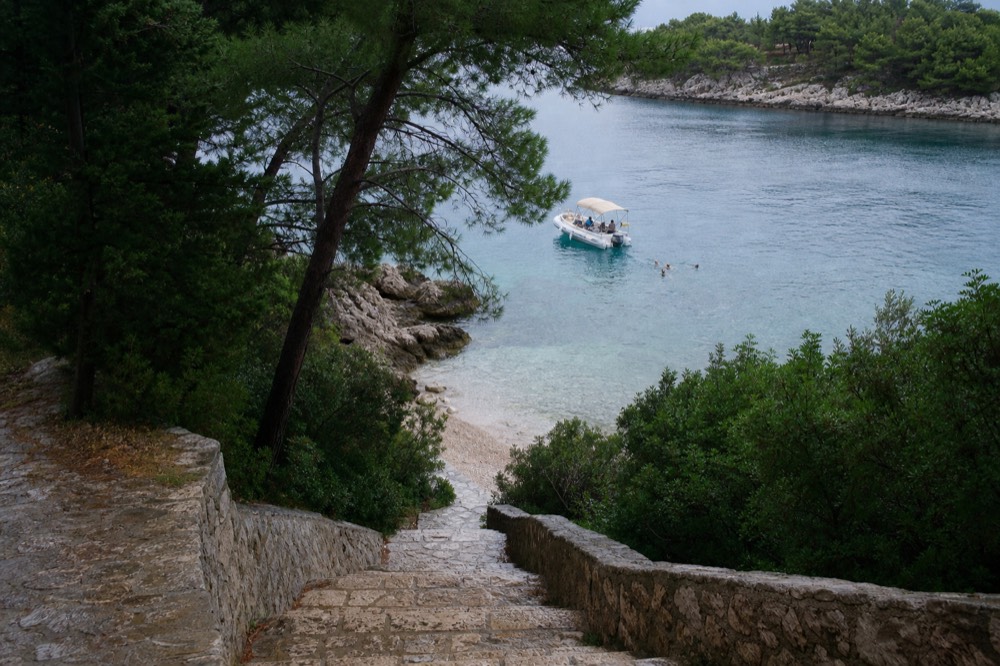
The best swimming around Dubrovnik is often not from a beach at all but from a boat or a kayak, at the Elaphiti islands, in Betina Cave, or off Lokrum's rocky shores. The water at the islands is clearer and calmer than town, the caves are swimmable by kayak, and a full-day boat trip builds in two or three proper swim stops with lunch between them.
Lokrum is the easiest island swim: the 30-euro ticket covers reserve entry and the return boat, and the boats leave the City Harbour at 09:00 and then every 15 minutes from 10:00 to 18:00. The swimming there is from rocks and small coves, with pines for shade. Our Lokrum Island guide covers which side of the island holds the calm water on a given wind.
For a full swimming day, the Mljet and Elaphiti trip is the serious option: ten hours, two islands and a national park, rated 4.8 across 333 reviews and from $139.47 per person. Mljet's saltwater lakes are the warmest, calmest swimming on this whole coast, sheltered from every wind, and they are the answer I give when someone asks where they would swim if they only had one day.
Closer to town, the kayaking options double as swimming trips. Besides the Betina Cave route described above, there is a longer guided kayak and snorkel day rated 4.9 across 4,286 reviews from $36.50 per person, which paddles the walls and stops for snorkelling. If you are weighing the options, our kayaking in Dubrovnik guide compares the routes, the seasons and what to bring.
Practical Swimming Tips From Someone Who Lives Here
Swim before 09:00 or after 17:00 in high summer, bring water shoes for the pebbles and rocks, keep hydrated because sea swimming masks the heat, and check the wind rather than the forecast temperature. The morning is almost always calm; the afternoon breeze, when it comes, roughens the eastern bays first. A towel that dries fast matters more here than any gadget.
A few habits that make the difference between a good swim and a great one:
| Tip | Why it matters here |
|---|---|
| Water shoes | Pebble entry and urchin crevices at nearly every spot |
| Early or late swimming | Calm water, cool stone, thin crowds in July and August |
| Reef-safe sunscreen | Full sun on the water, no natural shade on the platforms |
| A dry bag on kayak trips | Everything you keep in the boat gets splash-wet |
| Watch the wind flag at Banje | Afternoon chop arrives fast in the eastern bays |
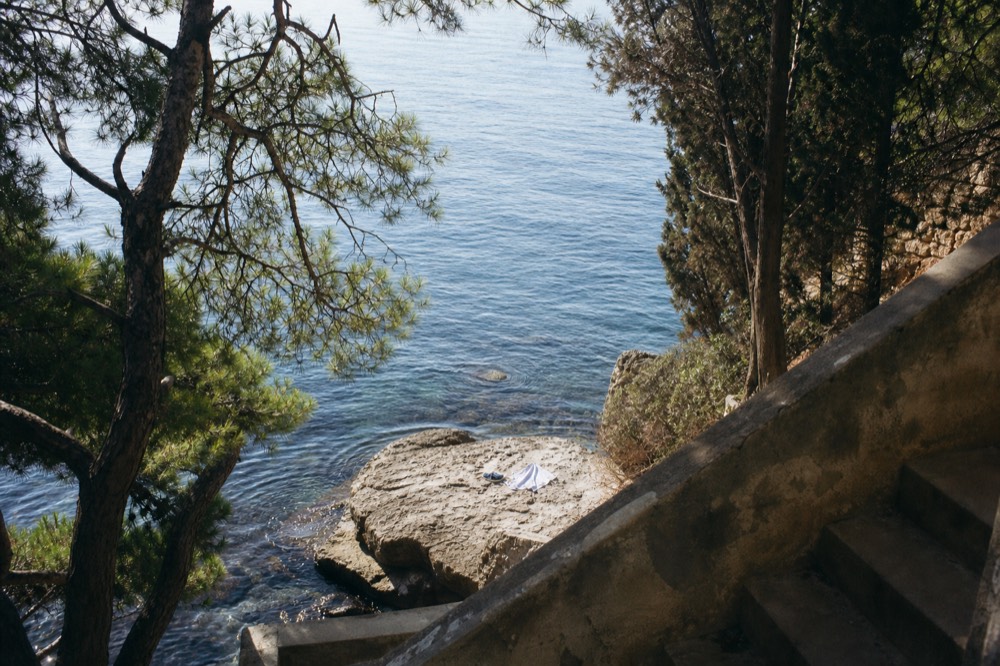
The heat deserves respect. Air temperatures in July and August sit in the low thirties, the stone reflects it back, and swimming in warm sea does not cool your core the way a cold lake does. Drink water before and after, and treat the midday hours as time for shade, lunch and a nap rather than a long swim. Visitors planning a full day around water and heat may find our Dubrovnik in August guide useful for pacing.
One more thing worth saying plainly: this is a coastline you can plan a whole trip around, not just a beach bolt-on. The water is the reason the kayakers, the boat trips and the cave swims all exist, and the same clear sea that makes Banje a photograph makes the islands a destination. If you are building an itinerary, the swimming days slot best into the late morning and the hours after 16:00, leaving the walls and the Old Town to the early hours when they are at their emptiest.
And if the day calls for something with more speed than a swim, the panorama zipline above the city is the one non-water activity I would pair with a beach day. It is rated 4.9 across 2,109 reviews, from $64 per person, and one recent review sums up the feeling: "The panorama zipline in Dubrovnik is really worth an excursion. You have an excellent view over Dubrovnik. You feel very well taken care of by Bobby, Matteo, and Dennis. Excellent organization! I would do it again anytime."
For more on pairing the water with everything else this coast does well, start with Things to Do in Dubrovnik and build outward from the sea.
Common Questions About Swimming in Dubrovnik
Can you swim in Dubrovnik beaches?
Yes. Banje, Sveti Jakov, Lapad Bay and Copacabana are all swimmable, free to enter at the shoreline, and clear underfoot. The beaches are pebble and rock rather than sand, so bring water shoes and enter at open slabs rather than weedy crevices.
Where do the locals swim in Dubrovnik?
Mostly at Danče east of Ploče, the rocks below the Buža bars, and the quiet coves of the Lapad peninsula. These are free rocky platforms with deep water and afternoon shade, and no facilities beyond a cafe and a shower. That is the local swimming culture: pick a rock, bring a towel, jump in.
Is it safe to swim in the sea in Dubrovnik?
Yes. The water is clean, there are no dangerous rip currents, and jellyfish are occasional rather than routine. The avoidable hazards are sea urchins in rock crevices, hot stone underfoot in midsummer, and boat traffic in busy bays, all managed with water shoes, common sense and swimming inside marked areas.
Can you still swim in Dubrovnik in October?
Yes. The long-run October average sea temperature is about 21.0 degrees, against 23.6 in September, and sheltered bays hold their warmth longer than the open-water figure suggests. Early October swims better than late October, and the beaches are far quieter than in August.
What is the warmest month to swim in Dubrovnik?
August, with a long-run open-water average of about 25.8 degrees, followed by July at 24.9 and September at 23.6. Sheltered bays run warmer still: the Dubrovnik buoy read 27.0 to 27.4 degrees on a September day against a 23.6 monthly mean.
Do you need water shoes for swimming in Dubrovnik?
They help a lot. Nearly every swimming spot here is pebble or smooth rock, and sea urchins live in the darker crevices. Shoes are not strictly required at the concrete platforms, but they make every pebble entry more comfortable.