When Can You Swim in Dubrovnik? The Swimming Season Explained
Dubrovnik's swimming season is longer than most visitors expect, but the water has a rhythm. Here is what the sea actually does, month by month, and how to plan around it.
Short answer
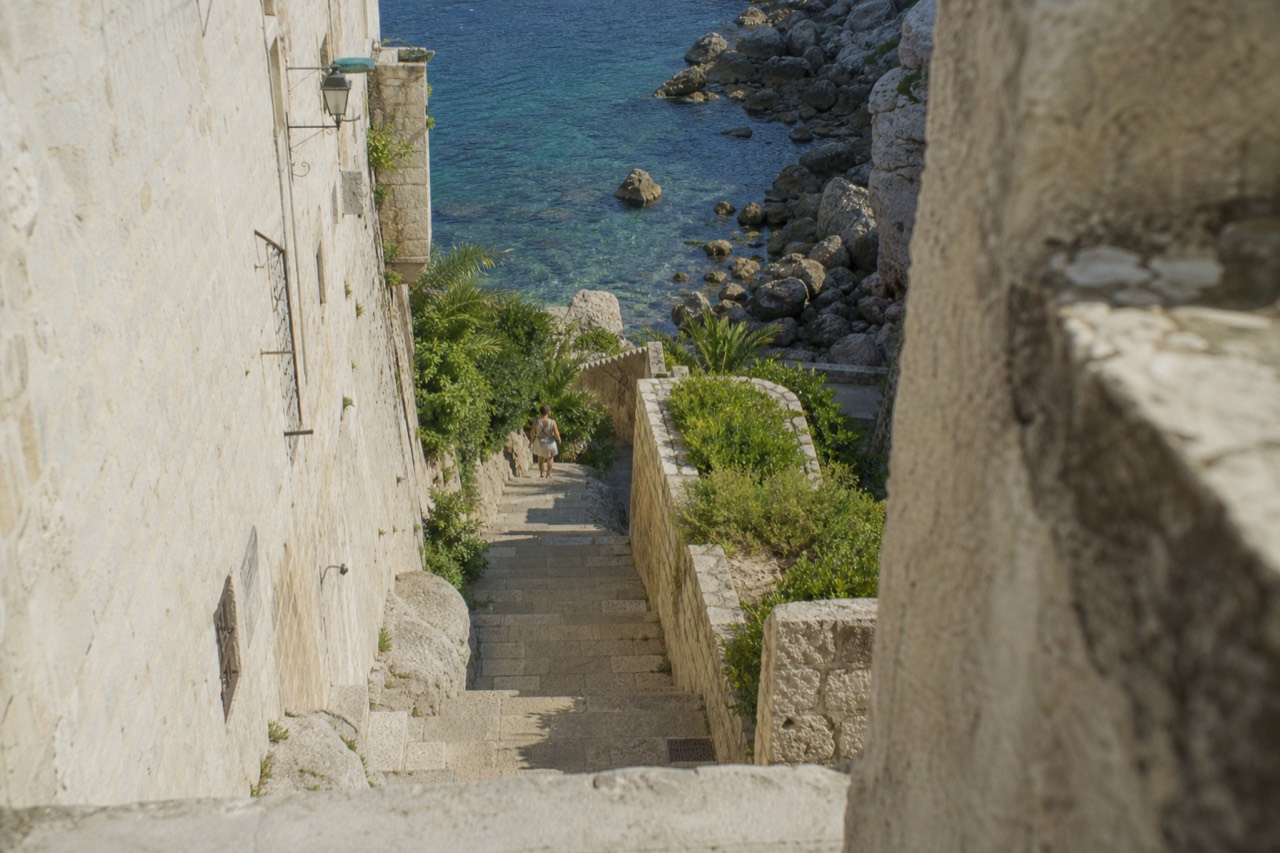
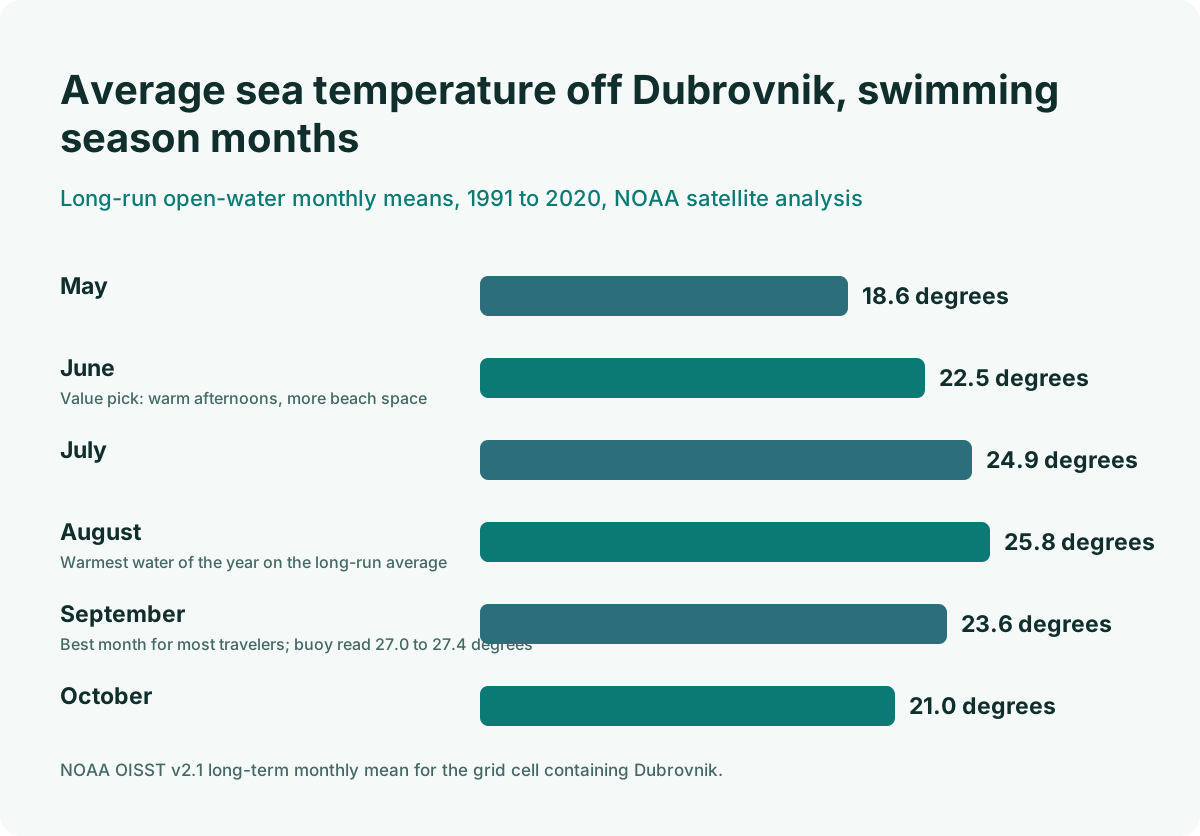
Yes, you can swim in Dubrovnik from roughly June through early October. The sea averages 22.5 degrees in June, 24.9 in July, 25.8 in August and 23.6 in September against a 1991 to 2020 long-run average. May at 18.6 and October at 21.0 are for the brave, and sheltered bays run warmer than the open-water figures.
When Can You Swim in Dubrovnik? The Swimming Season Explained
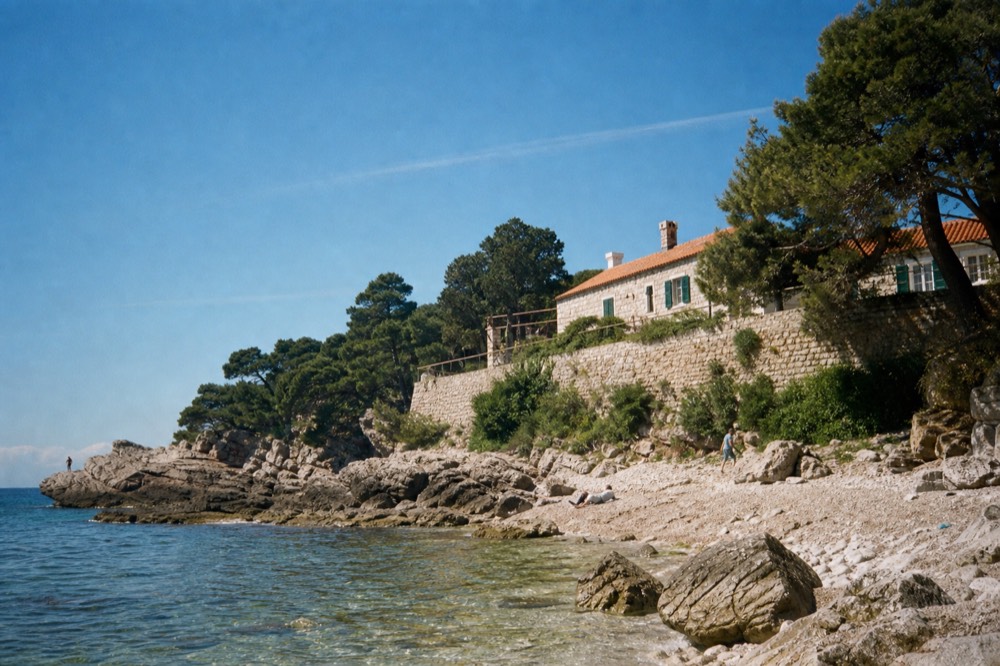
Yes, you can swim in Dubrovnik, and the honest season runs from June into early October. The headline numbers come from a long-run average, not a beach thermometer: the sea off this coast averages 22.5 degrees in June, 24.9 in July, 25.8 in August and 23.6 in September. May and October are swimmable for some people, and sheltered bays consistently read warmer than the open water, which is where most of the actual swimming happens.
I have walked this coastline in every month of the year, and the pattern is reliable. The same sheltered cove that feels brisk in May feels like a bath by late July. What surprises most first-time visitors is not the summer water, which is genuinely warm, but how good September still is once the crowds thin. That month deserves its reputation, and the numbers back it up.
This page answers the questions people actually ask before booking: is the sea safe, which month is best, what the water does month by month, and whether the kayak and boat tours are worth it in the month you happen to be coming. Everything here comes from verified measurements and operator data, not from a brochure.
Is It Safe to Swim in the Sea in Dubrovnik?
Yes, swimming in the sea around Dubrovnik is generally safe, with clean, calm waters along most of the coast. As with any rocky Adriatic shoreline, take normal precautions: watch for sea urchins near rocks, use water shoes where the terrain is uneven, and avoid swimming in rough conditions or unfamiliar areas at night. The water is exceptionally clear, there are no dangerous currents of note inside the sheltered bays, and sea urchins on rocks are the main everyday hazard, so water shoes earn their space in your bag. Jellyfish appear occasionally, as they do everywhere in the Adriatic, but encounters are the exception rather than the rule, and the painful species are rare. The safety question here is really about where and when you swim, not whether.
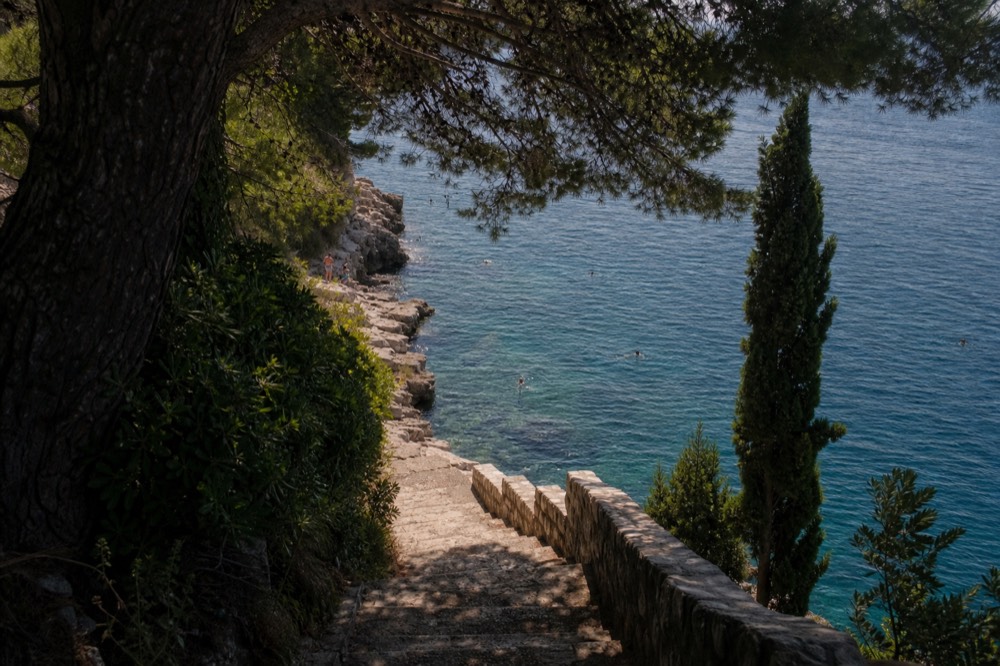
The coastline here is steep and rocky rather than sandy. That is a gift for water clarity, since there is little sediment to cloud it, but it means most entry points are stone slabs, concrete platforms or pebble coves. Depths drop quickly in places, which children and weak swimmers should know about before jumping in. Lifeguards are present at the organised beaches in high season, including Banje and the main Lapad Bay beaches, but the wilder coves have nothing but you and your judgement.
Two practical points are worth stating plainly. First, the sea is clean: Dubrovnik's beaches are monitored under the Croatian bathing-water programme, and the city's tourism economy depends on that staying true. Second, jellyfish do appear occasionally, as they do everywhere in the Adriatic, but encounters are the exception rather than the rule, and the painful species are rare. If you want a fuller rundown of the specific beaches, our guide to Dubrovnik's beaches covers each one in detail.
The other safety angle is heat. July and August afternoons on exposed stone are brutal, and the smart swimmer treats the sea as a way to break up the day rather than a single event. That is exactly why the water-based tours, kayaking in particular, are structured around morning and late-afternoon departures. If you are weighing the options, these three are the ones worth a look.
One more thing that belongs in any honest safety discussion: the cruise schedule. September and October are actually the two busiest cruise months of 2025, with 101,246 and 100,132 passengers respectively, ahead of July's 96,072 and August's 87,385, according to the Port Authority's own cruise-destination page. Those passengers are ship capacity, not people guaranteed ashore, but the Old Town still feels them. The water does not.
What Is the Best Month to Visit Dubrovnik?
September is the best month to visit Dubrovnik for most travelers. The sea is still warm at 23.6 degrees, the air is gentler than midsummer, and cruise traffic is falling from its peak. If swimming in the warmest water is your priority, aim for July or August instead. June at 22.5 degrees is the value pick, with warm afternoons and noticeably more space on the beaches. If swimming is secondary to sightseeing, May and October trade cooler water for quiet streets and lower prices, and neither month is out of the question for a determined dip in a sheltered bay that holds the summer's warmth.**
I will defend September to anyone who asks. The long-run average for that month, 23.6 degrees, sits within a degree of what two independent marine datasets agree on, and sheltered bays read well above it: the Croatian met service's Dubrovnik buoy recorded 27.0 to 27.4 degrees on 8 September 2026 against that 23.6 mean. That gap between open water and sheltered water is the single most useful thing to understand about swimming here.
The counter-intuitive part is crowd timing. Most people assume July and August are the busiest months for cruise passengers, and for total visitors they broadly are, but the Port Authority's monthly figures show September at 101,246 and October at 100,132 cruise passengers in 2025, above July's 96,072 and August's 87,385. The sea is at its most pleasant exactly when a good number of day-visitors are still arriving. The saving grace is that swimmers spread along the coast while day-visitors concentrate in the streets.
| Month | Sea average | Swimming verdict | Crowds |
|---|---|---|---|
| May | 18.6 degrees | Brisk, short dips | Moderate |
| June | 22.5 degrees | Comfortable | Building |
| July | 24.9 degrees | Warm, peak season | Heavy |
| August | 25.8 degrees | Warmest water | Heavy |
| September | 23.6 degrees | Excellent, best balance | Falling but busy |
| October | 21.0 degrees | Cool, for the committed | Light |
If you are locked to school holidays, August is what it is: the warmest water of the year at 25.8 degrees on the long-run average, and the busiest everything else. If you have any flexibility, aim for mid-June or the first three weeks of September. For a deeper comparison of the shoulder months, our September in Dubrovnik guide goes month by month.
What Is the Average Temperature in Croatia by Month?
Along this coast the long-run sea averages run 14.3 degrees in January, 14.0 in February, 14.2 in March, 15.4 in April, 18.6 in May, 22.5 in June, 24.9 in July, 25.8 in August, 23.6 in September, 21.0 in October, 18.5 in November and 16.0 in December. These are open-water averages for 1991 to 2020 from NOAA's satellite analysis, not this year's readings and not a beach thermometer.**
That provenance matters, and I want to be precise about it, because plenty of sites print sea-temperature tables with no source at all. The headline series here is NOAA's OISST v2.1 long-term monthly mean, a satellite-based analysis for the grid cell that contains Dubrovnik. An independent EU dataset, EMODnet's in-situ climatology, corroborates it within about a degree in the months that matter: 24.90 against 25.8 in August, and 23.15 against 23.6 in September. Two different instruments, two different reference periods, same answer.
The caveat that must travel with these numbers: they are grid-cell averages for open water. Sheltered, shallow bays warm well above them in high summer. On 8 September 2026 the Croatian met service's own Dubrovnik buoy read 27.0 to 27.4 degrees across the day, against the 23.6 September mean, and that buoy sits in exactly the kind of near-shore water people actually swim in. Treat the table below as the floor, not the ceiling.
| Month | Sea average (deg C) | Month | Sea average (deg C) |
|---|---|---|---|
| January | 14.3 | July | 24.9 |
| February | 14.0 | August | 25.8 |
| March | 14.2 | September | 23.6 |
| April | 15.4 | October | 21.0 |
| May | 18.6 | November | 18.5 |
| June | 22.5 | December | 16.0 |
Air temperature follows a similar arc but with wider swings, and it is the air, not the sea, that decides whether a swim is pleasant or heroic in the shoulder months. An October dip in 21-degree water under a 25-degree afternoon sun is a different experience from the same water under grey skies. For the full picture including rainfall, our weather by month guide is the companion page to this one.
Where Can You Swim Near the Old Town?
The closest swimmable water to the Old Town is Banje Beach, a few minutes on foot from Ploče Gate, followed by the rocks and platforms below the city walls and the small coves reached on foot or by kayak around Lokrum. Everything else worth swimming in, Lapad Bay, Copacabana, Sveti Jakov, is a bus or a stiff walk away, which is fine because the buses are cheap and frequent.**
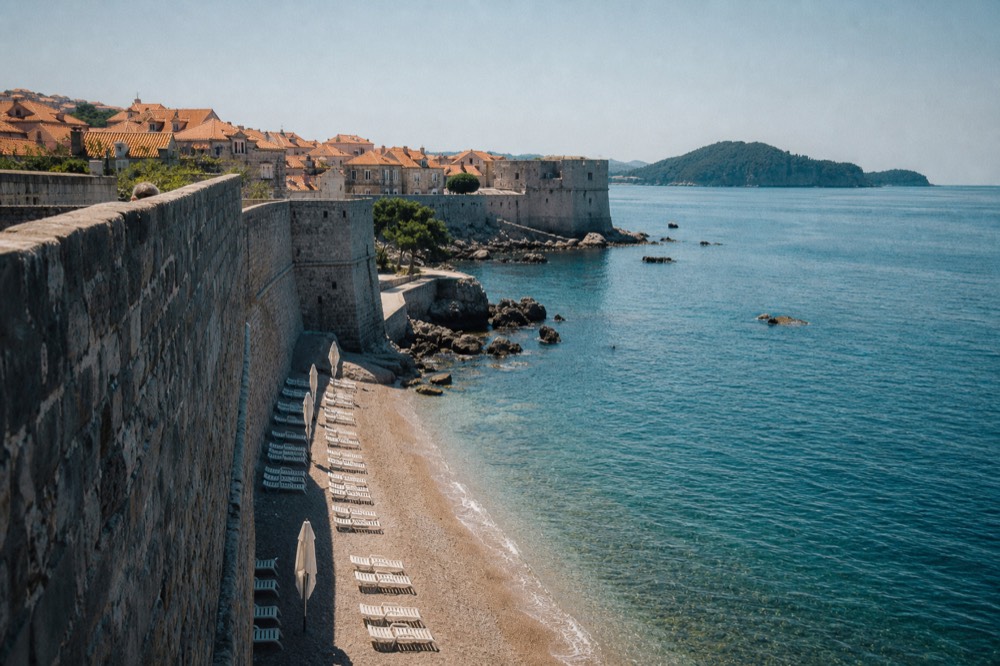
Banje divides opinion because it is small, famous and busy, but its position is unmatched: you swim with the walls and Fort Lovrijenac behind you and Lokrum in front. Sveti Jakov, below the church of the same name, is the local favourite for the view back across the whole Old Town bay, reached by a staircase that filters the crowds better than any ticket could. Lapad Bay is where families end up, on purpose, for its seafront promenade and organised beaches.
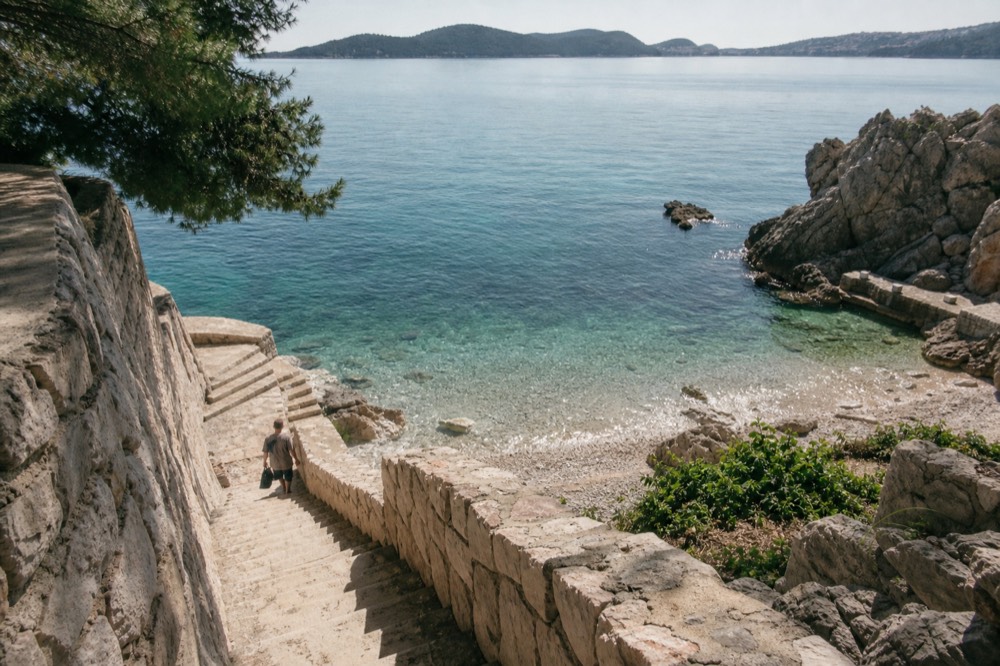
The wild-card option is Lokrum island. A ticket is 30 euro per person and covers both reserve entry and the return boat transfer, with departures from the City Harbour at 09:00, then every 15 minutes from 10:00 to 18:00, and the ticket office at Luža works 08:00 to 18:00. Lokrum has a small salt lake, rocky swimming platforms and the kind of deep, clear water the mainland coves cannot match. Our Lokrum island guide covers the whole day there.
| Swim spot | Distance from Old Town | Water character | Best for |
|---|---|---|---|
| Banje Beach | Walk from Ploče Gate | Deep, clear, quick drop | Convenience and the view |
| Walls rocks and platforms | On the circuit itself | Deep, entry by ladder or slab | A quick cooling dip |
| Sveti Jakov | Staircase descent | Clear, pebble entry | The classic panorama |
| Lapad Bay | Bus ride | Shallower, warmer, calmer | Families and lazy days |
| Lokrum island | Boat from City Harbour | Deepest and clearest | A half-day adventure |
One habit worth adopting: swim early or late. The counting system at the Old Town gates updates every 15 minutes, and on a sample September morning the headcount climbed from 5,419 at 08:00 to a 7,739 peak at 10:00. The water is the same at 07:30 as it is at noon, and the shoreline is not.
Is Kayaking and Snorkelling in Dubrovnik Worth It?
Yes, kayaking and snorkelling in Dubrovnik is absolutely worth it, especially for a swimming-focused trip. A kayak reaches caves and hidden coves that the beaches simply cannot, while the guided snorkelling stops put you in water clearer than anything reachable from shore, making it the single best water activity you can book there. The leading two-and-a-half-hour kayak and snorkel tour runs from $35 per person and is rated 4.9 across 3,619 reviews, and the two-hour Lokrum and Betina Cave version runs from $35.49 at 4.9 across 1,518 reviews. Both include guided paddling with snorkelling stops, and both are beginner-friendly.**
I have watched these tours launch from the beach below the walls for years, and the geometry is what sells them. Betina Cave, the green-lit sea cave around the headland, is only reachable by water, and paddling out to it with the Old Town shrinking behind you is the closest thing Dubrovnik has to a secret. The tours are reporting voice throughout: what the listings state, what the review counts show, and what the water is actually doing.
The Lokrum-and-Betina version is the one families tend to book, and one recent review captures why:
Loved this kayaking experience. Had an amazing time as a family and enjoyed the swimming break at Betina Cave very much. The views were amazing, water was crystal clear, the guide was excellent and we learnt a lot about Dubrovnik.
Imara_D
Practical notes that apply to both: book the morning departure in July and August, since the afternoon heat on open water is no joke, and take water shoes for the cave entry. If you want the full picture on the activity before committing, our kayaking guide compares every operator and route.
Which Boat Tours Actually Get You in the Water?
The full-day Elaphite islands cruise is the swimmer's boat tour: eight hours, three islands, a fish-picnic lunch, from $59.16 per person and rated 4.9 across 10,312 reviews, which makes it the most reviewed product in the city. The Blue Cave and Sunj Beach tour, from $63.48 at 4.87 across 3,105 reviews, is the alternative that trades the sit-down lunch for a cave swim and a famously shallow sandy beach. The Mljet National Park trip, from $153.99 at 4.9 across 397 reviews, is the wilder option with lakes, forest and the least crowded swimming of any boat day from the city.**
Sunj beach on Lopud is the swimming highlight of the Elaphiti chain, a shallow sandy arc that warms well above the open-water averages in this guide, which is precisely why children love it. The Blue Cave tour pairs a cave swim with that same beach. The Mljet National Park trip is the wilder option: lakes, forest and the least crowded swimming of any boat day from the city.
The Elaphite cruise is the one I would point a swimmer at first, and the review base explains the loyalty:
This was a wonderful day. Nice and shaded on the boat as we cruised on the cool adriatic. Loved seeing the neat Elphiti Islands and a wonderful way to get out the the heat and large crowds for a bit. They kept the drinks flowing and lunch was phenomenal and a generous portion. This is the way to cruise the Adriatic.
Shelby_S
| Boat tour | Length | From (per person) | Rating |
|---|---|---|---|
| Elaphite islands cruise with lunch | 8 hours | $59.16 | 4.9 across 10,312 reviews |
| Blue Cave and Sunj Beach with drinks | Half day | $63.48 | 4.87 across 3,105 reviews |
| Mljet National Park and 3 islands | 10 hours | $153.99 | 4.9 across 397 reviews |
| Lokrum and Betina Cave boat tour | Half day | $39.42 | 4.6 across 1,154 reviews |
A booking-timing note: sea state, not temperature, is what cancels boat days, and the operators watch the forecast and cancel with full refunds when the maestral or the bura makes the caves unsafe. That makes the free-cancellation options genuinely useful rather than marketing filler. For the wider comparison, our boat tours guide ranks every option.
What Should You Pack for Swimming in Dubrovnik?
Pack water shoes, a quick-dry towel, reef-safe sunscreen, and a dry bag for swimming in Dubrovnik, and treat all four as essential rather than optional. The rocky shores and sea urchins make water shoes especially important, while a dry bag keeps your belongings safe on boat trips and beach days. The entry at nearly every swim spot is stone or pebble, the sun off the water is fierce from June to September, and anything you want to stay dry on a kayak or boat needs to be sealed. A rash guard earns its place for children on all-day boat trips, and a spare bottle of water belongs in the bag before the swim, not after it, because shade is scarce on the platforms and the paddle back is longer than the paddle out.**
Water shoes are the item people skip and then regret. Between the sea urchins on the rocks, the pebbles at Sveti Jakov and the hot stone platforms at Banje, bare feet take a beating here. Sunscreen belongs in the bag before the swim, not after: the latitude is southern, the water reflects as well as the stone radiates, and a burned back on day two ruins day three.
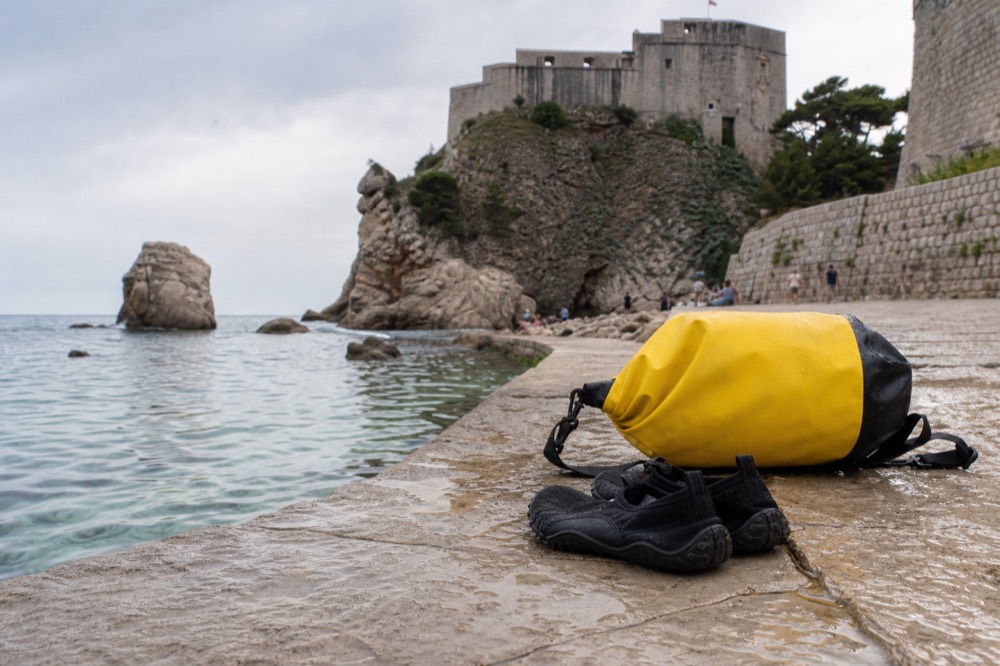
Timing advice folds into the packing list. Swim before 10:00 or after 16:00 in July and August, both for the sun and for the space, and keep the middle of the day for shade, lunch and the kind of slow afternoon this coast was built for. The swimming itself is the easy part; the water is warm, clear and safe, and the season is longer than the August stereotype suggests. For everything else on the water and off it, Things to Do in Dubrovnik is where the rest of the planning lives.
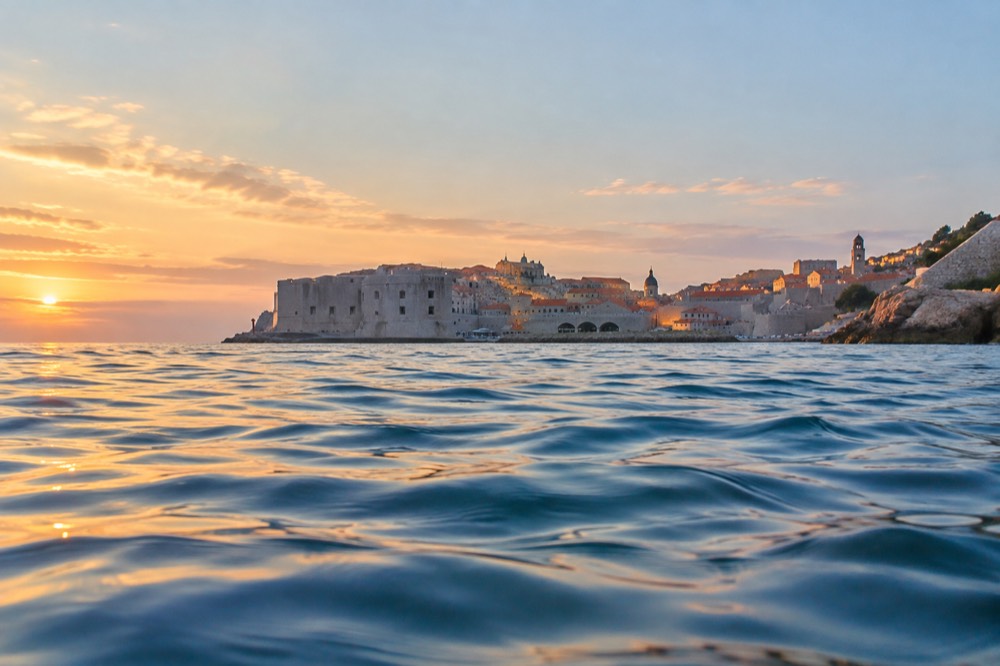
If you are still deciding which water day to book, these three cover the range: a kayak and snorkel morning, a panorama zipline for the view from above, and the Mljet National Park boat day for the deepest escape.
Common Questions About Swimming in Dubrovnik
Can you swim in Dubrovnik in September?
Yes, comfortably. The September long-run sea average is 23.6 degrees, and sheltered bays read warmer, with the Dubrovnik buoy recording 27.0 to 27.4 degrees on 8 September 2026. September is arguably the best swimming month of all, combining warm water with thinner beach crowds.
Is it safe to swim in the sea in Dubrovnik?
Yes. The water is clear and clean, organised beaches are lifeguarded in high season, and the main hazards are mundane: sea urchins on rocks, quick depth drops at some entry points and strong summer sun. Water shoes and common sense handle almost all of it.
What is the best month to visit Dubrovnik?
For swimming, August has the warmest water at a 25.8 degree average, but September at 23.6 degrees is the better all-round month, with gentler heat and falling crowds. Mid-June at 22.5 degrees is the value pick before peak pricing arrives.
What is the average temperature in Croatia by month?
Along the Dubrovnik coast the long-run sea averages are 14.3 in January, 14.0 in February, 14.2 in March, 15.4 in April, 18.6 in May, 22.5 in June, 24.9 in July, 25.8 in August, 23.6 in September, 21.0 in October, 18.5 in November and 16.0 degrees in December. These are 1991 to 2020 open-water averages from NOAA's satellite analysis, corroborated by an independent EU dataset.
Can you swim at Lokrum island?
Yes. Lokrum has rocky swimming platforms and a small salt lake, and the 30 euro ticket covers both reserve entry and the return boat transfer. Boats leave the City Harbour at 09:00, then every 15 minutes from 10:00 to 18:00, and a ticket stays usable for three days.
Do you need to book water tours in advance?
In July, August and September, yes, the popular kayak and boat tours sell out days ahead. Outside those months you can often book a day or two before. Look for the free-cancellation options, since sea state occasionally forces operators to cancel with a full refund.