Can You Swim at Lokrum Island?
Yes, you can swim at Lokrum island, and the water is some of the clearest within sight of Dubrovnik's Old Town. Here is what swimming there is like, what it costs and whether it is worth the trip.
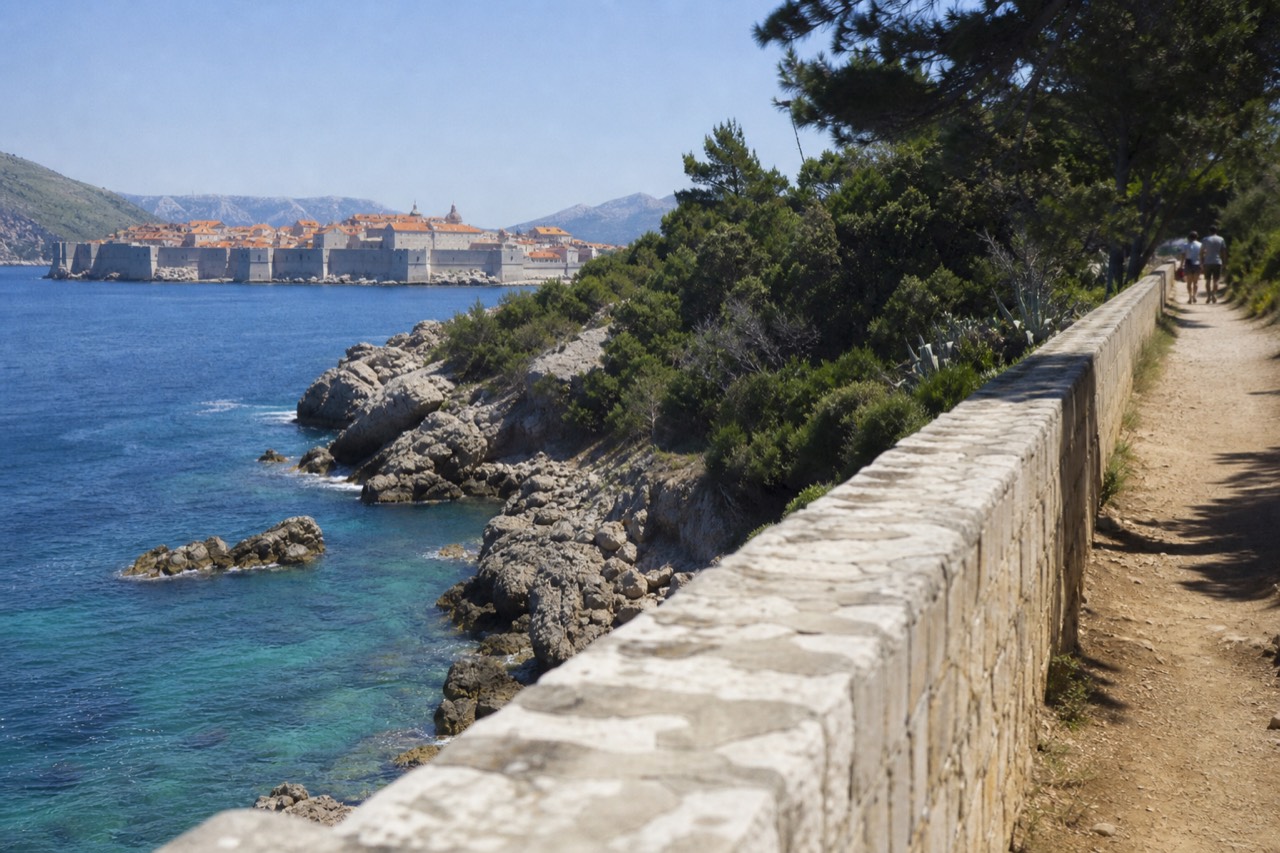
Can You Swim at Lokrum Island?
Yes, you can absolutely swim at Lokrum island, and swimming is arguably the single best reason to make the crossing. The island is a protected nature reserve with no cars and no overnight stays, so a day there revolves around water, shade and walking paths. Entry is controlled, the water is clear, and swimming is from rocks and stone platforms rather than a sandy beach.
I get this question from visitors standing at the old harbour more often than almost any other, usually from people who have looked across at the green lump on the horizon and wondered whether it is a real destination or just scenery. It is a real destination. Lokrum is a reserve run by a public institution, the crossing is a short scheduled boat ride, and once you are ashore the island is yours for the day within the reserve's rules.
The swimming itself is different from what many visitors expect. There is no sand to speak of. You enter the water from smoothed limestone ledges and rocky coves, some of them easy ladder entries, some of them a scramble. What you get in exchange is water clarity that the mainland beaches inside the city cannot match, because there is no road runoff and no city between you and the open Adriatic. On a calm morning you can see the bottom several metres down.
The water temperature is worth planning around. The September average for this coast is about 23.6 degrees, from a long-run NOAA average for 1991 to 2020, and July and August average 24.9 and 25.8. Those are open-water figures rather than beach thermometer readings: sheltered bays along this coast run warmer, and the Croatian met service's own Dubrovnik buoy read 27.0 to 27.4 degrees on a day in early September against that 23.6 monthly mean. In June the average drops to 22.5, still comfortable for most swimmers, while October's 21.0 is brisk but doable for a quick dip.
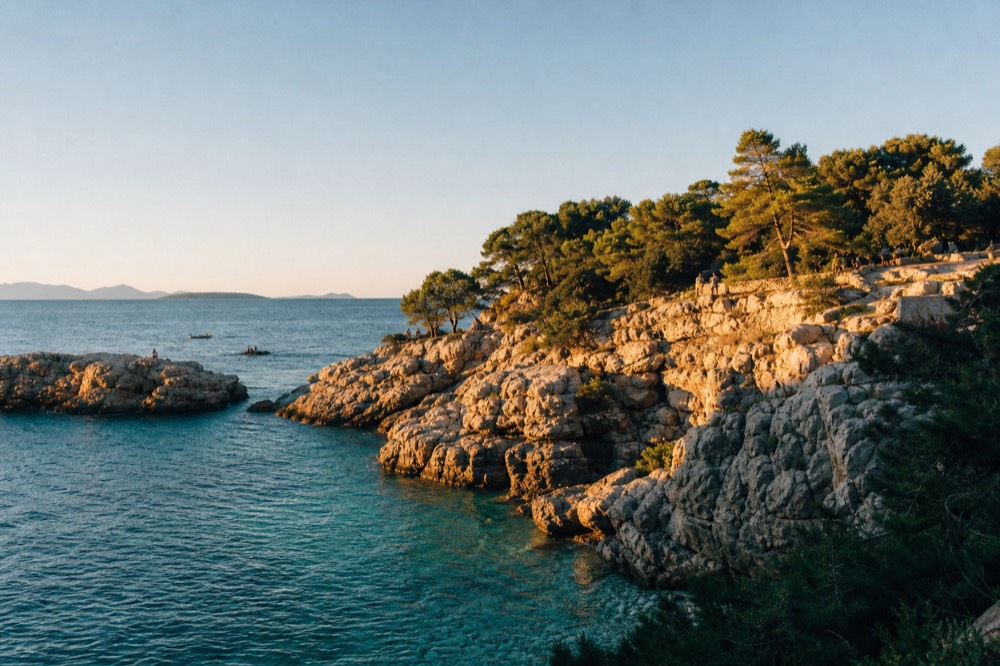
Because the island is close, small and swimmable, it pairs naturally with boat tours that work the same stretch of coast. If you would rather see Lokrum's cliffs and caves from the water, with a proper swim stop built in, these are the three options I would put in front of you first.
What Is Swimming on Lokrum Actually Like?
Swimming on Lokrum means clear, deep water entered from rock, with several distinct spots around a small island you can walk across in well under an hour. The most popular swimming area sits near the harbour where the boats arrive, so most people never walk far. The water deepens quickly, there is little shade at the waterline, and sea urchins mean water shoes are a sensible precaution.
The main swimming area is close to where the boats dock, which is convenient and, on a busy July afternoon, exactly as crowded as that sounds. Arrive on one of the early boats and you will have the ledges almost to yourself for a couple of hours. Walk further and the island quietens fast, because a large share of day visitors never leave the area near the landing.
The character of the swimming changes with the coastline. On the side facing Dubrovnik the water is calm in the morning and the city makes a backdrop for your swim. On the outer side there is more swell and more wind, and the rocks drop into deeper water. Neither side has lifeguards or facilities in the water, so this is swim-at-your-own-risk territory, which is standard for the whole Croatian coast outside established beach clubs.
Two practical notes I give everyone. First, sea urchins live in the rocks here, as they do everywhere along this coast, so bring something on your feet if you plan to enter anywhere other than the smoothest ledges. Second, there is very little natural shade at the swimming spots themselves, while the interior of the island is full of it. Plan your sun exposure accordingly, and take water with you.
Here is how the practical side of a swimming day on Lokrum compares with the alternatives inside and near the city:
| Swimming spot | Entry type | Water character | Best time |
|---|---|---|---|
| Lokrum, harbour side | Rock ledges and platforms | Clear, deepens quickly, calm mornings | First boats of the day |
| Lokrum, outer coast | Rocks, some scrambling | Deeper, more swell and wind | Calm days only |
| Betina Cave beach | Cave pebble beach, boat access | Sheltered, vivid blue, popular | Morning before tour boats |
| Banje beach, city | Managed beach with facilities | Clear but busier, city view | Early or late afternoon |
If the cave-and-cliff version of swimming appeals more than the do-it-yourself island version, the boat tour that works this exact coastline is worth a look. The Dubrovnik: Lokrum Island (optional) and Betina Cave Boat Tour runs from $39.42 per person, is rated 4.6 across 1,154 reviews, and its whole premise is the stretch of water between the Old Town harbour and Lokrum's rocky shore, with a swim stop at the cave and the island visit left to your choice. You can Check availability alongside the details in our Lokrum island guide.
A few things make the day go more smoothly once you are actually on the island. Because the water deepens quickly off the ledges, this is not a spot where you wade in gradually; you are in deep water within a few strokes, so swim only as far as you are confident returning from, and remember there is no lifeguard watching. The rock platforms are the smoothest places to enter, which is also why they fill up first, so if you want a flat, easy entry point on a busy day, the early boat matters more than on a quiet one.
Choose your side of the island to match the conditions rather than your mood. If the wind is up, the Dubrovnik-facing side is the sheltered option, with the calmest water in the morning before any afternoon breeze settles in. If the sea is flat and you want the deeper, quieter swimming, the outer coast rewards the walk, but expect some scrambling on the rocks getting in and out, and be honest with yourself about the swell before you jump. Check the water depth and the rocks below you before entering anywhere on the outer side.
Finally, build the shade problem into your plan rather than fighting it. The swimming spots themselves offer almost no escape from the sun, while the wooded interior a short walk away is full of it, so the natural rhythm of a Lokrum day is to swim, retreat to the shade to cool off and dry off, then come back for another dip. Bring more water than feels necessary, wear something on your feet for the rocks, and you will avoid the two complaints I hear most often from people who came unprepared: sunburn and sea urchin spines.
Is It Worth Going to Lokrum Island?
For most visitors with two or more days in Dubrovnik, yes, Lokrum is worth going to, precisely because it is the opposite of the Old Town: green, quiet, car-free and organised around water rather than stone streets. It costs 30 euro per person including the return boat, takes half a day, and delivers swimming and shade that the walled city cannot offer inside its walls.
The honest case for Lokrum rests on contrast. By the second day of a Dubrovnik trip, many people have walked the walls, done the Stradun twice and started to feel the crowd. The Old Town's official carrying capacity, from the UNESCO carrying-capacity assessment, is 11,275 people, and six counters at every entrance update a headcount every 15 minutes. On a September morning that curve can read 5,419 people at 08:00 and peak at 7,739 at 10:00. Lokrum is the nearest place where that number simply stops mattering, because the reserve spreads people out and half of them never walk past the harbour.
It is also the easiest "island" experience available from the city. You do not need to plan a day around it. Boats leave the City Harbour at 09:00, then every 15 minutes from 10:00 to 18:00, so you can decide on the spur of the moment, subject to the ticket office at Luža being open, which it is from 08:00 to 18:00. A ticket stays usable for three days after the date printed on it, which gives you a little slack if the weather turns.
The case against is real too, and I want to give it fairly. If your visit is a single day, or a cruise stop of a few hours, the walls, the Stradun and a viewpoint will eat your time and Lokrum will feel like a detour. And if you have no interest in swimming, the island's appeal drops sharply, because its walking paths, gardens and ruins are pleasant rather than spectacular. There is a reason the question "is it worth it" gets asked so often, and the honest answer is that it depends almost entirely on how much you want to be in the water.
For planning how a Lokrum half day fits alongside everything else, our piece on how many hours you need on Lokrum breaks the timing down, and the wider Things to Do in Dubrovnik homepage lays out the full menu of days out.
Is It Worth It to Go to Lokrum Island?
Judged on value rather than novelty, Lokrum holds up well in the shoulder months and is at its weakest at the height of August. The 30 euro ticket is a fair price for a half day that includes the boat, the reserve and swimming in clear water. In July and August the heat, the crowds and the exposed rocks take the edge off, while May, June, September and October give you the same island with more space.
This version of the question, worth-it rather than worth-going, deserves a different answer because it is about money and time, not curiosity. On the money side, 30 euro per person covers the reserve entry and the return boat transfer together, whether you ride the official boat or arrange your own transport to the island. There is also a combined Dubrovnik, Trsteno, Lokrum, Dubrovnik ticket at 42 euro that adds the Trsteno Arboretum and an air-conditioned boat, which starts to make sense if the arboretum was already on your list.
On the time side, the seasonal pattern matters more than most visitors expect. Cruise passengers, who add noticeably to Old Town congestion, peaked in September at 101,246 and October at 100,132 in 2025, above July's 96,072 and August's 87,385, according to Port Authority data. The island absorbs that pressure better than the streets do, but the swimming ledges near the harbour still feel it. Early September is the sweet spot I recommend most often: sea averaging about 23.6 degrees, warm in the sheltered spots, and a calmer town around the harbour before and after.
| Month | Average sea temperature | What it means for swimming |
|---|---|---|
| May | 18.6 | Cold for most, brief dips only |
| June | 22.5 | Comfortable, fewer people |
| July | 24.9 | Warm, busiest period |
| August | 25.8 | Warmest, peak crowds and heat |
| September | 23.6 | Comfortable, best overall balance |
| October | 21.0 | Brisk, quiet, fine for hardy swimmers |
Those temperatures are long-run monthly averages for this coast, not a forecast for the day you arrive, and sheltered bays along the shore run warmer than the open-water figure. Treat them as a planning range and check the water when you get there.
If your honest motivation is swimming in the clearest possible water rather than visiting the island itself, compare Lokrum against the boat-based alternatives before you commit. The Elaphiti Island Luxury Pirate Ship Cruise runs from $65 per person, rated 4.8 across 757 reviews, and gets you out to the wider archipelago. The Mljet National Park and 3 Island Boat Tour, from $153.99 per person and rated 4.9 across 397 reviews, is the full-day version with lakes and forest. Lokrum wins on ease and price; those win on scale.
Is There a Restaurant on Lokrum Island?
Lokrum has limited catering rather than a restaurant scene, and the honest advice is to treat food as bring-your-own. As a protected nature reserve the island has no town, no shops and no overnight accommodation, so whatever food service exists is minimal and seasonal. Most visitors who plan to eat properly on Lokrum bring a picnic, and the shade of the interior makes that a genuinely pleasant plan.
I am deliberately careful here, because the details of what is open on the island change from season to season and I will not print an opening pattern I cannot stand behind. What I can say with confidence is structural: the island is a day-visit reserve, everything on it operates under the reserve's rules, and the reliable sources for what is currently serving food are the reserve's own site at lokrum.hr and the staff at the ticket office at Luža in the Old City Port.
The picnic plan deserves more credit than it gets. The ticket office works 08:00 to 18:00, the boats run until early evening, and the island's wooded interior is full of shaded spots a short walk from the swimming ledges. Buy bread, cheese, fruit and something cold in the Old Town before you board, and you have a better lunch than a rushed restaurant stop would give you, at a fraction of the price. City restaurants are expensive, and a day on a quiet island with your own food is one of the few genuinely cheap-feeling experiences in Dubrovnik.
Water is the other thing to carry. There is little shade at the swimming rocks and the summer sun off white stone is fierce, so a bottle per person, sun cream and a hat matter more on Lokrum than they do in the streets, where at least the buildings give you shade to dodge into.
How Much Does It Cost to Go to Lokrum Island?
A Lokrum visit costs 30 euro per person, and that single ticket covers both the reserve entry and the return boat transfer from the City Harbour, whichever way you travel. A combined Dubrovnik, Trsteno, Lokrum, Dubrovnik ticket costs 42 euro and adds the Trsteno Arboretum with an air-conditioned boat. There is no separate cheaper entry-only option for arriving by your own boat.
That flat structure surprises people, so it is worth spelling out. The 30 euro is not a boat fare plus an entrance fee you can dodge by rowing over; the reserve charges the same per person whether you ride the official boat or arrange your own transport, and the official boat transfer is bundled into it. The ticket office at Luža sells from 08:00 to 18:00, boats leave the City Harbour at 09:00 and then every 15 minutes from 10:00 to 18:00, and a ticket stays valid for three days after its printed date, which gives you a weather escape hatch.
Here is the full cost picture for a day built around swimming:
| Item | Cost | Notes |
|---|---|---|
| Lokrum ticket, per person | 30 euro | Reserve entry plus return boat transfer |
| Combined Dubrovnik, Trsteno, Lokrum ticket | 42 euro | Adds Trsteno Arboretum, air-conditioned boat |
| Betina Cave boat tour, from | $39.42 | Boat tour with swim stop, island visit optional |
| Kayak tour of Lokrum and Betina Cave, from | $35.49 | Rated 4.9 across 1,518 reviews |
| Elaphiti pirate ship cruise, from | $65 | Full archipelago day, rated 4.8 across 757 reviews |
Two comparisons help place the 30 euro. The adult City Walls ticket is 40 euro in main season, 1 March to 30 November, so Lokrum is the cheaper of the city's two headline half days. And against the boat tours, you are paying less but doing the work yourself: no guide, no swim stop organised for you, no cave detour. Some visitors do both, taking the official boat out for the island and the swimming, then a cave tour on a different day. If you want the details on how the boats work, our Lokrum ferry guide covers the schedule and ticket mechanics in full.
If you are leaning toward letting a boat do the planning, these are the three water days I would compare, from the short Lokrum-and-cave run to the full Mljet expedition.
Common Questions About Swimming on Lokrum Island
Can you swim at Lokrum island?
Yes. Swimming is one of the main reasons to visit, from rock ledges and stone platforms in clear water. There is no sandy beach, water shoes help against sea urchins, and the water is at its warmest from July to September, averaging 24.9, 25.8 and 23.6 degrees in those months as long-run coastal averages.
Is It Worth Going to Lokrum Island?
For most visitors with two or more days, yes. It costs 30 euro per person including the return boat, takes half a day, and offers green space, shade and swimming that the Old Town cannot. On a one-day visit it is usually the thing to cut.
Is There a Restaurant on Lokrum Island?
Catering on the island is minimal and seasonal, and the reliable answer is to bring a picnic. The island is a protected day-visit reserve with no shops, so check lokrum.hr or ask at the Luža ticket office for whatever is currently open.
How Much Does It Cost to Go to Lokrum Island?
30 euro per person, covering reserve entry and the return boat transfer together, whether you use the official boat or your own transport. A combined ticket with Trsteno Arboretum is 42 euro. Tickets stay usable for three days after the printed date.
How Do the Boats to Lokrum Run?
Boats leave the City Harbour at 09:00, then every 15 minutes from 10:00 to 18:00. The ticket office at Luža in the Old City Port operates 08:00 to 18:00. No crossing duration is published by the reserve, so plan on the schedule rather than a minute count.
When Is the Best Time to Swim on Lokrum?
Early September balances warm water, about 23.6 degrees on the long-run average and warmer in sheltered spots, against thinner crowds. June is quieter but cooler at 22.5, and August is the warmest at 25.8 but the busiest. Take an early boat whatever the month.