Do They Speak English in Croatia? What a Dubrovnik Trip Actually Sounds Like
Yes, English works almost everywhere in Croatia, especially in Dubrovnik. Here is what language you will hear, what to watch out for, and the best month to go.
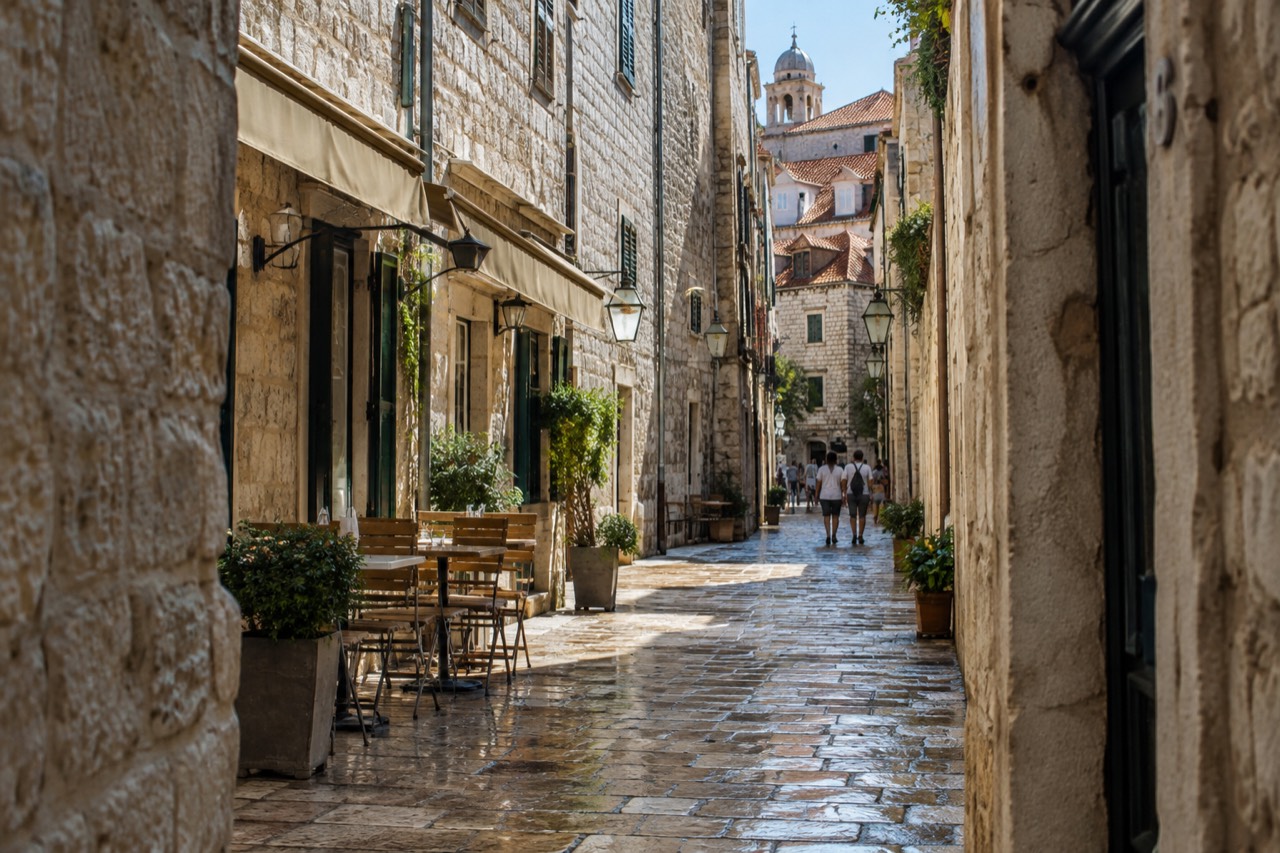
Do They Speak English in Croatia?
Yes, overwhelmingly. Croatia's official language is Croatian, but English is the default second language of the coast, the tourism industry and the younger generation, and in Dubrovnik you can complete an entire trip, from airport transfer to dinner order to guided tour, without a word of Croatian. Staff in hotels, restaurants, ticket offices and museums switch to English the moment they hear your accent, and in a destination that logged about 4.2 million overnight stays in 2025, sharing first place among Croatian destinations with Rovinj, they get a great deal of practice. You will not need a phrasebook to function. A few Croatian words still earn you warmth, and a handful of situations still reward care, which is what the rest of this page is for.
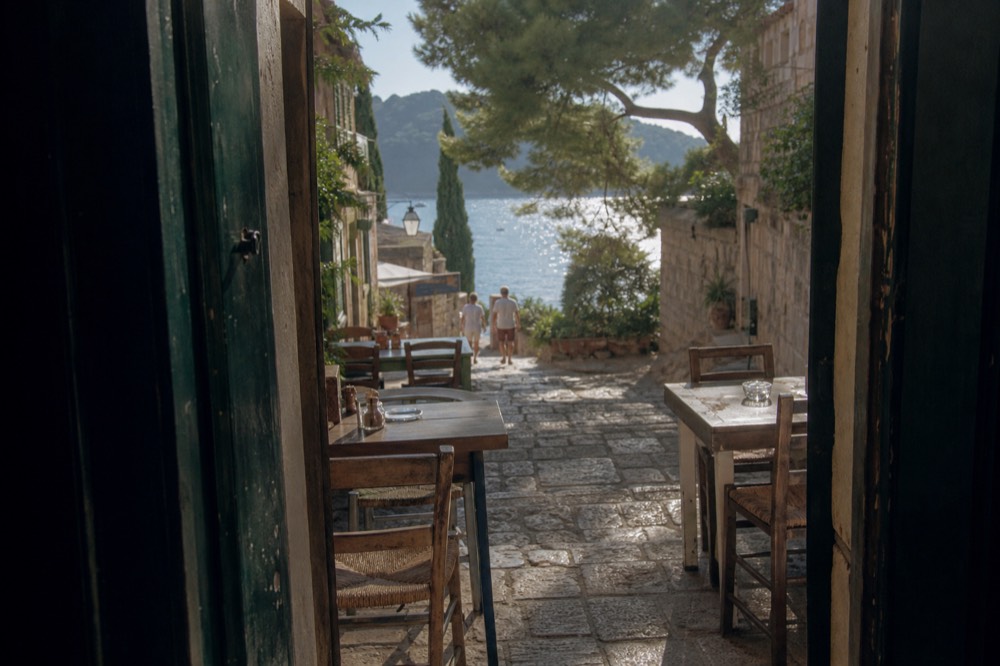
Croatia sits at a crossroads of languages. Croatian is a South Slavic language written in the Latin alphabet, closely related to Serbian, Bosnian and Montenegrin, so many people in the tourism trade also speak a neighbouring language or two. German and Italian are common second languages among older Croatians, a legacy of decades of Austrian and Italian tourism on the Adriatic, and Italian in particular is strong in Istria and along the northern coast. English, though, is the language of the youngest working generation and of the entire tourism economy, and it is the one you will hear used most after Croatian itself.
Dubrovnik pushes this even further. The city's population at the 2021 census was 41,562, a small resident base serving one of the busiest tourism economies on the Adriatic, and the industry that serves it is built for international guests. Every museum of note offers English labels, the city walls operator sells tickets through an English-language webshop, the cable car's official site publishes prices and timetables in English, and the local tour roster runs in English as its standard language. If you have ever worried that a small Mediterranean city would be hard work linguistically, this is the opposite case: Dubrovnik is arguably the easiest city in Croatia for an English-only traveller.
That said, "everyone speaks English" is a slight overstatement, and it helps to know where the edges are. Outside the tourism belt, in inland towns, in some suburban bus situations and among some older residents, English thins out. Croatian politeness words go a long way there, and they are genuinely appreciated rather than merely tolerated. The practical picture, where English is strong and where it is thinner, is worth a quick look before you land.
| Situation | English availability | What helps |
|---|---|---|
| Dubrovnik Old Town restaurants and cafes | Universal, menus in English as standard | Nothing needed |
| Museums, city walls, cable car, Lokrum | Universal, official sites and signage in English | Book tickets online in English |
| Guided tours in Dubrovnik | English is the default tour language | Check the listing for language options |
| Taxis and airport transfers | Very strong | Have your address written down |
| Local buses and suburban routes | Variable | Know your stop name in Croatian |
| Inland towns and villages | Thinner, generational | A few Croatian phrases |
If you want to see how deep the English-language offer runs in this one city, the guided products are a good proxy. The walls, the Old Town and the viewpoints all come with English-speaking guides, and the three below are a fair cross-section of what a first visit looks like.
A few practical notes round out the picture. Croatian is written in the Latin alphabet, so you can read street signs, bus destinations and menu boards without learning a new script, which already puts you ahead of travellers in much of eastern Europe. Croatian is also highly phonetic: words are pronounced roughly as they are spelled, so a small effort at pronunciation goes further than you might expect. If you do want to try a few words, the ones that land best are the simple ones: "dobar dan" (good day), "hvala" (thank you), "molim" (please or you're welcome) and "izvolite" (here you go). Locals will usually reply in English anyway, but the greeting is noticed.
One situation worth flagging is the ferry and catamaran network. Ticket counters and websites at the main ports handle English well, but departure boards and announcements can be Croatian-only, so it pays to confirm your gate and sailing time with staff rather than relying on the board alone. The same applies at the main bus station, where platform assignments sometimes change faster than the signage. In restaurants, one useful distinction is the cover charge: many places add a small bread-and-cover fee per person, listed on the bill in Croatian, and knowing to look for it saves a moment of confusion at the end of the meal.
Finally, a word on expectations. English proficiency in Croatia is among the strongest in the region, and the country consistently ranks well in international English proficiency surveys, but fluency is uneven rather than universal. In tourist areas you will be understood; in everyday settings a little patience, a written address and a polite "dobar dan" cover almost everything else. The language barrier in Dubrovnik is close to nonexistent, and what remains of it is easily bridged.
What Language Do They Speak in Croatia?
Croatian is the official and only state language of Croatia, spoken by essentially the entire population, and it is a South Slavic language written in the Latin alphabet, closely related to the languages of Serbia, Bosnia and Montenegro, so a phrase learned anywhere in the region works across most of the former Yugoslav lands. Regional dialects vary noticeably, and the coast around Dubrovnik has its own speech traditions, but standard Croatian is what you will hear in schools, media and official life. English is the most useful foreign language for visitors, followed by German and Italian in the tourism regions. Nothing about the language situation should change your travel plans.
A little linguistic context makes the country easier to read. Croatian uses the Latin alphabet with a handful of extra letters, including č, ć, š, ž and đ, and its spelling is pleasingly phonetic: once you learn a few letter values, you can pronounce almost any word you see, including place names. That matters more than you would think, because half the practical friction of a Croatian trip is not conversation, it is pronouncing bus stops, street signs and restaurant names. If you can say "Stradun" and "Gruž" reasonably well, you are ahead of most visitors.
The dialect map is real but invisible to a short-stay visitor. What you will notice instead is that Dubrovnik's history as a merchant republic left it comfortable with foreign languages for centuries, and the modern tourism economy has only deepened that. The city's Old Town was inscribed on the UNESCO World Heritage List in 1979 under criteria (i), (iii) and (iv), covering a property area of 24.7 hectares, and a site of that standing is interpreted for visitors in multiple languages as a matter of course. English sits at the front of that queue.
For everyday courtesy, a small vocabulary is worth more than fluency. Croatian greetings and thanks are simple, and using them marks you as a guest who made an effort rather than a visitor who assumed. Nobody will correct your pronunciation, and plenty of people will smile at the attempt, which is a fair trade for two minutes of memorising on the plane.
| English | Croatian | Roughly sounds like |
|---|---|---|
| Hello / goodbye | Zdravo / Doviđenja | ZDRAH-vo / doh-vee-JEH-nya |
| Good day | Dobar dan | DOH-bar dahn |
| Please | Molim | MOH-leem |
| Thank you | Hvala | HVAH-lah |
| Yes / no | Da / ne | dah / neh |
| The bill, please | Račun, molim | RAH-choon, MOH-leem |
If you are curious how far a single greeting carries, our piece on saying hi in Croatia breaks down the greetings visitors actually use day to day.
What Language Do They Speak in Dubrovnik?
Croatian, in its standard form, is what Dubrovnik's 41,562 residents speak at home, and English is the working second language of the entire visitor economy, so thoroughly that an English-only traveller can book, buy, eat, tour and find their way without a single language obstacle. The city's tourism infrastructure, from the walls operator's English webshop to English-language guided tours, is built for an international audience first. You will also hear Italian, German, French and Spanish around the Stradun in high season, because Dubrovnik's guests come from everywhere.
The scale of the international presence explains the language comfort. Dubrovnik recorded about 4.2 million overnight stays in 2025, sharing first place among Croatian destinations with Rovinj, according to the Croatian Bureau of Statistics, and the cruise side adds another layer: 625,257 cruise passengers passed through the Port of Dubrovnik in 2025, per the Port Authority's statistics. A resident base of 41,562 serving that volume simply has to operate in English, and it does, cheerfully and without ceremony.
The numbers behind those crowds are worth knowing, because they shape your day more than any language question will. Six counters at every Old Town entrance update a headcount every 15 minutes, and the official carrying capacity from the UNESCO carrying-capacity assessment is 11,275 people. On a real September morning the count climbed from 5,419 people at 08:00 to a 7,739 peak at 10:00, then eased to 7,205 by 11:00. That curve, not the Croatian language, is the thing to plan around.
Because the guide economy runs in English, a guided walk is one of the most language-efficient things you can do here: one booking, and a local explains a thousand years of history in fluent English. The Ancient City Walls & Wars walk is a good example, about 2 hours, from $29.58 per person, rated 4.8 across 1,387 reviews, and it covers the walls circuit with the wars and sieges that shaped it. One recent guest put it better than a listing can:
This well organized tour helped put Dubrovnik's past (and present) into perspective. It's incredible that the city walls have withstood the test of time. Antun was a wonderful guide.
linda_a
The same operator runs a longer option if you want the Old Town and the walls in one morning, and the e-tuk-tuk panorama ride suits anyone whose knees have opinions about stairs. Whichever format you choose, the guiding is in English, the meeting points are easy to find, and free cancellation is standard on these listings, so there is little risk in locking a date before you fly.
What to Be Careful of in Croatia?
The honest cautions are practical rather than linguistic: heat and sun on the walls and stairs, crowds peaking in late morning, prices in the Old Town running above the Croatian average, and a few simple safety habits around water, stone and summer traffic. Croatia is a safe, orderly country by European standards, and Dubrovnik is a small city where violent crime against visitors is rare. What catches people out is not danger, it is discomfort: sunburn on the walls, an empty water bottle at noon, and a bill that assumed table service. English removes the language friction; the rest is planning.
Start with the walls, because that is where the most people get caught out. The circuit is 1,940 metres long, up to 25 metres high, with almost no shade, and the operator's stated hours run 08:00 to 19:30, so the smart move is the 08:00 entry, before the counters show the climb toward that 10:00 peak. The adult ticket is 40 euro in main season, 1 March to 30 November, and 20 euro in December; a child 7 to 18 pays 15 euro then 5 euro, and under 6 goes free. Bring water, a hat and shoes with grip, because the limestone paving is polished by four centuries of feet and it is slick when wet.
Money and billing habits deserve one honest paragraph. Croatia uses the euro, and cards are accepted almost everywhere, including small cafes and buses, so cash is a backup rather than a necessity. Service is sometimes included in restaurant bills and sometimes not, so read the bottom of the bill before tipping, and expect Old Town prices to sit above what locals pay a few streets outside the walls. The classic visitor error is not being overcharged, it is assuming every terrace on the Stradun prices like a neighborhood konoba. It does not.
Around water, use ordinary sea sense. The September average for this coast is about 23.6 degrees, a long-run open-water average rather than a beach thermometer reading, and sheltered bays run warmer, but rocks drop off quickly and stone underfoot is sharp. On the practical safety side, keep valuables out of back pockets in the peak-hour crush on the Stradun, hold small children's hands on wall parapets, and remember that the sun is stronger than the air temperature suggests. If you want the fuller checklist, our guide to what to be careful of in Dubrovnik goes into detail.
| Caution | Where it bites | Simple fix |
|---|---|---|
| Heat and no shade | City walls, stairs, midday Old Town | Walk the walls at 08:00, carry water |
| Peak crowds | Old Town, 10:00 to early afternoon | Do sights early, terraces late |
| Slick limestone | Stradun and wall paving, when wet | Grippy shoes, slow steps |
| Old Town prices | Stradun-facing terraces | Eat a street or two in |
| Sea rocks and depth | Betina Cave, rocky swim spots | Water shoes, enter feet first |
| Pickpocket risk | Peak-hour crush on the Stradun | Front pockets, zipped bag |
What Is the Best Month to Go to Croatia?
For Dubrovnik specifically, the sweet spots are May, June, late September and early October: the sea is swimmable, the crowds are below the late-morning summer peaks, and September and October are actually the two busiest cruise months, at 101,246 and 100,132 passengers in 2025, ahead of July and August. July and August bring the fullest programme and the warmest water, the August long-run average is 25.8 degrees, but they also bring the densest Old Town counts and the highest heat. April and May are quiet and green with a cooler sea, and winter is mild, quiet and cheap, with the walls ticket at 20 euro in December.
The month choice is really a choice between three Dubrovniks. The first is the full summer city, June through August, when the cable car runs until midnight, every boat sails, the sea sits at its warmest, and the Old Town counters climb toward their 10:00 peak every single day. The second is the shoulder city, May, late September and October, when the water is still swimmable, the September average is about 23.6 degrees and October's about 21.0, and the cruise calendar is, counter-intuitively, at its busiest. The third is the winter city, when the walls drop to 20 euro, the cable car closes January to March, and you share the Stradun with locals.
That cruise peak in September and October surprises almost everyone, and it is the single most useful planning fact on this page. The Port Authority's own monthly figures for 2025 put September at 101,246 cruise passengers and October at 100,132, above July's 96,072 and August's 87,385. Cruise figures are ship capacity rather than a count of people who actually walk ashore, so read them as pressure, not as a census. Still, if your dream is an empty Stradun, a Tuesday in February beats any Tuesday in September, and a September morning before 09:00 beats the same morning at 11:00.
| Month | Sea average, degrees C | What to expect |
|---|---|---|
| April | 15.4 | Quiet, green, cool sea, full sightseeing weather |
| May | 18.6 | Shoulder-season favourite, warm days, thin crowds |
| June | 22.5 | Swimmable, long days, busy but not peak |
| July | 24.9 | Peak heat and crowds, everything open late |
| August | 25.8 | Warmest water, fullest Old Town, book ahead |
| September | 23.6 | Warm sea, top cruise month, mornings still calm |
| October | 21.0 | Second cruise peak, mild days, quieter evenings |
Those sea figures are long-run open-water averages, not this year's beach reading, and sheltered bays run warmer: the Croatian met service's Dubrovnik buoy read 27.0 to 27.4 degrees on 8 September 2026 against a 23.6 September mean. For a fuller month-by-month breakdown, our Dubrovnik weather by month guide carries the whole year, and when to avoid Dubrovnik covers the weeks worth skipping. Whatever month you pick, this site, Things to Do in Dubrovnik, exists to make the planning half as hard as the walking.
If you are leaning toward the shoulder months, and you should be, the same three products that carry a summer visit carry an October one, often with more room to breathe on the walls and the water.
Common Questions About Speaking English in Croatia
Do they speak English in Croatia?
Yes, widely. Croatian is the official language, but English is the default second language of the coast, the tourism industry and the younger generation, and in Dubrovnik you can handle every part of a trip, bookings, meals, tickets and tours, entirely in English.
What Language Do They Speak in Croatia?
Croatian, a South Slavic language written in the Latin alphabet, closely related to Serbian, Bosnian and Montenegrin. German and Italian are common second languages in the tourism regions, and English is the most useful one for visitors.
What Language Do They Speak in Dubrovnik?
Standard Croatian at home, English everywhere the visitor economy runs. With about 4.2 million overnight stays in 2025 and 625,257 cruise passengers through the port, the city operates comfortably in English, plus Italian, German, French and Spanish in high season.
What to Be Careful of in Croatia?
Practical discomforts rather than danger: heat and no shade on the city walls, crowds peaking around 10:00, slick limestone paving, and Old Town terrace prices above the local average. Croatia is safe and orderly; bring water, grippy shoes and a little patience.
What Is the Best Month to Go to Croatia?
For Dubrovnik, May, June, late September and early October balance warm seas, thinner crowds and full opening hours. Note that September and October are actually the busiest cruise months, at 101,246 and 100,132 passengers in 2025, ahead of July and August.
Do I Need Any Croatian at All?
No, but a few words earn genuine warmth. Zdravo or dobar dan for hello, hvala for thank you, molim for please, and račun, molim for the bill will cover almost every courtesy situation you meet.