How Do I Say "Hi" in Croatia?
The Croatian greetings that matter, how to use them in Dubrovnik, what to be careful of, and the best month to visit, from a Dubrovnik-based specialist.
How Do I Say "Hi" in Croatia?
The everyday word is bok, a casual all-purpose hi used among friends, with dobar dan, good day, as the polite standard for shops, restaurants and hotel desks from morning until late afternoon. Croatian distinguishes formal from informal address, so choosing the right greeting matters almost as much as the word itself.
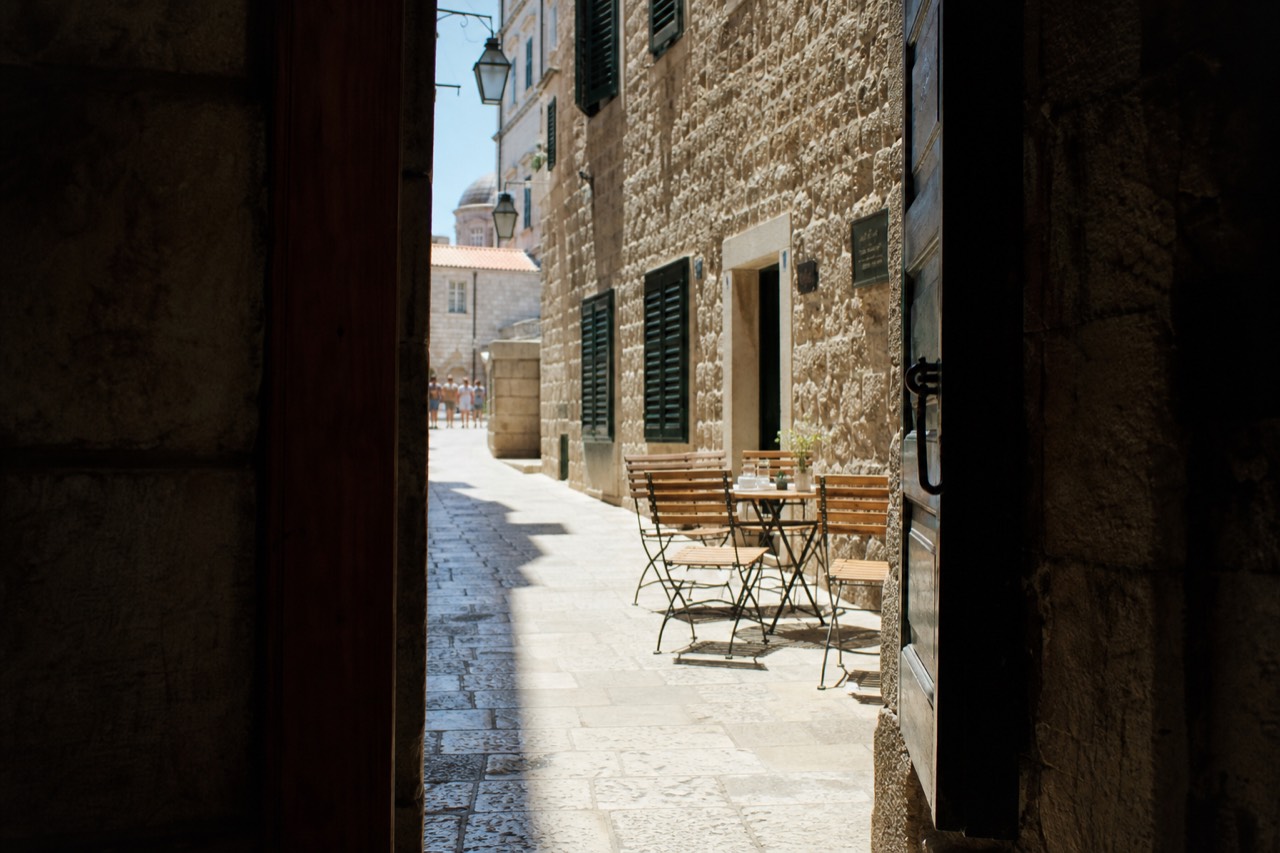
I get asked this on the Stradun more often than almost any other question, usually by someone standing in front of a bakery counter wondering whether to speak first. In Croatia you generally should. Walking into a small shop, a konoba or an apartment building without greeting the room reads as abrupt here in a way it does not in London or New York. One word, said with a nod, sets the whole interaction on the right foot.
Croatian is a South Slavic language written in the Latin alphabet, so reading signs is easier than in neighbouring Greece or, for that matter, much of the eastern Mediterranean. Pronunciation is phonetic and stress is predictable once you have heard a few sentences. Visitors who manage even two or three local words notice the difference immediately: a warmer greeting back, a slower explanation, sometimes a small discount at the market. Nobody expects fluency, and English is widely spoken in Dubrovnik, but effort is noticed and rewarded.
There is a practical side to this too. The greetings you use signal the register of the conversation that follows. Start formal with a stranger and you can stay formal; start with the casual form and a waiter may match you, which is fine in a beach bar and less fine when you are asking a museum clerk for help. This page walks through the words themselves, the politeness rules around them, the things visitors genuinely should be careful of in Croatia, and the best month to plan the trip around.
If you are heading straight from this question into planning your days, these three are the most useful first bookings in the city: the walls admission, a guided Old Town walk, and the cable car and walls combination.
How Do You Say Hello in Croatia?
Hello is zdravo informally and dobar dan during the day, with dobro jutro before roughly noon and dobra večer in the evening. Bok is the friendly hi you will hear constantly in Dubrovnik, and it works both as hello and goodbye between people who know each other or are the same age.
The full ladder of daytime greetings, with the situations where each one fits, looks like this. Notice that Croatian changes the greeting by clock rather than by mood: there is a right word for the hour, and locals use it without thinking.
| Croatian | Means | When to use it |
|---|---|---|
| Dobro jutro | Good morning | Until about 10:00 or 11:00 |
| Dobar dan | Good day | Late morning to early evening, the safe default |
| Dobra večer | Good evening | From dusk onward, restaurants and bars |
| Zdravo | Hello | Neutral, informal, any hour |
| Bok | Hi / bye | Casual, friends, peers, younger staff |
| Laku noć | Good night | Parting only, at night |
Two things trip up English speakers. The first is the formal you, vi, versus the informal ti. With anyone older, anyone serving you, or anyone you have just met, use vi and the formal greeting. Bok and ti belong with people your own age, children, and friends of friends once the ice has broken. The second is pronunciation: bok rhymes with the English word woke, dobar dan is DO-bar DAHN, and večer sounds like VEH-cher with the č as in church. Say the words with confidence even if imperfectly; hesitation reads worse than an accent.
A few companion words earn their keep quickly. Hvala means thank you and should follow every transaction. Molim covers please, you are welcome and pardon me, which makes it the most useful single word in the language. Oprostite is excuse me, the polite form, for squeezing past a crowd on the Stradun. Izvolite is what a waiter says handing you a menu, and what you say offering a seat. If you want a deeper run through the language situation in the country, including how widely English carries you, read do they speak English in Croatia.
The greeting is also your entry into the day's rhythm here. Locals greet the room when they enter, and they say dobar dan to strangers on hiking paths, in apartment stairwells and at the fish stall in Gruž. I do the same on the walls circuit every week, and it is remarkable how often a dobar dan to a stranger on a staircase turns into a two-minute conversation about where to eat. The city recorded about 4.2 million overnight stays in 2025, sharing first place among Croatian destinations with Rovinj, so the people behind the counters meet a lot of visitors; the ones who say hello in Croatian stand out.
Once the greeting is sorted, the classic first morning in the city is the walls circuit, and the plain admission ticket is the cheapest way onto it.
What to Be Careful of in Croatia?
The main things to be careful of are sun and heat on unshaded stone, crowds at peak hours in the Old Town, sea urchins on rocky beaches, and pickpocketing in dense crowds, which is uncommon but not zero. Croatia is one of the safest countries in Europe for visitors, so the real risks are physical: dehydration, uneven limestone and overconfidence in the water.
Start with the sun. The Dalmatian coast is a Mediterranean climate and the stone of the Old Town holds heat like an oven wall. In July and August, walking the city walls at midday is genuinely hard going: the circuit is 1,940 metres long with almost no shade, the operator's stated hours run 08:00 to 19:30, and the difference between 08:00 and 13:00 on that stone is the difference between a pleasant walk and a slog. Carry water, wear a hat, and do the walls or the Srd hike early. The same logic applies to kayaking and to the stairs up to viewpoints; the sun is the one thing in Croatia that reliably catches visitors out.
Crowds are the second thing to plan around, and the data is more interesting than the folklore. Everyone assumes July and August are the worst, and on the beaches they are. But Port Authority figures show cruise passengers in 2025 actually peaked in September at 101,246 and October at 100,132, above July's 96,072 and August's 87,385. Six counters at every Old Town entrance update a headcount every 15 minutes, and on a sample September morning the count climbed from 5,419 at 08:00 to a 7,739 peak at 10:00. The lesson is simple: early morning is quiet in every month, and September is not the escape from crowds people imagine, even though it is a beautiful time to come. The Port Authority limits cruise passengers to 8,000 a day in most cases, which keeps the worst days bounded, but the 10:00 to 14:00 window is still the busiest part of the day in the lanes.
Money and practicalities are the third cluster. Croatia uses the euro. Cards are accepted almost everywhere in Dubrovnik, though a market stall or a small beach kiosk may prefer cash, so carrying a modest amount is sensible. Prices in the Old Town are high by Croatian standards, and the complaint you hear most from visitors is not danger but cost: a drink on the Stradun costs several times what the same drink costs ten minutes away in Gruž. Tipping is appreciated but modest; rounding up a restaurant bill or leaving ten percent is normal, and nobody tips on a bad experience. For a fuller rundown of local etiquette and the mistakes that mark you out, see the dos and donts in Croatia.
In and on the water, the honest risks are jellyfish in late summer, sea urchins on rocks, and currents around the headlands. Water shoes solve most of the urchin problem. The sea itself is clean and the September long-run average for this coast is about 23.6 degrees, an open-water figure rather than a beach thermometer reading, with sheltered bays running warmer. Do not overread that number either way: it is a 1991 to 2020 average, not this week's water. Swimming is safe on the main beaches; the Buža bars and rocky edges simply demand more care entering the water than a sandy shelf does.
Traffic and borders deserve one line each. Croatian drivers are no worse than the European average, but the coastal road is narrow and the parking around the Old Town is scarce and expensive, so most visitors are better off on foot or buses. If you cross into Bosnia and Herzegovina for Mostar or into Montenegro, carry your passport; the borders are straightforward but they are real external borders and queues build in high season.
None of this should read as alarm. The city's population at the 2021 census was 41,562, and it absorbs millions of nights of tourism a year with remarkably low incident rates. The visitors who have a bad time here are almost always the ones who underestimated the sun, the stone stairs or the midday crowd, not the ones who encountered crime.
What Is the Best Month to Go to Croatia?
For Dubrovnik the best months are May, June, September and early October, when the sea is warm enough to swim, the crowds are thinner than July and August, and prices sit below the peak. June and September are the sweet spot for most travellers: June pairs 22.5-degree average seas with long days, September pairs 23.6-degree seas with harvest food and warm evenings.
The sea temperature series makes the swimming case clearly. These are long-run monthly averages for the open water off this coast, and they tell you when the water is genuinely pleasant rather than merely survivable: May 18.6, June 22.5, July 24.9, August 25.8, September 23.6 and October 21.0 degrees. In other words, the sea is warmest in August but perfectly swimmable from mid-June into October, and a sheltered bay in September often feels several degrees warmer than the open-water figure, as the Croatian met service's own Dubrovnik buoy showed when it read 27.0 to 27.4 degrees on a September day against that 23.6 monthly mean.
| Month | Average sea temp | What to expect in Dubrovnik |
|---|---|---|
| May | 18.6 °C | Green hills, quiet lanes, cool-ish sea |
| June | 22.5 °C | Warm sea, long days, busy but not peak |
| July | 24.9 °C | Hottest, busiest, highest prices |
| August | 25.8 °C | Warmest sea, peak crowds and heat |
| September | 23.6 °C | Warm sea, harvest food, cruise peak |
| October | 21.0 °C | Mild, quieter, sea still swimmable |
Two corrections to the standard advice. First, September and October are the two busiest cruise months of the year in Dubrovnik, ahead of July and August, so if your goal is empty streets, the shoulder season is late October and November rather than September, or the winter months if you do not need swimming. Second, the cable car closes January to March and runs reduced hours from October, so a winter visit trades sea and views for low prices and a completely different, quieter city. April opens the season with the cable car running 09:00 to 21:00 and the sea still cool at a 15.4-degree average.
Price follows the same curve. Flights and rooms are cheapest in the shoulder months and the winter, and the walls ticket itself drops from 40 euro in main season, 1 March to 30 November, to 20 euro in December, which is one of the few hard seasonal discounts in the city. The one-day Dubrovnik Pass costs the same 40 euro as the walls ticket in main season and adds ten more sights plus a 24-hour bus ticket, but that equivalence is a main-season fact only: in December no pass tier is on sale at all. The full month-by-month trade-offs, including events and rainfall, are laid out in the best time to visit Dubrovnik.
My own answer, asked every week: come in June if you want heat and swimming, September if you want the sea still warm and the grapes coming in, and late October if you want the city to yourself. Say dobar dan to whoever hands you the first coffee of the trip and the rest of the day tends to take care of itself.
How Do You Say Thank You, Goodbye and Cheers?
Thank you is hvala, goodbye is doviđenja formally or bok casually, and cheers is živjeli. Add oprostite for excuse me, molim for please, and račun molim for the bill, and you have the complete courtesy kit for a week on the coast.
These six words close the loop that the greetings opened. Hvala is the one you will use most, and hvala lijepa, thank you kindly, earns a smile at any counter. Doviđenja literally means until we see each other again and is the polite parting; bok does double duty as hi and bye among peers. Živjeli, pronounced ZHEEV-yeh-lee, is the toast, and it is worth knowing before your first evening at a konoba, because someone will raise a glass within the hour.
The bill ritual catches a few visitors out. In a Croatian restaurant you generally have to ask for the check; staff will not bring it unbidden because bringing it unasked is considered rude, hurrying you out. Račun, molim, the bill please, is the phrase, and it works everywhere from a fish restaurant on the quay to a café on a side street. Service is not rushed in Dalmatia by design, and once you know that, the pace stops feeling slow and starts feeling like the point.
A note on how far to take it. You do not need to memorise phrases to be welcomed here, and pretending to more Croatian than you have can be its own small comedy. A greeting, a thank you and a request for the bill, delivered warmly, cover ninety percent of daily interactions, and the remaining ten percent happens in English without friction. The words are a courtesy, not an entrance exam. For everything beyond the greetings, from the walls to the islands, the planning starts on Things to Do in Dubrovnik.
One honest word on the walls admission ticket, since it is the booking most first mornings revolve around: it is the cheapest route onto the circuit, from $36.37 per person, rated 3.6 across 249 reviews, and it covers the walls plus Fort Lovrijenac. The modest rating mostly reflects the price of the ticket rather than the walk itself; the stone is the stone, and 1,940 metres of it is the single best thing you will do in the city.
If you would rather have the history explained while you walk, the guided Old Town walk with a local guide starts at $20 per person and is rated 4.8 across 5,826 reviews. One guest review sums up the difference a guide makes on a hot day: "Alex was a fantastic guide, she explained the complex history of Dubrovnik to give a lasting impression of the history of the area. Really appreciated that she aimed for shaded areas on a boiling September day. The food recommendations for after were much appreciated too! Great tour for a first experience of the old town!"
That shaded-route detail is worth pausing on, because it is exactly the kind of local knowledge a guide adds that no ticket or guidebook can. On a September afternoon the difference between a route that hugs the shade and one that does not is the difference between finishing the walk and abandoning it halfway, and reviewers mention it again and again.
For the full spread of options, from the plain admission to the combination tickets that bundle the cable car with the walls and a walking tour, these three are the ones worth comparing before you commit a morning.
Common Questions About Saying Hi in Croatia
How do I say "hi" in Croatia?
Say bok for a casual hi among friends and peers, or dobar dan for the polite daytime greeting in shops, restaurants and hotels. Dobro jutro works before late morning and dobra večer after dusk. Croatian distinguishes formal and informal address, so with strangers and anyone serving you, dobar dan is the safe, respectful choice.
How do you say hello in Croatia?
Zdravo is the neutral informal hello, dobar dan is the standard polite daytime hello, and bok is the friendly hi you will hear most often in Dubrovnik. The greeting changes with the clock: dobro jutro in the morning, dobar dan through the day, dobra večer in the evening.
What to be careful of in Croatia?
Sun and heat on unshaded stone, especially the 1,940-metre walls circuit at midday; crowds between 10:00 and 14:00, remembering that September and October are actually the peak cruise months; sea urchins on rocky beaches; and modest pickpocketing risk in dense crowds. Croatia is otherwise one of the safest countries in Europe for visitors.
What is the best month to go to Croatia?
For Dubrovnik, June and September: June pairs a 22.5-degree average sea with long days, September pairs a 23.6-degree sea with harvest food and warm evenings. May and early October suit travellers who prefer quieter streets, while July and August bring the warmest water, the biggest crowds and the highest prices.
Do I need to speak Croatian in Dubrovnik?
No. English is widely spoken in shops, restaurants and tour operations. A greeting and a thank you in Croatian are appreciated and open doors, but nobody expects fluency, and every interaction you are likely to have as a visitor can be completed in English without friction.
How do you say cheers in Croatian?
Živjeli, pronounced roughly ZHEEV-yeh-lee. Raise your glass, make eye contact, and say it before the first sip. Hvala for thank you and račun molim for the bill complete the evening set.