Does Dubrovnik Get Cold at Night?
Night temperatures in Dubrovnik by season, what to pack for evenings, and how the Adriatic keeps the Old Town warmer than the hills behind it.
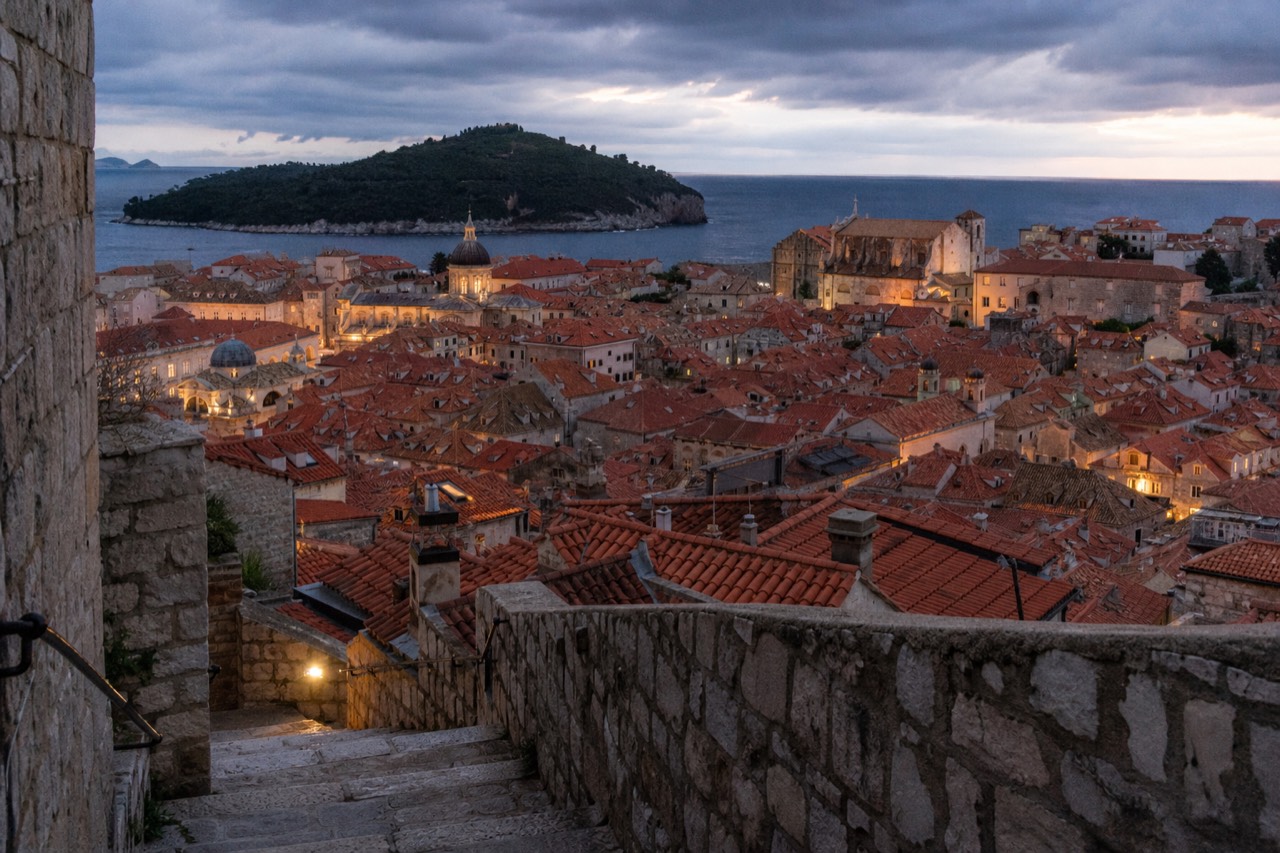
Does Dubrovnik Get Cold at Night?
Rarely in the way people fear. Summer nights stay warm, typically in the low twenties Celsius, because the Adriatic releases stored heat all evening, and even midwinter nights sit well above freezing on average. The nights that catch visitors out are the shoulder-season ones, when a bura wind can drop the felt temperature sharply within an hour of sunset.
I get this question from travellers packing for June and imagining the Mediterranean as a place that snaps cold after dark, the way an inland continental city does. It does not work like that here. Dubrovnik sits on a narrow coastal shelf with the sea on one side and Mount Srđ rising behind it on the other, and that geography does two things to the nights. The sea, which the long-run record puts at a 25.8 degree August average and a 23.6 degree September average as an open-water figure, cools far more slowly than the land, so it keeps the air above the city from falling very far overnight. The mountain, meanwhile, can funnel cold, dry air down from the interior when the pressure gradient is right, and that is the bura, the wind that makes a March evening feel like a different country from a March afternoon.
The honest answer therefore has three parts. In June, July and August, nights are warm enough that you will eat dinner outside at 21:00 without a jacket, and the summer festival season is built around exactly that. In April, May, October and the first half of September, evenings are pleasantly cool, and a light layer is genuinely useful, especially near the water. From November through March, nights are properly cold by Mediterranean standards, damp cold off the sea rather than deep frost, and you should pack as you would for a cool European city.
One number worth holding onto: the cable car operator closes entirely from January to March, and when it reopens in April it runs until 21:00. A town whose viewing attractions keep evening hours in spring is a town that expects people to be comfortable outdoors at night. The same logic applies to the evening walks, including the free, pay-what-you-want Magical Dubrovnik Nights walk on GuruWalk, which runs 1 hour 45 minutes after dark and is rated 4.9 across 288 reviews. Nobody builds a night-tour product for a city where evenings are miserable.
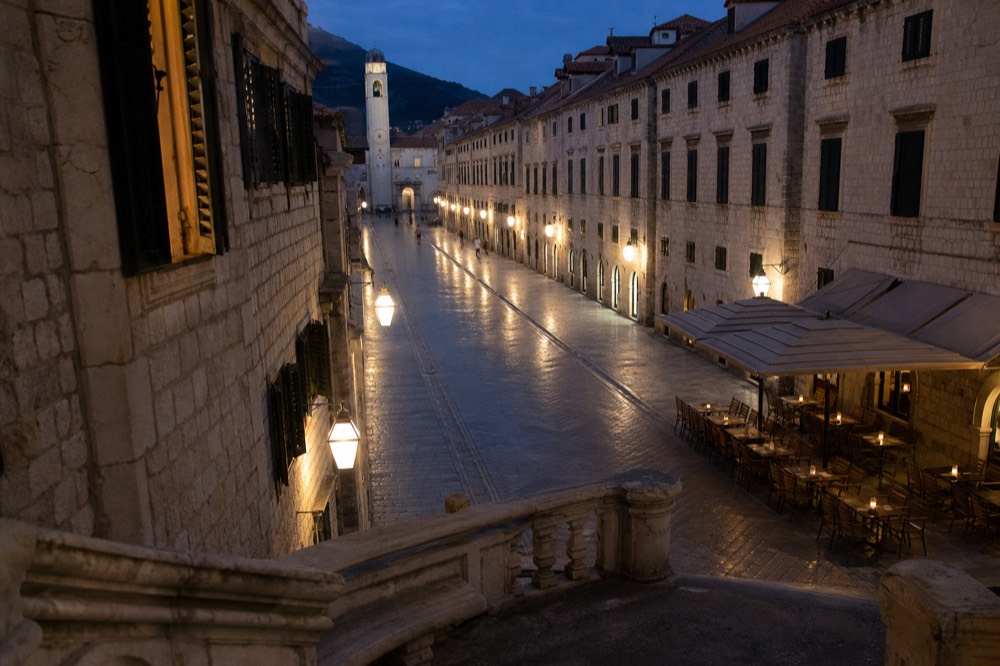
If you are planning around this, the month-by-month picture matters more than a single average, so here is the open-water sea temperature series, a NOAA long-run 1991 to 2020 average for this coast rather than a beach thermometer reading, which is the single biggest driver of how the nights feel.
| Month | Average Sea Temperature | What the Evening Feels Like |
|---|---|---|
| January | 14.3 °C | Cold and damp; coat and layers |
| February | 14.0 °C | The coldest water of the year; cold nights |
| March | 14.2 °C | Cool nights, bura risk at its peak |
| April | 15.4 °C | Chilly after sunset; a real jacket |
| May | 18.6 °C | Mild evenings, light layer enough |
| June | 22.5 °C | Warm nights, outdoor dining easy |
| July | 24.9 °C | Warm to hot; no jacket needed |
| August | 25.8 °C | The warmest nights of the year |
| September | 23.6 °C | Warm early, cooler late in the month |
| October | 21.0 °C | Mild but cooling; bring a layer |
| November | 18.5 °C | Cool nights, occasional storms |
| December | 16.0 °C | Cold, damp, festive lighting |
A caveat I insist on when I quote this series: these are grid-cell open-water averages, not this year's water and not a sheltered bay. The Croatian met service's own Dubrovnik buoy read 27.0 to 27.4 degrees on 8 September 2026 against a 23.6 degree September mean, which tells you how much warmer shallow, sheltered water runs in late summer. Warm bays near the Old Town warm the evenings above them in exactly the same way.
For evening plans, the practical split is simple. From June through August you can book any sunset cruise, night walk or terrace dinner and be comfortable. In May and most of September, you will want one extra layer after about 21:00. From October to April, plan evenings the way you would in a cool city: indoors more often, and when you do go out, dressed for it.
What Not to Do in Dubrovnik?
Do not walk the city walls at midday in summer, do not drive or park anywhere near the Old Town, do not eat on the Stradun's main drag expecting the city's best food, and do not arrive in July or August expecting quiet. Each of these mistakes is common, avoidable, and the difference between a good trip and an exhausting one.
The walls mistake is the one I see most. The circuit is 1,940 metres with almost no shade, stone underfoot that radiates the day's heat back at you, and the operator's stated hours run 08:00 to 19:30. Walk it at 08:00 and you have cool stone, empty photo spots and soft light. Walk it at 13:00 in August and you are doing 25-metre-high, unshaded stair work in the hottest part of the day. The same logic applies to the cable car: the upper station sits at 405 metres, and the view range the operator claims is up to 60 km on a clear day, so go early or go late, never at noon haze.
The car mistake is structural. The Old Town is pedestrianised, parking outside it is scarce and expensive in season, and the local buses are frequent and cheap. The counting system that tracks Old Town crowding uses six counters at every entrance updating every 15 minutes, and the official carrying capacity from the UNESCO assessment is 11,275 people. Adding a car to that equation buys you nothing except a parking hunt. Use buses, use your feet, and if you are coming from the airport, use a transfer.
The food mistake is subtler. The Stradun, 298 metres long and fixed in its final plan by the 1272 Statute, is a beautiful street to walk and an average street to eat on, at least at the tables most visible from it. The konobas a few streets back, and the neighbourhood places in Gruž and Lapad, are where the city actually eats. The Dubrovnik Tourist Board's own Placa page is a good primary read on the street's history if you want context before you walk it.
The timing mistake is the big one, and it deserves its own section, because the data on when Dubrovnik is busiest contradicts what everyone assumes. That is next.
Is Dubrovnik Worth Visiting?
Yes, and the numbers back it. The Old Town has been UNESCO-listed since 1979 under criteria (i), (iii) and (iv), the destination recorded about 4.2 million overnight stays in 2025 to share first place in Croatia with Rovinj, and the walls, the sea and the island belt within an hour's sail justify the trip on their own. Worth visiting is not really in doubt; worth visiting well is the real question.
The case for the city is easy to state. A fully walled medieval core of 24.7 hectares, inscribed by UNESCO in 1979 and listed as World Heritage in Danger from 1991 to 1998 during the siege, standing intact and lived-in. A fortress, Lovrijenac, perched on a 37-metre sea rock facing the walls across a channel. An island archipelago, the Elaphites, close enough that a full-day cruise with lunch is a standard, excellent day out. A cable car that lifts you 367 metres in three and a half minutes to a panorama over all of it. The city's population at the 2021 census was 41,562, which means the Old Town you are walking through is a real neighbourhood, not a museum set.
The case against, honestly stated, is cost and crowding in the peak. The adult walls ticket is 40 euro in main season, 1 March to 30 November, and 20 euro in December, with no family ticket sold, only adult and child 7 to 18, under 6 free. Restaurants in the core price for a captive audience. And the crowds are real and measured, not folklore. But both problems are seasonal and manageable, which is exactly why the timing question matters so much.
One planning note that pays for itself: in main season the one-day Dubrovnik Pass costs the same 40 euro as the standalone walls ticket and adds ten more sights plus a 24-hour bus ticket, with the walls and Lovrijenac listed first among the inclusions. In December the walls ticket drops to 20 euro and no winter pass tier is on sale at all, so the "pass costs the same as the walls" line is a main-season comparison only. The City of Dubrovnik's official card page lays out the structure if you want to check the current inclusions.
For a first visit, I would say the answer is an unqualified yes if you can time it well. The city rewards the traveller who walks early, sails at least one day, eats a street or two back from the Stradun, and treats the evening as part of the experience rather than a wind-down. The night version of the Old Town, lamplit and cooler, is arguably its best version, which is one reason the free GuruWalk evening walk has built the following it has.
When to Avoid Dubrovnik?
Avoid the peak cruise weeks of September and early October if you want the Old Town to yourself, and avoid November to February if you want the full restaurant and tour season. The counter-intuitive fact is that cruise passengers in 2025 peaked in September at 101,246 and October at 100,132, above July's 96,072 and August's 87,385.
That September and October peak surprises everyone, and it is the single most useful piece of timing information on this site. The Port Authority's own data, published on its statistics page, shows the full-year 2025 total was 625,257 cruise passengers against 582,499 in 2024, and 461 cruise calls are scheduled for 2026. The daily management is real: the Port Authority limits cruise passengers to 8,000 a day in most cases, and of 243 cruise days a year only 18 exceed 8,000, with only 4 slightly above 10,000. About forty call requests were refused in one season to hold that line.
What that means for you is a matter of degree rather than disaster. A real half-hourly count read on 8 September 2026 showed the Old Town at 1,200 people at 04:00, 5,419 at 08:00, a 7,739 peak at 10:00, then 7,205 at 11:00, all well under the 11,275 carrying capacity. Even on a busy September day, the town is not physically crushed; it is simply busiest at mid-morning, which is one more argument for the 08:00 walls start. Note that cruise passenger figures are ship capacity, not people who actually walk ashore, so treat them as an upper bound on the crowd, not a headcount.
The winter case is the opposite trade. From November through March you get the city largely to yourself, walls tickets at 20 euro in December, and a damp, quiet, atmospheric Old Town. What you lose is operational: the cable car is closed January to March, the Western Outer Wall section closes December through February, plenty of restaurants and island boats pause, and the nights are genuinely cold as covered above. December also brings the seasonal lighting and a different kind of charm, but it is not the postcard version.
The sweet spots, if you want them named: late May and June, and the second half of September into mid-October. Sea temperatures of 22.5 degrees in June and 23.6 in September mean swimming is comfortable, evenings are mild, and the cruise peak, while real, is concentrated into predictable midday windows you can plan around. Our broader best time to visit guide works through the whole year in more detail.
Is Dubrovnik Good for Beaches?
Good, not great, and different from the sandy image most people bring. The city's beaches are mostly stone, concrete and shelving rock with spectacular clear water, the best sandy beach nearby is Sunj on Lopud reached by boat, and the sea is warm enough for comfortable swimming from June into October.
Set expectations first. There is no long sandy crescent walking distance from the Stradun. What there is: Banje near Ploče with its postcard view back at the walls, the rocky and quieter stretches below the Babin Kuk peninsula, Lapad Bay's concrete-and-shingle setup backed by cafés, and Sveti Jakov, the small beach below the cliff path that rewards the walk down with the best view of the Old Town from water level. The water quality is the constant across all of them, exceptionally clear, which is what the Adriatic here actually delivers.
The water temperature story is the one that answers this question properly, and it is a long-run average story, not a forecast. The June average for this coast is about 22.5 degrees, July 24.9, August 25.8, September 23.6 and October 21.0, from the NOAA 1991 to 2020 open-water series, corroborated within about 1 degree by an independent EU dataset (August 24.90, September 23.15). Those are open-sea figures; sheltered shallow bays run warmer, as the Dubrovnik buoy's 27.0 to 27.4 reading on 8 September 2026 shows against that 23.6 September mean. Practical translation: June through September is genuinely swimmable, October is brisk but fine, and from November to May you are swimming on principle.
| Beach | Surface | Best For |
|---|---|---|
| Banje | Pebble and concrete | Views of the walls, closeness to the Old Town |
| Lapad Bay | Shingle with facilities | Families, cafés, easy bus access |
| Sveti Jakov | Pebble | The walk, the view, quiet mornings |
| Sunj, Lopud | Sand | Shallow water, children, a boat day out |
| Copacabana, Babin Kuk | Concrete and pebble | Water sports, sunset, staying on the peninsula |
The sandy exception is worth a day of anyone's trip. Sunj on Lopud, one of the Elaphiti islands, is the shallow, sandy, family-perfect beach this coast otherwise lacks, and the way to reach it is the island cruise: the full-day Elaphite cruise with lunch runs about 8 hours, and the most-reviewed version carries a 4.9 rating across 10,312 reviews. If sand is the priority, plan a boat day rather than hunting for it inside the city.
For evening swimmers, this loops back to where we started. An August sea averaging 25.8 degrees holds the night air warm, so a late swim off Banje or Lapad at 20:00 is one of the city's quiet pleasures, and a September one is still comfortable in the first half of the month. If you are weighing the water month by month, our swimming season guide covers it in depth, and the September swimming answer takes that specific question further.
One last practical note that ties the whole article together: pack for the evening, not just the day. The traveller in shorts and a linen shirt who is fine at 17:00 is the one buying an emergency hoodie on the Stradun at 21:00 in early October. A single warm layer, real shoes for the walls stairs, and something rain-ready outside high summer covers almost every night this city will throw at you. That is the whole secret of Things to Do in Dubrovnik after dark: the nights are an asset here, and the people who plan for them get a second city, quieter and lamplit, after the day-trippers have gone.
Common Questions About Cold Nights in Dubrovnik
Does Dubrovnik get cold at night?
Not in summer. June to August nights typically stay warm thanks to the sea, which averages 22.5 to 25.8 degrees in those months and releases heat all evening. Shoulder-season evenings from April to May and September to October are cool enough for a light layer, and from November to March nights are properly cold and damp, though usually above freezing.
Do I Need a Jacket for Dubrovnik Evenings in Summer?
Usually not in July and August, when outdoor dining at 21:00 is comfortable without one. In June and early September a light layer is sensible, especially near the water or on a boat, where the evening breeze carries the sea's chill.
What Is the Bura and Does It Affect Night Temperatures?
The bura is a cold, dry wind that funnels down from the mountains behind the city when the pressure gradient is right. It can drop the felt temperature sharply within an hour, most often in the winter and early spring months, and it is the reason a March afternoon and a March evening can feel like two different seasons.
Which Months Have the Coldest Nights in Dubrovnik?
December through February. The sea temperature averages 16.0 degrees in December, 14.3 in January and 14.0 in February, the lowest of the year, so the water stops insulating the coast and the damp cold settles in. Pack as you would for a cool European city.
Can You Still Do Evening Activities Outside in Shoulder Season?
Yes. The cable car runs until 21:00 in April and later as spring deepens, and the free Magical Dubrovnik Nights walk on GuruWalk, rated 4.9 across 288 reviews, runs year-round after dark. Bring one warm layer and the shoulder-season evenings are some of the best the city offers.