Does Dubrovnik Have Good Wine?
Yes, Dubrovnik has good wine: the city sits on the edge of the Plavac Mali heartland, and wine bars, Konavle valley tastings and Ston oyster-and-wine lunches are all within easy reach.
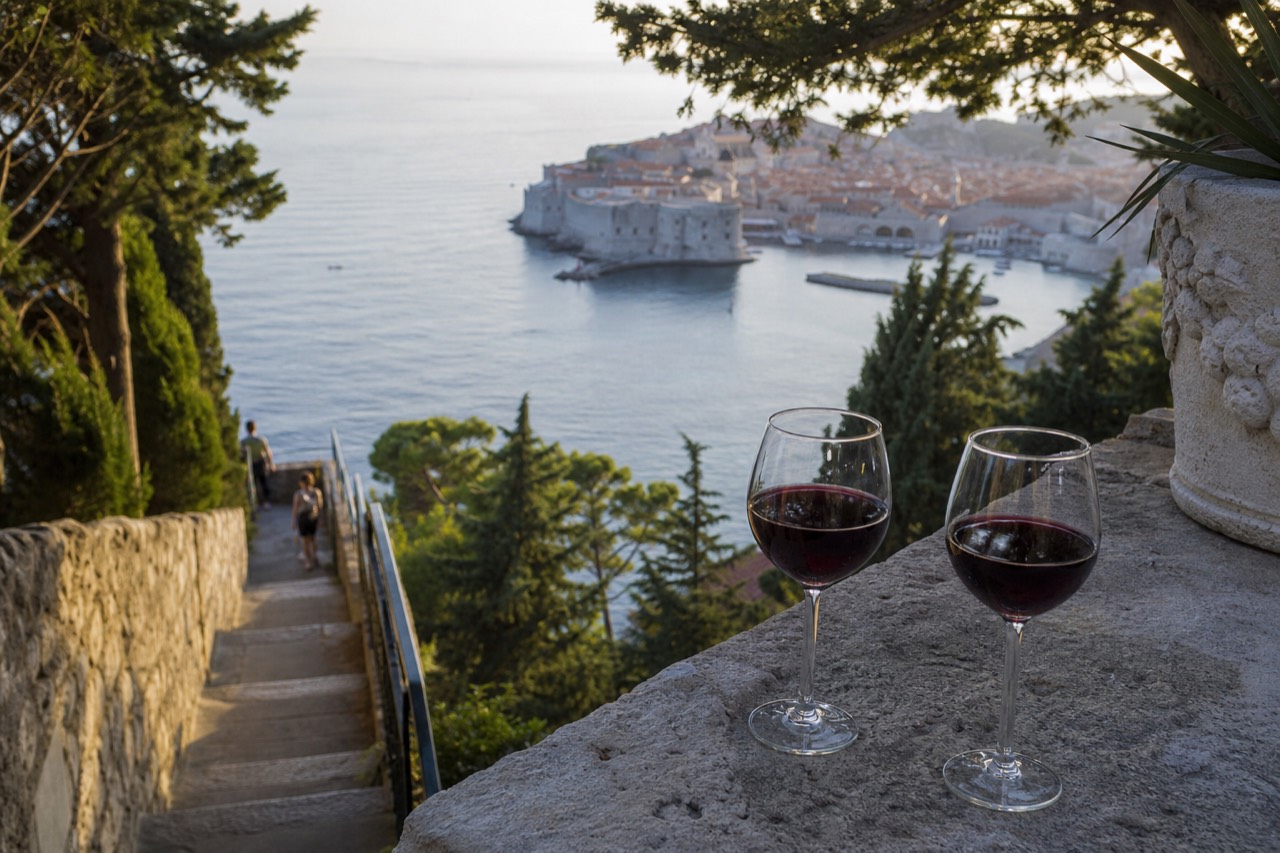
Does Dubrovnik Have Good Wine?
Yes, Dubrovnik has good wine, and the city is a better wine destination than its reputation as a cruise-and-walls town suggests. The local red is Plavac Mali, grown on the steep coastal slopes north of the city, and the whites are mostly Pošip and other Dalmatian varieties. You can taste all of it without leaving the Old Town, or ride half an hour into the Konavle valley for the vineyard version.
The short version of why the wine here is good: Dubrovnik sits at the southern end of the Dalmatian coast, and the strip of land running north from the city, the Pelješac peninsula, is one of the most serious red-wine regions in Croatia. The same harsh limestone, sun and sea breeze that make the coast beautiful make the vines work hard, and vines that work hard make concentrated grapes. The city itself is not a vineyard, it is a walled town of 24.7 hectares inside its UNESCO property boundary, but it is surrounded on three sides by wine country: the Konavle valley behind it, Pelješac up the coast, and the islands of Korčula and Lastovo across the water.
What surprises most first-time visitors is how easy the wine is to reach. You do not need a car or a full-day commitment. A glass of local Plavac Mali costs restaurant money rather than tasting-room money in most konobas, and there are dedicated wine bars within a five minute walk of the Stradun, the 298 metre main street that runs the length of the Old Town. If you want the full vineyard experience, guided tastings run from the city into the Konavle valley, roughly half an hour away, with pickup in town.
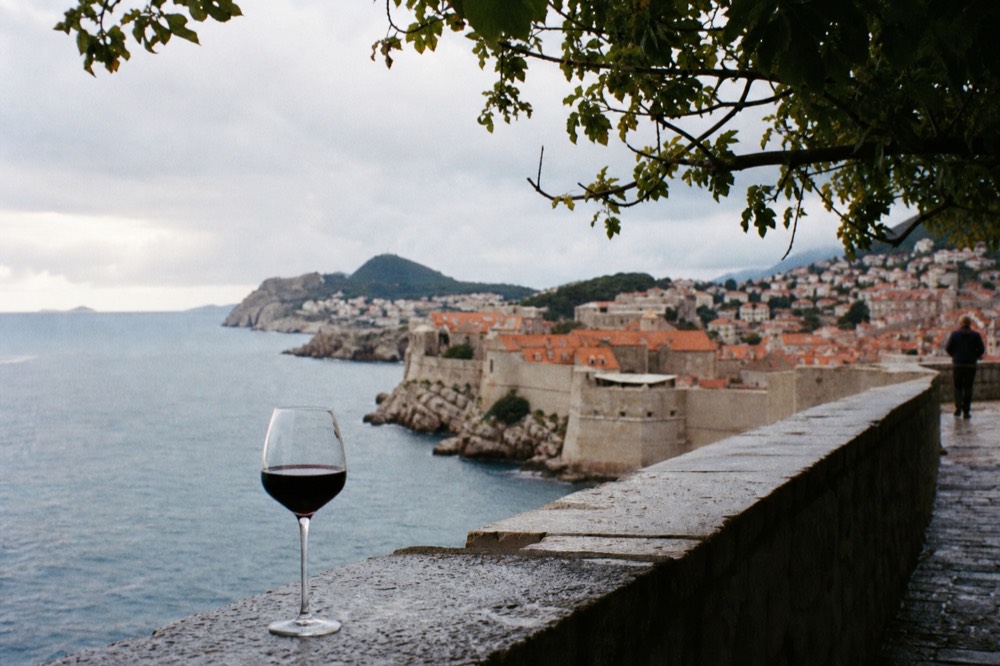
There is a practical reason to take the wine seriously here too: Dubrovnik is busy. The city recorded about 4.2 million overnight stays in 2025, sharing first place among Croatian destinations with Rovinj, according to the Croatian Bureau of Statistics. A tasting room in the Konavle valley or a long lunch with a bottle in a village konoba is one of the most reliable ways to step out of the crowd for an afternoon, and it costs less per hour than almost anything inside the walls.
It is also worth saying what Dubrovnik wine is not. It is not a museum experience or a novelty poured for tourists: the wines on the lists here are the same wines Dalmatian families drink at Sunday lunch, and the wineries you can visit are small, family-run operations rather than industrial estates. That keeps the experience human. You will usually be poured by someone whose name is on the bottle, in a room a few steps from the tank it was fermented in, and the conversation tends to be about the weather and the harvest rather than a rehearsed script. For a city that can feel like a theme park at midday in high summer, that ordinariness is part of the appeal.
If you are already sold on the idea, these are the three experiences that pair best with a wine-focused visit:
For the rest of this article I will take the question apart properly: whether the city itself has wineries, what the local wine actually is, and, since the question usually comes from people planning evenings as well as afternoons, whether the nightlife holds up too.
Does Dubrovnik Have Wineries?
Not inside the walls, no. The Old Town is a protected UNESCO World Heritage site with no commercial vineyards, so the wineries sit outside it: in the Konavle valley about half an hour away, on the Pelješac peninsula up the coast, and on the nearby islands. The city's role is tasting rooms, wine bars and shops, and it does that part very well.
The Konavle valley is the closest thing Dubrovnik has to a home wine region. It is the green agricultural valley directly southeast of the city, running down toward the border with Montenegro and Bosnia, and it is where most of the short guided wine tastings from the city actually take you. The valley grows its own local varieties alongside the coastal standards, and the drive there is short enough that a half-day tasting still leaves you the evening in town.
The bigger wine names are a little further out, on the Pelješac peninsula. This is the strip of land you drive along on the way to Orebić and Korčula, and its steep southern slopes above the sea are where the most celebrated Croatian reds come from. The villages of Dingač and Postup on that coast give their names to protected appellations, and the wines are all built on the same grape, Plavac Mali. If you want the full story on that grape before you order your first glass, read our guide to Plavac Mali, Croatia's signature red, and if you are planning a deeper trip, the Pelješac wine region guide covers the route.
Korčula, reachable as a day trip, is the white-wine counterweight: Pošip and Grk, two indigenous whites that grow almost nowhere else, come from its vineyards. The practical split to remember is simple: reds from Pelješac, whites from Korčula, mixed tasting flights in the city. A Korčula day trip that stops at a winery is one of the better ways to taste the whites in situ, and the island is small enough that a ferry, a tasting and a long lunch fit comfortably into one day.
Here is how the options stack up for a visitor basing themselves in the city:
| Wine region | Distance from Dubrovnik | Signature wine | Best way to visit |
|---|---|---|---|
| Konavle valley | About 30 minutes by road | Local blends and coastal reds | Half-day guided tasting with pickup |
| Pelješac peninsula | Day trip up the coast | Plavac Mali, Dingač, Postup | Car, or a Ston and Pelješac tour |
| Korčula island | Ferry or day tour | Pošip and Grk whites | Island day trip with winery stop |
| Old Town wine bars | Walkable everywhere | Flights of all of the above | Evening, no booking needed |
One honest caveat: wine tasting in Dubrovnik is not cheap. Anything served inside the walls carries the same premium as the food, and a serious flight in a good wine bar can cost as much as a restaurant main. The value play is the countryside. A tasting in the Konavle valley or a winery on Pelješac gives you more wine, more time and more explanation for the money, which is exactly why the guided options sell so well. It also removes the driving question entirely. Croatian drink-driving limits are strict, the coastal roads are narrow, and the whole point of a valley afternoon is that everyone at the table gets to drink.
Does Dubrovnik Have a Good Nightlife?
Yes, though it is a wine-bar-and-terrace city rather than an all-night clubbing capital. The Old Town concentrates its nightlife into a walkable strip of cocktail bars, wine bars and cliffside spots around the walls, and it runs late because Dalmatians eat late. There is one headline nightclub inside a fortress, plus a summer season of open-air bars in Lapad.
The shape of a Dubrovnik evening is worth understanding before you plan one. Dinner starts late by northern European habits, often after 20:00, and the bars fill from around 22:00. The Stradun and the side streets off it hold most of the wine and cocktail bars, and because the whole Old Town is pedestrianised and compact, a night out is really a walk between three or four venues rather than a commitment to one district. Our best bars in Dubrovnik guide covers the individual rooms worth walking into, including the famous cliff bar perched on the rocks outside the walls.
The one venue that answers the clubbing question is Culture Club Revelin, a nightclub built inside the Revelin fortress, one of the massive stone bastions guarding the eastern edge of the Old Town. A nightclub inside a fortress is genuinely unusual, and it is the closest thing the city has to a big-city venue, with international DJs through the summer season. Beyond it, the nightlife skews civilised: sunset drinks, wine bars, terrace cocktails in Lapad, and bars that close at a reasonable hour because the city is small and residential. Dubrovnik has 41,562 inhabitants at the 2021 census, and the Old Town is their living room as much as a visitor attraction.
Where the wine question and the nightlife question meet is the evening wine bar. This is the best version of Dubrovnik nightlife for most visitors over about 25: a couple of glasses of local Plavac Mali or Pošip, a plate of prosciutto and cheese, and a table on a stone street. It is also the most reliable way to taste a range of local wines in one evening, because the good wine bars pour by the glass and the staff know the list. If you want the fuller picture, the nightlife in Dubrovnik guide walks the whole evening from aperitif to last call.
| Nightlife type | Where it happens | When it peaks | Wine angle |
|---|---|---|---|
| Wine bars | Old Town side streets | 20:00 to midnight | Local flights by the glass |
| Cocktail bars | Stradun and Buža area | 22:00 onward | Limited local lists |
| Clubbing | Revelin fortress | After midnight, summer | None, go earlier for wine |
| Terrace bars | Lapad bay | Sunset onward | Decent Dalmatian whites |
A sunset cruise is the other evening format worth naming, because it doubles as a wine-friendly one. The Karaka ship runs a panoramic sunset cruise, adults only, an hour and a half from $59 per person and rated 4.8 across 833 reviews, with the walled city seen from the water as the light goes. It is a drinking-with-a-view experience rather than a tasting, but it slots neatly into the same evening. There is also a shorter option out of Cavtat, an hour with a cold platter and drinks from $23.66 per person, rated 4.9 across 203 reviews, if you find yourself on that side of the bay.
What Wine Is Dubrovnik Known For?
Dubrovnik is known for Plavac Mali, the powerful local red grown on the coastal slopes north of the city, especially from the Dingač and Postup appellations on Pelješac. On the white side it is Pošip from Korčula. In the city itself, the signature serve is a glass of Plavac Mali with oysters from nearby Ston, which is the classic Dalmatian pairing.
Plavac Mali deserves the headline because it is the grape that built the region's reputation. It is a dark-skinned red that ripens brutally on south-facing slopes above the sea, and the best vineyards are so steep that everything is picked by hand. The wines run from easy, fruity versions to the serious Dingač bottlings that age for years. If your reference point for red wine is southern France or Italy, Plavac Mali will feel familiar: full-bodied, warm, food-friendly, and very much at home next to grilled fish and lamb.
The pairing that locals will steer you toward is oysters and white wine. The oyster beds at Ston, the small walled town at the base of the Pelješac peninsula about an hour up the coast, supply half the coast's restaurants, and the traditional match is a local white rather than Champagne. That pairing has become a bookable experience in its own right: the Oyster, Mussels, and Wine Tasting Tour in Ston runs from $157 per person, rated 4.9 across 111 reviews, and builds a seafood lunch around the tastings. It is the most complete food-and-wine day available from the city.
Here is the practical vocabulary to order with confidence:
| Wine | Type | Where it grows | Order it with |
|---|---|---|---|
| Plavac Mali | Red | Pelješac slopes | Grilled meat, aged cheese |
| Dingač | Red, premium Plavac | Dingač appellation | Lamb under the bell |
| Pošip | White | Korčula island | Oysters, white fish |
| Grk | White, rare | Korčula, Lumbarda | Shellfish |
Two buying notes. First, restaurant markups on local wine are mild compared with imported bottles, so the house Plavac Mali is usually the smartest order on the list, not the compromise. Second, if you want to take bottles home, buy them where you taste them: winery prices in Konavle and on Pelješac beat Old Town shop prices comfortably. For a full walkthrough of where to taste what, start with our wine tasting in Dubrovnik guide, which covers the city's wine bars as well as the countryside options.
How to Fit Wine Into a Dubrovnik Trip
Plan one evening of wine bars in the Old Town and one half-day or full-day tasting outside it. If you have only two days, do the Konavle half-day tasting and a wine-bar evening. With three or more days, add the Ston oyster and wine lunch or a Pelješac drive. Book guided tastings ahead in summer, when the city's crowd numbers are at their highest.
Timing matters more here than in most wine regions, and not for the reason people expect. The crowd pressure in Dubrovnik does not peak in July and August: cruise passengers actually peaked in September 2025 at 101,246, above July's 96,072, with October close behind at 100,132, according to Port Authority data. The Old Town counting system, six counters at every entrance updating every 15 minutes, recorded 7,739 people inside the core at the 10:00 peak on one early September day. What that means for wine planning is simple: the countryside tastings fill up in shoulder season too, and the "visit in September and skip the crowds" advice is only half true.
The second timing point is the day's shape. Tastings that leave the city in the morning return mid afternoon, which leaves the evening free for the wine-bar walk. Doing it the other way round, a heavy tasting evening before a morning departure, is a mistake people make once. If your time is short, the one-day and two-day itineraries on Things to Do in Dubrovnik show where a tasting slots into a packed schedule without cannibalising the walls or the cable car.
A final word on budget. Inside the Old Town, a glass of decent Plavac Mali in a wine bar is a restaurant-priced pleasure, and the free option, browsing the Old Town's shop shelves and asking questions, costs nothing at all. However you do it, the answer to the question this page started with stands: yes, the wine here is good, and it is one of the better reasons to spend an evening, or an afternoon, doing exactly what the city invites you to do anyway, which is to sit down, eat slowly and drink something local.
Common Questions About Wine in Dubrovnik
Does Dubrovnik have good wine?
Yes. The city sits next to serious wine country: Plavac Mali reds from Pelješac, Pošip whites from Korčula, and Konavle valley wineries half an hour away. Old Town wine bars pour all of them by the glass.
Does Dubrovnik have wineries?
Not inside the walls. The wineries are in the Konavle valley about 30 minutes away, on the Pelješac peninsula up the coast, and on Korčula. The Old Town itself has wine bars and shops rather than vineyards.
does dubrovnik have good nightlife?
Yes, though it is a bar city more than a club city. Evenings centre on wine bars and cocktail terraces in and around the Old Town, with Culture Club Revelin, a nightclub inside a fortress bastion, as the headline late venue in summer.
What Wine Is Dubrovnik Known For?
Plavac Mali, the local red, especially from the Dingač and Postup appellations on Pelješac. The best-known white is Pošip from Korčula. The classic pairing is Ston oysters with a local white.
Is Wine Expensive in Dubrovnik?
By the glass in Old Town wine bars, expect restaurant prices rather than bargain prices, though local bottles carry far milder markups than imports. Countryside tastings in Konavle offer better value per hour, and winery prices beat Old Town shop prices for bottles to take home.
Can You Visit a Winery as a Day Trip From Dubrovnik?
Yes. Half-day guided tastings run to the Konavle valley with city pickup, the Ston oyster and wine lunch is a full day, and Pelješac and Korčula both work as self-drive or guided day trips for the serious red and white appellations.