Is Blue Cave Closer to Split or Dubrovnik?
The Blue Cave sits on Biševo beside Vis, far closer to Split than to Dubrovnik. Here is what that means for your itinerary, and what still works from Dubrovnik.
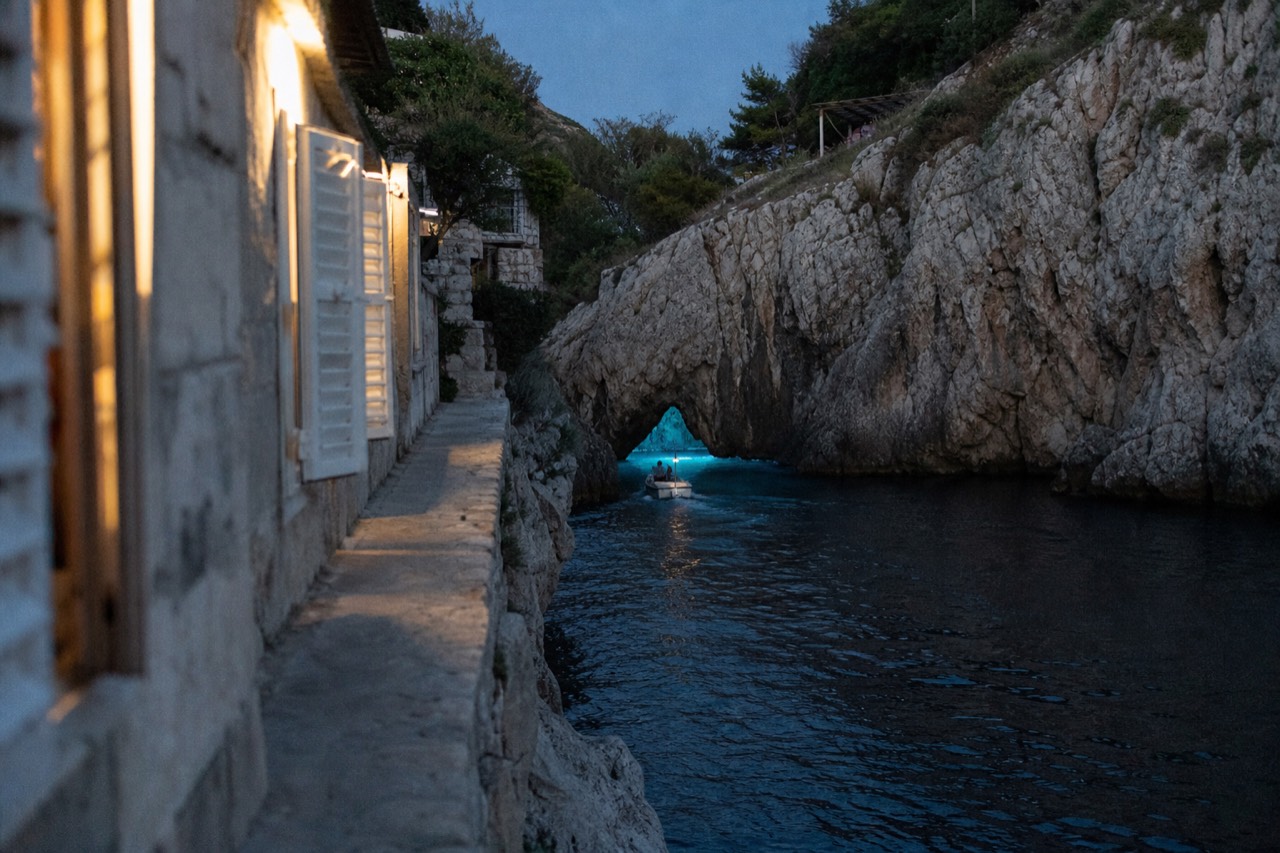
Is Blue Cave Closer to Split or Dubrovnik?
The Blue Cave is much closer to Split. The cave is on Biševo, a tiny island just off Vis, on the central Dalmatian coast that Split serves directly. From Dubrovnik the cave is reached by a long speedboat run northwest along the coast, which is why every Dubrovnik version of this trip is a full-day, fast-boat excursion. If the cave itself is the reason for the trip, Split is the honest answer.
I get this question from guests standing at the Old City Harbour more often than you would think, usually while they are holding two browser tabs open, one for a Split listing and one for a Dubrovnik listing, and trying to work out which one is less of a haul. The geography decides it. Biševo sits beside Vis, and Vis sits off Split. The islands that crowd Dubrovnik's own horizon are the Elaphiti chain, Lokrum, Mljet and Korčula, and none of them is Biševo. When a boat leaves Dubrovnik for the Blue Cave it is committing to a serious run up the coast, past the Pelješac peninsula and the central Dalmatian islands, before it ever reaches the cave's entrance.
That does not make the Dubrovnik trip a bad product. It makes it a different product. The Split version is a shorter hop to a famous cave. The Dubrovnik version is a full day of fast boating that bundles the cave with other stops, most often Šunj beach on Lopud, which is one of the shallowest, sandiest swimming spots in the whole Elaphiti chain. You are buying a day on the water with a headline attraction, not a quick cave visit.
It helps to picture the coast as two overlapping zones. Split's zone runs from Šolta and Hvar in the south up past Vis, Biševo and Brač, a tight cluster of islands that a fast boat from Split can work through in a single morning. Dubrovnik's zone runs from the Elaphiti chain out to Mljet and down to Korčula, islands of pine, sand and fortress towns that sit within easy reach of Gruž and the Old City Harbour. The Blue Cave sits at the far northern edge of Split's zone and at the extreme outer edge of anything a Dubrovnik boat can cover in a day. That single fact explains almost everything about how the two tours are priced, timed and shaped.
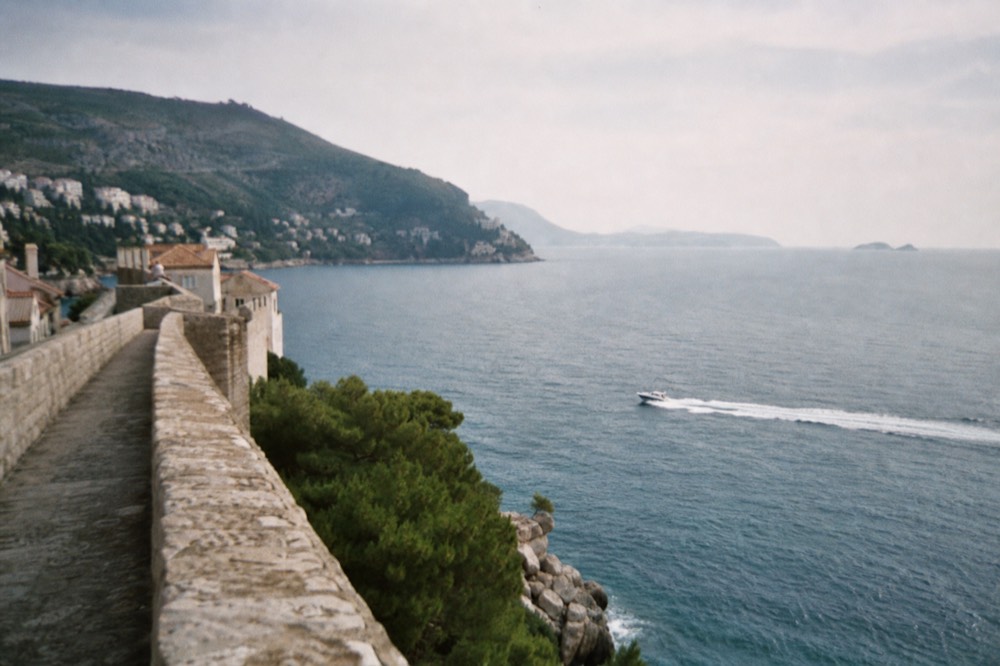
The practical comparison looks like this:
| From Split | From Dubrovnik | |
|---|---|---|
| Where the cave sits | In Split's immediate island group, beside Vis | A long run up the coast, well beyond Dubrovnik's own islands |
| Trip character | Shorter boat ride, cave-focused morning or day | Full-day fast-boat excursion with bundled stops |
| Typical add-ons | Vis town, nearby coves | Šunj beach on Lopud, drinks on board |
| Best if you are | Based in Split or on Vis already | Based in Dubrovnik and set on seeing the cave anyway |
There is a version of this trip that leaves from Dubrovnik and carries an excellent reputation: the Blue Cave and Sunj Beach boat tour with drinks, from $63.48 per person, rated 4.87 across 3,105 reviews. For anyone whose holiday is anchored in Dubrovnik and who does not want to reorganise the whole itinerary around a bus ride to Split, that is the listing to look at first. You can also read our wider Blue Cave day trip guide for the full picture.
Is It Better to Go to the Blue Cave From Split or Dubrovnik?
If the cave is your priority and your itinerary is flexible, go from Split: the crossing is shorter, the sea time is smaller, and the cave is the centrepiece rather than one stop on a long day. If your holiday is already based in Dubrovnik, going from Dubrovnik is better than sacrificing a day to reach Split. Neither answer is wrong; the wrong answer is pretending the two are equivalent.
The honest framing is about what you are optimising for. Split-based travellers are optimising for the cave itself. The boat ride is shorter, the day is less demanding, and if the cave is the thing you flew to Croatia for, that matters. Dubrovnik-based travellers are optimising for a good day on the water that happens to include the cave. Both products exist because both kinds of traveller exist.
There is a third case worth naming, because it is the one people regret. If you are splitting a week between the two cities, do not book the cave from Dubrovnik on day one and then arrive in Split on day four with the cave already behind you. Order the trip so the cave falls on the Split half. A surprising number of guests tell me they did it the expensive way, a full-day fast-boat run out of Dubrovnik, and then discovered their Split hotel was twenty minutes from the departure pier for a shorter, cheaper, cave-first version of the same morning. Geography is free to use; use it.
One thing worth saying plainly, because I plan boat days for guests all the time: the Blue Cave entrance is sea-condition dependent. The cave is entered by small boat through a low opening, and when the swell is up, entry is closed, from either departure city. A long-run trip from Dubrovnik carries slightly more exposure to that on paper, simply because more of the day is spent in open water, but every operator in either city faces the same call on the morning itself. Book with the weather window in mind, keep a flexible day in reserve, and check the cancellation terms on the live listing before you pay.
The Dubrovnik tour deserves a proper look here, because its review record is unusually strong for a fast-boat product: 4.87 across 3,105 reviews, from $63.48 per person, with drinks included and Šunj beach on the itinerary. That is the one I point people toward when they are staying in Dubrovnik and have already decided the cave is non-negotiable.
Before you commit to any long boat day, it is worth weighing what else your Dubrovnik week could do with that time. The cave run eats a full day, and if your stay is three nights or fewer, that is a third of your trip spent at speed on open water. For longer stays, or for travellers who know they want the cave specifically, the trade is fair. For everyone else, the shorter water days later in this article deliver more experience per hour, and they leave your evenings intact for the Old Town.
Is Plitvice Closer to Split or Dubrovnik?
Plitvice Lakes is closer to Split than to Dubrovnik, but it is genuinely far from both, and the difference matters less than people hope. The national park sits inland in the Lika region, north of Zadar, so a day trip from Split is a very long drive and a day trip from Dubrovnik is longer still. Most travellers who see Plitvice well either overnight near the park or treat it as a stop between cities.
This is the other half of the "which city is my base" question, and the answer runs against the instinct that a few dozen kilometres on a map should not change much. Plitvice is in the interior, and both Split and Dubrovnik are coastal cities at the southern half of the country. From Split you are driving north and inland. From Dubrovnik you are driving north, inland, and around the Neum corridor geometry that defines almost every long route out of this city. Neither is a casual morning's drive.
The reason I group Plitvice with the Blue Cave question at all is that both expose the same trap: a famous Croatian sight that social media makes look adjacent to everywhere. The Blue Cave looks like a quick hop from any coastal city because every photo is taken from inside the cave, with no coastline in frame to give you scale. Plitvice looks like a day trip from anywhere because the wooden walkways could be an hour from wherever you are standing. Neither is true, and itineraries built on that assumption collapse on day two.
The practical advice I give guests: if Plitvice is on your must list, build the itinerary around it rather than bolting it on. Sleep a night near the park, walk the lakes early before the midday crowds arrive, and continue to your next city afterwards. Done that way, the park rewards you. Done as a sixteen-hour day trip squeezed between two nights in Dubrovnik, it punishes you, and you will remember the bus more than the waterfalls.
For context on why the roads behave this way, it helps to know how the region's visitor load is distributed. Dubrovnik recorded about 4.2 million overnight stays in 2025, sharing first place among Croatian destinations with Rovinj, per the Croatian Bureau of Statistics. A city carrying that many nights, on a coastal strip with limited inland road links, is exactly the place where "just drive there" advice needs a reality check.
Is Korcula Closer to Dubrovnik or Split?
Korčula is closer to Dubrovnik, and the balance tips clearly to this city. The island sits at the southern end of the central Dalmatian chain, reachable from the Dubrovnik side by road and ferry via the Pelješac peninsula, while from Split it sits well down the coast. If Korčula is on your list, Dubrovnik is the natural base.
Korčula is the island that genuinely belongs in Dubrovnik's orbit, which is why it keeps coming up in the same breath as the Blue Cave question. Travellers building a southern-Croatia itinerary often discover that the two famous islands they want, Vis for the cave and Korčula for the walled town, sit at opposite ends of the coast, and they cannot be comfortably combined from one base.
The pattern is consistent: the further north you go, the more the islands belong to Split; the further south, the more they belong to Dubrovnik. Korčula is south. There are day trips from Dubrovnik that pair Korčula with Ston and its walls and a wine tasting on Pelješac, which is a well-shaped day and one of the better long days out of the city. If you want the deeper dive, we have a full Korčula island guide and an answer piece on whether Korčula is worth visiting.
Korčula also answers a question the Blue Cave cannot: what does a "far" island day look like when it is actually within reach? The crossing from the Dubrovnik side is a routine ferry or a scenic drive over Pelješac, the town is a compact walled gem you can walk end to end in an hour, and the wine country around it, grk and pošip grown on sandy soils a short drive from the old streets, gives the day a second act the cave trip lacks. Guests who do both often tell me Korčula was the day they would repeat, and the cave was the day they are glad they did once.
Here is the whole decision in one table, because this is really one question asked four ways:
| Destination | Closer to | Day trip works from the other city? | Best plan |
|---|---|---|---|
| Blue Cave, Biševo | Split | Yes, as a full-day fast-boat tour | From Split if flexible; from Dubrovnik if already based there |
| Plitvice Lakes | Split, but far from both | Possible but punishing | Overnight near the park |
| Korčula | Dubrovnik | Long day from Split | Day trip or overnight from Dubrovnik |
| Elaphiti islands, Lokrum, Mljet | Dubrovnik | Not sensible from Split | Base in Dubrovnik |
What Water Days Beat the Blue Cave From Dubrovnik?
If you are based in Dubrovnik and open-minded about the water day itself, two alternatives beat the long Blue Cave run on value per hour: sea kayaking to Lokrum and Betina Cave, and the Mount Srđ panorama zipline. Both sit inside Dubrovnik's immediate horizon, both are shorter commitments, and both carry review records as strong as anything in the region. The Blue Cave tour is for the determined; these are for everyone else.
I say that as someone who walks this coastline for a living. The kayak run around Lokrum and into Betina Cave gives you the same glowing-cave experience the Blue Cave is famous for, at a scale that fits a morning, and the two-and-a-half-hour guided snorkelling tour from Adventure Dubrovnik is rated 4.9 across 3,619 reviews, from $35 per person. That is a serious ratio of experience to time. The zipline over the hillside above the Old Town, rated 4.9 across 2,109 reviews from $64, is the other half-day that guests consistently rank above their expectations.
Betina Cave deserves the comparison spelled out, because it is the closest thing Dubrovnik has to a Blue Cave on its doorstep. It is a sea cave at the foot of the cliffs below the road to Cavtat, reached from the water, and the light inside on a sunny morning does the same silver-blue trick that made Biševo famous. It is smaller, yes, and it is not lit by the same deep-window geometry that gives the original its glow, but it is fifteen minutes from the Old Town harbour rather than a coastline away. For families with children or anyone who gets seasick on fast boats, that trade is not close.
For anyone weighing the cave run against these, the honest summary is this:
| Tour | Format | From (per person) | Rating and reviews |
|---|---|---|---|
| Blue Cave & Sunj Beach, drinks included | Full-day fast boat | $63.48 | 4.87 across 3,105 reviews |
| 2h 30m kayak & snorkel tour | Half-day paddle | $35 | 4.9 across 3,619 reviews |
| Panorama zipline | Half-day ride | $64 | 4.9 across 2,109 reviews |
Timing matters as much as choice. Cruise passengers at the Port of Dubrovnik peaked in September at 101,246 and October at 100,132 in 2025, above July's 96,072 and August's 87,385, per the Port Authority's statistics. The folklore says avoid August; the data says the Old Town is at its most crowded in early autumn, when the sea is still warm. The September average for this coast is about 23.6 degrees, a long-run open-water figure, and sheltered bays like Šunj run warmer still on a calm afternoon. A September or October Blue Cave day, booked outside the biggest cruise days, is the sweet spot.
One last planning note for the whole cluster. The Old City of Dubrovnik, inscribed by UNESCO in 1979, is why most of you are here at all, and it is a compact 24.7-hectare core that empties beautifully in the early evening once the day-trippers sail off. Whatever you decide about the cave, keep at least one late afternoon free to have the lanes to yourselves. More on planning the whole stay, including the water days, lives on our Things to Do in Dubrovnik homepage, and the island options are laid out in good island day trips from Dubrovnik.
Common Questions About the Blue Cave and Dubrovnik
Is Blue Cave closer to Split or Dubrovnik?
The Blue Cave is much closer to Split. It sits on Biševo, the small island beside Vis, in the central Dalmatian island group that Split serves. From Dubrovnik it is a long, full-day fast-boat run up the coast, usually bundled with other stops such as Šunj beach on Lopud.
Can You Visit the Blue Cave on a Day Trip From Dubrovnik?
Yes. The Blue Cave and Sunj Beach boat tour with drinks runs from Dubrovnik, from $63.48 per person, rated 4.87 across 3,105 reviews. It is a full-day commitment because of the distance, so plan it as your big water day rather than a filler morning.
Is the Blue Cave Always Open?
No. Entry is by small boat through a low sea opening, so when the swell is too high the cave closes for safety, regardless of which city you depart from. Operators monitor conditions on the morning itself, which is why you should check the cancellation terms on the live listing before booking.
Is Plitvice Closer to Split or Dubrovnik?
Plitvice Lakes is closer to Split than to Dubrovnik, but it is far from both. The park sits inland in the Lika region. A day trip from Split is a very long drive and from Dubrovnik longer still, so most travellers sleep a night near the park instead.
Is Korcula Closer to Dubrovnik or Split?
Korčula is closer to Dubrovnik. The island sits at the southern end of the central Dalmatian chain, reachable from the Dubrovnik side via the Pelješac peninsula, and it is a natural day trip or overnight from Dubrovnik rather than from Split.
What Is a Good Alternative to the Blue Cave From Dubrovnik?
Sea kayaking to Lokrum and Betina Cave gives you a glowing sea cave at half-day scale, and the guided kayak and snorkel tour is rated 4.9 across 3,619 reviews from $35 per person. The panorama zipline above the Old Town, 4.9 across 2,109 reviews from $64, is the other short day that outperforms expectations.