Is Dubrovnik Good for Beaches?
Is Dubrovnik good for beaches? An honest answer from a local specialist: what the swimming is actually like, which beaches deliver, and how the coast compares with Split.
Is Dubrovnik Good for Beaches?
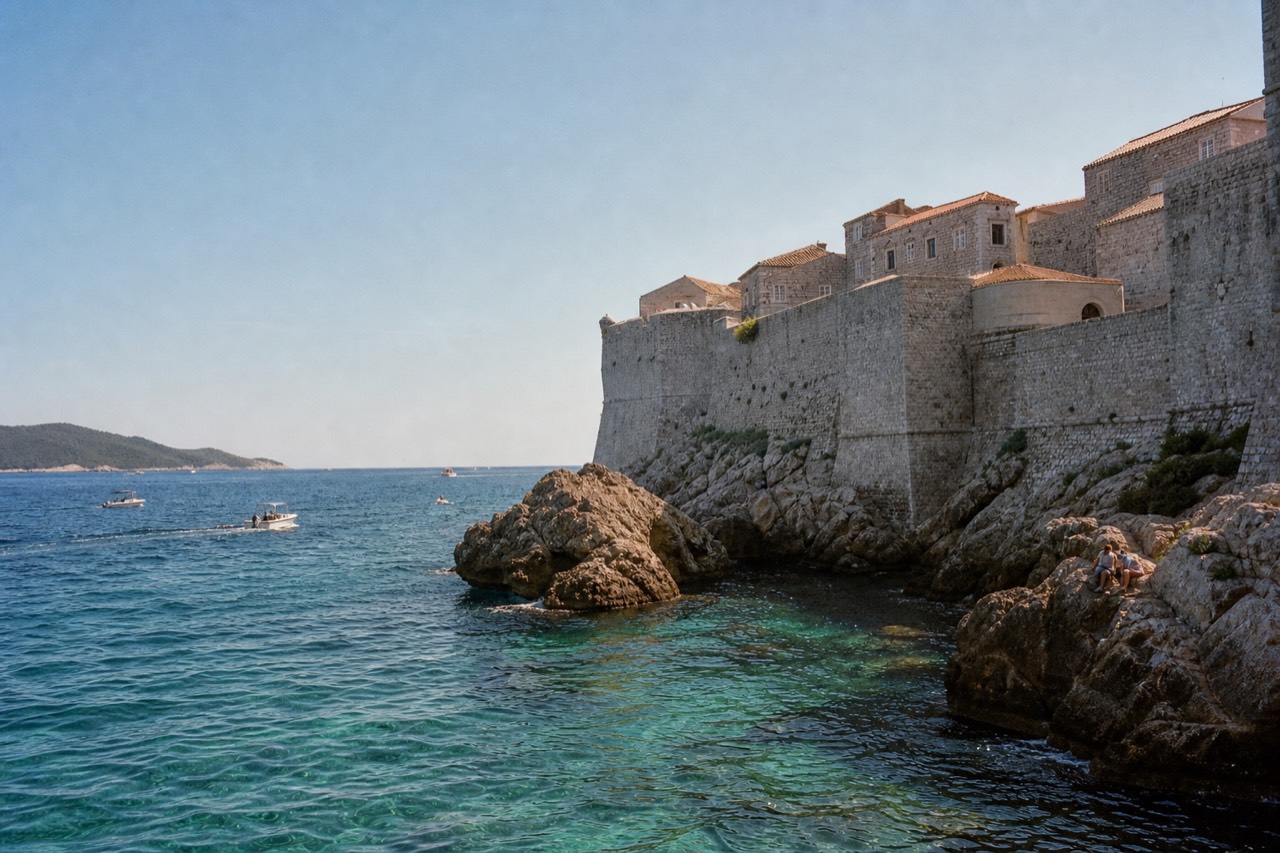
Yes, but not in the way most people mean when they ask. Dubrovnik's beaches are overwhelmingly stone, rock and shingle rather than soft sand, the water is remarkably clear, and the swim season runs comfortably from June into early October. If you want a sandy bucket-and-spade resort you will be partly disappointed; if you want warm, clean sea inside a UNESCO-listed city, you will be very happy.
I get this question constantly, and the honest answer has two halves. The first half is the water itself, which is genuinely excellent. The second half is what you stand on, which is usually limestone. That trade-off defines swimming in Dubrovnik, and it is better to know it before you pack a suitcase full of flip-flops and sand toys.
Let me start with the water, because that is the part that surprises people in a good way. The long-run average sea temperature on this coast, a 1991 to 2020 open-water average from NOAA's satellite analysis, is 25.8 degrees in August and 23.6 in September. Those are open-sea figures, not beach readings: sheltered shallow bays along this coast run warmer, and the Croatian met service's own Dubrovnik buoy read 27.0 to 27.4 degrees on a day in early September against that 23.6 monthly average. In plain terms, the swimming here is warm far later in the year than most visitors expect, and October's 21.0 degree average is still perfectly swimmable for most people.
The beaches themselves cluster into a few recognisable types. There are the hotel-zone beaches around the Lapad bay, which are groomed shingle and concrete with sunbeds and cafes. There are the Old Town rock-and-cliff spots like Buža, where you swim off ledges directly under the walls. There is Banje below Ploče, the postcard beach with the Old Town behind you and Lokrum in front. And there are the island beaches, above all Šunj on Lopud, which is the closest thing this corner of Croatia has to a proper shallow sandy beach. Each type suits a different traveller, and I will break them down properly below.
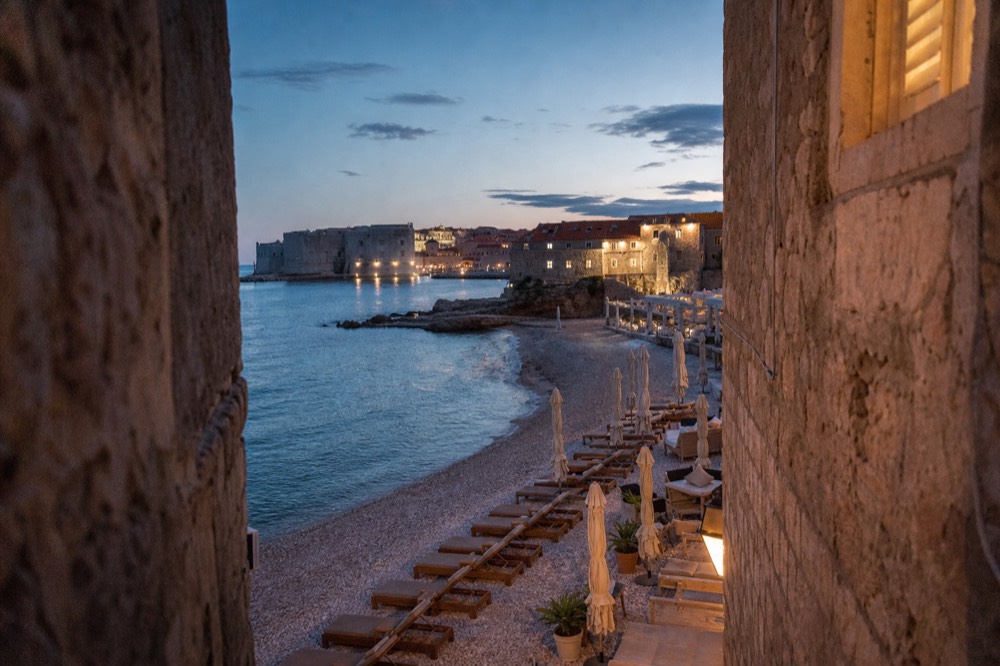
One thing worth saying early: the sea is the main event, and the coastline is built for people who like jumping in, snorkelling and floating rather than building castles. If that is your kind of beach day, read our full rundown of the best beaches around Dubrovnik, which covers each stretch of coast in detail. If sand is non-negotiable, skip ahead to the Šunj discussion, because that changes the calculus.
Here is the temperature picture month by month, so you can judge the season for yourself:
| Month | Average sea temperature | What it means for swimming |
|---|---|---|
| May | 18.6 °C | Bracing; locals swim, most visitors dip |
| June | 22.5 °C | Comfortable, the season starts in earnest |
| July | 24.9 °C | Warm, peak beach weather |
| August | 25.8 °C | The warmest month of the year |
| September | 23.6 °C | Still excellent, and the crowds thin |
| October | 21.0 °C | Swimmable for most, mornings feel fresh |
A note on honesty, because I would rather be accurate than flattering: those are long-run open-water averages, a grid-cell figure for this stretch of coast, not a beach thermometer and not this year's water. They describe the climate, not any particular Tuesday. In practice, shallow sheltered bays in high summer feel several degrees warmer than the open-sea number, which is exactly why the buoy reading and the monthly mean can look so far apart.
The counter-intuitive part of that data is worth sitting with: September and October are the two busiest cruise months of the year here, ahead of July and August. The sea is at its kindest exactly when the day-visitor numbers peak, which is why I keep telling people that where you swim matters almost as much as when. The beaches within five minutes of the Old Town absorb the crowds; the ones a bus ride or a boat ride away do not.
If the plan is to see the coastline properly before choosing your patch of water, there are three good ways to do it, and I will discuss each in this article: from above on the zipline, from the water in a kayak, and from a boat out to the sandy spots.
Can You Swim in Dubrovnik Beaches?
Yes, swimming is not just possible but genuinely good, and it is a normal part of daily life here from June through September. You swim off rock ledges, concrete platforms, shingle and occasionally sand, and the water is clear enough that snorkelling is worthwhile even ten metres from shore. Sea nets, shoes for the pebbles and a little care on wet stone are the practical essentials.
The mechanics of swimming here deserve a plain explanation, because they catch people out. Most Dubrovnik beaches are entry-by-ledges or by shingle: you walk in over smooth stones, often slippery ones, and the depth drops quickly. Water shoes are not a tourist cliché here, they are what makes the difference between a relaxed swim and a careful hobble. Once you are in, the water is usually calm inside the bays, especially in the morning, and the clarity is excellent, which makes a mask or goggles worth packing even for a casual dip.
Buža is the famous one, the bar carved into the cliff outside the walls where you swim off the rocks with the open Adriatic in front of you. It is a bucket-list swim and I recommend it once, ideally in the late afternoon. Banje below Ploče is the accessible city beach, shingle and concrete with the Old Town skyline behind you; it fills up by mid-morning in high season. Further out, the Lapad bay beaches, Copacabana on the Babin Kuk peninsula and the quieter coves along the coastal path give you more space, sunbeds and cafes, and water that is just as clear. We cover the full set, including the cliff spots, in the guide to swimming in Dubrovnik.
Lokrum deserves its own mention because it changes the answer to this question. The island a short boat ride from the Old City has rocky bathing spots, including a small salt lake that warms up well beyond the open-sea temperature, and its tickets are 30 euro per person covering both reserve entry and the return boat. Boats leave the City Harbour at 09:00, then every 15 minutes from 10:00 to 18:00, and a ticket stays usable for three days. For a swimming day that feels like an excursion rather than a beach errand, Lokrum is the strongest option inside the city's orbit, and we treat it in full in the Lokrum Island guide.
The other way to swim here is to combine it with the coastline itself, and that is what the kayak tours do well. The two-hour Sea Kayaking Tour of Lokrum Island and Betina Cave, from $35.49 per person and rated 4.9 across 1,518 reviews, paddles out past the walls to a cave beach you cannot reach on foot, with a swimming break built in. One recent review of that tour captures the family experience of it well:
Loved this kayaking experience. Had an amazing time as a family and enjoyed the swimming break at Betina Cave very much. The views were amazing, water was crystal clear, the guide was excellent and we learnt a lot about Dubrovnik.
Imara_D
For anyone who prefers their water flat and their afternoon unhurried, the practical swimming checklist looks like this:
| Swimming spot | Entry type | Best time of day | Who it suits |
|---|---|---|---|
| Banje, Ploče | Shingle and concrete | Early morning | First-timers wanting the view |
| Buža cliffs | Rock ledges | Late afternoon | Confident swimmers |
| Lapad bay beaches | Groomed shingle | Any time | Families, sunbed days |
| Copacabana, Babin Kuk | Shingle and concrete | Morning | Calmer water, kids |
| Lokrum coves and salt lake | Rock and lake ledge | Midday ferry out | A swimming excursion day |
The one caution I give every visitor: the afternoon wind can pick up on the open-water side, and the sea state on the outer beaches changes while the sheltered bays stay calm. Swim where locals swim when the wind is up, which means the bays, and save the exposed cliff spots for flat mornings.
Are the Beaches Better in Split or Dubrovnik?
For pure beach quantity and sandy options, Split wins: its beaches are more numerous, more central and several are genuinely sandy. For water clarity, dramatic setting and swimming inside a historic city, Dubrovnik wins clearly. Split is the better beach base; Dubrovnik is the better swim.
This is a fair fight only if you know what each city actually offers. Split sits on a wide bay with a long string of beaches walking distance from the Diocletian's Palace core, and the Bacvice beach by the ferry port is real sand, shallow and family-friendly, with the famous picigin ball game played in the shallows. From sand at Bacvice to the pebble stretches stretching west along the Marjan hill, Split gives you choice without needing a bus or a boat. That variety is its strength.
Dubrovnik's counter-argument is setting and water. You can swim in water of exceptional clarity with a medieval fortress wall above you, or take a boat to a sandy island beach in under an hour. The beaches here are smaller, stonier and often crowded in the peak weeks, but the water quality and the sheer drama of swimming beneath the walls is something Split cannot match. The Croatian Bureau of Statistics counts Dubrovnik among the country's two busiest destinations, with about 4.2 million overnight stays in 2025, and the beaches feel that pressure in July and August, per the official statistics release.
The honest comparison, category by category:
| Category | Split | Dubrovnik |
|---|---|---|
| Sandy beaches | Yes, several near the centre | Rare; Šunj by boat is the real one |
| Beaches within walking distance | Many, along the whole bay | A few, mostly shingle and rock |
| Water clarity | Good | Excellent |
| Setting | City bay and Marjan hill | Walls, cliffs and islands |
| Crowds in peak season | Heavy but spread out | Concentrated in small spaces |
| Island beach escapes | Ferries to nearby islands | Elaphiti boats, Lokrum, Šunj |
There is one more factor that decides this for a lot of travellers, and it is the day-visitor effect. Dubrovnik's beaches share the city with a very large daily influx, and the Port Authority's own cruise-destination page explains the management of that flow, including the limit of 8,000 cruise passengers a day in most cases. Split has cruise traffic too, but its beach line is long enough to absorb it. In Dubrovnik, timing and location are your tools: swim early, swim outside the Old Town orbit, or take a boat.
If you are still weighing the two cities overall rather than just their beaches, we have a full head-to-head in Dubrovnik vs Split, which compares cost, sights and trip logistics as well as the coastline.
Are Beaches Nicer in Split or Dubrovnik?
Niceness depends on your definition. If nicer means comfortable, sandy and easy, Split's beaches are nicer. If nicer means beautiful water in an unforgettable place, Dubrovnik's are nicer. Most repeat visitors to Croatia end up saying Split for the beach holiday, Dubrovnik for the swim you remember.
The word "nicer" smuggles in a standard, so let me make the standards explicit. Comfort standards, sand underfoot, shallow water for children, cafes within reach, shade, favour Split. Scenic standards, clarity, colour, the view while you float, favour Dubrovnik without contest. I have walked both coastlines in every month of the season, and I would swim in Dubrovnik over Split every single time, but I would send a family with toddlers to Split without hesitating.
The strongest version of the Dubrovnik argument is the island day. The Elaphiti boats run out to Koločep, Lopud and Šipan, and Šunj beach on Lopud is a broad, shallow sandy bay that behaves like the Mediterranean of postcards: waist-deep water for dozens of metres out, warm because it is shallow, and sandy underfoot. The full-day Elaphite Islands cruise with lunch, from $59.16 per person and rated 4.9 across 10,312 reviews, is the most-reviewed product on this entire site, and a large part of its appeal is exactly this: a proper beach day with sand, reached by boat from a stone city.
The Blue Cave and Šunj Beach boat tour with drinks, from $63.48 per person and rated 4.87 across 3,105 reviews, pairs the sandy swim with a cave stop, which is about as complete a Dubrovnik water day as exists.
That phrase, "get out the the heat and large crowds for a bit", is the real use case. In July and August the city beaches are the most crowded square metres in Croatia, and the boats are the release valve. The water off the islands is the same clear Adriatic, the crowds thin out over the horizon, and you come back in the evening with the Old Town glowing. For the full picture of the boat options, read the Elaphiti Islands guide and the deeper island hopping from Dubrovnik rundown.
Is Split or Dubrovnik Better for Beaches?
For a beach-centred holiday, Split is the better base: more beaches, more sand, more space, lower prices around the water. For a city break with outstanding swimming woven into it, Dubrovnik is better, because the water is clearer, the settings are dramatic and the sandy escapes are a short boat ride away. Choose Split to beach; choose Dubrovnik to swim.
That is the decision rule I give friends, and it holds up across budgets and seasons. Split's beach infrastructure, the long bay, the sand, the beach bars, is built for days that begin and end at the water. Dubrovnik's is built around the water: you visit the city, and the swimming is folded in between the walls, the cable car and the konobas. Neither is pretending to be the other, and travellers who expect Dubrovnik to behave like a resort town come away grumbling about the stones.
The seasonal angle matters too, and it favours Dubrovnik more than people expect. The sea here averages 23.6 degrees in September and 21.0 in October, and the cruise-visitor peak lands in September and October, not July and August, so an autumn visit trades a little warmth for a city at full energy with water still at its pleasant. A September swimmer in Dubrovnik gets the best of the trade: warm sea, long light, and beaches that empty out once the day boats leave. We treat that month in detail in Dubrovnik in September.
There is also a way to answer the question that has nothing to do with swimming, and everything to do with seeing the coast before you commit to it. The Panorama Zipline Tour, from $64 per person and rated 4.9 across 2,109 reviews, runs above the coastline just outside the city, and from up there you can read the whole geography of the question at once: where the cliffs fall steep, where the bays shelter, where the islands sit. It is the fastest orientation to this coast that exists, and I mention it because the beach question is ultimately a geography question.
Whichever city you pick, one piece of local advice travels to both: the best beach hours in Croatia are before ten and after four, and everything between is for shade, lunch and the water you can see from it. The Old Town of Dubrovnik, a UNESCO World Heritage property of 24.7 hectares inscribed in 1979, per the World Heritage listing, is at its most beautiful in the evening light, and the sea is at its calmest in the morning, so the day almost plans itself.
So, is Dubrovnik good for beaches? Good enough that I have never once considered swimming anywhere else on this coast, stones and all. For everything the city offers beyond the waterline, start with Things to Do in Dubrovnik and work outward from there.
Common Questions About Beaches in Dubrovnik
Is Dubrovnik good for beaches?
Yes, with a caveat: the beaches are mostly stone, rock and shingle rather than sand, but the water is exceptionally clear and warm from June into October. For sandy beaches you take a boat to Šunj on Lopud. Dubrovnik rewards swimmers and snorkellers more than sandcastle builders.
Can You Swim in Dubrovnik Beaches?
Yes, swimming is excellent and completely normal here. You enter from rock ledges, concrete platforms or shingle, and the water is calm in the bays. Water shoes help on the pebbles, and the sea averages 25.8 degrees in August and 23.6 in September as a long-run open-water average.
Are the Beaches Better in Split or Dubrovnik?
For quantity, sand and convenience, Split's beaches are better. For water clarity, setting and dramatic swimming spots, Dubrovnik's are better. Split suits a beach-centred holiday; Dubrovnik suits a city break with superb swimming built in.
Is Split or Dubrovnik Better for Beaches?
Split is the better beach base, with more beaches, more sand and more space within walking distance of the centre. Dubrovnik is the better swimming city, with clearer water, cliff and wall bathing, and sandy island beaches a short boat ride away.
When Is the Best Time to Swim in Dubrovnik?
September is the sweet spot: the long-run sea average is 23.6 degrees, the light is long, and the water is still warm through October at a 21.0 degree average. Arrive early in the morning or after four in the afternoon for the calmest water and the fewest people.