Is Dubrovnik Worth Visiting in Winter?
A honest look at Dubrovnik between December and February: what stays open, what closes, what it costs, and who will love the city out of season.
Is Dubrovnik Worth Visiting in Winter?
Yes, if you want the Old Town almost to yourself and do not care about swimming, island boats or long opening hours. December drops the adult City Walls ticket to 20 euro, cruise traffic collapses to a trickle, and the stone streets go quiet, but the cable car closes from January to March and the sea averages about 16.0 degrees. Winter suits walkers, photographers and anyone who has already seen Dubrovnik in summer.
I get this question more than almost any other, usually from people who saw the July crowds in photos and decided that Dubrovnik in peak season is not for them. They are half right. The crowds are real, and winter does remove them, but the trade-off is bigger than most guides admit. This is not simply "the same city, cheaper." It is a different city, with a different rhythm, and whether it is worth visiting depends almost entirely on what you came for.
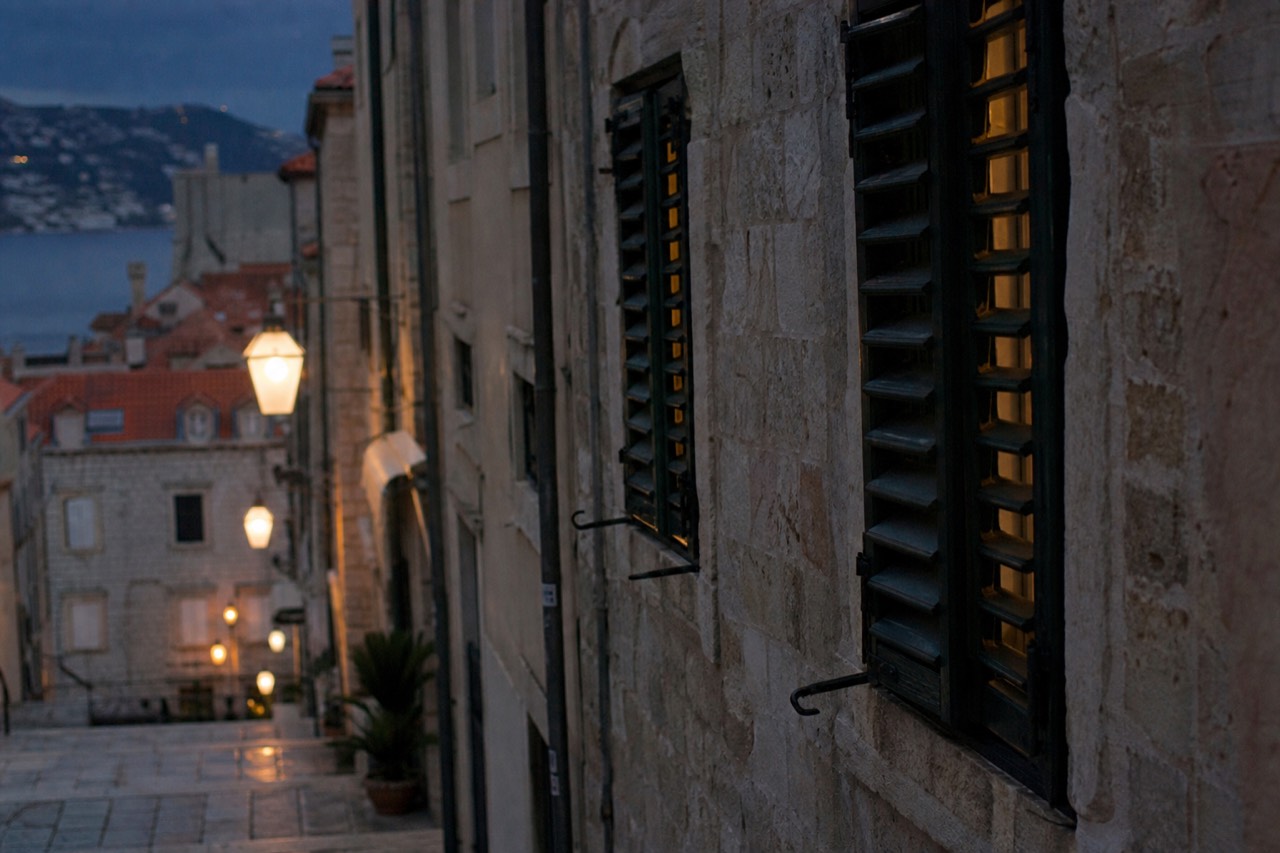
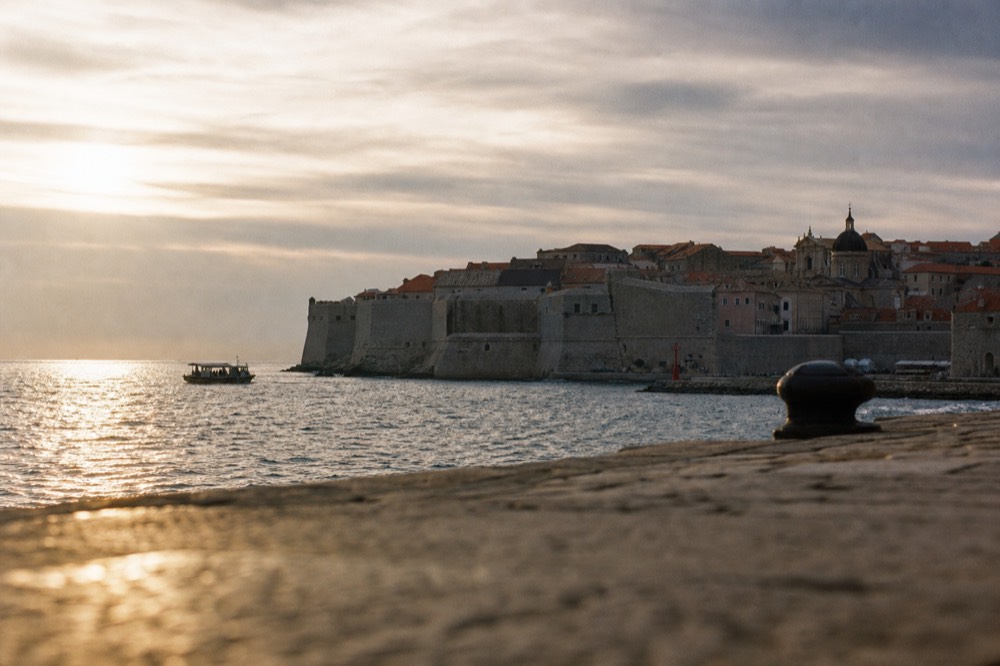
Start with what you keep. The Old Town itself does not close. The Stradun is still 298 metres of polished limestone, the UNESCO-inscribed core is still there, and the winter light off that stone is, in my opinion, the best light the city gets all year. Rain-slicked marble and low sun make photographs that are simply impossible in July. Restaurants along the side streets stay open for locals, and the ones that survive a Dubrovnik winter tend to be the ones worth eating at anyway.
Then what you lose. The cable car stops running from January to March, so the Mount Srd panorama is a hike rather than a ride. The full-day island boats that define the summer experience, the Elaphiti cruises and the Lokrum shuttles, scale back or stop. The sea is cold by any standard: the December average for this coast is about 16.0 degrees as a long-run open-water figure, and sheltered bays do not warm much beyond it. And the walls, while open and half price, are walked in whatever the bora and the rain decide to give you.
The honest framing is this. Winter Dubrovnik is a city break, not a beach-and-boats holiday. If you accept that, it is one of the best-value city breaks on the Adriatic. If you do not, you will spend four days looking at closed ticket offices and wondering why you came.
The pricing shift is the part that surprises people most. The walls operator sells exactly two paid ticket types, adult and child 7 to 18, and in December the adult ticket is 20 euro where the main season price, from 1 March to 30 November, is 40 euro. The child ticket falls from 15 euro to 5 euro. There is no family ticket in any season, and under 6 goes free. That 40 euro main-season ticket is the walls plus Fort Lovrijenac combination, and the winter ticket covers the same combination, though the Western Outer Wall section closes December through February. You can check the current prices and the season boundaries on the walls operator's own site.
One warning on the pass question, because it trips up every winter visitor who has read a summer guide: the Dubrovnik Pass, at 40 euro for one day, 50 for three days and 60 for seven, is sold for the summer window only. No winter tier is on sale at all. So the neat main-season equivalence, where a one-day pass costs the same 40 euro as the standalone walls ticket and adds ten more sights plus a 24-hour bus ticket, does not exist in winter. In December the standalone walls ticket at 20 euro is simply the cheaper product, full stop. If you are weighing the pass for a warmer month, the Dubrovnik Pass guide breaks down every inclusion.
If you are already rethinking your dates toward spring or autumn, the boat trips are the first thing worth locking in, because the best ones sell out. These are the three I would compare first.
What Not to Do in Dubrovnik?
Do not plan a winter trip around the cable car, the island boats, swimming, or a packed restaurant-and-bar scene, because all four shrink or vanish between January and March. Do not buy a Dubrovnik Pass in December, since no winter tier exists. And do not visit in July or August expecting space, since the Old Town's official carrying capacity is 11,275 people and summer days push toward it.
The "what not to do" question is usually asked about summer, but it matters more in winter, because the mistakes cost more. Here is the list I give friends.
First, do not build an itinerary around the cable car in deep winter. The operator's own timetable closes the lift from January to March. When it does run, an adult round trip is 30 euro, one way 17 euro, a child round trip 8 euro, and under 4 goes free; the current schedule and prices are on the cable car's official page. If the Srd viewpoint is the single thing you want, shift your dates to April or later, or plan to walk up the old path, which is a serious half-day in short daylight.
Second, do not assume the boats run. The Elaphiti cruises, the Blue Cave trips, the Lokrum shuttle: these are warm-season products. The official Lokrum boats run on a summer schedule, departing the City Harbour at 09:00 and then every 15 minutes from 10:00 to 18:00, and the reserve's whole operation is built around that season. In winter there is no island day trip infrastructure to speak of. If the islands are the point of your trip, the Elaphiti Islands guide explains what each island offers and when it is reachable.
Third, do not come for the beach. I will come back to this in its own section, because it deserves more than a clause.
Fourth, do not buy a Dubrovnik Pass for December dates. This is the single most common winter booking error. Travellers read that the pass costs the same as the walls ticket and covers ten more sights, which is true in main season and false in winter, because no winter pass is on sale. Buy the 20 euro walls ticket instead and pay museums individually.
Fifth, do not expect the nightlife. Dubrovnik's bar scene is genuinely good but it is a warm-weather scene, built around terraces and the sea. A handful of year-round places keep the lights on, and the best bars guide notes which ones, but the club calendar is effectively asleep until spring.
| Plan | Winter reality | Better season |
|---|---|---|
| Cable car to Mount Srd | Closed January to March | April to October |
| Elaphiti islands boat day | Warm-season schedules only | May to September |
| Dubrovnik Pass | No winter tier on sale | 1 March to 30 November |
| Swimming | December sea average about 16.0 degrees | June to September |
| City Walls circuit | Open, 20 euro adult, Western Outer Wall closed | Any, but shade matters in summer |
The table is not an argument against winter. It is an argument against importing a summer itinerary into it. The people who love Dubrovnik in January are the ones who came for stone, light, coffee and long lunches, and got all four at prices the summer crowd would not recognise.
Is Dubrovnik Worth Visiting?
Yes, at almost any time of year, because the walled core is a UNESCO World Heritage Site of 24.7 hectares with 1,940 metres of walls, and that does not depend on the weather. About 4.2 million overnight stays in 2025 put Dubrovnik joint first among Croatian destinations. The real question is not whether it is worth visiting but which month suits you, since the city swings from cruise-peak crowds to near-silence.
Strip away the boats and the beaches and ask what Dubrovnik actually is: a complete medieval walled city on a headland, inscribed by UNESCO in 1979 under criteria (i), (iii) and (iv), with the Stradun running 298 metres through its middle and a street plan fixed by the 1272 Statute. The walls run 1,940 metres, reach up to 25 metres high, and pack in 16 towers, 3 fortresses, 6 bastions, 2 corner fortifications, 3 bulwarks, 3 moats, 2 flank fortresses, 1 breakwater and 2 drawbridges. That is the product. It does not close for the season. The full index of guides sits on Things to Do in Dubrovnik.
What changes through the year is everything around it. The Port Authority counted 625,257 cruise passengers in 2025, and their distribution is the single most useful planning fact on this site: September, at 101,246, and October, at 100,132, were the busiest cruise months, above July's 96,072 and August's 87,385. The idea that "summer is the busiest time" is simply wrong for cruise traffic, and the Port Authority's own statistics show it month by month. If your goal is fewer people, the deep off-season wins, then late autumn, then the May shoulder, and then you are back into the ship calendar.
The city also manages its crowds in ways most visitors never hear about. Six counters at every Old Town entrance update a headcount every 15 minutes, and the official carrying capacity from the UNESCO assessment is 11,275 people. On a measured September morning the count climbed from 5,419 at 08:00 to a 7,739 peak at 10:00. In February you can stand on the Stradun and hear your own footsteps. Both experiences are "worth it"; they are just worth it to different people.
For a first visit, my honest ranking of seasons: May and June for warmth without the August furnace, September and October for the sea at its warmest and the light at its best, deep winter for solitude and price, July and August only if heat and crowds genuinely do not bother you. The best time to visit guide works through the whole calendar, and the Dubrovnik in winter guide goes deeper on the cold months than I have space for here.
Worth visiting also means worth understanding, and a short guided walk is the cheapest way to buy that understanding. For a fuller rundown of every walk on the roster, the walking tours guide compares lengths, prices and angles.
When to Avoid Dubrovnik?
Avoid the first half of August if you dislike heat and peak crowds together, and avoid January to early March if your heart is set on the cable car, island boats or swimming. September and October are actually the busiest cruise months, at 101,246 and 100,132 passengers in 2025, so "avoid summer, visit autumn" does not dodge the ships.
Every "avoid" list for Dubrovnik needs two versions, because the thing you are avoiding differs.
Avoiding crowds is the first version, and it is harder than it looks. The intuitive move, going in autumn instead of August, runs straight into the cruise calendar: September and October out-drew July and August in 2025. The Port Authority limits cruise passengers to 8,000 a day in most cases, with only 18 of 243 cruise days exceeding that and about 4 days a year going slightly above 10,000, and it refused about forty call requests in one season. So the ships are managed, not absent, and the busiest single days cluster in late September and early October: 6 October carried 2 ships and up to 5,798 passengers by capacity, 29 September 2 and 5,675, 30 September 3 and 5,536.
What that means in practice: an autumn visit trades August's land heat and full-price everything for cruise-day crowds concentrated between late morning and late afternoon. The countermeasure is time-shifting, not date-shifting. Walk the walls at 08:00, when the operator's stated hours open at 08:00 to 19:30 and the day's count is still climbing, and spend the 11:00 to 16:00 cruise window in a konoba or on a boat, away from the core. The cruise schedule guide helps you pick days with light or no ship traffic.
Avoiding closures is the second version, and it is simple: January, February and the first weeks of March. The cable car is shut, the boats are shut, the sea is at its coldest, and daylight is short. December is a partial exception, because the Christmas atmosphere, the 20 euro walls ticket and the year-round restaurants give it real appeal, but it is a city-break appeal, not a summer-holiday appeal.
| Window | Crowd level | Main drawback |
|---|---|---|
| July to mid-August | Highest land crowds, 96,072 cruise passengers in July 2025 | Heat and cruise peaks combine |
| September to October | Highest cruise months, 101,246 and 100,132 in 2025 | Ships fill the midday Old Town |
| January to early March | Lowest, 2,458 cruise passengers in December 2025 | Cable car and boats closed |
| May and June | Moderate | Prices rise toward peak |
Note the honest caveat on those cruise numbers: they are ship capacity, not people who actually walk ashore. Write "up to X cruise passengers scheduled", never "X people will be in town". Some passengers never disembark at all.
Is Dubrovnik Good for Beaches?
In summer, yes, genuinely good ones. In winter, no: the December sea average is about 16.0 degrees and swimming is off the table for most people. Dubrovnik's beaches are pebble and rock rather than sand, with the best swimming from June through September, when the sea averages 22.5 to 25.8 degrees.
The beach question and the winter question collide head-on, so let me be blunt about both halves.
The summer half is a clear yes. The coast here is limestone, so the beaches are smooth pebble and rock platforms with astonishingly clear water, not sand. The long-run averages tell the story: June 22.5 degrees, July 24.9, August 25.8, September 23.6, before falling through October's 21.0 to December's 16.0. Those are open-water grid-cell averages from NOAA's 1991 to 2020 climatology, not beach thermometer readings, and sheltered bays run warmer in high summer; the Croatian met service's own Dubrovnik buoy read 27.0 to 27.4 degrees on a September day against that 23.6 monthly mean. September is the sweet spot: the sea at its summer-warmest, the crowds manageable if you dodge the ship windows.
The winter half is a clear no, with one nuance. You will not swim, but you will get coastal walks that summer visitors never take, because in July nobody wants to hike the shoreline at noon. The beaches themselves are still there, empty and photogenic, and a winter walk from Lapad's bay beaches or out to Sveti Jakov's viewpoint below the cliff is one of the city's quiet pleasures. The beaches guide ranks the swimming options for the months when they work, and the swimming season guide maps exactly which weeks the water is warm enough.
| Month | Sea average, degrees C | Swimming verdict |
|---|---|---|
| June | 22.5 | Comfortable |
| July | 24.9 | Excellent |
| August | 25.8 | Excellent, warmest of the year |
| September | 23.6 | Excellent, best overall month |
| October | 21.0 | Brief dips for the hardy |
| December | 16.0 | Not a swimming month |
And this is where the winter answer loops back to the boats. If reading those sea temperatures has already moved your dates, the single best warm-season day out of the city is the full-day Elaphite Islands cruise with lunch, from $59.16 per person and rated 4.9 across 10,312 reviews, the most reviewed trip on this site's entire roster. It runs about 8 hours, includes a fish picnic lunch, and stops at the islands you cannot reach in winter. One recent review captures the day well:
This was a wonderful day. Nice and shaded on the boat as we cruised on the cool adriatic. Loved seeing the neat Elphiti Islands and a wonderful way to get out the the heat and large crowds for a bit. They kept the drinks flowing and lunch was phenomenal and a generous portion. This is the way to cruise the Adriatic.
Shelby_S
If you would rather compare the two big Elaphiti operators side by side, or pair a boat day with a short Old Town walk for the same trip, these three are the natural shortlist.
Common Questions About Visiting Dubrovnik in Winter
Is Dubrovnik worth visiting in winter?
Yes, if you want a quiet, cheap city break built around the Old Town, the walls at 20 euro and long lunches. No, if you want swimming, island boats or the cable car, which closes January to March. Winter Dubrovnik is a different product, not a discounted version of summer.
Is Dubrovnik worth visiting?
Yes. The walled core is a UNESCO World Heritage Site inscribed in 1979, the walls run 1,940 metres, and the city recorded about 4.2 million overnight stays in 2025, sharing first place among Croatian destinations with Rovinj. The only real question is which month suits you.
When to avoid Dubrovnik?
Is Dubrovnik good for beaches?
In summer, yes: clear water over pebble and rock, with the sea averaging 22.5 degrees in June rising to 25.8 in August. In winter, no, the December average is about 16.0 degrees, though the empty coastal walks are excellent.
What not to do in Dubrovnik?
Do not plan winter dates around the cable car or island boats, both closed or scaled back. Do not buy a Dubrovnik Pass in December, since no winter tier is on sale and the 20 euro walls ticket is cheaper. And do not walk the walls at midday in August without water and a hat.
Is the Dubrovnik Pass worth it in winter?
No, because it is not available. The pass is sold for the summer window only, 1 March to 30 November, at 40 euro for one day, 50 for three and 60 for seven. In December, buy the standalone walls ticket at 20 euro and pay museums individually.