Is Gruž, Dubrovnik Worth Visiting?
An honest look at Gruž, Dubrovnik's port and market quarter: what it offers, who it suits, and how it compares with the walled Old Town for a first visit.
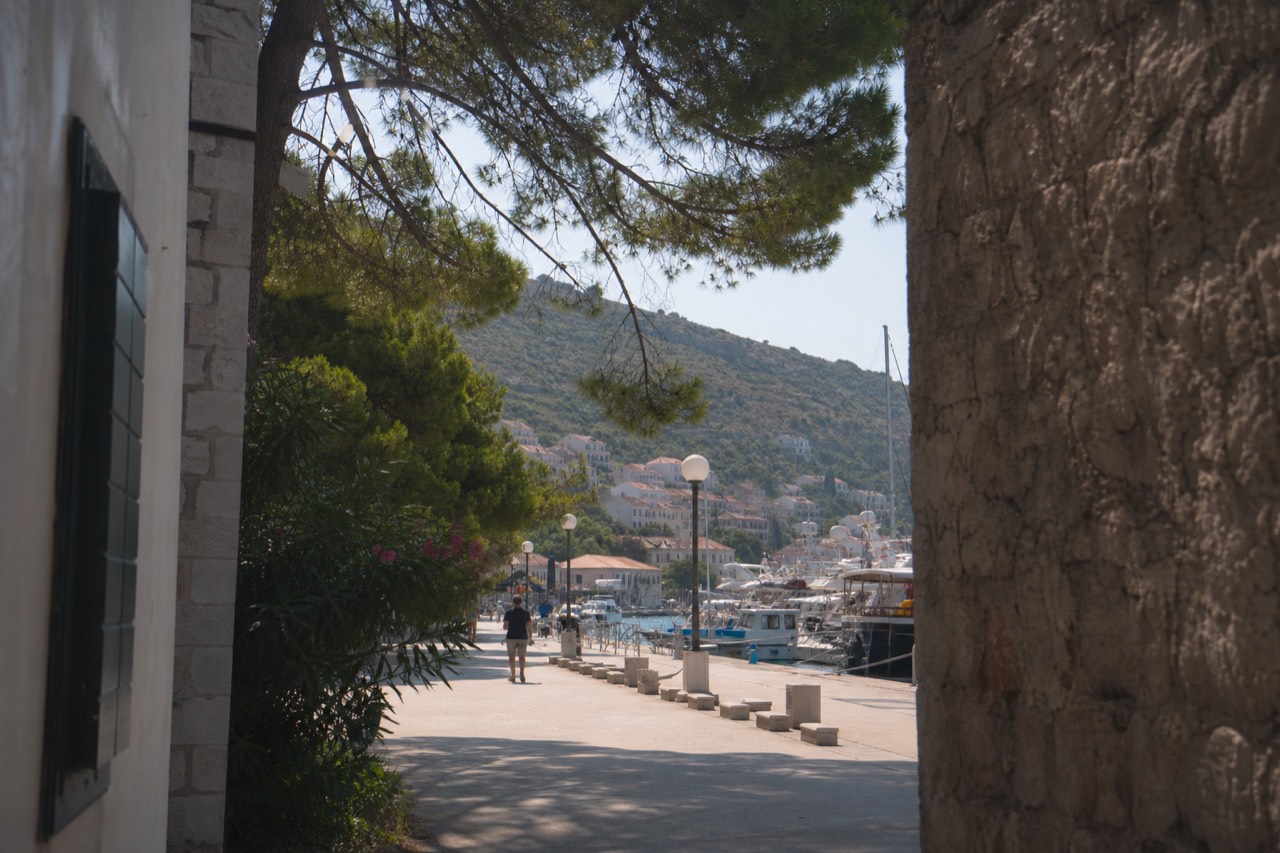
Is Gruž, Dubrovnik Worth Visiting?
Yes, Gruž is worth visiting, though not as a sight in itself. It is Dubrovnik's working port quarter, home to the daily market, the cruise and ferry terminals, the main bus station and a long harbour promenade, and it rewards travellers who want everyday Croatia alongside the UNESCO showpiece. Treat it as a base, a market stop or a morning walk, not a destination.
I get this question more often than you would expect, usually from someone who has found an apartment in Gruž at half the price of an Old Town room and wants to know what they are trading away. The short version: you are trading marble streets and postcard views for space, lower prices, a genuinely local market and a ten-minute bus ride to Pile Gate. For many travellers that is a good trade. For someone with two nights and a bucket list, it can be a mistake.
Gruž sits about 3 kilometres northwest of the walled city, wrapped around a deep harbour where the cruise ships, car ferries and local fishing boats all dock. The quarter grew around that harbour rather than around tourism, which is why it feels different the moment you step off the bus: wider streets, apartment blocks, hardware shops, cafés full of people reading newspapers rather than reading menus. The Things to Do in Dubrovnik homepage concentrates on the headline sights, and rightly so, but a real trip benefits from both halves of the city.
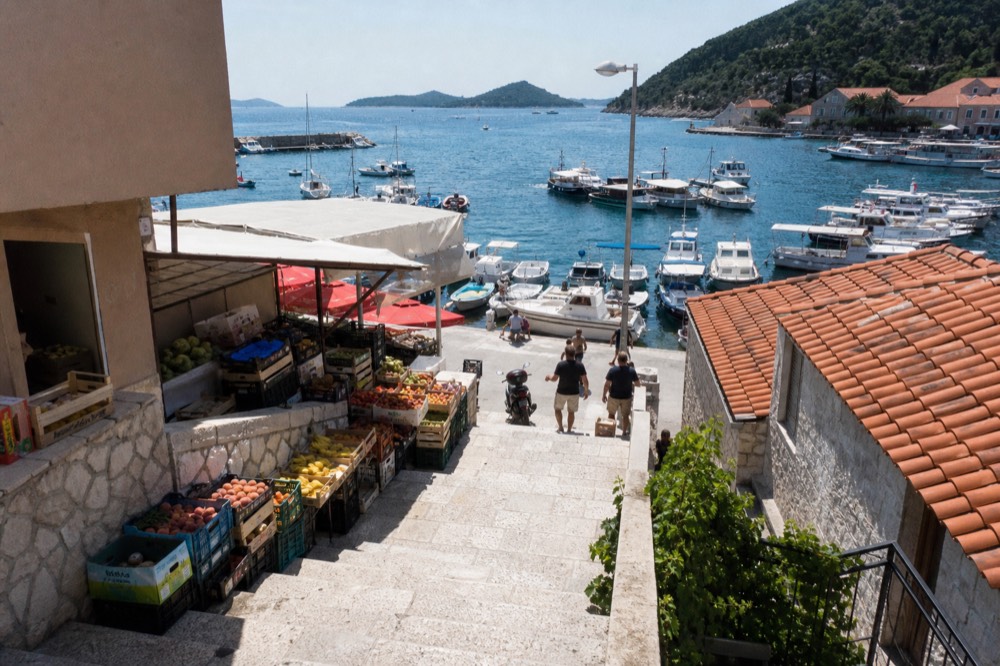
The single best reason to come here is the market. Traders sell fruit, vegetables, honey, olive oil and flowers along the water from early morning, and the fish hall beside it is the real thing, not a performance for visitors. Buy peaches and a loaf, sit on the harbour wall, and you have had a better Dubrovnik morning than many people get in three days of museum queues.
For structure, here is how the two halves of the city compare for a visitor deciding where to spend time or book a bed.
| What Matters | Gruž | Walled Old Town |
|---|---|---|
| Atmosphere | Working port, market, local cafés | UNESCO core, marble streets, crowds |
| Accommodation cost | Noticeably lower, more apartments | Premium, often double |
| Getting to the sights | Bus or a long walk to Pile Gate | Everything on foot inside the walls |
| Food shopping | Daily market, fish hall, bakeries | Restaurants, konobas, souvenir shops |
| Best for | Longer stays, self-catering, ferry days | Short stays, first visits, atmosphere |
If you are weighing Gruž as a base, the practical question is where you sleep once you leave the Old Town. Lapad, the next bay along, is the classic middle ground, and two properties there cover the sensible range: Hotel Komodor, a budget three-star rated 7.8 out of 10 across 822 Expedia reviews, about a 29-minute walk from the Gruž cruise and ferry port and on the number 6 bus line to Pile Gate, and Hotel Lapad for a mid-range step up in the same neighbourhood.
Check rates at Hotel Excelsior
Before you plan the days themselves, the three essentials most first visitors want are the walls ticket, a guided Old Town walk and a panorama ride, and the selection below covers all three.
What Not to Do in Dubrovnik?
Do not walk the city walls at midday in July and August, do not drive into the Old Town area expecting to park, do not eat on the Stradun itself if you care about the bill, and do not plan a ferry or island day without checking the schedule the evening before. Each of these mistakes costs money, comfort or a whole morning, and all four are easy to avoid.
The walls error is the most common. The circuit is 1,940 metres long with almost no shade, and the operator's stated hours at the time of check run 08:00 to 19:30, so the same ticket buys either a cool, empty morning or a furnace at noon. Walk early, then have breakfast. The same logic applies to the Stradun: the 298-metre main street is beautiful and worth seeing, but the restaurants facing it charge for the view. Two streets in either direction, the food improves and the prices drop.
Parking is the third trap. The Old Town is car-free and the streets around it are a maze of residents-only zones, so anyone arriving by car should park in one of the public garages and not attempt anything cleverer. If you are staying in Gruž this barely matters, which is one of the quiet advantages of the quarter.
The fourth mistake is treating the timetable as a suggestion. Boats to the islands, ferries to Split and the Lokrum boats all leave from the Gruž side or the Old City Port, and they leave on time. The official Lokrum boats leave the City Harbour at 09:00, then every 15 minutes from 10:00 to 18:00, and the ticket office at Luža works 08:00 to 18:00. Miss the pattern and you lose an hour of a short day.
One more thing worth saying plainly: do not skip the walls because of the price. The adult ticket is 40 euro in main season, 1 March to 30 November, and 20 euro in December, and that ticket is the walls plus Fort Lovrijenac combination, with Lovrijenac alone at 15 euro if you wanted only the fortress. It is a lot of money, but it is the single defining experience of the city, and the queue argument is real: a prebooked admission ticket saves you standing in the Pile line in the sun. For a fuller argument either way, read is it worth doing the city walls.
Is Dubrovnik Worth Visiting?
Yes, Dubrovnik is worth visiting, and the numbers back the instinct: the Old Town has been UNESCO-listed since 1979, the destination recorded about 4.2 million overnight stays in 2025, sharing first place in Croatia with Rovinj, and the walls, the sea and the islands within an hour by boat justify the trip. The honest caveat is crowding, which is manageable with timing.
I say that as someone who lives here and guides travellers for a living, and I will not pretend the crowds are imaginary. The Old City was inscribed on the World Heritage List in 1979 under criteria (i), (iii) and (iv), covering a property area of 24.7 hectares with an 1,188.6-hectare buffer zone, and it spent 1991 to 1998 on the List of World Heritage in Danger during the war. That history is part of what you are walking through: a city that was shelled and rebuilt, not a film set, even though the film crews came too.
The crowd question has real data behind it, and the data is more interesting than the folklore. Six counters at every Old Town entrance update a headcount every 15 minutes, and the official carrying capacity from the UNESCO assessment is 11,275 people. On a real September morning the count read 1,200 at 04:00, 5,419 at 08:00, a 7,739 peak at 10:00, then 7,205 at 11:00. What that curve tells you is simple: the Old Town before 09:00 and after 18:00 is a different place from the Old Town at lunchtime, and you can choose which one you visit.
The Port Authority publishes these figures openly on its statistics page, and the UNESCO inscription details are on the World Heritage Centre's listing. Both are worth ten minutes of your planning time, because they replace vibes with a schedule: on the heaviest days you plan the walls for early morning and the islands for the afternoon.
And the islands are half the answer to "is it worth it". Lokrum sits off the Old City Port, the Elaphiti chain stretches northwest toward Gruž, and a full-day boat trip with lunch costs from $59.16 per person on the most-reviewed option, rated 4.9 across 10,312 reviews. A city that can feel like a museum in August becomes a coastline the moment you get on the water.
The walls themselves are the one thing almost nobody regrets. The plain admission ticket is the flexible choice if you like your own pace:
If you would rather have the stories attached to the stones, a guided Old Town walk starts from $20 per person, rated 4.8 across 5,826 reviews. One guest review captures what a good guide adds:
Alex was a fantastic guide, she explained the complex history of Dubrovnik to give a lasting impression of the history of the area. Really appreciated that she aimed for shaded areas on a boiling September day. The food recommendations for after were much appreciated too! Great tour for a first experience of the old town!
Sophie
When to Avoid Dubrovnik?
Avoid Dubrovnik in the peak cruise windows of September and October if you hate crowds, and avoid late July and August if you hate heat. Counter-intuitively, September 2025 brought 101,246 cruise passengers and October 100,132, more than July's 96,072 and August's 87,385, so "September is quiet" is the single most outdated piece of advice still circulating about this city.
The heat half of the answer is straightforward. July and August are the hottest months, the sea is at its warmest, with the August long-run average at 25.8 degrees, and the walls at noon are punishing. The sea temperature figures are open-water averages, a 1991 to 2020 long-run mean rather than a beach thermometer, and sheltered bays run warmer still; the Croatian met service's own Dubrovnik buoy read 27.0 to 27.4 degrees on one September day against a 23.6 September average. Hot water, hot stone, hot streets.
The crowd half is where most guidebooks are quietly wrong. Everyone repeats that summer is the crush and autumn is the escape, and the Port Authority's own monthly figures say otherwise: September and October are the two busiest cruise months of the year. That does not make autumn a bad time, because the sea is still warm, the light is better and the days are long, but it does mean you should plan around the cruise calendar rather than the calendar-page myth.
| 2025 Month | Cruise Passengers | What It Means for You |
|---|---|---|
| July | 96,072 | Peak heat plus heavy ship traffic |
| August | 87,385 | Hottest month, slightly fewer ships than July |
| September | 101,246 | Busiest cruise month of the year, warm sea |
| October | 100,132 | Second busiest, softer light, cooler evenings |
One caution on reading any of these numbers: cruise passenger figures are ship capacity, not people who actually walk ashore, so write "up to X scheduled" in your head, never "X people will be in town". The Port Authority caps most days at 8,000 cruise passengers, and only 4 days a year run slightly above 10,000, so the floor of the experience is managed even at the ceiling of the season.
If your dates are flexible, the sweet spots are May, June and late October into early November: warm enough to swim in June, when the long-run sea average is 22.5 degrees, quiet enough in November that you will have the walls almost to yourself. Winter has its own case, and the walls ticket drops to 20 euro in December, though no pass tier is on sale at all in that window. For a fuller month-by-month breakdown, see when to avoid Dubrovnik and the best time to visit guide.
Is Dubrovnik Good for Beaches?
Yes, though not in the wide-sand sense. Dubrovnik's beaches are mostly concrete platforms, pebble coves and rocky shelves on clear water, with the long-run sea average at 25.8 degrees in August and 23.6 in September, and the best swimming is reachable on foot or by a short bus or boat ride. Come for the water clarity, not for sandcastles.
The nearest proper beach to the Old Town is Banje, just outside the walls toward Ploče, a pebble beach with the classic fortress-and-old-city view and a busy summer scene. On the Lapad side, closer to Gruž, the coast opens up: Lapad Bay has a long pedestrianised stretch with cafés and a mix of pebble and concrete swimming areas, and Copacabana at the far end adds water sports. From Gruž itself you can walk the harbour or hop a bus west in minutes, which is another quiet point in the quarter's favour for a beach-focused stay.
The honest framing on temperature matters here, because the numbers get thrown around carelessly. The monthly series is a long-run open-water average, not this year's water and not a beach reading: the September average is about 23.6 degrees, and EMODnet's independent climatology corroborates it at 23.15 for the same month. Sheltered bays run warmer in high summer, which is exactly the gap between that average and the 27.0 to 27.4 the Dubrovnik buoy recorded on one warm September day. Practically: the swimming season runs comfortably from June into early October.
| Beach | Type | Best For |
|---|---|---|
| Banje | Pebble, view of the walls | The postcard swim, closest to the Old Town |
| Lapad Bay | Pebble and concrete, cafés | Families, easy access from Gruž by bus |
| Copacabana | Pebble, water sports | Active days, kayaks and jetskis |
| Lokrum coves | Rocky shelves on the island | Combining a swim with the island trip |
Lokrum deserves its own line in any beach answer. The island ticket is 30 euro per person and covers both the reserve entry and the return boat transfer, whether you ride the official boat or arrange your own transport, and the boats leave the City Harbour at 09:00, then every 15 minutes from 10:00 to 18:00. The swimming off Lokrum's rocky coves is some of the clearest water you will find this close to a major city, and the island's peacocks and botanic gardens make it a half-day rather than a quick dip. A ticket stays usable for three days, so a weather-flexible plan works well.
For a different angle on the water, sea kayaking around the walls and out to Betina Cave starts from $35 per person on the shorter tours, rated 4.9 across thousands of reviews, and combines the two best things about the coast: the clarity of the water and the view of the city from sea level. The kayaking guide covers the routes in detail.
How Gruž Fits Into Your Dubrovnik Plans
Gruž earns its place as a base for stays of three nights or more, as a market-and-harbour morning for anyone, and as the practical hub for ferries, island boats and buses. It does not replace the Old Town, and anyone trying to see Dubrovnik in a single day should sleep inside or beside the walls instead. Pair the two: Gruž for living, the Old Town for looking.
The decision usually comes down to trip length. With one or two nights, location beats comfort, and you should pay the Old Town premium, because every hour saved walking to and from the walls is an hour of your trip. With three nights or a week, Gruž or Lapad flips the arithmetic: lower nightly cost, a real kitchen if you self-cater from the market, and the bus station and ferry port on your doorstep for the day trips that make a longer stay shine, from the Elaphiti cruise to Mostar, which runs from $35 per person and carries 10,019 reviews at 4.6.
Cruise passengers get a specific version of this answer. Your ship docks in Gruž, and the Old Town is a short bus or taxi ride away, so the quarter is not a decision for you but a fact of your day. The smart play is to do the walls or the Old Town walk early while the counters are still climbing toward that 10:00 peak, then come back toward the harbour side for a late lunch away from the Stradun prices. The cruise port to Old Town guide covers the transfer options, and the what to do from a cruise ship answer ranks the realistic half-day choices.
If you take one structural tip from a local: anchor your trip on the water. Gruž is the departure side for the island boats, and a day on the Elaphiti chain, swimming off Lopud and eating a fish lunch on deck, is the experience visitors describe back home more warmly than any museum. The most-reviewed full-day cruise runs from $59.16 per person with lunch included, rated 4.9 across 10,312 reviews, and there are quieter and cheaper variants if that is not your pace.
And whichever base you choose, book the two things that sell out or queue badly: the walls and your best-guided walk. The trio below is the shortlist I would hand a friend.
Of that trio, the guided walk is the one that changes most with the guide you draw, so it is worth a closer look on its own. A local guide turns the Stradun from a corridor into a story, and at from $20 per person it is the cheapest substantial upgrade you can buy in this city.
Common Questions About Gruž in Dubrovnik
Is Gruž, Dubrovnik worth visiting?
Yes, as a base, a market morning or a practical hub for ferries and island boats, not as a sight in itself. It pairs well with the Old Town for stays of three nights or more.
How Far Is Gruž From the Old Town?
About 3 kilometres, roughly ten minutes by bus to Pile Gate. The number 6 bus runs the route frequently, and the harbour promenade makes the walk pleasant if you are not in a hurry.
Is It Cheaper to Stay in Gruž?
Generally yes. Accommodation in Gruž and the surrounding neighbourhoods runs noticeably cheaper than inside the walls, and the daily market lets you self-cater, which compounds the saving on longer stays.
When to Avoid Dubrovnik?
Avoid September and October if you want the fewest cruise crowds, since those were the two busiest cruise months of 2025, and avoid late July and August if you want to escape the heat. May, June and November are the calmer windows.
Is Dubrovnik Good for Beaches?
Yes, if you accept pebble and rocky beaches over sand. The water is exceptionally clear, the long-run sea average reaches 25.8 degrees in August, and beaches sit within a short bus or boat ride of both Gruž and the Old Town.