Is It Better to Fly Into Split or Dubrovnik?
Split or Dubrovnik: which airport should you fly into? An honest comparison of cost, itinerary fit, connections and crowds from a Dubrovnik-based specialist.
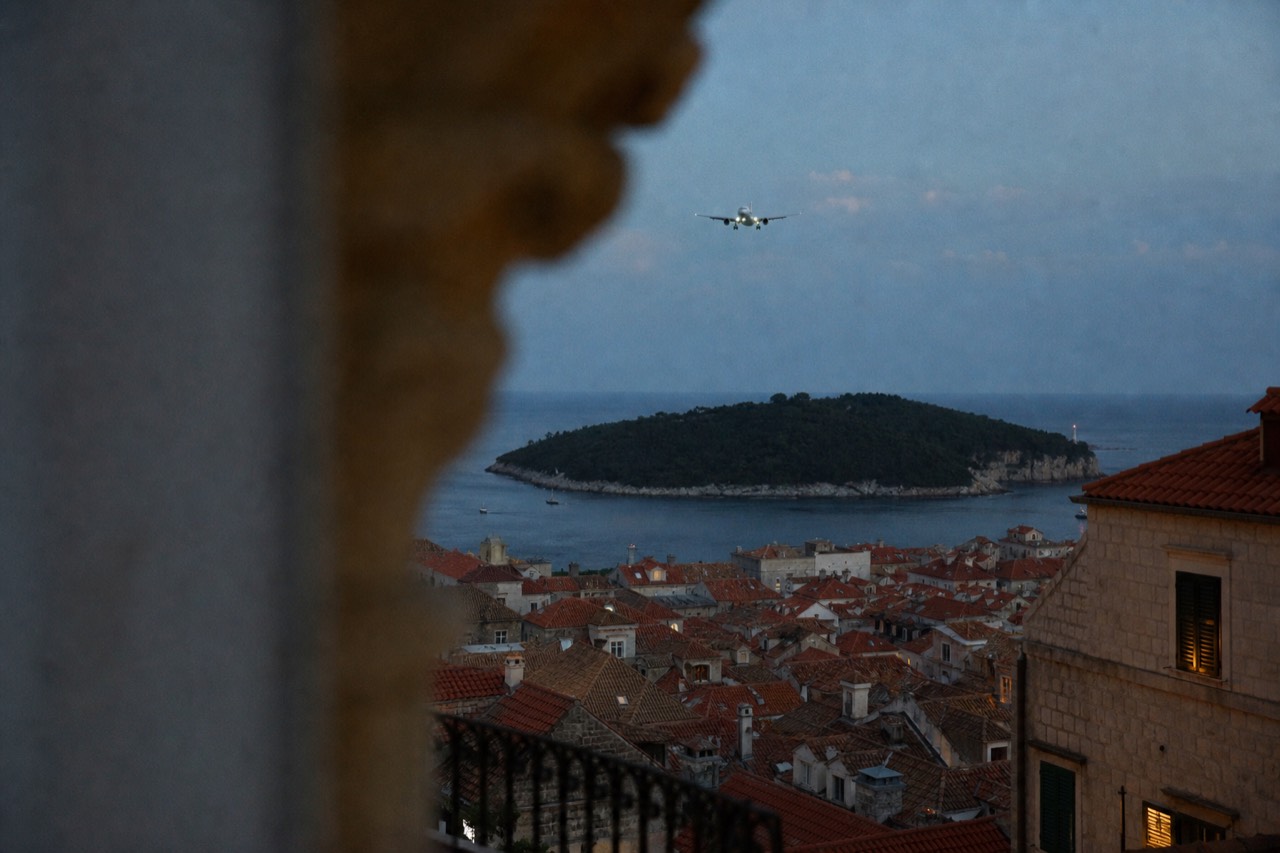
Is It Better to Fly Into Dubrovnik or Split?
Fly into Dubrovnik if the walled city and the southern coast are the point of your trip, and fly into Split if you are island hopping up the coast, visiting Hvar or finishing in Zagreb, or if the fare difference pays for your onward travel. Dubrovnik's airport sits closer to its city than Split's does, but Split wins on route count and on flexibility once you land. The best choice follows your itinerary, not the airport.
I get this question from travellers almost every week, and the honest answer is that most people ask it too early. They pick the airport before they have decided what the trip actually is, and then they spend two days of a week-long holiday on buses they did not need to take. So before anything else, sketch the trip. If your list reads "Dubrovnik, Lokrum, maybe Mostar, a day on a boat", you have a southern trip and Dubrovnik airport is your airport. If it reads "Split, Hvar, Korčula, finish in Dubrovnik", you have a coastal route and Split is almost certainly the smarter entry point.
The geography is simple and unforgiving. Dubrovnik sits at the far southern end of the Croatian coast, squeezed against the Bosnia and Herzegovina border at Neum and then the Montenegro border a short way further on. That position is what makes it a superb base for day trips into two other countries, and it is also what makes it a poor place to start a trip that mostly happens further north. There is no train anywhere in the region, and the coastal road between the two cities is slow and beautiful in equal measure.
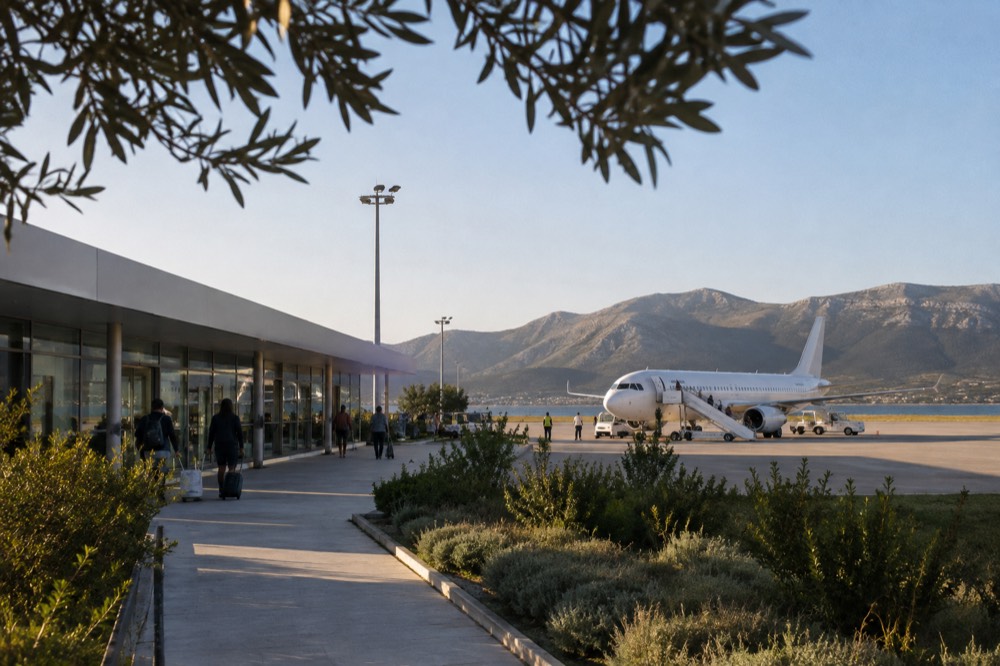
Split, by contrast, is a transport hub. It has the ferry connections, the motorway link toward Zagreb, and a bigger airport with more routes in high season. The trade-off is that Split's airport is further from the city it serves than Dubrovnik's is, so the transfer you save by choosing the busier hub partly comes back as a longer ride at the end. Neither airport is difficult. Both are small by international standards, and both clear bags faster than the mega-hubs most long-haul travellers are used to.
One more framing point before the detail. If your heart is set on the walls, the Old Town and the sunset from Mount Srđ, flying into Split to save a little on the fare and then losing half a day transferring south is a false economy. The walls alone are 1,940 metres of walking, up to 25 metres high in places, and the adult ticket is 40 euro in main season, 1 March to 30 November. That is a half-day experience before you add anything else, and Dubrovnik rewards the time you give it.
If you do land in Dubrovnik and want to use the days well, these are the trips that only really work from there:
The trio above is deliberate: two versions of the Bosnia and Herzegovina day trip and the long Mljet boat day. All three are southern trips. If you fly into Split, none of them is a sensible use of your time, and that asymmetry is the single clearest signal of which airport your trip wants.
Is It Cheaper to Fly Into Split or Dubrovnik?
There is no fixed answer: fares into both airports swing heavily by month and by how far ahead you book, and any specific price I printed would be stale before you read it. What is stable is the pattern. Split usually has more competing routes in summer, which tends to help fares, while Dubrovnik's season is compressed into fewer months, which pushes peak-season prices up. The real cost comparison must include your onward transfer, not just the ticket.
I will not quote you a flight price, because anyone who does is quoting you a snapshot. What I can do is give you the structure of the decision, because the structure does not change. Start with the fare you can actually book today for your dates, then add the cost and the hours of getting from your arrival airport to the first place you actually want to be. That total, in money and in holiday time, is the number to compare.
The seasonal pattern matters more than the airport itself. Dubrovnik's air traffic, like nearly everything else in the city, is intensely seasonal. The city recorded about 4.2 million overnight stays in 2025, sharing first place among Croatian destinations with Rovinj, and almost all of that pressure lands between late spring and early autumn. Outside that window, routes thin out sharply, and the cable car, a fair proxy for the wider season, closes entirely from January to March. Fewer winter flights into Dubrovnik means fewer cheap winter seats.
| Your trip looks like this | Cheaper entry point is usually | Why |
|---|---|---|
| Dubrovnik only, 3 to 4 nights | Dubrovnik | No transfer cost or lost day; Split requires a 3-plus-hour onward journey each way |
| Split and islands, finishing in Dubrovnik | Split | Open-jaw routing southbound follows the ferry and bus lines naturally |
| Dubrovnik first, finishing in Split or Zagreb | Dubrovnik | Same logic reversed; flying out of Split avoids backtracking |
| Both cities, order flexible | Whichever fare is lower | The route works equally well in either direction |
| Shoulder season, November or March | Split | More routes keep running when Dubrovnik's schedule thins out |
Notice the recurring advice in that table: fly into one city and out of the other. Croatia is a corridor, not a circle, and backtracking along it is the most common planning mistake I see. An open-jaw ticket into Split and out of Dubrovnik, or the reverse, costs a little more than a return sometimes and saves you an entire day of double-tracking. Check both orderings before you book, because the difference between them is often larger than the difference between the two airports.
The onward transfer is where the comparison gets concrete. From Dubrovnik airport, the city is a short bus or taxi ride away, and the airport transfer options are straightforward enough that most travellers never think about them twice. From Split, if Dubrovnik is your destination, you are signing up for a bus or a private transfer of several hours, or a ferry that runs on a seasonal schedule. That is not an argument against Split, it is an argument for making Split earn its place in your itinerary rather than treating it as a cheaper doorway to someone else's destination.
One cost angle people forget: the cheapest airport can be the one that lets you skip a night. A late arrival into Split followed by a morning transfer south burns an evening and a hotel night that a direct Dubrovnik arrival would not. Run the whole-week arithmetic, not just the airline's.
Is It Better to Go to Split or Dubrovnik?
That is a different question from the airport one, and the answer depends on what you want from a city. Dubrovnik is the more extraordinary place, a UNESCO-listed walled city on 24.7 hectares where the streets follow a plan fixed in 1272, but it is small, expensive and crowded at peak. Split is bigger, livelier, cheaper to base in, and sits on the ferry network for the islands.
As a rough split of your time, give Dubrovnik at least two full days and give Split one or two, and you will not feel short-changed by either. The two cities are often sold as rivals, and they are not. They do different jobs. Dubrovnik is a monument you can sleep inside. The Stradun alone, 298 metres of polished limestone, is worth the walk at two different times of day, and the walls circuit above it is one of the great walks of Europe. The Old Town was inscribed by UNESCO in 1979 under criteria (i), (iii) and (iv), and it spent 1991 to 1998 on the List of World Heritage in Danger during the war, which is part of why it feels both preserved and hard-won.
Split's core attraction, the palace of a Roman emperor turned into a living city, is arguably the more astonishing trick, because people still live, work and do their shopping inside it. But Split does not have the single overwhelming icon that Dubrovnik has, and it does not need one. Its strength is position: the islands, the ferries, the motorway, the fact that things are simply easier to get to from there. If your trip is a list of islands, Split is the city that serves the list.
Where the comparison gets honest is crowd and cost. Dubrovnik's peak is intense, and it is not quite where people expect it. Cruise passengers at the Port of Dubrovnik peaked in September 2025 at 101,246 and October at 100,132, both above July's 96,072 and August's 87,385, a pattern the Port Authority's own statistics confirm year after year. The folk wisdom that August is the month to avoid is simply wrong for this city. If you come in shoulder season, come in late spring or early summer, not early autumn, if empty streets are what you are buying.
| What you want from the trip | Split delivers better | Dubrovnik delivers better |
|---|---|---|
| A famous walled old city | No | Yes, unambiguously |
| Island hopping by ferry | Yes, it is the hub | Limited, mostly Elaphiti and seasonal routes |
| Day trips to another country | No | Yes: Bosnia and Herzegovina, Montenegro |
| Late-night city life | Yes, bigger local scene | Smaller, more concentrated |
| Swimming straight off the itinerary | Good nearby beaches | Buje, Lokrum and kayak coves on the doorstep |
| Lower day-to-day costs | Generally yes | Generally no |
The swimming line deserves a note on honesty, because the numbers people quote online are often the wrong numbers. The sea-temperature figures I use are long-run open-water averages, the NOAA 1991 to 2020 climatology, not a beach thermometer. By that series, the September average for this coast is about 23.6 degrees and August about 25.8, while sheltered bays run warmer: the Croatian met service's own Dubrovnik buoy read 27.0 to 27.4 degrees on 8 September 2026 against that 23.6 September mean. Both coasts share the same water. Swimming is not a reason to choose either airport.
If you are still weighing the two cities rather than just the runways, the deeper comparison is which is nicer, Split or Dubrovnik, and the honest summary is that Split is the better base and Dubrovnik is the better sight. A trip that gives each its correct role, Split as the hub, Dubrovnik as the finale, is the trip most people end up wishing they had planned.
Does the Time of Year Change the Answer?
Yes, and more than most people expect. In July and August both airports are busy and fares peak everywhere, so the itinerary should decide. In the shoulder months Split keeps more of its route network, while Dubrovnik's thins out sharply. And in deep winter the choice can be made for you: Dubrovnik's high season genuinely sleeps, with the cable car closed January to March and the walls on a reduced 20 euro December ticket.
Seasonality is the hidden variable in this whole comparison. Travellers treat airports as constants and they are not. Dubrovnik's flight schedule is built around a city that does most of its annual business in a few months, and when the season ends, capacity ends with it. Split, serving a bigger city with more year-round residents and more domestic connections, holds onto more of its network through the winter. If you are travelling in November, February or early March, check Split first and check it seriously.
The summer inversion is the one nobody sees coming. Because cruise traffic, and with it a large share of Dubrovnik's visitor pressure, peaks in September and October rather than July and August, the late-summer airport-and-city combination in Dubrovnik is busier than the calendar suggests. The Port Authority limits cruise passengers to 8,000 a day in most cases, and of 243 cruise days a year only 18 exceed that number, but those 18 days cluster exactly when the weather is still perfect and the fares are starting to fall. The bargain window and the crowd window overlap.
For the shoulder-season traveller, here is the practical pattern. May and June are close to ideal in both cities: the sea is warming through the twenties by June's 22.5-degree average, everything is open, and the July fare spike has not arrived. Late September and October bring the warmest-looking prices and the heaviest cruise calendar. November is quiet, cheap and increasingly shut in Dubrovnik, with the walls dropping to their 20 euro December-season pricing from 1 December and the Western Outer Wall section closed from December through February.
| Travel window | Split as entry point | Dubrovnik as entry point |
|---|---|---|
| May and June | Strong: full ferry network running | Strong: everything open, sea warming |
| July and August | Busy and hot, best for island routes | Busy and hot, book walls and tours early |
| September and October | Excellent weather, thinning crowds | Best light of the year, peak cruise days |
| November | More routes still flying | Quieter city, shrinking schedule |
| December to March | Workable year-round base | Reduced flights, cable car closed January to March |
The December row carries a caveat I refuse to bury. People read "20 euro walls ticket" and book a winter Dubrovnik trip on the strength of it. The December ticket is real, and the Dubrovnik Pass, whose one-day tier costs the same 40 euro as the standalone walls ticket in main season, is simply not on sale in winter, so the comparison flips: in December the standalone ticket is the only product and it is half price. But the city you get in December is a quiet, partly closed one. Some travellers love exactly that. Just go in knowing it.
What About Flying Into One and Out of the Other?
Do it, if the fare math allows. Croatia's coast runs as a line, Split in the middle-north, Dubrovnik at the far south, and an open-jaw ticket that enters at one end and exits at the other saves you a full day of backtracking. The classic shape is into Split, down through the islands by ferry, out of Dubrovnik. The reverse works when fares cooperate.
The only genuinely wrong answer is a return ticket that forces you to retrace your steps, because the corridor logic is the whole argument. Between the two cities you have Šibenik's rivals inland, Trogir next to Split's airport, Hvar, Korčula, the Pelješac peninsula with its wine road, Ston with its walls and oysters, and finally Dubrovnik. Every one of those sits on the line between the two airports. A round trip into and out of the same city forces you to see that line twice, once in each direction, and the second pass is never as charming as the first.
The direction matters less than people think, with one exception. Ferries along the coast run more frequently and more reliably in the direction and season that suits island hopping, and the network is denser from Split. So if islands are the heart of your trip, start in Split and let the ferries carry you south, finishing in Dubrovnik when you are ready for a city finale and a short hop to the airport. If Dubrovnik is the heart, start there, take your day trips into Bosnia and Montenegro while you are based south, and then travel north once, exiting from Split.
The south-first shape has a hidden advantage worth spelling out. Dubrovnik's best day trips are the ones that cross a border, and border crossings want an early start and a long day. The Mostar and Kravica trips run about 11 hours, and reviews consistently flag the early departure as the price of the day. That is a day you want fresh legs for, which means doing it early in your stay, which means being based in Dubrovnik early, which often means flying in there.
For the border trips specifically, the two operators run slightly different shapes of the same day. The review-count gap tells you which one the crowds have found; the smaller one can mean a more personal day. Both only exist as options because Dubrovnik sits where it sits.
Practical notes for the open-jaw plan. Book the intercity leg before you fly, not after you land: the Split to Dubrovnik transport options include buses, a seasonal ferry and private transfers, and the cheap seats on the popular departures go early in summer. Leave a full day, or at least a full afternoon, between arriving at your exit city and your flight home; both airports are small, but both are also a ride away from the cities they serve, and a dawn bus after a late ferry is a miserable way to end a holiday.
And if the whole comparison has you leaning toward Dubrovnik as the base, the planning groundwork is already laid for you on Things to Do in Dubrovnik: how many days to give the city, what the walls ticket actually includes, and which day trips justify the long days.
Which Should You Actually Book?
Book Dubrovnik if the walled city is the destination and your trip is four days or fewer, or if Bosnia and Montenegro day trips are on your list. Book Split if your trip is longer, island-heavy or ends somewhere other than the far south. Book the open-jaw combination if you can, because the coast is a line and lines are meant to be walked in one direction.
The airport is a detail; the shape of the trip is the decision. Everything above reduces to that. Travellers agonise over airports because airports are the first thing you book and the first thing that feels real, but the airport is downstream of the itinerary, not upstream of it. Decide whether this is a Dubrovnik trip with a corridor attached, or a corridor trip that ends in Dubrovnik, and the runway question answers itself.
A final word on timing your booking rather than your route. Fares into both cities respond to the same forces: the July and August peak, the September shoulder that is busier in Dubrovnik than most guidebooks admit, and the winter collapse. Watch both airports for your dates, watch them a few months out, and when a sensible fare appears into either end of your line, take it. The perfect airport choice at an inflated price is a worse deal than the good-enough airport at a fair one, and no amount of optimisation changes the fact that you will be standing on the Stradun either way within a day of landing.
Whichever of those two Mostar days suits your group, the booking logic is the same: reserve it for your first full day in the city, while the early start still feels like part of the adventure rather than a chore. And if a border day is not your thing at all, the Mljet boat day in the selection below is the gentler way to spend a long day out of the city.
Common Questions About Flying Into Split or Dubrovnik
Is it better to fly into Split or Dubrovnik?
Fly into Dubrovnik for a short, Dubrovnik-focused trip or for border day trips into Bosnia and Herzegovina and Montenegro. Fly into Split for island hopping, longer coastal routes or trips that continue north. If your itinerary touches both cities, fly into one and out of the other rather than doubling back.
Is It Cheaper to Fly Into Split or Dubrovnik?
There is no fixed answer, because fares at both airports swing by month and booking window. Split usually fields more competing summer routes, which helps fares, while Dubrovnik's compressed season pushes peak prices up. Compare the fare plus your onward transfer cost and time before deciding.
Is It Better to Go to Split or Dubrovnik?
They do different jobs. Dubrovnik is the more extraordinary sight, a UNESCO-listed walled city, but it is small, pricey and crowded at peak. Split is bigger, cheaper to base in and sits on the ferry network. Many trips are best served by both: Split as the hub, Dubrovnik as the finale.
How Do I Get Between the Two Airports?
By bus, seasonal ferry or private transfer, with the coastal journey taking several hours. There is no train anywhere on this stretch of coast. Book the intercity leg in advance in summer, because popular departures fill early, and leave a buffer afternoon before your flight home.
When Is the Worst Time to Fly Into Dubrovnik?
Early autumn, not August, is the busiest visitor window. Cruise passengers at the Port of Dubrovnik peaked in September 2025 at 101,246 and October at 100,132, ahead of July and August. If quiet streets matter to you, aim for May, June or late October rather than September.