Is It Expensive to Eat Out in Dubrovnik?
A straight answer on Dubrovnik restaurant prices, what drives them, where locals eat, and how to eat well without overspending inside the Old Town walls.
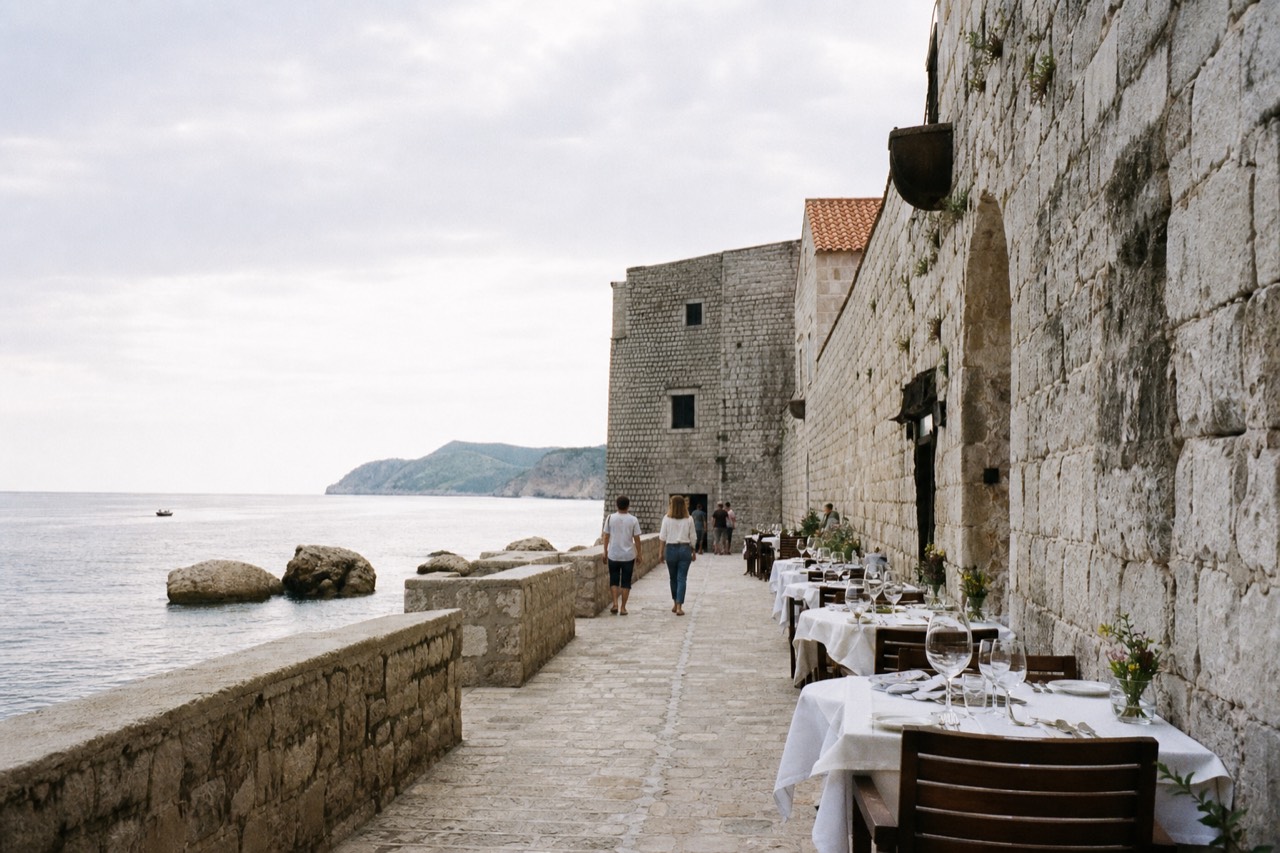
Is It Expensive to Eat Out in Dubrovnik?
Yes, eating out in Dubrovnik is expensive, and it is the priciest food city in Croatia by most travellers' accounts. Inside the walled Old Town you are paying for a UNESCO-listed stone stage as much as for the plate, and the same kitchen a ten minute bus ride away in Lapad or Gruž will charge meaningfully less for the same grilled fish. The honest answer splits by location, not by cuisine.
I have walked these streets with visitors since 2015, and the pattern never changes. A couple sits down on the Stradun, orders two mains and a bottle of water, and the bill lands like a small hotel charge. Two streets over, off the main drag, the same money buys a full konoba dinner with wine. The gap is not subtle, and it is the single most useful thing to understand about food prices here.
The reason is structural, not greedy waiters. The Old Town is a 24.7-hectare UNESCO property, inscribed in 1979, where every delivery arrives through a gate sized for medieval carts, rents are among the highest on the Adriatic, and the customer base is overwhelmingly short-stay visitors who will never return. A restaurant on the Stradun, the 298-metre limestone main street, does not need you to come back. A family konoba in the suburbs does.
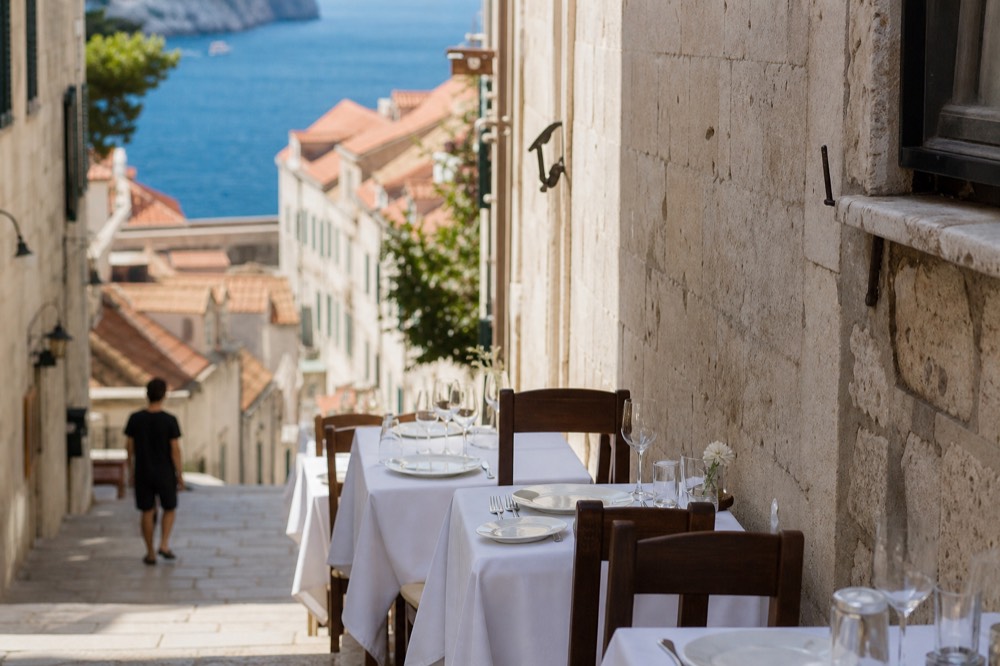
Scale matters too. Dubrovnik recorded about 4.2 million overnight stays in 2025, sharing first place among Croatian destinations with Rovinj, according to the Croatian Bureau of Statistics. That volume, compressed into a small walled core for a short season, lets Old Town venues charge tourist prices with full terraces every night from June to September.
There is a reliable way to short-circuit the whole problem: let a local walk you through the food streets on day one. The food and drink walking tours below do exactly that, and they double as an orientation to the city.
If you would rather go it alone, the rest of this page breaks down where the money goes, what a day of sightseeing and eating actually costs in hard figures, and where Dubrovnik's own residents sit down to eat.
Is Dubrovnik Expensive to Eat?
Yes, but unevenly, and the unevenness is the whole story. Eating inside the Old Town walls costs roughly double what the same meal costs in Gruž, Lapad or the wider city, and the premium climbs further on the Stradun itself and on any terrace with a sea view. Outside the walls, prices fall back toward normal Dalmatian levels, and the quality often rises because the kitchen is cooking for neighbours as well as visitors.
Start with what you can control. Location is the biggest single line in a Dubrovnik restaurant bill, bigger than the fish, bigger than the wine. The second factor is seafood pricing by the kilo, which catches visitors out every summer: grilled fish and shellfish are sold by weight, the price per kilo is printed on the menu, and the fish gets weighed in front of you. That is honest and standard practice, but if you have never ordered by the kilo before, ask the server to show you the fish and confirm the total price before it goes to the kitchen.
The third factor is the season. Dubrovnik's food economy runs flat out from June through September and then thins out. In the shoulder months of April, May and October many kitchens are fully open but the terrace premium softens, and some of the best-value eating of the year happens then. In deep winter a good share of the Old Town closes entirely and the city eats where it always ate, in the residential neighbourhoods.
Coffee and drinks deserve their own warning. A coffee standing at a bar is one of the last genuinely cheap pleasures in the Old Town; the same coffee at a table on the Stradun carries a terrace premium that surprises people. House wine by the decilitre, poured from the tap, is usually the value play against bottled wine, and it is what most locals drink with lunch. Tap water is safe and drinkable throughout the city, so there is no need to buy bottled water at restaurant prices.
None of this means you should skip the Old Town at dinner. Some of the city's best kitchens are inside the walls, and a meal on a stone alley at dusk is a legitimate part of the experience you came for. The point is to choose it deliberately, once or twice, rather than defaulting to it three times a day because it is what is in front of you. Our guide to Dubrovnik restaurants worth booking goes deeper on the good ones, and what to eat in Dubrovnik covers the dishes that are actually worth their price.
One honest shortcut for the first evening: the food and drink walking tour run by Fabula Ragusea, about 3 hours, from $165.64 per person and rated 5 across 704 reviews, walks you through the city's food stops with tastings and wine at every one. It is not the cheap option, but it replaces two meals and a bottle of wine you would have bought anyway, and it ends with you knowing exactly which streets to return to.
Is Dubrovnik Expensive to Visit?
Yes, Dubrovnik is an expensive destination overall, not just at the table. The headline sight, the City Walls, costs 40 euro for an adult in main season, the cable car round trip is 30 euro, and a Lokrum ticket is 30 euro, so a couple doing all three spends more on tickets than on any single dinner. Food feels expensive partly because everything around it is expensive too.
Put the fixed costs side by side and the picture is clear. These are the operator's own prices, all verified, and they are what a typical day of sightseeing actually costs before you eat anything. Other pages covering the same trip are gathered on Things to Do in Dubrovnik.
| Item | Adult Price | Notes |
|---|---|---|
| City Walls ticket | 40 euro | Main season, 1 March to 30 November; includes Fort Lovrijenac; 20 euro in December |
| Dubrovnik Pass, one day | 40 euro | Same price as the walls in main season, adds ten more sights and a 24-hour bus ticket |
| Cable car round trip | 30 euro | One way 17 euro; child 4 to 12 round trip 8 euro |
| Lokrum Island ticket | 30 euro | Includes reserve entry and return boat transfer |
| Old Town walking tour | From $20 | Cheapest paid guided walk on the roster |
That table explains a lot of the sticker shock people report. The walls ticket alone, sold by the Society of Friends of Dubrovnik Antiquities, is 40 euro per adult in main season, and if you are doing the walls, the pass, the cable car and Lokrum, the ticket bill stacks up fast before lunch is even ordered. Dinner then lands on a budget that is already stretched, which is why "expensive to eat" and "expensive to visit" blur together in most people's memory of the trip.
The timing of your visit changes the numbers more than most people expect. Cruise passenger volumes, tracked by the Port Authority, peaked in September 2025 at 101,246 and October at 100,132, above July's 96,072 and August's 87,385. September and October are the busiest cruise months, not the height of summer, and the Old Town's official carrying capacity of 11,275 people, with six entrance counters updating a headcount every 15 minutes, gets tested hardest in those months. Crowds push prices up and patience down, so if cheap and calm is the goal, look at late April, May, early June or late October instead.
A few of these prices have obvious escape hatches. The walls ticket drops to 20 euro in December, which is the single biggest fixed-cost saving on the whole list, and the cable car offers a one-way option at 17 euro for anyone willing to walk the descent instead of riding it. Children aged 4 to 12 pay just 8 euro round trip on the cable car, so family arithmetic changes quickly on that item even when the adult fares stay fixed. The one-day Dubrovnik Pass only makes sense as a deliberate play: it costs exactly the same 40 euro as the standalone walls ticket in main season, so every one of the ten extra sights and the 24-hour bus ticket is effectively free once you have committed to the walls.
For anyone who finds even that too much, the walking tour tier drops to $20 for the cheapest paid guided walk on the roster, and below that sits the free tier entirely, the GuruWalk pay-what-you-want Old City walk, 1 hour 45 minutes and rated 4.87 across 2,242 reviews, which costs only what you choose to hand over at the end.
There are genuinely free ways to spend a day here, and they are not consolation prizes. The Stradun itself, Onofrio's Fountain, the alleyways off Prijeko, the harbour at dusk and the walk around the outside of the walls all cost nothing, and the free, pay-what-you-want walking tours on GuruWalk, including a 1 hour 45 minute Old City walk rated 4.87 across 2,242 reviews, cover the history for whatever you think it was worth. Our free things to do in Dubrovnik guide collects the rest.
The pattern to internalise is simple: Dubrovnik charges heavily for the famous enclosed experiences, the walls, the cable car, the island boat, and much less for the open ones. Budget the big three tickets deliberately, fill the gaps with free streets and cheap standing coffee, and the food budget stops absorbing the shock of everything else.
Where Do Locals Eat in Dubrovnik?
Locals eat mostly outside the walled Old Town, in Gruž, Lapad and the surrounding neighbourhoods, where konobas serve the same Dalmatian cooking at prices residents can actually pay. Inside the walls, the places Dubrovnik people recommend are the small, unfashionable kitchens a few streets off the Stradun, the bakeries, and the market at Gundulić Square where the shopping, and the real price level, starts.
Start where the shopping starts. Gruž Market and the morning stalls on Gundulić Square set the true price of food in this city, and everything a restaurant charges is built on top of them. Locals buy their fish, vegetables, cheese and olive oil here, and any restaurant that sources from these stalls is cooking the same ingredients you could buy yourself. It is also the cheapest breakfast in the Old Town: a piece of cheese or a pastry from a nearby bakery, eaten on the steps, costs a fraction of a hotel terrace.
In the residential neighbourhoods the logic of the menu changes completely. A konoba in Lapad or above Gruž is cooking for families who come back every week, so the prices, the portions and the pace all reflect a repeat customer. You will find the same grilled fish, the same peka if you order it a day ahead, the same house wine, at a noticeably gentler level than the equivalent inside the walls. The trade is a bus ride or a twenty minute walk, and the number 6 bus from Pile toward Lapad is the standard route. Our detailed answer on where locals eat in Dubrovnik lists the specific neighbourhoods and the cheap eats worth the trip, and the Gruž neighbourhood guide covers the market side.
Inside the walls, the local test is simple: does the kitchen have a menu shorter than one page, and is there a queue of people speaking Croatian at the counter? Bakeries are the other open secret. A burek or a slice of pizza from an Old Town bakery is the cheapest hot food in the city centre, and it is exactly what half the people working in the Old Town eat standing up at eleven in the morning. If you are staying a full week, it is worth planning at least two dinners outside the walls and treating the Old Town as your splurge nights, because that single structural choice saves more money than any amount of menu comparison inside the walls ever will.
If you want the locals' knowledge without doing the research yourself, this is precisely what a food walk buys you. The Food and Drink Walking Tour with a Local Guide is the strongest version on the roster, and one recent guest put it better than any description I could write:
Amazing food tour! Marija was a great guide, full of stories and facts that really brought Dubrovnik to life. The food was delicious, and generous. Wines at every stop. Would highly recommend this tour to anyone visiting Dubrovnik, especially to help get your bearings of the city and know where to go for dinner!
Bryan_M
That last sentence is the real argument. Knowing where to go for dinner, on night one instead of night four, is worth more than any single saving on a menu, and it is the difference between an expensive trip and a well spent one. For a fuller treatment of the city's food culture, start with the food tour guide and the what to eat guide.
How to Eat Well in Dubrovnik Without Overspending
Eat your big Old Town dinner once, deliberately, and build the rest of your food day around bakeries, market stalls, standing coffee and neighbourhood konobas outside the walls. Book the walls or the pass as your one big-ticket sight, walk the free streets in between, and let a food tour on day one hand you the local knowledge that would otherwise take three trips to earn.
The cheapest reliable structure for a day looks like this. Coffee standing at a bar in the morning, bakery pastry or market fruit mid-morning, lunch outside the walls in Lapad or Gruž where the same kitchen charges less, a free walking tour or the Stradun's free sights in the afternoon, and then one proper dinner inside the walls, chosen from a shortlist rather than whatever terrace finds you first. Repeat visitors who eat this way spend dramatically less than first-timers who default to the nearest Old Town table three times a day, and they eat better.
Two final habits close the gap. First, ask to see the fish and confirm the price whenever anything is sold by the kilo; it takes ten seconds and removes the only real bill shock left in the system. Second, remember that the expensive things in Dubrovnik are the enclosed attractions, not the city itself, so budget for one or two of those and let the streets, the viewpoints and the markets carry the rest of the day. The city is expensive at the table only if every table you choose is inside the walls.
Common Questions About Eating Out in Dubrovnik
Is it expensive to eat out in Dubrovnik?
Yes. Dubrovnik is Croatia's most expensive food city, and inside the walled Old Town prices run roughly double the neighbourhoods outside the walls. The premium comes from location, rents and a short, intense tourist season. You can still eat well for less by moving a few streets off the Stradun or taking the bus to Lapad or Gruž.
How Much Should I Budget for Food per Day in Dubrovnik?
There is no single verified per-meal price table for the city, so plan by structure rather than by figures: a bakery breakfast and standing coffee cost little, a neighbourhood konoba lunch costs mid-range, and one seated Old Town dinner with wine is the day's big spend. Travellers who eat one restaurant meal a day instead of three report the largest savings.
Is Seafood Sold by Weight in Dubrovnik?
Yes. Grilled fish and shellfish are priced per kilo on the menu, and the fish is weighed before cooking. Ask the server to show you the fish and confirm the total price before it goes to the kitchen. This is standard, honest practice, but it is the most common source of bill shock for visitors who have never ordered by the kilo.
Where Is the Cheapest Food in the Old Town?
Bakeries and the market stalls at Gundulić Square. A burek or a pastry from an Old Town bakery is the cheapest hot food inside the walls, and it is what many people working in the Old Town eat themselves. The market is also where the city's real price level is visible before restaurant markups are added.
Do Locals Eat Inside the Old Town Walls?
Rarely at dinner prices. Most residents live and eat in Gruž, Lapad and the surrounding neighbourhoods, where konobas cook for repeat customers at prices locals can pay. Inside the walls, the places locals actually use are the short-menu kitchens a few streets off the Stradun, the bakeries and the market.
Is Tap Water Safe to Drink in Dubrovnik?
Yes, tap water is safe and drinkable throughout the city, so there is no need to buy bottled water at restaurant prices. Ordering tap water with a meal is normal and unremarkable.