Is It Hard to Cross the Border from Croatia to Montenegro?
Crossing from Croatia to Montenegro is usually straightforward: passport checks at Debeli Brijeg, variable queues, and a day trip that handles the logistics for you.
Is It Hard to Cross the Border from Croatia to Montenegro?
No, crossing the border from Croatia to Montenegro is not hard, it is simply slow on peak days. Both countries run standard passport and ID checks, most crossings take minutes rather than hours, and the single biggest variable is how many buses and cars arrived just before you. Travellers on organised day trips from Dubrovnik report the whole process feeling routine.
The short version is that this is an ordinary international road border, not a checkpoint drama. You stay seated on the bus or in your car, a document is checked, and you continue. The crossing on the coastal route between Dubrovnik and the Bay of Kotor is the one almost every visitor uses, and it handles a heavy daily volume of tourist traffic in summer. Queues build when several buses converge at once, which is why timing matters more than difficulty.
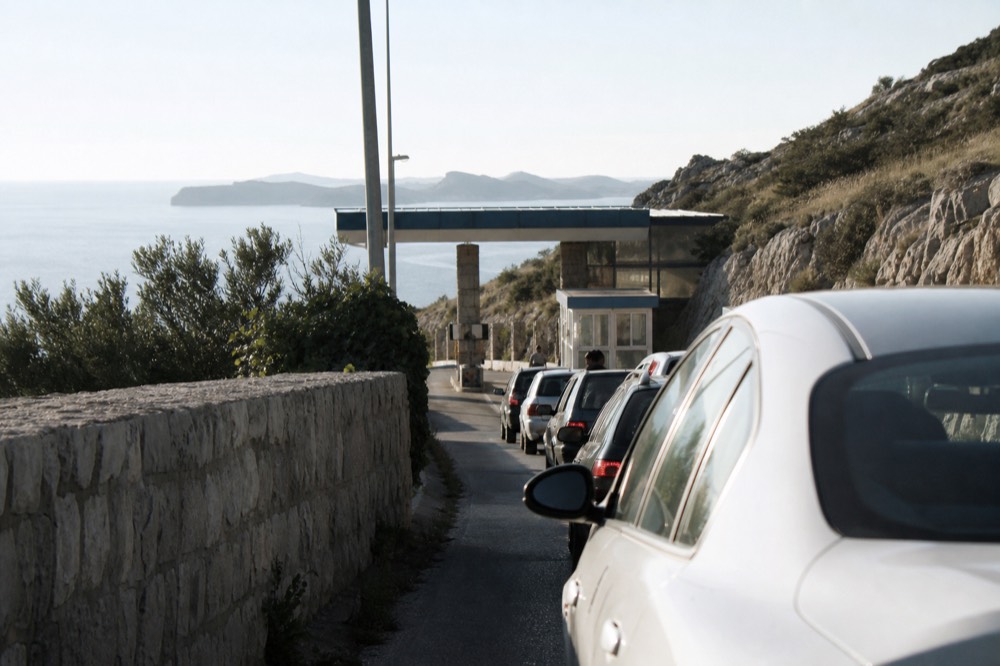
I have planned enough cross-border itineraries out of Dubrovnik to say this with confidence: the people who have a bad border story are almost always the people who drove themselves in late July or August, hit a bus convoy, and sat in a hot car. The people who took an organised trip, or who crossed early in the morning, describe the same stop as a non-event. One traveller on the popular Montenegro day trip put it plainly in a review: the border took their group fifteen minutes in September.
We booked the semi-private tour. 6 people total. Robert was fantastic! He was so knowledgeable and enthusiastic about everything. The tour was well organized and we had just the right time at the spots. Extremely satisfied with this tour and would certainly recommend to anyone. Also the border in September only took us 15 minutes.
Nithya
What actually determines your wait is a mix of season, hour and luck. Weekday mornings outside the July and August peak move quickly. Midday in high season, when excursion buses from Dubrovnik, Herceg Novi day-trippers and private cars all stack up, can stretch the same crossing into a long sit. If you are travelling independently, leave early, carry your passport rather than assuming any other document will do, and keep water in the car. If you are on a tour, none of that planning is yours to do.
There is also a rhythm to the day that experienced drivers know and first-timers do not. The morning wave of excursion coaches leaves Dubrovnik in a fairly tight window, so the border tends to bunch between mid-morning and noon. The return wave is looser, but late afternoon still collects a share of tired buses heading back before dinner. Cross outside those two windows and you will often wonder what all the warning was about. Cross inside them on a Saturday in August and you will understand why locals check the queue reports before driving south.
The practical comparison most readers want is between handling the border yourself and letting a tour operator absorb it. The roster below shows the two Montenegro options that leave from Dubrovnik, with the figures each operator's live listing states.
| Day trip from Dubrovnik | Duration | Price | Rating |
|---|---|---|---|
| Montenegro Day Trip | Full day | from $58 per person | 4.4 across 5,611 reviews |
| Montenegro Day Trip with Optional Boat Trip | 11 to 12 hours approx | from $70.99 per person | 4.4 across 3,829 reviews |
Both are built around the same reality: the operator knows the border rhythm, times the departure so the bus is not tenth in a convoy, and builds the queue into the schedule so Kotor time is not eaten by it. If the border is the part of a Montenegro day you are nervous about, that is precisely the friction a tour removes. You can read the wider framing in is a Montenegro day trip worth it.
Is It Easy to Cross the Border from Dubrovnik to Montenegro?
Yes, from Dubrovnik specifically the crossing is easy, because there is essentially one sensible road and every tour operator and local driver knows its rhythm. The border sits on the coastal route south of the city, the drive to Kotor is short on a clear run, and the only real planning question is what time you leave. Documents are checked, not interrogated.
Dubrovnik sits close enough to Montenegro that the border is a normal part of local life, not an expedition. People cross it for lunch, for work, for a weekend in Kotor. That familiarity works in your favour: the infrastructure is used to tourists, the officers process foreign passports all day long, and the tour companies that run this route daily have the timing down to a routine. For context on how the day itself is shaped, the Montenegro day trip planner covers the full route.
The mechanics are simple. On an organised coach you hand nothing over yourself; the guide collects passports or asks you to have them ready, an officer boards or checks documents at the booth window, and the bus rolls on. In a hire car you pull up, hand over the passports of everyone in the vehicle, and wait in place. Rental paperwork is worth carrying since cross-border permissions vary by company, and checking your rental agreement before you drive south is the one piece of homework that genuinely matters. On foot or by public bus the process is the same, just slower to load and unload.
A few practical details make the whole thing feel even more routine. Croatia uses the euro, and Montenegro uses it unilaterally too, so you never need to change money at the border. Mobile signal switches between networks automatically, and roaming within the region is cheap or free on most European plans, so map apps keep working without you touching anything. The only genuinely awkward scenario is arriving with a document that is not a passport, since national ID cards are fine for some travellers but the safe answer for everyone is the passport itself.
The one thing I would tell any first-timer is to build slack into the afternoon. The Bay of Kotor deserves more than a rushed hour, and a border queue on the return leg is the usual reason independent travellers end up sprinting back toward Dubrovnik. Tours handle this by scheduling the return crossing outside the worst of the evening flow. The classic option, the Montenegro Day Trip, runs from $58 per person and is rated 4.4 across 5,611 reviews, with the operator's live listing carrying the current departure times. For the variant that adds a boat ride on the bay, the Montenegro Day Trip with Optional Boat Trip runs 11 to 12 hours from $70.99 per person, rated 4.4 across 3,829 reviews.
A word on crowds on the Dubrovnik side of the day, because they feed directly into border traffic. The Port Authority limits cruise passengers to 8,000 a day in most cases, and of 243 cruise days a year only 18 exceed that number, so the road south is busier on those days than the raw visitor numbers suggest. The official carrying capacity of the Old Town core, from the UNESCO carrying-capacity assessment, is 11,275 people, tracked by six counters that update every 15 minutes.
Which Is Nicer, Croatia or Montenegro?
Neither country is objectively nicer, they are different products. Croatia offers the polished, higher-priced Adriatic experience with Dubrovnik and a famous walled city; Montenegro offers dramatic fjord-like scenery around Kotor at noticeably lower prices. Travellers who want comfort and infrastructure lean Croatia; travellers who want raw landscape per hour lean Montenegro.
Nice is a word that hides a budget and a travel style. Croatia's coastline around Dubrovnik is world-famous for a reason: the walls, the Stradun's 298 metres of polished limestone, the restaurant scene, the sheer density of things within walking distance. Montenegro's draw is different. The Bay of Kotor packs steep mountains, medieval towns and mirror-calm water into a compact area, and the cost of a meal or a coffee once you are across the border is generally gentler than in Dubrovnik's Old Town. The wider set of guides lives on Things to Do in Dubrovnik.
The honest framing I use with visitors is that Dubrovnik is a destination you arrive at, while Kotor is scenery you travel through. Both are spectacular. The Croatian experience is more curated and, in peak season, more crowded per square metre: the Old Town's official carrying capacity is 11,275 people, and on cruise-heavy days it gets close. Montenegro spreads its visitors along a bay and up mountain roads, so even a busy day feels looser. That contrast is exactly why the combined day trip exists, and why so many people base in Dubrovnik and cross the border for a single day of the other country's character.
Service standards follow the same split. In Croatia you are paying for polish: reliable timetables, polished old-town dining, hotel infrastructure that has been tuned to international expectations for decades. In Montenegro you are paying less for something a little rougher at the edges, a family-run konoba where the fish was landed that morning, a viewpoint with no ticket booth, a town square where dinner costs what a drink costs in Dubrovnik. Neither is wrong. The question is whether your ideal day is curated or discovered, and the border is close enough that you can honestly sample both before deciding where to spend the rest of your week.
If you want the fuller argument on both sides, we break it down in Croatia versus Montenegro compared. The short version for border planners: crossing is easy enough that you do not need to choose one country or the other. Base in one, day trip to the other, and you get both.
Which Is More Beautiful, Croatia or Montenegro?
On raw, drop-your-ice-cream scenery, Montenegro's Bay of Kotor is the more dramatic of the two, with mountains that rise straight out of the sea. Croatia's beauty is more architectural and refined: limestone streets, terracotta rooftops, islands off the coast. Beauty here is a matter of whether you prefer geology or cityscape.
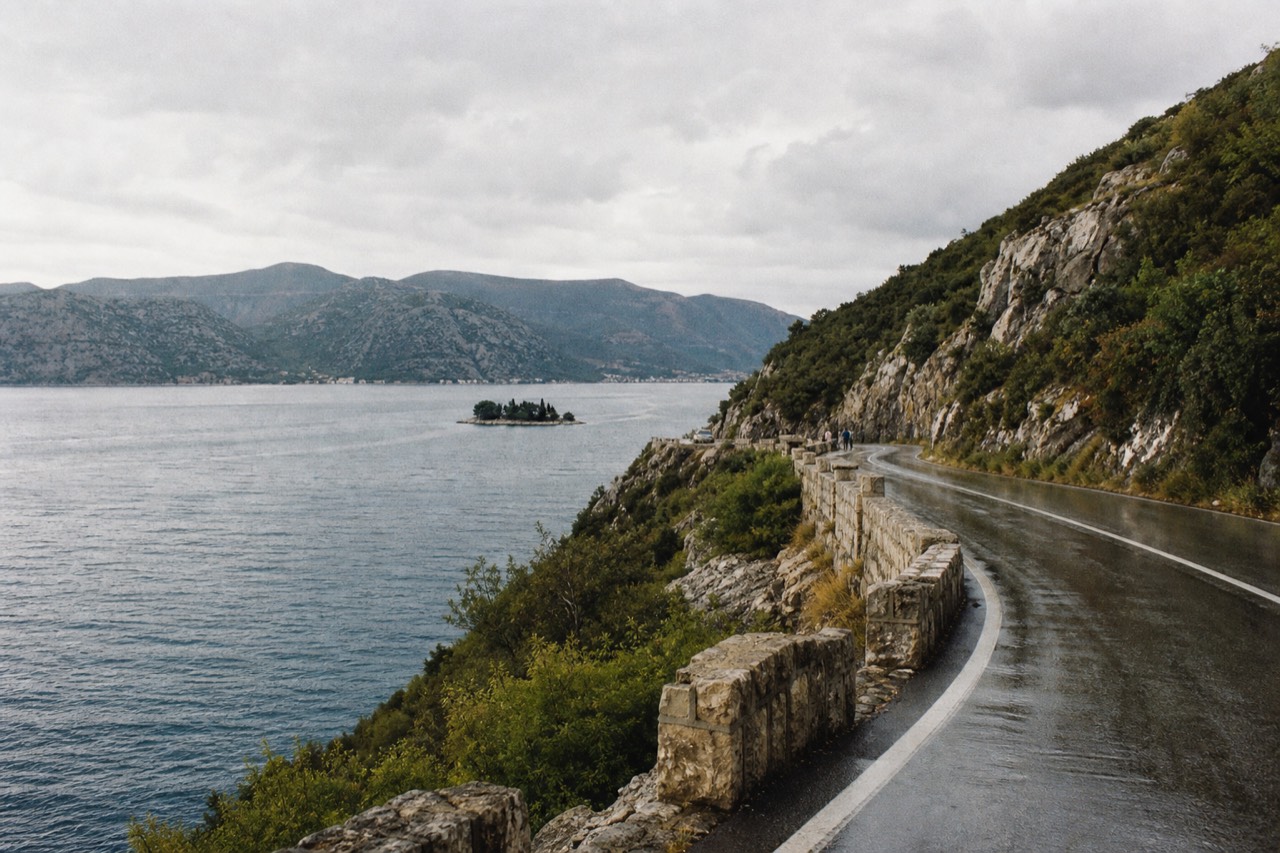
There is no neutral judge for this question, but there is a useful distinction. Montenegro's beauty hits you from a moving bus window. The road down into the Bay of Kotor wraps around water so still it mirrors the cliffs, and the switchback above Kotor gives a panorama that many visitors describe as the single best view of their whole Croatia trip. You do not have to work for it. It is simply there, framed by the window.
Croatia's beauty rewards walking. Dubrovnik's walls, 1,940 metres long and up to 25 metres high, frame the Old Town's 24.7-hectare UNESCO property from every angle, and the light on the limestone at golden hour is the photograph half the visitors came for. The city was inscribed on the World Heritage List in 1979 under criteria (i), (iii) and (iv), and it earns that status in stone rather than in skyline. It is a beauty you move through slowly rather than one that ambushes you from a coach seat.
The two kinds of beauty also photograph differently, which matters more than people admit. Kotor Bay gives you the wide establishing shot: water, cliffs, a red-roofed town tucked at the base, all in one frame without moving your feet. Dubrovnik gives you the sequence: a gate, an alley, a staircase opening onto the sea, a wall walk where the composition changes every fifty steps. If your camera roll is full of landscapes, Montenegro will dominate it. If it is full of streets and details, Croatia already has. The border lets you fill both folders on consecutive days, which is the real answer to the question.
The practical answer for a traveller is that the border puts both kinds within one day of each other, which is a rare thing. A morning on Dubrovnik's walls and an afternoon above Kotor Bay is not a compromise, it is the best of the eastern Adriatic in a single 24 hours. That is why the Montenegro day trip from Dubrovnik, from $58 per person and rated 4.4 across 5,611 reviews, is one of the most-booked products out of the city, and why the question of which country is more beautiful usually dissolves by dinner time.
Is Montenegro Prettier Than Croatia?
In places, yes: Kotor Bay's mountain-backed water is prettier than anything on the immediate Dubrovnik coast, and visitors say so constantly. But prettier overall is a stretch. Croatia counters with Dubrovnik itself, the Elaphiti islands and a polished coastline, so the fair verdict is that Montenegro wins the landscape round and Croatia wins the cities.
Prettier is the blunt version of the beauty question, and it deserves a blunt answer. If you lined up postcards, the Serpentine road view over Kotor would beat most single views in Croatia. Montenegro's advantage is vertical: the mountains come down to the water with almost no coastal plain, and towns like Kotor and Perast sit in that collision zone. It photographs like a smaller Norwegian fjord with Mediterranean light.
Croatia's counterargument is consistency. Dubrovnik alone, a fully walled Renaissance city on a peninsula, is prettier as a single urban ensemble than anything Montenegro has, and the island chain off its coast adds beaches and cypress-lined silhouettes that Kotor Bay cannot match, because the bay is about the frame rather than the shore. The UNESCO listing for the Old City of Dubrovnik, inscribed in 1979, is one measure of that; the 4.2 million overnight stays Dubrovnik recorded in 2025, sharing first place among Croatian destinations with Rovinj, is another, per the Croatian Bureau of Statistics.
There is a seasonal angle to the prettiness contest that nobody mentions in the comparison articles. Montenegro's bay keeps its drama in every month, but Croatia's coast changes character with the light: October and late September, when cruise passengers at the Port of Dubrovnik actually peak, at 101,246 and 100,132 in 2025 respectively, bring softer light, thinner crowds on the walls and sea that still holds a 21.0-degree October average on the long-run NOAA series. A prettier Croatia exists in the shoulder season, and it is a different country from the August version. Montenegro is more constant, which is its own kind of compliment.
For planning purposes the debate is free to stay unresolved, because the border costs you so little. The two Montenegro day trips from the roster cover the crossing, Kotor and Perast in one day, and if you would rather see a different border and a different country, the Mostar and Kravica options run the other direction into Bosnia and Herzegovina. One traveller on the Mostar and Kravice Waterfalls Day Tour described that day as "a long day and an early start, but well worth it," with an excellent guide and the advice to bring euros. The trio below covers all of these, and every one of them takes the border off your to-do list.
Common Questions About Crossing the Border from Croatia to Montenegro
Is it hard to cross the border from Croatia to Montenegro?
No. It is a routine passport check on the coastal road south of Dubrovnik. The difficulty is not the process but the queue: on peak summer days buses and cars can stack up, while in the shoulder season travellers report clearing it in around fifteen minutes. Organised day trips build the wait into their schedule.
Is it easy to cross the border from Dubrovnik to Montenegro?
Yes. From Dubrovnik there is effectively one sensible coastal route, operators run it daily, and the crossing is a standard document check. Leave early if driving yourself, carry passports for everyone in the vehicle, and check your rental agreement permits cross-border travel.
Which Is Nicer, Croatia or Montenegro?
They suit different styles. Croatia offers the polished, higher-priced experience centred on Dubrovnik's walled Old Town; Montenegro offers the dramatic Bay of Kotor at generally lower prices once you are across. Many travellers base in one and day trip to the other rather than choosing.
Which Is More Beautiful, Croatia or Montenegro?
Montenegro's Bay of Kotor is the more dramatic landscape, with mountains rising straight from the sea. Croatia's beauty is architectural: the 1,940-metre city walls, the limestone Stradun and the islands off the coast. The border is easy enough to see both in one trip.
Is Montenegro Prettier Than Croatia?
In places, yes, especially the Kotor Bay scenery. But Dubrovnik as a complete walled city is prettier than any single Montenegrin town, so the fair verdict is a split decision: Montenegro wins the landscape, Croatia wins the cities.