Is It Worth Taking the Cable Car in Dubrovnik?
Is the Dubrovnik Cable Car worth the €30 ticket? We break down the views, the restaurant, the walk down, and the best tours to book.
Is It Worth Taking the Cable Car in Dubrovnik?
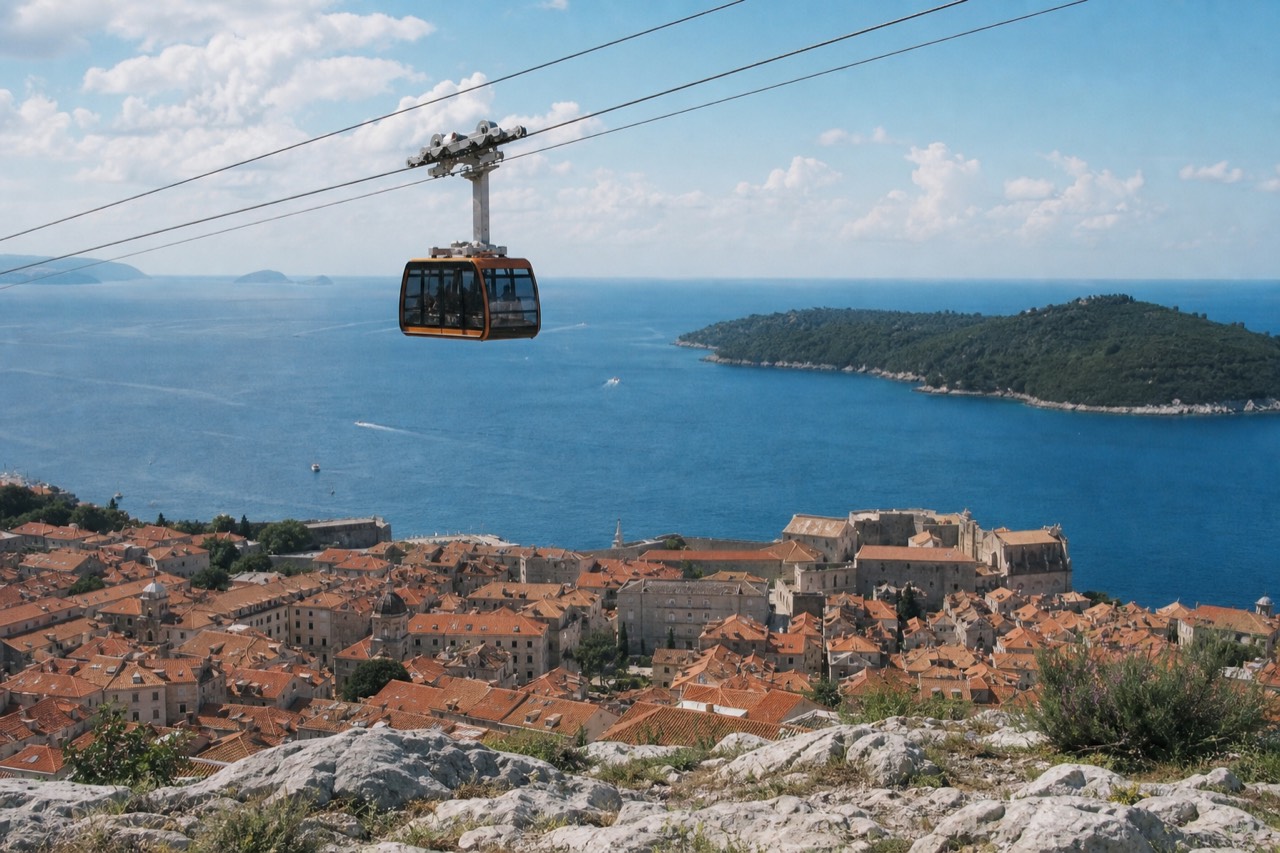
Yes, for most visitors the Dubrovnik Cable Car is well worth the cost, especially if you time your ride for sunset. The 3.5-minute ascent delivers unobstructed views of the Old Town, Lokrum Island, and the Adriatic Sea. The €30 round-trip ticket is steep, but the panoramic experience and the exhibits at the top make it a memorable highlight of any trip to Dubrovnik.
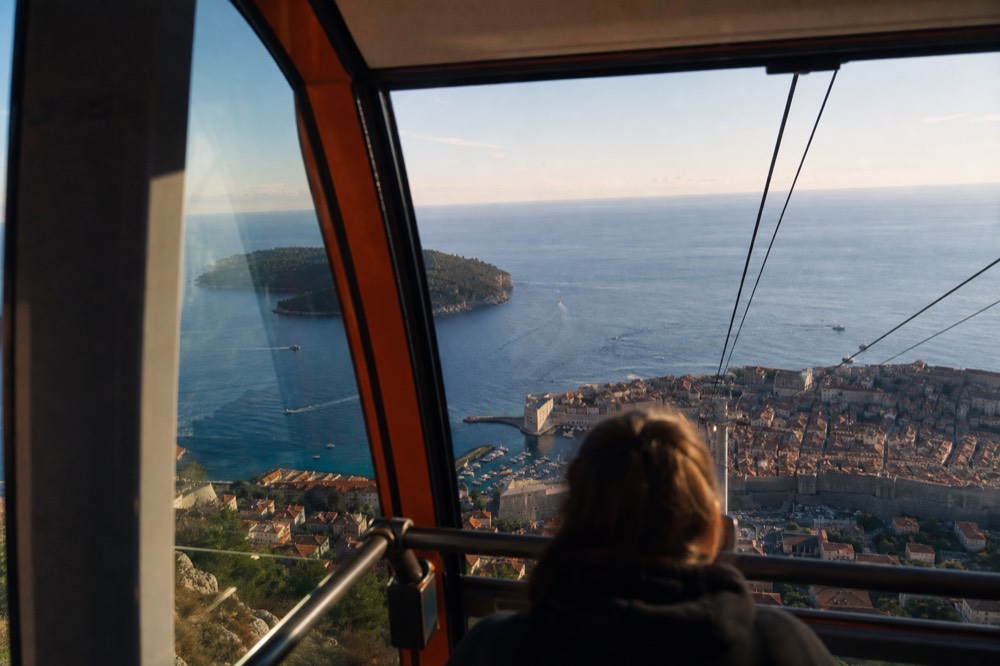
The cable car is one of the most iconic Things to Do in Dubrovnik, but the €30 price tag makes many visitors hesitate. When you dig into the details, the value often outweighs the cost. The ride itself is a smooth, glass-walled journey that climbs 367 metres in just over three minutes, giving you a view that changes every second. On a clear day, the sight stretches from the Elaphiti Islands to the mountains of Montenegro, and the Old Town looks like a miniature model below.
The cable car system was built in 1969 and has been a fixture of the Dubrovnik skyline ever since. It was destroyed during the siege of Dubrovnik and rebuilt with modern cabins and a new track. The two cabins, each holding 32 passengers plus an operator, run on a continuous loop, so you rarely wait more than a few minutes to board. The floor-to-ceiling windows give you a clean, unobstructed view, and the cabin is stable enough that even visitors uneasy with heights usually find it comfortable.
Many travelers combine the cable car with a visit to the Museum of the Homeland War, which sits inside Fort Imperial at the summit. The museum tells the story of Dubrovnik's siege and is a powerful, sobering counterpoint to the holiday atmosphere. The terrace outside, with its 360-degree panorama, is free to access once you have a ticket, so you can linger as long as you like. The museum admission is separate from the cable car ticket and costs a modest fee, well worth it for the photographs and original artefacts inside.
If you are on a tight budget, the 30-minute walk up the Mount Srd switchback trail is a free alternative, but it is steep and completely exposed. For most people, the cable car is the smarter choice, especially in the heat of summer. Time your ride for the last hour before sunset, and you will get golden light on the terracotta rooftops and a spectacular colour show over the sea. The cable car runs until midnight in the peak summer months, so a late-evening ride with the city lights below is a completely different experience.
Visibility on Mount Srd is not guaranteed, and the summit can be clouded over even when the Old Town is sunny. A quick check of the live webcam on the cable car website, or a glance at the hilltop from the Stradun, tells you whether the view is clear. If the summit is in cloud, save your €30 for another day. The ticket office at the lower station will also tell you if the view is obscured, and they are honest about it.
The Dubrovnik Cable Car & Old Town Walking Tour is a neat way to bundle the two most popular activities. The tour includes a cable car ticket and a guided walk through the main sights of the Old Town, so you get the birds-eye view first and then the ground-level history. The guide handles the logistics, which means you do not have to queue for tickets at the lower station. The entire experience runs about four and a half hours, with the cable car ride taking up roughly the first hour including the time at the summit.
Great tour with a great guide. Terrific views from the cable car. The old town is fascinating. We walked part of the wall because it was very hot. Sara was a fabulous guide and gave us recommendations for lunch and what else we should see.
Fred_W
If the cable car is a must-do on your list, you will also want a few other viewpoints to round out your stay. The trio below covers the cable car itself, a quirky e-tuk-tuk ride that gets you into the hills above the city, and the hop-on hop-off bus that loops between the Old Town and the beaches. Each one gives you a different angle on Dubrovnik, and together they cover the high points, the hidden lanes, and the coastal stretch.
The Dubrovnik Cable Car is not a cheap attraction, but it is a rare one that gives you a complete perspective on the city. Once you are up there, you understand why the Republic of Ragusa built Fort Imperial on this spot, and why the modern city spreads out the way it does. That kind of orientation is hard to put a price on, and it makes the rest of your visit feel more coherent.
What Is at the Top of the Cable Car in Dubrovnik?
At the top you will find the Panorama Restaurant and Bar, the Museum of the Homeland War, a souvenir shop, and the Fort Imperial. The broad terrace provides 360-degree views that stretch up to 60 km on a clear day, and you can walk along the ridge for even more vistas. The Mount Srd summit is 405 metres above sea level, and the entire complex is a designated historic site.
The upper station is a low stone building that blends into the hillside. Stepping off the cable car, you walk straight onto a paved terrace with a metal railing. The view is immediately jaw-dropping: the entire Old Town, the island of Lokrum, the Lapad peninsula, and the open Adriatic. There are coin-operated telescopes if you want to zoom in on the city walls or the cruise ships anchored in the bay.
Behind the terrace, the Museum of the Homeland War occupies a section of Fort Imperial. It is a small but carefully curated museum that uses photographs, video footage, and original artefacts to tell the story of the siege. The admission fee is separate from the cable car ticket, but it is modest and well worth the time if you have any interest in the recent history that shaped modern Dubrovnik.
Fort Imperial itself is a sturdy stone structure. The thick walls and deep windows give you a sense of how strategically important this hilltop was. The cable car station is built into one side of the fort, so you can walk around the outside without paying an extra fee. The fort's courtyard and ramparts are open to explore, and the views from the battlements are even better than from the terrace because you are slightly higher.
The technical details of the cable car are impressive in their own right. The system dates from 1969, and the two cabins each carry 32 passengers plus an operator. The table below breaks down the key numbers.
| Specification | Value |
|---|---|
| Lower terminal elevation | 38.0 m above sea level |
| Upper terminal elevation | 405.0 m above sea level |
| Total rise | 367.0 m |
| Track length | 778.2 m |
| Travel time | 3 minutes 30 seconds |
| Speed | 6.5 metres per second |
| Cabins | 2, each with 32+1 capacity |
| Maximum height above ground | 40 m |
| View range (clear day) | Up to 60 km (37 miles) |
The cable car is closed from January to March, so if you are visiting in winter, you will need to hike up instead. The timetable from April through December varies by month, with the longest hours in summer when the last ride is around midnight. The official timetable page on the cable car website lists the exact hours for each month, and it is worth checking a day or two before your visit because the seasonal transitions can shift by a week or two.
If you want to make the cable car the centrepiece of a longer outing, the Mount Srd guide covers the trails, the museum, and the history of the fortress in depth. The summit is also a popular starting point for a downhill walk along the ridgeline, which we will cover in a later section.
The views from the top are the main attraction, but the Fort Imperial itself is worth a look. It is a sturdy, no-nonsense military structure, and the thick walls and deep windows give you a sense of how strategically important this hilltop was. The cable car station is built into one side of it, so you can walk around the outside of the fort without paying an extra fee.
What Is the Restaurant on Top of the Cable Car in Dubrovnik?
The Panorama Restaurant & Bar sits at the upper cable car station, offering Mediterranean cuisine and a terrace with arguably the best views in Dubrovnik. It is a high-end dining experience, and reservations are strongly recommended, especially for sunset. A walk-in coffee or cocktail at the bar is a more budget-friendly way to enjoy the view without committing to a full meal.
The restaurant is on the second floor of the upper station building, with a large outdoor terrace that faces the Old Town. The menu focuses on fresh seafood, grilled meats, and pasta, with a strong Croatian wine list that includes several local labels from the Pelješac peninsula. The atmosphere is smart but not stuffy, and the service is generally attentive, though peak hours can slow things down. The wine list is a highlight, and the staff are knowledgeable about pairings.
Because the view is the real star, the restaurant feels like a special-occasion place. Many visitors come for a sunset drink and a light bite, rather than a full dinner. The cocktail list is solid, and the local wines by the glass are a good value. If you are on a budget, a coffee or a beer at the bar still gives you the view, and you can take your drink outside to the terrace. The bar area is more casual than the dining room, and you do not need a reservation for a drink.
The restaurant is not directly connected to the cable car ticket: you do not need to eat there to enjoy the summit. The outdoor terrace area is free to walk around, and there are benches and standing spots all along the railing. The Panorama is simply the highest-quality option for food and drink, and it is a brilliant way to turn the cable car ride into a proper evening out. A sunset dinner here, with the Old Town lighting up below, is one of the most romantic experiences in Dubrovnik.
If you are arriving by the cable car, you can book a table for the time of your ride, but be aware that the last cable car down is earlier than the restaurant closing time. Check the timetable on the operator website before you book, especially in the shoulder season when the hours are shorter. The walk down is an option if you miss the last ride, but it is dark and steep, so a torch is essential. The restaurant staff can also call a taxi to meet you at the summit parking area, though this is an expensive option.
The Panorama Restaurant is not the only place to eat near the summit. A small kiosk near the terrace sells snacks, ice cream, and cold drinks, so you can grab a quick refreshment without a reservation. The souvenir shop sells postcards, magnets, and local crafts, and it is a good spot to pick up a small gift. For the full picture on the cable car experience, including ticket options and how to avoid the queues, see the full guide to the Dubrovnik Cable Car. That guide also covers how the cable car fits into a one-day itinerary and whether you should buy a ticket in advance.
Can You Walk Down From the Cable Car in Dubrovnik?
Yes, you can walk down from the top of the cable car via the winding switchback trail that leads to the Old Town. The hike takes about 30 to 45 minutes on a steep, rocky path, so wear sturdy shoes. It is free, and you will pass the Homeland War Museum and enjoy different angles of the view. However, there is no shade, so avoid the midday heat.
The trail starts just behind the upper station, near the parking area. It is a well-trodden donkey path that zigzags down the bare hillside. The surface is loose gravel and exposed limestone, so it can be slippery after rain. The path is not suitable for pushchairs or anyone with mobility issues, and in the summer, the heat makes it a tough slog. The trail is popular with locals as a fitness route, and you will often see runners tackling it in the cooler morning hours.
The main advantage of walking down is the cost: you can buy a one-way cable car ticket (€17 for adults, €5 for children) and then hike down for free. That saves you €13 per person compared to the round-trip ticket. It also gives you a completely different visual experience, with the Old Town growing larger as you descend. You will see the high walls of Fort Imperial from below, and the view of Lokrum framed by the hillside is a photographer dream.
Along the way down, you pass the stone stations of the cross that line the path, a relic of the annual pilgrimage to the summit. The trail also gives you a close-up look at the cable car pylons, which tower overhead as you descend. The vegetation is sparse and scrubby, typical of the Dalmatian karst, and wild rosemary and sage grow along the edges of the path. The scent of crushed herbs underfoot is a small sensory bonus on a hot day.
The walk down is also a great way to visit the Homeland War Museum without paying the full round-trip cable car fare. You can ride up, explore the museum, have a drink at the Panorama, and then walk down. The trail meets the main road near the Bosanka village, and from there it is a short walk to the Old Town Pile Gate. The entire descent from summit to Stradun takes most people about 40 minutes at a steady pace.
If you are not keen on the walk, the e-tuk-tuk tour is a quirky alternative that gives you a similar high-up perspective without the exertion. The electric tuk-tuk weaves through the narrow streets above the Old Town and stops at several viewpoints, including a spot near the cable car base. It is a relaxed, photo-friendly way to see the city from above, and the driver usually shares local stories that you would not hear on a standard tour.
The weather on Mount Srd can be changeable, even in summer. A sudden sea breeze can make the terrace feel cool, so bring a light layer. If you are walking down, start early or late to avoid the worst of the sun. The trail is not lit, so do not attempt it after dark unless you have a head torch and a good sense of direction. The path is marked with white and red paint blazes, but they are hard to spot in the dark.
The decision to walk down really comes down to your fitness and your budget. For a family with young children, the round-trip ticket is the safer bet. For solo travelers or couples on a budget, the one-way ride plus hike is a good compromise. Either way, you get the same incredible view from the top, and the walk down is a free bonus that adds a sense of adventure to the experience.
The cable car is not the only way to get a high-angle view of Dubrovnik. The hop-on hop-off bus stops at a viewpoint near the cable car base, and the walk up from the Ploce area gives you a different perspective. But the cable car speed and the uninterrupted glass wall make it the most dramatic option. If you are only in Dubrovnik for a day or two, it is the most efficient way to see the city from above, and the summit gives you a sense of the geography that no street-level walk can match.
Common Questions About the Dubrovnik Cable Car
Is it worth taking the Cable Car in Dubrovnik?
Yes, the cable car is worth it for the incredible 360-degree views of the Old Town, Lokrum, and the Adriatic. The €30 round-trip ticket is steep, but the experience is unique and the summit terrace is free to enjoy once you are up there. Time your ride for sunset to get the best light and the most vivid colours.
How much does the Dubrovnik Cable Car cost?
An adult round-trip ticket costs €30, a one-way adult ticket is €17. Children aged 4 to 12 pay €8 round trip and €5 one way. Children under 4 ride free. The cable car is closed from January to March.
Does the Dubrovnik Pass include the cable car?
No, the Dubrovnik Pass does not include the cable car. The pass covers the City Walls, museums, and a bus ticket, but the cable car is sold separately. The pass is still a good value if you plan to visit several museums, as the Dubrovnik Pass guide explains.
What is the best time to ride the cable car?
The best time is late afternoon, about an hour before sunset. The light is softer, the crowds are thinner, and the view over the Adriatic is spectacular. In summer, the cable car runs until midnight, so you can even go up after dinner for a night-time panorama.
Can you walk up to the cable car station?
Yes, you can walk up to the upper station via the steep switchback trail from the Old Town. The hike takes about 45 to 60 minutes and is free, but it is strenuous and completely exposed. The lower station in the city is a 10-minute walk from the Pile Gate.
Is the cable car wheelchair accessible?
The lower station is wheelchair accessible, and the cabins can accommodate a wheelchair. The upper station and terrace are also accessible. However, the trail to the summit and the Fort Imperial interior may have steps and uneven surfaces, so check with the operator if you need detailed access information.