Is Kayaking in Dubrovnik Worth It?
A straight answer on whether kayaking in Dubrovnik is worth the money and the paddle time, with prices, routes, and honest advice on when to go and when to skip it.
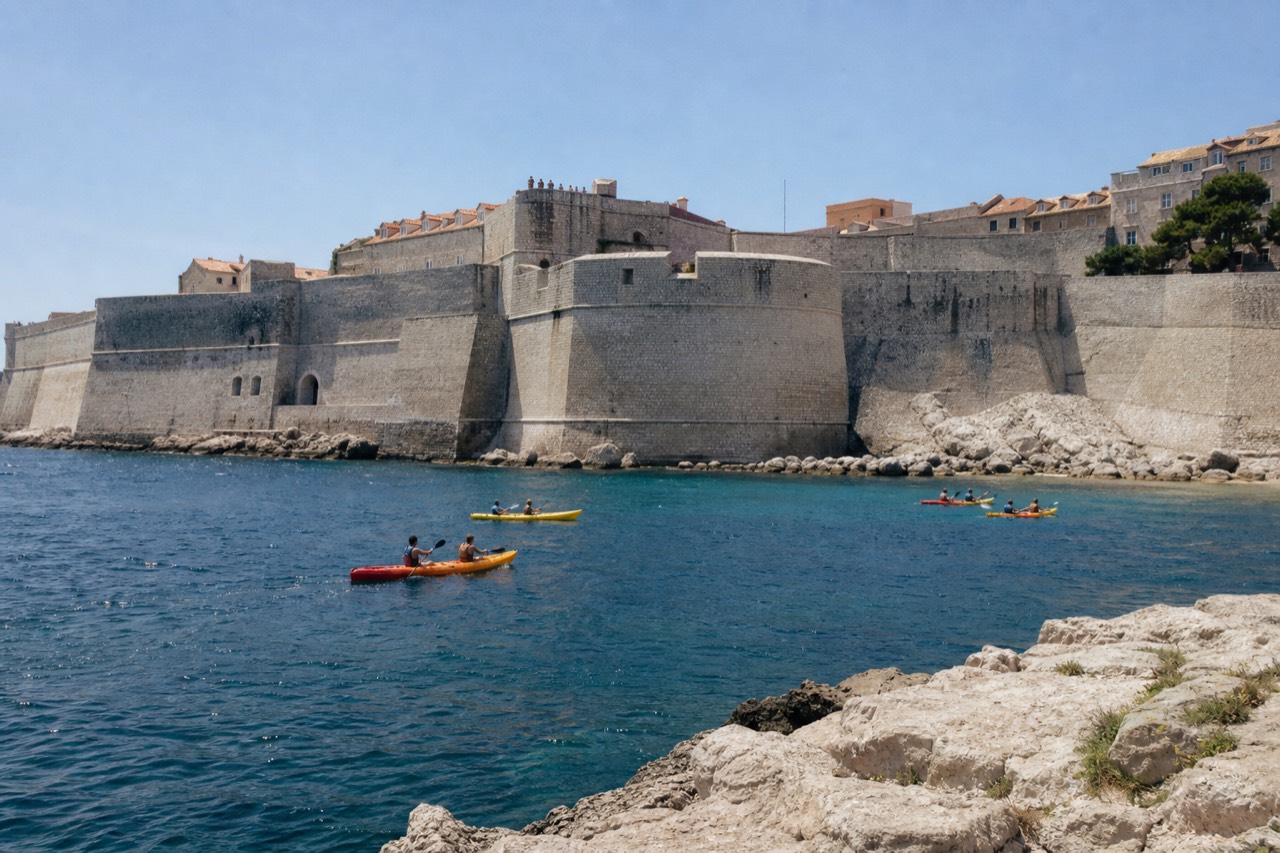
Is Kayaking in Dubrovnik Worth It?
Yes, for almost every visitor. Kayaking is the cheapest guided way to see Dubrovnik from the water, with the main guided options starting from $35 per person, and the sea below the walls is calm, warm and swimmable for most of the year. The only travellers who should skip it are those with no interest in the sea at all, or anyone visiting in the short winter window when operators pause.
I have walked the coastline below the Old Town more times than I can count, and the stretch between Pile and Betina Cave is the one piece of Dubrovnik that genuinely looks different from a kayak. From the water you get the walls rising straight out of the Adriatic, the cliffs of Mount Srđ behind them, and the cave beaches that are awkward to reach on foot. The Stradun is 298 metres long and you can walk it in five minutes; the sea-level view of the same city takes an afternoon and stays with you far longer.
The price argument is straightforward. The adult City Walls ticket is 40 euro in main season, the cable car round trip is 30 euro, and a guided kayak tour with snorkelling starts from $35 per person, rated 4.9 across 4,286 reviews on the live listing. For less than the walls ticket you get two to three hours on the water, a guide, equipment and usually a swim stop. No other paid activity in Dubrovnik offers that ratio.
There is also a practical reason the tours work so well here. The departure points sit at the small beaches just outside the western end of the Old Town, so you can be on the water within twenty minutes of leaving your hotel inside the walls. The classic route paddles past the walls, around the headland toward Betina Cave, crosses to Lokrum or hugs the coast, and finishes where it started. Nothing needs to be scheduled around it the way a day trip does.
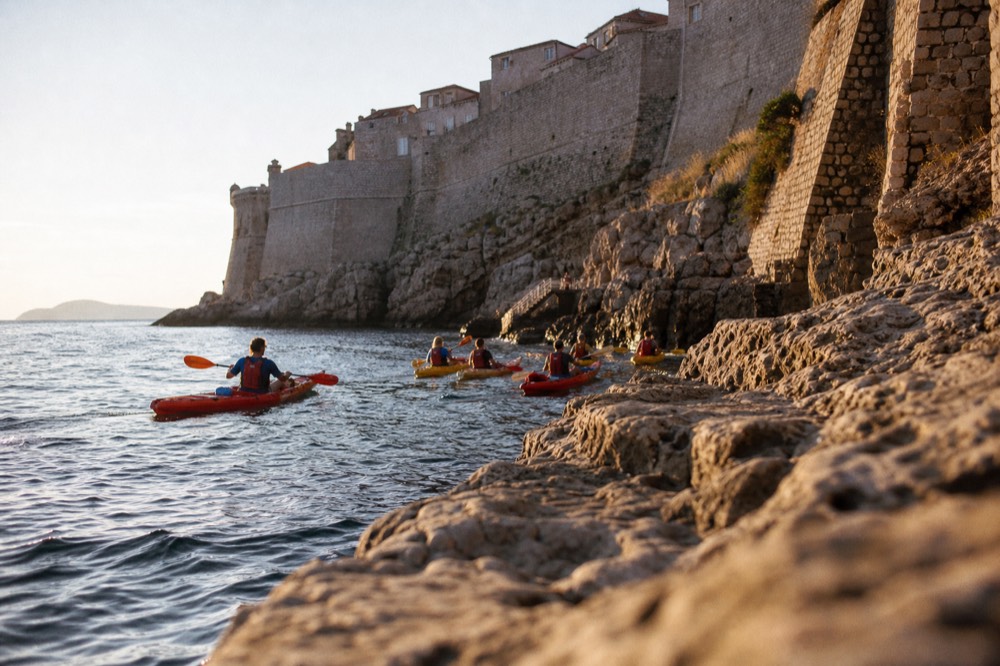
If you are already convinced, these are the three ways onto the water I would compare first: the guided day or sunset kayak and snorkel tour, the shorter two-hour paddle around Lokrum and Betina Cave, and, for a group that wants to skip paddling altogether, a self-drive boat for up to six people.
Which Kayak Tour Fits Your Day?
Pick the two-hour Lokrum and Betina Cave tour if you want the shortest commitment, from $35.49 per person and rated 4.9 across 1,518 reviews. Pick the day or sunset guided tour with snorkelling, from $36.50, if you want flexibility on departure time. The two products cost nearly the same, so the real choice is route and timing, not price.
The longer-standing option is the guided day and sunset kayaking and snorkelling tour run by Adventure Dalmatia. It offers both a daytime departure and a sunset departure, which matters more than people expect: the afternoon light on the walls from the water is the single best photographic angle in the city, and the sea is at its calmest late in the day. At 4.9 across 4,286 reviews it is also the most reviewed paddle product in Dubrovnik, which tells you the operation is consistent rather than lucky.
The alternative is the two-hour kayak tour of Lokrum Island and Betina Cave, from $35.49 per person, rated 4.9 across 1,518 reviews. This one suits visitors with a packed schedule, because two hours still covers the walls from the water, the crossing toward Lokrum and a swim stop inside or beside Betina Cave. One recent review on the live listing captures what families tend to report:
Loved this kayaking experience. Had an amazing time as a family and enjoyed the swimming break at Betina Cave very much. The views were amazing, water was crystal clear, the guide was excellent and we learnt a lot about Dubrovnik.
Imara_D
A note on Lokrum itself, because several kayak routes point that way. The island is a protected reserve and a Lokrum ticket is 30 euro per person, covering reserve entry and the return boat transfer whether you arrive on the official boat or your own transport. Kayak tours that land on the island account for this in their listings, but if you are paddling independently and plan to go ashore, budget for it. Boats leave the City Harbour at 09:00, then every 15 minutes from 10:00 to 18:00, and a ticket stays usable for three days, which the official Lokrum Reserve site spells out in full.
For groups of four to six who would rather not paddle at all, there is a third route onto the water: a self-drive boat rental for up to six people, from $259.60 for a full eight hours, rated 4.9 across 266 reviews. Split six ways that competes with the kayak tours on price per head and gives you the whole Elaphiti coastline instead of one stretch of it. It is a different experience, unguided and unsupervised, but for a confident group it is the best value on this page.
What Not to Do in Dubrovnik?
Do not walk the walls at midday in summer, do not drive into the Old Town, do not arrive without a plan for the crowds, and do not treat the sea as an afterthought. The mistakes that ruin Dubrovnik trips are almost all timing mistakes, and every one of them is avoidable with a schedule that puts indoor and water activities in the hot, crowded middle of the day.
Start with the walls. The circuit is 1,940 metres long with almost no shade, and the operator's stated hours run 08:00 to 19:30, so there is no reason to be on it between 11:00 and 16:00 in July and August. Walk it at opening or in the late afternoon. The same logic applies in reverse to kayaking: midday on the water is hot but bearable, and the sea is where you want to be when the streets are at their worst.
Second, do not drive to the Old Town expecting to park beside it. The walled core is pedestrian, parking around it is scarce and expensive, and the counting system at the entrances, six counters updating a headcount every 15 minutes, exists precisely because the place fills up. The official carrying capacity from the UNESCO assessment is 11,275 people, and on a busy September day the count passes 7,000 by late morning. Plan around the peak, do not add to it.
Third, do not book a single big activity per day and leave the rest to chance. Dubrovnik rewards alternating: walls or a viewpoint early, sea or an island in the middle, Old Town streets and dinner in the evening. A kayak tour slots perfectly into that middle slot, which is part of why I recommend it so readily. For a fuller list of the traps, the first-timers guide to Dubrovnik covers the ground in detail.
Finally, do not assume everything needs to be paid. Three walking tours in the city run on a pay-what-you-want basis through GuruWalk, including a free Game of Thrones and history walk rated 4.74 across 444 reviews. If budget is tight, the free walk plus a kayak tour is a better combination than two expensive tours.
Is Dubrovnik Worth Visiting?
Yes, and the numbers back it up. Dubrovnik recorded about 4.2 million overnight stays in 2025, sharing first place among Croatian destinations with Rovinj, and its Old Town has been a UNESCO World Heritage Site since 1979, inscribed under criteria (i), (iii) and (iv). The city earns its crowds, and the same coastline that draws them is what makes the kayaking so good.
The honest version of the answer is that Dubrovnik is worth visiting but not worth cramming. The walled Old Town covers just 24.7 hectares, you can cross it on foot in fifteen minutes, and the mistake visitors make is treating it as a two-week destination when it is a two-to-four-day one with excellent half-day and full-day escapes attached. The Elaphiti Islands, Lokrum, Cavtat and the Konavle valley are all within easy reach, and they are where the city exhales.
The walls are the headline, and they deserve it. The circuit reached its shape in the 13th century and was finished in 1660 with the Bastion of St Stephen, and it packs 16 towers, 3 fortresses and 6 bastions into under two kilometres of walking. Fort Lovrijenac, standing on a 37-metre-high sea rock across the bay, is included with the 40-euro main-season walls ticket. That ticket, by the way, is a walls plus Lovrijenac combination, not a walls-only product, and it also covers the Western Outer Wall and the coin collection at Gundulić Square.
What the walls do not give you is the sea. That is the gap kayaking fills, and it is why the two activities pair so well: walk the walls in the morning when the operator opens at 08:00, paddle beneath them in the afternoon. For a longer treatment of the city's overall case, including the quieter corners, start with the best things to do in Dubrovnik and work outward from there.
When to Avoid Dubrovnik?
Avoid the peak cruise days of September and October if crowds are your main concern, because cruise passengers peaked in September at 101,246 and October at 100,132 in 2025, above July's 96,072 and August's 87,385. For kayaking specifically, avoid winter, when the sea averages 14 to 16 degrees and most water operations pause.
That September and October fact surprises people, and it should. The received wisdom is that Dubrovnik is unbearable in July and August and calm afterward, but the Port Authority's own data shows the two busiest cruise months of 2025 were the two autumn ones. The full-year figure was 625,257 cruise passengers, up from 582,499 in 2024, with 461 calls scheduled for 2026. The Port Authority statistics page publishes the monthly breakdown, and it is worth checking before you fix dates.
For the kayak question specifically, the season matters more than the crowd question. The sea temperature here is a long-run average, not a beach thermometer: the NOAA 1991 to 2020 series puts the September average at about 23.6 degrees and August at 25.8, while October drops to 21.0 and November to 18.5. Sheltered bays run warmer, the Croatian met service's Dubrovnik buoy read 27.0 to 27.4 degrees on one early September day against that 23.6 mean, but the trend is clear. May through early October is comfortable swimming-from-a-kayak weather; by late November it is a wetsuit activity. The rest of the planning pages sit on Things to Do in Dubrovnik.
The shoulder months, May, June, late September and early October, are the sweet spot: the sea is warm, the cruise peaks are avoidable if you check the schedule, and the kayak tours run their full range of departures. July and August are hot but operable, and the sunset paddle is the one I would choose then.
Is Dubrovnik Good for Beaches?
For swimming and water, yes; for long sandy beaches, mostly no. Dubrovnik's beaches are small, stony or rocky, and the best water experiences are on or under the surface, which is exactly why kayaking, snorkelling and boat trips outperform sunbathing here. The clearest water sits in the coves you reach by paddle or boat, not at the hotel beaches.
The city's own beaches are honest about what they are. Banje, the famous one below the walls, is a mix of pebble and platform with a postcard view and crowds to match. The Lapad bay beaches are more relaxed and family-friendly, and the beaches on the Babin Kuk peninsula are where locals actually spread towels. None of them is a wide sandy arc; the Adriatic around Dubrovnik is a rocky coast, and the beaches are where the rock flattens out.
The beaches that feel like a reward, Betina Cave above all, are the ones with no road access. Betina Cave is a sea cave beach reached by kayak or boat, and it is a regular stop on the two-hour Lokrum and Betina Cave tour. This is the structural argument for kayaking in Dubrovnik: the city's best beach is functionally part of the paddle route, and a kayak tour gets you into it with a guide, equipment and a time slot, rather than a scramble.
Lokrum adds another layer. The island has rocky swimming spots and a small inland salt lake, and the 30-euro ticket covers both the reserve and the return boat. Kayaking around its coastline without landing is free of that ticket, and the crossing toward the island is part of most tour routes anyway. If beaches are the priority, the pairing is simple: kayak in the morning, beach in the afternoon, and the guide to Dubrovnik's beaches maps the full set.
What Does Kayaking Cost Against the Alternatives?
A guided kayak tour starts from $35 per person, which undercuts every other paid way onto or above the water: the walls ticket is 40 euro, the cable car round trip is 30 euro, and the full-day island cruise with lunch starts from $59.16. Kayaking is the cheapest guided activity in Dubrovnik, and the only cheaper experiences are the free walking tours.
Here is the comparison in one place, using the operators' own prices and the verified figures on the live listings:
| Experience | Price from | Rating | Time |
|---|---|---|---|
| Guided kayak, day or sunset, with snorkelling | $36.50 per person | 4.9 across 4,286 reviews | Flexible departures |
| Two-hour kayak, Lokrum and Betina Cave | $35.49 per person | 4.9 across 1,518 reviews | 2 hours approx |
| City Walls ticket, main season | 40 euro | not rated as a tour | 1 to 3 hours |
| Cable car, adult round trip | 30 euro | not rated as a tour | 3 minutes 30 seconds each way |
| Full-day Elaphite cruise with lunch | $59.16 per person | 4.9 across 10,312 reviews | 8 hours approx |
| Panorama zipline | $64 per person | 4.9 across 2,109 reviews | short ride |
| Self-drive boat, up to 6 people | $259.60 | 4.9 across 266 reviews | 8 hours approx |
Read that table as a budgeting tool rather than a ranking. If you have three activity slots in a two-day stay, the strongest combination is usually the walls, a kayak tour and either the cable car or an island cruise, in that order of priority. The walls and the kayak tour cover the city from its two best angles, land and sea, for a combined outlay smaller than a single dinner for two at a rooftop restaurant.
One seasonal caveat on the walls figure. The 40-euro adult ticket is main season only, 1 March to 30 November; in December it drops to 20 euro, and the one-day Dubrovnik Pass, which also costs 40 euro in main season and includes the walls, is not on sale in a winter tier at all. If you are visiting in December, the arithmetic of every comparison on this page changes, and kayaking itself becomes a cold-water proposition.
So, Should You Book the Paddle?
Book it if you have a free morning or afternoon between April and October, if you want the walls from the water, or if anyone in your party wants to swim somewhere without crowds. Skip it only if your visit is in deep winter, if the sea makes you unwell, or if your schedule is already full of day trips. It is the single best value among Dubrovnik's paid activities.
My honest summary after years of watching visitors plan this city: the kayak tour is the activity people underestimate and remember. The walls are magnificent and everyone knows it. The cable car view is famous. But the two hours spent paddling beneath the fortifications, with a swim stop in a cave you could not otherwise reach, is the part of the trip that comes up in conversation afterward. At from $35 per person it costs less than either headline attraction.
If you are weighing it against the other ways onto the water, here again are the three I would compare before deciding:
Common Questions About Kayaking in Dubrovnik
Is kayaking in Dubrovnik worth it?
Yes. Guided tours start from $35 per person, the routes pass directly beneath the city walls, and the sea is warm enough for swimming from roughly May through early October. It is the cheapest guided activity in the city and the only one that shows you the walls from the water.
Do You Need Experience to Kayak in Dubrovnik?
No. The guided tours are built for first-timers, the sit-on-top kayaks used on the Adriatic are stable, and the routes stay close to shore. Guides give a full briefing before launch, and the two-hour format is short enough that fatigue is rarely an issue.
Can You Swim During a Kayak Tour?
Usually yes. Most routes include a swim stop, often at Betina Cave or a cove near Lokrum, and the September average sea temperature is about 23.6 degrees on the long-run series, with sheltered bays running warmer. Bring a swimsuit and a towel even on the sunset departure.
What Is the Best Time of Day to Kayak in Dubrovnik?
Late afternoon into sunset, between May and September. The sea is at its calmest, the light on the walls is at its best, and you avoid both the midday heat and the late-morning peak of Old Town crowds, which passes 7,000 people by 11:00 on a busy September day.
Is Kayaking in Dubrovnik Safe?
Yes, in the normal conditions the tours operate in. The water is warm, the routes are close to shore, and guides carry safety equipment and stay with the group. Tours do not run in rough weather, and the sea state on this coast is generally predictable through the summer season.