Dubrovnik Travel Guide for First-Time Visitors
Everything a first visit needs in one place: the neighbourhood decision, the days question, the Split routing puzzle, and the tickets worth buying before you fly.
Short answer
Base yourself in or beside the Old Town for two to four nights. Walk the walls early, buy the 40 euro one-day Dubrovnik Pass in main season, and save island time for a full-day Elaphite cruise. Most first timers fly into Dubrovnik first and finish in Split, travelling between the two by bus, shuttle or private transfer.
Dubrovnik packs a walled medieval city, an island archipelago and a mountain into a destination of 41,562 residents, and it absorbed about 4.2 million overnight stays in 2025, sharing first place in Croatia with Rovinj. That density is the whole planning problem for a first visit. The city is small enough to see quickly and crowded enough that the order in which you do things decides whether you love it or merely survive it.
I have walked these streets with travellers since 2015, and the questions below are the ones every first timer asks me, in almost exactly this order. Where to sleep. How long to stay. Whether Split comes first or second. What the walls actually cost and whether the pass is worth it. This guide answers each one with the current verified figures, then points you to the deeper page on this site for anything you want in full detail.
Where to Stay in Dubrovnik for First Timers?
First timers should stay either inside the walled Old Town itself, for atmosphere at a price, or just outside it in Ploče or Pile for the same walkability with more space, while Lapad Bay is the family-friendly fallback with beaches and a calmer rhythm. The single worst first-timer mistake is booking a distant suburb to save money and then paying for it in buses and taxis twice a day.
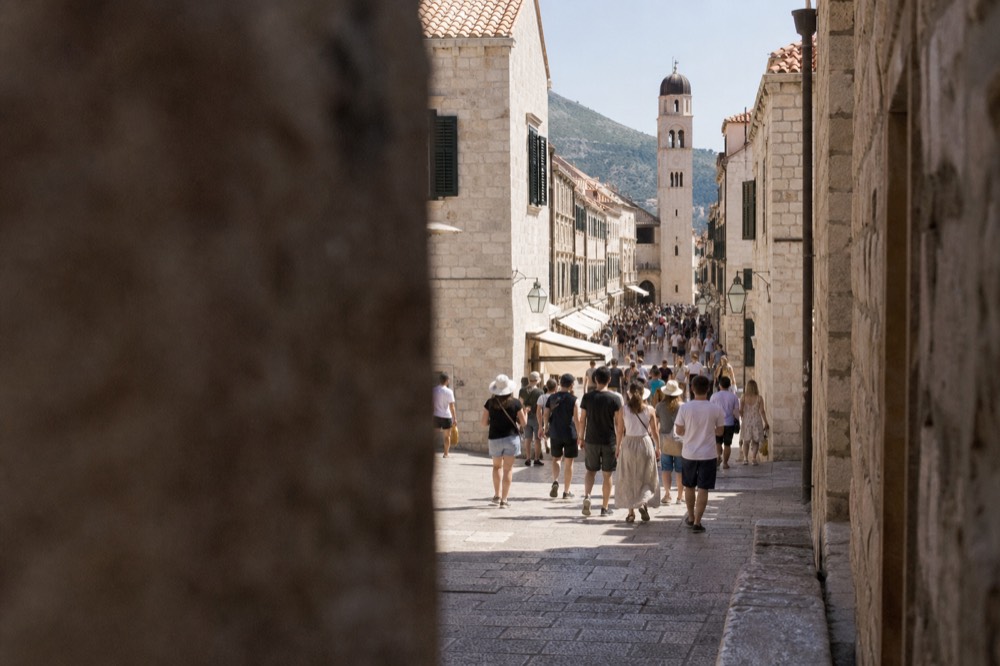
The Old Town is car-free, so a room inside the walls means dragging luggage over polished limestone, but it also means the Stradun, the 298-metre main street, is yours at 07:00 before the day-trippers arrive. Ploče sits on the eastern side, close to Banje Beach and the cable car, and tends to be quieter at night. Pile is the western gate, where the buses stop, so it suits anyone arriving without a car. Lapad, three kilometres west, is where most of the resort hotels cluster around a pedestrianised bay of cafés and beaches.
For a budget first stay, Hotel Komodor in Lapad is a three-star option rated 7.8 out of 10 across 822 Expedia reviews, about a 29-minute walk from the Gruž cruise and ferry port, with the number 6 bus to Pile Gate instead of a walk. At the luxury end, Hotel Excelsior in Ploče puts you five minutes on foot from the Old Town with sea-facing terraces. If you want the full neighbourhood-by-neighbourhood breakdown, including Gruž and Babin Kuk, read the detailed where to stay in Dubrovnik guide.
| Area | Walk to Old Town | Best for | Trade-off |
|---|---|---|---|
| Old Town | You are in it | Atmosphere, early mornings | Priciest, luggage over stone, noisy in season |
| Ploče | 5 to 10 minutes | Views, Banje Beach, cable car | Hillier streets, hotel prices |
| Pile | 2 minutes to the gate | Bus links, walls access | Limited choice, books out early |
| Lapad Bay | Bus or 40-minute walk | Families, beaches, value | Not walkable to Old Town at night |
| Gruž | Bus, 15 minutes | Ferry and cruise convenience | Working port district, few sights |
How Many Days Do First Timers Need in Dubrovnik?
Two full days covers the walls, the Old Town and one island or beach afternoon, and is the honest minimum. Three days lets you add a kayak or sunset cruise without rushing, and four days is the sweet spot that also fits a day trip to Mostar or Montenegro. Anything beyond five days and you should be island-hopping rather than staying put.
Day one belongs to the Old Town: the Stradun, the Rector's Palace, Onofrio's Fountain, and the walls either early or late in the day. Day two goes to the water, which in practice means Lokrum, the Elaphite Islands or a kayak around the walls. From day three onward you are choosing between Cavtat, Trsteno, a wine trip to the Pelješac peninsula, or a border-crossing day trip. The deeper breakdown, including one-day and two-day hour-by-hour plans, is in how many days you need in Dubrovnik.
The reason the day count matters more here than elsewhere is crowding. The Old Town's official carrying capacity, from the UNESCO carrying-capacity assessment, is 11,275 people, and the counter system at the six entrances updates the headcount every 15 minutes. On a September morning the curve read 5,419 people at 08:00, 7,297 at 09:00 and a 7,739 peak at 10:00. A first timer who does the walls at 08:00 and the museums at midday feels none of that pressure.
Three products cover the spine of a first visit, and booking them early in your stay is how most people sequence the whole trip:
| Days | What fits comfortably | What you skip |
|---|---|---|
| 1 day | Old Town walk, walls, one viewpoint | Islands, beaches, day trips |
| 2 days | Walls, Old Town, Lokrum or a beach afternoon | Mostar, Montenegro, Mljet |
| 3 days | All of the above plus a sunset cruise or kayak | One border day trip only |
| 4 days | Full programme plus Mostar or Montenegro | Very little |
| 5 or more | Add Elaphite overnights, Korčula, Cavtat | Nothing, if you pace it |
What Is the Best Way to Travel from Dubrovnik to Split?
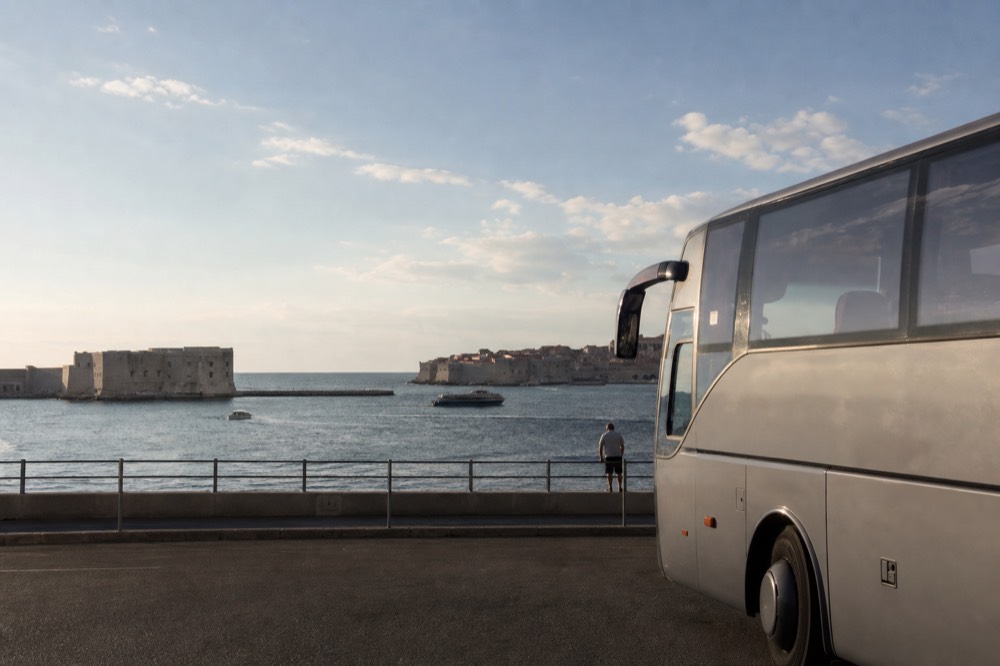
The best way from Dubrovnik to Split is the airport shuttle or a private transfer if you value time, the long-distance bus if you value price, and the seasonal catamaran if you value the sea itself. There is no train: Croatia's rail network stops well short of Dubrovnik, so the choice is road or water, and the coastal road takes the better part of a morning in normal traffic.
The bus runs several times daily from Dubrovnik's station in Gruž and is the default for most travellers, cheap and reliable, with the bonus that you cross the short Neum corridor through Bosnia, so keep your passport reachable. Private transfers cost more but pick you up at your door and stop where you ask. The catamaran, operated seasonally, is the memorable option: it calls at islands like Šipan, Hvar and Korčula where relevant, and turns the transfer into a day of its own. The full comparison, with prices and booking notes, is in the Dubrovnik to Split transport guide.
One planning note from experience: check the ferry calendar against your travel dates before you build the itinerary around it. Sailing schedules on this coast thin out sharply outside summer, and a September catamaran that ran daily in August may run a fraction as often by October. The bus, by contrast, runs all year.
| Option | Rough time | Best for | Watch out for |
|---|---|---|---|
| Long-distance bus | Half a day | Budget, year-round | Two border checks at Neum |
| Private transfer | Half a day | Groups, door-to-door ease | Cost scales with comfort |
| Catamaran | Half a day | Sea views, island stops | Seasonal, weather-dependent |
| Rental car | Half a day | Stops in Ston or Makarska | Parking at both ends |
Before you leave Dubrovnik, though, give the Old Town one properly guided hour and a half. A guide who explains the republic, the 1991 siege and the architecture in the first hours of your trip changes how every later walk reads.
The same logic applies to timing. Book the walk for your first full morning, not your last, because everything the guide points out, the fountain, the palace, the hidden courtyards, becomes a landmark you recognise for the rest of the stay. Travellers who take the walk on day one consistently tell me the rest of their trip felt easier to get around, in every sense.
Is It Better to Go to Split or Dubrovnik First?
Flying into Dubrovnik first is the better plan for most first timers, because Dubrovnik is the smaller, more intense destination and it rewards the fresh energy of a trip's opening days, while Split's bigger-city rhythm and better flight connections suit a relaxed finish. Reversing the order works, but it means ending on the crowds rather than easing away from them.
The practical case for Dubrovnik first is simple. The Old Town is compact and pedestrian, so jet lag and the first two days of orientation happen inside one square kilometre. Split, by contrast, is a working city around a Roman palace, with day trips to Krka, Hvar and Trogir spreading outward from it, which is exactly the shape of a trip's second half. Flying home from Split also opens more route options, and the northbound bus or catamaran from Dubrovnik drops you there conveniently.
The counter-argument matters in shoulder season. If your dates fall in October, Split's weather holds up similarly and Dubrovnik's outdoor restaurant terraces begin closing, so the order matters less than the calendar. For the full head-to-head, including costs and atmosphere, see Dubrovnik versus Split.
Should I Go to Split or Dubrovnik First?
Go to Dubrovnik first if your trip is short, under five nights, or if the walls and the Old Town are the reason you are flying to Croatia at all. Go to Split first if you have a week or more, plan several islands, or your flights simply price better that way, because with that much time the order stops mattering and the airfare decides.
This is the same question phrased the way people actually type it, and the honest answer is that itinerary length is the hidden variable. On a four-night trip, Dubrovnik first protects the priority sights: you arrive rested, walk the walls on morning one, and anything that goes wrong later is recoverable. On a ten-night trip you will see both cities properly and the order is a coin toss weighted by flight prices and ferry timetables.
One structural fact tips longer trips toward Split first: the best island chain, Hvar and Korčula up the coast, is easier to thread northward from Split and finish with a single long hop or bus ride down to Dubrovnik. Doing it south-to-north from Dubrovnik is possible, and the Korčula day trip guide covers that route, but the timetables are kinder in the other direction.
When Is the Best Time to Visit Dubrovnik?
The best months for a first visit are May, June, late September and early October, when the sea is swimmable, the cable car and boat schedules are in full swing and the cruise crowds have thinned from their peak. July and August bring the hottest water and the fullest streets, and December trades the beach for a quiet, inexpensive, Christmas-lit Old Town.
The counter-intuitive fact about Dubrovnik crowds is that cruise passengers do not peak in July and August. Port Authority data for 2025 shows September at 101,246 and October at 100,132 cruise passengers, both above July's 96,072 and August's 87,385. The full-year total was 625,257 against 582,499 in 2024, and 461 cruise calls are scheduled for 2026. So the crowd question is not "summer versus autumn", it is "cruise-day versus non-cruise-day", and the busiest single days in the remaining 2026 schedule are 6 October (2 ships, 5,798 by capacity) and 29 September (2, 5,675).
Sea temperature follows a different logic. The September average for this coast is about 23.6 degrees, on the NOAA long-run 1991 to 2020 average, and August about 25.8, while sheltered bays run warmer: the Croatian met service's Dubrovnik buoy read 27.0 to 27.4 degrees on 8 September 2026 against that 23.6 mean. May and October sit at about 18.6 and 21.0. For the month-by-month detail, use the best time to visit guide.
| Period | Sea average | Crowds | First-timer verdict |
|---|---|---|---|
| April | 15.4 degrees | Low | Too cool to swim, lovely streets |
| May | 18.6 degrees | Moderate | Excellent all-round choice |
| June | 22.5 degrees | High | Swimmable, busy but manageable |
| July and August | 24.9 to 25.8 degrees | Highest heat | Book everything, start at 08:00 |
| September | 23.6 degrees | Peak cruise months | Warm sea, check the cruise schedule |
| October | 21.0 degrees | Falling fast | Great value, thinner schedules |
How Do the City Walls and the Dubrovnik Pass Work?
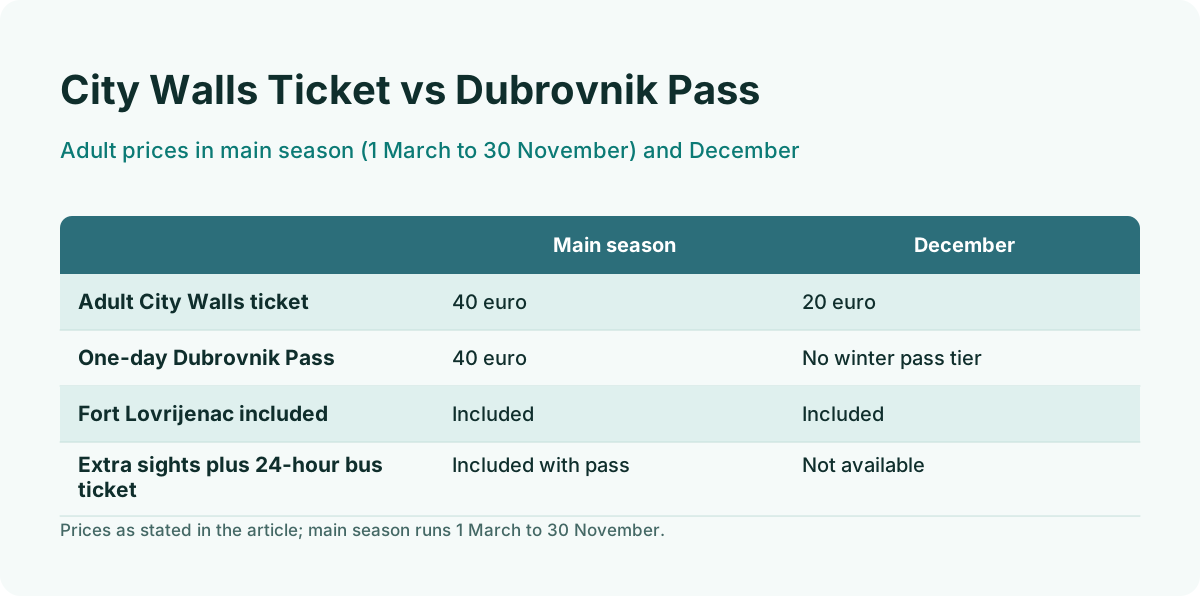
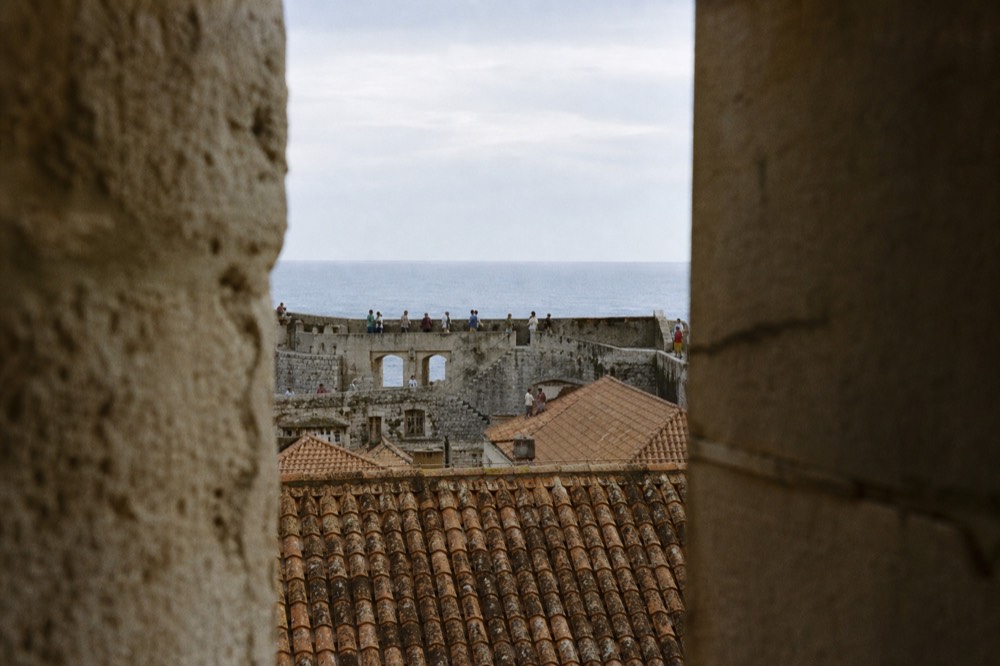
The adult City Walls ticket is 40 euro in main season, 1 March to 30 November, and 20 euro in December, and that 40-euro ticket already includes Fort Lovrijenac, so there is no cheaper walls-only option. The one-day Dubrovnik Pass also costs 40 euro in main season and adds ten more sights plus a 24-hour bus ticket, which makes it the better buy for any first timer doing a museum day.
The walls themselves are 1,940 metres long, up to 25 metres high, and 4 to 6 metres thick on the land side, a circuit of 16 towers, 3 fortresses and 6 bastions that took its shape in the 13th century and was finished in 1660. The operator's stated hours at the time of check were 08:00 to 19:30, and the ticket also covers the Western Outer Wall, closed December through February, and the Collection of Coins of the Republic of Ragusa. Lovrijenac alone, on its 37-metre sea rock, is 15 euro if you skip the walls.
The pass comparison is strictly seasonal. In main season the one-day pass at 40 euro matches the walls ticket exactly and layers on the Rector's Palace, the Maritime Museum, the Franciscan Monastery Museum and more, with a one-time visit allowed to each. In December the walls ticket drops to 20 euro and no winter pass tier is on sale at all, so the "pass costs the same as the walls" line is true from 1 March to 30 November and false outside it. Prices and inclusions are on the official pass site and the walls operator's page.
Many first timers prefer the walls with a guide who can name what they are looking at. The two-hour Ancient City Walls and Wars walking tour costs from $29.58 per person and is rated 4.8 across 1,387 reviews.
This well organized tour helped put Dubrovnik's past (and present) into perspective. It's incredible that the city walls have withstood the test of time. Antun was a wonderful guide.
linda_a
| Ticket | Main season (1 Mar to 30 Nov) | December |
|---|---|---|
| City Walls adult (includes Lovrijenac) | 40 euro | 20 euro |
| City Walls child 7 to 18 | 15 euro | 5 euro |
| Child 6 and under | free | free |
| Lovrijenac alone | 15 euro | 15 euro |
| Dubrovnik Pass 1 day | 40 euro | not on sale |
| Dubrovnik Pass 3 days | 50 euro | not on sale |
| Dubrovnik Pass 7 days | 60 euro | not on sale |
What Should You Not Miss Beyond the Old Town?
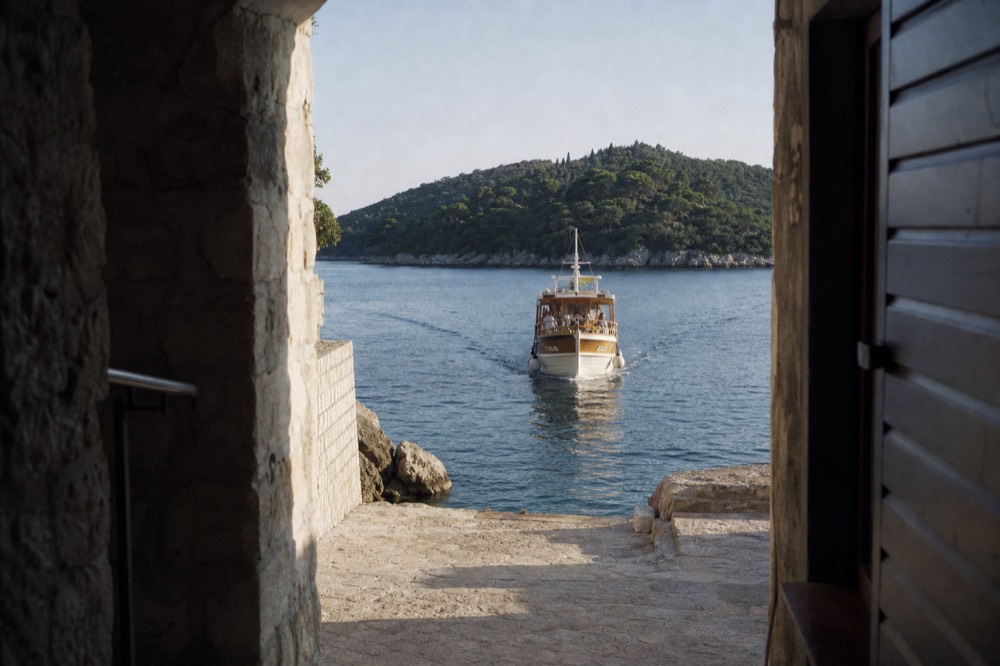
Beyond the walls, first timers should not miss the Elaphite Islands by boat, the cable car up Mount Srđ for the panorama, and Lokrum's botanical reserve a short sail from the Old Port, in roughly that order. Each one is a half or full day, and together they are the difference between seeing Dubrovnik and understanding why people keep coming back.
The Elaphite cruise is the classic day out: eight hours among Koločep, Lopud and Šipan with lunch on board. The full-day cruise with lunch costs from $74.58 per person and is rated 4.8 across 6,751 reviews, while its sister boat, the Zrinka, runs from $59.16 and carries 10,312 reviews at 4.9, the most reviewed product in the city. Reviewers consistently single out the shaded deck and the swim stops, which is worth knowing in July and August when the Old Town is at its hottest.
The cable car climbs from the lower terminal at 38.0 metres to the Mount Srđ station at 405.0 metres, a 367.0-metre rise over a 778.2-metre track in 3 minutes 30 seconds, with a stated view range of up to 60 km on a clear day. An adult round trip is 30 euro in 2026, a child 4 to 12 round trip 8 euro, and the ride runs from 09:00 to midnight in high summer, closing January to March. Lokrum, meanwhile, is a 30-euro ticket that covers both the reserve entry and the return boat transfer, with boats leaving the City Harbour at 09:00 and then every 15 minutes from 10:00 to 18:00. The Lokrum Island guide covers the reserve in full.
For the complete shortlist, including the free options, see the best things to do in Dubrovnik, and for the wider site's coverage start at Things to Do in Dubrovnik.
| Experience | Time needed | Cost from | Book ahead? |
|---|---|---|---|
| Elaphite Islands full-day cruise | 8 hours | $59.16 per person | Yes, in July and August |
| Cable car round trip | 1 hour on site | 30 euro adult | Sunset slots sell out |
| Lokrum reserve and boat | Half day | 30 euro per person | Morning boats in season |
| Sea kayaking to Betina Cave | 2 hours | $35 per person | Sunset tours especially |
| Srd zipline | 90 minutes | $64 per person | Weekends |
What Does a Realistic First-Timer Plan Look Like?
A realistic first plan is three nights: day one for a guided Old Town walk and an evening on the Stradun, day two for the walls at 08:00 followed by museums under the pass, and day three for the Elaphite cruise, with the cable car squeezed in at sunset on any clear evening. That sequence front-loads the crowded sights into the quiet hours and ends the trip on the water, which is exactly how locals would order it.
The one adjustment I would make for a two-night trip is to drop the museum day and keep the walls plus the cruise, because the walls are unrepeatable and the museums are. For four nights, insert Mostar or Montenegro as day three and push the islands to day four. Whatever the length, book the walls-adjacent tours and the island cruise before you fly: the top-rated products on this site run at four-figure review counts for a reason, and the capacity is finite.
| Day | Morning | Afternoon | Evening |
|---|---|---|---|
| Day 1 | Guided Old Town walk | Rector's Palace, Stradun | Dinner in the Old Town |
| Day 2 | City walls at 08:00 | Pass museums, Lovrijenac | Cable car at sunset |
| Day 3 | Elaphite Islands cruise | Swim stop, lunch on board | Quiet dinner in Lapad |
| Day 4, optional | Mostar or Montenegro trip | Return by early evening | Buža Bar drinks |
Common Questions About a First Trip to Dubrovnik
Where to stay in Dubrovnik for first timers?
Inside the Old Town for atmosphere, Ploče or Pile for walkability with more space, or Lapad Bay for beaches and family value. The mistake to avoid is a distant suburb that forces two bus rides a day into the walls.
Is it better to go to Split or Dubrovnik first?
Dubrovnik first, for most trips. It is the smaller, more intense city and rewards the fresh energy of an arrival day, while Split's day trips and flight connections make a better, more relaxed finale.
Should I go to Split or Dubrovnik first?
Dubrovnik first on trips under five nights or when the walls are the priority. Split first when you have a week or more, plan several islands, or the flights price better that way.
What is the best way to travel from dubrovnik to split?
Bus for price, private transfer for speed and comfort, or the seasonal catamaran if you want the journey itself to be a highlight. There is no train connection to Dubrovnik.
How much does it cost to walk the Dubrovnik city walls?
40 euro for an adult in main season, 1 March to 30 November, and 20 euro in December, with children 7 to 18 at 15 euro then 5 euro, and under 6 free. The ticket includes Fort Lovrijenac.
Is the Dubrovnik Pass worth it for a first visit?
Yes, in main season, if you will visit even two or three of the included sights. The one-day pass costs the same 40 euro as the walls ticket alone and adds ten more sights plus a 24-hour bus ticket. In December no pass tier is on sale, so buy the 20-euro walls ticket instead.