Is There a Direct Train from Zagreb to Dubrovnik?
No train reaches Dubrovnik from Zagreb, Split or anywhere else. Here is why the railway stops short, and the routes that actually finish the journey.
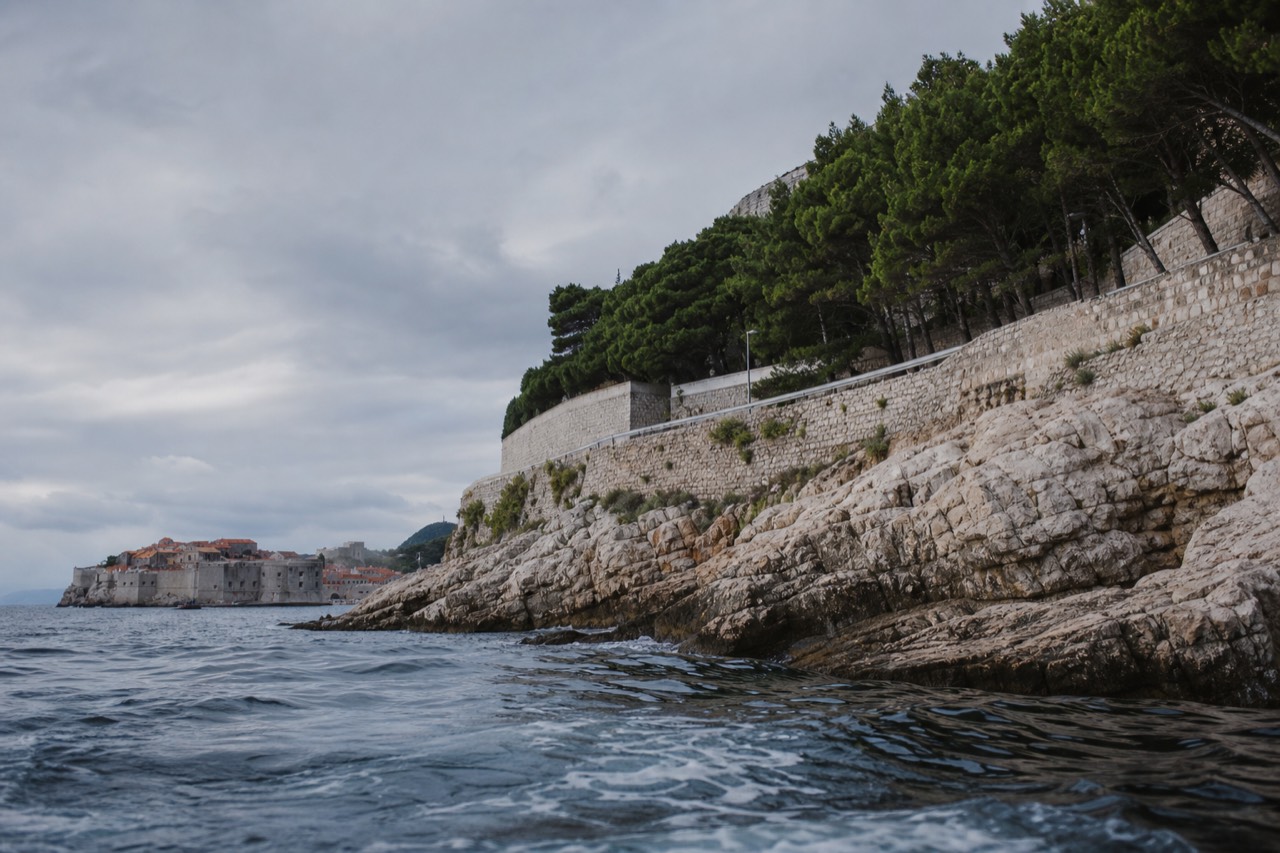
Is There a Direct Train from Zagreb to Dubrovnik?
No, there is no direct train from Zagreb to Dubrovnik, and there is no connecting train either. Dubrovnik has no railway station, and no passenger line serves the city at all. Every traveller covering this route finishes the journey by plane, long-distance bus or car, usually with a change in Split along the way.
This surprises people who assume a European country of Croatia's size and tourism volume must be stitched together by rail. It is a reasonable assumption, and it is wrong. The railway network was never extended down the narrow southern coast to the city, and the geography explains most of why: the strip of land between the mountains and the sea south of Split is tight, winding and expensive to build through. The result is that one of the most visited destinations in the country, a city that recorded about 4.2 million overnight stays in 2025 and shares first place among Croatian destinations with Rovinj, according to the Croatian Bureau of Statistics, sits at the end of the road network rather than the end of a rail line.
I get asked this constantly, usually by travellers holding a rail pass and a plan that quietly falls apart at the last leg. The pass is not wasted, Croatia's trains still serve the northern and central parts of the country, but the final stretch to the far south has to be done differently. The practical decision is between flying, riding a long-distance coach, or driving, and each of those comes with trade-offs in cost, comfort and time that I will lay out properly further down this page.
There is a second group of people this catches out, and they deserve a mention too: cruise and ferry travellers who assume the port city must be a rail hub. Dubrovnik is a hub of the sea, not of the rails. Its port at Gruž handles cruise calls and ferries, the airport at Čilipi handles the flights, and the bus station handles everything the road brings in. A traveller arriving by any of those three doors steps into a city that is walked, bused and sailed, never railed, and once you accept that framing the whole place starts making sense very quickly.
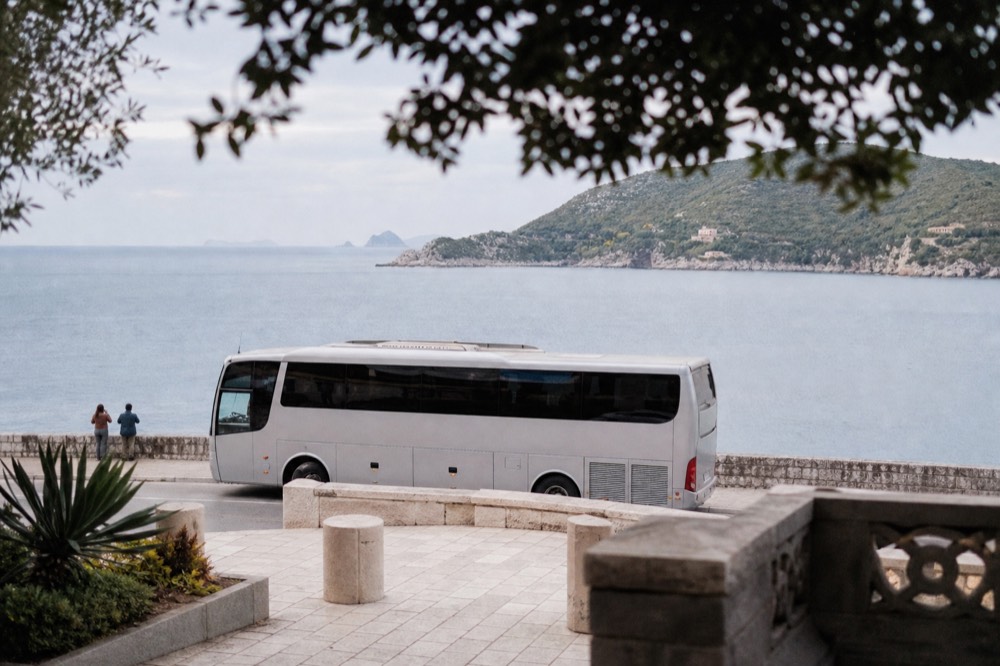
If you are building an itinerary around this gap, the planning pages on Things to Do in Dubrovnik cover each leg in detail, and the question of whether the city has any station of its own is answered squarely on our page does Dubrovnik have a train station. Meanwhile, if you have already accepted the train is off the table and are thinking about what to book for the days after you arrive, these are three options that travel well with a long journey behind you:
Is There a Fast Train from Zagreb to Dubrovnik?
No fast train exists, because no train of any speed exists. There is no high-speed rail option, no sleeper service and no regional connection that ends in Dubrovnik. Speed is not the problem, the track is: the rails never reach the city. Anyone promising a quick rail route is describing a journey that ends somewhere else entirely.
It is worth being blunt about this because search results and old forum threads sometimes blur the picture. You will see mentions of trains that run part of the way, and travellers occasionally assume they can ride the rails to the south coast and hop off within walking distance of the walls. The honest framing is simpler: rail gets you partway through Croatia at best, and the southern terminus of any useful rail leg is well north of Dubrovnik. From wherever the rails stop, you are on a bus, a plane or in a car.
That is not a disaster, and I would not let it reshape a whole trip. The flight between the two cities is the option most people land on, because it turns a very long surface journey into a short hop and saves a full day of holiday. The coach is the budget answer, and plenty of travellers genuinely like it: the coastal road south of Split is one of the more scenic stretches of tarmac in Europe, hugging the water for long stretches, and doing it in daylight is its own small experience. Driving yourself adds flexibility, and it is the version I would pick if the itinerary includes Ston, the Pelješac peninsula or the Elaphite islands, all of which reward stopping when something looks good.
A quick word on why the gap has never been closed, because travellers ask. Building a railway down the Dalmatian coast means threading track between steep karst mountains and the sea, through a corridor that also carries the main road, the water supply and every utility line the coast depends on. The cost per kilometre is punishing and the passenger numbers south of Split are seasonal, which makes the business case weak even before you price it. Successive plans for southern rail links have come and gone over the decades, and none has produced a metre of track a traveller can ride. For planning purposes, treat the situation as permanent: no rail operator sells a ticket to Dubrovnik, and no timetable anywhere lists the city as a stop.
One planning note that matters more than people expect: whatever mode you choose, do not plan to arrive in Dubrovnik and immediately sprint into a packed sightseeing day. The surface options in particular land you in the city tired, and the walls walk, which covers 1,940 metres of circuit with climbs and staircases at both ends, is punishing on heavy legs in the afternoon heat. Build the first evening light, a wander along the Stradun, dinner, an early night, and start the real sightseeing the next morning, ideally early, before the day-trip crowds thicken.
Timing that first proper morning is easier than most cities because the crowd data is public. Six counters at every Old Town entrance update a headcount every 15 minutes, and the pattern through a September day is instructive: 5,419 people at 08:00, 7,297 at 09:00, a 7,739 peak at 10:00, then 7,205 at 11:00. The lesson is not complicated. Before 09:00 the old core is a different place, calmer, cooler and easier to photograph, and after 10:00 you are sharing every lane with the maximum the day will hold.
Is There a Direct Train from Split to Dubrovnik?
No, there is no direct train from Split to Dubrovnik either, for the same reason: Dubrovnik has no station and no line. Split is the point where rail-bound travellers have to change mode. From Split the journey continues by bus, by car, by ferry in some seasons, or by a short flight.
Split is the natural hinge of any Zagreb-to-Dubrovnik overland route, and this is where the train question dies in practice. Travellers holding a rail ticket to Split often discover the gap only there, standing in the station with a Dubrovnik booking that evening. The good news is that the Split-to-Dubrovnik leg is well served by intercity buses, which run frequently through the day along the coastal road, and it is the stretch where the scenery earns its keep. If you are weighing the two cities against each other, our comparison of Split versus Dubrovnik for island hopping covers the trade-offs, and the full transport rundown lives in the Dubrovnik to Split transport guide.
The ferry question comes up alongside the bus one, and it deserves its own honest answer. Sea connections along this coast exist, but they are seasonal, weather-dependent and not a substitute for the road in the way a train would be. The reliable year-round workhorse between Split and Dubrovnik is the coach, and the ferry is best treated as a scenic bonus when the schedule happens to fit your dates rather than the backbone of a plan. Travellers who try to force a ferry connection into a tight itinerary usually end up back on the bus anyway.
A few practical points for the Split-to-Dubrovnik leg. The buses fill up in high summer, so book the seat a day or two ahead in July and August rather than turning up on the day. Keep your passport or ID accessible, because the route clips a short strip of Bosnia and Herzegovina around Neum, which means a border crossing even between two points in Croatia. And if you are prone to motion sickness, sit forward on the lower deck: the road curves a lot and the views pull your eyes out to sea while your inner ear objects.
The Neum corridor deserves a sentence of its own, because it is the detail that surprises travellers most on this route. For a short stretch the highway leaves Croatia, passes through Bosnian territory, and re-enters Croatia further south. For most EU nationals the crossing is a formality, often without a full stop, but non-EU travellers should carry their passports in hand luggage rather than buried in the hold, and everyone should expect a brief pause. A newer bridge now carries some traffic around the corridor entirely, which has simplified parts of the journey, but intercity buses still use the coastal route and the border formality still applies on many departures.
Once you do arrive in Dubrovnik, one of the easiest ways to get oriented without exhausting yourself is a bus loop with commentary, which brings me to the tour I would point most train-weary arrivals toward.
How Do I Get from Zagreb to Dubrovnik?
The three realistic routes are flying, the long-distance coach, or driving. Flying is the fastest and usually the most expensive; the coach is the cheapest and takes the longest; driving gives you the coastal road and the freedom to stop. There is no rail option at any price, so the choice is really between speed, budget and flexibility.
Here is how the options compare in practice, without pretending there is a single right answer:
| Route | Best for | Trade-offs |
|---|---|---|
| Fly Zagreb to Dubrovnik | Travellers short on time | Fastest door-to-door; fares swing with season and demand |
| Long-distance coach | Budget travellers and those who enjoy road scenery | Cheapest; a long ride with rest stops, best booked ahead in summer |
| Rental car | Itineraries including Ston, Pelješac or the islands | Most flexible; parking in Dubrovnik is scarce and paid |
| Train and bus combination | Rail pass holders | Rail covers only part of Croatia; the southern leg is always by road |
The flight is the default for a reason. Croatia's domestic connection between the capital and the southern coast is short, and in season there are multiple departures a day, which means a morning in Zagreb can realistically become an evening walk on the Stradun. Book early for July and August, when the whole country is moving: those months sit inside a season that begins building from May, when the sea's long-run May average is about 18.6 degrees, and peaks in August at about 25.8, figures from the NOAA long-term monthly series, with an independent European dataset corroborating within about a degree. Those are open-water averages rather than beach readings, so sheltered bays near town run warmer still, but they tell you when the coast is at full pull.
The coach deserves more respect than it gets. It is the workhorse of Croatian intercity travel, it is cheap, and the southern half of the route runs along one of the loveliest coastlines in the Mediterranean. The cost is time and stamina: this is a ride you do once, enjoy in daylight if you can, and arrive from ready for a slow evening. Overnight versions exist in high season and save a hotel night, at the price of arriving wrinkled. Bring water, a layer for the air conditioning, and low expectations of the onboard toilet, and the ride becomes genuinely pleasant rather than merely endurable.
Driving is the connoisseur's option. The road south past Split passes the oyster farms of Ston, the vineyards of Pelješac and a string of viewpoints that no bus schedule allows you to linger at. The catch waits at the end: parking anywhere near the Old Town is limited and paid, so if you drive, plan the car's resting place before you plan anything else. Our getting around Dubrovnik guide covers parking, buses and the honest arithmetic of whether a car helps or hurts inside the city.
Whichever way you arrive, the last few kilometres into the city have their own logic. Flights land at Dubrovnik Airport, which sits well south of town, and the connection onward is by airport bus, local bus or taxi; our airport to Old Town guide walks through the options and costs. Coaches terminate at the main bus station near the port at Gruž, from which local buses run to Pile Gate at the edge of the Old Town in a few minutes. Drivers should follow signs for one of the paid garages rather than hunting for street parking, which barely exists inside the old core and is not worth the circling.
And if you arrive by coach or plane with legs that have had enough of sitting, this is exactly the moment a hop-on-hop-off bus tour earns its keep. The Hop-On Hop-Off Yellow Bus Tour with audio guide runs about 1 hour 30 minutes, is rated 4.9 across 1,147 reviews, and starts from $35.46 per person; you can read the full rundown on the hop-on hop-off bus tour page or Check availability directly.
Is There a Train from Dubrovnik?
No. Dubrovnik has no train station, no freight line and no planned rail link that a traveller can book. The city is reached by road, air and sea only. Within the city itself you walk, ride local buses, take the cable car, or take to the water, and none of that involves a rail platform.
This is the deeper version of the question, and the answer shapes how the whole city works. Dubrovnik's transport reality is pedestrian-first inside the walls, bus-fed outside them, and boat-flavoured wherever the islands are involved. The Old Town itself is compact: the Stradun, its main street, runs just 298 metres end to end, and the walled core covers 24.7 hectares, a footprint you cross on foot without ever thinking about a timetable. That walkability is the compensation for the missing railway, and it is a fair trade.
What the absence of a train does mean is that arrival logistics matter more than in rail cities. The airport sits well outside town, the cruise port at Gruž is a bus or taxi hop from the gates, and the intercity coaches drop you at a station from which you walk or ride into the centre. None of it is difficult, but all of it rewards a little planning, which is why the question of getting from the cruise port to the Old Town comes up so often.
The sea does some of the work the rails never will. Lokrum, the wooded island directly off the old harbour, is served by official boats that leave the City Harbour at 09:00, then every 15 minutes from 10:00 to 18:00, and the 30 euro ticket covers both the reserve entry and the return transfer. The Elaphite islands beyond it are the domain of the full-day cruises, including the most reviewed boat product on this coast, an eight-hour Elaphite cruise with lunch rated 4.9 across 10,312 reviews. When people ask how a city without a train moves its visitors around, the honest answer is that a good share of them move by boat.
Once you are in and settled, the sightseeing budget is easy to plan because the headline prices are stable and public. The adult City Walls ticket is 40 euro in main season, 1 March to 30 November, and 20 euro in December; the one-day Dubrovnik Pass costs the same 40 euro in main season and layers on ten more sights plus a 24-hour bus ticket; the cable car round trip is 30 euro for an adult. Here is the quick reference:
| Experience | Price | Notes |
|---|---|---|
| City Walls adult ticket | 40 euro | Main season only, 1 March to 30 November; 20 euro in December |
| One-day Dubrovnik Pass | 40 euro | Same price as the walls in main season, adds sights and a 24-hour bus ticket |
| Cable car adult round trip | 30 euro | Child 4 to 12 round trip 8 euro; under 4 free |
| Lokrum Island ticket | 30 euro | Includes reserve entry and return boat transfer |
A note on that walls ticket, because travellers arriving from the north often head straight for it. The 40 euro adult price is a main-season figure, valid 1 March to 30 November, and in December it drops to 20 euro while the one-day pass is not on sale at all, so the "pass costs the same as the walls" arithmetic holds only in the main season. The ticket is also more than the circuit alone: it includes Fort Lovrijenac across the bay, the Western Outer Wall and the Collection of Coins of the Republic of Ragusa. The walls operator's stated hours at the time of check were 08:00 to 19:30, and the circuit itself, 1,940 metres with sections up to 25 metres high, takes most visitors a unhurried morning.
For travellers who want the panorama without the stair-climbing, there are two bus-based ways to see the city from above, both with recorded commentary, and a full-day option for the day after:
| Tour | Duration | From (per person) | Rating |
|---|---|---|---|
| Hop-On Hop-Off Yellow Bus Tour with audio guide | About 1 hour 30 minutes | $35.46 | 4.9 across 1,147 reviews |
| Convertible Bus Panorama Tour with audio guide | About 1 hour 30 minutes | $34.77 | 4.6 across 796 reviews |
The convertible bus panorama tour is the one I would flag for anyone whose legs are finished after the journey south: an open-top loop with an audio guide, rated 4.6 across 796 reviews and starting from $34.77 per person, it covers the elevated viewpoints around the city while you sit still and let the scenery do the work.
It is the kind of itinerary that only makes sense in a country where the train never came, and it is often the highlight of a southern-Croatia week.
And with the train question settled, the itinerary question opens up. Whether you flew, rode the coach or drove the coast road, the same shortlist of experiences tends to suit travellers on their first or second day in the city, and these three are a solid place to start comparing:
Common Questions About Trains from Zagreb to Dubrovnik
Is there a direct train from Zagreb to Dubrovnik?
No. Dubrovnik has no railway station and no passenger line serves the city, so no direct or connecting train can complete the journey. Travellers finish the route by plane, long-distance bus or car, usually changing in Split.
Can You Take a Train Part of the Way?
Yes, in the sense that Croatia's rail network serves the northern and central parts of the country, but the rails stop well short of the far south. Any rail leg ends north of Dubrovnik, and the final stretch is always by road or air.
Is There a Direct Train from Split to Dubrovnik?
No. Split is where rail-bound travellers change mode. From Split you continue by intercity bus, car, seasonal ferry or a short flight, and the bus along the coastal road is the most common choice.
What Is the Fastest Way from Zagreb to Dubrovnik?
Flying is the fastest option and the default for travellers short on time, with multiple departures a day in season. The coach is the cheapest but slowest, and driving gives the most flexibility along the coast.
Is There a Train from Dubrovnik at All?
No station, no line, no service. Within the city you walk, use local buses, ride the cable car or take boats to the islands, and the compact Old Town, whose main street runs 298 metres, is explored entirely on foot.