What Clothes to Wear in Dubrovnik?
A Dubrovnik packing guide from a local specialist: what to wear month by month, why the limestone punishes bad shoes, and what not to do in the Old Town.
What Clothes to Wear in Dubrovnik?
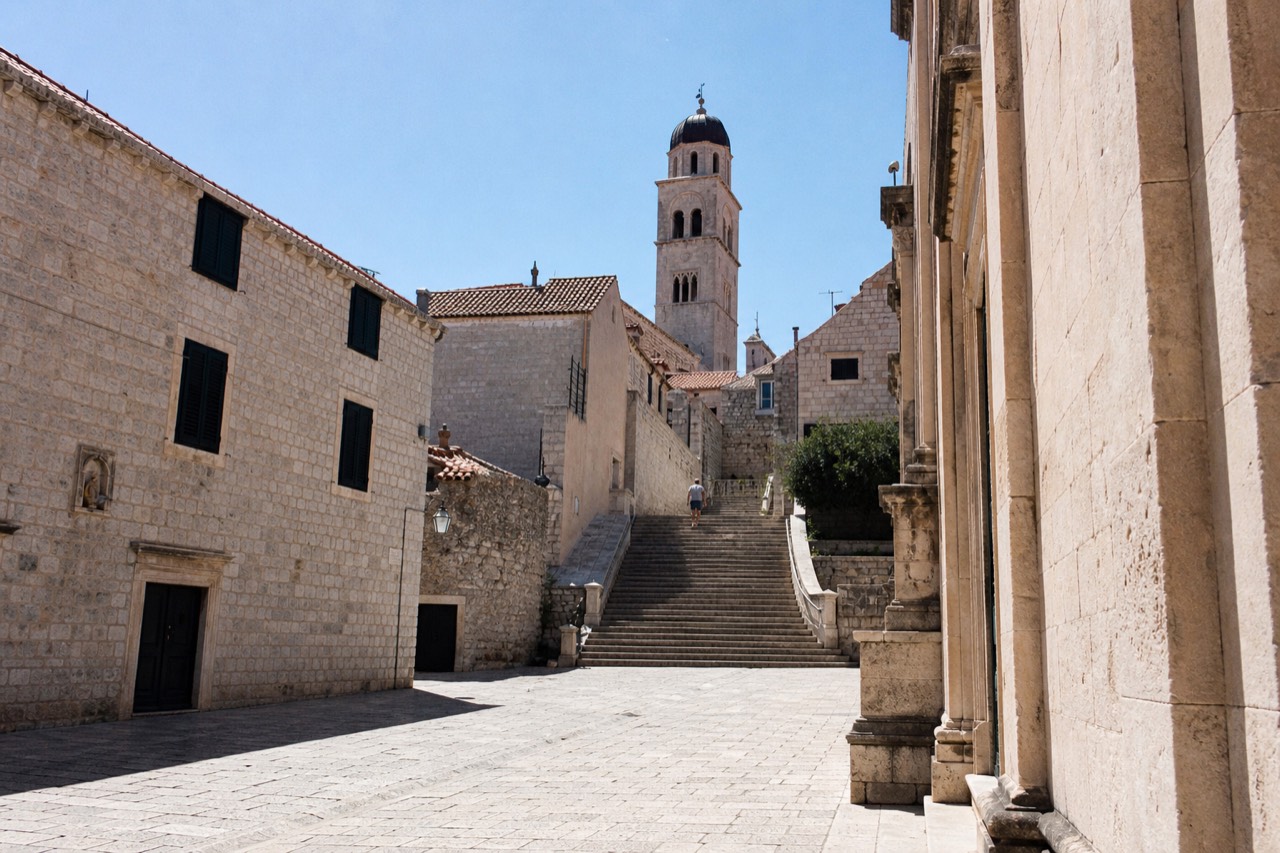
Pack for heat, stairs and polished stone: light, breathable daytime layers, shoes with real grip, and something with sleeves for churches and evenings. Dubrovnik's Old Town is a 24.7-hectare pedestrian grid of limestone paving that holds the day's heat, and the city walls alone run 1,940 metres with almost no shade. What you wear on your feet matters more than anything else you pack.
I have walked these streets with travellers since 2015, and the single most common wardrobe mistake I see is not a fashion error at all. It is footwear. The Stradun and every lane off it are paved in limestone polished smooth by centuries of feet, and when the summer sun has been on that stone all day it becomes both slippery and radiantly hot. Sandals with flat leather soles, brand-new sneakers with no tread, anything with a smooth sole, all of them turn a happy afternoon into a careful, tense shuffle down from the walls.
The second mistake is dressing only for the temperature on the forecast. The daytime heat is real, but Dubrovnik in the evening, especially near the water and up on Mount Srđ, cools down in a way the midday reading does not suggest. A light layer you can tie around your waist all day earns its place at dinner. And if you plan to step inside the Rector's Palace, the cathedral or any of the working churches, covered shoulders and knees are the respectful baseline, so a scarf or a light long-sleeve shirt solves two problems at once.
Here is the core wardrobe that works across the whole visitor season:
| Item | Why it earns its place | Best season |
|---|---|---|
| Grippy closed shoes or trail sandals | Polished limestone, 1,940 m of walls, steep side streets | All year |
| Light trousers or a long skirt | Church and monastery entry, evening breeze | All year |
| Breathable shirt with sleeves | Sun protection beats sunscreen on a 3-hour walk | April to October |
| Swimwear under day clothes | Betina Cave, Banje, Lokrum, no changing rooms to speak of | June to September |
| Light jacket or cardigan | Evenings on the water and up at 405 m on Mount Srđ | March to June, September to November |
| Wide-brim hat, not a cap | The walls give almost no shade between towers | May to September |
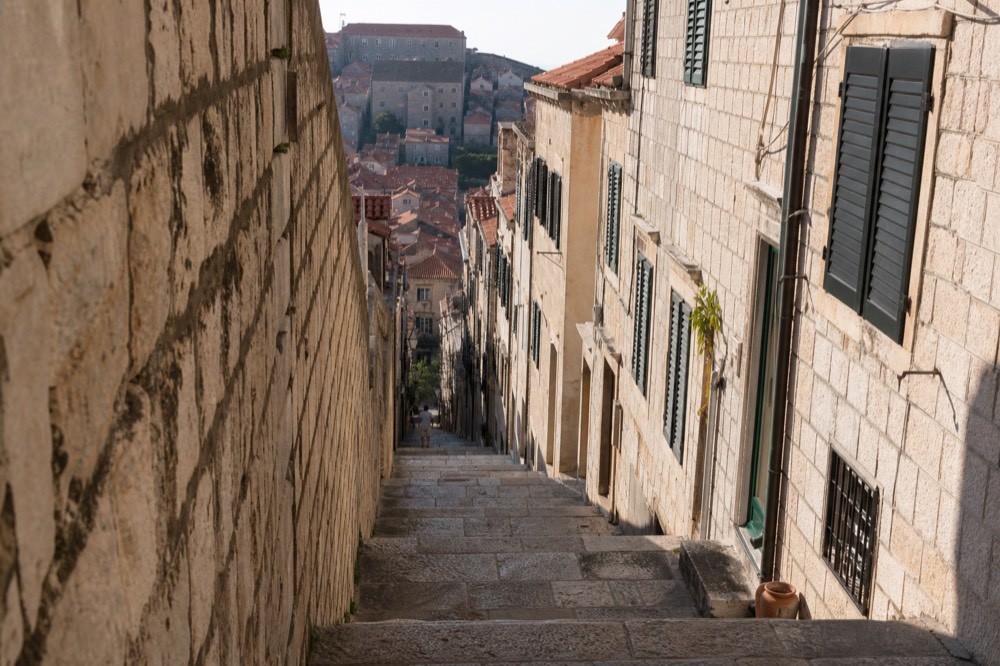
One planning note that shapes everything below: the heat on the walls is not an abstract warning. The walls operator's stated hours run 08:00 to 19:30, and the difference between walking at 08:00 and walking at 13:00 in July is the difference between a pleasant circuit and an ordeal. Your clothing choices partly determine when you can go, and when you go determines what you should be wearing. Plan the two together.
If you would rather have the walls explained than simply walked, a guided circuit is the best use of a hot morning, because a guide keeps the pace honest and the commentary makes the stair climbs feel shorter. The 2-Hour City Walls Walk from Dubrovnik Walks runs from $29.58 per person and is rated 4.8 across 1,387 reviews, and the Old Town & Walls Combo Walk covers both the streets and the ramparts in one 3 hour 30 minute outing from $50.94 per person. For a day when the heat argues against stairs at all, the Convertible Bus Panorama Tour shows you the city from open-top comfort with an audio guide, from $34.77 per person.
A final general point before the month-by-month detail. Dubrovnik recorded about 4.2 million overnight stays in 2025, sharing first place among Croatian destinations with Rovinj, so you will rarely have the streets to yourself no matter how you dress. But dressing sensibly is what keeps the crowds from mattering. The visitor who is comfortable walking at 08:00 sees an Old Town that the visitor in unsuitable shoes, waiting until the afternoon cools, never will.
What Clothes to Wear in Dubrovnik in September?
September is the sweet spot and the busiest cruise month at once: swimwear, a light layer for evenings, and your grippiest shoes. The September average sea temperature is about 23.6 degrees, air temperatures stay summer-warm, and cruise passengers in September 2025 peaked at 101,246, above July and August. Dress for a hot city, not a fading summer.
Many visitors arrive in September expecting the season to be winding down and pack accordingly, too many warm layers, no swimwear. That is backwards. The sea is at its settled summer best, and the days are long and hot. The one genuine change is the evening: the sun sets earlier and the sea breeze turns cooler, so the light jacket or cardigan that sat unused in July finally comes out.
The swimwear point deserves emphasis because September is arguably the best swimming month of the year. The 23.6 degree figure is a long-run average for this coast, a 1991 to 2020 open-water climatology from NOAA's satellite record, not a beach thermometer reading, and sheltered bays run noticeably warmer: the Croatian met service's own Dubrovnik buoy read 27.0 to 27.4 degrees on a single September day against that 23.6 monthly mean. What that means for your bag is simple. Pack to swim, and pack to swim often, because the water will not disappoint you.
The crowd point changes your clothing strategy too. September and October were the two busiest cruise months of 2025, ahead of July and August, according to the Port Authority's own figures, and the Port Authority limits cruise passengers to 8,000 a day in most cases. What that means practically is narrow streets at midday, and narrow streets reward people who can walk comfortably for hours. Light, loose clothing in natural fabrics, real shoes, a hat, and a small day bag instead of anything you have to carry in one hand.
Here is how the sea shapes up across the year, because it is the single best guide to how much of your September bag should be swimwear:
| Month | Average Sea Temperature | Month | Average Sea Temperature |
|---|---|---|---|
| January | 14.3 °C | July | 24.9 °C |
| February | 14.0 °C | August | 25.8 °C |
| March | 14.2 °C | September | 23.6 °C |
| April | 15.4 °C | October | 21.0 °C |
| May | 18.6 °C | November | 18.5 °C |
| June | 22.5 °C | December | 16.0 °C |
These are open-water averages for the grid cell that contains Dubrovnik, and an independent EU marine dataset corroborates them to within about a degree in the months that matter. Treat them as a planning baseline, not a promise, and expect sheltered swimming spots to read warmer than the open water figure in high summer.
September also rewards the evening layer more than any summer month. Sunset boat trips run late into the season, and out on the water, moving, the temperature drops fast. If a sunset cruise is on your list, and the one-hour Cavtat sunset cruise with a cold platter and drinks is a lovely way to spend one, bring the layer even on a day that felt like full summer at lunchtime.
One clothing item worth singling out for September specifically: proper water shoes or secure sandals if you plan to kayak or swim from rocks. The popular kayak routes around Lokrum and Betina Cave involve landing on stone, and the pebbles and rock shelves are hard on bare feet. A review of the two-hour kayak tour of Lokrum Island and Betina Cave describes the swimming break at the cave as a highlight, and the difference between enjoying that break and enduring it is often just what is on your feet.
What Clothes to Wear in Dubrovnik in May?
May is a two-wardrobe month: summer-weight days and cool evenings, with a real chance of rain. The average sea temperature is about 18.6 degrees, warm enough for brave swimmers but not bath-warm, and the cable car runs until 22:00 or later, so pack a proper jacket for the 405-metre summit. Layers are the whole strategy.
May in Dubrovnik can hand you a 25-degree afternoon and a 15-degree evening in the same day, and occasionally a wet morning on top. The mistake to avoid is packing only for the postcard version of the month. The sea at 18.6 degrees is swimmable for some and merely invigorating for most, so swimwear is worth bringing but should not dominate the bag the way it does in July. What dominates instead is the mid-layer: a light jumper or fleece for evenings, a genuinely waterproof layer for the shower risk, and trousers you are happy to walk in all day.
The summit point is not a throwaway. The cable car climbs 367 metres from the lower terminal to the Mount Srđ station at 405 metres above sea level, and the temperature difference between the Old Town and the top is real in every month, most noticeably in spring and autumn. In May the operator runs until 22:00 in the first half of the month and until 23:30 in the second half, which means most visits happen close to sunset, the coldest part of the day at altitude. The adult round trip is 30 euro. People ride up in t-shirts and shiver through the view; the view deserves better than that.
Daytime clothing in May is straightforward: what you would wear on a warm spring day anywhere on the Mediterranean. Light trousers or a skirt, a t-shirt with a light shirt over it, comfortable walking shoes, sunglasses. The city walls are fully open, the adult ticket is 40 euro in main season, which runs 1 March to 30 November, and a May circuit is one of the best times of year to walk it, warm but not punishing, with the light excellent for photographs from the towers. The same footwear rule applies: grip, always grip.
One May-specific note about the Dubrovnik Pass, since visitors often buy it alongside their spring trip. The one-day pass costs 40 euro, the same as the standalone walls ticket in main season, and adds ten more sights plus a 24-hour bus ticket. That equivalence is a main-season fact: in December the walls ticket drops to 20 euro and no winter pass tier is on sale at all. In May, though, the pass is at its most useful, because spring visitors tend to museum-hop between the walking, and the pass covers the Rector's Palace, the Maritime Museum and more, all of which are places you will want that light layer for, since their stone interiors stay cool all year.
For more on getting the timing right across the whole year, the best month to visit Dubrovnik question goes deeper than clothing alone, and the Dubrovnik weather by month guide lays out the full picture you are packing against.
What to Wear in Dubrovnik in September?
For September days specifically: light natural fabrics, a hat, real walking shoes and swimwear worn under your clothes, with a light layer tied around your waist from late afternoon. The sea is about 23.6 degrees on average, the streets are at their most crowded, and the evenings cool enough that the layer gets used every single day. Treat it as full summer with a jacket.
This question overlaps the one above, but it is worth answering on its own terms because people asking it are usually fine-tuning an actual suitcase rather than planning in the abstract. So here is the concrete September packing list, item by item, the one I give friends visiting for a week.
Footwear first, always. One pair of broken-in walking shoes with grip, and optionally a pair of secure sports sandals for the beach and boat days. No new shoes on this trip: the combination of steep lanes, stairs and 1,940 metres of wall circuit will find any weak point in a shoe or a foot within two days. If you are taking a guided walls walk, and the 2-Hour City Walls Walk is the best-value way to do it at from $29.58 per person, rated 4.8 across 1,387 reviews, wear the best shoes you brought and save the sandals for afterwards.
Daytime clothing is summer clothing with sense applied. Loose linen or cotton, light colours, sleeves rather than bare shoulders for long outdoor stretches, because sun on skin for a six-hour walking day is more tiring than heat alone. A hat with a brim, sunglasses, and a small cross-body bag or daypack rather than anything handheld. Swimwear goes on under your daytime clothes on any day with a boat or beach plan, because changing facilities at the swimming spots are minimal, and the water in September is at its most inviting.
A review of the walls and wars walking tour captures exactly why the clothing advice and the tour advice belong together, with a guest noting the city walls have withstood the test of time and praising the organisation of the tour itself. That is a September circuit done right: early start, good shoes, guide, and the rest of the day for the water.
Evening clothing in September is where the month earns its reputation. Restaurant terraces, the bars perched above the walls, a sunset drink at one of the cliffside spots, all of them are outdoors, all of them face the sea, and all of them get the breeze. Men are fine in trousers and a light shirt; women in anything from a summer dress to trousers with a wrap. The one universal item is the layer. Not a coat, not a fleece, just something that takes the edge off a sea breeze at 21:00.
And one item people forget: something warm-ish to sleep in if your accommodation has air conditioning you actually use. September nights can be humid, the air conditioning goes on, and the thin summer duvet that was correct in a July heatwave is suddenly not enough. A t-shirt as pyjamas solves it.
What Not to Do in Dubrovnik?
Do not walk the walls at midday in summer, do not wear smooth-soled shoes on polished limestone, do not enter churches in beachwear, and do not treat the Old Town as a beach town. The official carrying capacity of the historic core is 11,275 people, counted by six entrance counters, and the residents of this working city deserve the basic courtesy of a dressed, considerate visitor.
The clothing-adjacent mistakes are covered above, but this question deserves the fuller answer, because the same visitors who under-pack for the heat also under-prepare for the etiquette. Dubrovnik is a living city of 41,562 people at the 2021 census, not a theme park, and the fastest way to mark yourself as an unwelcome guest is to treat the Stradun like a hotel pool deck. Shirt and shoes in the Old Town at all times is the baseline, and it is both a courtesy and, in churches and museums, effectively a rule.
The midday walls mistake deserves its own warning because it is the one that hurts. The wall circuit is almost entirely exposed, the stone radiates the morning's heat back at you all afternoon, and there is no shortcut off the circuit once you are on it in the busy direction of travel. Walk it at opening, 08:00, or in the last two hours before the 19:30 close. The same logic applies to the cable car in the height of summer, where the operator runs until midnight in June, July and August, and the sunset and evening rides are both cooler and better lit than anything at 14:00.
A few further do-nots that cost visitors real money or real comfort. Do not rely on a single payment method: cards are widely accepted but small konobas, market stalls and beach kiosks can be cash-only, so carry some euro. Do not plan to drive into the Old Town, because you cannot, it is fully pedestrianised, and the parking situation outside it is its own project, covered in the parking in Dubrovnik guide. Do not swim off the rocks in the port or in marked boat lanes, and do not climb the walls or fortifications for a photograph, people genuinely try, and it is both dangerous and prohibited.
The etiquette list is short and mostly obvious once stated. Keep your voice down in residential lanes after about 22:00. Do not sit on the Onofrio Fountain's rim in swimwear eating lunch, it is a 15th-century monument and a working drinking fountain, and locals will notice. Ask before photographing people, especially older residents going about their morning. Queue at the entrance gates rather than pushing in, and if a cruise crowd is surging through Pile Gate, wait ten minutes with a coffee, because the counters show the surge passes almost as fast as it arrives.
| Mistake | Why it fails | What to do instead |
|---|---|---|
| Smooth-soled shoes | Polished limestone is slick, especially with any moisture | Grippy walking shoes or trail sandals |
| Walls at midday in summer | 1,940 m of exposed circuit, no shade, no exit shortcut | Start at 08:00 or go after 17:30 |
| Beachwear in the Old Town | Working city, churches, museums, resident neighbours | Cover up between beach and town |
| No evening layer | Sea breeze at dinner and on boats, cooler at 405 m | Light jacket or cardigan every day |
| Only swimwear in September bag | Evenings cool, streets stay crowded | Full summer kit plus one warm layer |
The last do-not is the pleasant one: do not over-plan. The visitors who enjoy Dubrovnik most are the ones dressed comfortably enough to say yes to things, yes to the walls at 08:00, yes to a boat at short notice, yes to the long way back down a lane they had not walked before. If you want help structuring a first visit, Things to Do in Dubrovnik is the site's core guide, and the walls-focused options below are the natural place to start.
The combo walk is the option I point most first-time visitors toward, because it folds the streets and the ramparts into a single morning and leaves the afternoon free for the water, which is exactly the shape of a good Dubrovnik day. It runs 3 hours 30 minutes from $50.94 per person with a 4.8 rating across 1,183 reviews, so it is a commitment, but a well-reviewed one, and the guide does the pacing so you do not have to think about anything except what you are looking at. If you would rather compare it against the shorter walls-only circuit or the open-top bus alternative before deciding, the three options side by side are below.
Common Questions About What Clothes to Wear in Dubrovnik
What clothes to wear in Dubrovnik?
Light, breathable daytime layers, shoes with real grip for the polished limestone, covered shoulders for churches, swimwear in the warmer months, and a light layer for evenings. Footwear matters more than anything else: the Old Town is pedestrian, hilly, and paved in stone polished smooth by centuries of feet.
What Clothes to Wear in Dubrovnik in September?
Treat September as full summer with a jacket. The sea averages about 23.6 degrees, days are hot, and swimwear belongs in the bag, but evenings cool off enough that a light layer gets used daily. Real walking shoes are essential, because September is the busiest cruise month of the year and you will be on your feet in crowds.
What Clothes to Wear in Dubrovnik in May?
Layers are the whole strategy: summer-weight days, cool evenings, and a genuine rain possibility. The sea averages about 18.6 degrees, so swimming is optional rather than the point. Bring a proper jacket if you are riding the cable car, which runs late into the evening in May and sits 405 metres above the sea.
What Not to Do in Dubrovnik?
Do not walk the walls at midday in summer, do not wear smooth-soled shoes, do not enter churches in beachwear, and do not treat the Old Town as a beach town. It is a living city of 41,562 people whose historic core has an official carrying capacity of 11,275, and basic courtesy, quiet evenings in residential lanes and patience at the gates, costs nothing.
Do You Need Water Shoes in Dubrovnik?
They help. Many of the best swimming spots, including Betina Cave and the rocky shelves around Lokrum, involve entering the water over stone or pebbles, and changing facilities are minimal. Secure sandals or water shoes make boat days and kayak tours considerably more comfortable.