What Dessert Is Dubrovnik Known For?
Discover the sweet side of Dubrovnik, from creamy rožata to delicate fritule, and learn where to try the city's most beloved desserts.
What Dessert Is Dubrovnik Known For?
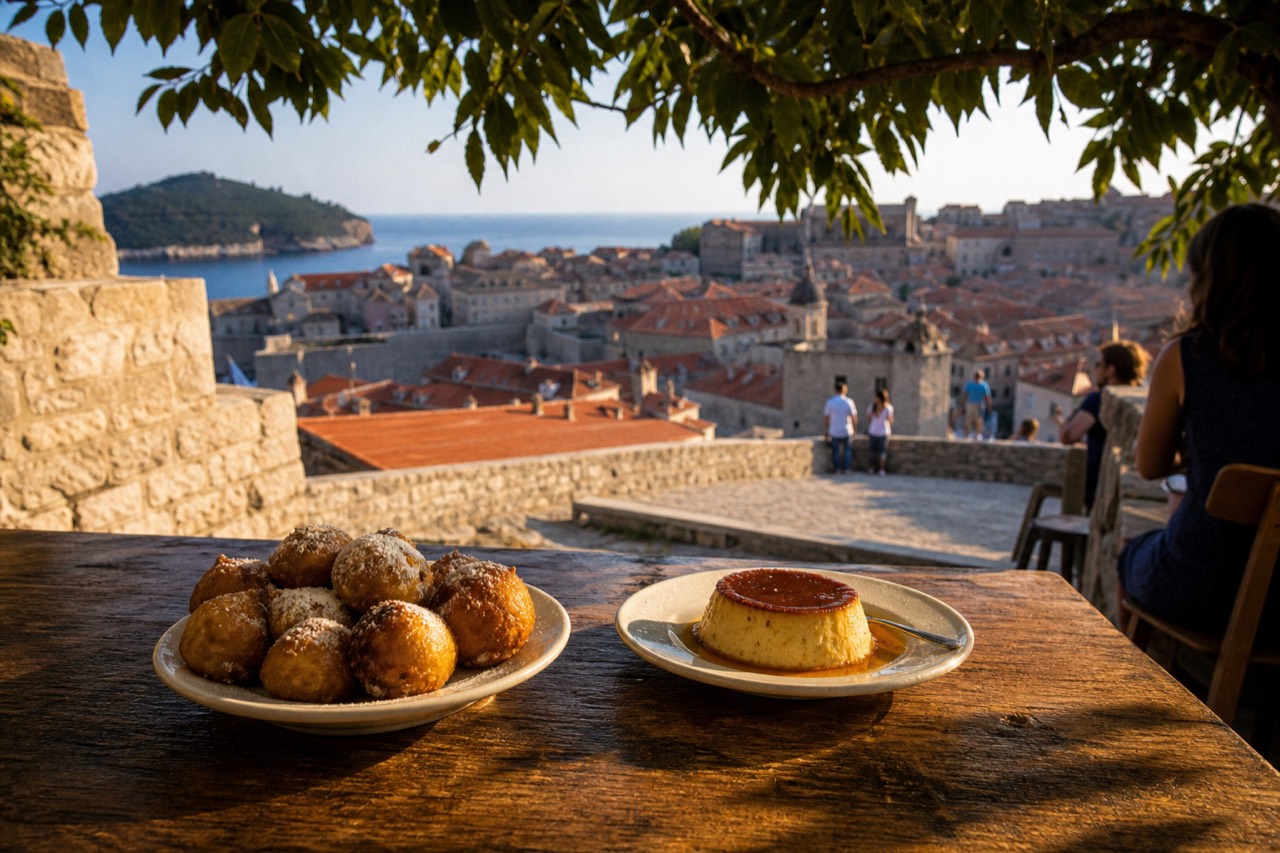
Dubrovnik's most famous dessert is rožata, a creamy caramel custard similar to flan, often flavored with rose liqueur. Other local favorites include fritule (small fried doughnuts dusted with sugar), kroštule (crunchy fried pastry ribbons), and tufahija (poached apple stuffed with walnuts and whipped cream. These sweets reflect the city's Venetian and Mediterranean culinary heritage.
Rožata is the standout. It appears on nearly every traditional restaurant menu in the Old Town, from the polished dining rooms along the Stradun to the family-run konobas tucked into side streets. The name comes from the Croatian word for rose, and the best versions carry a delicate floral note that cuts through the caramel. It is a custard, poured into a caramel-lined mold and baked in a water bath. The result is a wobbly, golden dessert that is served cold, often with a dollop of whipped cream and a scatter of candied citrus peel. The dish has deep roots in the Republic of Ragusa, the maritime city-state that governed Dubrovnik for centuries, and its recipe has been passed down through generations of home cooks and professional chefs alike.
Fritule are small, round doughnut-like balls, fried and rolled in sugar while still warm. They are a Christmas and carnival staple, but you will find them year-round at bakeries and street stalls. The batter can include raisins, lemon zest, or a splash of rakija, giving them a slight kick. Walking through the Old Town on a winter evening, the smell of frying fritule drifting from a bakery doorway is one of the city's most comforting sensory experiences. Kroštule are another fried treat, thin ribbons of dough twisted into knots and fried until crisp, then dusted with powdered sugar. They are addictive, crunchy, and disappear fast. The dough is often enriched with a little brandy or citrus zest, and the shaping requires a practiced hand, a skill that local grandmothers have perfected over a lifetime.
Tufahija is a baked apple, peeled and poached in syrup, then filled with a mixture of ground walnuts, sugar, and sometimes whipped cream or custard. It is a dish that arrived with the Ottomans and found a home across the Balkans. In Dubrovnik, it is often served in a small glass bowl, the syrup pooling around the apple, and finished with a drizzle of clotted cream. The contrast between the tender, syrup-soaked apple and the crunchy walnut filling makes it a textural delight, and it is one of the few desserts on local menus that feels genuinely light after a heavy meal of grilled meat or seafood.
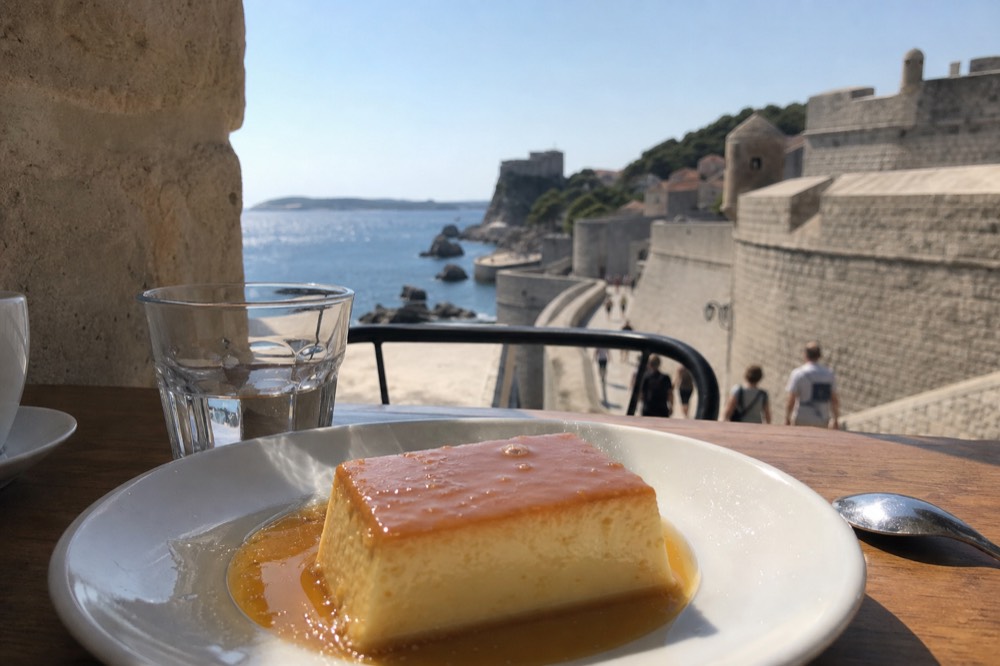
Palačinke, thin crepes filled with walnut, chocolate, or jam, are a beloved everyday dessert. They are prepared fresh at dedicated pancake bars, and the sweet, nutty filling is a perfect end to a meal. The city's dessert culture is deeply tied to its café scene, where a leisurely coffee is often accompanied by a small pastry. The Dubrovnik café ritual is itself a kind of dessert course: a mid-morning or late-afternoon pause that might involve a square of dense chocolate cake, a slice of lemon tart, or a few fritule on a saucer alongside a macchiato. The City of Dubrovnik promotes its culinary heritage as a key part of the visitor experience, and many local bakeries have been perfecting these recipes for generations. The sweet side of the city is not just about the desserts themselves but the places where you eat them. A slice of rožata on a terrace overlooking the red roofs, with the sound of church bells in the distance, is a memory that stays. The Things to Do in Dubrovnik guide can help you find the best spots.
| Dessert | What It Is | Where to Try It |
|---|---|---|
| Rožata | Caramel custard with rose liqueur | Most konobas and restaurants in the Old Town |
| Fritule | Small fried doughnuts, often with raisins and lemon zest | Bakeries, street stalls, and Christmas markets |
| Kroštule | Crunchy fried pastry ribbons dusted with sugar | Bakeries and pastry shops |
| Tufahija | Poached apple stuffed with walnuts and cream | Traditional restaurants and dessert cafés |
| Palačinke | Thin crepes filled with walnut, chocolate, or jam | Pancake bars and casual eateries |
Many visitors combine dessert tasting with a broader food tour of the city, and the following experiences offer a convenient way to sample both sweet and savory specialties.
What Is Dubrovnik Best Known For?
Dubrovnik is best known for its remarkably preserved medieval walls, the UNESCO-listed Old Town, and its role as a filming location for Game of Thrones. Beyond the stone and sea, the city is also renowned for its seafood, wine, and a growing reputation for culinary experiences that draw from its Venetian and Ottoman past. Its compact size and walkability make it a favorite for cruise passengers and city-break travelers alike.
The city walls, built between the 13th and 17th centuries, stretch 1,940 meters and encircle the entire Old Town. No visit is complete without a walk along the top, where the views of red-tiled roofs and the sparkling Adriatic are unforgettable. Fort Lovrijenac stands on a 37-meter sea rock, guarding the western approach. The Stradun, the main limestone-paved street, runs 298 meters from Pile Gate to Luža Square, a polished white thoroughfare lined with Baroque churches and palaces.
But Dubrovnik's fame extends beyond its architecture. The city's food scene is a draw in its own right, and the Dubrovnik Tourist Board highlights the region's seafood and wine traditions as central to the local identity. Seafood is king, with oysters from Ston, black risotto, and grilled octopus appearing on menus alongside local wines like Plavac Mali and Pošip. The city's dessert culture, as we explored above, is equally compelling.
The best way to sample it all is through a curated experience that combines food, scenery, and a bit of history.
The Oyster, Mussels, and Wine Tasting Tour in Ston is a popular half-day trip to the Pelješac peninsula. It includes a boat ride to oyster beds, a tasting of freshly harvested oysters with lemon, and a lunch of mussels and grilled fish paired with local wines. The tour starts at $157 per person, and its 4.9 rating across 111 reviews speaks to the quality of the experience. The combination of sparkling water, mountain backdrops, and one of the freshest seafood meals you will ever have makes it a standout.
What Food Is Dubrovnik Known For?
Dubrovnik's cuisine is anchored in seafood, with black risotto, grilled octopus, and oyster dishes from nearby Ston standing out. The city also embraces traditional Dalmatian fare like pašticada (a slow-cooked beef stew), peka (meat and vegetables cooked under a bell-like lid), and fresh Adriatic fish. The influence of Italian and Balkan flavors is evident, with plenty of olive oil, garlic, and aromatic herbs.
The daily catch defines the menu. At the Gruž market, fishermen sell their haul each morning, and by evening it appears on plates across the city, as detailed in our guide to Dubrovnik food tours. Black risotto, made with cuttlefish ink, is a signature dish that stains the rice a deep, glossy black. It is rich and briny, often finished with a squeeze of lemon. Grilled octopus is another staple, served with blitva (Swiss chard and potatoes) and a drizzle of olive oil.
Oysters from the Mali Ston bay are a delicacy. The Pelješac peninsula produces some of the finest oysters in the Adriatic, and they are served raw with a squeeze of lemon, or grilled with Parmesan. A trip to the oyster beds is a highlight for food lovers, and the Oyster, Mussels, and Wine Tasting Tour in Ston is the most direct way to experience them.
Pašticada is a slow-cooked beef dish marinated in wine vinegar and spices, then braised until tender. It is often served with gnocchi or homemade pasta. Peka is another traditional method, where meat or octopus is placed in a metal or clay lid and covered with hot coals. The result is fall-apart tender and deeply flavorful. The technique dates back centuries, when farmers and shepherds would cook a meal under an iron bell buried in the embers of a fire. Today, several restaurants in the Konavle Valley and the Dubrovnik countryside still prepare peka in the traditional way, and it typically requires ordering a day in advance. The wait is worth it: the slow, even heat transforms tough cuts of meat into something that pulls apart with a fork, and the vegetables beneath absorb every drop of the seasoned juices.
| Dish | Description | Typical Price Range |
|---|---|---|
| Black risotto (crni rižot) | Cuttlefish ink risotto, creamy and briny | €12 to €18 |
| Grilled octopus | Tender octopus tentacles with blitva and olive oil | €15 to €22 |
| Oysters (kamenice) | Raw or grilled, from Mali Ston | €2 to €3 per piece |
| Pašticada | Slow-cooked beef stew with gnocchi | €14 to €20 |
| Peka | Meat or octopus cooked under a bell lid | €18 to €25 per person (for two) |
The price ranges are approximate and can vary by season and restaurant. For a more immersive dive, a cooking class like the Peka Cooking Lesson is an excellent way to learn the traditions firsthand, and it pairs well with a visit to the Pelješac peninsula, as our guide to the Pelješac peninsula and the Ston walls explains.
What Drink Is Dubrovnik Known For?
Dubrovnik's drink scene is defined by rakija, a potent fruit brandy served as an aperitif or digestif, and by the region's growing craft beer culture. Local wines, particularly Plavac Mali and Pošip, are also central to the dining experience. The city's café culture means that coffee is an all-day ritual, and the Adriatic summer calls for refreshing cocktails made with local herbs and citrus.
Rakija is the spirit of choice. It comes in many flavors: plum (šljivovica), grape (loza), herb (travarica), and even cherry or honey. It is often homemade, and locals will offer a small glass as a welcome. The standard serving is a shot-sized glass, and it is sipped, not downed. A good rakija is smooth and warming, with a lingering fruit finish. In Dubrovnik, you will find it at the start of a meal, as a digestive after a heavy dinner, or simply as a gesture of hospitality when you visit someone's home. Many restaurants keep a bottle of house-made rakija behind the counter, and it is often brought to the table unasked, a small glass for each guest, before the menu even arrives.
Craft beer has made inroads in recent years. Dubrovnik has a few microbreweries, and you can find locally brewed pilsners and IPAs on tap at bars in the Old Town and Gruž. The city's wine list, however, remains the most important drink pairing, and our guide to wine tasting around Dubrovnik covers the best vineyards and tasting rooms. For a non-alcoholic alternative, the local lemonade, made with freshly squeezed lemons and sometimes a spoonful of honey, is a refreshing option on a hot summer day. The lemons in Dalmatia are intensely fragrant, and the drink is a far cry from the bottled version.
The Croatian Traditional Cuisine: Peka Cooking Lesson is a hands-on experience that includes a tasting of local wines alongside the meal. It is rated highly, and while it has only 10 reviews, the small-group format means plenty of personal attention.
Coffee is a ritual. Dubrovnik's café terraces fill from morning to night. The order is usually a macchiato or an espresso, and the pace is leisurely. For a non-alcoholic treat, try a lemonade made with fresh lemons and local honey, or a glass of cedevita, a vitamin drink that is a Croatian staple. The café culture is one of the city's defining rhythms: a morning coffee on the Stradun, an afternoon pause in a shaded square, an evening drink as the sun sets over the walls. It is a pace of life that visitors quickly adopt, and it pairs perfectly with the dessert culture we explored earlier.
| Drink | Description | Where to Try It |
|---|---|---|
| Rakija | Fruit brandy, often homemade | Any konoba or bar; ask for a local variety |
| Plavac Mali | Full-bodied red wine from Pelješac | Wine bars and restaurants throughout the city |
| Pošip | Crisp white wine from Korčula | Seafood restaurants and wine shops |
| Craft beer | Locally brewed IPAs and lagers | Bars like Love Bar or The Beer Factory |
| Coffee | Espresso or macchiato, enjoyed slowly | Cafés along the Stradun and in the Old Town squares |
What Wine Is Dubrovnik Known For?
The wines of Dubrovnik and the surrounding region are dominated by Plavac Mali, a full-bodied red wine that is the descendant of Zinfandel, and Pošip, a white wine from the island of Korčula that is crisp and aromatic. The Pelješac peninsula is the heart of red wine production, while the Konavle valley offers a mix of white and red varieties, often paired with local food in a family-run vineyard setting.
Plavac Mali is the star. The name translates to "small blue," and the grape is known for producing wines with high alcohol content, rich tannins, and flavors of dark cherry, plum, and Mediterranean herbs. The best Plavac Mali comes from the Dingač and Postup appellations, where the steep, sun-drenched slopes overlooking the sea create ideal conditions. These wines are bold and age-worthy, and they pair perfectly with grilled red meat, aged cheese, and the local pašticada. The vineyards cling to slopes so steep that the grapes are often harvested by hand, carried down in baskets, a practice that has changed little in generations. The resulting wines are concentrated and powerful, with a distinct minerality that comes from the limestone soil and the reflected heat of the Adriatic.
Pošip is the white counterpart. It was once nearly extinct but has been revived and is now the most widely planted white grape in the Dalmatia region. The wines are crisp, with notes of citrus, green apple, and a hint of almond. They are excellent with seafood, and a chilled glass of Pošip on a hot afternoon is a perfect match for oysters or grilled fish. The grape is mostly grown on Korčula, an island that is a day trip from Dubrovnik, and the Pošip from the Smokvica and Čara vineyards is particularly prized.
The Konavle Valley, a short drive south of Dubrovnik, is a hidden gem for wine lovers. The region produces Malvasija Dubrovačka, a full-bodied white, and a range of reds from Plavac Mali and Cabernet Sauvignon. Many vineyards offer tastings in a rustic setting, often accompanied by a platter of local prosciutto, cheese, and olives. The valley is a patchwork of small family farms, and the winemakers are often the same people who pour your glass.
The tour includes round-trip transport, a guided tasting of several wines, and a light lunch of local specialties. It is a relaxed way to discover the region's wines without worrying about driving. The vineyards you visit are typically small, family-run operations where the winemaker is likely to be the person pouring your glass, and the tasting room might be a converted stone barn with a view of the vines.
For those who prefer to stay in the city, the local wine bars, such as D'vino Wine Bar in the Old Town, offer extensive flights of Croatian wines. The knowledgeable staff can guide you through a tasting of Plavac Mali, Pošip, and lesser-known varieties like Tribidrag or Maraština. The Dubrovnik Pass, if you hold one, does not include wine tastings, but the city's wine culture is so accessible that you hardly need one. A wine bar crawl through the Old Town is a rewarding way to spend an evening, and the flights are often accompanied by small plates of local cheese and prosciutto, effectively becoming a light dinner.
| Wine | Type | Region | Tasting Notes | Food Pairing |
|---|---|---|---|---|
| Plavac Mali | Red | Pelješac (Dingač, Postup) | Dark cherry, plum, black pepper, herbs | Grilled steak, lamb, strong cheese |
| Pošip | White | Korčula | Citrus, green apple, almond, mineral | Oysters, grilled fish, salads |
| Malvasija Dubrovačka | White | Konavle | Full-bodied, honey, apricot, floral | Prosciutto, creamy pasta |
| Dingač (Plavac Mali) | Red | Dingač appellation | Intense, blackberry, smoke, leather | Roasted meats, dark chocolate |
| Maraština | White | Dalmatia | Light, floral, peach, crisp | Light appetizers, seafood |
After savoring the city's desserts, seafood, and wines, many visitors look for a complete culinary experience. The following tours combine the best of Dubrovnik's food and wine scene with a dose of history and culture.
Common Questions About Desserts in Dubrovnik
What dessert is Dubrovnik known for?
Dubrovnik is most famous for rožata, a creamy caramel custard flavored with rose liqueur. Other popular desserts include fritule (fried doughnuts), kroštule (crunchy pastry ribbons), and tufahija (poached apple stuffed with walnuts).
What Is the Most Traditional Croatian Dessert?
Rožata is considered one of the most traditional Croatian desserts, especially in the Dalmatian region. Variants of the custard appear across the Adriatic, but the Dubrovnik version is distinct for its use of rose liqueur and a light, silky texture.
Where Can I Try Rožata in Dubrovnik?
Almost every traditional restaurant in the Old Town serves rožata. Konoba Kamarica, Lady Pi-Pi, and the restaurants along the Stradun are good bets. It is often listed on the dessert menu as "rožata" or "Dubrovnik crème caramel."
Are Dubrovnik Desserts Expensive?
No, most desserts in Dubrovnik are reasonably priced. A slice of rožata or a serving of fritule typically costs between €5 and €8 at a restaurant, and less at a bakery. Tasting a few different sweets is an affordable indulgence.
What Drink Goes Best With Dubrovnik Desserts?
A glass of Prošek, a sweet dessert wine made from dried grapes, is a classic pairing with rožata and fritule. Alternatively, a shot of herb-flavored rakija, particularly travarica, can complement the sweetness.
What Food Is Dubrovnik Known For?
Dubrovnik is known for seafood dishes like black risotto, grilled octopus, and oysters from Ston. Traditional Dalmatian fare includes pašticada and peka, slow-cooked meats that reflect the city's Venetian and Ottoman influences.