Ston and Pelješac Day Trip from Dubrovnik
Ston is the oyster and wine capital on Dubrovnik's doorstep, and the Pelješac peninsula that carries you there is the quiet counterweight to the Old Town's crowds. Here is how to plan the day, what to taste, and which tours are worth the seat on the bus.
Short answer
Ston sits on the Pelješac peninsula about an hour's drive from Dubrovnik, and the day combines Europe's most striking defensive walls, oysters pulled straight from the bay, and Plavac Mali vineyards above the water. A guided tour runs from $81.69 per person, or you can drive and taste independently.
Why Make the Trip to Ston and Pelješac?
Ston and Pelješac give you the three things Dubrovnik's walled city cannot: working salt pans and shellfish farms rather than souvenir stands, vineyards you can stand in rather than read about, and a coastline where the crowd counters barely register. The peninsula is the food and wine engine of the Dubrovnik region, and it is close enough that a day trip costs you nothing in holiday time. Most visitors experience it as a blur from a tour bus window between Dubrovnik and Korčula, which is a waste of a genuinely distinctive place.
I send people to Pelješac for the same reason I send them to Konavle: it is the version of Dalmatia that still runs on its own produce. The oysters in Ston's bay are farmed in the water you look at while you eat them. The wine is grown on steep slopes a few hundred metres from the sea, and the red grape behind most of it is Plavac Mali, the same variety that powers the Dingač and Postup appellations further down the peninsula. If you want the background before you taste, our guide to Plavac Mali, Croatia's signature red covers the grape and its Dubrovnik-area expressions in detail.
The practical case is just as strong. Dubrovnik recorded about 4.2 million overnight stays in 2025, sharing first place among Croatian destinations with Rovinj, and the Old Town's official carrying capacity is 11,275 people, monitored by six counters that update every 15 minutes. On a peak September day the headcount passes 7,700 before 10:00. An hour up the coast, none of that applies. You trade the crowd for a bowl of oysters and a glass of something local, which is a trade I would make on most trips.
How Do You Get from Dubrovnik to Ston?
Ston is reached by road along the Pelješac peninsula, and the drive from Dubrovnik is short enough that every option works: an organised day tour with transport and lunch included, a rental car you drive yourself, or the public bus toward Orebić with a stop in Ston. Tours start from $81.69 per person, a rental car gives you full control of the tasting schedule, and the bus is the budget fallback. The choice is really about how much of the day you want to spend on logistics versus oysters.
The tour route is the easiest sell. The Ston and Korčula day trip runs about 11 hours from Dubrovnik, costs from $81.69 per person, and pairs the peninsula with a wine tasting, though its review average of 3.8 across 131 reviews is noticeably below the site's other day trips, so read the recent feedback before booking. The oyster-focused alternative, from $157 per person, is rated 4.9 across 111 reviews and builds the whole day around the shellfish and a mussel lunch. Both remove the driving, which matters if you plan to taste seriously.
Driving yourself is what I would do on a second visit. You set the pace in Ston, then follow the coast road west past the vineyards, stopping where a tasting room looks inviting. The one honest caveat: this is a day for a designated driver or a very disciplined spitting regime, because the tastings add up and the road back is coastal. If nobody in your group wants to hold the wheel, that is exactly what the tours are for.
What Should You See in Ston and Pelješac?
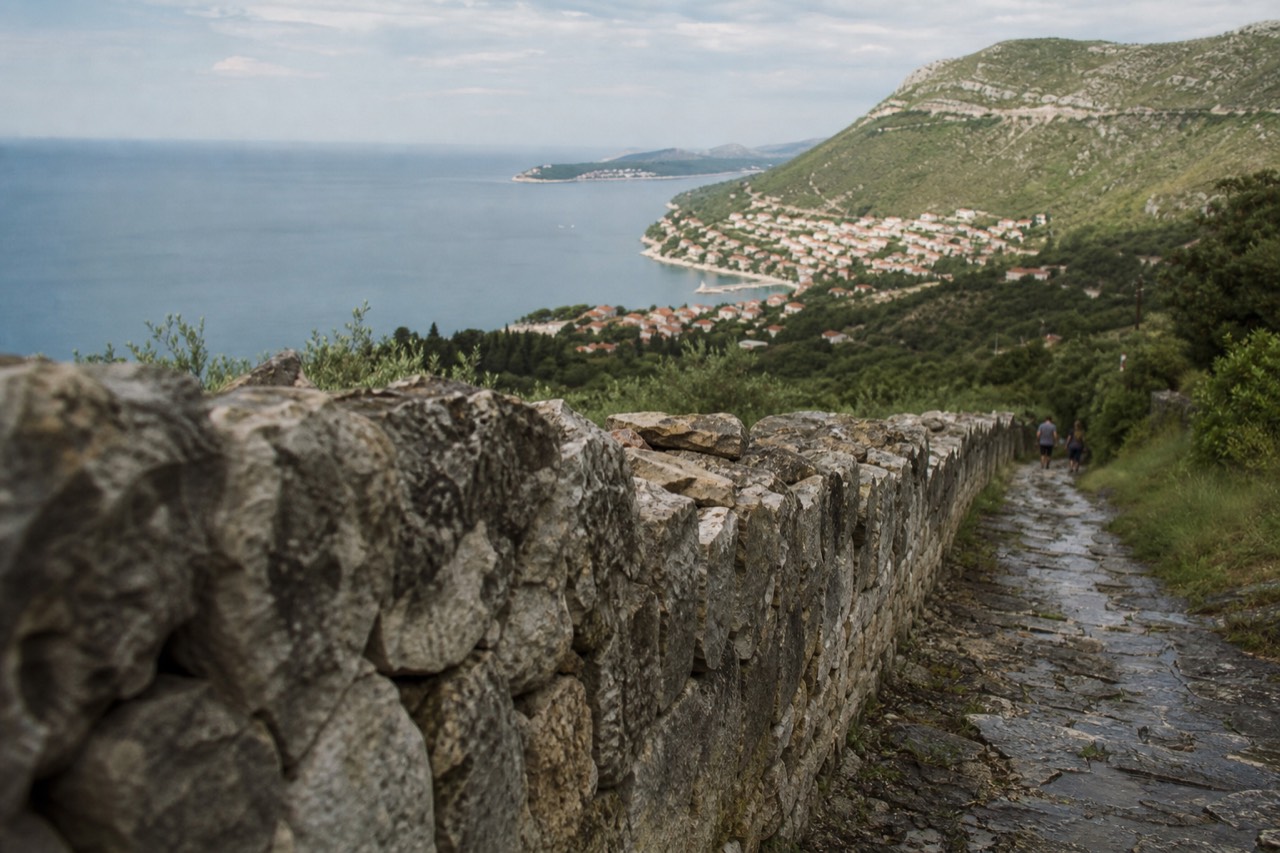
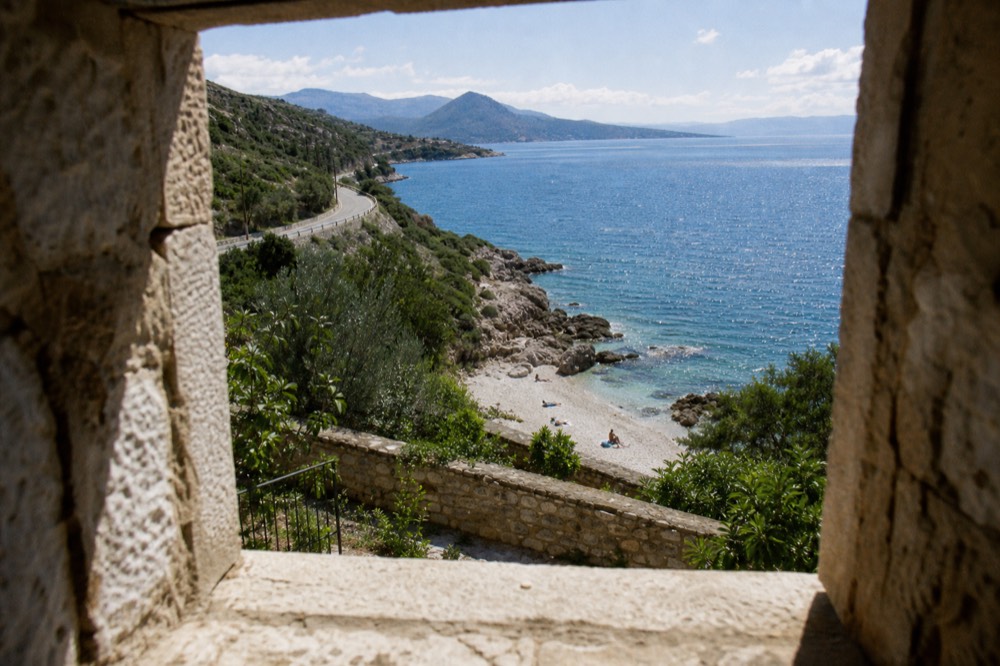
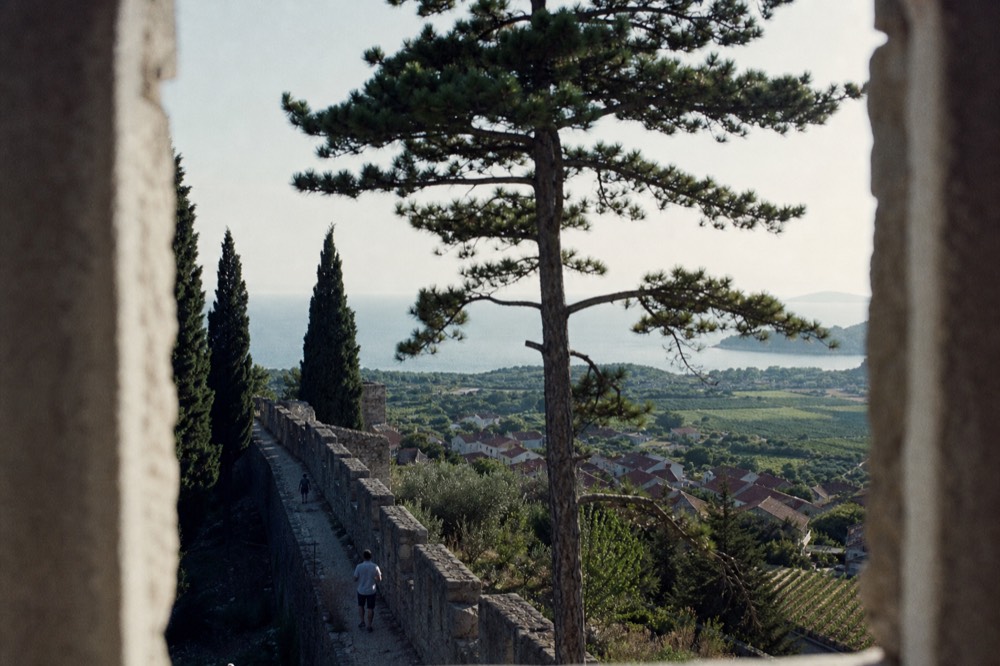
Ston's headline sight is its defensive wall, one of the longest fortification systems in Europe, snaking over the hill between Ston and its smaller twin Mali Ston, and the second reason to come is the salt works that paid for it. Further out, the peninsula delivers vineyard roads, pebble coves and the ferry port at Orebić facing Korčula. Give the walls a full morning and the coast road the afternoon. The wall walk is steep in stretches, so carry water and pick your hours the way you would for Dubrovnik's walls.
The comparison with Dubrovnik's own walls is worth making, because it sharpens what each place is. Dubrovnik's circuit is 1,940 metres long, up to 25 metres high, and built from 16 towers, three fortresses, six bastions and a catalogue of moats and drawbridges, per the walls operator's own official description. Ston's wall is a different animal: a rural ridge fortification guarding a salt monopoly, walked by a fraction of the numbers. Where Dubrovnik's walls cost 40 euro for an adult in main season, 1 March to 30 November, and drop to 20 euro in December, Ston's entry is a modest local ticket, and the experience is quieter at any price.
If you are pairing the trip with your Dubrovnik sightseeing, think about the Dubrovnik Pass before you leave. The one-day pass costs 40 euro, the same as the standalone walls ticket in main season, and adds ten more sights plus a 24-hour bus ticket; the three-day pass is 50 euro and the seven-day pass 60 euro. In December the standalone walls ticket falls to 20 euro and no pass tier is on sale at all, so the equivalence is a main-season fact only. The full breakdown is in our Dubrovnik Pass guide.
| Ticket | Main season (1 Mar to 30 Nov) | December |
|---|---|---|
| Dubrovnik City Walls adult | 40 euro | 20 euro |
| Dubrovnik City Walls child 7 to 18 | 15 euro | 5 euro |
| Child 6 and under | free | free |
| Fort Lovrijenac alone | 15 euro | 15 euro |
| Dubrovnik Pass 1 day | 40 euro | not on sale |
| Dubrovnik Pass 3 day | 50 euro | not on sale |
| Dubrovnik Pass 7 day | 60 euro | not on sale |
Oysters, Salt and Wine: What Should You Taste on Pelješac?
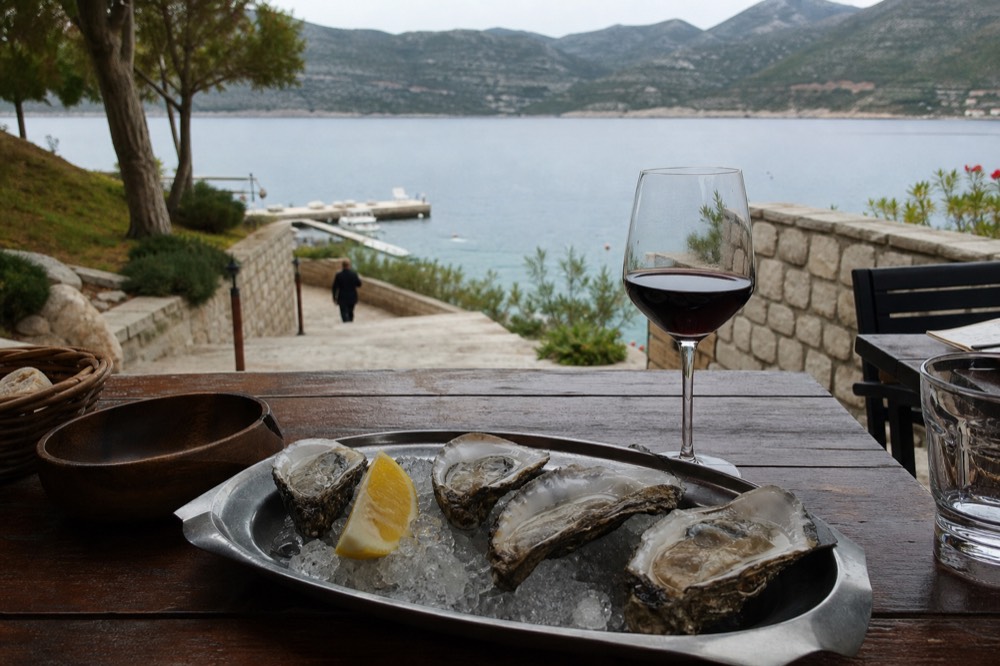
Taste three things in order: Mali Ston oysters eaten within sight of the farms, mussels from the same bay, and Plavac Mali red from the vineyards on the hillsides above the coast road. The oyster and mussel tasting tour with lunch runs from $157 per person and is rated 4.9 across 111 reviews, which tells you the food lives up to the setting. Do not leave without the oysters; everything else is negotiable.
Mali Ston's bay is a shellfish farm first and a view second, and that is the whole point. The oysters are pulled, opened and handed over in a sequence that takes minutes rather than hours, which is why a boat-side tasting beats a restaurant table for freshness. Mussels from the same water usually follow, cooked simply. For the full local picture, our Ston oysters guide goes deeper on the bay, the farms and how the tasting actually works.
The wine half of the day is Plavac Mali country. The grape makes dense, food-friendly reds, and Pelješac's steep coastal slopes are among its best terroirs; the Dingač appellation on the peninsula's southern side is its most famous expression, covered in our Dingač wine guide. Tasting fees along the route usually run modest, in the range of a few euros to around 15 euro depending on the producer and the pour, and many waive the fee against a bottle purchase, so check the room rather than assuming.
| Food and wine experience | Length | From (per person) | Rating |
|---|---|---|---|
| Oyster, mussel and wine tasting in Ston with lunch | day trip | $157 | 4.9 across 111 reviews |
| Ston and Korčula day trip with wine tasting | 11 hours approx | $81.69 | 3.8 across 131 reviews |
| Dubrovnik food and drink walking tour | 3 hours approx | $165.64 | 5 across 704 reviews |
| Peka cooking lesson | 4 hours approx | $159.83 | on the listing |
Which Tours Make the Ston Trip Easy?
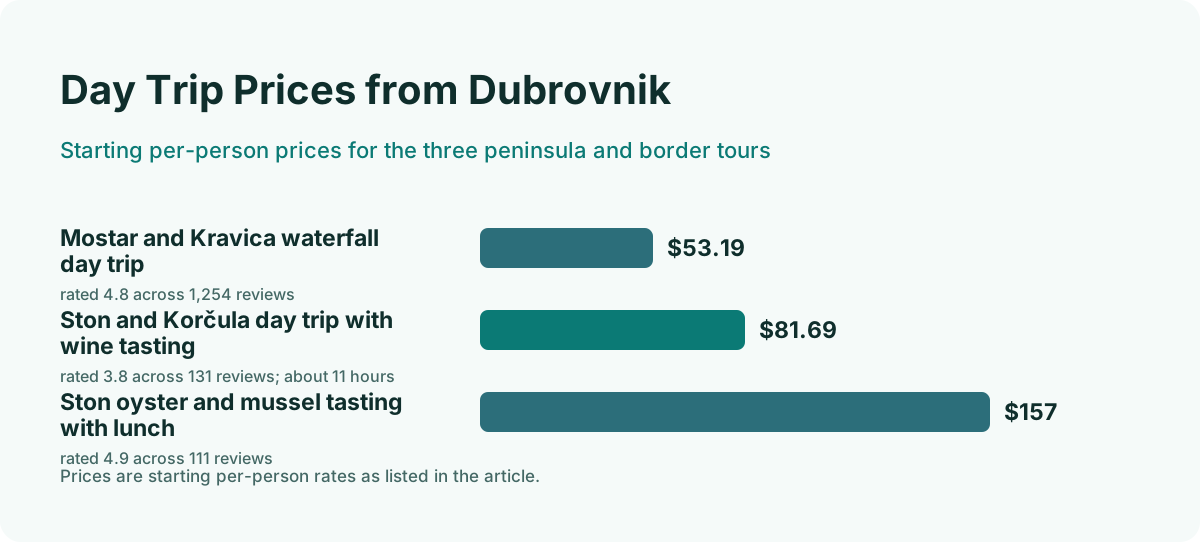
Three tours cover the peninsula and its neighbours: the Ston oyster and mussel lunch at from $157 per person rated 4.9, the Ston and Korčula combination with wine tasting at from $81.69 rated 3.8 across 131 reviews, and, if you would rather cross a border than a bay, the Mostar and Kravica waterfall day trip at from $53.19 rated 4.8 across 1,254 reviews. Each suits a different traveller, and none of them requires you to drive.
The oyster tour is the food-first choice and the strongest reviewed of the three. The Ston and Korčula trip is the sightseer's option: it stretches to about 11 hours, adds a wine tasting and an island town, and costs the least of the three, though the 3.8 average suggests the long day is not for everyone. The Mostar trip is the one to pick if this is your only chance to see Bosnia and Herzegovina, pairing the old bridge town with the Kravica waterfalls and a swim window in summer.
A long day and an early start, but well worth it. The tour guide Tina was excellent, keeping us well informed throughout the process. Bring euros! Mostar and the waterfalls are a must to see.
John_B
That review's practical note matters for any border day: bring cash euros for Mostar, and expect the frontier to move at its own pace. One recent guest on the Montenegro trip reported a September border crossing of only 15 minutes, but that is luck, not a promise. Build slack into any day that includes a border and do not book a fixed evening commitment on the other side of it.
| Day trip | From (per person) | Rating | Best for |
|---|---|---|---|
| Ston oyster, mussel and wine tasting with lunch | $157 | 4.9 across 111 reviews | Food and wine focus, no driving |
| Ston and Korčula with wine tasting | $81.69 | 3.8 across 131 reviews | Maximum sightseeing per euro |
| Mostar and Kravica waterfalls | $53.19 | 4.8 across 1,254 reviews | A second country in one day |
What to Be Careful of in Croatia?
The honest answer is that Croatia is a safe, easy country for travellers, and the things to be careful of are mundane: sun and heat on exposed walls and boats, card minimums and cash-only stalls at markets and small konobas, border queues on any day trip that leaves the country, and tourist-priced menus in the most crowded lanes. Violent crime against visitors is rare and the usual city precautions cover the rest. None of it should change your plans, all of it should shape your packing.
Heat is the one that catches people. Dubrovnik's walls and Ston's ridge walk are both shade-free for long stretches, and guests on walking tours here regularly report adjusting routes to stay in shade on hot September days. Carry water, start early, and treat the middle of the day as a long lunch, which in this region is the correct thing to do anyway. The sea will not rescue you from the heat as much as you expect: the September average for this coast is about 23.6 degrees, a long-run open-water figure rather than a beach thermometer, and sheltered bays read warmer.
Money is the second. Cards are widely accepted in Croatia, but small producers, market stalls and one or two konobas on the peninsula still prefer cash, and any trip that crosses into Bosnia and Herzegovina or Montenegro needs euros in hand. Tipping is appreciated but modest, a rounding-up rather than a percentage ritual. And be sceptical of confident-sounding claims from unofficial guides at the gates: the walls operator sells exactly two paid ticket types, adult and child 7 to 18, with under 6 free, and there is no family ticket, so anyone selling you one is selling you something that does not exist.
| Common claim | What the official sources actually say |
|---|---|
| "There's a family ticket for the walls" | Only adult and child 7 to 18 tickets exist; under 6 is free |
| "Cruise ships are capped at two a day" | The Port Authority's limit is 8,000 passengers a day in most cases, with a 2+1 berthing arrangement |
| "2027 prices are already out" | No 2027 price is on sale; the walls operator's own system returns nothing for 2027 dates |
| "Summer is the busiest cruise time" | 2025 cruise passengers peaked in September (101,246) and October (100,132), above July and August |
What Is the Best Month to Go to Croatia?
For a Dubrovnik-and-Pelješac trip the best months are May, June, September and early October: the sea is warm enough to swim, the crowds thin after the August peak, and September and October still carry the year's biggest cruise numbers, so book tours ahead. July and August are hottest and busiest; winter is quiet and cheap but the cable car closes and the pass is off sale. May and September are the sweet spot for this itinerary specifically.
The sea temperature series makes the case. The monthly averages for this coast, a long-run open-water climatology rather than this year's beach reading, run 18.6 degrees in May, 22.5 in June, 24.9 in July, 25.8 in August, 23.6 in September and 21.0 in October. In other words, September water is barely cooler than July water, while the land temperature is kinder and the town is calmer. Sheltered bays run warmer than the open-water figure: the Croatian met service's Dubrovnik buoy read 27.0 to 27.4 degrees on a day in early September against that 23.6 monthly mean.
Crowds follow a pattern most visitors get backwards. Cruise passengers at the Port of Dubrovnik in 2025 peaked in September at 101,246 and October at 100,132, above July's 96,072 and August's 87,385, Port Authority data shows, and those are ship-capacity figures, not people who actually walk ashore. The full-year total was 625,257 passengers against 582,499 in 2024, with 461 cruise calls scheduled for 2026. The Port Authority limits cruise passengers to 8,000 a day in most cases, per its own crowd-management page. So even the shoulder season has busy days; the answer is early starts and pre-booked tours, not a different month.
| Month | Sea temperature average | 2025 cruise passengers |
|---|---|---|
| May | 18.6 °C | 84,107 |
| June | 22.5 °C | 82,642 |
| July | 24.9 °C | 96,072 |
| August | 25.8 °C | 87,385 |
| September | 23.6 °C | 101,246 |
| October | 21.0 °C | 100,132 |
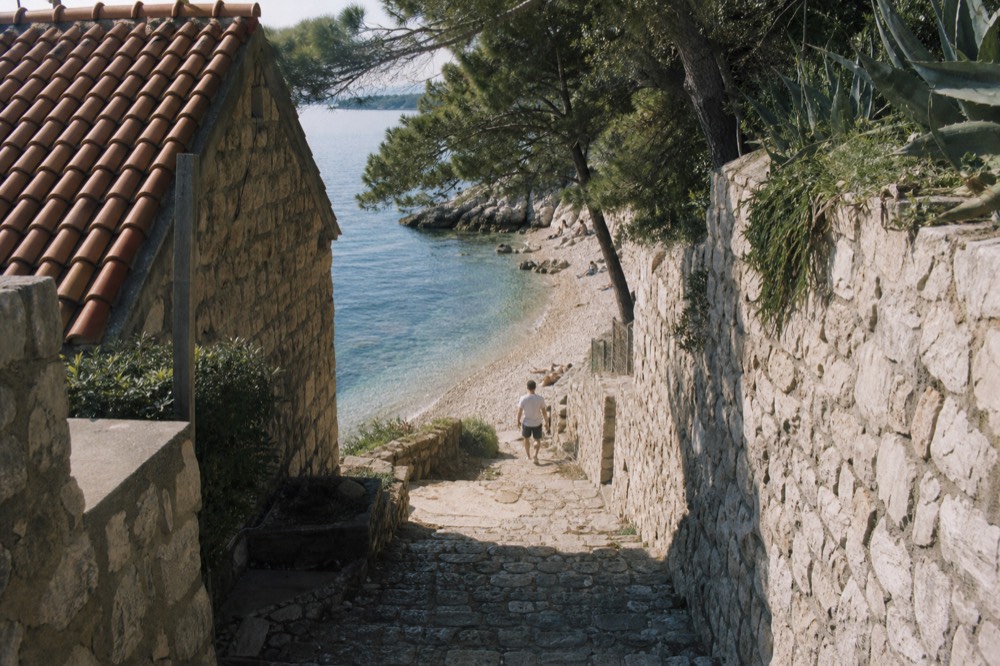
Is Split in Croatia Worth Visiting?
Yes, Split is worth visiting, and it pairs naturally with Dubrovnik either as a two-base trip or a one-way itinerary with a transfer between them. Its Roman core, the palace of Diocletian, is a living old town rather than a roped-off monument, and the city works as a ferry hub for the islands. Give it at least one full day, ideally two. It is a city break rather than a day trip from Dubrovnik, so plan it as part of the route.
The practical link between the two is good. Buses and ferries both connect Dubrovnik and Split, and the choice between them is a real one, with trade-offs in scenery, time and luggage handling; our Dubrovnik to Split transport guide lays out the options. If you are flying open-jaw, into one city and out of the other, Split's airport gives you a second departure point and saves backtracking.
For a Pelješac-centred trip, Split is the extension rather than the base. You could drive or bus north from Ston, or work in a stop at Korčula town on the way. What Split adds is scale: a bigger food scene, a bigger nightlife scene, and the ferry lines to Hvar and Brač. If your holiday is built around oysters and quiet coves, two nights in Split at the end is enough.
Is Zadar in Croatia Worth Visiting?
Zadar is worth visiting if you have the time, but it is a long way from Dubrovnik and does not fit a Pelješac itinerary: expect several hours of travel each way, so it belongs on a separate leg of a wider Croatia trip rather than a day out from Dubrovnik. What you get is a compact Roman and Venetian old town on a peninsula, a famous sea organ, and sunset views Alfred Hitchcock called the world's finest. Treat it as a destination, not an excursion.
The geography is the honest constraint. Zadar sits on the northern Dalmatian coast, past Split, and Croatia has no coastal train line down to Dubrovnik; there is no direct train from Zagreb to Dubrovnik either, so the south is reached by road, air or sea. If you are touring the country north to south or the reverse, Zadar earns its night. If you are based in Dubrovnik with a week, it is the wrong spend of a day.
The right framing for this page: your Dubrovnik week is better spent going deep than going far. Ston and Pelješac, Lokrum, the Elaphiti islands and one border day trip use your time well; Zadar, Plitvice and the north are a second trip. For a fuller ranking of the realistic options, see our answer on the best day trip from Dubrovnik, and for the wider picture of the city itself, start with Things to Do in Dubrovnik and work outward.

Common Questions About Ston and Pelješac
What Is There to Do in Ston Croatia?
Walk the great wall between Ston and Mali Ston, see the historic salt works, eat oysters and mussels at the farms in Mali Ston bay, and taste Plavac Mali at wineries along the peninsula's coast road. Most visitors combine the walls in the morning with a long shellfish lunch, then drive west through the vineyards toward Orebić.
How Far Is Ston from Dubrovnik?
Ston sits at the base of the Pelješac peninsula, a short drive north of Dubrovnik, close enough that organised day tours run there and back comfortably inside a single day, with the longest tour option, the Ston and Korčula combination, running about 11 hours in total.
What Is the Best Month to Go to Croatia?
May, June, September and early October for a Dubrovnik-based trip. The September sea average is about 23.6 degrees, barely below July's 24.9, while air temperatures are kinder and the August peak has passed. Note that September and October carry the year's highest cruise passenger numbers, so book tours ahead.
What to Be Careful of in Croatia?
Sun and heat on shade-free walls and boat decks, cash-only stalls and small konobas, border queues on day trips to Bosnia and Herzegovina or Montenegro, and inflated menus in the most crowded lanes. Croatia is otherwise a safe, straightforward country for visitors.
Is Split in Croatia Worth Visiting?
Yes. Split's Roman palace core is a functioning old town, the food and nightlife scenes are the strongest on the coast outside Dubrovnik, and the city is the ferry hub for the islands. Plan it as a one- or two-night stop on a wider route rather than a day trip from Dubrovnik.
Can You Taste Wine on Pelješac Without a Tour?
Yes, if someone in your group is happy to drive. Tasting rooms line the road from Ston toward Orebić and Dingač, fees are usually modest, and many producers waive them against a bottle purchase. If everyone wants to taste, the oyster and mussel tour or the Ston and Korčula trip with wine tasting are the safer choices.