What Is Special to Buy from Croatia?
What is special to buy from Croatia? A Dubrovnik-based shopping guide to lavender, plavac mali wine, olive oil, salt, ties, cheese and more, with honest price notes.
What Is Special to Buy from Croatia?
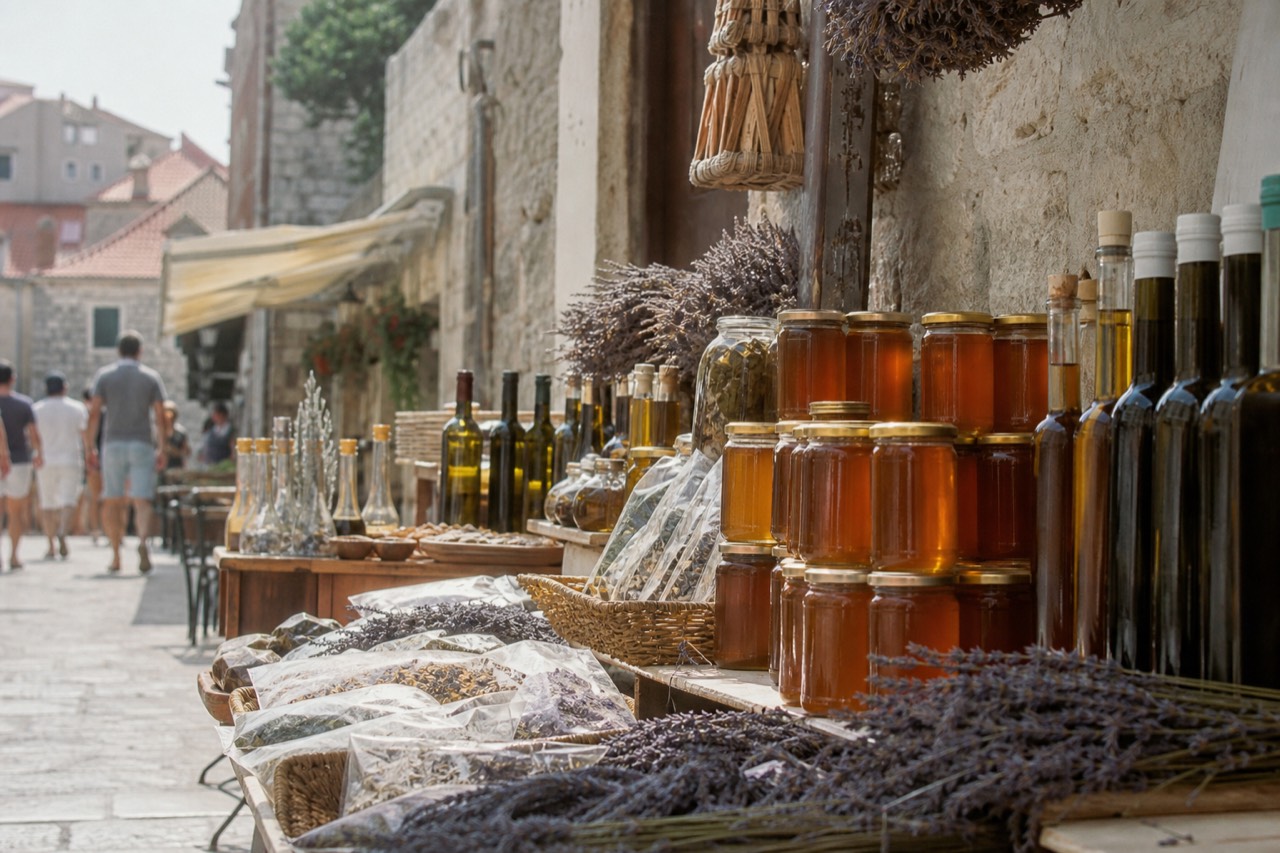
The things genuinely special to buy from Croatia are its food and drink: plavac mali and dingavac wines, cold-pressed olive oil from the Pelješac peninsula, lavender from Hvar, salt from Ston, Pag cheese, and silk-and-wine region products you cannot replicate at home. A one-day Dubrovnik Pass costs 40 euro in main season and the same money buys a bottle of very good local wine, which tells you where the real value sits. Croatia uses the euro, so there is no exchange-rate arithmetic to do, only luggage weight to think about.
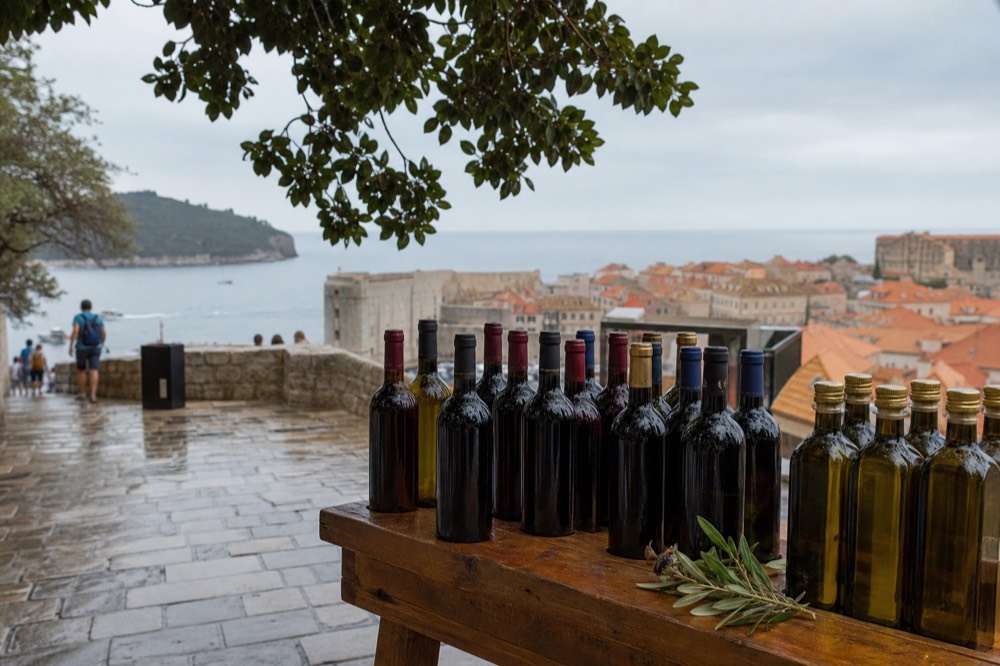
I have walked past Dubrovnik's souvenir stalls a few thousand times, and the pattern never changes. The front third of every shop is the same printed T-shirts, magnets and mass-produced trinkets you would find in any Mediterranean resort town. The back third, if you push through, is where the good things hide: bottles from wineries an hour up the coast, olive oil in dark glass from a family press, honey from the Konavle valley behind the city. The trick is knowing which shelf to walk toward.
The honest answer to this question splits into three parts, and the rest of this article takes them one at a time. First, what is actually cheaper here than at home, because some things genuinely are. Second, what Croatia is famous for producing, whether or not it is cheap. Third, the short list of things I would call a must buy, the items that define the country's pantry and its craft traditions. Along the way I will flag the tourist-trap versions to walk past, because a bad bottle of "Dalmatian wine" in a rope basket helps nobody.
One planning note before the shopping starts. If your day in Dubrovnik is short, do the sightseeing first and the shopping after, because the shops stay open into the evening while the city walls have stated hours of 08:00 to 19:30. The walls ticket, 40 euro for an adult in main season, also covers Fort Lovrijenac across the bay, so it is a half-day commitment on its own. For a deeper look at that, see the guide to city walls tickets and prices.
If you want a shortcut to the best of the shelves, these are the three experiences that pair naturally with a shopping day in the Old Town:
What Is Cheaper to Buy in Croatia?
Wine, olive oil, lavender products and restaurant meals built on local ingredients are reliably cheaper in Croatia than in most of western Europe or North America. Electronics, branded clothing and cameras, on the other hand, are not cheaper here at all, so plan your shopping around local food, drink and artisan goods. A good bottle of plavac mali often costs less in a Dubrovnik konoba than a mediocre bottle costs in a London or New York shop. The savings come from buying at the source, not from Croatia being a bargain country overall, because it is not one, and the difference is worth understanding before you spend anything.
Start with wine, because it is the clearest case. Croatia's reds from the plavac mali grape, and the top-tier dingavac made from the same grape on the steepest Pelješac slopes, sell domestically at prices set for Croatian wallets. Export markups, shipping and importer margins then double or triple the price abroad, so a bottle you buy at a winery or a good local shop is often the cheapest version of that wine anywhere in the world. The same logic applies to olive oil: Dalmatian oil is produced in small quantities, most of it consumed inside Croatia, and what does get exported carries a premium. Buying it here means paying the producer's price rather than the specialty-store price.
Lavender is the other classic. Hvar was once one of the Mediterranean's great lavender islands, and the oil, soap and dried bunches sold on Dalmatian stalls are still priced for locals. A small bottle of lavender essential oil costs a fraction of what a wellness brand charges for the same volume elsewhere. Check that what you are buying is actual essential oil and not a fragrance oil, which is the one scam in this category: real lavender oil is sold in small dark glass bottles, and the label should name the plant and nothing much else.
Here is the honest price map, in the categories people actually ask about:
| Category | Cheaper in Croatia? | Why |
|---|---|---|
| Local wine (plavac mali, pošip, dingavac) | Yes, clearly | Bought at or near the producer, no export markup |
| Olive oil, small-producer | Yes | Most Dalmatian oil never leaves the country |
| Lavender oil, soap, dried bunches | Yes | Hvar-region production sold at local prices |
| Eating out (konoba cooking, local ingredients) | Generally yes | Compared with western Europe, especially outside peak streets |
| Electronics, phones, cameras | No | Same EU pricing as everywhere, sometimes worse selection |
| Branded fashion and sportswear | No | Standard EU retail prices, no outlet advantage |
| Generic souvenirs, magnets, printed shirts | About the same | Mass-produced, imported, priced for tourists everywhere |
The pattern to hold onto: Croatia is cheap at the source and normal-priced for global goods. A useful rule I give friends is to buy anything a Croatian grandmother would buy, and to skip anything she would not recognize. That single filter eliminates most of the airport shelf.
Two more things belong in the "cheaper" column. Sea salt from the Ston salt pans, the oldest working salt works in this part of Europe, sells in handy cloth bags at prices that make it an easy gift. And truffle products from Istria in the north, oil and cheese and paste, undercut the Italian equivalents across the border while coming from the same terroir. Neither travels to Dubrovnik stalls in huge volume, but both are worth grabbing if your route passes through the north or a well-stocked delicatessen.
For a deeper dive into the local grape that anchors most of this, read the guide to plavac mali, Croatia's signature red. And if your shopping list is Dubrovnik-specific rather than Croatia-wide, the rundown of souvenirs worth buying in Dubrovnik covers the city's own specialties, including the hand-carved chess sets the town is quietly known for.
What Is Famous in Croatia to Buy?
Croatia is famous for plavac mali and dingavac wine, Pag cheese, Ston salt and oysters, Istrian truffles, and Hvar lavender. Shoppers also seek the original Cravat tie and Neretva mandarins when they are in season, making these products some of the country's best-known buys. Each of these carries a protected regional status or a centuries-old production story behind it, which is what separates them from the generic souvenir shelf. The tie deserves special mention: the cravat, ancestor of the modern necktie, traces its name to Croatian cavalrymen, and Zagreb shops sell proper silk versions rather than novelty imitations.
Pag cheese, or paški sir, is the one I would put at the top of any famous-food list. It is a hard sheep's milk cheese from Pag island, where the sheep graze on wild sage and salt blown in off the bora wind, and the result is a distinctive, slightly sharp wheel that travels well and keeps for weeks. It is the most awarded cheese in Croatia and the item Croatian emigrants ask relatives to bring. Vacuum-packed halves and quarters are sold in every decent delicatessen, and customs rules within the EU make it easy to carry home if you are returning to another EU country. Everything else covered here is indexed on Things to Do in Dubrovnik.
Ston oysters are famous in a different way: they are famous to eat, not to carry. The oyster beds at Ston, on the Pelješac peninsula about an hour from Dubrovnik, produce flat European oysters served straight from the sea at the waterside shacks. You can buy them fresh at the source, and you can also buy mussels from the same Mali Ston bay. Neither survives a flight home, but a jar or tin of prepared seafood, and a bottle of the local white that goes with it, does. The guide to Ston and its oysters covers the day trip, which pairs naturally with a wine stop on the same peninsula.
The Cravat story is the best non-food item. The word "cravat" comes from the French for Croat, picked up when Croatian soldiers wore distinctive knotted neckcloths that Parisians then copied. Croatia leans into this heritage, and proper silk cravats, often in deep red or with traditional patterns, are sold in dedicated shops in Zagreb and occasionally on Dalmatian streets. A silk tie is light, unbreakable and genuinely tied to the country's history, which checks every box a good souvenir should check.
A quick map of the famous list:
| Product | Region | Carries home well? |
|---|---|---|
| Plavac mali / dingavac wine | Pelješac, southern Dalmatia | Yes, bottles travel |
| Pag sheep cheese | Pag island | Yes, vacuum-packed |
| Ston salt | Ston | Yes, cloth bags |
| Hvar lavender oil | Hvar | Yes, small dark bottles |
| Istrian truffle products | Istria | Yes, jars and tins |
| Silk cravat | Zagreb, nationally | Yes, light and flat |
| Ston oysters | Mali Ston | No, eat them there |
| Neretva mandarins | Neretva valley | Only in season, short shelf life |
Olive oil belongs on this famous list too, not just the cheaper one. Dalmatian varieties, oblica and lastovka above all, are peppery and grassy, and the good bottles are harvested and pressed within a day. Look for a harvest year on the label, which is the mark of oil sold as food rather than as decor. A decorative bottle shaped like a lighthouse with no year on it is a candle holder, not an ingredient.
The wine deserves a paragraph of its own because it is the category most visitors under-buy. Croatia's wine industry was rebuilt in the decades after the homeland war and most producers are small, family-run estates with no export presence at all. The bottle you taste in a konoba in Dubrovnik genuinely may not exist in any shop outside Croatia. That is the definition of a special purchase, and it is why I tell people to leave suitcase space for two or three bottles rather than one. The Dingavac guide explains the top tier of the local reds if you want to chase the best.
One honest warning about the famous list: Neretva mandarins are wonderful in their November-to-January season, sweet, thin-skinned and sold by the crate on roadside stands in the valley north of Dubrovnik, but they do not keep and they do not survive a long journey. Buy them to eat on the trip, not to bring back.
What Is a Must Buy in Croatia?
If you buy only one thing in Croatia, make it a bottle of plavac mali or dingavac from a Pelješac winery or a serious wine shop; add Pag cheese and a small bottle of Hvar lavender oil if you have room. Those three cover the country's signature red, its signature cheese and its signature scent, all in a carry-on. A silk cravat is the must buy for anyone who wants something non-perishable instead.
The must-buy list is short on purpose. Souvenir regret almost always comes from buying many small forgettable things instead of one or two real ones, and the real ones here are concentrated in food and drink. A bottle of wine is consumed, remembered, and often reordered from the producer, which no fridge magnet ever manages. Pag cheese gets eaten at home with friends and starts a conversation about where it came from. Lavender oil sits in a drawer and releases the trip every time it opens.
For the wine, the practical advice is to buy where you can taste. A tasting room on Pelješac, reached on a Ston and Pelješac day trip, pours three or four bottles and sells the ones you liked at cellar-door prices. In Dubrovnik itself, the better wine shops around the Old Town do tastings too, and the staff know the difference between the famous names and the good small estates. If you are buying blind, look for a specific grape and a specific vineyard on the label rather than a generic "Dalmatian red."
The food-and-drink walking tour is another way to shortcut this. The three-hour walk with a local guide, from $165.64 per person and rated 5 across 704 reviews, moves through the city's eating spots with a guide who explains what is local and what is not, and guests consistently come out of it knowing exactly which shop to return to. One recent guest review captures it well:
Amazing food tour! Marija was a great guide, full of stories and facts that really brought Dubrovnik to life. The food was delicious, and generous. Wines at every stop. Would highly recommend this tour to anyone visiting Dubrovnik, especially to help get your bearings of the city and know where to go for dinner!
Bryan_M
That last line is the point: a good food tour ends with a mental map of the shops and konobas worth returning to, which is exactly the knowledge a shopping day needs.
For non-food must buys, two stand out. The silk cravat, already covered, is the classic. And Dubrovnik itself has one quiet specialty worth seeking out: hand-carved chess sets, a craft tradition tied to the city's old stone workshops. They range from small travel boards to serious statement pieces, and the good ones are carved, not molded. The guide to the Dubrovnik chess set explains what to look for and what a fair price looks like.
Should you buy the Dubrovnik Pass as part of all this? It is not a souvenir, but it belongs in any spending plan for the city. The one-day pass costs 40 euro in main season, which is exactly the price of the standalone walls ticket between 1 March and 30 November, and it adds ten more sights plus a 24-hour bus ticket. In December the standalone walls ticket drops to 20 euro and no winter pass tier is on sale, so the comparison only holds in the main season. The details are in the guide to what the Dubrovnik Pass includes.
What Is So Special About Split, Croatia?
Split is special because a living, working city operates inside a Roman emperor's palace: Diocletian's Palace forms the entire old core, with apartments, shops and bars built into its walls and cellars, and residents still crossing the ancient courtyards on their daily errands. For a shopper, that means the retail experience itself is the sight. You buy lavender, wine and olive oil inside the palace walls, in a city that is Croatia's second-largest and far less museum-like than Dubrovnik.
Split's shopping identity differs from Dubrovnik's in a useful way. Dubrovnik's Old Town is a UNESCO World Heritage site, inscribed in 1979, with a property area of 24.7 hectares, and its retail leans toward the polished and the pricey. Split's old core is bigger in feel and rougher at the edges, with a famous green market, the Pazar, spilling along the palace's eastern wall every morning. At Pazar you buy from producers: figs, honey, herbs, rakija in unlabelled bottles, and in the right season mandarins trucked down from the Neretva valley. Prices are set for locals who shop there daily, which makes it the best value shopping street on the whole coast.
The palace itself is the draw that makes the shopping incidental. You can walk its basement halls, climb the bell tower, and stand in the peristyle where residents cross on their way to work, all within a few hundred metres. Split also sits at the gateway to the central Dalmatian islands, Hvar and Brač among them, which is why Hvar lavender reaches Split's stalls reliably and cheaply. If your Croatia trip includes both cities, do the serious souvenir buying in Split and the sightseeing-heavy days in Dubrovnik.
A comparison that comes up constantly, and that shoppers feel immediately:
| Aspect | Dubrovnik Old Town | Split Old Core |
|---|---|---|
| Setting | Walled medieval city, UNESCO site | Living city inside Diocletian's Palace |
| Market scene | Gundulić Square morning market | Pazar, along the palace wall |
| Price level | Higher, visitor-oriented | Lower, partly local trade |
| Signature buys | Wine, chess sets, salt, oil | Lavender, figs, rakija, produce |
| Best paired with | City walls and Lokrum | Island ferries to Hvar and Brač |
Both cities use the euro, both are walkable without a car, and both reward the same shopping discipline: buy the edible, drinkable and handmade things, and leave the printed polyester alone. If you are routing between the two, the guide to Dubrovnik to Split transport covers the bus, ferry and private-transfer options, and the answer on whether to bus or ferry from Split to Dubrovnik settles the question most travelers ask on that leg.
Back in Dubrovnik, if a shopping day is your plan, the structure that works is simple. Morning for the walls, since the operator's stated hours run 08:00 to 19:30 and the early light on the sea side is the best of the day. Afternoon for the shops and the food. The walls admission ticket, from $36.37 per person, is the cheapest of the bookable Old Town products and leaves the most budget for the shelves afterward.
Common Questions About What to Buy From Croatia
What is special to buy from Croatia?
Plavac mali and dingavac wine, Pag sheep cheese, Hvar lavender oil, Ston salt, Istrian truffle products and a silk cravat. These are the products with a protected regional identity or a centuries-old production story, and they are the ones that cannot be replicated by a generic souvenir factory.
What Is Cheaper to Buy in Croatia?
Wine, olive oil, lavender products and konoba meals are reliably cheaper than abroad, because you are buying at or near the source. Electronics, branded clothing and cameras are not cheaper, and generic souvenirs cost about the same as in any tourist city.
What Is Famous in Croatia to Buy?
Pag cheese, Ston salt and oysters, Hvar lavender, Istrian truffles, Neretva mandarins in season, and the silk cravat, whose name traces back to Croatian cavalrymen. Plavac mali wine is the most famous buy of all for travelers who drink.
What Is a Must Buy in Croatia?
One good bottle of plavac mali or dingavac, bought where you can taste it, plus Pag cheese and a small bottle of lavender oil if there is suitcase room. For a non-food purchase, a silk cravat is the classic.
What Is so Special About Split, Croatia?
Split's entire old core is Diocletian's Palace, a Roman palace complex that people still live and shop inside. Its Pazar market sells from producers at local prices, making it the best-value shopping street on the Dalmatian coast.
Can you bring Croatian wine and cheese home?
Within the EU, yes, with generous personal-use allowances. Travelers to the United States can generally bring wine for personal use in checked luggage, subject to duty limits, while meat and most dairy products are restricted, so check your home country's rules before packing the cheese.