What Is the Most Popular Wine in Croatia?
Plavac mali leads Croatian wine, and Dubrovnik is one of the best places on the coast to taste it. Here is what to order, which regions matter and how to book a tasting.
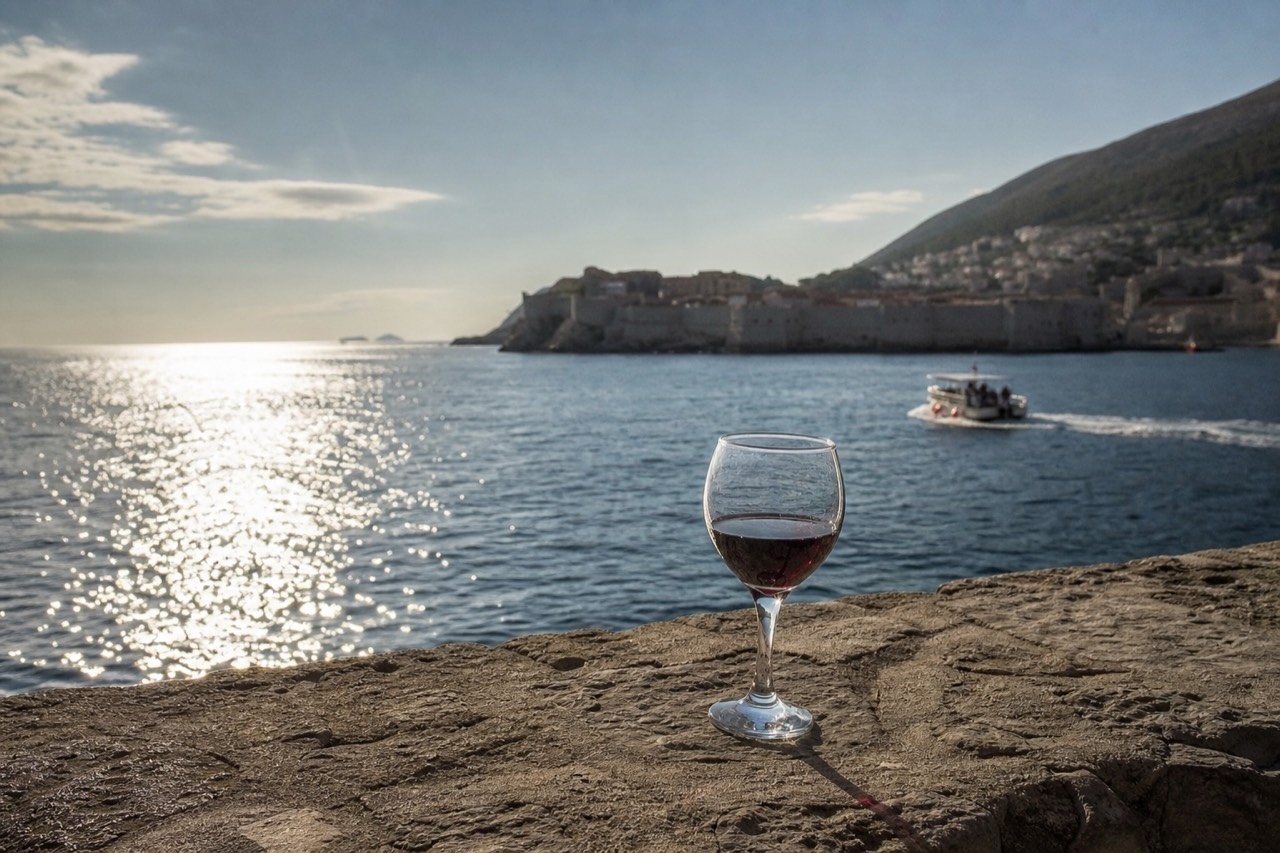
What Is the Most Popular Wine in Croatia?
The most popular wine in Croatia is Plavac mali, a full-bodied red grown along the Dalmatian coast and its islands. It is the grape behind Dingač, the country's most famous single-vineyard red, and it appears on nearly every wine list from Split to Dubrovnik. For whites, Pošip from Korčula and Graševina from the continental interior carry the same weight.
If you are reading this in Dubrovnik, you are already sitting in Plavac mali country. The grape thrives on steep, sun-baked slopes facing the sea, and the coastline south of the city, through the Konavle Valley and up the Pelješac peninsula, is exactly that terrain. Order a house red at a konoba anywhere in the region and the bottle that lands on the table is very likely a Plavac mali, often from a small family producer whose entire output never leaves the county.
The name itself tells you something. Mali means small, and the grape's berries are indeed small and thick-skinned, which concentrates flavour and colour and gives the wine its characteristic dark fruit, dry finish and firm structure. It pairs naturally with the grilled fish, lamb under a peka bell and cured ham that make up most of what Dalmatian cooking actually is. That fit between the local grape and the local table is a large part of why it became the default pour.
There is a historical logic behind that dominance, too. Coastal Dalmatia has grown grapes for as long as anyone has recorded anything about the place, and the steep, stony hillsides that make farming almost anything else miserable happen to be perfect for wine. Olives, figs and vines are the three crops that shaped this landscape, and the vineyards climbing the hills above the sea are as much a part of the scenery around Dubrovnik as the terracotta roofs. When you drive the coast road towards Ston or look down from the walls, the green rows stitched across the slopes are mostly Plavac mali.
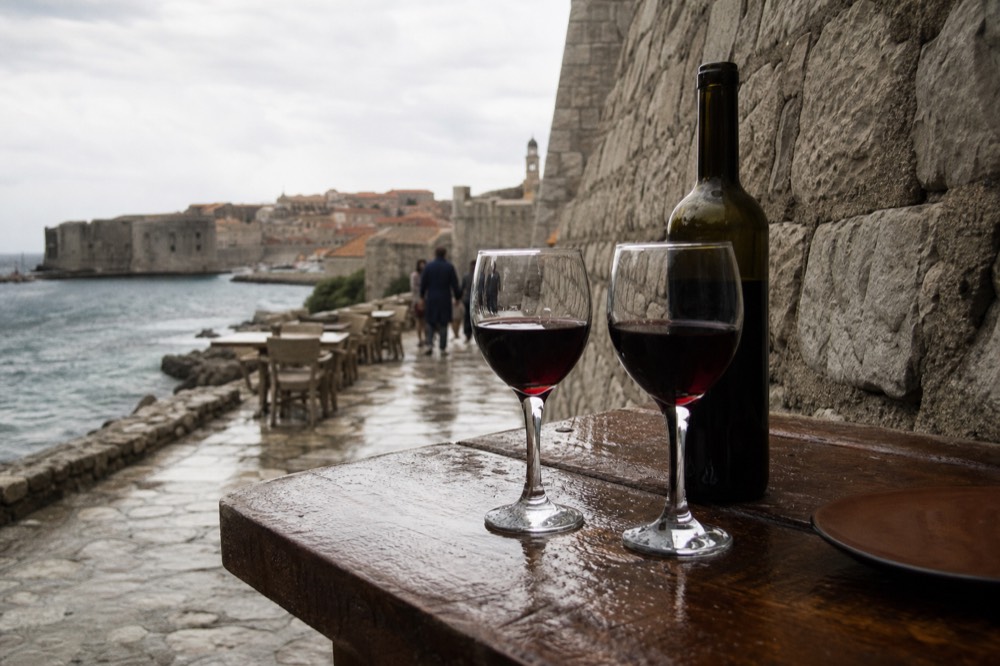
Visitors often arrive expecting a minor wine country and leave with a case shipped home. Dubrovnik recorded about 4.2 million overnight stays in 2025, sharing first place among Croatian destinations with Rovinj, according to the Croatian Bureau of Statistics, and a growing share of those visitors come specifically to eat and drink their way through the region. Wine is no longer a footnote to the city walls. It is one of the main reasons people book a second trip.
One reason the wine surprises people is that so little of it travels. Production is fragmented into thousands of small family holdings, many bottling only a few thousand bottles a year, and the best of it is drunk within a short drive of the vineyard. The glass you are served in a Konavle cellar may genuinely not exist anywhere else in the world. That scarcity is not marketing; it is simply what happens when a wine culture is built on tiny plots and local loyalty.
If tasting rather than reading is your preferred way in, the Konavle Valley trip is the natural first booking: it takes you into the green valley behind Dubrovnik where local families pour their own reds and whites alongside home-cured prosciutto and cheese.
What Is the Best Wine From Croatia?
The best-known wine from Croatia is Dingač, a Plavac mali grown on the steep southern slopes of the Pelješac peninsula, and it is the closest thing the country has to a flagship bottle. Below it sit a cluster of serious Plavac mali bottlings from nearby hills, and, on the white side, Pošip from Korčula. Best is a matter of taste, but fame has a clear answer.
Dingač deserves its reputation for a reason that is visible the moment you stand in the vineyard. The slopes face directly south over the sea, so steep that some plots were historically worked by hauling pickers and crates up and down on a kind of rail sled, and the reflected heat and light off the water push the grapes to full, concentrated ripeness. The resulting wine is dense, dry and built for ageing in a way few coastal Mediterranean reds manage.
You do not have to hunt down a famous label to taste the family style, though. Plavac mali from ordinary hillside plots around Dubrovnik, Konavle and the Elaphite islands shares the same character in a lighter frame: dark cherry and plum, a herbal edge, tannins that soften with food. Our guide to Plavac mali, Croatia's signature red goes deeper on what to look for on a label, and the story of the peninsula's most famous slope is covered in Dingač wine from Pelješac.
A practical note on ordering. Wine lists in Dubrovnik run from generic house pours to serious bottle lists, and the price gap between them is smaller than in most western European cities. A mid-list Plavac mali by the bottle usually costs little more than two glasses of the house wine and is nearly always the better experience. Ask the waiter what is local rather than what is good; in Dalmatia the answer to both is usually the same bottle.
Vintage matters less here than you might fear, but serving temperature matters more. Coastal reds are often poured slightly cool, closer to cellar temperature than room temperature, and that is deliberate: at high-summer temperatures a warm red loses everything that makes it refreshing. If a bottle arrives tasting flat and hot, ask for it to be chilled for ten minutes. Nobody will blink, and the same bottle poured cool can taste like a different wine entirely.
| Croatian wine | Grape | Style | Order it with |
|---|---|---|---|
| Plavac mali | Plavac mali | Dry, full-bodied red, dark fruit | Grilled meat, lamb under peka, aged cheese |
| Dingač | Plavac mali, Pelješac slopes | Dense, structured red for ageing | Special-occasion dinners, game, steak |
| Pošip | Pošip, Korčula | Dry, rounded white, stone fruit | Grilled fish, shellfish, risotto |
| Graševina | Graševina, continental Croatia | Fresh, light white, everyday drinking | River fish, chicken, light lunches |
| Malvazija | Istrian Malvasia | Aromatic, mineral white | Truffle dishes, pasta, prosciutto |
What Is the Best Wine in Croatia?
There is no single best wine in Croatia, but the whites deserve far more attention than they get. Pošip from Korčula is the standout coastal white, Graševina is the workhorse of the interior, and Istrian Malvazija has quietly become the favourite of sommeliers. Among reds, Plavac mali and its rarer cousin Teran cover most ground.
Visitors who arrive via Dubrovnik tend to meet the reds first, because that is what the region pours. But a short ferry ride away, Korčula grows Pošip, a white with enough body and stone-fruit richness to stand up to grilled fish while staying crisp enough to drink in the sun. It is the white most locals on the islands reach for without thinking, and it travels badly, which is a quiet argument for drinking it here rather than hunting for it at home.
The continental half of the country tells a different story. Inland, in Slavonia and the hills around Zagreb, Graševina dominates plantings and restaurant lists alike. It is lighter, fresher and cheaper than the coastal styles, closer in spirit to a crisp everyday white than to anything brooding, and it pairs with the freshwater fish and poultry dishes of the interior rather than with squid and lamb. Istria, in the north-west corner, rounds out the map with Malvazija, an aromatic white that has become the darling of Croatian wine fairs, and Teran, a red with bright acidity that suits the truffle-heavy Istrian table.
For a visitor based in Dubrovnik, the honest summary is this: the reds here are the reason to drink locally, and the whites are the reason to take a day trip. Korčula produces Pošip within easy reach of the city, and a day on the island mixes wine tasting with swimming and seafood in a way few wine regions anywhere can match. Our Korčula wine guide covers the island's producers in detail, and the Korčula day trip guide handles the logistics of getting there.
It is worth saying plainly that "best" depends on the moment as much as the bottle. A dense Dingač at a long dinner is one kind of pleasure; a chilled Pošip at a beachside konoba at two in the afternoon is another, and pretending the first is automatically superior is a mistake travellers often make in their first days here. The local culture treats wine as food, not as performance, and the wines are built for the table and the climate they come from. Drink what the place pours and you will rarely go wrong.
The easiest tasting to book from the city itself stays closer to home. The Konavle Valley, the green agricultural valley behind the airport, is Dubrovnik's own wine country, and a half-day tasting there covers reds, whites and the local prosecco-style sparkling pour that every Konavle household seems to make.
What Is the Best Wine Region in Croatia?
Dalmatia is the best wine region for visitors to combine with Dubrovnik, with Pelješac, Korčula and the Konavle Valley all within a day's reach. For quality whites, Istria in the north-west is the country's most celebrated region. Graševina country around Slavonia and Zagreb suits travellers driving between Zagreb and the coast.
Each region has its own logic. Dalmatia is about reds, islands and steep seaside slopes, and it fits a Dubrovnik-based trip without any extra travel planning. Pelješac, the long peninsula north-west of the city, is the heartland: vineyards climb its hills, the town of Ston guards its base with the longest defensive walls in this part of Europe, and oyster beds lie in the channel beside it. Wine and oysters within a few hundred metres of each other is a pairing that sells itself.
Istria is the connoisseur's answer. The peninsula has the country's densest concentration of ambitious small producers, a food culture built around truffles and olive oil, and a style of Malvazija that changes character from village to village. It is a destination in its own right, better suited to a dedicated trip than to a detour from Dubrovnik, but if your itinerary touches the north, it rewards a full day.
Continental Croatia is the region foreign visitors see least and locals drink most. Graševina flows through the cellars of Slavonia and the wine roads around Zagreb, and the whole experience is gentler on the wallet than the coast. The trade-off is distance: none of it sits within reach of a Dubrovnik day trip, so treat it as a separate chapter of the country rather than part of a southern holiday.
The seasons shape the regions as much as the geography does. Harvest on the coast falls in early autumn, when the crowds thin but the sea is still warm enough for a swim between tastings, and the September average for this coast is about 23.6 degrees, a long-run average rather than a promise about any particular week. Spring brings green vineyards and lighter menus; midsummer pushes everyone towards the whites and the shade. If you can choose, the shoulder months give you the vineyards at their most generous and the roads at their calmest.
| Region | Signature grape | Reachable from Dubrovnik? | Best for |
|---|---|---|---|
| Dalmatia, Pelješac | Plavac mali, Dingač | Yes, day trip | Reds, oysters in Ston, scenic drives |
| Korčula | Pošip | Yes, day trip | Whites, island beaches, seafood |
| Konavle Valley | Local reds and whites | Yes, half day | First tasting close to the city |
| Istria | Malvazija, Teran | No, separate trip | Whites, truffles, serious producers |
| Slavonia and inland | Graševina | No, separate trip | Value whites, wine roads, cellars |
For a taste of the Dalmatian pairing at its most direct, the Ston tour combines fresh oysters and mussels pulled from the beds beside the town with local wine, in one sitting. It starts from $157 per person and is rated 4.9 across 111 reviews, and it is the closest thing to a wine-and-shellfish masterclass you can book from Dubrovnik.
What Is the Most Popular Dessert in Croatia?
The most popular dessert in Croatia depends on where you stand. On the coast it is rožata, a silky baked custard with caramel, followed closely by fritule, the small fried doughnuts that appear at every festival. Inland, kremsnite, a layered cream slice, is the everyday favourite. All three pair surprisingly well with local sweet wine.
Rožata is the Dalmatian answer to crème brûlée, though locals will tell you, correctly, that it is softer and more delicate, flavoured with rose liqueur in the traditional version and served cold. It appears on nearly every restaurant menu in Dubrovnik, usually in a small glass or ramekin, and it is the dessert most visitors end up ordering more than once. Fritule are its street-food counterpart: bite-sized, slightly citrusy, dusted with sugar, and sold by the paper bag at Christmas markets and summer festivals alike.
Inland, the kremsnite rules. A square of puff pastry filled with thick vanilla cream, it is the cake every Croatian bakery keeps in the front case, and arguing about which town makes the best one is a national pastime. Around Dubrovnik you will also meet kontonjata, a firm quince cheese served with cheese or nuts, and dried figs pressed with almonds, both of which belong to the older, slower end of the Dalmatian sweet tradition.
The wine link is not a stretch. Sweet and dessert-style wines made from dried grapes have a long history on the Dalmatian coast, and a glass of the local prošek, not to be confused with Italian prosecco, is the traditional partner for dried figs, quince cheese and even rožata. Ask for it by name in a good konoba and you will usually get a small pour of something amber and honeyed that never appears on the printed list.
Dessert culture here also runs on rhythm. Lunch is the main meal of the day for many families, and dessert follows it slowly, with coffee, in the late afternoon rather than immediately after dinner. Restaurants in the Old Town will of course bring you a dessert menu whenever you ask, but the more local pleasure is to eat your main meal at midday, walk it off along the Stradun, then stop for rožata and coffee as the evening crowd builds. The same slow rhythm is exactly what a good wine tasting follows: pours, conversation, food, more pours.
Dessert is also where a cooking class earns its keep. The peka cooking lesson runs about 4 hours from $159.83 per person and covers the slow-cooked meat-and-vegetable dish that anchors Dalmatian Sunday lunches, and classes of this kind typically end with something sweet from the same wood-fired hearth. It is the fullest way to eat your way into the region's food culture in a single afternoon.
Where to Taste Croatian Wine Near Dubrovnik?
The three practical options are a half-day tasting in the Konavle Valley, a full-day trip to Pelješac and Ston for wine and oysters, or a ferry day trip to Korčula for Pošip whites. Each needs no car of your own, each can be booked as a guided tour, and each shows a different face of the same wine culture.
Konavle is the low-effort choice. The valley sits behind the airport, twenty minutes from the Old Town, and its family wineries pour generous flights alongside home-cured ham and cheese. Pelješac is the full-day commitment and the biggest payoff: vineyard slopes, the walled town of Ston, and oysters eaten within sight of the beds they came from.
Korčula splits the difference. The ferry ride itself is part of the pleasure, and once on the island the Pošip cellars sit among olive groves and coves that invite a swim between tastings. Whichever you choose, book the guided version if you plan to drink seriously; the roads are winding, the pours are generous, and the local guides know which family cellar is pouring the good bottle that week.
Timing matters more than most visitors expect. The busiest months on this coast are no longer simply July and August: cruise passengers at the Port of Dubrovnik peaked in September 2025 at 101,246, ahead of July's 96,072 and August's 87,385, according to Port Authority data. September is therefore both the best month for wine, because the harvest is coming in and the sea is still swimmable, and a busier month than most people assume. Book tastings and restaurant tables ahead in that window, and you get the best of the season without the squeeze.
A final planning note from experience with these roads: tastings in this region are generous by northern European standards, and the sun multiplies whatever you drink. Build in an afternoon that does not depend on you being sharp afterwards, eat whenever food is offered, and treat the tasting as the day's main event rather than a stop between sights. For everything else worth doing in the region, start with Things to Do in Dubrovnik and plan the wine around it, not the other way round.
Common Questions About the Most Popular Wine in Croatia
What is the most popular wine in Croatia?
Plavac mali, a full-bodied red from the Dalmatian coast and islands. It is the default house red from Split down to Dubrovnik, and its most famous bottling, Dingač from the Pelješac peninsula, is the country's best-known wine label.
What Is the Best Wine From Croatia?
Dingač, a Plavac mali grown on steep southern slopes on Pelješac, is the most celebrated Croatian wine abroad. For everyday drinking, standard Plavac mali and Korčula's Pošip white offer the same character at friendlier prices.
What Is the Best Wine Region in Croatia?
For a Dubrovnik-based trip, Dalmatia: Pelješac, Korčula and the Konavle Valley are all within a day's reach. For whites, Istria in the north-west is the most celebrated region, best visited on a dedicated trip rather than a detour.
What Is the Most Popular Dessert in Croatia?
On the coast, rožata, a silky caramel custard, with fritule, small fried doughnuts, close behind. Inland, the kremsnite cream slice is the everyday bakery favourite. Dried figs and quince cheese round out the Dalmatian sweet tradition.
Can You Visit Croatian Wineries From Dubrovnik Without a Car?
Yes. Guided tastings run to the Konavle Valley, Pelješac and Ston, and Korčula, and the Konavle trip in particular is a short drive from the city. Booking a tour also solves the problem of generous pours on winding coastal roads.
What Should I Drink With Seafood in Dubrovnik?
A local white, ideally Pošip from Korčula or a Konavle white poured at a family winery. Plavac mali works better with grilled meat and lamb; with fish and shellfish the lighter island whites are the traditional match.